DACA Work Permit Process in Florida
Discover the DACA work permit process in Florida with our detailed guide. Understand eligibility, required documents, and common mistakes to avoid. Call us for expert guidance and a free consultation.

The Deferred Action for Childhood Arrivals (DACA) program has provided a lifeline for hundreds of thousands of young undocumented immigrants in the United States, allowing them to live and work legally without fear of deportation. For DACA recipients in Florida, understanding the intricacies of the DACA work permit process is crucial for maintaining their status and continuing to contribute to their communities. This comprehensive guide will walk you through everything you need to know about obtaining and renewing your DACA work permit (also known as an Employment Authorization Document, or EAD) in the Sunshine State, highlighting the importance of legal guidance every step of the way.
Understanding DACA and Eligibility in Florida
DACA was established in 2012 by the Obama administration, offering temporary relief from deportation and work authorization to eligible young people who were brought to the U.S. as children. It is not a path to citizenship or permanent residency, but rather a renewable form of deferred action that allows recipients to live and work in the country legally for a two-year period.
Who is Eligible for DACA?
To be considered for DACA, applicants must meet several strict criteria:
- Were under the age of 31 as of June 15, 2012.
- Came to the United States before reaching their 16th birthday.
- Have continuously resided in the United States since June 15, 2007, up to the present time.
- Were physically present in the United States on June 15, 2012, and at the time of making their request for deferred action.
- Had no lawful immigration status on June 15, 2012.
- Are currently in school, have graduated or obtained a certificate of completion from high school, have obtained a general education development (GED) certificate, or are an honorably discharged veteran of the Coast Guard or Armed Forces of the United States.
- Have not been convicted of a felony, a significant misdemeanor, or three or more other misdemeanors, and do not pose a threat to national security or public safety.
While DACA is a federal program, its impact can be felt at the state level. In Florida, DACA recipients are generally eligible for in-state tuition at public colleges and universities, provided they meet residency requirements. They can also obtain a driver's license, which is a significant benefit for daily life and employment. However, it's important to stay informed about any state-specific policies that might affect DACA recipients, as these can change.
The DACA Work Permit (EAD) Application Process
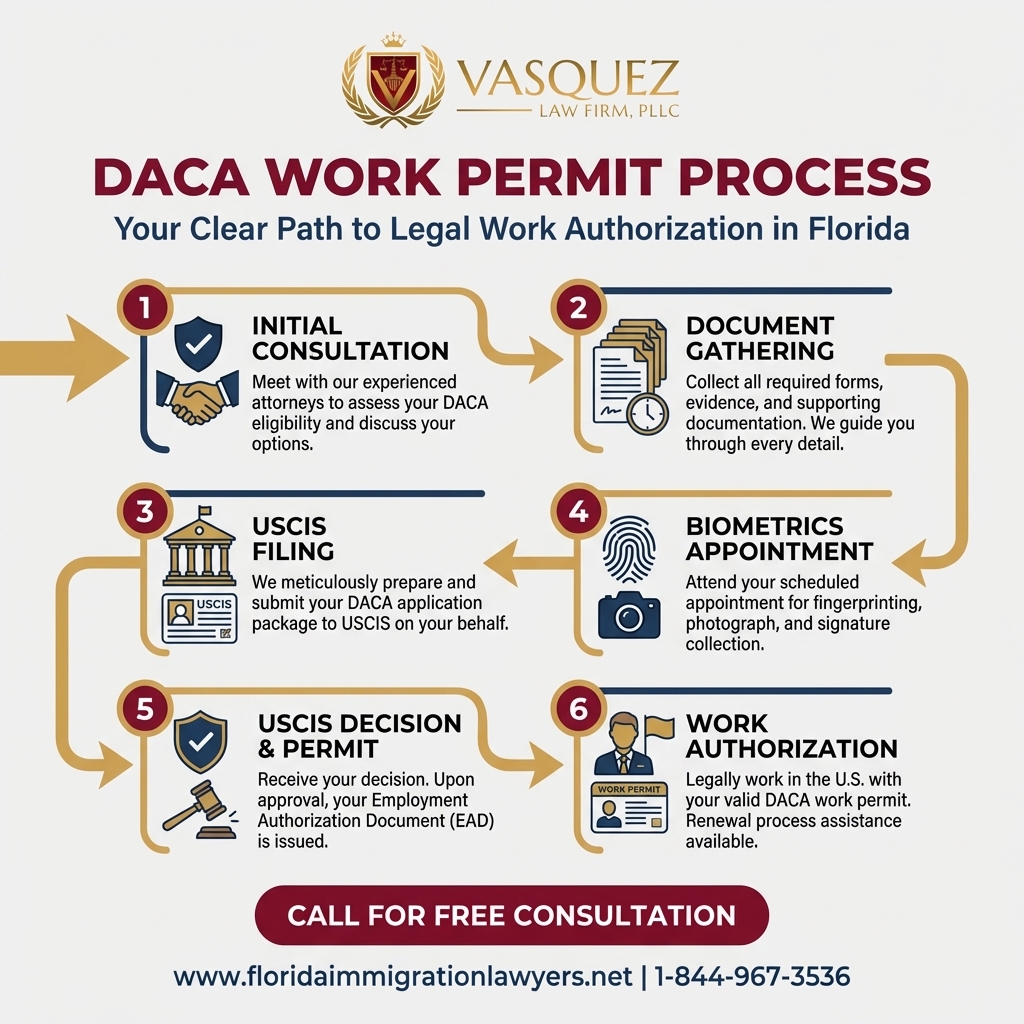
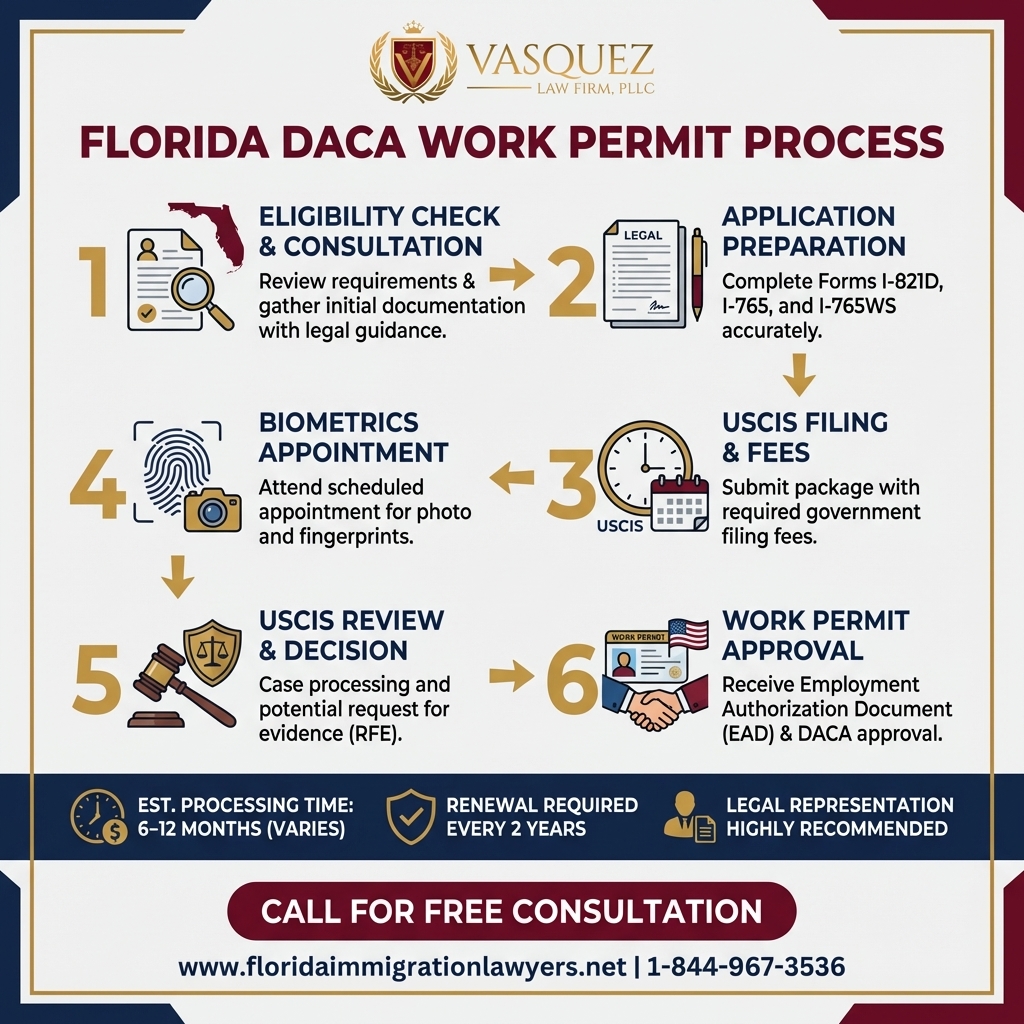
The process for applying for an initial DACA work permit or renewing an existing one involves several key forms and careful documentation. It’s a detailed procedure that leaves little room for error.
Required Forms
When applying for DACA and an EAD, you will typically need to submit the following forms to U.S. Citizenship and Immigration Services (USCIS):
- Form I-821D, Consideration of Deferred Action for Childhood Arrivals: This is the primary form requesting deferred action.
- Form I-765, Application for Employment Authorization: This form is for your work permit.
- Form I-765 Worksheet (I-765WS): This helps USCIS determine if you have an economic need for employment.
- Form G-1450, Authorization for Credit Card Transactions: If you choose to pay your fees by credit card.
Gathering Supporting Documents
The strength of your DACA application lies in the evidence you provide. You must submit documents to prove all eligibility criteria. This includes:
- Proof of Identity: Passport, birth certificate with photo ID, school ID with photo, military ID.
- Proof of Entry Before Age 16: Foreign passport with entry stamp, I-94 arrival/departure record, school records, medical records.
- Proof of Continuous Residence: School transcripts, employment records, utility bills, bank statements, medical records, rental agreements, affidavits from people who can attest to your presence.
- Proof of Physical Presence on June 15, 2012: Similar documents as continuous residence, specifically covering that date.
- Proof of No Lawful Status on June 15, 2012: This is often inferred from the absence of immigration documents, but can include expired visas or I-94s.
- Proof of Education/Military Service: High school diploma, GED certificate, college transcripts, military discharge papers.
- Criminal History Records: If applicable, provide certified court dispositions for any arrests or convictions.
Biometrics Appointment
After submitting your application, you will receive a notice for a biometrics appointment at an Application Support Center (ASC). Here, your fingerprints, photograph, and signature will be collected. This data is used for background checks and identity verification.
Processing Times and Fees
USCIS processing times for DACA applications can vary significantly. It's essential to check the USCIS website for the most current estimates. As of the latest updates, there are fees associated with both the I-821D and I-765 forms. While fee waivers are generally not available for DACA applications, it's always wise to consult with an immigration attorney regarding current fee structures and any potential changes.
Renewing Your DACA Work Permit in Florida
For current DACA recipients, the renewal process is just as critical as the initial application. Timely renewal ensures you maintain your work authorization and protection from deportation. Allowing your DACA to expire can lead to serious consequences, including losing your job and facing potential removal proceedings.
When to Apply for Renewal
USCIS recommends submitting your DACA renewal application 120 to 150 days (approximately 4 to 5 months) before your current DACA and EAD expire. This timeframe allows for potential processing delays and helps prevent any lapse in your work authorization. Applying too early (more than 150 days out) might result in USCIS rejecting your application, while applying too late risks a period without DACA protection.
Documents Needed for Renewal
The renewal application generally requires similar documentation to the initial application, but with a focus on proving continuous residence since your last DACA approval and demonstrating that you continue to meet all eligibility criteria. Key documents include:
- Your most recent DACA approval notice (Form I-797).
- Your current Employment Authorization Document (EAD card).
- Updated proof of continuous residence in the U.S. since your last DACA approval (e.g., pay stubs, bank statements, utility bills, school records).
- Any new criminal history records, if applicable. Even minor infractions should be disclosed and properly documented.
Potential Challenges During Renewal
The DACA program has faced numerous legal challenges and policy shifts over the years, making the renewal process sometimes uncertain. Delays in processing, changes in USCIS policy, or even administrative errors can impact your renewal. It's crucial to stay informed about the program's status and to work with an experienced legal professional who can help you navigate any unforeseen hurdles. Letting your DACA expire, even for a short period, can lead to loss of employment and potential vulnerability to immigration enforcement actions.
Rights and Responsibilities of DACA Recipients in Florida
While DACA provides significant benefits, it's important for recipients in Florida to understand both their rights and their ongoing responsibilities.
Employment Rights
With a valid EAD, DACA recipients are legally authorized to work in the United States. Employers must treat DACA recipients the same as any other legally authorized worker and cannot discriminate based on immigration status. It's important to keep your EAD current to avoid any disruption in employment.
Driving Privileges
Florida allows DACA recipients to obtain a driver's license, provided they meet the state's standard requirements for driving. This is a crucial benefit for daily life, commuting to work, and accessing essential services.
Educational Opportunities
Many DACA recipients pursue higher education. In Florida, DACA recipients who meet state residency requirements are often eligible for in-state tuition rates at public colleges and universities, making higher education more accessible and affordable.
Travel Considerations (Advance Parole)
One of the most complex areas for DACA recipients is international travel. Generally, DACA recipients cannot leave the U.S. and re-enter without specific authorization. This authorization is called Advance Parole. USCIS grants Advance Parole only under limited circumstances, typically for humanitarian, educational, or employment purposes. Traveling outside the U.S. without Advance Parole can result in the termination of your DACA status and inability to re-enter the country. It is absolutely critical to consult with an immigration attorney before considering any international travel as a DACA recipient.
Navigating Complex DACA Situations and Legal Challenges
While DACA offers a temporary reprieve, life can present unforeseen circumstances that complicate a recipient's immigration status. Understanding how to navigate these challenges is paramount.
Impact of Criminal History
Any arrest or conviction, even for minor offenses, can jeopardize your DACA status or future renewal. USCIS carefully reviews an applicant's criminal record. Even if an offense doesn't meet the "significant misdemeanor" threshold, a pattern of lesser misdemeanors can still lead to denial. It's imperative to disclose all arrests and convictions to your attorney, even if charges were dropped or expunged, as they can still impact your case.
Changes in Immigration Law and Policy
The DACA program has been subject to numerous legal challenges and policy shifts since its inception. Its future remains uncertain, underscoring the importance of staying informed and seeking expert legal advice. Should there be significant changes or even a potential termination of the program, understanding alternative pathways becomes critical.
Exploring Pathways to Permanent Residency
While DACA itself does not lead to a green card, some DACA recipients may be eligible for other forms of immigration relief that could lead to permanent residency. These pathways often depend on individual circumstances, such as marriage to a U.S. citizen, eligibility for family-based visas, or specific employment opportunities. Navigating these complex avenues requires deep knowledge of broader immigration law. Our firm specializes in helping individuals explore all available options for long-term stability.
What if DACA is Rescinded?
In the unfortunate event that DACA is fully rescinded, recipients could face the threat of deportation. In such a scenario, exploring other forms of relief, such as asylum, if there is a credible fear of persecution in one's home country, or preparing a robust deportation defense, becomes paramount. Proactive legal planning is essential to understand potential options and protect your future.
Why Choose [Law Firm Name] for Your DACA Journey in Florida?
The DACA process, whether initial application or renewal, is fraught with complexities and requires meticulous attention to detail. Partnering with an experienced immigration law firm in Florida can make a significant difference in the outcome of your case.
At [Law Firm Name], our dedicated team of attorneys understands the profound impact DACA has on individuals and families. We are committed to providing compassionate, knowledgeable, and effective legal representation to DACA recipients throughout Florida. We stay abreast of the latest policy changes and legal developments to offer the most current and strategic advice. Our goal is to simplify the process for you, ensuring all forms are correctly filed, all necessary documentation is gathered, and your rights are protected.
Don't navigate this critical journey alone. Let our expertise guide you toward a secure future. We invite you to learn more about our team on our attorneys page or to reach out directly. For a confidential consultation to discuss your DACA application or renewal, please contact us today. We are here to answer your questions and provide the support you need.
Conclusion
The DACA program offers vital opportunities for young individuals in Florida to work, study, and build their lives without immediate fear of deportation. However, the process of obtaining and maintaining a DACA work permit is intricate and subject to ongoing changes in immigration policy. From ensuring initial eligibility to meticulously preparing renewal applications and understanding potential pathways to permanent
Do Not Navigate This Process Alone
Our experienced immigration attorneys are ready to fight for you. Get a free, confidential consultation today.
Se Habla Español
Frequently Asked Questions

William J. Vásquez
Founding Attorney · Vasquez Law Firm
U.S. Air Force veteran and immigration attorney with thousands of cases resolved. J.D., NCCU School of Law. AILA member. Admitted to the 4th, 5th, and 11th Circuit Courts.
Available 24/7 - Free Evaluations
Related Legal Services
Our Florida immigration attorneys can help you with citizenship and naturalization, family immigration services and immigration practice areas. Call today at 1-844-967-3536 for a free consultation.
Related Links
Related Topics
Free Legal Consultation
Discuss your case with our experienced attorneys. We're available 24/7.
Se Habla Español - Estamos aquí para ayudarle.
Related Articles
E-2 Visa for Florida Business Investors | VLF Florida
Learn about the E-2 investor visa for Florida business opportunities, tailored for Fort Lauderdale entrepreneurs. Discover the process, requirements, and common pitfalls. Contact Florida Immigration Lawyers for expert assistance.
Immigration Documents Checklist for Florida | VLF Florida
Navigating immigration processes in Florida requires a comprehensive checklist of documents. This guide helps you gather all necessary paperwork to ensure a successful application. Consult Florida Immigration Lawyers for personalized assistance.
Immigration Attorney West Palm Beach Guide | VLF Florida
Navigate the complexities of immigration in West Palm Beach with a trusted attorney. Learn what to expect, common pitfalls, and how to choose the right legal help.
Dual Citizenship in Florida: What You Need to Know
Explore dual citizenship in Florida, understand the process, and learn how to apply. Discover the benefits and complexities involved with having two passports and navigating immigration laws. Call Florida Immigration Lawyers for expert guidance.