DACA Renewal Guide for Dreamers in Florida 2026
Renew your DACA in Florida for 2026 with our comprehensive guide. From gathering documents to understanding costs, we cover it all. Contact Florida Immigration Lawyers for a free consultation and support through this process.

- Stay updated on changes in immigration policy.
- Ensure all forms are complete and accurate.
- Consider legal assistance for complex cases.
- Monitor processing times through USCIS.
Introduction
For many "Dreamers" living in Naples and throughout Florida, maintaining DACA status is crucial for continuing their education and careers. As immigration policies shift, Dreamers face uncertainty, but renewing your DACA status remains a viable path to stability. This guide will detail each step of the DACA renewal process in Florida for 2026, providing you with the necessary information and resources.
The journey for DACA recipients is often fraught with anxiety due to the program's evolving legal landscape. However, proactive and informed renewal is the best defense against potential disruptions to your life. This comprehensive guide aims to empower you with the knowledge needed to navigate the renewal process with confidence, ensuring your continued ability to live, work, and study in Florida.
We understand the profound impact DACA has on individuals and families across the Sunshine State. From pursuing higher education to contributing to Florida's vibrant economy, DACA recipients are integral members of our communities. Our goal is to simplify this often-complex process, offering clear guidance and expert support every step of the way.
Call Florida Immigration Lawyers at 1-844-967-3536 for a free consultation to ensure your application is seamless and stress-free.
Understanding DACA and Its Importance
DACA, or Deferred Action for Childhood Arrivals, provides temporary relief from deportation and work authorization to eligible undocumented immigrants who were brought to the U.S. as children. With over 23,000 DACA recipients in Florida, it's essential to understand the program's importance in providing educational and employment opportunities. Recent Supreme Court decisions have influenced immigration policies, but DACA remains a critical option for Dreamers.
The benefits of DACA extend far beyond just temporary protection from deportation. It grants recipients the ability to obtain a work permit, allowing them to secure stable employment, pay taxes, and contribute significantly to local and state economies. Furthermore, DACA enables access to driver's licenses in many states, including Florida, and in-state tuition for higher education, opening doors to academic and professional advancement that would otherwise be inaccessible. This stability allows Dreamers to plan for their futures, invest in their communities, and pursue their aspirations.
Despite its critical role, DACA's future has been subject to ongoing legal challenges and political debate. This uncertainty makes timely and accurate renewal even more paramount. Each renewal cycle is an opportunity to reaffirm your eligibility and continue benefiting from the program's protections. Staying informed about the latest developments and preparing meticulously for renewal helps safeguard your status against potential policy shifts. Florida Immigration Lawyers are dedicated to keeping clients updated on these changes and providing robust legal strategies.
For more details, visit the USCIS website for updates on DACA policies.
Step-by-Step Guide to DACA Renewal in Florida
- Gather Required Documents: Collect your previous DACA approval notice, employment authorization card, and any new supporting documents.
- Complete Form I-821D: Accurately fill out the renewal application. Double-check for errors that could delay processing.
- Pay the Application Fee: Submit the correct fee amount, as outlined by USCIS.
- Submit Your Application: Mail your completed forms and documents to the address specified by USCIS for Florida residents.
- Track Your Application: Use the USCIS online tool to monitor the status of your case.
It is recommended to file your renewal 120-150 days before the expiration of your current DACA status.
Let's delve deeper into each step. When gathering documents, think comprehensively. This isn't just about your previous DACA paperwork; it's also about any life changes. For example, if you've moved, ensure you have proof of your new address. If you've changed your name due to marriage, include your marriage certificate. Having all relevant documents organized beforehand will streamline the entire process and prevent last-minute rushes.
Completing Form I-821D requires meticulous attention to detail. Any discrepancy, no matter how small, can lead to a Request for Evidence (RFE) or even a denial. Use black ink, write legibly, and ensure all questions are answered truthfully and completely. If a question does not apply, mark it as "N/A." It's highly advisable to make a copy of your entire application package for your records before mailing it. This can be invaluable if USCIS requests additional information or if there's an issue with your submission.
Regarding the application fee, ensure you submit the exact amount required by USCIS. Payment methods typically include a money order, cashier's check, or personal check made payable to the "U.S. Department of Homeland Security." Do not send cash. Double-check the current fee schedule on the USCIS website, as fees can change. If you're concerned about managing the fees, explore local community organizations in Florida that might offer financial assistance programs. Submitting an incorrect fee will cause your application to be rejected and returned, leading to significant delays.
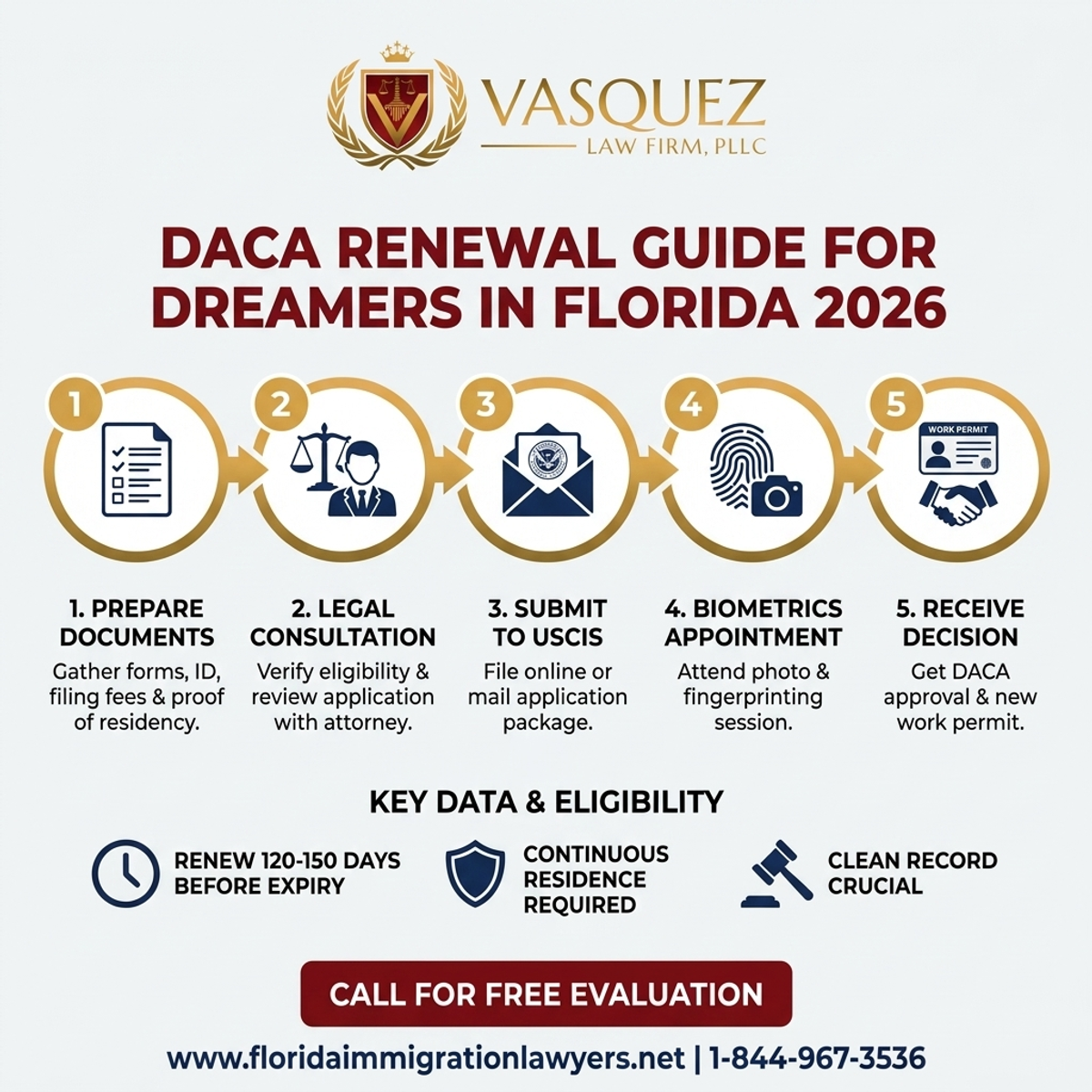
Step-by-Step Process — DACA Renewal Guide for Dreamers in Florida 2026
Document Checklist for DACA Renewal
- Completed Form I-821D
- Form I-765, Application for Employment Authorization
- Two passport-sized photos
- Previous DACA approval notice
- Supporting documents for any new qualifications
- Proof of identity and residency
Beyond the core documents, it's crucial to understand the nuances of each requirement. For instance, the two passport-sized photos must meet specific USCIS guidelines regarding size, background, and facial expression. These guidelines are strictly enforced, and non-compliant photos can lead to delays. Always refer to the USCIS website for the most current photo specifications to avoid rejection.
When it comes to "supporting documents for any new qualifications," think broadly about any changes since your last DACA approval. This could include new educational certificates or diplomas, marriage certificates if you've gotten married, birth certificates of any children born in the U.S., or any documents related to name changes. These documents help USCIS maintain an up-to-date record of your personal circumstances and may be relevant to your continued eligibility. Even if you believe a document is minor, it's often better to include it or consult with an attorney like Florida Immigration Lawyers to determine its relevance.
Proof of identity and residency is also vital. This might include a copy of your birth certificate from your home country, a foreign passport, or a state-issued ID. For residency, utility bills, rental agreements, or school transcripts showing your Florida address can be effective. The goal is to establish a clear and consistent record of your identity and your continuous presence in Florida since your last DACA application. Maintaining a well-organized file of all your immigration documents, both past and present, is a practical tip that will save you considerable time and stress during each renewal cycle.
Timeline and Processing Expectations
Typically, the DACA renewal process takes 4 to 6 months. However, processing times can vary based on current USCIS workload and potential policy changes. Staying informed about the latest immigration news is crucial for understanding possible delays.
While the 4-6 month timeframe is a general guideline, it's essential to understand that these times are estimates and can fluctuate significantly. Factors such as the volume of applications USCIS receives, staffing levels, and any new governmental policies or legal challenges can all impact how quickly your application is processed. For instance, periods of high application volume or major policy announcements often lead to longer processing queues. It is always wise to check the USCIS website's processing times page for the most current information specific to the service center handling DACA renewals.
To mitigate the risk of a gap in your DACA protection and employment authorization, filing within the recommended 120-150 day window is critical. If you file too late, your DACA status might expire before your renewal is approved, potentially leading to a loss of work authorization and even a period of unlawful presence. Should you find yourself nearing the expiration date without having filed, or if your application is taking longer than expected, do not hesitate to contact Florida Immigration Lawyers at 1-844-967-3536. We can assess your situation, inquire with USCIS on your behalf, and provide guidance on any immediate steps you might need to take to protect your status.
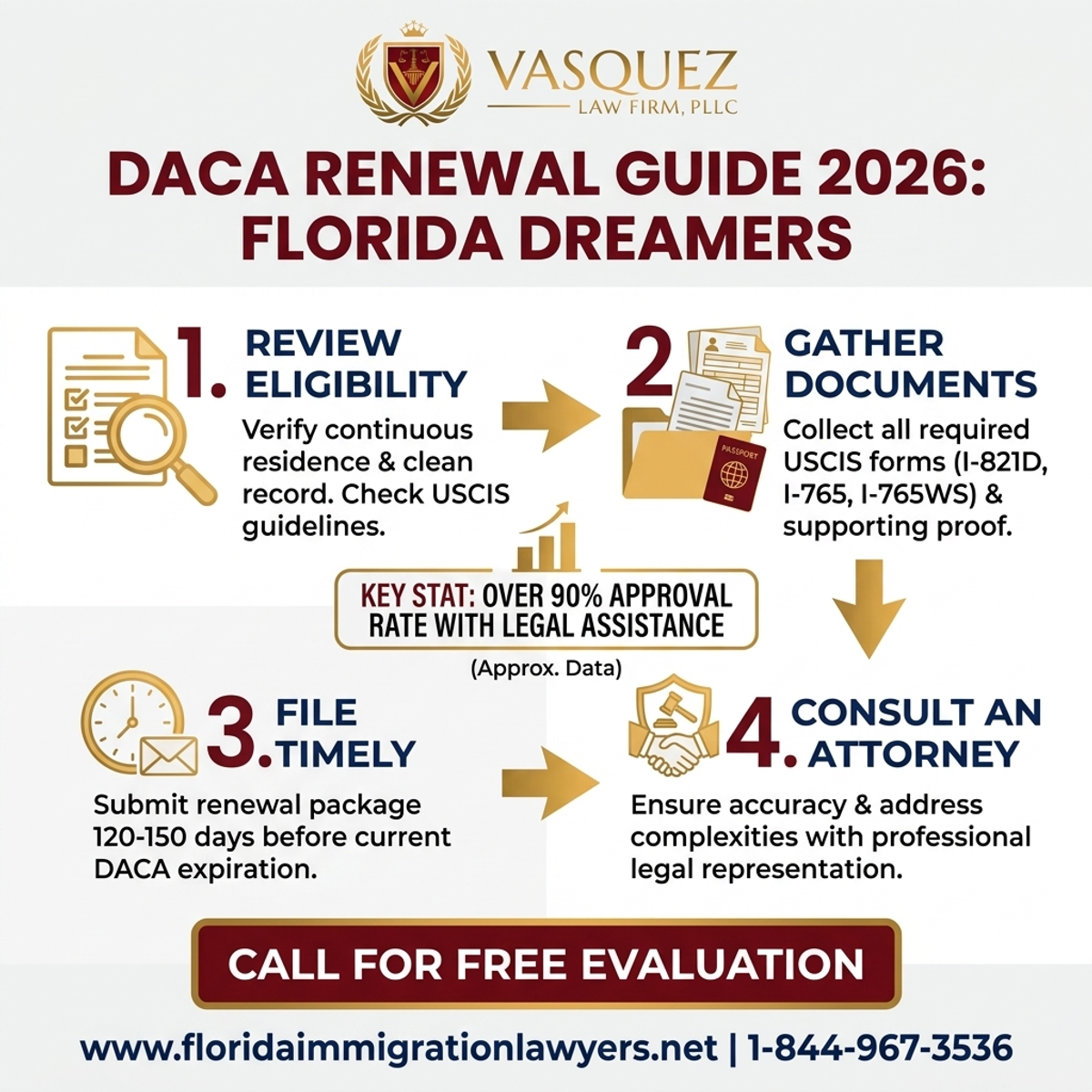
Key Statistics — DACA Renewal Guide for Dreamers in Florida 2026
Cost Factors and Fee Breakdown
The cost of renewing DACA includes the application fee for Form I-821D and Form I-765. While fee waivers are not available for DACA renewals, financial assistance may be available through local organizations in Florida. Consider consulting with Florida Immigration Lawyers for advice on managing renewal costs effectively.
The current combined fee for DACA renewal, which includes Form I-821D (Consideration of Deferred Action for Childhood Arrivals) and Form I-765 (Application for Employment Authorization), is a significant financial commitment for many Dreamers. This fee is subject to change, so it's vital to check the USCIS website or consult with an immigration attorney for the most up-to-date amount before submitting your application. Remember that this fee is non-refundable, even if your application is denied, emphasizing the importance of a complete and accurate submission.
While USCIS does not offer fee waivers for DACA renewals, several non-profit organizations and community groups in Florida are dedicated to assisting DACA recipients with the renewal process, including offering financial aid or low-cost legal services. These organizations often have specific eligibility criteria, so it's recommended to research and contact them well in advance of your renewal deadline. Florida Immigration Lawyers can also provide information on reputable organizations that offer such assistance, helping you explore all available options to manage the renewal costs without added stress.
Do not navigate this process alone. Contact Florida Immigration Lawyers today.
Common Mistakes to Avoid
- Failing to apply early: Missing the renewal window can lead to gaps in protection.
- Inaccurate application details: Errors can result in application denial or delays.
- Not updating address: Ensure your mailing address is current with USCIS.
- Ignoring USCIS notices: Respond promptly to any requests for additional information.
- Forgetting supporting documents: Omissions can lead to processing delays.
- Assuming no legal changes: Stay informed about policy shifts that may affect your status.
- Overlooking legal help: Complex cases may require professional legal assistance.
Let's elaborate on these critical pitfalls. Failing to apply early is perhaps the most common and impactful mistake. If your DACA status expires, you lose your work authorization and are at risk of accumulating unlawful presence, which can have severe long-term immigration consequences. A lapse in DACA can also make future renewals more complicated, potentially requiring you to file as an initial applicant rather than a simple renewal, which has different requirements and higher scrutiny. Always aim for that 120-150 day window before expiration.
Inaccurate application details go beyond simple typos; they can include providing outdated information about your employment, education, or criminal history. Even a minor inconsistency between your current application and previous submissions, or with information USCIS already has on file, can trigger an RFE or even a Notice of Intent to Deny (NOID). Review every section carefully, cross-referencing with your previous application and supporting documents. If you're unsure about how to answer a specific question, especially concerning past interactions with law enforcement or travel, seeking legal counsel from Florida Immigration Lawyers is paramount.
Not updating your address with USCIS is another seemingly small oversight with potentially large consequences. USCIS communicates important updates, RFEs, and approval notices via mail. If your address is incorrect, you could miss critical deadlines or even an approval notice, leading to further complications. Always file Form AR-11, Alien's Change of Address Card, within 10 days of moving, and update your address online through your USCIS account. Similarly, ignoring USCIS notices is a grave error. These notices are time-sensitive; failing to respond promptly to an RFE or other communication can lead to the denial of your application. Always open and read all mail from USCIS immediately and consult with an attorney if you don't understand what is being requested.
When to Call a Lawyer
If your DACA renewal is denied or you face potential deportation proceedings, it is crucial to seek legal advice. Florida Immigration Lawyers can provide guidance on complex cases, including criminal history or previous immigration violations. Contact us if you have questions about eligibility or face unexpected challenges during your renewal process.
Beyond denials or deportation, there are many scenarios where legal counsel can be invaluable during the DACA renewal process. For instance, if you have had any encounters with law enforcement, even minor ones like traffic citations, it's wise to discuss these with an attorney. While some minor infractions may not impact your DACA eligibility, others could. An attorney can help you understand the implications of your record and advise on how to accurately disclose it on your application without jeopardizing your renewal.
Another common situation warranting legal advice is if you have traveled outside the United States without advance parole since your last DACA approval, or if you are considering applying for advance parole. Unauthorized travel can lead to significant immigration issues, including the termination of DACA and potential bars to future immigration benefits. Furthermore, if your personal circumstances have changed dramatically—such as marriage to a U.S. citizen, the birth of U.S. citizen children, or significant changes in your educational or employment status—an attorney can help you understand how these changes might affect your DACA status and whether they open up any new potential pathways for your immigration journey.
Frequently Asked Questions (FAQs) About DACA Renewal
Q: What happens if my DACA expires before I renew?
A: If your DACA expires before your renewal is processed, you will lose your deferred action status and employment authorization. This means you could be at risk of deportation and would no longer be legally authorized to work. It's crucial to file your renewal application within the recommended 120-150 day window before expiration to avoid any gaps in your protection and benefits. If your DACA has already expired, contact Florida Immigration Lawyers immediately for guidance on your specific situation.
Q: Can I travel outside the U.S. with DACA?
A: DACA recipients can travel outside the U.S. only if they have been granted Advance Parole by USCIS before their departure. Traveling without Advance Parole can lead to the termination of your DACA status and may prevent you from re-entering the United States. Advance Parole is typically granted for humanitarian, educational, or employment purposes. Always consult with an immigration attorney before planning any international travel to ensure you meet all requirements and secure the necessary documentation.
Q: What if I have a minor criminal record?
A: Any criminal record, even minor infractions, can potentially impact your DACA eligibility and renewal. While minor traffic violations might not automatically disqualify you, more serious offenses, or even multiple minor offenses, could lead to a denial. It is imperative to disclose all arrests, charges, and convictions accurately on your application. Consulting with Florida Immigration Lawyers is highly recommended to assess the impact of your record and determine the best strategy for your renewal application.
Q: Are there any pathways to permanent residency for DACA recipients?
A: DACA itself does not provide a direct pathway to permanent residency (a green card). However, some DACA recipients may be eligible for a green card through other avenues, such as marriage to a U.S. citizen, employment-based petitions, or through a qualifying family member, provided they meet specific eligibility criteria for those categories. The process can be complex, especially regarding lawful entry. It is essential to consult with an immigration attorney to explore potential options and understand the requirements for each pathway.
Q: How can I find financial assistance for renewal fees?
A: While fee waivers are not available directly from USCIS for DACA renewals, several non-profit organizations and community groups in Florida and nationwide offer financial assistance or grants to help DACA recipients cover the renewal fees. These organizations often have specific application processes and eligibility criteria. Research local immigrant advocacy groups, community foundations, or educational organizations. Florida Immigration Lawyers can also help direct you to reputable resources that may provide financial support for your DACA renewal costs.
About Florida Immigration Lawyers
Florida Immigration Lawyers is a leading firm dedicated to assisting immigrants across Florida. Our experienced attorneys specialize in DACA renewals, asylum, deportation defense, and more. We offer 24/7 availability and free consultations, aiming to provide compassionate and comprehensive legal support. Call 1-844-967-3536 or visit our website at floridaimmigrationlawyers.net to schedule your consultation today.
Sources and References
- U.S. Citizenship and Immigration Services (USCIS)
- Executive Office for Immigration Review (EOIR)
- 8 U.S.C. Chapter 12 - Immigration and Nationality Act
- State Department
Related services: immigration practice areas, family immigration services, citizenship and naturalization.
This article provides general legal information and is not intended as legal advice. Every case is unique, and outcomes depend on specific facts and circumstances. Contact an attorney for advice about your particular situation.
Se Habla Espanol - Estamos aqui para ayudarle.
If you need legal assistance, learn more about immigration case consultation, or call us at 1-844-967-3536 for a free consultation.
Do Not Navigate This Process Alone
Our experienced immigration attorneys are ready to fight for you. Get a free, confidential consultation today.
Se Habla Español
Or leave your details and we’ll call you:
Free Evaluation in 24 Hours
Or talk to us right now
AI voice assistant — available 24/7
FreeFrequently Asked Questions

William J. Vásquez
Founding Attorney · Vasquez Law Firm
U.S. Air Force veteran and immigration attorney with years of hands-on U.S. immigration experience. J.D., NCCU School of Law. AILA member. Admitted to the 4th, 5th, and 11th Circuit Courts.
Available 24/7 - Free Evaluations
Reviewed for legal accuracy by William J. Vásquez
Licensed in North Carolina; U.S. immigration is federal practice.
Related Legal Services
Our Florida immigration attorneys can help you with business immigration, asylum protection and deportation defense. Call today at 1-844-967-3536 for a free consultation.
Related Links
Related Topics
Free Legal Consultation
Discuss your case with our experienced attorneys. We're available 24/7.
Se Habla Español - Estamos aquí para ayudarle.
Related Articles
Stem OPT Immigration Lawyer: 2026 Florida Guide
For F-1 students in Florida, the STEM OPT extension offers a vital 24-month work authorization after their initial OPT. This guide, updated for 2026, covers eligibility, the step-by-step application process, required documents, and critical timelines. Graduates from Florida universities in STEM fields must navigate strict USCIS regulations, including the E-Verify employer requirement. Learn how to avoid common mistakes and when to seek professional legal assistance from a dedicated stem OPT immigration lawyer to ensure a successful application and continued career growth in the U.S. Florida Immigration Lawyers offers expert guidance for students across the state.
Dual Citizenship Lawyer: Navigating Delays in Florida
Facing citizenship delays in Florida can be challenging, but understanding the process and knowing your options is key. Learn how a dual citizenship lawyer can assist you in navigating N-400 processing and USCIS backlogs in Hialeah.
"ina § 208(a)(2)" One-Year Filing Deadline: Florida Asylum
Discover the importance of the "ina § 208(a)(2)" one-year filing deadline for asylum seekers in Florida. Learn about the steps, documents needed, and common mistakes to avoid in your asylum application process.
DV-2027 Registration Period: Your Green Card Lottery Guide
The DV-2027 Diversity Visa (DV) lottery offers a unique pathway to permanent residency for individuals from countries with historically low immigration rates to the U.S. Expected to open in Fall 2025, the registration period requires strict adherence to eligibility criteria, including country of birth and specific education or work experience. This guide from Florida Immigration Lawyers covers the step-by-step application process, essential documents, critical timelines, and associated costs. We highlight common mistakes to avoid and explain when legal counsel is indispensable, especially for residents in Florida. Understanding the nuances of the green card lottery is vital for a successful application. Contact us for expert guidance on your DV-2027 journey.