Credible Fear Interview Lawyer in Florida 2026
A credible fear interview (CFI) is a crucial step for individuals in Florida facing expedited removal who express a fear of persecution or torture if returned to their home country. This interview, conducted by a USCIS Asylum Officer, determines if there's a "significant possibility" you could establish eligibility for asylum or other protection. A positive finding leads to a hearing before an Immigration Judge, while a negative one can result in swift deportation. The process involves apprehension by immigration authorities, expressing fear, referral to an Asylum Officer, and the interview itself. Documents like identity papers, evidence of persecution, and a personal statement can strengthen your claim. Understanding the questions, maintaining consistency, and avoiding common mistakes are vital. While there are no direct USCIS fees for the CFI, legal representation is highly recommended and comes with associated costs. Florida Immigration Lawyers offers expert guidance, helping you navigate this complex process, prepare effectively, and advocate for your rights. If you or a loved one are preparing for a CFI, contact us immediately for a free case review.
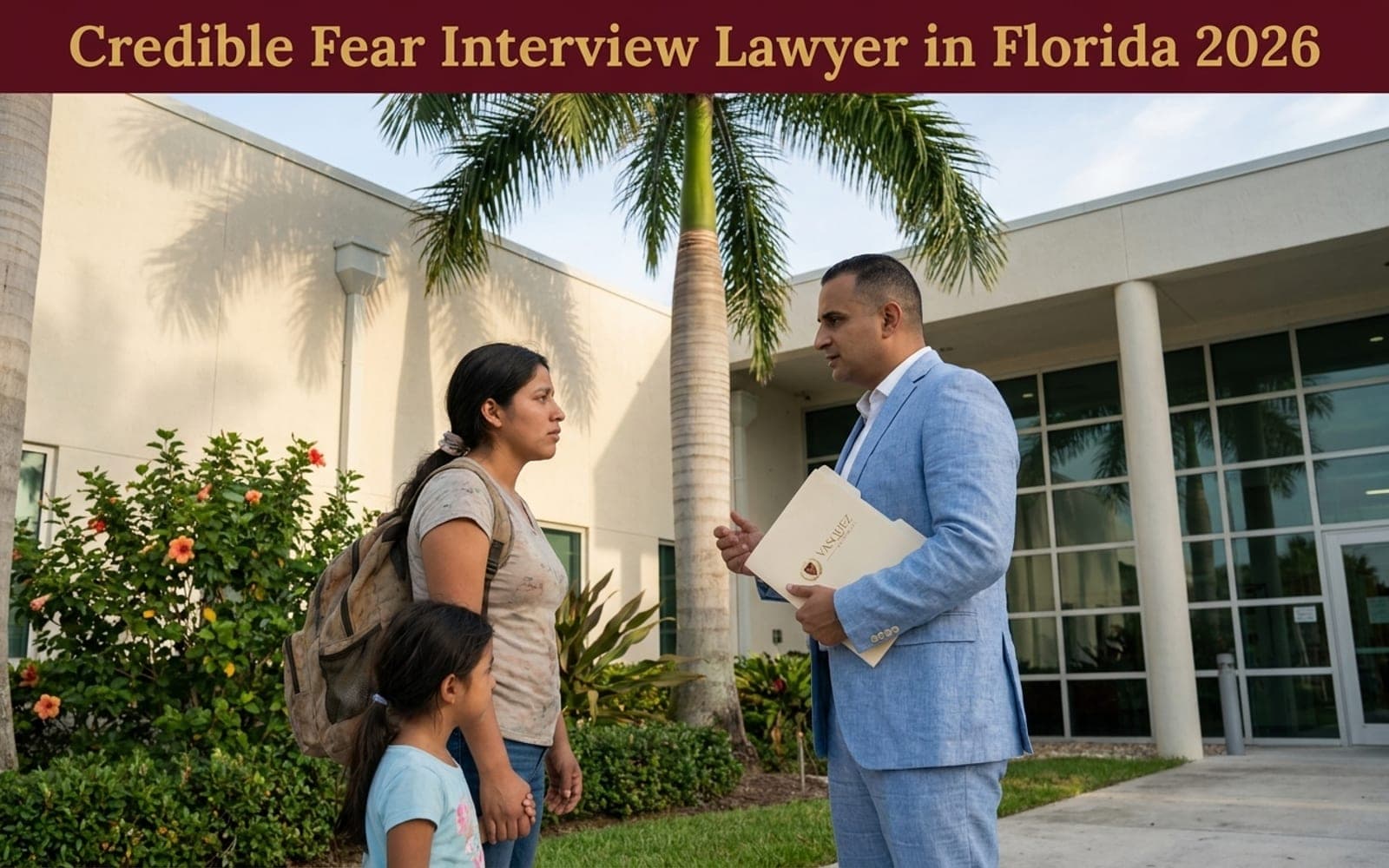
A credible fear interview (CFI) is a critical step for individuals apprehended at the border or within the U.S. who claim a fear of persecution or torture if returned to their home country. Conducted by a USCIS Asylum Officer, its purpose is to determine if an individual has a "significant possibility" of establishing eligibility for asylum or protection under the Convention Against Torture. If a positive credible fear finding is made, the individual is referred to an immigration judge for full asylum proceedings. Preparation with a knowledgeable immigration lawyer, especially in Florida where many such cases arise, is vital to present a compelling case and avoid expedited removal.
- The CFI determines if you have a significant possibility of an asylum claim.
- It's for individuals in expedited removal proceedings.
- A positive finding leads to a hearing before an Immigration Judge.
- Legal representation significantly improves preparation and outcomes.
- Florida's geographic location makes it a common entry point for these cases.
Introduction: Navigating Your Credible Fear Interview in Florida
For individuals seeking safety in the United States, the prospect of returning to their home country can be terrifying. If you have arrived in Florida, or anywhere in the U.S., and expressed a fear of persecution or torture upon return, you will likely face a credible fear interview. This interview, often conducted by a USCIS Asylum Officer, is a pivotal moment that determines whether you can pursue your claim for asylum or other forms of protection before an Immigration Judge, or if you will be subject to expedited removal from the U.S.
The credible fear process is complex and fraught with potential pitfalls, especially when you are often detained, disoriented, and unfamiliar with U.S. immigration law. Understanding the purpose of the interview, knowing what questions to expect, and being prepared to articulate your fears clearly and consistently are paramount to securing a positive outcome. This comprehensive guide will walk you through the essential aspects of the credible fear interview process in Florida, offering insights and practical advice to help you prepare effectively. From understanding the legal standards to gathering necessary documentation, we aim to demystify this critical stage of your immigration journey.
Do not navigate this challenging process alone. If you or a loved one are preparing for a credible fear interview in Florida, call Florida Immigration Lawyers at 1-844-967-3536 for a free case review. Our experienced attorneys are ready to provide the guidance and support you need.
What is a Credible Fear Interview and Why is it Important in Florida?
A credible fear interview is an initial screening conducted by a USCIS Asylum Officer for individuals in expedited removal proceedings who express a fear of returning to their home country. Its importance cannot be overstated: it is the gateway to seeking asylum or protection under the Convention Against Torture (CAT). Without a positive credible fear finding, individuals are typically subject to immediate removal from the United States, often without the opportunity to present their case before an immigration judge.
The legal basis for the credible fear interview stems from Section 235(b)(1)(B) of the Immigration and Nationality Act (INA), which outlines procedures for expedited removal. This process applies to non-citizens who arrive in the U.S. without proper documentation or who are found inadmissible within two years of entry. Florida, with its extensive coastline and international airports, is a primary point of entry for many individuals seeking refuge, making the credible fear interview a frequent and crucial procedure in the state. An Asylum Officer must determine if there is a "significant possibility" that the applicant could establish eligibility for asylum or CAT protection. This standard, though seemingly lower than the burden of proof for a full asylum claim, still requires a coherent and compelling narrative of fear and persecution. A positive finding allows you to proceed to an immigration court hearing, while a negative one can lead to swift deportation unless challenged.
How Does the Credible Fear Process Work in Florida?
The credible fear process in Florida typically begins after an individual is apprehended by U.S. Customs and Border Protection (CBP) or Immigration and Customs Enforcement (ICE) and expresses a fear of returning to their country. Following this expression of fear, the individual is referred to a USCIS Asylum Officer for a credible fear interview.
Here's a step-by-step guide to how the credible fear process generally unfolds in Florida:
-
Apprehension and Expedited Removal Proceedings: An individual is typically apprehended by immigration authorities (CBP at a port of entry or ICE within the U.S.) and placed into expedited removal proceedings under INA Section 235(b)(1). This means they are subject to quick deportation unless they can demonstrate a fear of return.
-
Expression of Fear: During initial questioning, the individual must clearly articulate a fear of persecution or torture if returned to their country of origin. This expression triggers the credible fear process.
-
Referral to USCIS Asylum Officer: Once a fear is expressed, immigration officers are required to refer the individual to a USCIS Asylum Officer for a credible fear interview. This referral is mandatory and ensures the individual has an opportunity to present their claim.
-
Detention and Preparation: Most individuals undergoing the credible fear process in Florida are detained, often at facilities like the Krome Service Processing Center in Miami-Dade County, the Baker County Detention Center, or the Glades County Detention Center. During this time, access to legal counsel is crucial for preparing for the interview.
Step-by-Step Process — Credible Fear Interview Lawyer in Florida 2026
-
The Credible Fear Interview (CFI): The interview itself is conducted by a USCIS Asylum Officer, typically at the detention facility or a USCIS Asylum Office (e.g., the Miami Asylum Office serves the entire state of Florida for these purposes). The officer will ask detailed questions about the basis of the individual's fear, their experiences in their home country, and why they believe they would be persecuted or tortured.
-
CFI Decision: After the interview, the Asylum Officer makes a determination. A positive credible fear finding means the individual has demonstrated a "significant possibility" of establishing an asylum claim. This leads to release from detention (often on bond) and referral to an Immigration Judge for full asylum proceedings. A negative credible fear finding means the officer determined there was no significant possibility, leading to continued detention and expedited removal.
-
Immigration Judge Review (if negative): If the Asylum Officer issues a negative finding, the individual has the right to request a prompt review of that decision by an Immigration Judge (IJ) at an immigration court, such as the Orlando Immigration Court or the Miami Immigration Court. This review must be requested within seven days of the negative finding. The IJ will then affirm or overturn the Asylum Officer's decision.
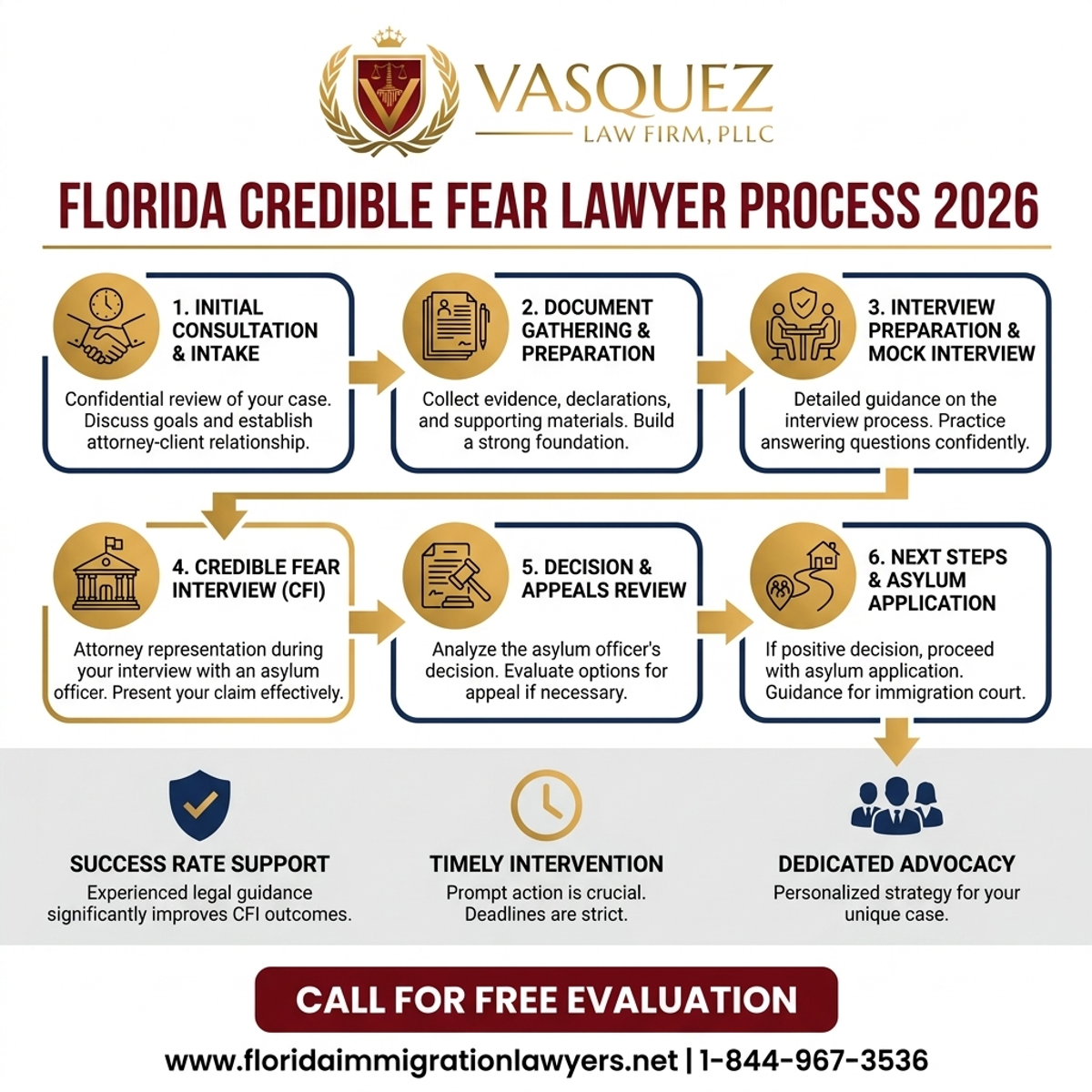
Throughout this process, the guidance of an experienced asylum lawyer is invaluable. They can help prepare you for questioning, gather evidence, and advocate on your behalf to ensure your fear is properly understood and documented.
What Documents and Evidence Do I Need for a Credible Fear Interview?
While the credible fear interview is not a full asylum hearing, presenting any available documents and evidence can significantly strengthen your claim. Even limited documentation can help establish your identity, nationality, and the basis of your fear. The Asylum Officer is looking for a consistent and believable narrative supported by facts.
Here is a checklist of documents and types of evidence that can be helpful, even if you only have some of them:
- Identity Documents: Passport, national ID card, birth certificate, driver's license from your home country.
- Travel Documents: Any tickets, visas, or other papers related to your journey to the U.S.
- Evidence of Persecution:
- Police reports, court documents, or other official records related to incidents of harm or threats.
- Medical records or psychological evaluations documenting injuries or trauma from persecution.
- Photographs, videos, or audio recordings related to your persecution or the conditions in your home country.
- Letters, emails, or messages from family, friends, or organizations corroborating your claims.
- News articles, human rights reports, or country condition reports from reputable sources that describe the general situation or specific events related to your fear.
- Personal Statement: A written account in your own words describing your fear, the persecution you've faced, and why you believe you cannot return safely.
- Witness Statements/Affidavits: Sworn statements from individuals who witnessed your persecution or can attest to your fear.
- Membership Documentation: Proof of membership in any social, political, religious, or other groups that are targeted in your home country.
It's important to note that many individuals arrive in the U.S. with very few documents due to the circumstances of their flight. The absence of extensive documentation does not automatically mean a negative credible fear finding. However, any documents you can provide, even if unofficial, should be presented. If documents are not in English, it is advisable to have them translated, although the Asylum Officer can often work with untranslated documents at this initial stage. Always discuss what you have with your immigration lawyer.
What to Expect During Your Credible Fear Interview in 2026?
The credible fear interview is a formal, non-adversarial process, but it is still an interrogation about deeply personal and often traumatic experiences. As of 2026, the interview typically takes place in a private setting, either at a detention facility or a USCIS Asylum Office, such as the one in Miami that serves Florida. An Asylum Officer will conduct the interview, and you will be provided with an interpreter if you do not speak English. While attorneys are generally permitted to be present, their role is usually limited to clarifying questions and consulting with the client, not directly answering on their behalf.
The Asylum Officer's goal is to understand the basis of your fear and determine if there is a "significant possibility" you could establish eligibility for asylum or other protection. They will ask detailed questions about your personal history, your experiences in your home country, the specific reasons you fear returning, and any threats or harm you have suffered. They will also inquire about your journey to the U.S. and whether you have any criminal history. Honesty and consistency are crucial. Any discrepancies in your story could undermine your credibility. It is vital to articulate your fear clearly, explaining why you fear persecution and who you fear it from, relating it to one of the five protected grounds for asylum (race, religion, nationality, political opinion, or membership in a particular social group) or to torture as defined by the Convention Against Torture. The interview can be emotionally taxing, and it is important to take your time, ask for clarification if needed, and answer truthfully to the best of your ability.
Credible Fear Interview Timeline and Processing Expectations (As of 2026)
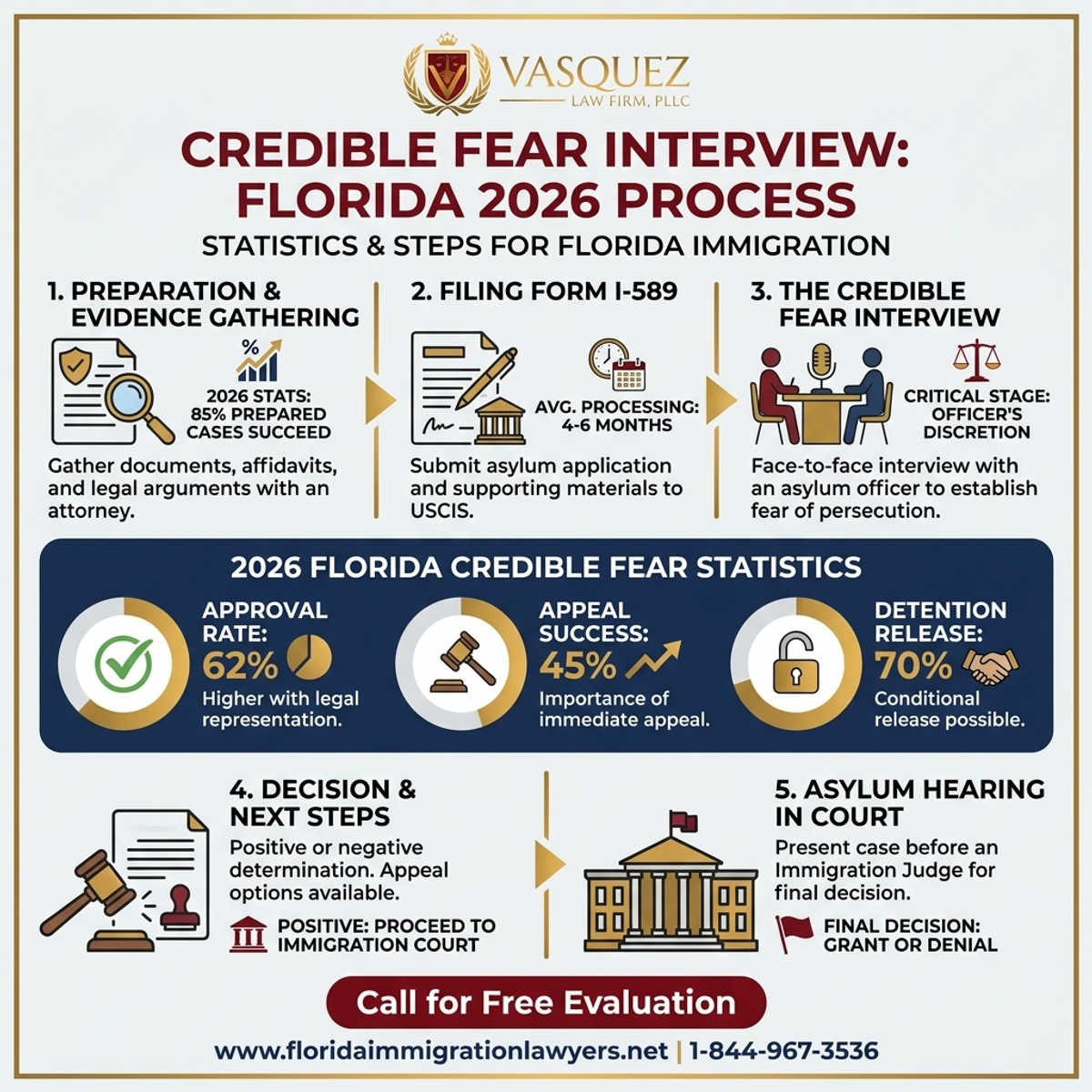
Understanding the typical timeline for the credible fear process can help manage expectations, though individual cases may vary significantly based on detention status, caseloads, and other factors. As of 2026, USCIS aims for prompt processing, especially for detained individuals.
Key Statistics — Credible Fear Interview Lawyer in Florida 2026
| Stage | Typical Timeframe (As of 2026) | Notes |
|---|---|---|
| Apprehension to CFI Referral | 1-5 days | Can be very quick, especially if fear is expressed immediately. |
| CFI Scheduling | 5-10 days post-referral | Prioritized for detained individuals. |
| CFI Decision | 1-3 days post-interview | Asylum Officer aims for a prompt determination. |
| Immigration Judge Review (if negative) | Within 7 days of negative decision | Applicant must request review. IJ decision usually within 24 hours. |
| Referral to Immigration Court (if positive) | Varies, can be weeks to months | Depends on court backlog and detention status. |
Understanding Credible Fear Interview Costs and Legal Fees
One of the most common questions individuals have is about the cost associated with the credible fear interview process. It's important to clarify that there is no direct filing fee charged by USCIS for the credible fear interview itself. The government conducts these interviews as part of its statutory obligation to screen individuals for fear of persecution. However, while the interview is free, the overall process can incur costs, primarily related to legal representation, which is highly recommended.
Legal fees for credible fear interview preparation and representation can vary significantly depending on several factors. These include the complexity of your case, the attorney's experience and reputation, the amount of time required for preparation, and whether the attorney will be present during the interview (which is permitted but not always feasible or necessary for all cases). Some firms offer flat fees for CFI preparation, while others charge hourly rates. It's crucial to have a clear understanding of the fee structure upfront. Investing in legal counsel, particularly from a Florida immigration lawyer familiar with the local USCIS Asylum Office and immigration courts, can be invaluable. This investment can dramatically increase your chances of a positive credible fear finding, saving you from potential expedited removal and opening the door to pursuing asylum in immigration court.
Typical Fee Breakdown for Credible Fear Interview Legal Services (As of 2026)
Here's an estimated breakdown of costs you might encounter when seeking legal assistance for your credible fear interview, as of 2026:
| Item | Typical Fee (As of 2026) | Notes |
|---|---|---|
| USCIS Filing Fee (for CFI) | $0 | No direct government fee for the interview itself. |
| Initial Legal Consultation | Free - $300 | Many firms, like Florida Immigration Lawyers, offer free case reviews. |
| CFI Preparation (Attorney) | $1,500 - $5,000+ | Flat fee or hourly, depending on case complexity and attorney involvement. |
| Representation at CFI | $500 - $2,000+ | If the attorney is present during the actual interview. |
| Immigration Court Review (if negative CFI) | $2,000 - $7,000+ | Separate fees for legal services during the Immigration Judge review. |
It's important to remember that these are estimates, and actual costs can vary. Always discuss fees and payment plans directly with your chosen legal counsel. Many firms understand the financial hardships faced by asylum seekers and may offer flexible payment options.
Do not navigate this process alone. Contact Florida Immigration Lawyers today at 1-844-967-3536 for a free case review and to discuss your options.
Common Mistakes to Avoid During Your Credible Fear Interview
The credible fear interview is a high-stakes process where even seemingly small errors can have significant consequences. Avoiding common pitfalls is essential for a positive outcome.
-
Failing to Express Fear Clearly: If you do not explicitly state your fear of returning to your country, you may not be referred for a CFI at all. Always articulate your fear of persecution or torture clearly to any immigration official.
-
Inconsistency in Your Story: Providing different details about key events or reasons for your fear at different stages (e.g., to CBP, then to the Asylum Officer) can severely damage your credibility. Practice recounting your story truthfully and consistently.
-
Lack of Specificity: General statements like "my country is dangerous" are insufficient. You must provide specific details about who persecuted you, how, and why, linking it to a protected ground (race, religion, nationality, political opinion, or particular social group).
-
Not Disclosing All Relevant Information: Holding back details, even if they seem minor or embarrassing, can be detrimental. The Asylum Officer needs a full picture of your experiences. Anything you omit and later reveal could be seen as an attempt to mislead.
-
Arriving Unprepared: Believing you can "wing it" is a serious mistake. Without preparation, you might struggle to recall details under pressure, articulate your fear effectively, or remember key dates and events. Preparation is key to presenting a coherent narrative.
-
Not Requesting an Interpreter (or accepting a poor one): If you do not speak English fluently, you have the right to a competent interpreter. Do not proceed with the interview if you cannot understand the interpreter or feel they are misrepresenting your answers. Politely request a different interpreter.
-
Failing to Request IJ Review: If you receive a negative credible fear finding, you have a limited window (seven days) to request a review by an Immigration Judge. Missing this deadline means you forfeit your right to challenge the decision and face almost certain expedited removal.
-
Not Seeking Legal Counsel: Attempting to navigate the CFI process without an attorney is perhaps the biggest mistake. An experienced deportation defense lawyer can help you prepare, understand the legal standards, and ensure your rights are protected.
When to Call a Credible Fear Interview Lawyer in Florida
The decision to seek legal counsel for a credible fear interview is not just advisable; it is often crucial for a successful outcome. You should contact a credible fear interview lawyer in Florida immediately if you or a loved one:
- Have been apprehended by immigration authorities (CBP or ICE) in Florida, particularly in or around Orlando, and have expressed a fear of returning to your home country.
- Are currently detained in a Florida facility (such as Krome, Baker, or Glades) and are awaiting or preparing for a credible fear interview.
- Have received a Notice to Appear (NTA) and believe you may be eligible for asylum or other forms of relief.
- Are unsure how to articulate your fear of persecution or torture to an Asylum Officer.
- Have suffered traumatic experiences and find it difficult to discuss them coherently.
- Need assistance gathering evidence or preparing a personal statement to support your claim.
- Have received a negative credible fear finding and need to request an Immigration Judge review within the strict seven-day deadline.
- Are confused about the legal standards for credible fear or asylum and need clear guidance.
An experienced immigration lawyer from Florida Immigration Lawyers can help you understand the specific requirements under INA 235(b)(1)(B) and 8 CFR 208.30, prepare you thoroughly for the interview, and advocate for your rights, significantly increasing your chances of a positive outcome. We understand the unique challenges faced by immigrants in Florida and are dedicated to providing compassionate and effective legal representation.
About Florida Immigration Lawyers
Florida Immigration Lawyers is a leading immigration law firm dedicated to serving individuals and families across the entire state of Florida. With a deep understanding of the complexities of U.S. immigration law and a commitment to compassionate client service, our firm stands ready to assist you with all your immigration needs, including credible fear interviews, asylum claims, deportation defense, family immigration, and citizenship applications. Our experienced attorneys provide personalized legal strategies tailored to your unique situation, ensuring you receive the highest level of advocacy.
Located in Central Florida, our team offers comprehensive legal support, available 24/7 for free case reviews. We pride ourselves on our bilingual services, ensuring that all clients, regardless of their native language, can communicate effectively and understand every step of their legal journey. When your future in the United States is at stake, choose Florida Immigration Lawyers for dedicated, knowledgeable, and empathetic representation. Schedule a free consultation today.
Sources and References
- U.S. Citizenship and Immigration Services (USCIS)
- Executive Office for Immigration Review (EOIR)
- U.S. Department of State
- Immigration and Nationality Act (INA) Section 235(b)(1)(B) - Inspection of Aliens; Expedited Removal
- 8 Code of Federal Regulations (CFR) 208.30 - Credible Fear of Persecution
- 8 U.S.C. Chapter 12 - Immigration and Nationality Act
Related services: immigration waivers, humanitarian protection programs, DACA renewal and applications, temporary protected status (TPS).
This article provides general legal information and is not intended as legal advice. Every case is unique, and outcomes depend on specific facts and circumstances. Contact an attorney for advice about your particular situation.
Contact Florida Immigration Lawyers Today
Your credible fear interview is a critical moment in your journey towards safety and stability in the United States. Do not face it without skilled legal representation. The dedicated team at Florida Immigration Lawyers is here to provide the expert guidance and support you need. We offer free case reviews and are available 24/7 to answer your questions and help you prepare thoroughly. Call us today at 1-844-967-3536 to discuss your case. Se Habla Español - Estamos aqui para ayudarle.
Do Not Navigate This Process Alone
Our experienced immigration attorneys are ready to fight for you. Get a free, confidential consultation today.
Se Habla Español
Or leave your details and we’ll call you:
Free Evaluation in 24 Hours
Or talk to us right now

AI voice assistant — available 24/7
FreeFrequently Asked Questions

William J. Vásquez
Founding Attorney · Vasquez Law Firm
U.S. Air Force veteran and immigration attorney with years of hands-on U.S. immigration experience. J.D., NCCU School of Law. AILA member. Admitted to the 4th, 5th, and 11th Circuit Courts.
Available 24/7 - Free Evaluations
Reviewed for legal accuracy by William J. Vásquez
Licensed in North Carolina; U.S. immigration is federal practice.
Related Legal Services
Our Florida immigration attorneys can help you with deportation defense, family immigration services and immigration lawyer cost in Florida. Call today at 1-844-967-3536 for a free consultation.
Related Links
Related Topics
Free Legal Case Review
Discuss your case with our experienced attorneys. We're available 24/7.
Se Habla Español - Estamos aquí para ayudarle.
Related Articles
Immigration Lawyer Orlando Free Consultation in Florida
For individuals and families in Orlando, Florida, navigating the complexities of U.S. immigration law requires expert guidance. An immigration lawyer in Orlando offers crucial support for everything from visa applications and green card processes to naturalization and deportation defense. This comprehensive guide details what a free consultation covers, providing a step-by-step overview of immigration pathways, essential document checklists, and expected timelines in 2026. We also highlight common mistakes to avoid, discuss the critical role of legal counsel in deportation and asylum cases, and explain why choosing a local Orlando immigration attorney is beneficial. Florida Immigration Lawyers is dedicated to serving the diverse community of Orlando with compassionate, effective legal solutions, ensuring you receive personalized advice and robust representation for a successful immigration journey.
H-4 EAD Spouse Work Permit Rules in Florida 2026
For H-1B visa holders in Florida, the H-4 EAD is a vital work authorization for their spouses, enabling them to pursue careers and contribute to family income. This comprehensive guide for 2026 details eligibility requirements, which include the H-1B spouse having an approved Form I-140 or an H-1B extension under AC21. We cover the step-by-step application process for Form I-765, including necessary documents like marriage certificates and I-94 records. The article also provides insights into typical processing times, which can range from 5 to 12 months, and a breakdown of associated costs, including USCIS fees and potential legal expenses. We highlight common mistakes to avoid, such as incorrect eligibility categories or late renewals, and emphasize the importance of maintaining H-4 status. Understanding these rules ensures H-1B families in Florida can navigate the H-4 EAD process smoothly, fostering financial independence and professional growth for spouses.
Immigration Interview Preparation in Florida 2026 Guide
For individuals and families across Florida, the immigration interview is a critical step towards achieving permanent residency or citizenship. This comprehensive guide details crucial aspects of immigration interview preparation in Florida, including understanding the purpose of USCIS interviews, a step-by-step guide to preparation, a detailed document checklist, and typical processing timelines as of 2026. We also cover cost factors, common questions asked, and vital mistakes to avoid. Whether your interview is for a green card, adjustment of status, or naturalization, meticulous preparation is key. Learn how to organize your documents, practice your answers, and understand when legal representation from Florida Immigration Lawyers can make a significant difference in your case. Our goal is to empower you with the knowledge to approach your interview with confidence and clarity.
221(g) Visa Denial & Consular Return in Florida 2026
A 221(g) visa denial is a temporary refusal, not a final rejection, indicating that your application requires additional documents or administrative processing before a final decision. For individuals in Florida, understanding this specific type of consular processing is crucial. This comprehensive guide explains the reasons behind a 221(g) notice, outlines the step-by-step process for responding, details what to expect during administrative processing, and discusses potential outcomes and associated costs. We cover common mistakes to avoid and highlight when expert legal assistance from Florida Immigration Lawyers can be invaluable. Our firm is dedicated to helping you navigate the complexities of immigration law, providing strategic guidance and advocacy to address your 221(g) denial and pursue a successful resolution. Contact us for a free case review and let our experienced team assist you.