Consular Processing for Florida Immigrant Visa Applicants
Learn about consular processing for Florida immigrant visa applicants, key steps, and common pitfalls. For assistance, contact Florida Immigration Lawyers.

Consular processing is a critical step for Florida residents seeking an immigrant visa. It involves applying at a U.S. embassy or consulate outside the U.S. Key steps include completing the DS-260, attending an embassy interview, and submitting required documents. Successful processing can lead to an immigrant visa.
- Apply at a U.S. embassy or consulate.
- Complete form DS-260.
- Attend your interview.
- Submit required documents.
Introduction
Imagine you live in Tampa, Florida, and dream of reuniting with your family in the U.S. through an immigrant visa. The process known as consular processing is essential for many like you. This article covers the steps involved, timelines, and common pitfalls to avoid when going through consular processing. For personalized assistance, call Florida Immigration Lawyers at 1-844-967-3536 for a free consultation.
For many Florida residents sponsoring relatives or employees from abroad, consular processing is the primary route to achieving their immigration goals. It's a complex journey, but with the right guidance, it can lead to a successful outcome, allowing loved ones to join you in the Sunshine State. Understanding each phase, from the initial petition to the final visa interview, is crucial for a smooth application process.
This comprehensive guide aims to demystify consular processing, providing detailed insights into what to expect, how to prepare, and how to proactively address potential challenges. Whether you're in Miami, Orlando, or Jacksonville, the principles remain the same, and careful preparation is your best ally. Remember, professional legal support from Florida Immigration Lawyers can make a significant difference in navigating these intricate requirements.
Understanding Consular Processing
Consular processing is the pathway for obtaining an immigrant visa through a U.S. embassy or consulate abroad. It's a crucial process for applicants residing in Florida who have received sponsorship from a family member or employer. This method involves several steps, from the initial application to the final interview.
Unlike adjustment of status, which allows eligible individuals already in the U.S. to obtain lawful permanent residency without leaving the country, consular processing is specifically designed for those who are outside the United States or are ineligible for adjustment of status. This means the applicant must attend their visa interview and receive their immigrant visa at a U.S. embassy or consulate in their home country or country of last residence.
This process is foundational for countless families and employers in Florida who wish to bring foreign nationals into the U.S. permanently. It ensures that all applicants meet the strict eligibility requirements set forth by U.S. immigration law, including health, security, and financial criteria, before they are granted entry as lawful permanent residents. Navigating these requirements effectively is key to a successful outcome.
The Role of the National Visa Center (NVC)
Once your petition is approved by USCIS, it is forwarded to the National Visa Center (NVC). The NVC plays a pivotal role in preparing your case for the embassy interview, ensuring all necessary documentation is complete and fees are paid.
The NVC acts as a central hub, facilitating communication between USCIS, the visa applicant, and the U.S. embassy or consulate. They are responsible for collecting all required civil documents, such as birth certificates, marriage certificates, police records, and financial support documents, as well as the Immigrant Visa Application (DS-260) and Affidavit of Support (I-864) fees. This pre-processing helps streamline the interview stage.
This stage is critical for preventing delays. The NVC will review all submitted documents for completeness and accuracy. If anything is missing or incorrect, they will send a request for additional information, which can extend the processing time. Proactive and meticulous submission of all required paperwork at this stage, often with the assistance of a knowledgeable attorney from Florida Immigration Lawyers, can significantly expedite your case.
Step-by-Step Guide to Consular Processing
- Petition Approval: Begin with an approved I-130 or I-140 petition.
- Case Assignment: Your case moves to the NVC for processing.
- Submit DS-260: Complete the online immigrant visa application form DS-260.
- Gather Documents: Prepare civil documents like birth certificates, police records, and financial evidence.
- Pay Fees: Pay the required immigrant visa and affidavit of support fees.
- Attend Interview: Attend the scheduled visa interview at the U.S. embassy or consulate.
- Receive Decision: Wait for the visa decision. If approved, you will receive your visa and a sealed packet to present at the U.S. port of entry.
The journey through consular processing is a structured path, designed to ensure thorough vetting of all immigrant visa applicants. Each step is interconnected, and successfully completing one stage is essential before moving to the next. For instance, the initial petition approval (Form I-130 for family-based or I-140 for employment-based) is the bedrock of your application, confirming your eligibility for a visa category.
Once the NVC takes over, their role is to ensure all administrative prerequisites are met before your case is sent to the consulate. This includes the meticulous collection and review of your DS-260 application and supporting civil documents. A common real-world scenario involves applicants submitting documents without proper translations or certifications, leading to NVC requesting additional evidence and causing significant delays. Ensuring every document is correctly prepared and translated, if necessary, is a practical tip that can save months.
The interview is the culmination of this extensive preparation. It's your opportunity to demonstrate your eligibility and intent to the consular officer. Preparing thoroughly, understanding the questions you might be asked, and having all original documents organized are vital. For example, a family-based applicant might be asked about the legitimacy of their marriage, requiring them to present photos, joint bank statements, and other evidence of a bona fide relationship. Florida Immigration Lawyers can provide invaluable interview preparation, ensuring you feel confident and ready.
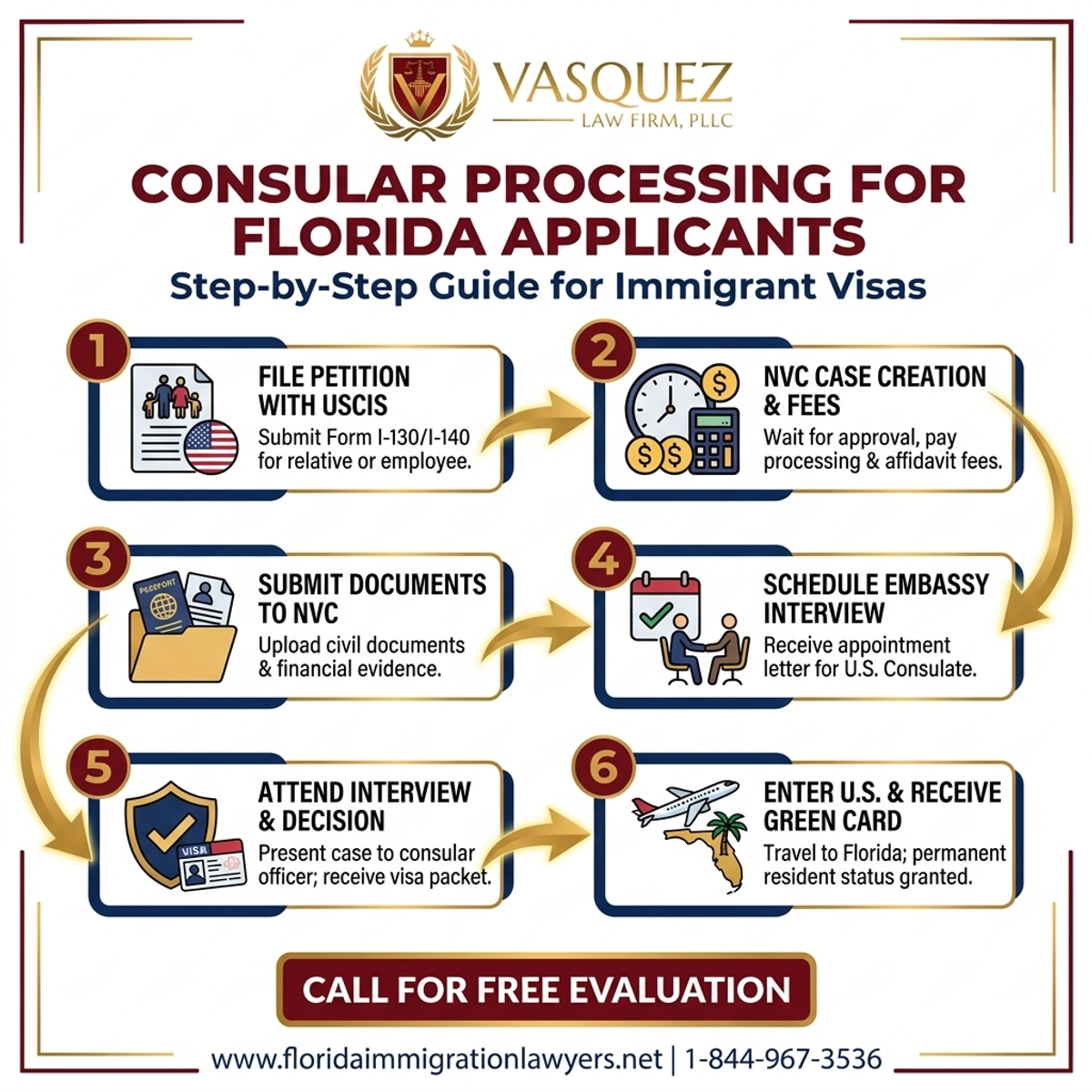
Step-by-Step Process — Consular Processing for Florida Immigrant Visa Applicants
Document Checklist for Consular Processing
- Valid passport
- DS-260 confirmation page
- Affidavit of Support (Form I-864)
- Two passport-sized photographs
- Civil documents (birth certificate, marriage certificate, etc.)
- Visa fee receipt
The importance of a complete and accurate document submission cannot be overstated in consular processing. Each document serves a specific purpose, verifying identity, eligibility, and financial support. For instance, your valid passport not only confirms your identity but also serves as the travel document where your immigrant visa will be affixed. The DS-260 confirmation page proves you have submitted your online application correctly.
The Affidavit of Support (Form I-864) is particularly critical, as it assures the U.S. government that the immigrant will not become a public charge. This form requires detailed financial information from the petitioner and, if applicable, a joint sponsor. A common scenario involves a petitioner in Florida who doesn't meet the income requirements; in such cases, a qualified joint sponsor becomes essential. Ensuring all financial documents, like tax returns and employment letters, are up-to-date and accurately reflect the sponsor's income is paramount.
Beyond the listed items, applicants should also prepare police certificates from all countries where they have lived for more than six months since age 16, military records, and court and prison records if applicable. For medical examinations, remember that this must be conducted by an authorized panel physician, and the results are typically sent directly to the embassy. Organizing all these documents meticulously in a binder or folder, with clear labels, can significantly ease the interview process and demonstrate your preparedness to the consular officer.
Timeline and Processing Expectations
Consular processing timelines can vary. Generally, after USCIS approval, NVC processing can take several months. The embassy interview scheduling depends on the consulate's workload. In Tampa, applicants typically wait 6-12 months from petition approval to visa issuance.
It's important to understand that the "6-12 months" estimate for Florida applicants refers to the overall journey from petition approval to visa issuance, assuming all steps proceed smoothly. However, several factors can influence this timeline, including the specific visa category (e.g., immediate relative vs. preference categories), the country where the interview will take place, the volume of applications at that particular consulate, and the applicant's responsiveness to NVC requests.
For example, a visa applicant from a country with high demand or limited consular staff might experience longer wait times for an interview slot. Conversely, a well-prepared case with all documents submitted promptly and accurately can move through the NVC stage relatively quickly. Tracking your case status online through the NVC's Public Inquiry Form and staying in close communication with Florida Immigration Lawyers can help manage expectations and address potential delays proactively.
Moreover, unexpected global events or changes in immigration policy can also impact processing times. It's advisable to factor in potential delays and avoid making irreversible plans, such as resigning from a job or selling property, until the visa is actually issued. Patience and meticulous adherence to instructions are key virtues during this lengthy process.
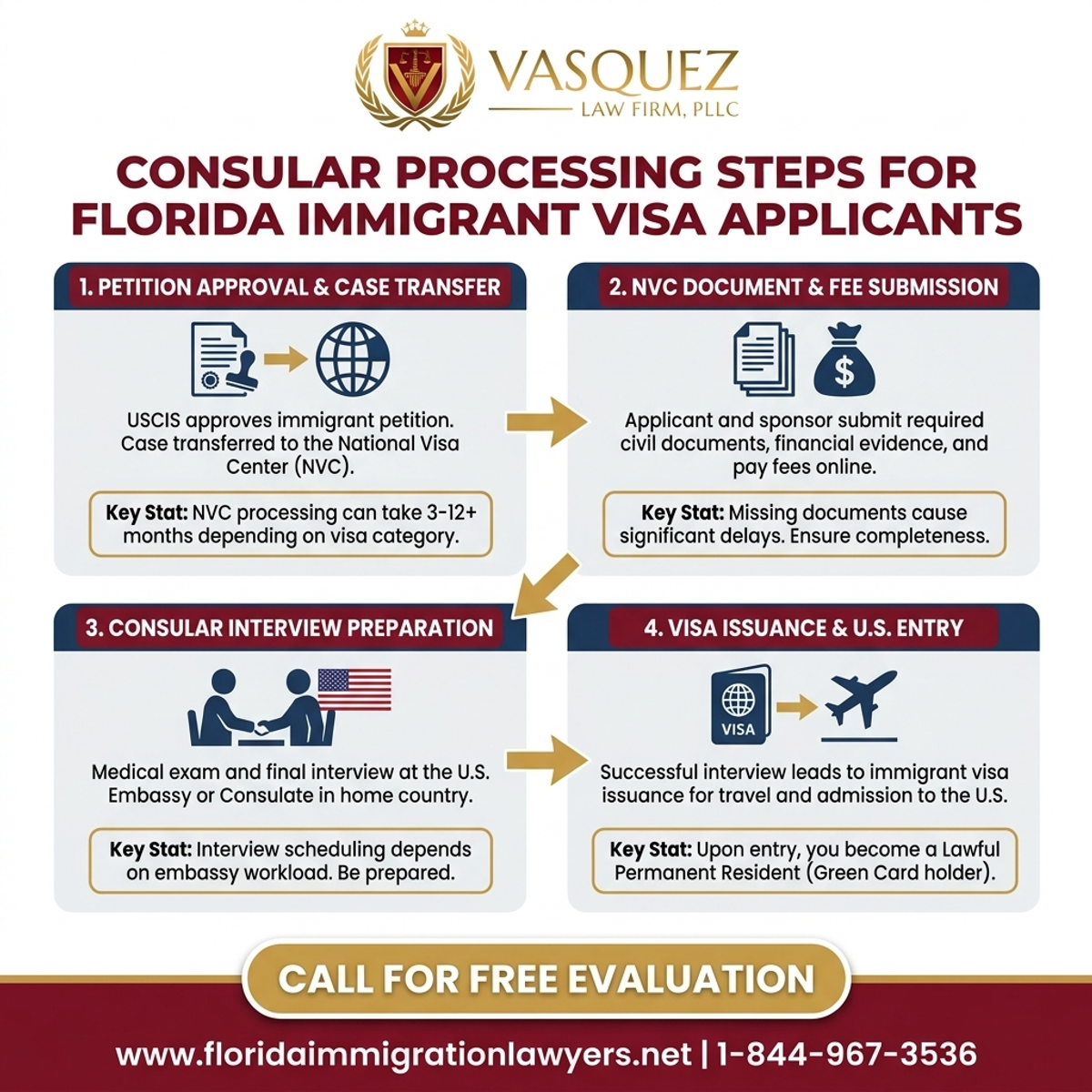
Key Statistics — Consular Processing for Florida Immigrant Visa Applicants
Cost Factors and Fee Breakdown
Costs associated with consular processing include filing fees for Form I-130/I-140, DS-260 processing fees, and the affidavit of support fee. Additionally, applicants should budget for travel expenses for the embassy interview and any required medical examinations.
Beyond the primary government fees, which are subject to change and should always be verified on the official USCIS and Department of State websites, there are several ancillary costs to consider. These often include fees for obtaining civil documents (birth certificates, marriage licenses, police records), certified translations of foreign documents into English, and potentially legal fees if you choose to hire an immigration attorney. A common oversight is underestimating the cost of the mandatory medical examination, which includes vaccinations and can vary significantly by country and clinic.
Travel expenses are another major consideration, especially for applicants in remote areas who may need to travel long distances to the U.S. embassy or consulate. This can involve flights, accommodation, and local transportation. For instance, an applicant from a rural part of a country might need to stay in the capital city for several days to complete the medical exam and attend the interview. Budgeting for these variable costs upfront can prevent financial stress during the process. Florida Immigration Lawyers can help you understand the full financial scope.
Do not navigate this process alone. Contact Florida Immigration Lawyers today.
Common Mistakes to Avoid
Navigating the complex landscape of consular processing requires meticulous attention to detail. Even minor errors can lead to significant delays or even denial. Here are some of the most common pitfalls applicants encounter and how to steer clear of them:
- Incorrect Form Filing: Mistakes on Form DS-260 can delay your application.
- Missing Documents: Incomplete documentation can lead to visa denial.
- Not Updating Address: Failing to update your address with USCIS can result in missed communications.
- Ignoring Medical Exam: Not completing the required medical exam can prevent visa issuance.
- Inaccurate Affidavit of Support: Providing incorrect financial information can result in denial.
- Missing Interview: Skipping the embassy interview without rescheduling is a common pitfall.
- Overlooking Fees: Unpaid fees can halt processing at the NVC stage.
- Ignoring Deadlines: Missing submission deadlines can significantly delay processing.
- Not Preparing for Interview: Failing to prepare for the interview can lead to a negative outcome.
- Assuming Automatic Approval: Each case is unique and assuming approval without preparation is risky.
By being aware of these common mistakes and taking proactive steps to avoid them, you can significantly improve your chances of a smooth and successful consular processing journey. Consulting with experienced professionals like Florida Immigration Lawyers can provide an additional layer of assurance, helping you navigate potential obstacles effectively.
Frequently Asked Questions (FAQs)
Here are answers to some common questions about consular processing for Florida residents:
What happens if my visa petition is denied?
If your visa petition (I-130 or I-140) is denied by USCIS, the agency will provide a reason for the denial. You may have options to appeal the decision or file a new petition, depending on the specific grounds for denial. It's crucial to consult with an immigration attorney from Florida Immigration Lawyers to understand the denial reason and strategize the best path forward, which might involve gathering additional evidence or correcting errors.
Can I expedite my consular processing case?
Expediting a consular processing case is generally difficult and reserved for true emergencies, such as a life-or-death situation involving a family member in the U.S. You typically need compelling humanitarian reasons, supported by robust evidence, to request an expedited interview or processing. Such requests are made directly to the NVC or the embassy/consulate and are granted at their discretion. Legal counsel can help present a strong case.
What is the difference between an immigrant visa and a non-immigrant visa?
An immigrant visa allows a foreign national to enter the U.S. for permanent residence, eventually leading to a Green Card. Non-immigrant visas, on the other hand, are for temporary stays, such as tourism (B-2), work (H-1B), or study (F-1), with a defined purpose and duration. Consular processing specifically deals with immigrant visas, enabling individuals to become lawful permanent residents in the U.S.
How long is an immigrant visa valid once issued?
An immigrant visa is typically valid for up to six months from the date of issuance. This means the visa holder must enter the United States within that six-month period. Failure to do so will result in the visa expiring, requiring the applicant to restart the entire consular processing procedure. It's essential to plan your travel promptly after receiving your visa.
What should I do if my circumstances change during processing?
If your marital status, address, or other significant personal details change during your consular processing, you must immediately inform the NVC or the U.S. embassy/consulate where your case is pending. Failure to update your information can lead to delays, missed communications, or even a finding of misrepresentation. Promptly notifying the authorities ensures your application remains accurate and up-to-date.
Do I need a lawyer for consular processing?
While not legally mandatory, hiring an experienced immigration lawyer from Florida Immigration Lawyers is highly recommended, especially for complex cases. An attorney can help prepare petitions, review documents, ensure compliance with evolving regulations, prepare you for your interview, and address any unforeseen challenges or denials. Their expertise can significantly reduce stress and improve the likelihood of a successful outcome.
When to Call a Lawyer
Legal assistance is crucial if you face complex issues such as past visa denials, criminal records, or complex family situations. An attorney can provide guidance tailored to Florida-specific scenarios and ensure all documentation is accurate and complete. Florida Immigration Lawyers offer expertise in navigating these challenges.
Beyond the common pitfalls, there are specific scenarios where professional legal intervention becomes not just helpful, but essential. For instance, if an applicant has a history of overstaying a previous visa, has been previously deported, or has certain criminal convictions, they may be deemed inadmissible to the U.S. In such cases, a waiver of inadmissibility might be required, a highly complex legal process that demands expert knowledge and meticulous preparation. An attorney can assess eligibility for waivers and prepare the necessary applications.
Furthermore, if there are discrepancies in identity documents, complex family structures (e.g., adoptions, step-children, or previous marriages that weren't properly dissolved), or if the petitioner's financial situation is borderline, an experienced immigration lawyer can strategize the best approach. They can help gather compelling evidence, prepare persuasive arguments, and represent your interests throughout the process. Don't hesitate to call Florida Immigration Lawyers at 1-844-967-3536 for a free consultation if you encounter any of these intricate issues.
About Florida Immigration Lawyers
Florida Immigration Lawyers is a dedicated firm providing comprehensive immigration services across Florida. We specialize in consular processing, deportation defense, and family immigration. Our experienced attorneys are available 24/7. Call us at 1-844-967-3536 or visit our website for a free consultation. Se Habla Español.
Our commitment extends beyond just processing paperwork; we are dedicated to providing compassionate and effective legal representation to individuals and families throughout Florida. With a deep understanding of both federal immigration laws and the unique needs of our diverse Florida community, we tailor our strategies to each client's specific circumstances. Our goal is to make the often daunting immigration process as clear and stress-free as possible, from initial consultation to final resolution.
Whether you are pursuing a family-based visa, navigating the complexities of employment immigration, or facing the challenges of deportation defense, our team is equipped with the knowledge and experience to advocate for you. We pride ourselves on our accessibility, offering support and answers around the clock, and ensuring that language is never a barrier to quality legal assistance. Reach out to Florida Immigration Lawyers today for reliable and steadfast support on your immigration journey.
Sources and References
- U.S. Citizenship and Immigration Services (USCIS)
- U.S. Department of State
- 8 U.S.C. Chapter 12 - Immigration and Nationality Act
Do Not Navigate This Process Alone
Our experienced immigration attorneys are ready to fight for you. Get a free, confidential consultation today.
Se Habla Español
Or leave your details and we’ll call you:
Free Evaluation in 24 Hours
Or talk to us right now

AI voice assistant — available 24/7
FreeFrequently Asked Questions

William J. Vásquez
Founding Attorney · Vasquez Law Firm
U.S. Air Force veteran and immigration attorney with years of hands-on U.S. immigration experience. J.D., NCCU School of Law. AILA member. Admitted to the 4th, 5th, and 11th Circuit Courts.
Available 24/7 - Free Evaluations
Reviewed for legal accuracy by William J. Vásquez
Licensed in North Carolina; U.S. immigration is federal practice.
Related Legal Services
Our Florida immigration attorneys can help you with experienced immigration attorneys, business immigration and asylum protection. Call today at 1-844-967-3536 for a free consultation.
Related Links
Related Topics
Free Legal Consultation
Discuss your case with our experienced attorneys. We're available 24/7.
Se Habla Español - Estamos aquí para ayudarle.
Related Articles
Stem OPT Immigration Lawyer: 2026 Florida Guide
For F-1 students in Florida, the STEM OPT extension offers a vital 24-month work authorization after their initial OPT. This guide, updated for 2026, covers eligibility, the step-by-step application process, required documents, and critical timelines. Graduates from Florida universities in STEM fields must navigate strict USCIS regulations, including the E-Verify employer requirement. Learn how to avoid common mistakes and when to seek professional legal assistance from a dedicated stem OPT immigration lawyer to ensure a successful application and continued career growth in the U.S. Florida Immigration Lawyers offers expert guidance for students across the state.
Dual Citizenship Lawyer: Navigating Delays in Florida
Facing citizenship delays in Florida can be challenging, but understanding the process and knowing your options is key. Learn how a dual citizenship lawyer can assist you in navigating N-400 processing and USCIS backlogs in Hialeah.
"ina § 208(a)(2)" One-Year Filing Deadline: Florida Asylum
Discover the importance of the "ina § 208(a)(2)" one-year filing deadline for asylum seekers in Florida. Learn about the steps, documents needed, and common mistakes to avoid in your asylum application process.
DV-2027 Registration Period: Your Green Card Lottery Guide
The DV-2027 Diversity Visa (DV) lottery offers a unique pathway to permanent residency for individuals from countries with historically low immigration rates to the U.S. Expected to open in Fall 2025, the registration period requires strict adherence to eligibility criteria, including country of birth and specific education or work experience. This guide from Florida Immigration Lawyers covers the step-by-step application process, essential documents, critical timelines, and associated costs. We highlight common mistakes to avoid and explain when legal counsel is indispensable, especially for residents in Florida. Understanding the nuances of the green card lottery is vital for a successful application. Contact us for expert guidance on your DV-2027 journey.