Prepare for Citizenship Test in Florida
Preparing for the citizenship test in Florida can be daunting. This guide provides insights into the test process, tips for preparation, and resources available in Hollywood, Florida. Contact Florida Immigration Lawyers for personalized support.

Embarking on the journey to U.S. citizenship is a significant milestone for many immigrants living in Florida. The naturalization process, culminating in the citizenship test, requires thorough preparation and a clear understanding of the requirements. This comprehensive guide is designed to help you navigate the path to becoming a U.S. citizen, focusing on the specific steps and resources available for those in the Sunshine State.
Understanding the Naturalization Process
The naturalization process is the method by which foreign nationals voluntarily become U.S. citizens. It's a multi-step journey overseen by U.S. Citizenship and Immigration Services (USCIS). Before you even consider the citizenship test, you must meet several eligibility criteria, which typically include:
- Being at least 18 years old at the time of filing Form N-400, Application for Naturalization.
- Being a lawful permanent resident (Green Card holder) for at least five years, or three years if married to a U.S. citizen.
- Demonstrating continuous residence and physical presence in the U.S. for specific periods.
- Showing good moral character.
- Demonstrating an ability to read, write, and speak English.
- Having knowledge and understanding of U.S. history and government (civics).
- Being willing to take an Oath of Allegiance to the United States.
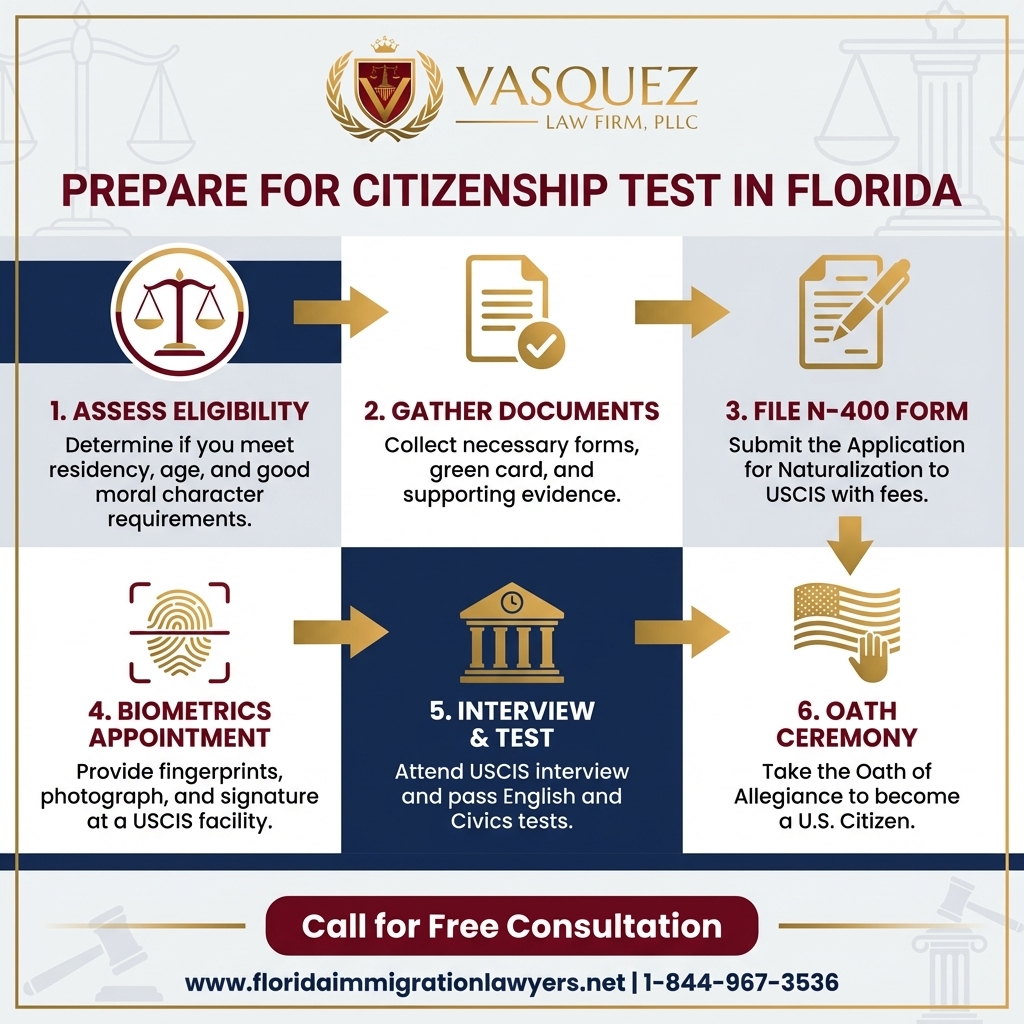
The process begins with filing Form N-400, which is a detailed application requiring extensive personal information and documentation. After filing, applicants typically attend a biometrics appointment, where fingerprints, photos, and signatures are collected. This is followed by an interview with a USCIS officer, during which the English and civics tests are administered, and the information on your N-400 is reviewed.
The Citizenship Test Components
The U.S. citizenship test consists of two main parts: the English test and the civics test. Both are crucial for demonstrating your readiness for citizenship.
The English Test
The English test assesses your ability to read, write, and speak basic English. The USCIS officer will evaluate your speaking ability during the interview itself, asking questions about your N-400 application and personal background. For the reading test, you'll need to read one out of three sentences correctly. For the writing test, you'll write one out of three sentences correctly. These sentences are typically simple and relate to civics or everyday life.
The Civics Test
The civics test evaluates your knowledge of U.S. history, government, and geography. There are 100 possible civics questions, and during your interview, the USCIS officer will ask you up to 10 questions from this list. You must answer at least 6 out of 10 questions correctly to pass. The questions cover topics like the Constitution, the branches of government, important historical events, and symbols of the nation.
Preparing for the English Test
Success on the English test requires consistent practice. Here’s how you can prepare:
- Speaking: Practice answering common interview questions aloud. Focus on clear pronunciation and understanding. Many resources offer lists of potential questions. Engage in conversations with English speakers whenever possible.
- Reading: USCIS provides a vocabulary list for the reading test. Practice reading these words and simple sentences. Read English newspapers, books, or online articles to improve your comprehension.
- Writing: Similarly, USCIS offers a writing vocabulary list. Practice writing sentences using these words. Pay attention to spelling and basic grammar. You might be asked to write a sentence that the officer dictates to you.
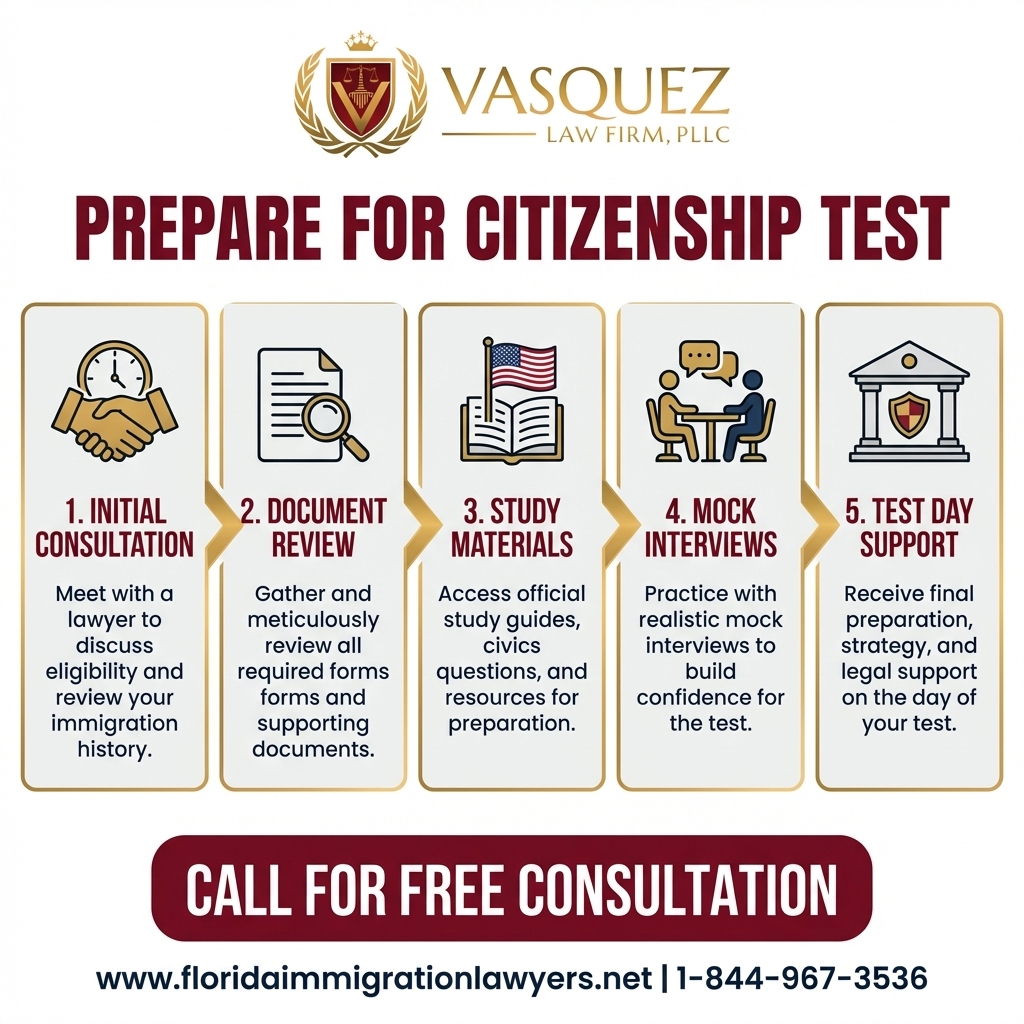
Many community organizations and adult education centers in Florida offer free or low-cost English as a Second Language (ESL) classes specifically designed to help prepare for the citizenship test.
Mastering the Civics Test
The civics test can seem daunting with 100 potential questions, but with a structured study plan, it's highly manageable.
- Study Materials: The official USCIS 100 Civics Questions and Answers is your primary study guide. Make sure you are using the most current version. You can find it on the USCIS website.
- Study Tips:
- Flashcards: Create flashcards with the question on one side and the answer on the other.
- Online Quizzes: Many websites and apps offer practice civics tests that simulate the actual exam.
- Group Study: Study with friends or family members who are also preparing. Teaching others can solidify your own knowledge.
- Focus on Florida-Specific Information: Remember to learn the names of your current U.S. Senator(s), U.S. Representative, and the Governor of Florida.
- Special Considerations: Certain applicants, based on age and length of permanent residency, may be exempt from the English test or allowed to take the civics test in their native language. For example, applicants who are 50 years old and have lived in the U.S. as a permanent resident for 20 years (50/20 rule) or 55 years old and have lived in the U.S. as a permanent resident for 15 years (55/15 rule) may take the civics test in their native language and are exempt from the English test. If you believe you qualify for an exemption, it's wise to consult with an expert.
Navigating Common Challenges and Seeking Expert Guidance
While the path to naturalization is clear for many, some applicants face unique challenges that can complicate the process. These can range from minor issues to significant legal hurdles that require professional intervention. Understanding these potential roadblocks and knowing when to seek expert guidance is crucial for a smooth and successful naturalization journey.
One common challenge involves complex legal histories. This could include past arrests, minor criminal offenses, or even issues related to previous immigration applications. While some minor infractions might not disqualify an applicant, others could lead to delays or even denial of the N-400 application. It's imperative to disclose all relevant information accurately on your application. Attempting to conceal information, even if you believe it's insignificant, can be considered a lack of "good moral character" and severely jeopardize your case.
Another area of concern for some applicants is maintaining continuous residence and physical presence requirements. Extended trips outside the U.S., even for seemingly legitimate reasons, can break the continuity of residence. Understanding the specific rules and exceptions, such as those for U.S. government employees or certain religious workers, is vital. Miscalculating these periods can lead to an N-400 denial.
Language barriers, beyond the scope of the English test, can also present difficulties. While the English test is specific, the entire interview process requires clear communication. If an applicant struggles significantly, even with an interpreter (if allowed), it can impact the officer's assessment. Furthermore, accurately completing the detailed N-400 form itself can be challenging for non-native English speakers, where misunderstandings can lead to errors.
For these and other complex situations, seeking the counsel of an experienced immigration attorney is not just helpful, but often essential. An attorney can review your entire immigration history, identify potential red flags, and advise on the best course of action. They can help you accurately complete the N-400, gather necessary supporting documentation, and prepare you thoroughly for the interview, including how to address any sensitive issues. If you have concerns about past legal issues, or if you previously sought asylum or faced deportation defense proceedings, an attorney can help ensure these complex parts of your history are presented correctly and do not negatively impact your naturalization application. Our dedicated attorneys are here to provide personalized support and guidance through every step of the process. Don't hesitate to contact us for a consultation to discuss your specific circumstances and ensure your application is as strong as possible.
What to Expect on Test Day
The day of your naturalization interview can be nerve-wracking, but knowing what to expect can help ease your anxiety.
- Documents to Bring: Always bring your interview notice, your Green Card, all passports (current and expired), and any other documents requested in your interview notice. It's also wise to bring originals of any documents you submitted copies of with your N-400 (e.g., marriage certificates, divorce decrees, birth certificates of children).
- The Interview: The USCIS officer will review your N-400 application with you, asking questions to confirm the information. They will then administer the English and civics tests. Be honest, calm, and answer clearly.
- Possible Outcomes:
- Passed: If you pass both tests and the officer approves your application, you will typically receive a notice for your Oath of Allegiance ceremony.
- Continued: If you fail one or both tests, or if the officer needs more information, you will be given a "Notice of Continuance" and scheduled for a second interview, usually within 60-90 days, to re-take the failed portion(s) or provide additional documents.
- Denied: In rare cases, an application might be denied if eligibility requirements are not met or if there are serious issues. You have the right to appeal a denial.
- The Oath of Allegiance Ceremony: This is the final step where you take an oath to the United States and officially become a U.S. citizen. You will receive your Certificate of Naturalization at this ceremony.
Resources for Florida Residents
Florida offers numerous resources to help you prepare for your citizenship test:
- USCIS Field Offices: Florida has several USCIS field offices (e.g., Miami, Orlando, Tampa, Jacksonville) where your interview may be scheduled. While they don't offer direct test preparation, they are the administrative centers for your application.
- Community Organizations: Many non-profit organizations and immigrant aid societies across Florida provide citizenship classes, English language instruction, and application assistance. Check with local community centers, libraries, and religious institutions.
- Online Resources: The official USCIS website (uscis.gov) is an invaluable resource, offering study guides, practice tests, and up-to-date information on the naturalization process.
Frequently Asked Questions About the Citizenship Test in Florida
Q: How long does the naturalization process typically take in Florida? A: The processing time can vary significantly based on the USCIS field office and individual case complexities. It can range from 8 months to over 2 years. You can check current processing times on the USCIS website. Q: Can I get an interpreter for my citizenship interview? A: Generally, no. The English test is a mandatory component for most applicants. However, if you qualify for an English language exemption based on age and length of residency (e.g., 50/20 or 55/15 rule), you may bring an interpreter for the civics portion of the interview. Q: What happens if I fail the citizenship test? A: If you fail either the English or civics test (or both), USCIS will typically schedule a second interview for you to retake the failed portion(s) within 60 to 90 days. You get two chances to pass. Q: Are there any fees for the naturalization application? A: Yes, there is a filing fee for Form N-400 and a biometrics fee. However, fee waivers may be available for eligible applicants based on income or receipt of certain public benefits. Q: Do I need a lawyer to apply for naturalization? A: While not legally required for all cases, an attorney can be highly beneficial, especially if you have a complex immigration history, criminal record, or any other issues that might complicate your application. They can ensure your application is correctly prepared and represent you during the process. Q: What is the "good moral character" requirement? A: Good moral character generally means you have abided by the law and demonstrated positive societal behavior during your statutory period of permanent residency. Certain criminal offenses, false statements, or other negative actions can prevent you from meeting this requirement. Q: Can I travel outside the U.S. while my N-400 application is pending? A: Yes, you can generally travel. However, extensive travel, especially for long periods, can impact your continuous residence and physical presence requirements. Always consult with an immigration expert if you plan significant travel during this period. Q: What is the difference between naturalization and citizenship? A: Citizenship refers to the legal status of being a citizen of a country. Naturalization is one of the processes by which an individual can acquire U.S. citizenship (the others being birth in the U.S. or birth to U.S. citizen parents abroad). Q: How can I check the status of my N-400 application? A: You can check your case status online using the receipt number provided by USCIS after you file your application. You can also call the USCIS Contact Center.Conclusion: Your Path to U.S. Citizenship
Becoming a U.S. citizen is a transformative step, offering numerous benefits and responsibilities. While the naturalization process, including the citizenship test, requires dedication and thorough preparation, it is an achievable goal for many Floridians. By understanding the requirements, utilizing available resources, and diligently studying, you can confidently approach your interview. Remember, you don't have to navigate this journey alone. If you encounter any complexities or simply wish for expert guidance, our team is here to support you every step of the way. We are committed to helping you achieve your dream of U.S. citizenship.
Do Not Navigate This Process Alone
Our experienced immigration attorneys are ready to fight for you. Get a free, confidential consultation today.
Se Habla Español
Frequently Asked Questions

William J. Vásquez
Founding Attorney · Vasquez Law Firm
U.S. Air Force veteran and immigration attorney with thousands of cases resolved. J.D., NCCU School of Law. AILA member. Admitted to the 4th, 5th, and 11th Circuit Courts.
Available 24/7 - Free Evaluations
Related Legal Services
Our Florida immigration attorneys can help you with asylum protection, deportation defense and citizenship and naturalization. Call today at 1-844-967-3536 for a free consultation.
Related Links
Related Topics
Free Legal Consultation
Discuss your case with our experienced attorneys. We're available 24/7.
Se Habla Español - Estamos aquí para ayudarle.
Related Articles
E-2 Visa for Florida Business Investors | VLF Florida
Learn about the E-2 investor visa for Florida business opportunities, tailored for Fort Lauderdale entrepreneurs. Discover the process, requirements, and common pitfalls. Contact Florida Immigration Lawyers for expert assistance.
Immigration Documents Checklist for Florida | VLF Florida
Navigating immigration processes in Florida requires a comprehensive checklist of documents. This guide helps you gather all necessary paperwork to ensure a successful application. Consult Florida Immigration Lawyers for personalized assistance.
Immigration Attorney West Palm Beach Guide | VLF Florida
Navigate the complexities of immigration in West Palm Beach with a trusted attorney. Learn what to expect, common pitfalls, and how to choose the right legal help.
Dual Citizenship in Florida: What You Need to Know
Explore dual citizenship in Florida, understand the process, and learn how to apply. Discover the benefits and complexities involved with having two passports and navigating immigration laws. Call Florida Immigration Lawyers for expert guidance.
