Citizenship Interview Tips for Florida Applicants
Prepare for your citizenship interview in Florida with expert guidance. Learn key tips, understand the process, and avoid common mistakes. Contact Florida Immigration Lawyers for assistance.

Introduction
Imagine the excitement of finally reaching your citizenship interview, a critical step towards becoming a U.S. citizen. For many in Coral Springs, Florida, this interview signifies a culmination of years of hard work and dedication. In this article, we will guide you through essential tips to prepare for your citizenship interview, ensuring you approach it with confidence. Call Florida Immigration Lawyers at 1-844-967-3536 for a free consultation.
The journey to U.S. citizenship is a profound one, representing new opportunities and a deeper connection to the American community. For residents of Coral Springs and across Florida, this final hurdle can feel daunting, but with proper preparation, it becomes a manageable and even empowering experience. Understanding what to expect and how to present yourself effectively can make all the difference in achieving your dream of naturalization.
Our goal is to demystify the process, offering clear, actionable advice that addresses common concerns and potential challenges. From reviewing your application to mastering the civics test, we'll cover every aspect you need to consider. Remember, you don't have to navigate this significant milestone alone; expert guidance is available to ensure your path to citizenship is as smooth as possible.
Understanding the Citizenship Interview Process
The citizenship interview, conducted by USCIS, is a key part of the naturalization process. During this interview, you will be asked questions about your application and your background. It's an opportunity for USCIS to assess your eligibility for U.S. citizenship.
In Florida, the USCIS offices in Miami and Tampa often handle these interviews. Given the state's diverse immigrant population, Coral Springs sees a significant number of applicants. Recent changes in immigration policies, as highlighted by ongoing legal developments, underline the importance of being well-prepared.
The interview typically involves three main components: an English test (reading, writing, and speaking), a civics test, and a review of your N-400 application. The USCIS officer will verify the information you provided, ask about your moral character, and ensure you meet all eligibility requirements. It's not just about memorizing facts; it's about demonstrating your commitment to the U.S. and your understanding of its principles.
Being prepared means not only knowing the answers but also understanding the context of the questions. For instance, when asked about your travel history, it's crucial to have accurate dates and reasons for each trip, as these details help confirm your continuous residency. A thorough review of your entire immigration history, including any previous visa applications or interactions with immigration authorities, is also vital to avoid any surprises during the interview.
Step-by-Step Guide to Preparing for the Interview
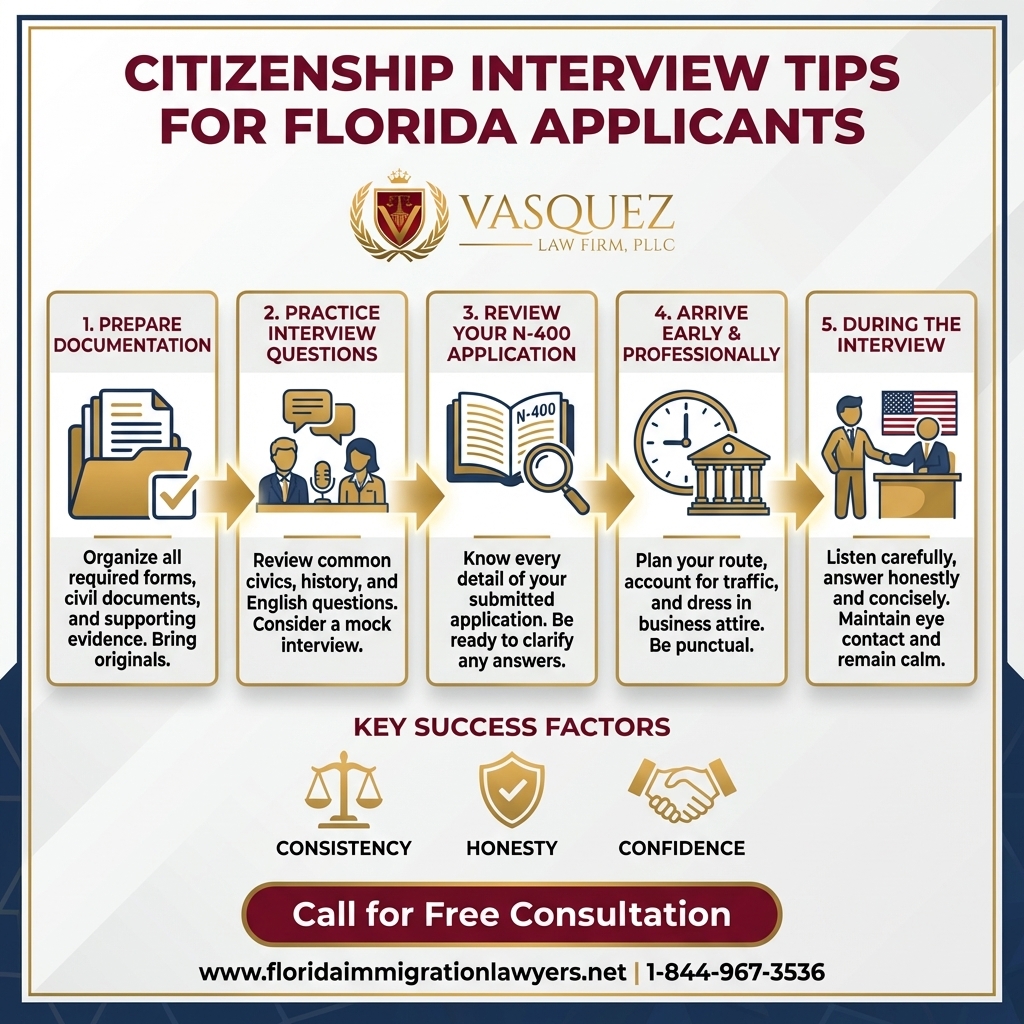
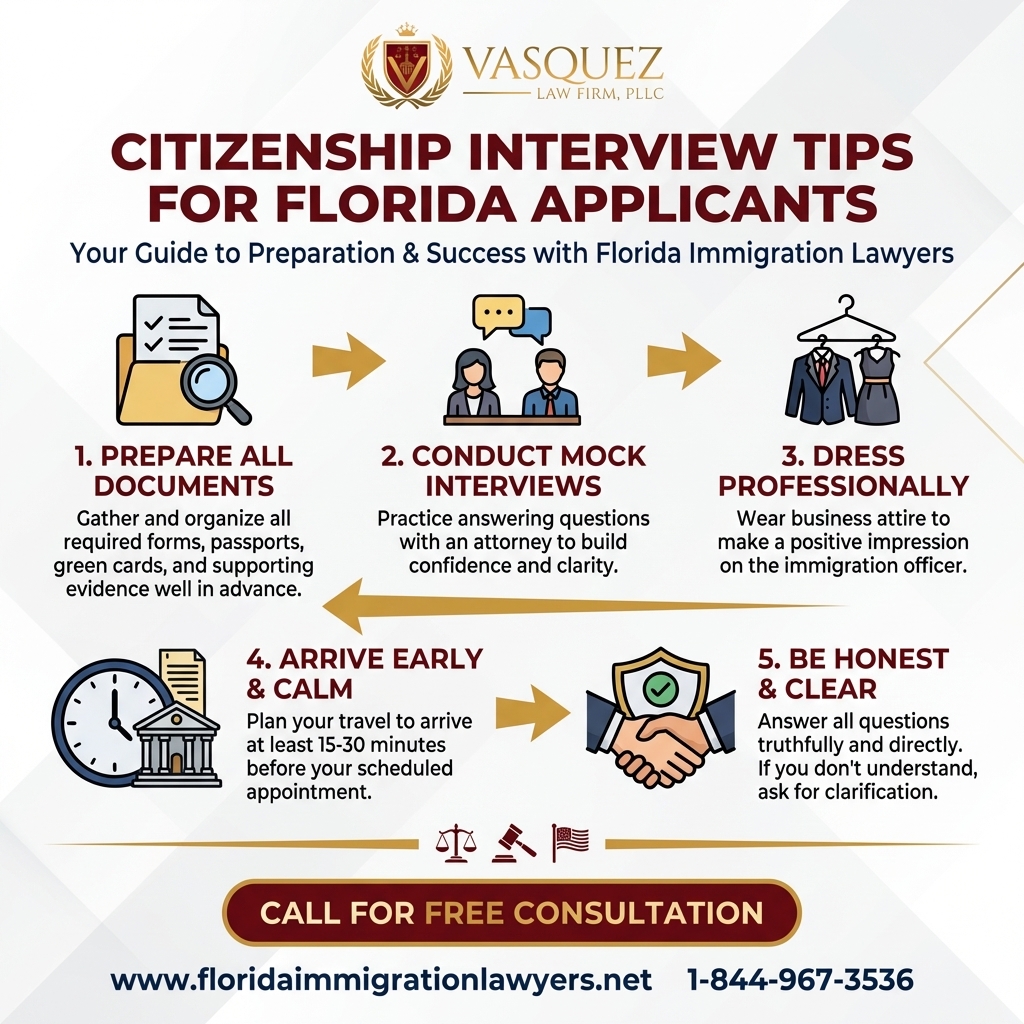
- Review Your Application (Form N-400): Ensure all information is accurate and up-to-date. Every detail, from your address history to your employment record, must match your original submission. It's a good practice to review your N-400 alongside any supporting documents you submitted to catch any inconsistencies before the interview.
- Gather Required Documents: Bring your green card, passport, state ID, and any other relevant documents. This includes original birth certificates, marriage certificates, divorce decrees, tax returns, and selective service registration if applicable. Organize these documents neatly in a folder for easy access, as the officer will likely ask to see them.
- Practice English and Civics Questions: Use USCIS resources to study potential questions. The USCIS website offers flashcards, study guides, and practice tests for both the English and civics portions. Dedicate regular study time, perhaps 30 minutes daily, to ensure you're comfortable with all 100 civics questions and can articulate your answers clearly in English. Consider joining a study group or working with a tutor for additional support.
- Attend a Mock Interview: Simulate the interview experience to build confidence. Practicing with a friend, family member, or an immigration attorney can help you become familiar with the format and reduce anxiety. A mock interview allows you to identify areas where you might hesitate or need further clarification, giving you the chance to refine your responses.
- Clarify Any Discrepancies: Be ready to explain any inconsistencies in your application. If you've had a minor traffic ticket, a change of address, or a new job since filing your N-400, be prepared to discuss these updates honestly and provide any supporting documentation. Transparency and honesty are key to a successful interview.
Document Checklist
- Green Card (Permanent Resident Card)
- State-issued ID or Driver's License
- Passport (Current and expired, if applicable)
- Copy of Form N-400 (Your original application)
- Marriage Certificate (if applicable)
- Divorce Decrees (if applicable)
- Tax Returns (for the last five years, or three if married to a U.S. citizen)
- Proof of Residence (Lease agreements, utility bills, bank statements showing your address)
- Birth Certificates of children (if applicable)
- Selective Service Registration Card (for males aged 18-26)
- Any court disposition records for arrests or citations, even if dismissed or expunged.
Having all these documents readily available and organized can significantly streamline your interview. Missing even a single crucial document can lead to delays or a request for additional evidence, prolonging your naturalization journey. It's always better to over-prepare than to arrive under-prepared.
Timeline and Processing Expectations
Typically, the timeline from submitting Form N-400 to completing the interview can range from 8 to 14 months, depending on your location and current USCIS backlog. Florida, with its large immigrant population, may experience longer wait times. It's essential to remain patient and keep track of your application's status through the USCIS website.
Several factors can influence your processing time, including the volume of applications at your local field office, the complexity of your case, and whether USCIS requires additional evidence. While the posted processing times on the USCIS website offer a general estimate, individual cases can vary. Staying informed through your online account is crucial.
If your case experiences significant delays beyond the typical processing times, or if you receive a Request for Evidence (RFE), it may be beneficial to consult with Florida Immigration Lawyers. They can help you understand the reasons for the delay, assist in responding to RFEs, or inquire about your case status through appropriate channels, ensuring your application doesn't get lost in the system.
Cost Factors and Fee Breakdown
While specific fees for the citizenship application process may vary, they generally include the filing fee for Form N-400 and potential biometrics costs. It's important to budget for these expenses and consider additional costs for legal assistance if needed.
As of recent updates, the N-400 filing fee can be substantial, and it's important to verify the current amount directly on the USCIS website. For individuals with limited income, USCIS offers fee waivers based on certain eligibility criteria, such as receiving a means-tested benefit or having an income at or below 150% of the Federal Poverty Guidelines. Exploring these options can significantly reduce the financial burden of the application.
Investing in legal assistance, especially for complex cases, can be a wise financial decision. While it adds to the overall cost, the expertise of Florida Immigration Lawyers can prevent costly mistakes, delays, or even denials that might require more expensive remedies later. A free consultation can help you understand the potential costs and benefits of legal representation for your specific situation.
Do not navigate this process alone. Contact Florida Immigration Lawyers today.
Common Mistakes to Avoid
Navigating the naturalization process can be complex, and even minor errors can lead to significant delays or complications. Being aware of common pitfalls is the first step toward a successful interview. Many applicants, despite their best intentions, make mistakes that could easily be avoided with proper guidance and attention to detail. Identifying these areas of concern beforehand can save you time, stress, and potential heartbreak.
- Failing to Review Your Application: Inconsistencies can lead to delays or denials. Forgetting to update your address or employment history since filing your N-400 can raise red flags. Always cross-reference your application with your personal records and be prepared to explain any changes clearly and concisely.
- Not Practicing English and Civics: Lack of preparation can result in failing the interview. The English test assesses your ability to read, write, and speak basic English, while the civics test requires knowledge of U.S. history and government. Dedicate consistent time to study, perhaps using online resources or community classes, to ensure you're confident in both areas.
- Forgetting Required Documents: Missing documents can postpone your interview. Imagine arriving at your interview only to realize you left your marriage certificate at home. This often results in a Request for Evidence (RFE) or a rescheduled interview, delaying your citizenship. Always create a checklist and double-check your folder before heading to the USCIS office.
- Providing Inaccurate Information: Misstatements may raise red flags. Honesty is paramount. Even unintentional misrepresentations can be viewed negatively. If you're unsure about an answer, it's better to state that you don't recall or ask for clarification rather than guessing. If you have a complex history, discussing it with Florida Immigration Lawyers beforehand is crucial.
- Ignoring Legal Advice: Complex cases benefit from professional guidance. Attempting to manage a naturalization case with a criminal record, previous immigration violations, or extended absences from the U.S. without legal counsel can lead to serious issues. An attorney can help you prepare explanations and gather necessary documentation to address these complexities effectively.
- Overlooking Interview Instructions: Not following USCIS directions can impact your case. USCIS provides specific instructions for your interview appointment, including what to bring and what to expect. Failing to read and adhere to these instructions, such as arriving without proper identification or bringing unauthorized individuals, can cause unnecessary complications.
- Being Late to the Interview: Punctuality is crucial; tardiness can cause rescheduling or cancellation. Plan to arrive at least 30 minutes early to account for traffic, parking, and security checks. Being late demonstrates a lack of respect for the process and the officer's time, potentially jeopardizing your appointment.
Beyond these common errors, applicants sometimes fail to maintain good moral character throughout the process. Any arrests, criminal charges, or significant legal issues that arise between filing your N-400 and your interview must be disclosed immediately to USCIS and discussed with your attorney. Transparency is always the best policy.
Another frequent oversight is not dressing appropriately for the interview. While there's no strict dress code, presenting yourself in neat, business-casual attire shows respect for the process and the USCIS officer. Avoid overly casual clothing, as this is a formal legal proceeding.
When to Call a Lawyer
If you face language barriers, have a complex immigration history, or encounter legal issues, consulting with an immigration attorney is advisable. Florida Immigration Lawyers can assist with these challenges, providing expert guidance tailored to your situation.
A lawyer's expertise becomes invaluable in situations that extend beyond a straightforward application. For instance, if you have any criminal history, even minor infractions from years ago, an attorney can help you understand how these might impact your eligibility and prepare the necessary court documents and explanations. They can also advise on issues related to tax compliance or selective service registration, which are often overlooked but critical aspects of the naturalization process.
Furthermore, if you've had extended absences from the U.S., a lawyer can help you demonstrate continuous residency and physical presence, which are strict requirements for naturalization. They can also represent you during the interview, providing an added layer of support and ensuring your rights are protected. Don't hesitate to reach out to Florida Immigration Lawyers at 1-844-967-3536 for a free consultation if you have any doubts about your eligibility or a complicated background.
About Florida Immigration Lawyers
Florida Immigration Lawyers is dedicated to helping clients navigate the complex immigration landscape. We offer services in family immigration, deportation defense, and more. With offices serving all of Florida, including Coral Springs, our team is ready to assist you. Call us at 1-844-967-3536 or visit our website for a free consultation.
Our team of experienced attorneys understands the nuances of U.S. immigration law and the specific challenges faced by individuals in Florida. We pride ourselves on providing compassionate, client-focused representation, ensuring that each case receives the meticulous attention it deserves. From initial consultations to preparing you for your interview and even accompanying you, we are committed to supporting you at every step of your naturalization journey.
We believe that everyone deserves clear, accessible legal guidance, which is why we offer free consultations to discuss your unique circumstances. Our commitment extends beyond just legal advice; we strive to empower our clients with the knowledge and confidence needed to successfully achieve their immigration goals. Let Florida Immigration Lawyers be your trusted partner on the path to U.S. citizenship.
Sources and References
- U.S. Citizenship and Immigration Services (USCIS)
- Executive Office for Immigration Review (EOIR)
- 8 U.S.C. Chapter 12 - Immigration and Nationality Act
Related services: citizenship test preparation, dual citizenship guidance.
This article provides general legal information and is not intended as legal advice. Every case is unique, and outcomes depend on specific facts and circumstances. Contact an attorney for advice about your particular situation.
For personalized assistance, contact Florida Immigration Lawyers at 1-844-967-3536 for a free consultation. Se Habla Español - Estamos aquí para ayudarle.
If you need legal assistance, learn more about experienced naturalization attorneys, or call us at 1-844-967-3536 for a free consultation.
Do Not Navigate This Process Alone
Our experienced immigration attorneys are ready to fight for you. Get a free, confidential consultation today.
Se Habla Español
Frequently Asked Questions

William J. Vásquez
Founding Attorney · Vasquez Law Firm
U.S. Air Force veteran and immigration attorney with thousands of cases resolved. J.D., NCCU School of Law. AILA member. Admitted to the 4th, 5th, and 11th Circuit Courts.
Available 24/7 - Free Evaluations
Related Legal Services
Our Florida immigration attorneys can help you with immigration practice areas, free immigration consultation and experienced immigration attorneys. Call today at 1-844-967-3536 for a free consultation.
Related Links
Related Topics
Free Legal Consultation
Discuss your case with our experienced attorneys. We're available 24/7.
Se Habla Español - Estamos aquí para ayudarle.
Related Articles
E-2 Visa for Florida Business Investors | VLF Florida
Learn about the E-2 investor visa for Florida business opportunities, tailored for Fort Lauderdale entrepreneurs. Discover the process, requirements, and common pitfalls. Contact Florida Immigration Lawyers for expert assistance.
Immigration Documents Checklist for Florida | VLF Florida
Navigating immigration processes in Florida requires a comprehensive checklist of documents. This guide helps you gather all necessary paperwork to ensure a successful application. Consult Florida Immigration Lawyers for personalized assistance.
Immigration Attorney West Palm Beach Guide | VLF Florida
Navigate the complexities of immigration in West Palm Beach with a trusted attorney. Learn what to expect, common pitfalls, and how to choose the right legal help.
Dual Citizenship in Florida: What You Need to Know
Explore dual citizenship in Florida, understand the process, and learn how to apply. Discover the benefits and complexities involved with having two passports and navigating immigration laws. Call Florida Immigration Lawyers for expert guidance.