Abrego Garcia Deportation: Florida Due Process and Your...
The Kilmar Abrego Garcia case highlighted critical due process issues in U.S. immigration law, emphasizing the need for robust legal defense against wrongful deportation. For Florida residents, understanding your rights and the complexities of removal proceedings is essential. This article delves into the Abrego Garcia case's relevance, outlines the step-by-step deportation defense process, details necessary documents, and discusses associated timelines and costs. We also cover common mistakes to avoid and explain when legal representation from Florida Immigration Lawyers is crucial. Our firm provides expert guidance for immigrants across Florida, ensuring your due process rights are protected.

The Kilmar Abrego Garcia case highlighted critical issues of due process in U.S. immigration law, particularly concerning wrongful deportation. For individuals in Florida facing similar immigration challenges, understanding your rights and the legal framework is paramount. Due process ensures fair treatment and the opportunity to present your case before any removal. Seeking expert legal counsel is crucial to protect your interests.
- Due process rights are fundamental in all immigration proceedings.
- Wrongful deportations, though rare, underscore the need for vigilance.
- Florida residents have specific legal resources available for defense.
- Early engagement with an immigration lawyer is highly recommended.
- Understanding the removal process is key to a strong defense strategy.
Abrego Garcia Deportation: Florida Due Process and Your Rights
The story of Kilmar Abrego Garcia resonated deeply across the nation, shedding light on the complexities and critical importance of due process within the U.S. immigration system. His experience with a mistaken deportation served as a stark reminder that even in a system designed for order, errors can occur, with profound consequences for individuals and families.
For immigrants and their families across Florida, this case underscores a vital truth: knowing your rights and having a robust legal defense are not just options, but necessities. Whether you are in Fort Lauderdale, Miami, Orlando, or any other part of our diverse state, understanding the nuances of deportation defense is paramount.
At Florida Immigration Lawyers, we understand the anxieties and uncertainties that immigration challenges bring. Our firm is dedicated to providing comprehensive legal support to protect your rights and guide you through every step of the process. If you or a loved one are concerned about deportation or need assistance with any immigration matter, do not hesitate to reach out. Call Florida Immigration Lawyers at 1-844-967-3536 for a free consultation.
Understanding the Abrego Garcia Case and Due Process in Florida Immigration
The case of Kilmar Abrego Garcia, a Salvadoran national, brought national attention to the vulnerabilities within the immigration enforcement system. He was wrongfully deported despite having legal avenues to remain in the United States, illustrating a critical breakdown in due process protections.
Due process, guaranteed by the Fifth and Fourteenth Amendments of the U.S. Constitution, ensures that individuals cannot be deprived of life, liberty, or property without fair legal procedures. In immigration law, this means individuals facing removal proceedings have the right to notice of charges, an opportunity to be heard, to present evidence, and to appeal decisions. This fundamental principle applies to everyone within U.S. borders, regardless of immigration status.
In Florida, a state with one of the largest and most diverse immigrant populations, the implications of cases like Abrego Garcia's are particularly significant. Our state is home to numerous immigration courts, including the Fort Lauderdale Immigration Court, and detention facilities like the Krome Service Processing Center and the Broward Transitional Center. These facilities and courts are where due process rights are tested daily.
Understanding these rights is crucial for anyone navigating the complex U.S. immigration system. The specific details of your case, combined with the general principles of due process, will dictate the best defense strategy. Our experienced immigration lawyers in Florida are well-versed in these protections and advocate fiercely for our clients.
The Role of Immigration Courts in Florida
Immigration Courts in Florida, part of the Executive Office for Immigration Review (EOIR) under the U.S. Department of Justice, are where removal proceedings are conducted. Judges hear cases and make decisions regarding deportability, asylum claims, and other forms of relief from removal. The Fort Lauderdale Immigration Court, for example, handles a significant volume of cases affecting individuals across South Florida.
The process in these courts is administrative, not criminal, but the stakes are incredibly high. A fair hearing, where individuals can present their case and challenge the government's allegations, is the cornerstone of due process. Without proper legal representation, navigating these complex proceedings can be overwhelming and lead to unfavorable outcomes.
Navigating Deportation Defense: A Step-by-Step Guide for Florida Residents
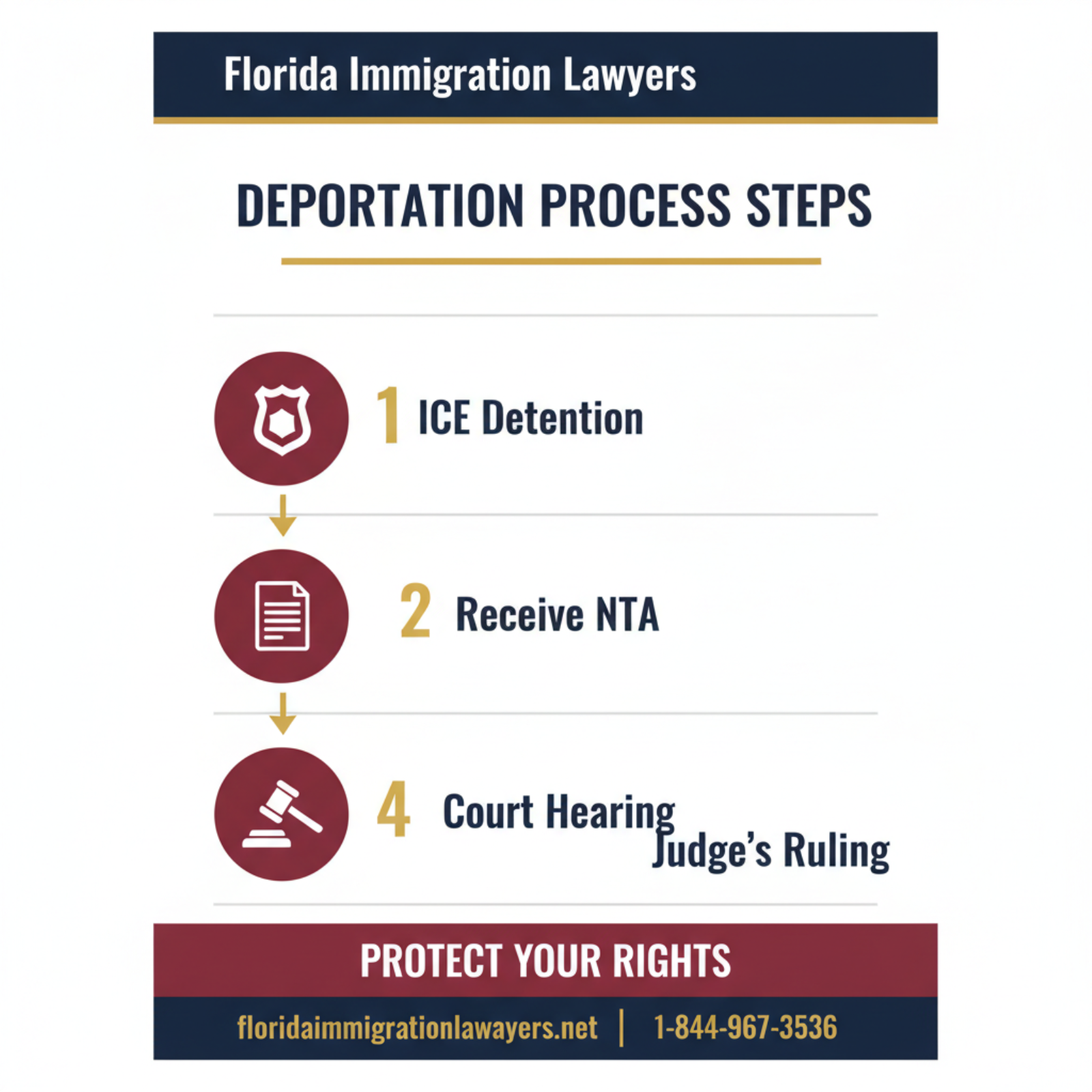
Facing deportation can be a frightening experience, but understanding the process is the first step toward building a strong defense. While every case is unique, here is a general overview of what removal proceedings typically entail in Florida:
-
Issuance of a Notice to Appear (NTA): This document, issued by Immigration and Customs Enforcement (ICE), formally charges an individual with being removable from the U.S. It outlines the legal reasons for removal and sets the initial court date. Receiving an NTA is a critical moment; it means removal proceedings have officially begun.
-
Master Calendar Hearing: This is the initial court appearance before an Immigration Judge. During this hearing, the judge confirms the individual's identity, ensures they understand the charges, and asks them to admit or deny the allegations. This is also where an individual informs the court if they have legal representation or plan to seek it. It's vital to appear at this hearing, as failing to do so can result in a removal order in absentia.
-
Pleading to the Charges and Identifying Relief: After the master calendar hearing, if the individual denies the charges or seeks relief, the judge will schedule an individual hearing. During this phase, your attorney will help you identify any potential forms of relief from removal for which you may be eligible, such as asylum, cancellation of removal, adjustment of status, or waivers.
-
Individual Hearing (Merits Hearing): This is the trial phase where both sides present evidence, call witnesses, and make legal arguments. The government, represented by an ICE attorney, will try to prove removability, while your attorney will present your defense and evidence supporting your eligibility for relief. This hearing can be lengthy and requires meticulous preparation.
-
Decision by the Immigration Judge: After considering all evidence and arguments, the Immigration Judge will issue a decision. The judge may order removal, grant a form of relief, or terminate the proceedings. This decision is delivered orally in court and then followed by a written order.
-
Appeals Process: If either party is dissatisfied with the Immigration Judge's decision, they typically have 30 days to file an appeal with the Board of Immigration Appeals (BIA). The BIA reviews the judge's decision for legal errors. Further appeals can be pursued in federal courts, including the U.S. Circuit Courts of Appeals, though this is a more complex and lengthy process. Our deportation defense attorneys are skilled in handling appeals.
Essential Documents for Your Immigration Defense
A strong defense in deportation proceedings relies heavily on organized and compelling evidence. Gathering the correct documents is crucial for supporting your case and demonstrating your eligibility for any form of relief. While the exact list varies by individual circumstances and type of relief sought, here's a general checklist of documents you should prepare:
- Personal Identification: Passport, birth certificate, national ID card, marriage certificate, divorce decrees.
- Immigration Documents: Form I-94 arrival/departure record, visa, previous applications to USCIS, any Notice to Appear (NTA), previous court orders.
- Proof of Residence: Utility bills, lease agreements, property deeds, bank statements, mail addressed to you in the U.S.
- Financial Records: Tax returns (W-2s, 1099s), pay stubs, employment letters, proof of financial support for dependents.
- Family Information: Birth certificates of U.S. citizen or legal permanent resident (LPR) relatives (spouse, children, parents), marriage certificates, affidavits from family members.
- Evidence of Good Moral Character: Letters of recommendation from employers, community leaders, religious figures, proof of volunteer work, criminal history records (if applicable, to show rehabilitation).
- Hardship Evidence (if applicable): Medical records, psychological evaluations, school records of children, evidence of economic impact if deported, country conditions reports if claiming asylum or withholding of removal.
- Police Records/Court Dispositions: Any arrest records, police reports, and certified court dispositions for any interactions with law enforcement, even minor ones. This is critical for showing eligibility for certain reliefs.
Timeline and Processing Expectations for Removal Proceedings in Florida
The timeline for immigration removal proceedings in Florida can vary significantly, often extending over several months or even years. This variability depends on several factors, including the complexity of your case, the specific immigration court's caseload, and whether you are detained or not. Individuals in detention often have their cases expedited, though not always to their benefit.
Initial master calendar hearings are typically scheduled a few weeks to a few months after the NTA is issued. Individual hearings, however, can be set many months, sometimes even a year or more, after the master calendar hearing. This allows time for evidence gathering, legal research, and preparation of arguments.
Appeals to the Board of Immigration Appeals (BIA) generally take several months to a year or more for a decision. Federal court appeals can add even more time to the process. It's important to remember that during this entire period, the threat of removal remains, and compliance with all court orders and deadlines is critical.
Working with an experienced immigration attorney from Florida Immigration Lawyers can help you understand realistic timelines for your specific situation. We strive to move your case forward efficiently while ensuring thorough preparation and protection of your rights.
Cost Factors and Fee Breakdown in Deportation Defense
Understanding the financial aspects of deportation defense is an important part of planning your legal strategy. The costs involved generally fall into two main categories: attorney fees and government filing fees. It is important to note that specific filing fees are subject to change by USCIS or EOIR, and legal fees vary based on the complexity of the case and the attorney's experience.
Attorney Fees: Legal fees constitute the primary cost of deportation defense. These fees compensate your attorney for their expertise, time, and resources dedicated to your case. This includes initial consultations, legal research, preparing court documents, representing you in court hearings, communicating with government agencies, and managing appeals. Complex cases requiring extensive research, multiple hearings, or expert witnesses will typically incur higher legal fees.
At Florida Immigration Lawyers, we believe in transparent fee structures. We will discuss all anticipated costs with you upfront during your free consultation. Our goal is to provide high-quality legal representation that is accessible and clear in its pricing.
Government Filing Fees: While many forms of relief in deportation proceedings do not require direct filing fees to USCIS, some applications for relief, such as adjustment of status (Form I-485) or certain waivers (e.g., Form I-601, Application for Waiver of Grounds of Inadmissibility), do have associated government fees. These fees are paid directly to the U.S. government and are separate from attorney fees. Fee waivers may be available for eligible low-income individuals in some circumstances.
It is crucial to budget for these potential costs. Investing in experienced legal counsel can significantly improve your chances of a favorable outcome and protect your future in the United States.
Do not navigate this complex process alone. Contact Florida Immigration Lawyers today to discuss your situation and explore your legal options. Our team is ready to provide the dedicated representation you deserve.
Common Mistakes to Avoid in Florida Deportation Proceedings
Navigating deportation proceedings is fraught with potential pitfalls. Avoiding common mistakes can significantly impact the outcome of your case. Be aware of these frequent errors:
-
Missing Court Dates: Failing to appear for any scheduled Master Calendar or Individual Hearing will almost certainly result in an order of removal in absentia. This means you will be deported without ever having your case heard, and appealing such an order is extremely difficult.
-
Not Understanding the Charges: Many individuals do not fully comprehend the allegations in their Notice to Appear (NTA). Admitting to charges you don't understand or that are factually incorrect can waive crucial defenses and make your case much harder to win. Always review your NTA carefully with an attorney.
-
Providing False Information: Lying or misrepresenting facts to immigration officials or in court documents carries severe consequences, including permanent bars to immigration benefits and criminal charges. Always be truthful, even if the truth is difficult.
-
Failing to Gather Sufficient Evidence: A weak case often stems from a lack of compelling evidence. Not collecting all necessary documents, affidavits, or expert reports to support your claims for relief can lead to denial. Organize your documents thoroughly with your lawyer's guidance.
-
Not Disclosing Criminal History: Attempting to hide past arrests or convictions, no matter how minor, is a serious mistake. Immigration officials have access to extensive databases. Failure to disclose can lead to allegations of misrepresentation and render you ineligible for relief. Always be forthright with your attorney.
-
Falling for Notario Fraud: This is a prevalent issue in Florida's immigrant communities. Notarios, who are not licensed attorneys, often claim they can provide legal immigration services. Engaging with them can lead to incorrect filings, missed deadlines, financial loss, and even deportation. Always seek advice from a licensed immigration attorney.
-
Delaying Legal Counsel: Waiting until the last minute to hire an attorney can severely limit your defense options. Early engagement allows your legal team ample time to investigate, prepare, and strategize effectively. The sooner you act, the better your chances.
When to Call Florida Immigration Lawyers
The complexities of immigration law, particularly regarding deportation, mean that timely and expert legal advice is invaluable. Do not wait for a crisis to unfold. If you find yourself in any of the following situations, it is imperative to contact Florida Immigration Lawyers immediately:
- You have received a Notice to Appear (NTA): This is the official start of removal proceedings. You need an attorney to represent you at your Master Calendar Hearing and beyond.
- You or a loved one are detained by ICE: Detention significantly complicates matters, and immediate legal intervention is often necessary to pursue bond hearings or other relief. Our Fort Lauderdale-based team can assist with cases at local detention centers.
- You are facing an interview with immigration officials: Any interaction with ICE or USCIS where your immigration status is in question warrants legal representation. Do not answer questions without your attorney present.
- You have a prior deportation order: Even if you have been previously deported, there may be avenues for relief or re-entry, though these are highly complex and require specialized legal knowledge.
- Your green card or visa application was denied: A denial might trigger removal proceedings or indicate underlying issues that need immediate attention from an expert.
- You are seeking asylum or other forms of relief from removal: These applications are highly detailed and require extensive evidence and legal arguments. A lawyer can significantly strengthen your case.
- You are unsure about your immigration status or rights: Proactive legal advice can prevent future problems. Understanding your situation fully is the best defense.
Our firm, Florida Immigration Lawyers, specializes in deportation defense and other critical immigration matters. We serve clients across all of Florida, including Fort Lauderdale, Miami, Orlando, and Tampa. Our dedicated attorneys are committed to protecting your future and ensuring your voice is heard in court. Visit our attorneys page to learn more about our team, or contact us directly.
About Florida Immigration Lawyers
Florida Immigration Lawyers is a leading law firm dedicated to providing exceptional legal services to immigrants and their families throughout Florida. With a deep understanding of U.S. immigration law and a compassionate approach, we stand ready to assist you with a wide range of immigration challenges.
Our experienced team handles complex cases including deportation defense, family immigration, business immigration, asylum, citizenship, and visa applications. We are committed to achieving the best possible outcomes for our clients, guiding them through every legal hurdle with professionalism and care.
We pride ourselves on our client-focused approach, ensuring that you receive personalized attention and clear communication throughout your case. Our attorneys are available 24/7 for urgent matters and offer free consultations to help you understand your options without financial obligation. Choose Florida Immigration Lawyers for dedicated, knowledgeable, and effective representation across all of Florida. Call us today at 1-844-967-3536 or visit our website at https://www.floridaimmigrationlawyers.net.
Sources and References
- U.S. Citizenship and Immigration Services (USCIS)
- Executive Office for Immigration Review (EOIR)
- U.S. Immigration and Customs Enforcement (ICE)
- 8 U.S.C. Chapter 12 - Immigration and Nationality Act (INA)
- INA 240 (8 U.S.C. 1229a) - Removal Proceedings Generally
- INA 242 (8 U.S.C. 1252) - Judicial Review of Orders of Removal
- 8 CFR Part 1240 - Proceedings to Determine Removability of Aliens
This article provides general legal information and is not intended as legal advice. Every case is unique, and outcomes depend on specific facts and circumstances. Contact an attorney for advice about your particular situation.
The path through immigration challenges in Florida can be daunting, but you do not have to walk it alone. Florida Immigration Lawyers is here to provide the expert legal guidance and compassionate support you need. Protect your rights and secure your future. Call us for a free consultation at 1-844-967-3536 today. Se Habla Español - Estamos aquí para ayudarle.
Do Not Navigate This Process Alone
Our experienced immigration attorneys are ready to fight for you. Get a free, confidential consultation today.
Se Habla Español
Frequently Asked Questions
Florida Immigration Lawyers
Immigration Attorney | Founder, Vasquez Law Firm
U.S. Air Force veteran and immigration attorney with thousands of cases resolved. J.D., NCCU School of Law. AILA member. Admitted to the 4th, 5th, and 11th Circuit Courts.
Available 24/7 - Free Evaluations
Related Legal Services
Our Florida immigration attorneys can help you with immigration practice areas, free immigration consultation and experienced immigration attorneys. Call today at 1-844-967-3536 for a free consultation.
Related Links
Related Topics
Free Legal Consultation
Discuss your case with our experienced attorneys. We're available 24/7.
Se Habla Español - Estamos aquí para ayudarle.
Related Articles
J-1 Waiver Physician in Florida: Conrad 30 Program
Explore how the J-1 waiver can help physicians in Florida bypass the home residency requirement through the Conrad 30 program. Learn about eligibility, steps, and common pitfalls to avoid. Contact Florida Immigration Lawyers for expert guidance.
T Visa for Trafficking Victims in Florida: A Guide
Discover how the T visa can provide critical support to human trafficking victims in Florida. Learn about eligibility, application processes, and how Florida Immigration Lawyers can assist you. Call 1-844-967-3536 for a free consultation.
T Visa for Human Trafficking Victims in Florida | VLF Florida
Explore how the T visa helps human trafficking victims in Florida. Learn about eligibility, application steps, and how Florida Immigration Lawyers can assist you.
Understanding the Child Status Protection Act in Florida
Learn how the Child Status Protection Act helps protect children from aging out of eligibility for visas in Florida. Discover eligibility criteria, common mistakes, and when to call a lawyer.