Abrego Garcia Deportation Florida: Understanding Your Rights
The Abrego Garcia deportation case has brought national attention to the intricacies of U.S. immigration law and the challenges individuals face during removal proceedings. For immigrants in Florida, understanding your legal rights and having robust legal representation is paramount. This comprehensive guide from Florida Immigration Lawyers explores the nuances of deportation defense, offering a step-by-step look at the process, essential document checklists, and common mistakes to avoid. We emphasize the critical role of experienced attorneys in navigating these high-stakes situations, especially in a state with a significant immigrant population like Florida. Learn how to protect your future and why immediate legal action is vital when facing an NTA or ICE encounter.

The Kilmar Abrego Garcia case highlights the complexities and potential injustices within the U.S. immigration system, particularly concerning deportation. For Florida residents, this case underscores the critical importance of understanding your legal rights and having robust legal representation when facing removal proceedings. Navigating these challenges requires expert guidance to protect your future.
- Deportation cases are complex and require immediate legal action.
- The Abrego Garcia case exemplifies the need for strong legal defense.
- Knowing your rights is crucial if ICE initiates removal proceedings against you.
- Florida Immigration Lawyers can provide vital support and representation.
- Understanding the Abrego Garcia Case and Its Impact on Florida Immigrants
- Navigating Deportation Proceedings in Florida: A Step-by-Step Guide
- Essential Documents for Your Deportation Defense Checklist
- Deportation Case Timeline and Processing Expectations in Florida
- Cost Factors and Fee Breakdown for Deportation Defense
- Common Mistakes to Avoid in Deportation Cases
- When to Call a Florida Immigration Lawyer
- Frequently Asked Questions About Deportation in Florida
The realm of U.S. immigration law is intricate, ever-changing, and often fraught with uncertainty. For individuals and families across Florida, facing the prospect of deportation can be one of the most frightening experiences imaginable. The widely publicized Abrego Garcia deportation case serves as a stark reminder of how complex and challenging these situations can become, even when legal protections should be in place.
In Florida, our diverse communities are especially vulnerable to the nuances of immigration policy and enforcement. Understanding your rights and the legal pathways available is not just important, it is absolutely essential. This comprehensive guide from Florida Immigration Lawyers aims to demystify the deportation process and empower you with knowledge.
We will delve into the critical aspects of deportation defense, drawing insights from cases like Kilmar Abrego Garcia's. Our goal is to provide clear, actionable information for anyone in Florida facing removal proceedings. Do not face these serious challenges alone. Call Florida Immigration Lawyers at 1-844-967-3536 for a free consultation and let our experienced team protect your future.
Understanding the Abrego Garcia Case and Its Impact on Florida Immigrants
The case of Kilmar Abrego Garcia, a Salvadoran national, garnered significant national attention due to his mistaken deportation despite a court order that should have prevented it. His story became a symbol of the challenges individuals face when navigating the U.S. immigration system, even with legal representation.
Abrego Garcia's legal battles after his initial deportation in 2025 highlighted issues of due process, the authority of Immigration and Customs Enforcement (ICE), and the critical role of federal courts. A federal judge in 2026 ruled that ICE could not re-detain him, emphasizing the importance of adherence to legal deadlines and judicial oversight. This ruling provided a crucial victory for immigrant rights advocates.
For immigrants in Florida, the Abrego Garcia deportation case carries significant weight. It underscores that errors can occur, and that vigilance and expert legal advocacy are paramount. Florida's large immigrant population, particularly in areas like Miami, Orlando, and Tampa, makes these legal precedents highly relevant.
This case reminds us that even with a strong legal position, the path to justice can be long and arduous. It reinforces the need for every individual facing removal proceedings to seek knowledgeable legal counsel immediately. Your rights must be vigorously defended at every stage of the process.
Navigating Deportation Proceedings in Florida: A Step-by-Step Guide
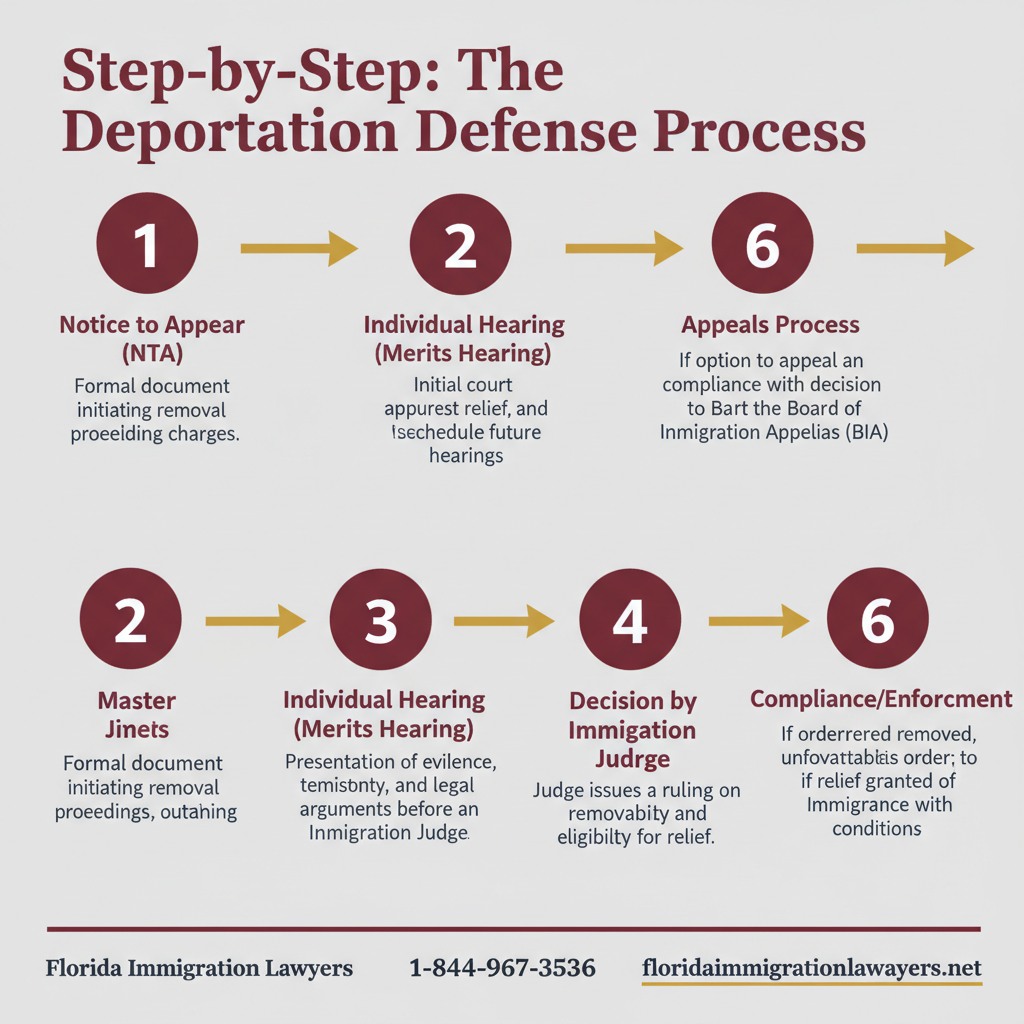
Deportation, also known as removal, is a formal legal process initiated by the U.S. government to remove a non-citizen from the country. Understanding each step is crucial for an effective defense. Here is a general overview of how these proceedings typically unfold in Florida.
-
Notice to Appear (NTA): The process usually begins when ICE issues a Form I-862, Notice to Appear. This document charges an individual with being removable and orders them to appear before an immigration judge. It specifies the reasons for removability, often citing sections of the Immigration and Nationality Act (INA).
If you receive an NTA in Florida, it means your case is being referred to an Immigration Court, such as those in Miami or Orlando. This is a critical juncture where immediate legal advice from a deportation defense lawyer is essential. Do not miss your scheduled court date.
-
Master Calendar Hearing: This is the initial appearance before an Immigration Judge. During this hearing, you will confirm receipt of the NTA, state whether you admit or deny the charges, and identify any forms of relief from removal you intend to pursue. The judge may also address bond eligibility.
Your attorney from Florida Immigration Lawyers will represent you, enter a plea, and help you understand the charges against you. This hearing sets the stage for your entire case and can influence its trajectory significantly. It is your opportunity to formally respond to the government's allegations.
-
Individual Hearing (Merits Hearing): If you contest removability or seek relief, your case will be scheduled for an Individual Hearing. This is essentially a trial where both sides present evidence, call witnesses, and make legal arguments. The Immigration Judge will then make a decision based on the evidence presented.
This hearing is where your defense strategy is fully executed. Your attorney will present your eligibility for various forms of relief, such as asylum, cancellation of removal under INA 240A or 240B, or adjustment of status. The outcome depends heavily on the strength of your evidence and legal arguments.
-
Decision and Appeals Process: After the Individual Hearing, the Immigration Judge will issue a decision. If the judge orders your removal, you generally have the right to appeal this decision to the Board of Immigration Appeals (BIA). If the BIA affirms the removal order, further appeals may be possible to a U.S. Circuit Court of Appeals (the 11th Circuit for Florida cases).
The appeals process is complex and time-sensitive, requiring precise legal filings. An experienced attorney is crucial for navigating these higher courts. They will ensure all deadlines are met and all legal avenues are explored to challenge an unfavorable ruling.
-
Seeking Relief from Removal: Throughout the proceedings, various forms of relief may be available depending on your specific circumstances. These can include asylum, withholding of removal, protection under the Convention Against Torture, cancellation of removal for certain non-permanent residents or permanent residents, and adjustment of status.
Eligibility for relief is strictly defined by law (e.g., INA 212, 240A, 240B) and requires meeting specific criteria. Your legal team will assess your situation to identify all potential forms of relief and build a compelling case for you to remain in the U.S. This is a cornerstone of any effective immigration defense Florida strategy.
Essential Documents for Your Deportation Defense Checklist
Preparing for a deportation case requires meticulous organization and a thorough collection of supporting documents. The strength of your defense often hinges on the evidence you can provide. Here is a checklist of essential documents you should gather:
- ✓ Personal Identification: Passport, birth certificate, national ID from your home country, driver's license, or any other government-issued identification.
- ✓ Proof of Entry and Residence: I-94 arrival/departure records, visa stamps, previous immigration petitions (I-130, I-485, etc.), utility bills, lease agreements, school records, employment records, bank statements, and any other documents showing your continuous physical presence in the U.S.
- ✓ Family Relationship Documents: Marriage certificates, birth certificates of U.S. citizen or LPR children, adoption decrees, and any other documents proving family ties. This is crucial for family-based immigration relief.
- ✓ Financial Records: Tax returns (Forms W-2, 1099, 1040), pay stubs, bank statements, and proof of financial support for dependents. These demonstrate economic ties and contributions to the U.S.
- ✓ Evidence of Good Moral Character: Letters of support from community leaders, employers, friends, and family; records of volunteer work; church affiliations; and any awards or recognitions.
- ✓ Criminal Records: All police reports, court dispositions, and sentencing documents for any arrests or convictions, even if they were minor or expunged. Full disclosure is critical for your immigration defense.
- ✓ Medical Records: If you or a family member has a serious medical condition that would be difficult to treat in your home country, gather all relevant medical documentation.
- ✓ Affidavits: Sworn statements from individuals who can attest to your character, presence in the U.S., family ties, or any hardship you or your family would face if you were deported.
Deportation Case Timeline and Processing Expectations in Florida
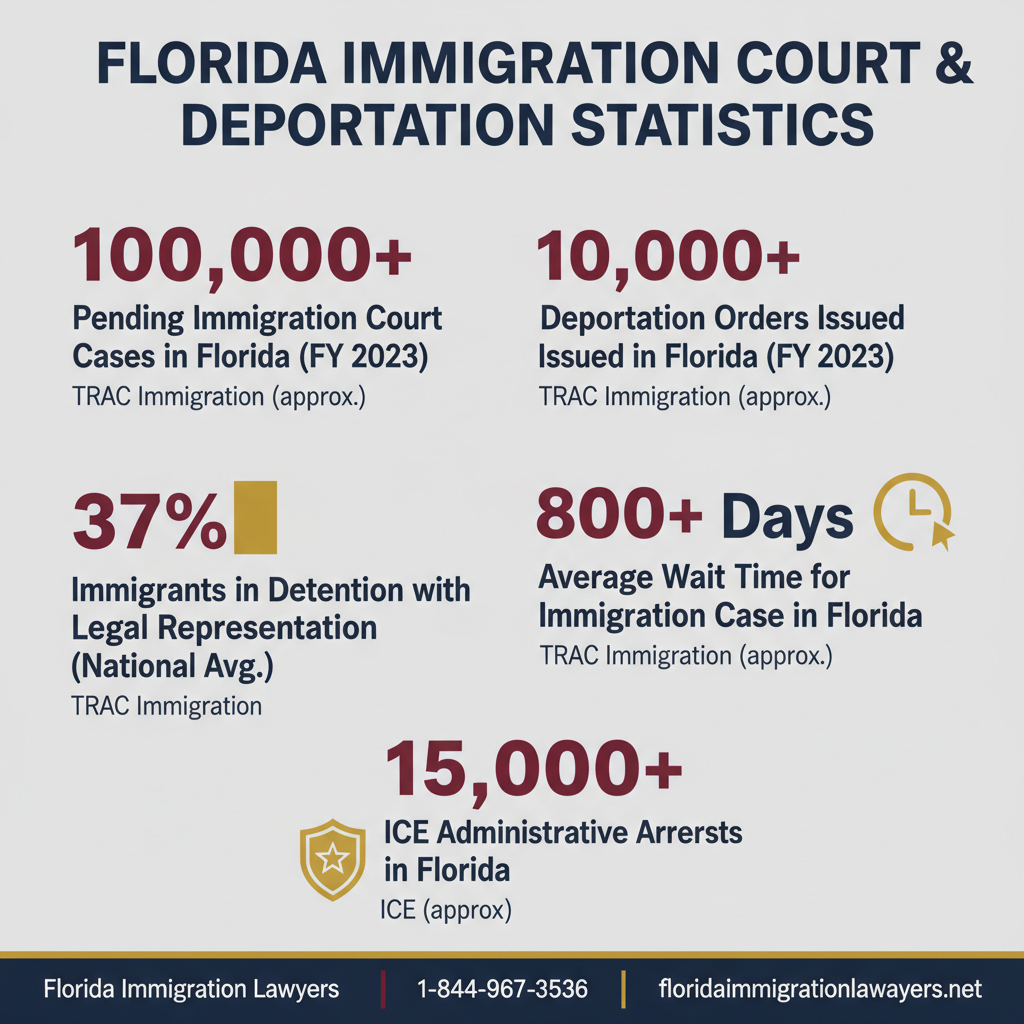
The timeline for a deportation case in Florida can vary significantly, ranging from a few months to several years. This variability depends on numerous factors, including the complexity of your case, the specific immigration court, the judge's docket, and the type of relief you are seeking.
Typically, after receiving a Notice to Appear, it may take several weeks or months for the first Master Calendar Hearing to be scheduled. In busy courts like Miami and Orlando, there can be significant backlogs. Individual Hearings, which are more extensive, are often scheduled months or even a year after the Master Calendar Hearing.
Appeals to the Board of Immigration Appeals (BIA) can add another year or more to the process. Further appeals to a federal circuit court can extend the timeline even further. Factors such as the availability of evidence, the need for expert witnesses, and unforeseen delays can all impact the overall duration of your case.
It is important to manage your expectations and understand that patience is often required. Your Florida Immigration Lawyers team will keep you informed of all developments and provide realistic assessments of your case's timeline. We work diligently to expedite the process where possible, always prioritizing a favorable outcome for you.
Cost Factors and Fee Breakdown for Deportation Defense
Understanding the financial aspects of a deportation defense case is important for planning. The costs involved can vary widely based on the complexity of the case, the specific relief sought, and the attorney's fee structure. Here is a breakdown of common cost factors:
-
Attorney Fees: This is typically the largest component. Immigration attorneys may charge hourly rates or a flat fee for specific stages of the deportation process. Flat fees are common for services like bond hearings, Master Calendar Hearings, or preparing for an Individual Hearing. Hourly rates apply to ongoing legal work, research, and court appearances.
At Florida Immigration Lawyers, we offer transparent fee structures. We will discuss all anticipated costs with you upfront during your free consultation. This ensures you have a clear understanding of your investment in your future.
-
Filing Fees: Government agencies like USCIS and the Executive Office for Immigration Review (EOIR) charge fees for various applications and appeals. For example, applying for adjustment of status or filing an appeal with the BIA will incur separate fees. These fees are set by the government and are subject to change.
-
Bond Amounts: If an individual is detained by ICE, an immigration judge may set a bond amount for their release. This money is held by ICE and is returned if the individual attends all court hearings. Bond amounts can range from a few thousand to tens of thousands of dollars.
-
Ancillary Costs: These can include fees for obtaining certified copies of documents, translation services for foreign-language documents, expert witness fees (if necessary), and travel expenses for witnesses. These costs, while often smaller individually, can add up over the course of a lengthy case.
Key Statistics & Data
Investing in skilled legal representation for a deportation defense is an investment in your freedom and your future in the United States. While the costs may seem daunting, the potential consequences of facing removal without proper legal guidance are far greater. Our firm is committed to providing high-quality, effective legal services to our Florida clients.
Common Mistakes to Avoid in Deportation Cases
Facing removal proceedings is stressful, but certain mistakes can severely jeopardize your case. Being aware of these pitfalls can help you avoid them:
-
Missing Court Dates: Failing to appear for any scheduled Master Calendar or Individual Hearing can result in an automatic deportation order (in absentia order). This is one of the most common and devastating mistakes. Always confirm your court dates and arrive on time.
-
Providing False Information: Lying or providing misleading information to immigration officials or the court can lead to severe penalties, including a permanent bar from the U.S. Always be truthful, even if the truth is difficult.
-
Failing to Disclose Criminal History: Attempting to hide arrests or convictions, even minor ones, will almost certainly be discovered and can seriously undermine your credibility and eligibility for relief. Full disclosure to your attorney is paramount.
-
Traveling Outside the U.S. Without Permission: If you are in removal proceedings, leaving the U.S. without specific authorization (e.g., advance parole) can be considered a self-deportation and may prevent your return. Always consult your attorney before any travel plans.
-
Ignoring a Notice to Appear (NTA): Many individuals, especially those new to the process, might ignore an NTA hoping it will go away. This is a critical error that almost always leads to an in absentia removal order. An NTA demands immediate attention.
-
Not Seeking Legal Counsel Early Enough: Delaying consultation with an experienced immigration lawyer can limit your options and reduce the time available to build a strong defense. The sooner you seek help, the better your chances.
-
Assuming No Options Exist: Even if your case seems difficult, many forms of relief or defense may be available that you are unaware of. An attorney can identify these possibilities. Never give up without exploring all avenues.
-
Failing to Gather Sufficient Evidence: A strong case relies on compelling evidence. Not collecting all necessary documents, affidavits, or records can weaken your defense significantly. Your attorney will guide you on what is needed.
-
Violating Terms of Release or Bond: If you are released from ICE detention on bond or other conditions, violating those terms can lead to re-detention and complicate your case. Adhere strictly to all requirements.
-
Not Preparing for Interviews or Hearings: Going into an interview with USCIS or a hearing before an Immigration Judge unprepared can be detrimental. Your attorney will help you prepare thoroughly, explaining what to expect and how to respond effectively.
-
Disclosing Too Much to Unauthorized Individuals: Be cautious about discussing your case with anyone other than your attorney. Information shared with non-legal personnel, or even friends and family who aren't experts, could inadvertently harm your case.
-
Failing to Update Your Address: If you move while in removal proceedings, you must inform the Immigration Court and USCIS of your new address. Failure to do so can result in missed notices and an in absentia removal order.
When to Call a Florida Immigration Lawyer
The complexities of immigration law make professional legal guidance almost always necessary, especially in deportation matters. Here are specific scenarios where contacting Florida Immigration Lawyers is not just recommended, but crucial:
-
You Receive a Notice to Appear (NTA): This is the most direct signal that you are in removal proceedings. Immediately contact an attorney upon receiving an NTA. Do not wait until your court date.
-
You or a Family Member is Detained by ICE: If you or a loved one is arrested or detained by Immigration and Customs Enforcement anywhere in Florida, legal intervention is urgent. An attorney can help seek release on bond or explore other avenues for release.
-
You Have a Prior Deportation Order: If you have been previously deported and re-entered the U.S., your situation is highly complex and carries severe penalties. You absolutely need an attorney to assess any potential relief.
-
You Have a Criminal History: Any criminal record, regardless of how minor it seems, can have significant immigration consequences, potentially making you deportable or ineligible for certain benefits. A lawyer can evaluate the impact and explore waivers.
-
You Are Seeking Asylum or Other Humanitarian Relief: Cases involving asylum, withholding of removal, or protection under the Convention Against Torture are highly specialized. A skilled attorney can help you prepare a compelling application and represent you in court. Learn more about asylum law.
-
You Are Considering Adjustment of Status While in Proceedings: If you are eligible for a green card through a family member (e.g., U.S. citizen spouse or parent), but are also in removal proceedings, adjusting your status requires careful navigation. An attorney can help you file the necessary forms, such as Form I-485, and represent you before the Immigration Court.
-
You Believe You Were Wrongfully Deported or Denied Entry: If you feel your rights were violated, or you were deported in error, similar to the Abrego Garcia deportation case, an attorney can review your case for potential legal challenges or appeals.
At Florida Immigration Lawyers, we understand the stakes involved. Our dedicated attorneys are ready to provide the compassionate yet aggressive representation you need. Visit our contact page or call us directly.
Frequently Asked Questions About Deportation in Florida
What is the difference between deportation and removal proceedings?
Historically, the terms "deportation" and "exclusion" were used to describe removing individuals already in the U.S. and preventing entry at the border, respectively. The Illegal Immigration Reform and Immigrant Responsibility Act of 1996 (IIRIRA) streamlined these into a single process called "removal proceedings." While "deportation" is still commonly used, legally, it falls under the umbrella of removal. The process is governed by sections of the Immigration and Nationality Act (INA), such as INA 240, which outlines the procedures for removal. Regardless of the term, the outcome is the same: being ordered to leave the United States. An attorney can clarify the specific legal charges against you.
Can DACA recipients be deported from Florida?
While the Deferred Action for Childhood Arrivals (DACA) program provides temporary protection from deportation and work authorization, it does not grant legal status. DACA recipients can still be placed in removal proceedings if they commit certain crimes, travel outside the U.S. without advance parole, or if the program itself faces legal challenges. The legal landscape for DACA is constantly evolving, making it crucial for recipients in Florida to stay informed and consult with an immigration attorney if they have any concerns or encounter law enforcement. Your DACA status offers a shield, but it is not impenetrable, especially in the current climate.
What is cancellation of removal, and am I eligible?
Cancellation of removal is a form of relief that allows certain non-citizens to apply for a green card even if they are in removal proceedings. There are two main types: for lawful permanent residents (LPRs) under INA 240A(a) and for non-LPRs under INA 240A(b). Eligibility criteria are strict and include factors like continuous physical presence in the U.S., good moral character, and demonstrating exceptional and extremely unusual hardship to a qualifying U.S. citizen or LPR family member. The requirements for non-LPRs are particularly difficult to meet. An attorney can assess your specific situation and determine if you meet the stringent criteria for this complex form of relief.
What happens if I miss my immigration court date in Miami?
Missing an immigration court date, whether a Master Calendar Hearing or an Individual Hearing, is a severe mistake. If you fail to appear without a valid reason, the Immigration Judge will almost certainly issue an in absentia order of removal against you. This means you will be ordered deported without your presence or defense. Once an in absentia order is issued, it is extremely difficult to reopen your case. You must file a motion to reopen within specific, very short deadlines, demonstrating exceptional circumstances for your absence. Always attend your court dates or have your attorney appear on your behalf if permitted.
What are my rights if ICE detains me in Florida?
If you are detained by ICE in Florida, you have fundamental rights. You have the right to remain silent and not answer questions about your immigration status. You have the right to speak with a lawyer. You also have the right to make a phone call. Do not sign anything without consulting an attorney. Ask to speak with Florida Immigration Lawyers immediately. Remember, anything you say can be used against you in removal proceedings. Knowing and asserting these rights is critical, especially during an ICE encounter or detention.

How long do deportation cases typically take in Florida?
The duration of deportation cases in Florida varies widely, ranging from several months to many years. Factors influencing the timeline include the complexity of your case, the specific immigration court (e.g., Miami vs. Orlando), the judge's caseload, the type of relief sought, and whether appeals are filed. Cases involving asylum or complex waivers often take longer due to evidentiary requirements. The current backlogs in the U.S. immigration court system also contribute to extended processing times. Your attorney can provide a more personalized estimate based on the specifics of your situation and the current court conditions in Florida.
Can I appeal a deportation order from an Immigration Judge?
Yes, generally you have the right to appeal an Immigration Judge's decision to the Board of Immigration Appeals (BIA). This appeal must be filed within 30 days of the judge's decision. The BIA reviews the judge's findings of fact and conclusions of law. If the BIA affirms the removal order, you may have the option to appeal further to a U.S. Circuit Court of Appeals (for Florida cases, this is the 11th Circuit). Appeals are highly technical and require a deep understanding of immigration law and appellate procedures. An experienced immigration attorney is essential for navigating the complex appeals process effectively.
What is voluntary departure, and should I consider it?
Voluntary departure is an option that allows certain non-citizens to leave the U.S. voluntarily at their own expense, avoiding a formal order of removal. This can be beneficial because an order of voluntary departure does not carry the same negative consequences as a formal removal order, such as a bar to future entry. However, strict deadlines and conditions apply. If you fail to depart by the specified date, the voluntary departure order automatically converts to a formal removal order, and you may face significant penalties. You should only consider voluntary departure after a thorough discussion with your immigration attorney, who can advise on its pros and cons for your specific situation.
About Florida Immigration Lawyers
Florida Immigration Lawyers is a leading immigration law firm dedicated to serving individuals and families across the entire state of Florida. We understand that immigration matters are deeply personal and often life-changing. Our firm is built on a foundation of compassion, expertise, and an unwavering commitment to our clients' success.
We offer a comprehensive range of immigration legal services, including deportation defense, asylum applications, citizenship and naturalization, family-based visas, business immigration, and more. Our experienced attorneys are adept at navigating the complexities of USCIS, ICE, and the Executive Office for Immigration Review (EOIR).
Why choose Florida Immigration Lawyers? We provide personalized attention, strategic legal advice, and tenacious advocacy. We are available 24/7 to address your urgent needs and offer free consultations to help you understand your options without financial commitment. Our bilingual team ensures that language is never a barrier to quality legal representation.
Protect your future and your family. Reach out to us today:
- Phone: 1-844-967-3536
- Website: https://www.floridaimmigrationlawyers.net
- Service Area: All of Florida
This article is for general informational purposes only and does not constitute legal advice. Immigration laws change frequently. For advice specific to your situation, please consult with a qualified immigration attorney.
Don't face immigration challenges alone. The complexities of cases like the Abrego Garcia deportation highlight the critical need for expert legal counsel. Whether you are facing removal proceedings, seeking asylum, or navigating visa applications, Florida Immigration Lawyers is here to help. Call us today at 1-844-967-3536 for a free consultation and take the first step towards securing your future in Florida.
Do Not Navigate This Process Alone
Our experienced immigration attorneys are ready to fight for you. Get a free, confidential consultation today.
Se Habla Español
Frequently Asked Questions
Vasquez Law Firm
Immigration Attorney | Founder, Vasquez Law Firm
U.S. Air Force veteran and immigration attorney with thousands of cases resolved. J.D., NCCU School of Law. AILA member. Admitted to the 4th, 5th, and 11th Circuit Courts.
Available 24/7 - Free Evaluations
Related Legal Services
Our Florida immigration attorneys can help you with free immigration consultation, experienced immigration attorneys and business immigration. Call today at 1-844-967-3536 for a free consultation.
Related Links
Related Topics
Free Legal Consultation
Discuss your case with our experienced attorneys. We're available 24/7.
Se Habla Español - Estamos aquí para ayudarle.
Related Articles
Stokes Interview: Navigating Marriage Fraud in Florida
A Stokes interview is a specialized, separate interview conducted by USCIS when there are suspicions of marriage fraud in a green card application. This rigorous process involves individual questioning of spouses, focusing on inconsistencies in their testimonies to determine the authenticity of their marital bond. For couples in Florida, navigating this high-stakes interview requires meticulous preparation, extensive documentation, and often the strategic guidance of an experienced immigration lawyer. Understanding the process, preparing for detailed questions, and presenting a strong case are crucial for overcoming marriage fraud allegations and securing your immigration future. Florida Immigration Lawyers stands ready to assist you.
Immigration Attorney Gainesville: North Florida Legal Help
For those in Gainesville, Alachua County, and throughout North Florida, navigating U.S. immigration law requires expert guidance. An experienced immigration attorney can simplify complex processes, from family-based petitions and employment visas to critical asylum claims and deportation defense. This comprehensive guide outlines the essential services provided by an immigration attorney, details necessary documentation, clarifies processing timelines, and discusses associated costs. We also highlight common mistakes to avoid and crucial scenarios where legal counsel is indispensable. Florida Immigration Lawyers serves all of Florida, including Gainesville and St. Petersburg, providing dedicated legal support to help you achieve your immigration goals. Contact us for a free consultation to discuss your specific needs.
Military Naturalization Expedited at Florida Bases
Explore expedited military naturalization processes for service members at Florida bases like MacDill. Learn about eligibility, steps, and common mistakes. Contact Florida Immigration Lawyers for a free consultation.
Protect Yourself from Immigration Scams in Florida
Learn how to protect against immigration scams in Florida, focusing on St. Petersburg. This guide covers identifying scams, verifying credentials, and getting legal help. Call Florida Immigration Lawyers at 1-844-967-3536 for assistance.
