Visa Bulletin October 2025: Florida Immigration Updates & Analysis
The Visa Bulletin October 2025 marked the beginning of a new fiscal year for immigrant visa availability, bringing crucial updates for individuals and families seeking permanent residency in Florida. Understanding these changes is vital for anyone navigating the complex U.S. immigration system, especially concerning family-sponsored and employment-based categories. This comprehensive guide from Florida Immigration Lawyers will break down the bulletin's implications, clarify priority dates, and outline essential steps for applicants. We aim to empower you with the knowledge to make informed decisions about your immigration journey in Florida. Learn how these updates could affect your path to a green card.
The Visa Bulletin October 2025 outlined the availability of immigrant visas for the start of the new fiscal year. It provided "Final Action Dates" and "Dates for Filing Applications" for family-sponsored and employment-based green card categories, impacting thousands of applicants in Florida. These dates determine when you can move forward with your immigration application, either by filing for adjustment of status or proceeding with consular processing.
- The October 2025 Visa Bulletin sets critical dates for green card eligibility.
- It differentiates between Final Action Dates and Dates for Filing.
- Family-sponsored and employment-based categories are most affected.
- Applicants in Florida must monitor these updates for their next steps.
- Consulting an immigration lawyer is crucial for understanding your specific eligibility.
Visa Bulletin October 2025: Florida Immigration Updates & Analysis
Are you an immigrant in Florida, perhaps in areas like Hialeah, Miami, or Orlando, eagerly anticipating your next step towards a green card? Navigating the complex world of U.S. immigration can feel overwhelming, especially when official announcements like the Visa Bulletin October 2025 are released. This bulletin is a critical tool published monthly by the U.S. Department of State, dictating the availability of immigrant visas and when applicants can move forward with their cases.
Understanding the implications of the Visa Bulletin October 2025 is essential for anyone on the path to permanent residency. It directly affects when you can file your Adjustment of Status application with USCIS or proceed with your immigrant visa interview abroad. For many, this bulletin represents hope and the next tangible step in their immigration journey.
At Florida Immigration Lawyers, we understand the anxieties and aspirations that come with these updates. Our dedicated team is here to help you decipher the Visa Bulletin October 2025 and understand its specific impact on your situation. Do not navigate this complex process alone. Call Florida Immigration Lawyers at 1-844-967-3536 for a free consultation and let our experienced attorneys guide you.
Overview: What is the Visa Bulletin and Why Does October Matter?
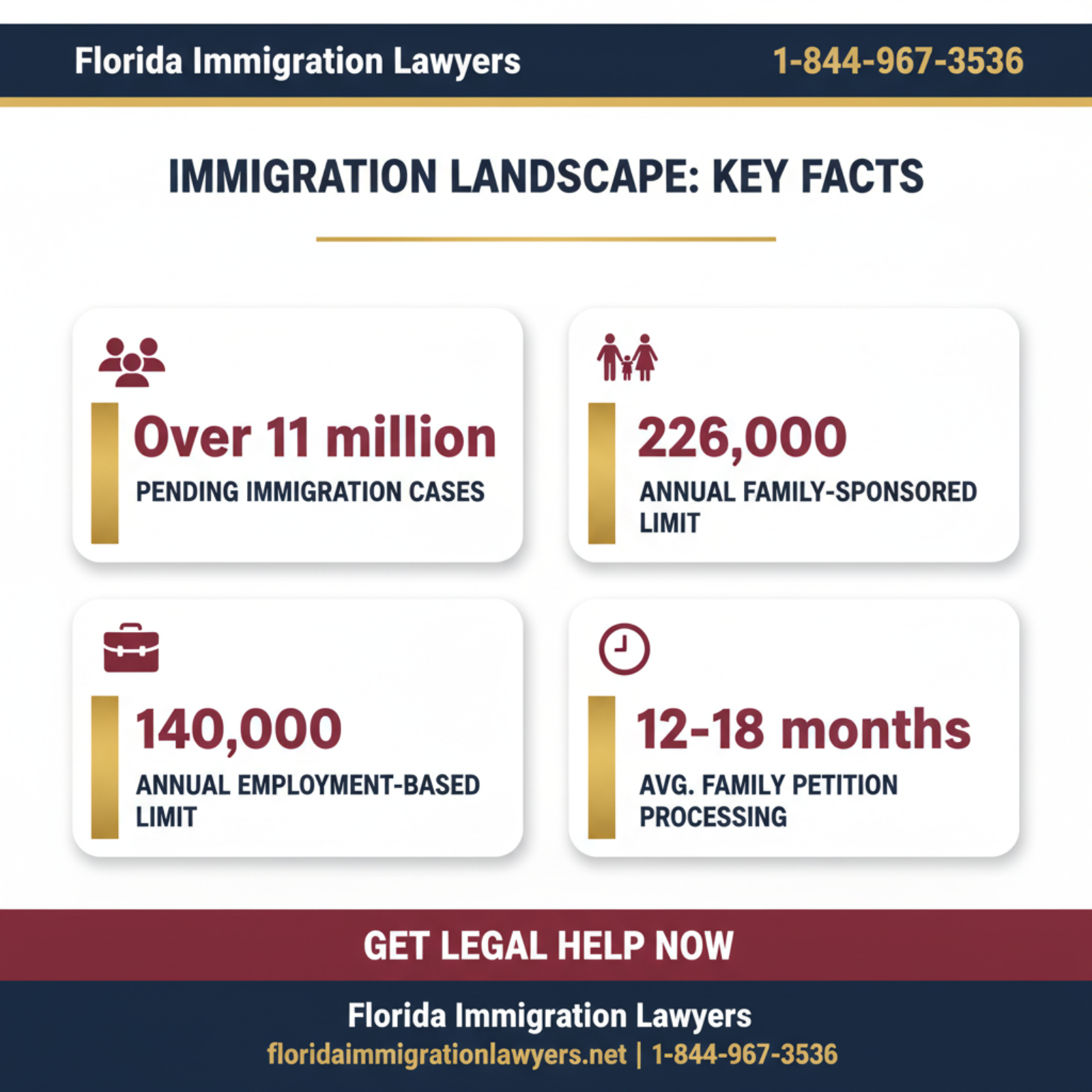
The Visa Bulletin serves as a monthly guide, published by the U.S. Department of State (travel.state.gov), that summarizes the availability of immigrant visa numbers. These numbers are allocated based on specific preference categories and the applicant's country of chargeability, which is usually their country of birth. The U.S. government limits the number of immigrant visas issued each fiscal year, and when demand exceeds supply, a backlog develops.
The Visa Bulletin October 2025 is particularly significant because it marks the beginning of a new fiscal year (October 1st to September 30th) for immigrant visa allocation. This is when a fresh quota of visa numbers becomes available. Often, this period sees some movement in priority dates, offering renewed hope for many applicants who have been waiting for their turn. For applicants in Florida, understanding these shifts is paramount to timely filing.
Each Visa Bulletin contains two charts for most preference categories: "Final Action Dates" and "Dates for Filing Applications." The Final Action Dates indicate when a visa can actually be issued. The Dates for Filing Applications indicate when applicants may submit their applications to USCIS for adjustment of status, even if a visa is not yet immediately available for final approval.
USCIS (uscis.gov) usually announces shortly after the Visa Bulletin's release which chart (Final Action Dates or Dates for Filing) should be used for adjustment of status applications. This decision is crucial for Florida residents applying from within the United States. Our team closely monitors these announcements to provide the most current advice to our clients.
Understanding Your Priority Date and Preference Category
Your "priority date" is essentially your place in line for an immigrant visa. For family-sponsored cases, it is the date the Form I-130, Petition for Alien Relative, was properly filed with USCIS. For employment-based cases, it is generally the date the Form I-140, Immigrant Petition for Alien Worker, or the labor certification application, was filed.
The Visa Bulletin categorizes immigrants into different preference levels. Family-sponsored preference categories include unmarried adult sons and daughters of U.S. citizens (F1), spouses and children of permanent residents (F2A), unmarried adult sons and daughters of permanent residents (F2B), married sons and daughters of U.S. citizens (F3), and brothers and sisters of U.S. citizens (F4). Each of these categories has annual limits and often experiences significant backlogs, especially for certain countries.
Employment-based preference categories include individuals of extraordinary ability (EB-1), professionals with advanced degrees or exceptional ability (EB-2), skilled workers, professionals, and other workers (EB-3), certain special immigrants (EB-4), and immigrant investors (EB-5). The EB-1 category is often the fastest, as it generally remains current for most countries, meaning visas are immediately available. This contrasts sharply with categories like EB-2 and EB-3 for applicants from countries such as India and China, which face substantial waits.
Knowing your priority date and preference category is the first step in understanding the Visa Bulletin October 2025. If your priority date is earlier than the date listed for your category and country of chargeability in the Visa Bulletin, you may be eligible to proceed with your application. Our attorneys at Florida Immigration Lawyers can help you determine your exact status and eligibility.
Navigating the Visa Bulletin: A Step-by-Step Guide for Florida Applicants
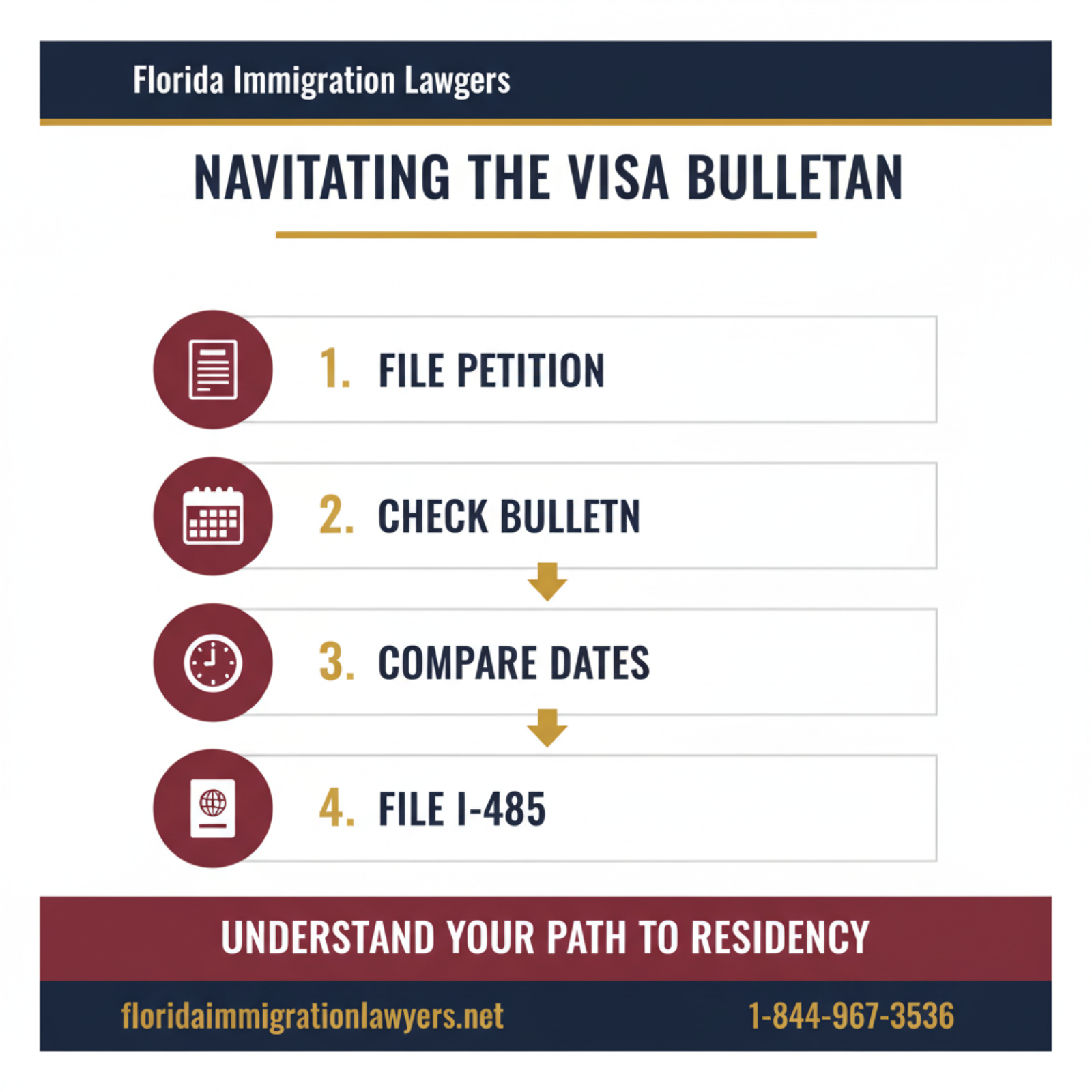
Interpreting the Visa Bulletin October 2025 can be complex, but following these steps can help you understand its relevance to your case. Remember, this is general information, and your specific situation may require personalized legal advice.
- Locate the Correct Visa Bulletin: Always ensure you are looking at the official Visa Bulletin for the correct month and year. In this case, the Visa Bulletin October 2025. You can find this on the U.S. Department of State website.
- Identify Your Preference Category: Determine if your petition falls under a family-sponsored (F1, F2A, F2B, F3, F4) or employment-based (EB-1, EB-2, EB-3, EB-4, EB-5) category. Your Form I-797 approval notice for your I-130 or I-140 petition will indicate this.
- Find Your Country of Chargeability: This is typically your country of birth, not necessarily your current nationality or residence. Visa availability often varies significantly by country due to per-country limits.
- Review the "Dates for Filing Applications" Chart: Check this chart first. If your priority date is earlier than the date listed for your category and country, you may be eligible to file your Form I-485, Application to Register Permanent Residence or Adjust Status, with USCIS. USCIS will announce if applicants should use this chart or the "Final Action Dates" chart for adjustment of status filing.
- Review the "Final Action Dates" Chart: This chart indicates when immigrant visas are actually available for issuance. If your priority date is earlier than the date listed here, and USCIS has indicated to use this chart for adjustment of status, or if you are undergoing consular processing, your case may be ready for final adjudication or interview.
- Monitor USCIS Announcements: After the Visa Bulletin is released, USCIS typically publishes on its website which chart (Dates for Filing or Final Action Dates) should be used for filing adjustment of status applications for that month. This is a critical step for Florida residents applying from within the U.S.
- Consult an Immigration Attorney: The most reliable way to understand the Visa Bulletin October 2025 and its impact on your specific case is to consult with an experienced immigration lawyer. They can help you interpret the dates, determine your eligibility, and advise on the best course of action.
Document Checklist for Adjustment of Status or Immigrant Visa Processing
Once your priority date becomes current according to the Visa Bulletin October 2025, preparing the necessary documentation is paramount. Whether you are filing for Adjustment of Status (Form I-485) in Florida or proceeding with Consular Processing abroad, having an organized set of documents will streamline your application. This list is general; your specific case may require additional items.
- Form I-485, Application to Register Permanent Residence or Adjust Status (if adjusting in the U.S.)
- Form DS-260, Immigrant Visa Application (if consular processing)
- Two passport-style photos
- Copy of government-issued identification with photo
- Copy of birth certificate
- Copy of passport biographical page and visa pages
- Copy of Form I-94, Arrival/Departure Record
- Copy of Form I-797, Approval Notice for Form I-130 or I-140 petition
- Form I-864, Affidavit of Support (for family-based and some employment-based cases)
- Proof of sponsor's income and assets (tax returns, employment letters, bank statements)
- Medical examination report (Form I-693) completed by a USCIS-approved civil surgeon
- Police certificates from all countries where you have lived for six months or more since age 16
- Court and prison records (if applicable)
- Marriage certificate (if applicable)
- Divorce decrees or death certificates of former spouses (if applicable)
- Evidence of your legal entry into the U.S.
- Employment authorization document (EAD) and advance parole (AP) cards (if applicable)
- Proof of bona fide marriage (for marriage-based petitions)
Timeline and Processing Expectations for Florida Applicants
Understanding the processing times after your priority date becomes current in the Visa Bulletin October 2025 is crucial for managing expectations. It's important to remember that the Visa Bulletin only indicates visa availability; it does not dictate how quickly USCIS or a U.S. Embassy/Consulate will process your specific application.
USCIS processing times (egov.uscis.gov/processing-times/) vary significantly by form type, service center, and field office. For instance, an Adjustment of Status application filed in a Florida USCIS field office like Miami, Orlando, or Hialeah could take anywhere from several months to over a year to be adjudicated after filing. Factors such as workload, staffing levels, and the complexity of your case all play a role.
Many applicants wonder, "Is USCIS moving faster in 2025?" While USCIS continually works to improve efficiency, processing times remain dynamic. The agency has implemented various strategies, including technology upgrades and policy changes, but backlogs in certain areas persist. It is always best to check the official USCIS processing times webpage for the most current estimates relevant to your specific application and location.
For those undergoing consular processing, the timeline involves coordination between the National Visa Center (NVC) and the U.S. Embassy or Consulate in your home country. After your priority date is current, the NVC will collect your documents and schedule an interview. Interview wait times can also vary greatly by location. Overall, patience is a virtue in the immigration process, and our attorneys are here to provide realistic expectations and consistent updates.
Cost Factors and Fee Breakdown in the Immigration Process
Pursuing a green card involves various fees, which can be a significant consideration for applicants in Florida. These costs are subject to change, so it is always important to consult the official USCIS website for the most current fee schedule. The Visa Bulletin October 2025 itself does not impose fees, but becoming current allows you to incur costs for subsequent applications.
Typical fees include the filing fee for Form I-485, Application to Register Permanent Residence or Adjust Status, if you are adjusting status in the U.S. This fee often includes the biometric services fee. If you are undergoing consular processing, you will typically pay an immigrant visa application processing fee to the Department of State and a USCIS Immigrant Fee after your visa is issued.
Beyond government filing fees, other potential costs include medical examination fees, which are paid directly to the civil surgeon. There may also be costs for obtaining supporting documents, such as birth certificates, marriage certificates, police clearances, and translations. Legal fees for an experienced immigration attorney are also a crucial investment, providing invaluable guidance and representation throughout the complex process.
While the initial costs may seem daunting, investing in proper legal representation can help prevent costly mistakes and delays. Florida Immigration Lawyers offers transparent fee structures and can discuss all potential costs associated with your specific immigration case during a free consultation. We believe that professional legal assistance is key to a successful outcome.
Do not navigate this process alone. The complexities of the Visa Bulletin October 2025 and subsequent application steps require expert guidance. Contact Florida Immigration Lawyers today by calling 1-844-967-3536 to ensure your application is handled correctly and efficiently.
Common Mistakes to Avoid When Your Priority Date Becomes Current
When your priority date becomes current according to the Visa Bulletin October 2025, it's an exciting time. However, rushing or overlooking critical details can lead to significant delays or even denial. Avoid these common pitfalls:
- Failing to Monitor the Visa Bulletin Regularly: The bulletin changes monthly. Missing an update could mean missing your window to file, particularly if your date retrogresses in a future month. This is a common issue for Florida applicants who are busy with their daily lives.
- Using the Wrong Chart: USCIS specifies each month whether to use the "Final Action Dates" chart or the "Dates for Filing Applications" chart for adjustment of status. Using the incorrect chart will result in your application being rejected.
- Incomplete or Incorrect Forms: Immigration forms are highly detailed. Errors or omissions, even minor ones, can lead to Requests for Evidence (RFEs) or outright denials. Ensure all sections are filled accurately and completely.
- Missing or Insufficient Supporting Documentation: Failing to include all required documents, or providing documents that are not properly translated or certified, is a frequent cause of delays. Refer to the official checklists thoroughly.
- Not Undergoing a Timely Medical Exam: The Form I-693, Report of Medical Examination and Vaccination Record, must be completed by a USCIS-approved civil surgeon. The results have an expiration date, so timing this correctly is important.
- Failing to Disclose All Immigration History: Any past immigration violations, arrests, or legal issues must be fully disclosed, even if they seem minor. Concealing information can have severe consequences, including charges of misrepresentation.
- Ignoring the Affidavit of Support Requirements: For family-based petitions, the Form I-864, Affidavit of Support, is crucial. If the sponsor's income is insufficient, a joint sponsor may be required. Failing to meet these requirements will halt your application.
- Traveling Internationally Without Advance Parole: If you have an Adjustment of Status application pending, leaving the U.S. without an approved Advance Parole document (Form I-131) can be considered abandonment of your application.
- Not Updating Address Changes: All applicants must inform USCIS of any address changes within 10 days of moving. Failing to do so can result in missed notices, interview appointments, or RFEs.
- Attempting to Handle a Complex Case Alone: While self-filing is possible for straightforward cases, the nuances of immigration law, especially with fluctuating Visa Bulletin dates, make legal representation invaluable. Many Florida residents find immense relief in having professional guidance.
When to Call a Lawyer: Expert Guidance for Your Immigration Journey
The immigration process, particularly when dealing with the intricacies of the Visa Bulletin October 2025, is rarely straightforward. While this guide provides general information, your individual circumstances are unique. Knowing when to seek legal counsel can be the difference between a smooth process and significant setbacks.
You should consider calling an immigration lawyer if:
- Your priority date is current or about to become current, and you need assistance preparing and filing your Adjustment of Status application or preparing for consular processing.
- You have a complex immigration history, including past denials, deportations, or criminal records.
- You are unsure which preference category you fall under or how to interpret your priority date in the Visa Bulletin October 2025.
- You receive a Request for Evidence (RFE) or Notice of Intent to Deny (NOID) from USCIS.
- You have been out of status or have overstayed a visa in the past.
- You have questions about accompanying family members, derivatives, or age-out issues.
- You are concerned about the financial requirements for an Affidavit of Support.
- You simply want peace of mind knowing that experienced professionals are handling your case.
Florida Immigration Lawyers specializes in a wide range of immigration services, including general immigration matters, family-based petitions, business immigration, deportation defense, and citizenship applications. Our attorneys are well-versed in the latest immigration laws and policies, including the nuances of the Visa Bulletin.
We serve clients across Florida, from Hialeah to Jacksonville, providing personalized and compassionate legal representation. Let us help you navigate the complexities of your immigration journey, ensuring your application is complete, accurate, and submitted correctly. Your success is our priority.
About Florida Immigration Lawyers
Florida Immigration Lawyers is a leading immigration law firm dedicated to serving individuals and families throughout Florida. We understand the profound impact immigration matters have on people's lives and are committed to providing exceptional legal representation with empathy and integrity.
Our firm specializes in a comprehensive range of immigration services, including family-sponsored visas, employment-based visas, adjustment of status, consular processing, naturalization, and removal defense. We pride ourselves on offering personalized strategies tailored to each client's unique circumstances, ensuring the best possible outcomes.
Why choose Florida Immigration Lawyers? Our experienced attorneys possess in-depth knowledge of U.S. immigration law and are passionate advocates for our clients. We offer transparent communication, diligent case management, and unwavering support from your initial consultation to the resolution of your case. We are available 24/7 to address your concerns and provide timely assistance.
For a free, confidential consultation to discuss your immigration needs, contact us today. We are here to help you achieve your American dream. Call us at 1-844-967-3536 or visit our website at https://www.floridaimmigrationlawyers.net. We serve all of Florida.
Sources and References
- U.S. Department of State - Visa Bulletin
- U.S. Citizenship and Immigration Services (USCIS)
- USCIS Check Processing Times
- 8 U.S.C. § 1153 - Immigration and Nationality Act (INA) Section 203 (Preference Categories)
- 8 CFR § 245.1 - Adjustment of status of nonimmigrant to that of person admitted for permanent residence
- USCIS Policy Manual - Volume 7, Part A, Chapter 3 (Visa Availability and Priority Dates)
This article provides general legal information and is not intended as legal advice. Every case is unique, and outcomes depend on specific facts and circumstances. Contact an attorney for advice about your particular situation.
The Visa Bulletin October 2025 was a pivotal moment for many, but your immigration journey doesn't end there. Ensure you have expert legal guidance every step of the way. Florida Immigration Lawyers is here to provide the support and representation you need to achieve your goals in Florida. Don't leave your future to chance.
Call us today at 1-844-967-3536 for a free consultation. Se Habla Español - Estamos aquí para ayudarle.
Need help with Immigration?
Our Florida immigration attorneys offer free consultations. Call today or schedule online.
Frequently Asked Questions
Florida Immigration Lawyers
Legal Team
Our experienced attorneys at Florida Immigration Lawyers have been serving clients across Florida for over 20 years. We specialize in immigration, personal injury, criminal defense, workers compensation, and family law.