Immigration for 2026 Winter Olympics Ice Hockey Athletes in Florida
For athletes, coaches, and support staff preparing for the 2026 Winter Olympics ice hockey events, understanding U.S. immigration requirements is vital. Many will train or transit through Florida, necessitating specific visas like the O-1A for extraordinary ability or P-1A for internationally recognized athletes. This comprehensive guide from Florida Immigration Lawyers details the step-by-step application process, essential document checklist, and expected timelines. We also highlight common mistakes to avoid and emphasize the importance of professional legal counsel to ensure a smooth and successful immigration journey. Secure your path to the Olympics with expert help.
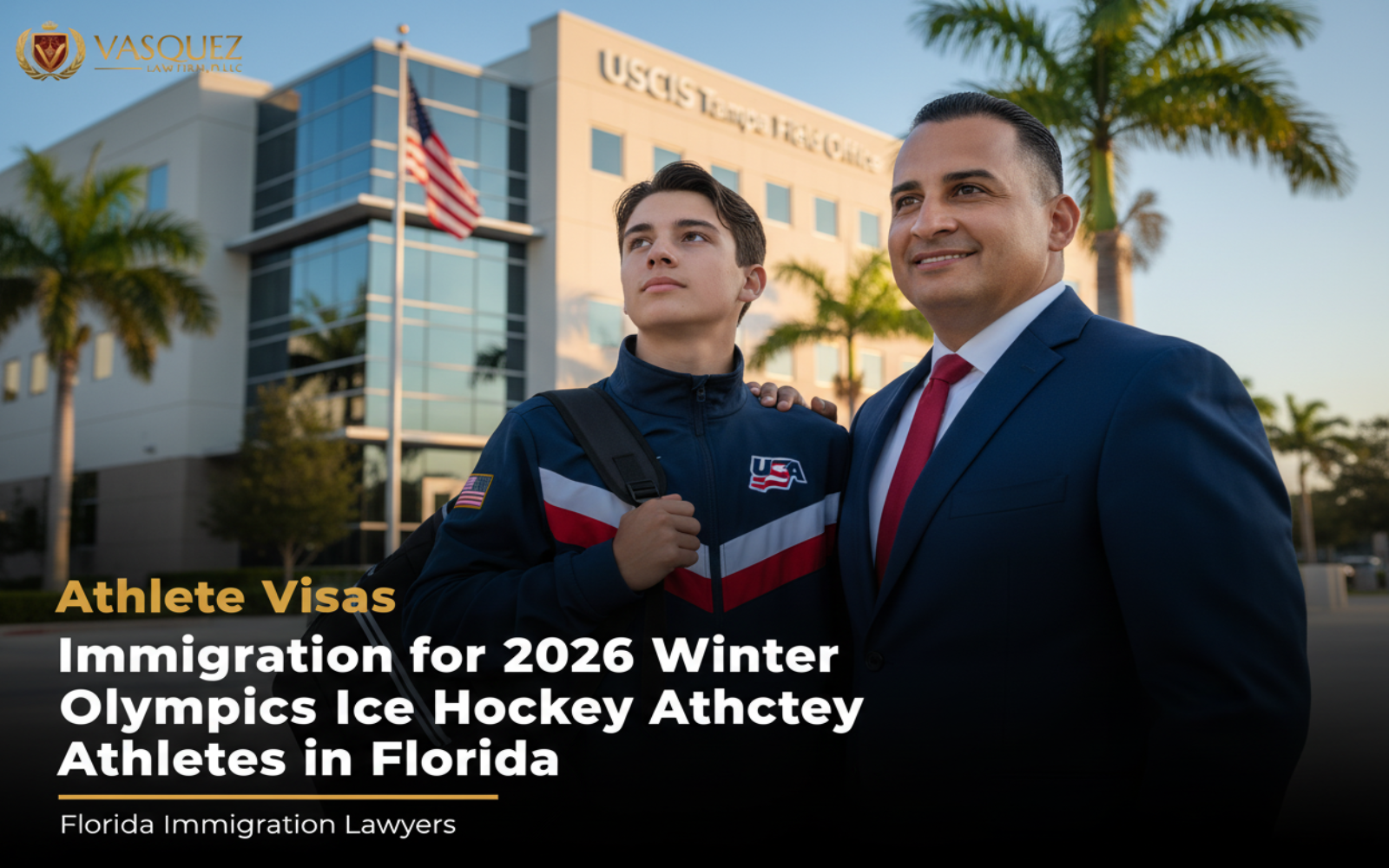
For athletes, coaches, and support staff involved in the 2026 Winter Olympics ice hockey events who may train, reside, or transit through Florida, specific U.S. immigration visas are required. These generally include O-1A visas for individuals of extraordinary ability or P-1A visas for internationally recognized athletes. Proper documentation and timely applications are crucial for a smooth process.
- O-1A and P-1A visas are primary options for Olympic athletes and essential support staff.
- Florida serves as a significant hub for training and transit for international sports figures.
- Understanding USCIS processing times and specific requirements is vital for timely approval.
- Working with an experienced Florida immigration lawyer can prevent common application errors.
- Family members of athletes may also require specific dependent visas to accompany them.
Immigration for 2026 Winter Olympics Ice Hockey Athletes in Florida
The excitement for the 2026 Winter Olympics in Milano Cortina is building, especially for ice hockey enthusiasts. As athletes, coaches, and essential support staff prepare for this global spectacle, many will find themselves navigating complex immigration pathways to train, reside, or transit through the United States, particularly Florida. Florida, with its world-class training facilities and strategic location, often serves as a crucial hub for international athletes.
If you or someone you know is an athlete, coach, or support personnel involved in the 2026 Winter Olympics ice hockey events and needs to understand U.S. immigration requirements, this guide is for you. We will explore the specific visa categories, application processes, and potential challenges. Our goal is to provide clear, actionable information to help you prepare effectively.
Do not let immigration complexities delay your Olympic journey. For personalized guidance and expert legal assistance, call Florida Immigration Lawyers at 1-844-967-3536 for a free consultation today. Our team is ready to assist you.
Understanding Immigration Pathways for Olympic Athletes in Florida
For international athletes participating in events like the 2026 Winter Olympics ice hockey, obtaining the correct U.S. visa is paramount. These are not standard tourist visas; they are specific nonimmigrant classifications designed for individuals with extraordinary ability or those performing at an internationally recognized level. Florida's vibrant sports scene means many athletes choose our state for training camps, pre-Olympic events, or even long-term residency.
The U.S. immigration system offers several visa options for athletes and their support teams. The most common include the O-1A visa for individuals with extraordinary ability and the P-1A visa for internationally recognized athletes. Understanding the nuances of each is critical, as eligibility criteria and application processes differ significantly. Our firm, Florida Immigration Lawyers, specializes in these complex categories.
Furthermore, support personnel-such as coaches, trainers, and specialized technicians-also require appropriate visas. Often, these individuals will apply for a P-1S visa as essential support personnel to a P-1A athlete or team, or an O-1B visa if they possess extraordinary ability in their field. Even family members need specific dependent visas, typically O-3 or P-4, to accompany their athlete relatives to Florida or elsewhere in the U.S.
The Role of Florida in Olympic Preparations
Florida is not just a tourist destination; it is a major center for professional sports and athletic training. From the state-of-the-art facilities near cities like Miami and Orlando to the growing sports communities in areas such as Gainesville, athletes often choose Florida for its climate, resources, and access to international travel hubs. This makes understanding Florida-specific immigration processes particularly relevant for those involved in the 2026 Winter Olympics ice hockey.
Many international sports organizations and teams establish temporary or permanent bases here. This often involves intricate logistical planning, including securing appropriate visas for their entire contingent. The presence of multiple USCIS field offices across Florida, including in cities like Orlando and Miami, means that local expertise from a Florida immigration lawyer can be invaluable in navigating regional processing nuances.
Step-by-Step Guide to Securing Athlete Visas for the 2026 Winter Olympics
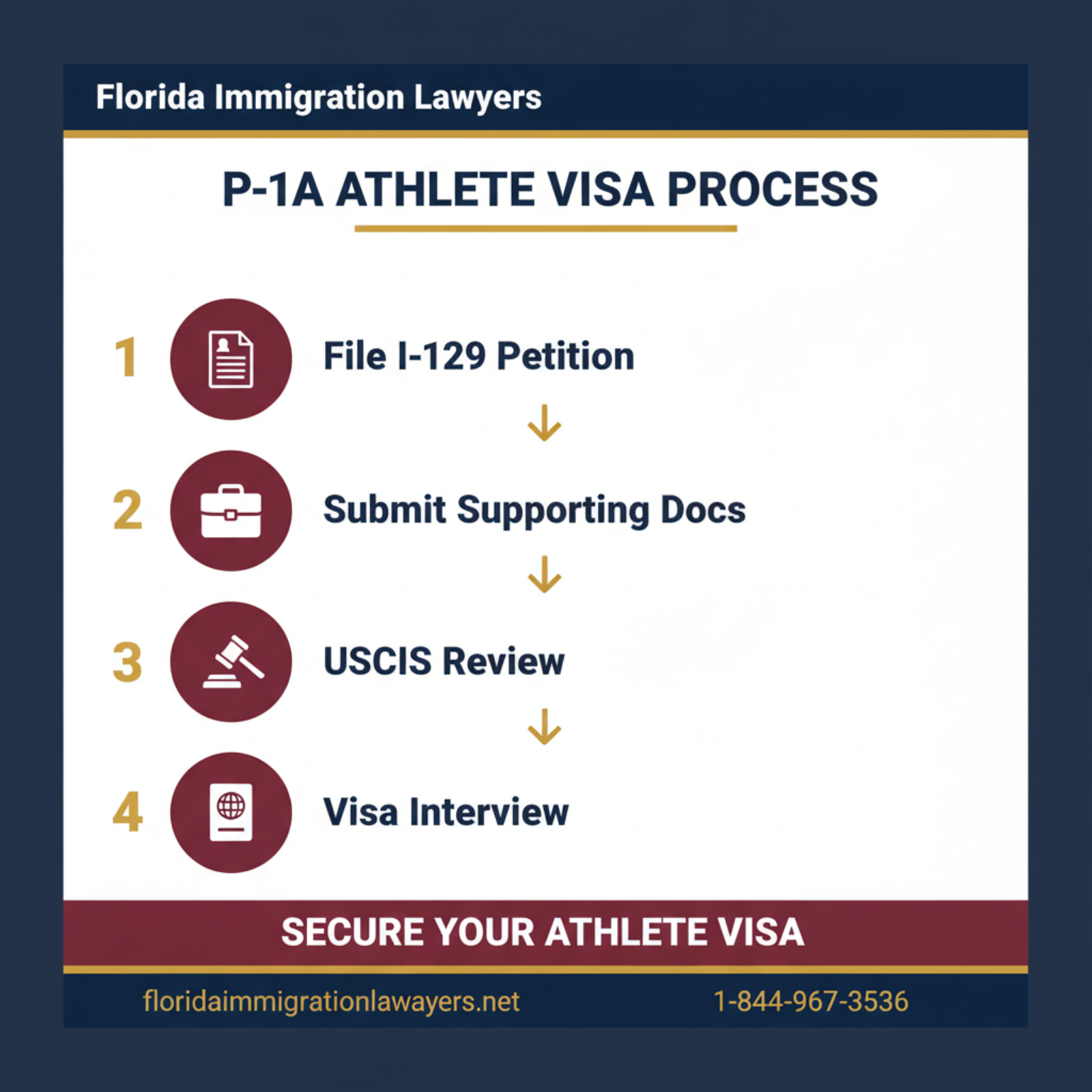
Navigating the U.S. immigration system for an athlete visa can be intricate. Here is a general step-by-step guide for individuals involved in the 2026 Winter Olympics ice hockey, focusing on O-1A and P-1A visas:
-
Determine Eligibility and Visa Category: First, assess which visa category best fits your situation. The O-1A visa for athletes is for individuals with extraordinary ability in the sciences, arts, education, business, or athletics, demonstrated by sustained national or international acclaim. The P-1A visa for international athletes is for individuals or teams who are internationally recognized for their achievements in a specific sport.
For support personnel, options like the P-1S or O-1B visas may be appropriate. Our attorneys can help you identify the most suitable path based on your unique qualifications and role.
- Secure a U.S. Sponsoring Organization or Agent: Both O-1A and P-1A visas require a U.S. employer or agent to file the petition on behalf of the athlete. This entity will be responsible for submitting the necessary paperwork and supporting documentation to U.S. Citizenship and Immigration Services (USCIS). For Olympic athletes, this is often the national Olympic committee, a specific sports federation, or a U.S.-based agent facilitating their presence for training or competition.
- Gather Required Documentation: This is a critical phase. You will need to collect extensive evidence proving your extraordinary ability or international recognition. This includes contracts, awards, media clippings, testimonials from experts, and evidence of significant past achievements. A detailed list is provided in the document checklist below. Ensure all documents are translated into English by a certified translator if they are in another language.
-
File Form I-129, Petition for a Nonimmigrant Worker, with USCIS: The U.S. sponsor or agent files Form I-129 along with all supporting evidence and the required filing fees. This petition is typically filed with the USCIS service center that has jurisdiction over the petitioner's location. For those in Florida, this usually means filing with the appropriate service center designated by USCIS.
Premium Processing Service (Form I-907) is available for an additional fee, which can significantly expedite the USCIS processing time for the I-129 petition. This is often advisable given the time-sensitive nature of Olympic preparations.
- Receive I-797 Approval Notice: Once USCIS approves the I-129 petition, they will send an I-797 Approval Notice to the petitioner. This notice confirms that the petition has been approved and that the athlete is eligible for the visa category requested. This is a crucial document for the next step.
-
Apply for the Visa at a U.S. Embassy or Consulate Abroad: If the athlete is outside the U.S., they will need to apply for the actual visa stamp at a U.S. Embassy or Consulate in their home country. This involves completing the DS-160 online nonimmigrant visa application, paying the visa fee, and attending a visa interview. During the interview, consular officers will review the I-797 approval and other documents.
It is important to be truthful and provide consistent information. Consular officers are trained to detect inconsistencies. For those already in the U.S. on another nonimmigrant status, a change of status may be possible through USCIS, avoiding the need to leave the country for a visa stamp.
- Enter the United States: Upon successful visa issuance, the athlete can travel to the U.S. At the port of entry, a U.S. Customs and Border Protection (CBP) officer will review their documents and admit them for a specific period. They will typically issue an I-94 Arrival/Departure Record, which indicates the authorized period of stay. Keep this record safe, as it is proof of your legal status in the U.S.
Essential Document Checklist for Athlete Visas
Preparing a thorough and accurate set of documents is vital for a successful athlete visa USA application. Missing or incorrect documentation can lead to delays or even denials. Here is a comprehensive checklist for O-1A and P-1A visa petitions:
- Form I-129, Petition for a Nonimmigrant Worker
- Form I-129 O/P Supplement (for O and P classification)
- Form G-28, Notice of Entry of Appearance as Attorney or Accredited Representative (if represented by a lawyer)
- Written advisory opinion from an appropriate U.S. peer group, labor organization, or management organization with expertise in the athlete's area of ability.
- Copies of contracts between the athlete and the U.S. petitioner/employer.
- Itinerary of events or activities in the U.S. (e.g., training schedule, competition dates for 2026 Winter Olympics ice hockey related activities).
- Evidence of international recognition or extraordinary ability (e.g., major international awards, significant media coverage, high salary, critical role in distinguished organizations).
- Testimonials or affidavits from experts in the field.
- Evidence of participation in internationally recognized competitions.
- Copies of any previous U.S. visas or I-94 records.
- Passport copies (biographical page and any previous U.S. visa stamps).
- Birth certificate and marriage certificate (if applying for dependents).
- Proof of relationship for dependents (e.g., birth certificates for children, marriage certificate for spouse).
- Relevant educational credentials.
- Any other documentation specifically requested by USCIS or the consular officer.
Timeline and Processing Expectations for Athlete Visas
The timeline for obtaining an athlete visa USA can vary significantly based on several factors, including the specific visa type, the USCIS service center workload, and the U.S. Embassy or Consulate processing times. For athletes involved in the 2026 Winter Olympics ice hockey, early planning is essential.
Typically, USCIS processing of Form I-129 can take several months. Without premium processing, it might range from 3 to 9 months, or even longer in some cases. With premium processing, USCIS guarantees a response within 15 calendar days for an additional fee. This can be crucial for time-sensitive events like the Olympics. After USCIS approval, securing an interview at a U.S. Embassy or Consulate can add several weeks to a few months, depending on the country and current demand.
For those in Florida, processing times by the specific USCIS office or the Executive Office for Immigration Review (EOIR) in cities like Miami or Orlando can also vary. While the I-129 petition is centrally processed, any related filings or responses to Requests for Evidence (RFEs) might interact with local timelines. It is always wise to consult the official USCIS website for the most current processing times.
USCIS Processing Times and Florida Considerations
While the initial I-129 petition is processed by national service centers, local USCIS field offices in Florida, such as those in Orlando, Miami, or Tampa, handle certain follow-up procedures or interviews for adjustments of status. These local offices do not directly process the I-129 athlete visa petitions, but their general workload can sometimes indirectly affect overall immigration timelines for those residing in Florida.
It is important to remember that immigration laws and policies can change. The information provided here is current as of 2026, but applicants should always verify the latest requirements on official government websites or consult a qualified Florida immigration lawyer. Proactive planning, often a year or more in advance of major events like the Olympics, is highly recommended.
Cost Factors and Fee Breakdown for Immigration Applications
Understanding the costs associated with obtaining an athlete visa USA is an important part of the planning process. U.S. immigration fees are subject to change, so it is crucial to always refer to the most current USCIS fee schedule. While we cannot provide exact figures, here is a general breakdown of potential costs:
- USCIS Filing Fees: There are statutory fees for filing Form I-129, Petition for a Nonimmigrant Worker. These fees are paid directly to USCIS and cover the processing of your petition.
- Premium Processing Fee: If you opt for expedited processing of your I-129 petition, there is a separate, significant fee for Form I-907, Request for Premium Processing Service. This guarantees a faster response from USCIS.
- Visa Application Fees (DS-160): After I-129 approval, there is a separate nonimmigrant visa application fee (MRV fee) paid to the U.S. Department of State for the actual visa stamp at an embassy or consulate.
- Biometrics Fee: In some cases, applicants may be required to attend a biometrics appointment, which may incur a separate fee.
- Legal Fees: Engaging a qualified Florida immigration lawyer like Florida Immigration Lawyers will involve legal fees for their services. This covers assistance with eligibility assessment, document preparation, petition filing, and representation throughout the process. Legal fees vary based on the complexity of the case.
- Translation Costs: If any supporting documents are not in English, certified translations will be required, incurring additional costs.
- Travel Expenses: Costs associated with traveling to a U.S. Embassy or Consulate for the visa interview, if applicable, should also be considered.
These fees are non-refundable, regardless of the outcome of your application. Therefore, ensuring your application is complete and accurate from the outset is paramount. A detailed cost estimate can be provided during a consultation with our firm.
Do not navigate this process alone. Contact Florida Immigration Lawyers today. Our experienced team is ready to provide the dedicated legal support you need.
Common Mistakes to Avoid in Athlete Visa Applications
Applying for an athlete visa can be complex, and even minor errors can lead to significant delays or denials. Being aware of common pitfalls can help you avoid them, especially when preparing for critical events like the 2026 Winter Olympics ice hockey.
- Filing Under the Wrong Visa Category: Attempting to apply for a B-1/B-2 tourist visa for competitive activities is a common error. These visas do not permit professional athletic engagement. Using the incorrect visa category will lead to denial and can complicate future applications.
- Insufficient Evidence of Extraordinary Ability or International Recognition: Applicants often underestimate the high evidentiary bar set by USCIS for O-1A and P-1A visas. Simply being a good athlete is not enough; you must provide extensive, documented proof of sustained national or international acclaim. Lack of sufficient evidence is a primary reason for Requests for Evidence (RFEs) or denials.
- Lack of a Qualified U.S. Petitioner/Sponsor: An athlete cannot self-petition for an O-1A or P-1A visa. A U.S. employer, agent, or organization must file the Form I-129 petition on their behalf. Without a valid petitioner, the application cannot proceed.
- Incomplete or Inaccurate Documentation: Failing to include all required forms, supporting documents, or providing inconsistent information can halt the process. USCIS is meticulous, and any discrepancies can trigger further scrutiny, delays, or outright rejection.
- Ignoring Deadlines and Processing Times: Immigration processes take time. Waiting until the last minute to apply, especially for the 2026 Winter Olympics ice hockey, can result in not having your visa in hand when needed. Always factor in potential delays and consider premium processing if time is critical.
- Poorly Written Petition Letter or Itinerary: The petition letter from the U.S. sponsor should clearly articulate the athlete's qualifications and the nature of their U.S. activities. A vague or poorly constructed itinerary can raise questions about the legitimacy of the proposed activities in Florida or elsewhere.
- Failure to Disclose Previous Immigration Issues: Any past visa denials, overstays, or immigration violations must be disclosed truthfully. Attempting to conceal such information can lead to severe penalties, including a permanent bar from the U.S.
- Not Obtaining an Advisory Opinion: For O-1A visas, a written advisory opinion from an appropriate U.S. peer group or labor organization is generally required. Failing to include this crucial document can lead to an RFE or denial.
- Incorrectly Translating Foreign Documents: All documents not in English must be accompanied by a certified English translation. Uncertified or inaccurate translations are unacceptable and can invalidate your evidence.
- Assuming Approval: Never make travel plans or financial commitments based on the assumption that your visa will be approved. Wait until you have the physical visa in hand before finalizing arrangements.
When to Call a Florida Immigration Lawyer
The complexities of U.S. immigration law, particularly for specialized categories like temporary work visas for athletes, make professional legal guidance indispensable. While this article provides general information, your specific situation will always require tailored advice. Florida Immigration Lawyers are here to help you navigate every step.
You should consider contacting our firm if:
- You are unsure which visa category is appropriate for your specific role in the 2026 Winter Olympics ice hockey.
- You have a complex immigration history, such as previous visa denials or overstays.
- You need assistance gathering and organizing the extensive documentation required for O-1A or P-1A visas.
- You receive a Request for Evidence (RFE) from USCIS and need help formulating a comprehensive response.
- You are a U.S. organization or agent seeking to sponsor an international athlete or team.
- You are a family member of an athlete needing to secure a dependent visa to join them in Florida.
- You are concerned about USCIS processing times Florida and need to strategize for timely approval.
- You simply want to ensure your application is flawless and maximize your chances of approval.
Our dedicated team at Florida Immigration Lawyers understands the unique needs of athletes and their support staff. We offer comprehensive services, from initial eligibility assessment to petition filing and consular processing guidance. Let us handle the legal complexities so you can focus on your Olympic preparations.
About Florida Immigration Lawyers
Florida Immigration Lawyers is a leading immigration law firm dedicated to serving individuals and families across the entire state of Florida. Our firm is built on a foundation of compassion, expertise, and unwavering commitment to our clients' success. We understand the profound impact immigration matters have on lives, and we are here to provide clear guidance and strong advocacy.
We offer a comprehensive range of immigration services, including assistance with athlete visas, family-based petitions, business immigration, citizenship applications, deportation defense, and asylum claims. Our experienced attorneys are well-versed in the intricacies of U.S. immigration law and are committed to staying updated on all changes.
Choose Florida Immigration Lawyers because we offer personalized attention, strategic legal solutions, and a deep understanding of Florida's unique immigration landscape. We are available 24/7 to answer your questions and provide support. We offer free consultations, so you can discuss your case without financial obligation. Our mission is to provide accessible, high-quality legal representation to every client, ensuring their rights are protected and their immigration goals are achieved.
Phone: 1-844-967-3536
Website: https://www.floridaimmigrationlawyers.net
Sources and References
- U.S. Citizenship and Immigration Services (USCIS)
- U.S. Department of State - O Visas
- U.S. Department of State - P Visas
- 8 U.S.C. Chapter 12 - Immigration and Nationality Act (INA)
- INA Section 101(a)(15)(O) - Definition of O nonimmigrants
- INA Section 101(a)(15)(P) - Definition of P nonimmigrants
- 8 CFR Part 214 - Nonimmigrant Classes
This article provides general legal information and is not intended as legal advice. Every case is unique, and outcomes depend on specific facts and circumstances. Contact an attorney for advice about your particular situation.
Your Olympic dream should not be hampered by immigration hurdles. Let Florida Immigration Lawyers be your trusted partner in navigating the U.S. immigration system. We are committed to providing the expert legal support you need to achieve your goals. Call us today at 1-844-967-3536 for a free, confidential consultation. Se Habla Español - Estamos aquí para ayudarle.
Need help with Immigration?
Our Florida immigration attorneys offer free consultations. Call today or schedule online.
Frequently Asked Questions
Florida Immigration Lawyers
Legal Team
Our experienced attorneys at Florida Immigration Lawyers have been serving clients across Florida for over 20 years. We specialize in immigration, personal injury, criminal defense, workers compensation, and family law.