Asylum Annual Fee in Florida: Your 2026 Guide to Compliance
For asylum seekers in Florida, understanding the asylum annual fee for 2026 is critical. This mandatory annual payment applies to certain individuals with pending Form I-589 applications, whether with USCIS or an Immigration Court (EOIR). Failure to pay this fee, which typically does not have a waiver option, can lead to the dismissal or denial of your asylum claim. Our comprehensive guide details who needs to pay, how to navigate the payment process through official portals, and crucial deadlines to ensure compliance. We also highlight common mistakes to avoid and emphasize the importance of legal counsel. Florida Immigration Lawyers offers free consultations to help you protect your asylum case. Call 1-844-967-3536 for expert assistance.

The asylum annual fee is a mandatory payment for certain asylum applicants with pending Form I-589 applications, particularly those whose cases have been pending for a specified period. This fee, implemented by USCIS and EOIR, ensures compliance with immigration regulations and avoids potential negative impacts on your asylum claim.
- Mandatory for specific pending asylum cases.
- Applies to both USCIS and EOIR proceedings.
- Non-payment can lead to case dismissal.
- No fee waivers are generally available.
- Seek legal guidance for compliance.
Imagine navigating the complex U.S. immigration system, seeking safety and a new beginning in Florida. For many asylum seekers, the journey involves numerous requirements, including understanding the asylum annual fee. This fee, a critical component of immigration compliance, can often be a source of confusion and anxiety for individuals focused on their asylum claim.
As we move into 2026, it is more important than ever for asylum applicants in Florida to be fully aware of their obligations regarding this annual payment. Missing deadlines or misunderstanding the requirements can have severe consequences for your case. This comprehensive guide is designed to clarify the asylum annual fee for 2026, including who must pay, how to pay, and critical deadlines.
Our goal at Florida Immigration Lawyers is to provide clear, actionable information to help you navigate these complex regulations. Do not let uncertainty jeopardize your future. Call Florida Immigration Lawyers at 1-844-967-3536 for a free consultation today.
Understanding the Asylum Annual Fee in Florida for 2026
The asylum annual fee, often referred to as the Annual Asylum Fee (AAF), was implemented to support the costs associated with processing asylum applications. This fee is a legislative requirement, stemming from initiatives to ensure that the immigration system remains sustainable. For 2026, the fee continues to be a mandatory aspect for a specific group of asylum seekers.
Specifically, the asylum annual fee applies to individuals who have a Form I-589, Application for Asylum and for Withholding of Removal, pending for a specified period. This includes cases pending with U.S. Citizenship and Immigration Services (USCIS) and those before an Immigration Judge with the Executive Office for Immigration Review (EOIR). The intent is to cover administrative costs for long-pending cases.
It is important to understand that this fee is distinct from any initial filing fees for Form I-589, which generally does not have an initial filing fee itself. The USCIS annual asylum fee and the EOIR annual asylum fee are typically applied to cases that have been pending for a full fiscal year, such as from October 1st to September 30th of the following year. This means for the 2026 fiscal year, the fee would apply to cases pending during the 2025-2026 period.
Unlike many other immigration fees, fee waivers are generally not available for the asylum annual fee. This makes it crucial for all eligible applicants to plan for and make this payment. Failure to comply can lead to significant negative repercussions for your asylum application, potentially including dismissal or denial of your claim.
For asylum seekers in Florida, understanding these nuances is particularly important given the state's diverse immigrant population and the high volume of cases handled by immigration courts in Miami, Orlando, and Pompano Beach, as well as USCIS field offices in Tampa, Orlando, and Miami. Compliance with 8 U.S.C. § 1158 (INA 208) and 8 CFR Part 208 is paramount for protecting your asylum claim.
Step-by-Step Guide to Paying Your Asylum Annual Fee
Paying the asylum annual fee requires careful attention to detail to ensure your payment is correctly applied to your case. Follow these steps to meet your obligations efficiently.
Determine Your Obligation
Your first step is to confirm whether you are required to pay the asylum annual fee. This typically depends on whether your Form I-589 has been pending for the full fiscal year for which the fee is assessed. Check any notices you have received from USCIS or EOIR regarding your asylum application.
Identify whether your asylum case is currently pending with USCIS (for affirmative asylum applications) or with an Immigration Court under EOIR (for defensive asylum applications). The payment process differs slightly based on which agency has jurisdiction over your case. Your A-number (Alien Registration Number) is essential for this verification.
Access the Payment Portal
If your case is with USCIS, you will generally pay the USCIS annual asylum fee online through your myUSCIS account. This platform allows you to manage your application and make necessary payments securely. Ensure all your case details are accurate when logging in.
For cases pending before an Immigration Judge, the EOIR annual asylum fee is typically paid through the EOIR Payment Portal. This portal is accessible via the Department of Justice website. You will need your A-number and potentially other case identifiers to proceed. Visit justice.gov/eoir for access and instructions.
Complete the Payment
Once you are in the correct payment portal, you will be prompted to enter your case information, including your A-number. Carefully review all details to prevent any errors. Use an accepted payment method, such as a credit or debit card, or electronic funds transfer.
After successfully completing the payment for the asylum annual fee, make sure to print or save the payment confirmation or receipt. This document serves as crucial proof that you have fulfilled your obligation. Do not close the browser window until you have secured this confirmation.
Submit Proof of Payment
For USCIS cases, keeping your payment confirmation for your records is typically sufficient. The system should automatically link your payment to your case. However, it is always wise to retain all documentation.
For EOIR cases, you may be required to file proof of payment directly with the Immigration Court where your case is pending. This often involves submitting a copy of your payment receipt to the court clerk, possibly with a cover letter referencing your A-number and case details. Consult with an attorney specializing in asylum law to ensure proper filing procedures are followed.
Essential Document Checklist for Asylum Annual Fee Compliance
To ensure a smooth payment process and proper compliance with the asylum annual fee, gather the following documents and information:
- Your A-Number (Alien Registration Number). This is critical for identifying your case.
- Your USCIS receipt number or EOIR case number, if applicable.
- Details of your preferred payment method (e.g., credit card information, bank account details for electronic transfer).
- Any previous notices from USCIS or EOIR regarding your asylum application or fee obligations.
- A copy of your filed Form I-589, Application for Asylum and for Withholding of Removal.
- The payment confirmation or receipt generated after successfully paying the fee.
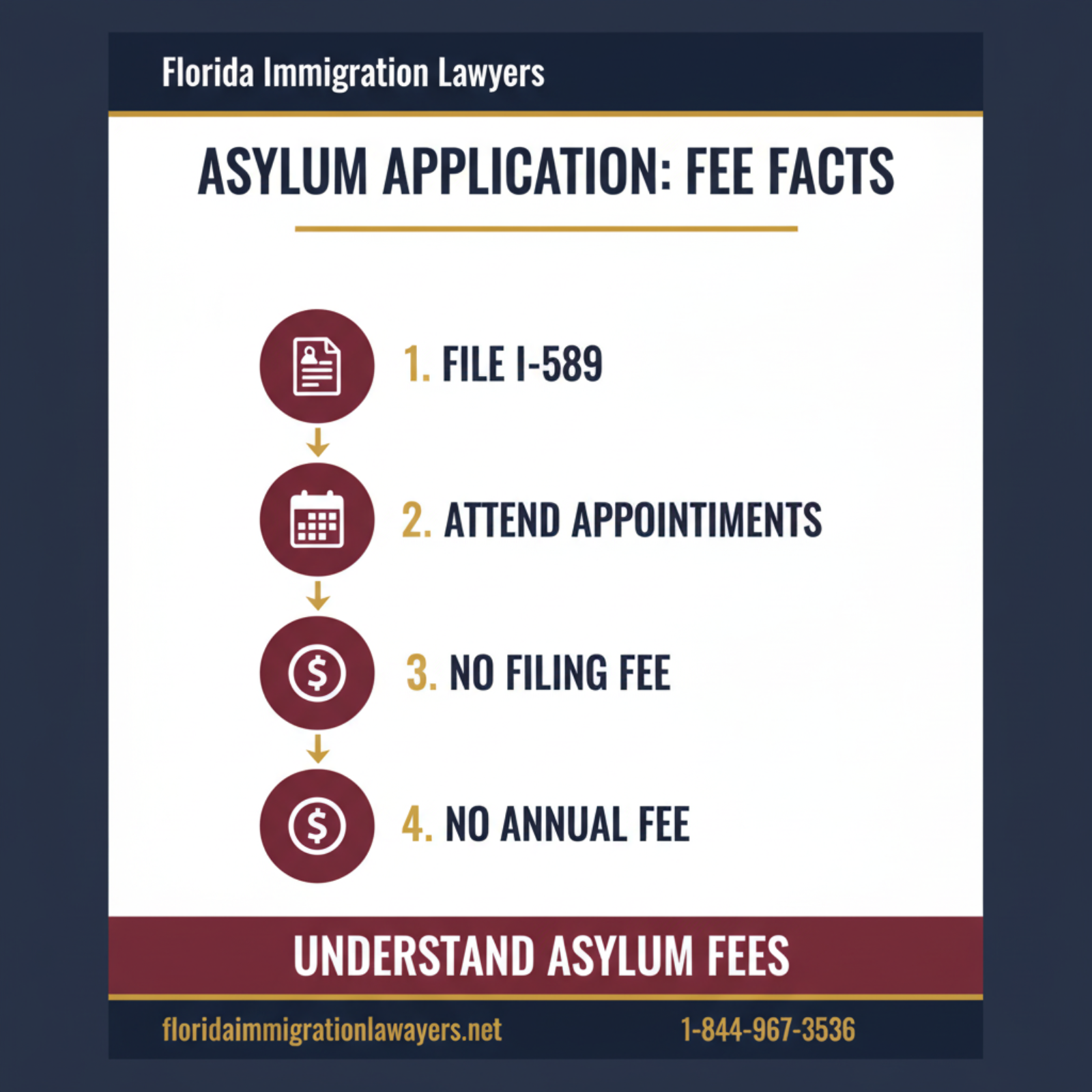
Having these items readily available will streamline the process and help you avoid common errors. Organizing your immigration documents is a key aspect of managing your case effectively.
Asylum Annual Fee Timeline and Processing Expectations in 2026
Understanding the timeline for the asylum annual fee is vital to avoid missing critical deadlines. While specific dates can vary slightly year to year, the fee generally applies to cases pending during a U.S. government fiscal year, which runs from October 1st to September 30th.
For the 2026 fiscal year, the fee would typically apply to asylum applications (Form I-589) that were pending for the entire period of October 1, 2025, through September 30, 2026. USCIS or EOIR will issue notices to eligible applicants, specifying the exact payment due date. It is imperative to respond to these notices promptly.
Once you make the payment, the processing involves linking the payment to your specific asylum case. This usually happens electronically. However, it is your responsibility to ensure that the payment is correctly attributed. Always keep your payment receipt as proof.
The consequences of late payment or non-payment of the asylum annual fee are severe. Both USCIS and EOIR have the authority to dismiss or deny your asylum application if you fail to comply with this mandatory payment. This means your entire claim for protection could be jeopardized simply by missing a payment deadline.
Given the high caseloads in Florida's immigration courts and USCIS offices, processing times can sometimes be unpredictable. Therefore, proactive payment and diligent record-keeping are your best defenses against potential issues. Do not wait until the last minute to address this crucial requirement.
Cost Factors and Fee Breakdown for the Asylum Annual Fee
The specific amount for the asylum annual fee is subject to change based on federal regulations and appropriations. For the 2026 fiscal year, the fee has generally been around $100-$102. It is crucial to verify the exact current amount directly from official USCIS or EOIR sources when you receive your payment notice.
As mentioned, one significant cost factor to remember is that fee waivers are typically not available for this annual payment. This means that, unlike some other immigration application fees, you will generally be expected to pay the full amount regardless of your financial circumstances. This policy underscores the importance of budgeting for this recurring expense if your asylum case remains pending.
It is also essential to distinguish the asylum annual fee from other potential costs associated with your immigration journey. This fee is separate from any fees for work permits (Form I-765, Application for Employment Authorization), which asylum applicants may also need to pay. It is also separate from any legal fees you incur for representation.
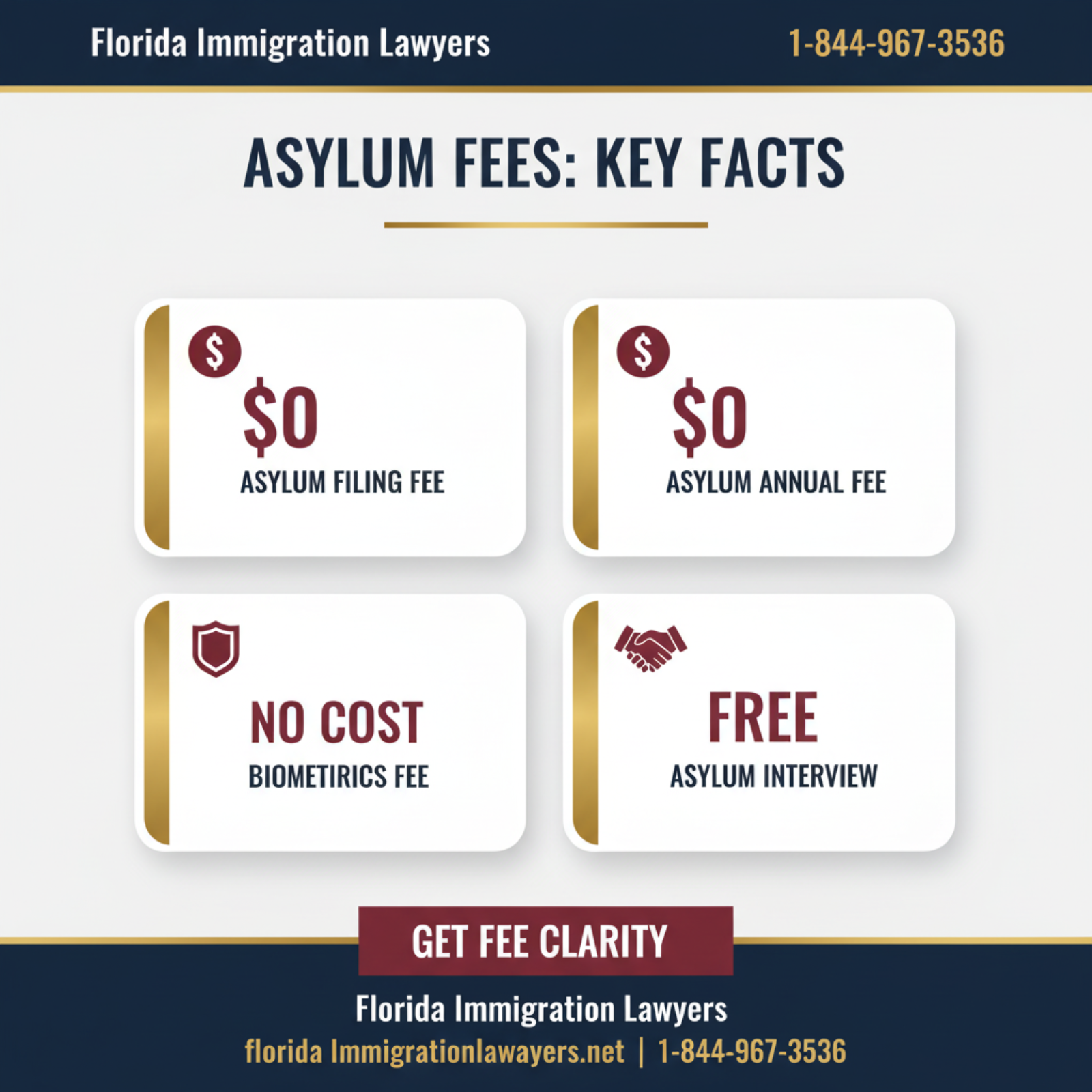
The fee is an annual requirement, meaning if your asylum application remains pending for multiple fiscal years, you could be required to pay it each year. This makes long-term financial planning an important consideration for asylum seekers in Florida. Staying informed about current fee schedules is paramount. For general immigration questions, you can always refer to our immigration practice area page.
Do not navigate this process alone. Contact Florida Immigration Lawyers today.
Common Mistakes to Avoid with the Asylum Annual Fee
- Missing the Deadline: Failing to pay the asylum annual fee by the specified deadline is perhaps the most critical error. This can lead to your asylum application being dismissed or denied, requiring you to potentially refile or face removal proceedings.
- Assuming a Fee Waiver Applies: Many immigration applications allow for fee waivers based on financial hardship. However, for the asylum annual fee, fee waivers are generally not permitted. Assuming one applies can result in non-payment and case dismissal.
- Paying the Wrong Amount: The fee amount can be adjusted by USCIS or EOIR. Paying an outdated or incorrect amount can cause delays, rejection of payment, and ultimately, non-compliance with the requirement. Always verify the current fee.
- Not Keeping Proof of Payment: After making the payment, it is crucial to save and print the payment confirmation or receipt. Without this proof, you may struggle to demonstrate compliance if there are any discrepancies in your case record.
- Confusing with Other Fees: The asylum annual fee is distinct from fees for employment authorization documents (EADs) or other immigration benefits. Do not mistakenly believe paying another fee covers this specific annual requirement.
- Incorrectly Identifying Jurisdiction: Knowing whether your case is with USCIS or EOIR is vital, as each agency has its own payment portal and procedures. Paying through the wrong portal can delay processing and lead to non-compliance.
- Ignoring Court Notices: Any communication from USCIS or EOIR, especially those related to fees or deadlines, must be reviewed immediately. Ignoring these notices can result in missed deadlines and adverse decisions in your case.
- Delaying Legal Consultation: Waiting until a deadline is imminent or a problem arises can limit your options. Consulting with an immigration attorney early can help you understand your obligations and avoid mistakes.
- Providing Inaccurate A-Number: Your A-number is your unique identifier. Entering an incorrect A-number during payment can result in the fee being applied to the wrong case or not applied at all, leaving your asylum application vulnerable.
- Not Updating Address with USCIS/EOIR: If your address changes, you must notify both USCIS and EOIR promptly. Failure to do so means you might not receive critical notices about the asylum annual fee or other important updates.
When to Call a Florida Immigration Lawyer for Asylum Fees
While this guide provides general information, the complexities of immigration law mean that individual circumstances often require personalized legal advice. If you are an asylum seeker in Tampa, Orlando, or anywhere else in Florida, knowing when to seek professional legal help can make a critical difference in your case.
You should strongly consider calling Florida Immigration Lawyers if you are:
- Unsure whether you are obligated to pay the asylum annual fee.
- Have received a Notice of Intent to Dismiss or Deny your asylum application due to non-payment.
- Experiencing technical difficulties with the USCIS or EOIR payment portals.
- Concerned about an approaching asylum fee deadline and need urgent guidance.
- Facing a complex asylum case, perhaps involving deportation defense or multiple immigration applications.
- Struggling to understand the legal citations (like those in the INA or CFR) referenced in official notices.
Warning signs that you need legal assistance include receiving unclear or confusing notices from immigration authorities, fear of making a mistake that could jeopardize your asylum claim, or simply feeling overwhelmed by the process. Our experienced attorneys at Florida Immigration Lawyers specialize in asylum applications and can provide the clarity and support you need.
We offer comprehensive services, from initial consultations to representing clients in court. Our team is well-versed in the latest immigration policies and can help you navigate the asylum annual fee and ensure all aspects of your case are handled correctly. Visit our attorneys page to learn more about our dedicated legal team.
Frequently Asked Questions (FAQ) About the Asylum Annual Fee
Do I need to pay the $100 asylum fee?
Generally, yes, if your Form I-589 has been pending for the specified annual period (e.g., October 1, 2025, to September 30, 2026) and you receive a notice from USCIS or EOIR. The fee applies to a specific group of asylum applicants with long-pending cases. It's crucial to consult with an attorney to confirm your specific obligation.
Does asylum have an annual fee?
Yes, for certain pending cases, asylum applications are subject to an asylum annual fee. This fee is distinct from any initial filing fees for the Form I-589 itself and is assessed annually if your case remains pending for the designated period.
What is the $600 asylum fee?
The specific amount of $600 is not currently the asylum annual fee. The annual fee is typically around $100-$102 for the 2026 fiscal year. There might have been proposed fees or other associated application fees (like for an EAD, which can be around $410 or more) that caused confusion. Always refer to official USCIS or EOIR sources for current fee amounts.
Is the annual asylum fee on hold?
While there have been legal challenges and temporary injunctions against certain immigration fees in the past, applicants should always assume the asylum annual fee is in effect unless officially notified otherwise by USCIS or EOIR. Policies can change, so it's vital to verify the current status directly from official government websites or through legal counsel.
About Florida Immigration Lawyers
Florida Immigration Lawyers is a leading law firm dedicated to providing exceptional legal representation to immigrants across Florida. With offices and services spanning the entire state, including major cities like Tampa, Orlando, and Miami, we are committed to helping individuals and families navigate the complexities of U.S. immigration law.
Our experienced team specializes in a wide range of immigration matters, including asylum applications, deportation defense, family immigration, business immigration, and citizenship processes. We understand the challenges our clients face and offer compassionate, client-focused legal solutions.
Choosing Florida Immigration Lawyers means partnering with a team that values your future. We offer free consultations, are available 24/7 to address your urgent needs, and provide bilingual services to ensure clear communication. Let us be your trusted advocates in your immigration journey.
Contact us today at 1-844-967-3536 or visit our website at https://www.floridaimmigrationlawyers.net.
Sources and References
- U.S. Citizenship and Immigration Services (USCIS)
- Executive Office for Immigration Review (EOIR)
- 8 U.S.C. Chapter 12 - Immigration and Nationality Act (INA)
- 8 U.S.C. § 1158 (INA 208) - Asylum
- 8 CFR Part 208 - Asylum and Withholding of Removal
This article provides general legal information and is not intended as legal advice. Every case is unique, and outcomes depend on specific facts and circumstances. Contact an attorney for advice about your particular situation.
Navigating the asylum annual fee and other immigration complexities can be overwhelming. Do not face it alone. Contact Florida Immigration Lawyers today for a free, confidential consultation. Call us at 1-844-967-3536. Se Habla Español - Estamos aquí para ayudarle.
Do Not Navigate This Process Alone
Our experienced immigration attorneys are ready to fight for you. Get a free, confidential consultation today.
Se Habla Español
Or leave your details and we’ll call you:
Free Evaluation in 24 Hours
Or talk to us right now

AI voice assistant — available 24/7
FreeFrequently Asked Questions

William J. Vásquez
Founding Attorney · Vasquez Law Firm
U.S. Air Force veteran and immigration attorney with years of hands-on U.S. immigration experience. J.D., NCCU School of Law. AILA member. Admitted to the 4th, 5th, and 11th Circuit Courts.
Available 24/7 - Free Evaluations
Reviewed for legal accuracy by William J. Vásquez
Licensed in North Carolina; U.S. immigration is federal practice.
Related Legal Services
Our Florida immigration attorneys can help you with free immigration consultation, experienced immigration attorneys and business immigration. Call today at 1-844-967-3536 for a free consultation.
Related Links
Related Topics
Free Legal Consultation
Discuss your case with our experienced attorneys. We're available 24/7.
Se Habla Español - Estamos aquí para ayudarle.
Related Articles
Immigration Lawyer Orlando Free Consultation 2026
Discover how to find an immigration lawyer in Orlando offering a free consultation. Understand the services available and why choosing Florida Immigration Lawyers can make a difference in your case.
Military Naturalization Expedited in Florida Bases
Explore military naturalization options for families at Florida bases, including parole in place benefits in Miami. Learn how to expedite your application with expert guidance from Florida Immigration Lawyers.
K-3 Visa Timeline in Florida: What to Expect
Learn the K-3 visa timeline process in Florida, including steps, costs, and documentation. Understand your options in 2026 with guidance from Florida Immigration Lawyers.
Dual Citizenship Lawyer Tips for Naturalization Interview
Discover crucial tips for your naturalization interview in Florida with insights from a dual citizenship lawyer. Learn what to expect, how to prepare, and common pitfalls to avoid as you embark on your journey to U.S. citizenship.