USCIS Processing Times in Florida 2026
Learn about USCIS processing times in St. Petersburg, Florida for 2026. Understand factors affecting wait times and when to seek legal help. Call Florida Immigration Lawyers at 1-844-967-3536 for a free consultation.

Understanding USCIS processing times in Florida can help you navigate immigration procedures more effectively. In 2026, processing times vary based on the type of application and service center. Key takeaways include:
- Processing times can range from a few months to several years.
- Delays can occur due to increased application volumes or policy changes.
- Consulting with an immigration lawyer can help you avoid unnecessary delays.
USCIS Processing Times in Florida 2026
Understanding the complexities of USCIS processing times is crucial for immigrants in Florida, especially in cities like St. Petersburg. These times can significantly impact your immigration journey, and staying informed can help you plan accordingly. As we explore this topic, you'll learn about the factors affecting processing times, how to manage expectations, and when to seek legal assistance. Call Florida Immigration Lawyers at 1-844-967-3536 for a free consultation to ensure your application process is as smooth as possible.
Overview of USCIS Processing Times
USCIS processing times refer to the duration it takes for the United States Citizenship and Immigration Services to process various immigration applications. In Florida, these times can vary significantly due to several factors, including the type of application, the service center handling the case, and current immigration policies. As of 2026, the processing environment is influenced by ongoing policy discussions and changes at the federal level.
St. Petersburg, Florida, falls under the jurisdiction of the Tampa Field Office, which handles a wide range of immigration applications. Processing times can be checked online through the USCIS website, where applicants can enter receipt numbers to track their case status.
Beyond the local field office, it's important to understand that many applications are initially processed at one of the five USCIS service centers: California, Nebraska, Texas, Vermont, and Potomac. Each service center handles specific form types and can have varying backlogs, directly influencing the overall timeline for Florida residents. For instance, a Form I-130 Petition for Alien Relative might be processed at a different service center than a Form I-485 Application to Register Permanent Residence or Adjust Status, leading to different timelines even for related cases.
Federal policy shifts, budget allocations, and presidential administrations can significantly alter USCIS priorities and resource distribution, leading to fluctuating processing times. For example, a focus on border security might divert resources from family-based petitions, causing delays. Additionally, the sheer volume of applications received annually can overwhelm the system, contributing to longer waits. Understanding these broader influences helps set realistic expectations for your immigration journey.
Step-by-Step Guide to Checking Processing Times
- Visit the USCIS official website.
- Navigate to the 'Check Processing Times' section.
- Select the form type and the service center processing your application.
- Enter your receipt number for a detailed status update.
- Review the estimated time range provided for your specific case type.
In case of delays, consider consulting an attorney from our team at Florida Immigration Lawyers to explore possible solutions or expedite requests.
When checking your case status, pay close attention to the 'Receipt Date for a Case Inquiry' displayed on the USCIS website. If your case has been pending longer than this date, you are eligible to submit an 'e-request' to inquire about your case. This online tool can sometimes provide specific updates or trigger a review of your application, but it's crucial to ensure you meet the criteria before submitting an inquiry to avoid further delays.
It's also beneficial to understand the different status updates you might encounter, such as 'Case Was Received,' 'Biometrics Appointment Was Scheduled,' 'Interview Was Scheduled,' or 'New Card Is Being Produced.' Each status indicates a different stage of processing. If your status remains unchanged for an unusually long period or you receive a generic update, this could be a sign to seek professional guidance. Florida Immigration Lawyers can help interpret these statuses and advise on the best course of action.
Document Checklist for Immigration Applications
Ensuring all necessary documents are prepared can prevent unnecessary delays in processing times. Common documents required include:
- Completed USCIS form (e.g., I-130, I-485, N-400)
- Supporting evidence such as birth certificates or marriage licenses
- Proof of financial support (e.g., Form I-864)
- Passport-sized photos
- Proof of lawful entry or status in the U.S.
Double-checking documentation with an immigration lawyer can help avoid errors that may lead to processing delays.
The completeness and accuracy of your documentation are paramount. Common pitfalls include submitting outdated versions of forms, failing to provide certified translations for foreign-language documents, or missing crucial supporting evidence. For example, a family-based petition (Form I-130) often requires extensive proof of a bona fide relationship, such as joint bank accounts, utility bills, photos, and affidavits from friends and family. Omitting such evidence almost guarantees a Request for Evidence (RFE), significantly extending your processing time.
Additionally, ensure all documents are clearly organized, preferably with tabs and cover letters, and that you keep copies of everything you submit. A medical examination (Form I-693) by a USCIS-approved civil surgeon is often required for adjustment of status applications, and delays in obtaining or submitting this can also hold up your case. Consulting with Florida Immigration Lawyers ensures that every detail is meticulously checked, safeguarding against common mistakes that can derail your application.
Timeline and Processing Expectations
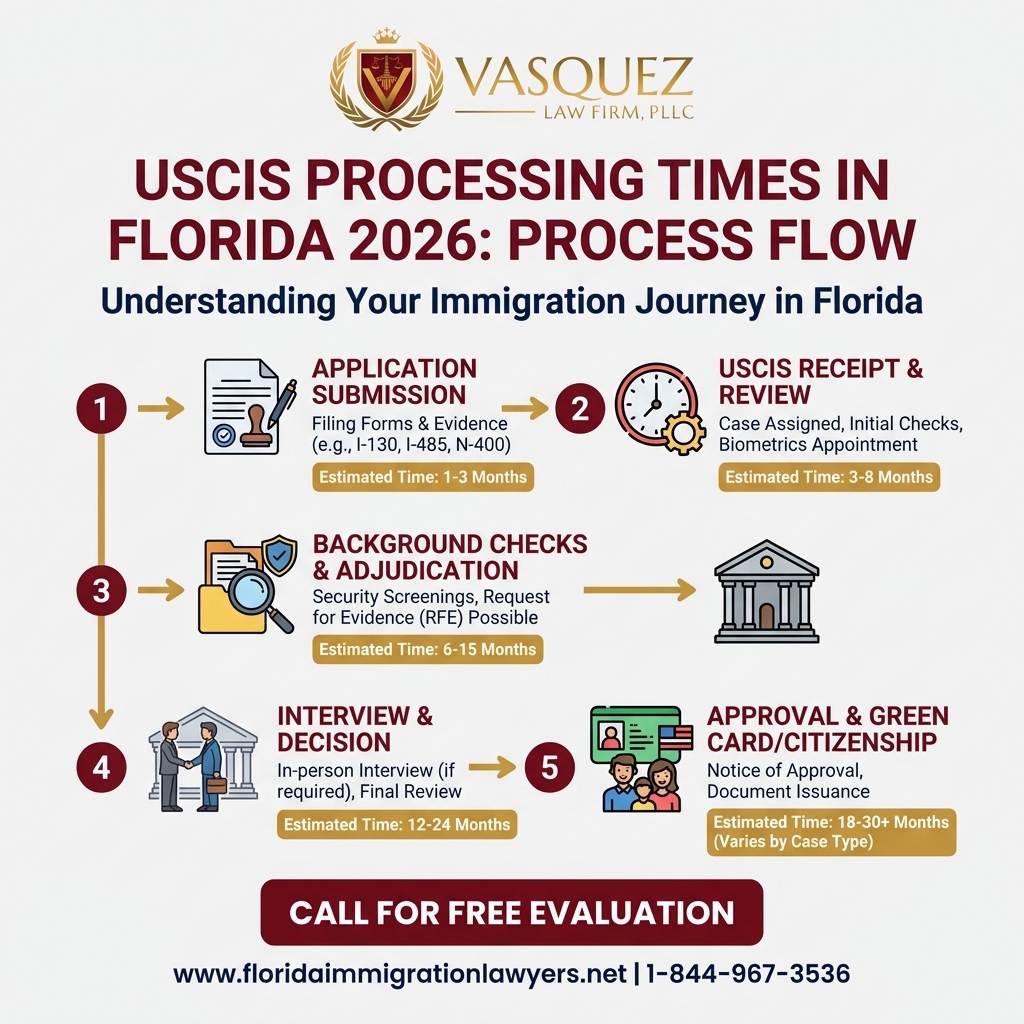
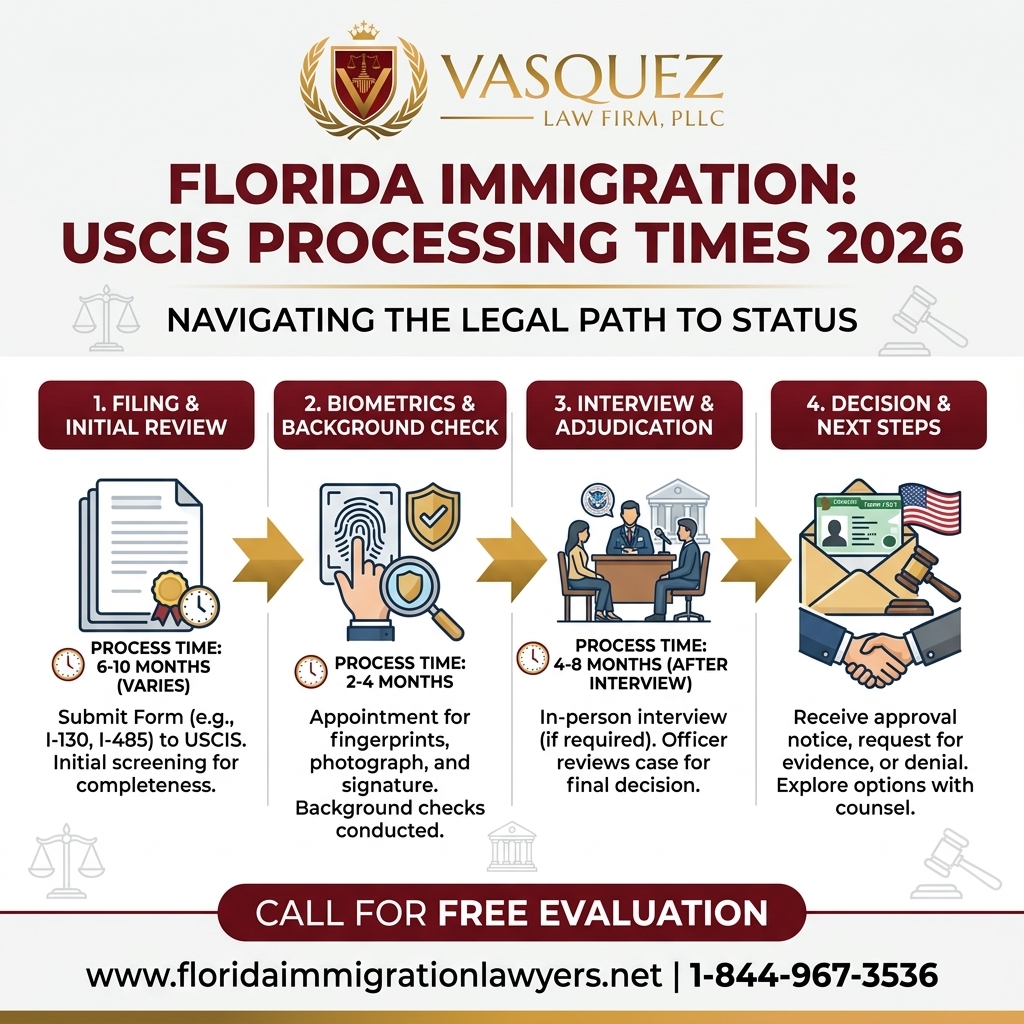
Processing times for USCIS applications in Florida can vary widely. For instance, naturalization applications (Form N-400) may take between 8 to 12 months, while family-based green card applications could take 12 to 24 months, depending on the service center workload. External factors such as policy changes or a surge in applications can also affect these timelines.
It's essential to monitor these times regularly, especially given the possibility of changes in immigration laws or executive orders, which can impact how quickly cases are processed. Staying informed will help you set realistic expectations and prepare for any adjustments.
The variation in timelines is often due to the complexity of the application and the specific immigration category. For family-based visas, immediate relatives (spouses, minor children, and parents of U.S. citizens) generally have faster processing times because they are not subject to annual visa quotas. In contrast, preference categories (e.g., adult children, siblings of U.S. citizens, or spouses of green card holders) face much longer waits due to numerical limitations and country-specific backlogs, as indicated by the monthly Visa Bulletin.
Furthermore, unforeseen events like government shutdowns, natural disasters, or public health emergencies can disrupt USCIS operations, leading to widespread delays across all application types. Receiving a Request for Evidence (RFE) or a Notice of Intent to Deny (NOID) will inevitably extend your processing time, as you will need to gather and submit additional information, and USCIS will then need to review it. Proactive planning, such as maintaining valid travel documents and planning for work authorization renewals well in advance, can mitigate the stress of these potential delays. Florida Immigration Lawyers can provide personalized guidance, helping you navigate these complexities and strategize for potential delays.
Cost Factors and Fee Breakdown
The cost of filing immigration applications can be significant, with fees varying based on the type of application. For example, the fee for a naturalization application is currently substantial and subject to change. It's important to budget for these costs and consider additional expenses such as legal fees or translation services.
At Florida Immigration Lawyers, we offer transparent fee structures and can provide guidance on potential costs associated with your application process. Contact us today to discuss your specific needs and budget.
USCIS fees are non-refundable and can change periodically, so always check the most current fee schedule on the official USCIS website before filing. For instance, as of recent updates, an application for adjustment of status (Form I-485) can involve significant fees, often bundled with fees for employment authorization (Form I-765) and advance parole (Form I-131) if filed concurrently. Naturalization (Form N-400) also carries a substantial fee, which typically includes biometrics services.
Beyond the direct filing fees, applicants must account for other mandatory or recommended expenses. These can include the cost of a medical examination by a USCIS-approved civil surgeon (Form I-693), which can range from a few hundred dollars, as well as fees for obtaining birth certificates, marriage licenses, police clearances, and certified translations of foreign documents. Travel expenses for biometrics appointments and interviews, particularly if you live far from the Tampa Field Office, should also be factored into your budget. For eligible low-income applicants, fee waivers may be available for certain forms, and Florida Immigration Lawyers can help determine eligibility and assist with the application process.
Common Mistakes to Avoid
- Failing to provide complete documentation, leading to RFEs (Requests for Evidence).
- Not checking the expiration dates of supporting documents, such as passports.
- Misunderstanding eligibility requirements, resulting in denied applications.
- Ignoring changes in immigration policies that may affect your case.
- Missing filing deadlines or not responding to USCIS notices promptly.
- Submitting applications to the wrong service center, causing delays.
- Not seeking legal advice when facing complex immigration issues.
When to Call a Lawyer
If you're experiencing delays or complications with your USCIS application, it may be time to consult with a lawyer. Common scenarios include receiving a Notice of Intent to Deny, complex family immigration cases, or needing to expedite a case due to urgent circumstances. Florida Immigration Lawyers are experienced in handling these situations and can provide the legal support necessary to navigate the immigration process effectively.
Beyond delays, there are several critical junctures where legal counsel becomes indispensable. If your application is denied, an attorney can help you understand the reasons for denial, evaluate options for appeal, or advise on refiling. Individuals with a criminal record, even minor offenses, should always consult an immigration lawyer, as these can have severe implications for eligibility and lead to deportation proceedings. Complex business immigration cases, asylum claims, or situations involving a change of status also benefit immensely from expert legal guidance.
Furthermore, proactive consultation, even before you begin filling out forms, can prevent many of the common mistakes listed above. An immigration attorney can assess your eligibility, help you gather the correct documentation, and ensure your application is submitted accurately and completely. This preventative approach often saves time, money, and stress in the long run. Don't hesitate to reach out to Florida Immigration Lawyers at 1-844-967-3536 for a free consultation at any stage of your immigration journey.
About Florida Immigration Lawyers
Florida Immigration Lawyers is a dedicated law firm serving the entire state of Florida, including St. Petersburg. We specialize in various immigration services, from family immigration to business visas. Our experienced attorneys are available 24/7 to provide free consultations, ensuring you receive the guidance needed for your immigration journey. Call us at 1-844-967-3536 or visit our website at floridaimmigrationlawyers.net.
Our firm is built on a foundation of deep legal expertise and a profound commitment to our clients. We understand that navigating the U.S. immigration system can be daunting and emotionally taxing, which is why our attorneys strive to provide compassionate, clear, and effective legal representation. We pride ourselves on staying abreast of the latest changes in immigration law and policy, ensuring that our advice is always current and tailored to your specific circumstances.
Whether you are seeking to unite with family, pursue educational or professional opportunities, or defend against deportation, Florida Immigration Lawyers offers comprehensive support. We believe everyone deserves competent legal representation, and our 24/7 availability for free consultations underscores our dedication to making expert immigration advice accessible when you need it most. Let us be your trusted partner in achieving your immigration goals.
Frequently Asked Questions
What if my USCIS processing time is beyond the estimated range?
If your application has been pending longer than the 'Receipt Date for a Case Inquiry' posted on the USCIS website for your specific form and service center, you can submit an online inquiry. This formal request prompts USCIS to review your case. If you don't receive a satisfactory response or the delay persists, consulting Florida Immigration Lawyers can help you explore further options, such as an expedited request or a writ of mandamus, ensuring your case receives the attention it deserves.
Can I expedite my USCIS application in Florida?
Expediting a USCIS application is possible under very specific circumstances, such as severe financial loss, urgent humanitarian reasons, or a compelling U.S. government interest. You must provide strong documentary evidence to support your request. While USCIS reviews these requests on a case-by-case basis, approval is not guaranteed. Florida Immigration Lawyers can help assess if your situation qualifies for an expedite and guide you through the complex application process, maximizing your chances of success.
How do policy changes impact USCIS processing times in Florida?
Policy changes, often driven by new administrations or legislative actions, can significantly impact processing times. Shifts in priorities, resource allocation, and stricter review standards can lead to increased backlogs for certain application types or service centers. For example, changes in interview requirements or public charge rules can add layers of review. Staying informed and preparing for potential shifts with the help of Florida Immigration Lawyers is crucial to navigating these evolving landscapes effectively.
What is an RFE, and how does it affect my timeline?
An RFE, or Request for Evidence, is issued by USCIS when they determine that your initial application lacks necessary supporting documents or information. Receiving an RFE significantly extends your processing time because you must gather and submit the requested evidence, and then USCIS needs to review it. Failing to respond adequately or on time can lead to a denial. Working with Florida Immigration Lawyers can help you prepare a comprehensive RFE response, preventing further delays.
Is there a difference between national and local field office processing times?
Yes, there can be a significant difference. National processing times typically reflect the average across all service centers for forms like I-130 or N-400. Local field office times, like those for the Tampa Field Office, primarily apply to interview scheduling, naturalization ceremonies, and some adjustment of status cases. It's crucial to check both, as your application might be processed by a national service center initially, then transferred to your local field office for the final stages. Florida Immigration Lawyers can clarify which times apply to your specific case.
Sources and References
- U.S. Citizenship and Immigration Services (USCIS)
- Executive Office for Immigration Review (EOIR)
- 8 U.S.C. Chapter 12 - Immigration and Nationality Act
Related services: immigration practice areas, family immigration services, citizenship and naturalization, deportation defense.
This article provides general legal information and is not intended as legal advice. Every case is unique, and outcomes depend on specific facts and circumstances. Contact an attorney for advice about your particular situation.
Se Habla Espanol - Estamos aqui para ayudarle. For comprehensive legal assistance, contact Florida Immigration Lawyers at 1-844-967-3536 for a free consultation today.
If you need legal assistance, learn more about immigration case consultation, or call us at 1-844-967-3536 for a free consultation.
Do Not Navigate This Process Alone
Our experienced immigration attorneys are ready to fight for you. Get a free, confidential consultation today.
Se Habla Español
Frequently Asked Questions
Florida Immigration Lawyers
Immigration Attorney | Founder, Vasquez Law Firm
U.S. Air Force veteran and immigration attorney with thousands of cases resolved. J.D., NCCU School of Law. AILA member. Admitted to the 4th, 5th, and 11th Circuit Courts.
Available 24/7 - Free Evaluations
Related Legal Services
Our Florida immigration attorneys can help you with family immigration services, immigration practice areas and free immigration consultation. Call today at 1-844-967-3536 for a free consultation.
Related Links
Related Topics
Free Legal Consultation
Discuss your case with our experienced attorneys. We're available 24/7.
Se Habla Español - Estamos aquí para ayudarle.
Related Articles
U Visa for Crime Victims in Florida: Key Insights | VLF Florida
Discover the potential of the U visa for crime victims in Florida. Gain insights into eligibility, the application process, and how Florida Immigration Lawyers can assist you. Call us today for a free consultation.
Green Card Through Marriage in Florida | VLF Florida
Considering a green card through marriage in Florida? Discover the steps, common mistakes, and when to consult a lawyer. Call 1-844-967-3536 today!
Understanding Stokes Interview for Marriage Fraud in Florida
If you're facing a Stokes interview in Hialeah, Florida, understanding the process is crucial. This interview assesses the authenticity of your marriage to prevent fraud in I-130 petitions. Learn more about preparation and common pitfalls. Call Florida Immigration Lawyers for expert guidance.
Family Petition Immigration Lawyer Miami: Florida Guide
Dreaming of reuniting your family in Florida? The family petition process, starting with Form I-130, is the crucial first step. This guide covers eligibility, step-by-step filing, essential documents, and navigating complex timelines for a family visa. Learn about the costs involved and the critical role an immigration lawyer plays in Miami, Jacksonville, and across Florida. Avoid common mistakes and understand when to seek legal counsel to ensure a smooth journey towards a green card. Florida Immigration Lawyers offers expert guidance for your family's future, providing free consultations and unwavering support.