H-2B Visa for Florida Hospitality: Seasonal Worker Guide
Explore the H-2B visa program for seasonal workers in Florida's dynamic hospitality sector for 2026. This visa is crucial for businesses in areas like West Palm Beach to meet peak demands, allowing foreign nationals to fill temporary non-agricultural roles. Our guide covers eligibility, the multi-step application process involving the Department of Labor and USCIS, essential documentation, and critical timelines. Understand the cost factors, common mistakes to avoid, and when professional legal assistance is indispensable. Florida Immigration Lawyers offers expert guidance to both employers and workers to navigate these complex regulations successfully, ensuring compliance and maximizing approval chances. Call us for a free consultation.

Quick Answer: H-2B Visa for Florida Hospitality Workers
The H-2B visa program allows U.S. employers to bring foreign nationals to the United States to fill temporary non-agricultural jobs, including many roles within Florida's thriving hospitality sector. This seasonal worker visa is crucial for businesses in West Palm Beach and across Florida that experience peak seasons, such as tourism surges or specific events. Employers must demonstrate a temporary need and that insufficient U.S. workers are available. For prospective H-2B visa holders, understanding the employer-sponsored process, strict deadlines, and eligibility criteria is vital. Navigating this complex process often requires expert legal guidance to ensure compliance and increase the likelihood of approval, especially with annual caps and evolving regulations.
- H-2B visas are for temporary, non-agricultural positions.
- Florida's hospitality sector heavily utilizes H-2B for seasonal needs.
- Employers must prove temporary need and lack of U.S. workers.
- Strict application timelines and annual caps apply.
- Legal assistance is highly recommended for both employers and workers.
Florida's vibrant tourism and hospitality industries thrive on seasonal demand, from bustling winter resorts in West Palm Beach to summer attractions across the state. Many businesses, including hotels, restaurants, and entertainment venues, rely on a dedicated workforce to meet these fluctuating needs. However, finding enough U.S. workers for these temporary positions can be a significant challenge. This is where the H-2B visa program becomes a critical solution. It allows Florida employers to legally bring in foreign nationals for temporary, non-agricultural jobs, ensuring operations run smoothly during peak seasons.
If you are an employer in Florida considering the H-2B visa program for your seasonal staffing, or a foreign national hoping to work in the U.S. hospitality sector, understanding this complex process is paramount. The H-2B visa offers a pathway for thousands of individuals to contribute to the U.S. economy and gain valuable work experience. However, its regulations are intricate, with strict eligibility requirements, application deadlines, and annual caps set by Congress.
This comprehensive guide will walk you through the H-2B visa process for seasonal workers in Florida's hospitality industry in 2026. We will cover everything from employer requirements and worker eligibility to the application steps, timelines, and potential challenges. Our goal is to provide clarity and essential information to help you navigate this immigration pathway successfully. Do not navigate this complex process alone. Call Florida Immigration Lawyers at 1-844-967-3536 for a free consultation to discuss your specific H-2B visa needs.
Understanding the H-2B Visa Program for Florida's Hospitality Sector
The H-2B visa is specifically designed for temporary non-agricultural workers. This means it applies to a wide range of jobs within Florida's hospitality industry, such as hotel housekeepers, cooks, resort staff, landscapers, and amusement park attendants. Unlike the H-2A visa for agricultural workers, H-2B covers a broader spectrum of seasonal and peak-load employment needs. The U.S. government sets an annual cap on the number of H-2B visas issued each fiscal year, typically 66,000, split evenly between the first and second halves of the fiscal year. This cap often makes the process highly competitive, emphasizing the need for timely and accurate applications.
For employers in Florida, particularly those in tourist-heavy areas like West Palm Beach, Orlando, or Miami, the H-2B program addresses a vital labor shortage during high-demand periods. These businesses often face challenges in recruiting sufficient U.S. workers for short-term, demanding roles. The program requires employers to demonstrate a temporary need, which can be seasonal, peak-load, intermittent, or a one-time occurrence. This temporary need must be clearly defined and justified in the application, proving that the job is not permanent or ongoing. Compliance with U.S. labor laws, including offering prevailing wages and safe working conditions, is also a mandatory aspect of the program. This crucial aspect ensures fair treatment for both U.S. and foreign workers, aligning with the Immigration and Nationality Act (INA) provisions.
Key Characteristics of the H-2B Visa
- Temporary Need: The job must be temporary, not permanent. USCIS defines temporary as generally less than one year.
- Non-Agricultural: It covers jobs outside of farming, ranching, and other agricultural activities.
- Employer-Sponsored: An employer must petition for the worker; individuals cannot self-petition.
- Annual Cap: Subject to a congressional cap, which can lead to high demand and lottery systems.
- Prevailing Wage: Employers must pay at least the prevailing wage for the occupation in the area of intended employment.
Step-by-Step H-2B Visa Application Process for Florida Employers
Securing an H-2B visa for your seasonal worker needs in Florida involves a multi-agency process that requires careful planning and strict adherence to deadlines. This detailed guide outlines the primary steps employers must follow to successfully petition for temporary non-agricultural workers. Missing a single step or deadline can jeopardize the entire application, making diligent preparation essential. Many Florida businesses, particularly those in hospitality, begin this process well in advance of their peak seasons to ensure they have the necessary workforce when needed. The process typically begins several months before the start date of employment.
- Step 1: Obtain a Temporary Labor Certification (TLC) from the Department of Labor (DOL).
Before filing with USCIS, employers must apply for a TLC from the U.S. Department of Labor (DOL). This involves submitting Form ETA-9142B, H-2B Application for Temporary Employment Certification, to the Chicago National Processing Center (CNPC). The DOL reviews the application to ensure the employer's temporary need is legitimate and that the employment will not adversely affect the wages and working conditions of similarly employed U.S. workers. Employers must conduct a recruitment process to test the U.S. labor market, advertising the job to U.S. workers. This recruitment must be documented thoroughly, proving that no qualified U.S. workers were available or willing to take the jobs. This step is critical under 8 CFR § 214.2(h)(6)(i)(A).
- Step 2: File Form I-129, Petition for a Nonimmigrant Worker, with USCIS.
Once the DOL issues a certified TLC, the employer can file Form I-129, Petition for a Nonimmigrant Worker, with U.S. Citizenship and Immigration Services (USCIS). This petition must include the certified TLC, a temporary need statement, and other supporting documentation. USCIS reviews the petition to ensure all eligibility criteria are met and that the employer's request aligns with the H-2B program regulations. This is also the stage where the H-2B cap comes into play. If the cap has been reached, USCIS may conduct a lottery or reject petitions, highlighting the importance of early submission.
- Step 3: Foreign National Applies for H-2B Visa at a U.S. Embassy or Consulate (if outside the U.S.).
After USCIS approves Form I-129, foreign national workers who are outside the U.S. must apply for an H-2B visa at a U.S. embassy or consulate in their home country. This involves completing Form DS-160, Online Nonimmigrant Visa Application, paying the visa fee, and attending a visa interview. During the interview, applicants must demonstrate their eligibility, intent to return to their home country after the temporary employment, and that they meet the job requirements. The U.S. Department of State (travel.state.gov) outlines the specific requirements for visa applicants.
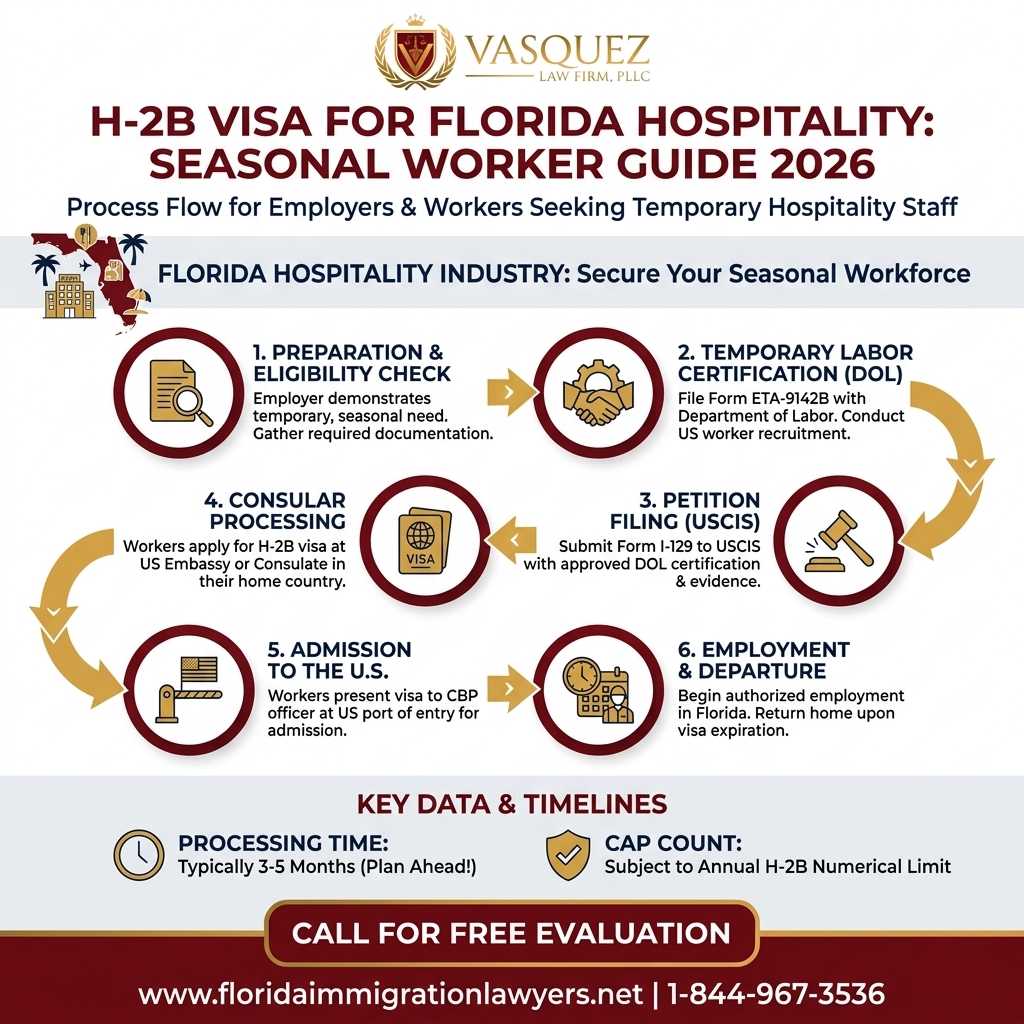
- Step 4: Admission into the U.S. (if applicable).
Upon receiving their H-2B visa, workers can then travel to the U.S. and seek admission at a port of entry. U.S. Customs and Border Protection (CBP) officers will review their documents and determine final admissibility. It is essential for workers to carry all relevant immigration documents, including their passport, H-2B visa, and a copy of the approved Form I-797, Notice of Action, for the H-2B petition. For workers already in the U.S. in a different nonimmigrant status, an employer may petition for a Change of Status with USCIS, subject to eligibility.
Essential Document Checklist for H-2B Visa Petitions
A complete and accurate submission of documents is critical for a successful H-2B visa petition. Any missing information or discrepancies can lead to delays, Requests for Evidence (RFEs), or even outright denials. Both the employer and the prospective H-2B seasonal worker will need to gather specific documents at different stages of the process. Preparing these documents well in advance can significantly streamline the application. For Florida-based employers, ensuring all state and federal business registrations are up to date is also important, as this demonstrates a legitimate and compliant business operation. This checklist is a general guide; your specific case may require additional documentation.
For the Employer (Petitioner):
- Certified Form ETA-9142B, H-2B Application for Temporary Employment Certification, from the DOL.
- Form I-129, Petition for a Nonimmigrant Worker, with all required supplements.
- Employer's Federal Employer Identification Number (FEIN).
- Proof of temporary need (e.g., historical employment data, business plans, contracts demonstrating seasonal or peak-load demand).
- Detailed job description and requirements for the H-2B positions.
- Documentation of U.S. worker recruitment efforts (advertisements, interview logs, rejection reasons).
- Evidence of ability to pay the prevailing wage.
- Financial statements or tax returns demonstrating business viability.
- Copy of business license and registration (e.g., Florida Department of State registration).
For the H-2B Seasonal Worker (Beneficiary):
- Valid passport (valid for at least six months beyond the intended period of stay).
- Nonimmigrant Visa Application, Form DS-160 confirmation page.
- Visa interview appointment confirmation page.
- Two photographs meeting U.S. visa requirements.
- Original or copy of Form I-797, Notice of Action, showing approval of the H-2B petition.
- Educational qualifications, certifications, or licenses relevant to the job (e.g., culinary certifications for a chef position).
- Proof of intent to return to home country (e.g., property deeds, family ties, bank statements).
- Prior employment history and references.
H-2B Visa Timeline and Processing Expectations for 2026
The H-2B visa process is notoriously time-sensitive, and understanding the typical timeline is crucial for both employers and prospective seasonal workers, especially for the 2026 season. Due to the annual cap and the multi-agency involvement, applications must be planned and submitted well in advance of the desired start date of employment. Employers in Florida, particularly those in the hospitality industry, often begin preparing their H-2B petitions 6-9 months before the actual need for workers. The H-2B cap, which is 66,000 annually, is split into two halves: 33,000 for workers starting employment in the first half of the fiscal year (October 1 - March 31) and 33,000 for workers starting in the second half (April 1 - September 30). This cap is frequently met very early in each period, sometimes even on the first day petitions are accepted.
The Department of Labor (DOL) processing can take anywhere from 2-3 months for the Temporary Labor Certification. This includes the required recruitment period to test the U.S. labor market. Once certified by the DOL, the USCIS processing of Form I-129 typically takes 2-5 months, though premium processing is available for an additional fee, which can expedite this to 15 calendar days. However, premium processing only applies to USCIS adjudication, not the DOL's part of the process. After USCIS approval, the visa interview at a U.S. embassy or consulate can add another 2-4 weeks, depending on the country and consulate workload. Overall, employers should plan for a total processing time of 4-7 months from the start of the DOL application to the worker's arrival in the U.S. This extended timeline underscores the importance of proactive planning and meticulous preparation to avoid delays.
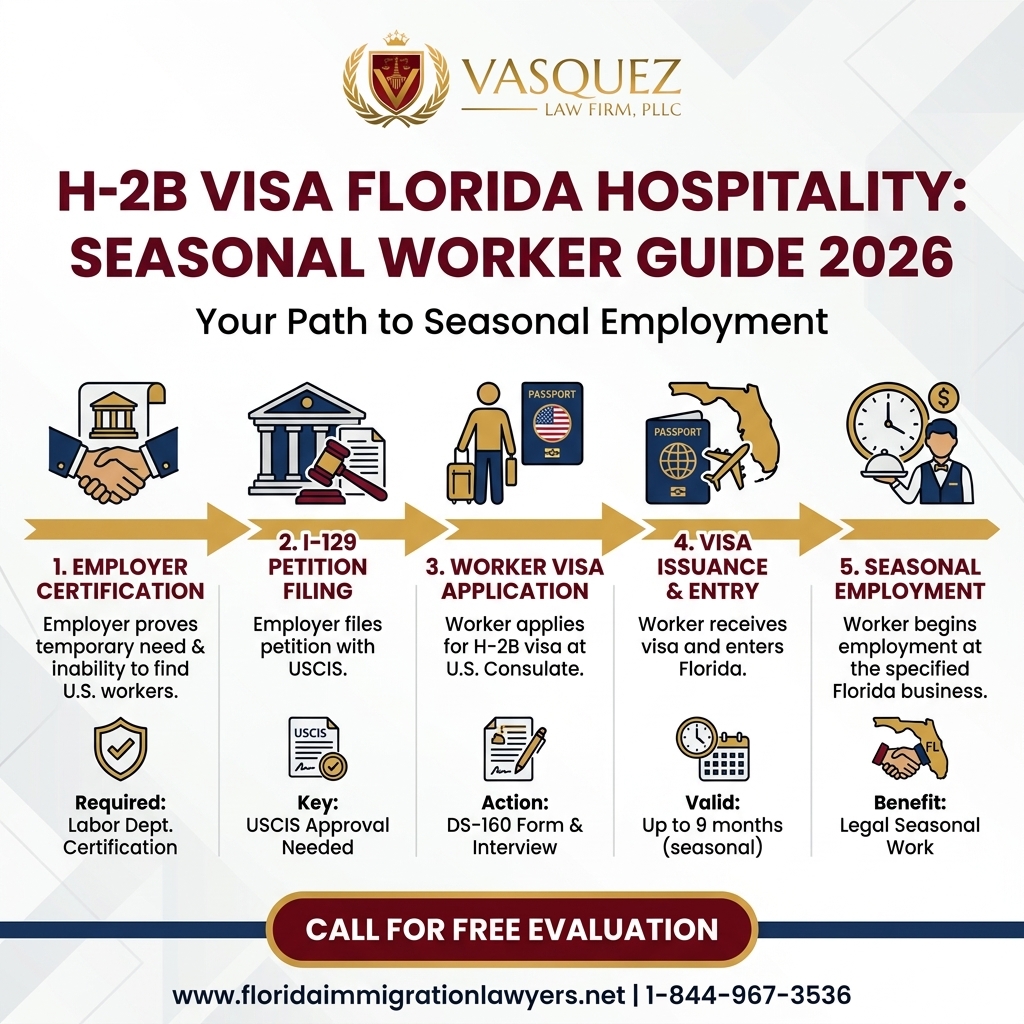
Key H-2B Timeline Considerations for 2026:
- DOL Processing: 60-90 days for Temporary Labor Certification, including recruitment.
- USCIS Processing (Form I-129): 2-5 months standard; 15 calendar days with premium processing.
- Visa Interview/Consular Processing: 2-4 weeks after USCIS approval.
- Cap Issues: Petitions often exceed the cap, leading to potential lotteries or rejections if not filed early.
- Start Date: Plan to begin the entire process at least 6-9 months before the desired employment start date.
Cost Factors and Fee Breakdown for the H-2B Visa
Understanding the financial commitment involved in the H-2B visa process is crucial for Florida employers. The total cost can vary depending on several factors, including whether premium processing is utilized, the number of workers petitioned for, and the need for legal assistance. These fees are subject to change, so it is always important to consult the official USCIS website and Department of Labor guidelines for the most current information. Employers are generally responsible for most of the application and processing fees associated with the H-2B petition. This includes fees for the Department of Labor, USCIS, and often, the transportation and housing costs for the workers.
The primary fees include the DOL's H-2B filing fee (if applicable), the USCIS Form I-129 filing fee, and the H-2B Fraud Prevention and Detection Fee. Additionally, if an employer opts for premium processing to expedite USCIS's review of Form I-129, there is a significant additional fee. Beyond government fees, employers should budget for costs associated with the mandatory recruitment process, such as advertising expenses. Legal fees for an experienced immigration attorney are also a significant, yet highly valuable, investment. An attorney can help ensure compliance, prepare accurate petitions, and respond to any Requests for Evidence, potentially saving time and money in the long run. Employers must also be aware of their obligation to pay for certain travel and subsistence costs for workers, as stipulated by DOL regulations and 8 USC § 1188.
Typical H-2B Visa Cost Components:
- Department of Labor Fees: No direct filing fee for the ETA-9142B, but costs associated with recruitment (advertising, job fairs) can be substantial.
- USCIS Form I-129 Filing Fee: Varies based on the number of beneficiaries and the type of petition.
- H-2B Fraud Prevention and Detection Fee: A mandatory fee per petition.
- Premium Processing Fee (Optional): Substantially increases the cost but guarantees faster USCIS adjudication.
- Consular Processing Fees: Visa application fee (DS-160) paid by the worker, but employers may reimburse.
- Transportation Costs: Employers typically bear the cost of inbound and outbound transportation for H-2B workers.
- Legal Fees: Costs for immigration attorney services, which vary based on case complexity and firm.
Do not navigate this complex process alone. Contact Florida Immigration Lawyers today for expert guidance on your H-2B visa petition. We offer free consultations to help you understand your options and ensure a smooth application.
Common Mistakes to Avoid in the H-2B Visa Process
The complexity of the H-2B visa program means that even minor errors can lead to significant delays or outright denials. Avoiding these common pitfalls is crucial for both Florida employers and prospective seasonal workers. A meticulous approach to every step of the application process is essential. Errors can result in lost time, financial penalties, and the inability to secure the necessary workforce or employment opportunity. Many of these mistakes stem from a lack of familiarity with the specific requirements of the Department of Labor and USCIS, emphasizing the value of experienced legal counsel.
- Failing to Prove Temporary Need: Employers sometimes struggle to clearly articulate or document that their need for workers is truly temporary (seasonal, peak-load, intermittent, or one-time). USCIS scrutinizes this heavily.
- Inadequate U.S. Worker Recruitment: Not conducting sufficient or properly documented recruitment efforts to test the U.S. labor market is a common reason for DOL certification denial. Employers must show a good faith effort to hire U.S. workers.
- Missing Deadlines or Filing Too Late: The H-2B program has strict filing windows and annual caps. Missing these dates often means an employer cannot secure workers for the desired season, especially for popular periods in Florida's hospitality industry.
- Incorrect Prevailing Wage Determination: Failing to obtain an accurate prevailing wage determination from the DOL or offering less than the determined wage can lead to application rejection and penalties.
- Incomplete or Inaccurate Documentation: Submitting a petition with missing forms, incorrect information, or insufficient supporting evidence will inevitably lead to a Request for Evidence (RFE) or denial.
- Misunderstanding the H-2B Cap: Many employers underestimate the competitiveness of the H-2B cap and file too late, only to find that visas are no longer available for their requested period.
- Lack of Employer-Employee Relationship Proof: USCIS requires clear evidence of a legitimate employer-employee relationship, including details of job duties, supervision, and payment.
- Not Complying with Post-Certification Requirements: Employers must continue to comply with recruitment and other requirements even after receiving DOL certification, such as posting notices of employment.
- Providing False Information: Any misrepresentation or false statements on application forms can lead to severe penalties, including criminal prosecution and future immigration bars.
- Failure to Consider Visa Interview Preparedness: Workers often fail to prepare adequately for their consular interview, not understanding the types of questions about their intent to return home or their job duties.
- Ignoring Regulatory Changes: Immigration laws and policies can change. Not staying updated on the latest H-2B regulations can lead to non-compliance.
When to Call Florida Immigration Lawyers for H-2B Visa Assistance
Navigating the intricate H-2B visa process can be overwhelming, even for experienced businesses. The stakes are high: a denied petition can mean significant financial loss for employers and missed opportunities for seasonal workers. This is precisely when the expertise of Florida Immigration Lawyers becomes invaluable. We understand the unique challenges faced by Florida's hospitality sector, from the seasonal demands in West Palm Beach to the specific labor laws governing temporary workers. Our team is dedicated to providing comprehensive legal support, ensuring your petition is robust, compliant, and submitted accurately and on time.
You should contact our firm if you are an employer considering the H-2B program for the first time, or if you have faced previous denials or RFEs. We can assist with every stage, from preparing the Temporary Labor Certification with the Department of Labor to filing the I-129 petition with USCIS and guiding workers through consular processing. For foreign nationals, while employers sponsor the H-2B visa, we can offer guidance on your rights, visa interview preparation, and what to expect upon arrival. Our attorneys are adept at handling complex H-2B cases, including those involving cap exemptions, extensions, or changes of employer. Do not risk your seasonal workforce or your chance to work in the U.S. due to procedural errors or misunderstandings of the law. We are here to help.
About Florida Immigration Lawyers
Florida Immigration Lawyers is a leading law firm dedicated to providing exceptional immigration legal services across the entire state of Florida. With a deep understanding of U.S. immigration law and a commitment to our clients, we offer personalized and strategic representation for a wide range of immigration matters, including the complex H-2B visa process. Our experienced attorneys serve individuals and businesses from West Palm Beach to Tallahassee, Miami to Jacksonville, and everywhere in between. We pride ourselves on our client-focused approach, ensuring that every case receives the attention and expertise it deserves. Whether you are an employer seeking to fill critical seasonal roles or an individual pursuing a temporary work opportunity, we are here to guide you.
Our firm specializes in various practice areas, including general immigration, business immigration, family immigration, and deportation defense. We understand that immigration challenges can be stressful and life-altering, which is why we offer empathetic and effective legal solutions. Our team is available 24/7 to answer your questions and provide support. We offer free, no-obligation consultations to discuss your specific situation and outline the best path forward. Choose Florida Immigration Lawyers for dedicated advocacy and proven results. Call us today at 1-844-967-3536 or visit our website at https://www.floridaimmigrationlawyers.net.
Sources and References
- U.S. Citizenship and Immigration Services (USCIS) - H-2B Nonagricultural Workers
- U.S. Department of State - H-2B Visa for Temporary Non-Agricultural Workers
- Executive Office for Immigration Review (EOIR)
- 8 U.S.C. Chapter 12 - Immigration and Nationality Act (INA)
- 8 CFR § 214.2(h) - Petitions for nonimmigrant workers
- 20 CFR Part 655, Subpart A - Temporary Employment of H-2B Nonimmigrants in the United States
- Department of Labor (DOL) - Office of Foreign Labor Certification (OFLC)
Related services: immigration practice areas, family immigration services, citizenship and naturalization.
This article provides general legal information and is not intended as legal advice. Every case is unique, and outcomes depend on specific facts and circumstances. Contact an attorney for advice about your particular situation. Immigration laws are subject to change.
The H-2B visa program is a vital resource for Florida's hospitality industry and for foreign nationals seeking temporary work opportunities. However, its complexities demand professional guidance. Ensure your application is handled with precision and expertise. Contact Florida Immigration Lawyers today at 1-844-967-3536 for a free consultation. Se Habla Espanol - Estamos aqui para ayudarle.
Do Not Navigate This Process Alone
Our experienced immigration attorneys are ready to fight for you. Get a free, confidential consultation today.
Se Habla Español
Frequently Asked Questions
Florida Immigration Lawyers
Immigration Attorney | Founder, Vasquez Law Firm
U.S. Air Force veteran and immigration attorney with thousands of cases resolved. J.D., NCCU School of Law. AILA member. Admitted to the 4th, 5th, and 11th Circuit Courts.
Available 24/7 - Free Evaluations
Related Legal Services
Our Florida immigration attorneys can help you with deportation defense, citizenship and naturalization and family immigration services. Call today at 1-844-967-3536 for a free consultation.
Related Links
Related Topics
Free Legal Consultation
Discuss your case with our experienced attorneys. We're available 24/7.
Se Habla Español - Estamos aquí para ayudarle.
Related Articles
Complete Guide to I-601 Waiver in Florida | VLF Florida
Learn about the I-601 waiver process in Florida to overcome inadmissibility challenges. Our guide provides essential steps, common mistakes to avoid, and when to seek legal help. Contact Florida Immigration Lawyers for expert assistance.
F-1 Visa Guide for Florida Universities | VLF Florida
Explore the F-1 visa process for studying at Florida universities, including Orlando's top institutions. Learn about application steps, documentation, and common pitfalls. Contact Florida Immigration Lawyers for a free consultation.
Withholding of Removal Florida Defense: Your Guide
If you are facing deportation in Florida and fear persecution or torture upon return to your home country, you may be eligible for withholding of removal or protection under the Convention Against Torture (CAT). These forms of relief are crucial for individuals who cannot return safely. Understanding the strict eligibility requirements, the complex legal process, and the high burden of proof is vital for a successful defense. Florida Immigration Lawyers specializes in deportation defense, offering expert guidance to navigate these challenging cases in courts across Florida. We are here to help you protect your future and explore every possible defense.
Voluntary Departure vs Deportation in Florida | VLF Florida
Explore the differences between voluntary departure and deportation in Florida. Understand the implications for immigrants and learn when to seek legal help. Call Florida Immigration Lawyers at 1-844-967-3536.
