Immigration Medical Exam: Florida Doctors & I-693 Guide
Navigating the immigration medical exam in Florida is a mandatory step for many Green Card applicants. This comprehensive guide details the Form I-693 requirements, how to find a USCIS-approved civil surgeon in Pembroke Pines and across Florida, and what to expect during the medical examination. Learn about required documents, vaccination protocols, validity periods, and typical cost factors. Avoid common mistakes that can delay your application and understand when legal counsel from Florida Immigration Lawyers is essential, especially for complex medical histories or potential inadmissibility issues. Our firm provides guidance to ensure a smooth and successful medical exam process, helping you move forward with your immigration goals.
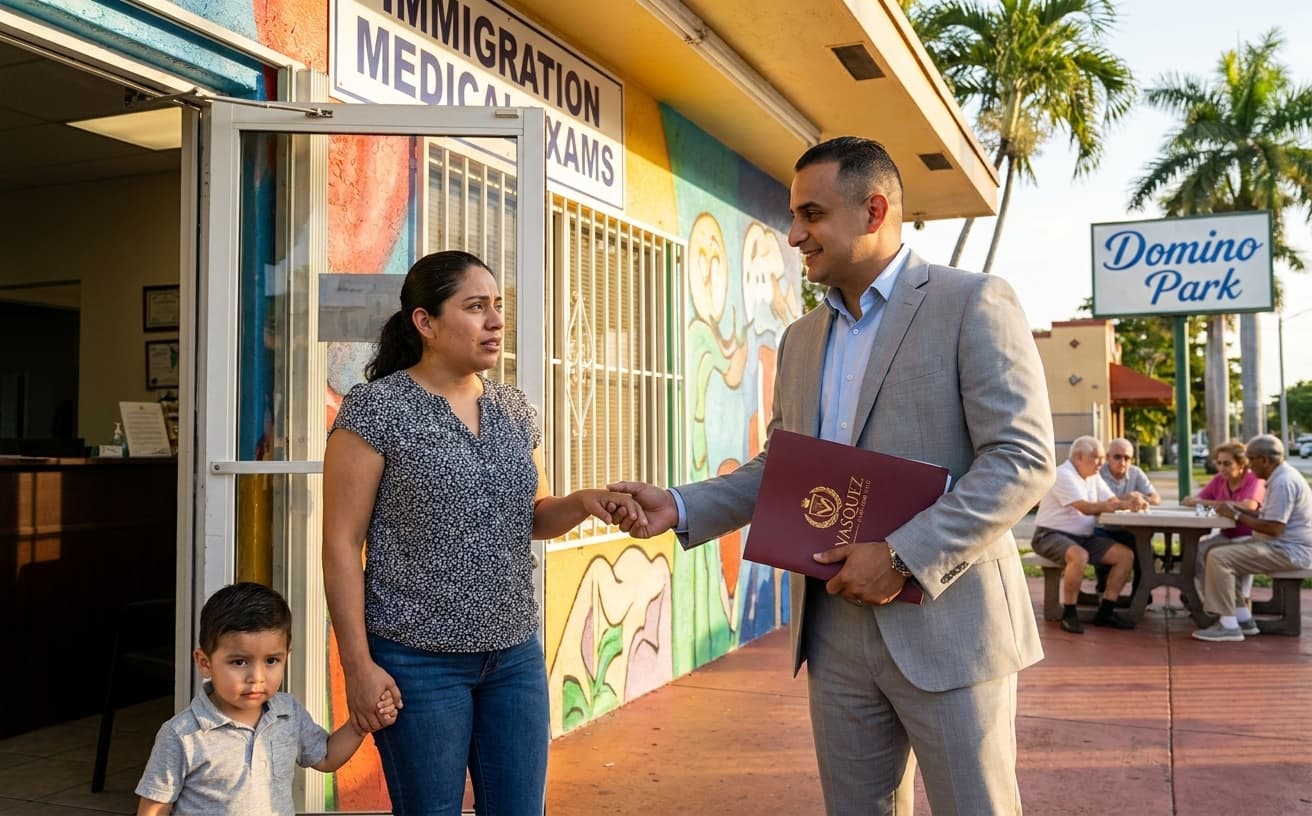
The immigration medical exam is a mandatory health screening required by USCIS for most individuals seeking adjustment of status to permanent resident (Green Card) in the United States, including those in Florida. This exam, conducted by a designated civil surgeon, ensures applicants do not pose a public health risk and meet specific medical criteria for admissibility. It involves a physical examination, mental health evaluation, blood tests for certain diseases, and verification of vaccination records. The results are documented on Form I-693, Report of Medical Examination and Vaccination Record, which must be submitted in a sealed envelope to USCIS.
- The exam is required for most Green Card applicants.
- It must be performed by a USCIS-approved civil surgeon.
- Form I-693 documents the results, including vaccinations.
- The sealed envelope from the civil surgeon is critical for submission.
- Ensures public health and addresses inadmissibility grounds.
Embarking on the journey to a Green Card in the United States can be an exciting yet complex process. For many individuals living in Florida, especially those in bustling areas like Pembroke Pines, a crucial step often involves undergoing an immigration medical exam. This medical evaluation is not just a formality; it is a critical requirement designed to ensure public health and determine an applicant's admissibility to the U.S. Navigating the specifics, from finding an approved civil surgeon to understanding the Form I-693, can feel overwhelming.
At Florida Immigration Lawyers, we understand the anxieties and questions that arise during this pivotal stage. This comprehensive guide is designed to demystify the USCIS medical exam process for Florida residents in 2026, providing clear, actionable information. We will cover everything from locating an authorized doctor in Pembroke Pines and surrounding Florida communities to detailing the examination's components, required documents, and what to expect regarding timelines and costs. Our goal is to equip you with the knowledge needed to approach your immigration medical exam with confidence, helping you avoid common pitfalls and move closer to achieving your immigration goals.
Do not let uncertainty derail your path to a Green Card. Understanding each step is vital. For personalized guidance and support throughout your immigration journey, we encourage you to reach out. Call Florida Immigration Lawyers at 1-844-YO-PELEO for a free consultation today.
Understanding the Immigration Medical Exam in Florida
The immigration medical exam is a cornerstone of the U.S. immigration process, mandated by the U.S. Citizenship and Immigration Services (USCIS) for most applicants seeking adjustment of status to become lawful permanent residents. Its primary purpose is twofold: to protect public health within the United States and to identify applicants who may be inadmissible under health-related grounds outlined in the Immigration and Nationality Act (INA).
Specifically, INA Section 212(a)(1) details the health-related grounds of inadmissibility, which include communicable diseases of public health significance, a failure to present proof of required vaccinations, physical or mental disorders with associated harmful behavior, and drug abuse or addiction. The medical examination serves as the mechanism through which USCIS assesses whether an applicant meets these health standards. For individuals residing in Florida, whether in Miami, Orlando, or smaller communities like Pembroke Pines, this requirement is universal.
The exam must be performed by a doctor specifically authorized by USCIS, known as a civil surgeon. These medical professionals are trained and approved to conduct the specific examinations required for immigration purposes, ensuring consistency and adherence to federal guidelines. The results of this examination are meticulously recorded on Form I-693, Report of Medical Examination and Vaccination Record. This form is a critical piece of your immigration application, and any errors or omissions can significantly delay your case or even lead to a denial. Understanding the gravity of this exam and preparing adequately is paramount for a smooth application process.
The medical exam is not a general health check-up. It is a targeted screening designed to identify specific conditions that could impact an individual's eligibility for a Green Card. Therefore, applicants should prepare to discuss their full medical history transparently and provide all necessary documentation to the civil surgeon. This proactive approach helps to ensure that the process is completed efficiently and without unnecessary complications, reflecting the importance USCIS places on public health and safety as part of the immigration framework.
Finding a USCIS Civil Surgeon in Pembroke Pines, Florida
Locating an approved civil surgeon is the crucial first step for anyone needing an immigration medical exam in Florida. USCIS maintains a strict list of physicians authorized to conduct these specific examinations. You cannot simply visit your family doctor; the examination must be performed by a doctor designated by USCIS. This ensures that the medical evaluation adheres to federal standards and that the results are acceptable for your Green Card application.
For residents of Pembroke Pines and surrounding areas in Broward County, finding an approved civil surgeon is straightforward using the official USCIS website. The USCIS Find a Civil Surgeon tool allows you to search by zip code or state, providing a list of authorized doctors, their addresses, and contact information. When searching in Florida, you will find numerous options across the state, including in major metropolitan areas like Miami-Dade, Broward, Palm Beach, and Orange counties. It's advisable to call several offices to compare availability, fees, and services offered.
When selecting a civil surgeon, consider factors beyond just proximity. While a doctor in Pembroke Pines or a nearby city like Hollywood or Miramar might be convenient, also inquire about their experience with immigration medical exams, the estimated cost, and how quickly they can provide the sealed Form I-693. Some clinics may offer bilingual staff, which can be a significant advantage for non-English speaking applicants. Ensure the doctor's office is reputable and has clear communication protocols for scheduling and follow-up. Remember, the accuracy and completeness of your Form I-693 depend entirely on the civil surgeon's thoroughness and adherence to USCIS guidelines.
It is important to verify the civil surgeon's current authorization status before your appointment, as their approval can change. A quick check on the USCIS website or a direct call to the doctor's office to confirm their status as an approved civil surgeon for 2026 can prevent potential issues with your application. Choosing the right civil surgeon is a vital part of successfully completing your USCIS medical exam and moving forward with your adjustment of status application in Florida.
Step-by-Step Guide to Your I-693 Medical Examination
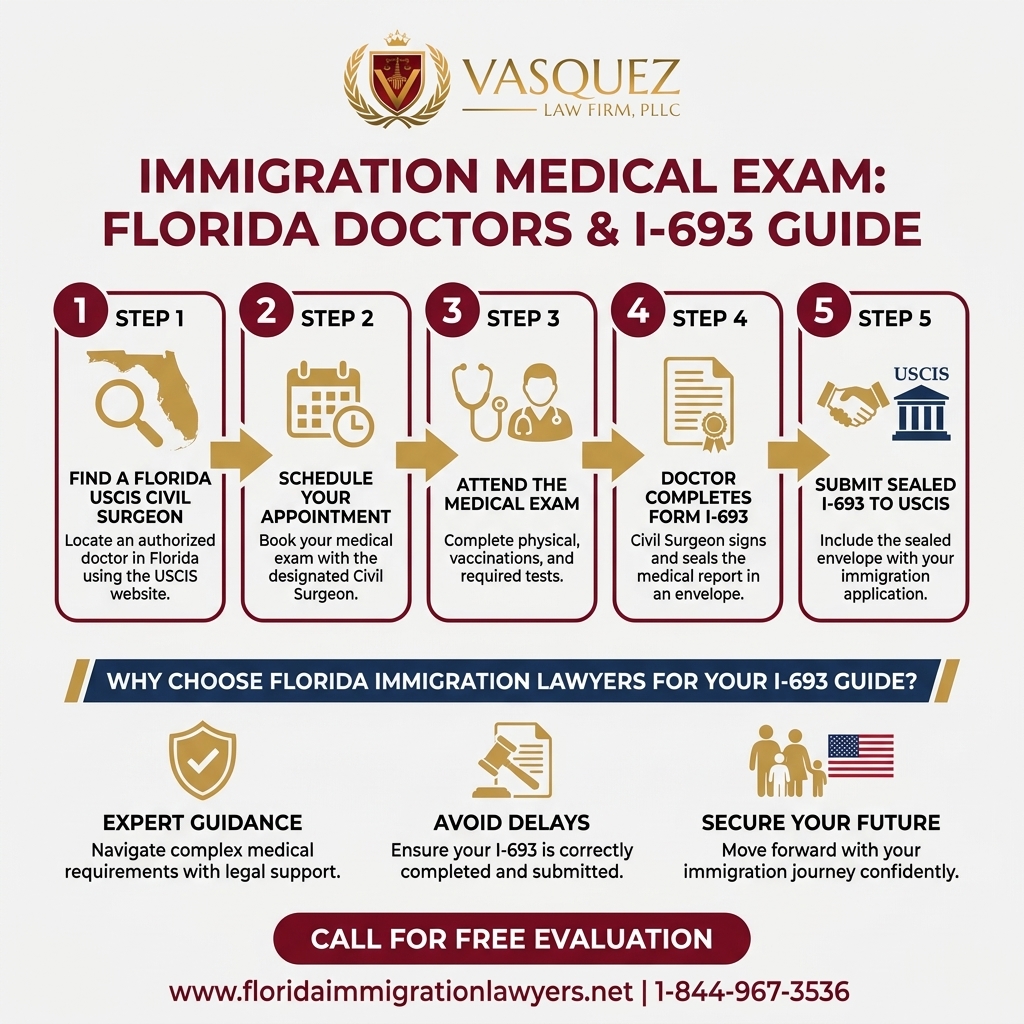
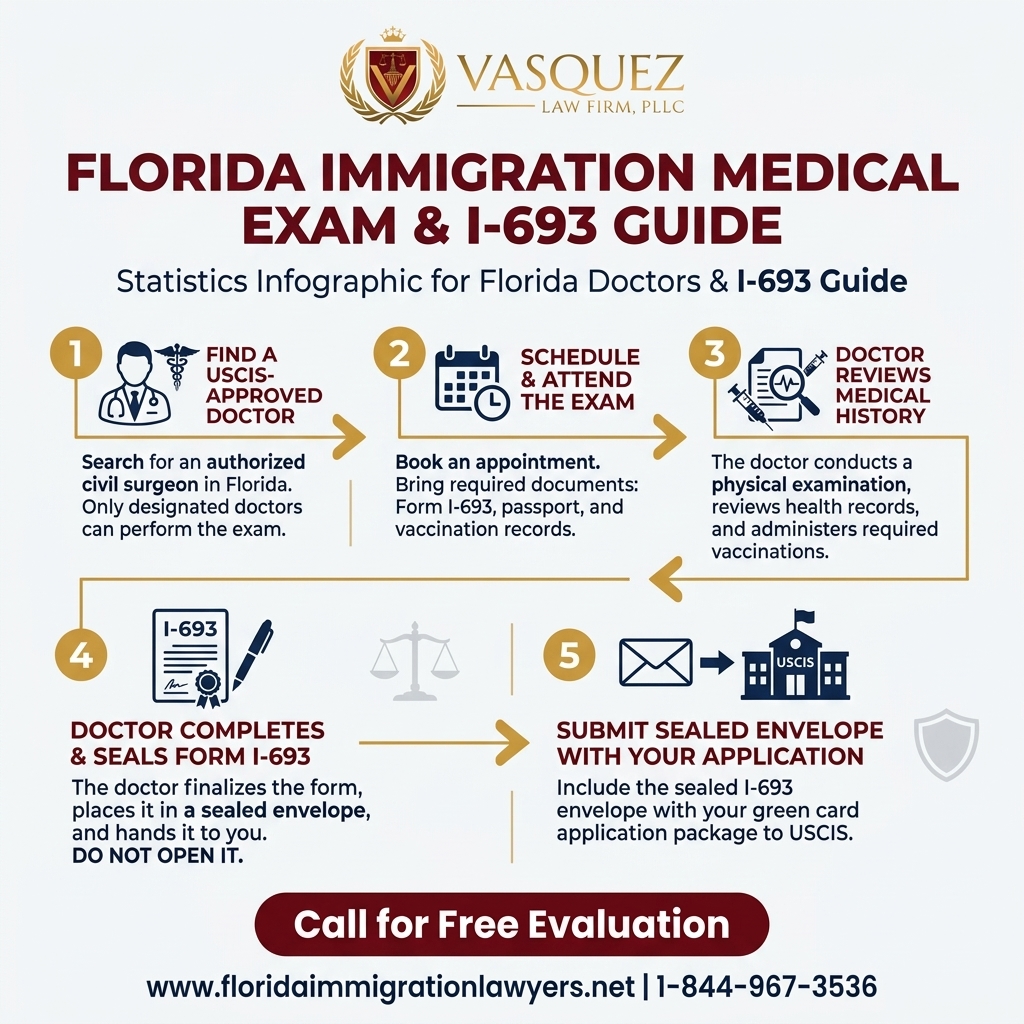
Navigating the immigration medical exam process can seem daunting, but breaking it down into manageable steps can help ease the burden. This guide will walk you through the typical process for completing your Form I-693 in Florida, ensuring you are well-prepared for each stage.
-
Step 1: Locate and Schedule with a USCIS Civil Surgeon. As discussed, use the USCIS Find a Civil Surgeon tool to find an approved doctor in Pembroke Pines or your local Florida area. Call several offices to inquire about their services, availability, and fees. Schedule your appointment, making sure to clarify what documents you need to bring.
-
Step 2: Gather Required Documents and Medical History. Before your appointment, compile all necessary identification documents, such as your passport, government-issued ID, and any visa documents (like an I-94 arrival/departure record). Crucially, gather all available vaccination records and any medical records pertaining to past or current health conditions, hospitalizations, or treatments. This includes mental health records, if applicable. Having these ready will streamline your visit and ensure accuracy on Form I-693.
-
Step 3: Attend Your Medical Examination. During the appointment, the civil surgeon or their staff will review your medical history, perform a thorough physical examination, and conduct a mental status evaluation. You will undergo specific lab tests, which typically include blood tests for syphilis and gonorrhea, and a test for tuberculosis (TB). Depending on your age and medical history, a chest X-ray may also be required, particularly if your TB test results are positive or inconclusive. Be honest and transparent with the civil surgeon about your health history.
-
Step 4: Fulfill Vaccination Requirements. The civil surgeon will review your vaccination records. USCIS requires proof of vaccination against a range of diseases, including mumps, measles, rubella, polio, tetanus, diphtheria toxoids, pertussis, Haemophilus influenzae type B, hepatitis B, and any other vaccine-preventable diseases recommended by the Advisory Committee for Immunization Practices (ACIP). If you lack certain vaccinations or proof, the civil surgeon will administer them or advise you on where to get them. This is a mandatory component for most applicants under 8 CFR 232.1.
-
Step 5: Receive Your Sealed Form I-693 Envelope. Once all examinations, tests, and vaccinations are complete, the civil surgeon will compile all results and complete Form I-693. They will then place the completed form and any supporting documents (like lab results) into a sealed envelope. This envelope is critical; it must remain sealed until submitted to USCIS. The civil surgeon will provide you with a copy of your completed I-693 form for your records, but the original sealed envelope is for USCIS only.
-
Step 6: Submit Form I-693 to USCIS. You will submit the sealed Form I-693 envelope along with your Green Card application (Form I-485, Application to Register Permanent Residence or Adjust Status) or at an interview, as instructed by USCIS. Ensure the envelope remains sealed until it reaches the USCIS officer. Submitting an unsealed envelope will lead to rejection and delays.
Required Documents and What to Expect During the Exam
Proper preparation is key to a smooth immigration medical exam experience. Knowing what documents to bring and what to expect during the examination itself can significantly reduce stress and prevent delays. For your appointment with a civil surgeon in Florida, ensure you have the following essential documents:
- Valid Passport or Government-Issued Photo ID: This is crucial for verifying your identity.
- Form I-693, Report of Medical Examination and Vaccination Record: You can download this from the USCIS website. Do not fill out the medical sections, as the civil surgeon will complete those.
- Vaccination Records: Bring all available immunization records, including childhood vaccinations. If you do not have them, the civil surgeon can perform blood tests to check for immunity or administer necessary vaccines.
- Medical History Documentation: Any records related to past or present medical conditions, hospitalizations, surgeries, or ongoing treatments. This includes diagnoses, treatment plans, and medication lists.
- Mental Health Records: If you have a history of mental health conditions, bring documentation from your treating physician or therapist.
- Proof of Prior TB Treatment: If you have ever been diagnosed with or treated for tuberculosis, bring all relevant medical records, including X-rays and lab results.
- Payment for the Exam: Be prepared to pay the civil surgeon's fees at the time of your appointment.
During the examination, you can expect a comprehensive assessment. The civil surgeon will conduct a thorough physical examination, checking vital signs, listening to your heart and lungs, and assessing your general physical health. A mental status evaluation will also be performed, where the doctor will ask questions to assess your cognitive function, mood, and behavior. This is to identify any potential mental disorders associated with harmful behavior, as per USCIS guidelines.
Blood tests are mandatory for all applicants aged 15 and older to screen for syphilis (using a serologic test) and gonorrhea. Depending on your country of origin and risk factors, additional tests may be required. A tuberculosis (TB) test, typically a TST (tuberculin skin test) or an IGRA (interferon-gamma release assay) blood test, will also be administered. If the TB test is positive, a chest X-ray will be necessary to rule out active TB disease. All these tests are critical for ensuring public health and meeting the health-related inadmissibility grounds.
The entire process is confidential. The civil surgeon's office is bound by patient privacy laws, and your medical information will only be shared with USCIS in the sealed Form I-693 envelope. Be honest and forthcoming with the civil surgeon; withholding information can lead to complications later in your immigration process. The goal is to accurately document your health status in accordance with USCIS requirements.
Timeline, Processing, and Validity of Form I-693
Understanding the timeline and validity of your immigration medical exam is crucial for a successful Green Card application in Florida. Form I-693 has specific validity rules that, if not followed, can lead to requests for evidence (RFEs) or even denials, causing significant delays in your immigration journey.
The validity period of Form I-693 is typically two years from the date the civil surgeon signs the form. However, there's a critical condition: the form must be submitted to USCIS within 60 days of the civil surgeon's signature. If you submit the form more than 60 days after the doctor signed it, USCIS will consider it invalid, even if it's still within the two-year window. This '60-day rule' is a frequent source of confusion and delays for applicants.
For example, if a civil surgeon in Pembroke Pines signs your I-693 on May 3, 2026, you must submit it to USCIS by July 2, 2026. Once USCIS receives it, the form remains valid for two years from the civil surgeon's signature date (until May 2, 2028, in this example). This allows for sufficient time for USCIS to process your adjustment of status application, even if interviews or further reviews are required. It is generally advisable to complete your medical exam closer to when you plan to submit your I-485 application or before your interview, to maximize the form's validity period.
The actual processing time for the medical exam itself can vary. Scheduling an appointment, undergoing the exam, waiting for lab results, and obtaining vaccinations can take anywhere from one week to several weeks, depending on the civil surgeon's availability, the need for follow-up tests, or if vaccinations need to be administered over multiple visits. Many civil surgeons in Florida, especially in areas with high immigrant populations like Miami, Orlando, and Tampa, are accustomed to expedited processing, but it's always best to plan ahead.
Keep in mind that the validity of Form I-693 impacts the overall processing time for your I-485. If your I-693 expires before USCIS makes a final decision on your adjustment of status, you will likely receive an RFE to submit a new medical exam. This can add months to your processing time. Therefore, careful timing and proactive communication with your legal team at Florida Immigration Lawyers can help ensure your USCIS medical exam is valid throughout your application's adjudication.
Do not navigate this process alone. Contact Florida Immigration Lawyers today for guidance and support.
Cost Factors and Fee Breakdown for the Medical Exam
The cost associated with the immigration medical exam is an important consideration for many applicants in Florida. Unlike USCIS filing fees, there is no standard, fixed fee for the Form I-693 medical examination. The total cost can vary significantly depending on several factors, including the specific civil surgeon or clinic you choose, your geographical location within Florida, and your individual medical needs.
Typically, the total cost for an immigration medical exam will encompass several components. The primary fee covers the civil surgeon's examination, which includes the physical and mental health evaluation, review of your medical history, and completion of the Form I-693. This fee can range widely, often from $200 to $500 or more, depending on the clinic's pricing structure and the complexity of your case. For instance, civil surgeons in larger metropolitan areas like Miami or Orlando might have different fee schedules compared to those in smaller towns or less populated regions of Florida.
Beyond the basic examination fee, additional costs frequently arise from required laboratory tests and vaccinations. Blood tests for syphilis and gonorrhea are standard, and a tuberculosis test (TST or IGRA) is also mandatory. If your TB test is positive, a chest X-ray will be required, which incurs an additional charge. The cost of these tests can range from $50 to $200 or more, depending on the lab and the specific tests performed. Furthermore, if your vaccination records are incomplete or if you lack immunity to required diseases, the civil surgeon will administer the necessary vaccines. Each vaccine comes with its own cost, and these can quickly add up, potentially adding another $100 to $300 (or more) to your total expense.
When contacting civil surgeons in Pembroke Pines or elsewhere in Florida, it is highly recommended to ask for a comprehensive breakdown of all potential costs upfront. Inquire about the base exam fee, the cost of all required lab tests, and the price per vaccination. Some clinics offer package deals that include all standard requirements, while others charge à la carte. Be aware that most health insurance plans, including Medicaid or Medicare, typically do not cover immigration medical exams, as they are not considered medically necessary treatments. Therefore, you should be prepared to pay for the entire cost out-of-pocket. Budgeting for these expenses is a crucial part of planning your adjustment of status application.
Common Mistakes to Avoid During Your Immigration Medical Exam
The immigration medical exam is a critical component of your Green Card application, and making mistakes can lead to significant delays, requests for evidence (RFEs), or even denial. Being aware of common pitfalls can help you navigate the process smoothly, especially for those in Florida seeking permanent residency.
-
Not Using a USCIS-Approved Civil Surgeon: This is perhaps the most critical mistake. Only doctors designated by USCIS can perform the exam. Using an unauthorized doctor will result in your Form I-693 being rejected, requiring you to restart the entire process and incur additional costs. Always verify a doctor's status on the USCIS website.
-
Opening the Sealed Envelope: The civil surgeon provides Form I-693 in a sealed envelope, which must remain intact until USCIS opens it. Opening this envelope, even out of curiosity, invalidates the form, and you will need a new exam.
-
Missing or Incomplete Vaccination Records: Failure to provide complete vaccination records will necessitate additional blood tests or vaccinations, increasing costs and potentially delaying the completion of your I-693. Gather all records beforehand.
-
Not Disclosing Full Medical History: Being dishonest or withholding information about past or current medical conditions, including mental health issues or substance abuse, can lead to serious consequences. USCIS may discover discrepancies, potentially resulting in accusations of misrepresentation or fraud.
-
Submitting an Expired Form I-693: The form has a specific validity period. If you submit it more than 60 days after the civil surgeon's signature or if it expires during the USCIS adjudication process, it will be deemed invalid. Always check the dates and plan your submission carefully.
-
Not Bringing All Required Documents to the Appointment: Forgetting identification, previous medical records, or vaccination histories can cause delays, requiring multiple visits and prolonging the process. Create a checklist and double-check it.
-
Delaying the Medical Exam: Postponing the exam can lead to delays in your overall Green Card application. It's best to complete it proactively, especially if you anticipate needing additional tests or vaccinations.
-
Not Following Up on Abnormal Test Results: If the civil surgeon identifies any abnormal findings, such as a positive TB test or concerning mental health indicators, prompt follow-up and appropriate treatment are essential. Failure to address these can lead to inadmissibility.
-
Assuming Health Insurance Covers the Exam: Most private health insurance plans, Medicaid, and Medicare do not cover immigration medical exams. Be prepared to pay out-of-pocket for all associated costs.
-
Not Seeking Legal Counsel for Complex Cases: If you have a complex medical history, a prior inadmissibility finding, or concerns about a communicable disease, attempting to navigate the medical exam process without legal advice can be risky. An experienced Florida immigration attorney can provide invaluable guidance.
When to Call a Lawyer for Your Immigration Medical Exam
While the immigration medical exam might seem like a straightforward medical procedure, certain circumstances warrant the expertise of an experienced immigration attorney. At Florida Immigration Lawyers, we frequently assist clients in Pembroke Pines and across Florida with challenges related to their USCIS medical exam, ensuring their Green Card application proceeds without unnecessary complications.
You should consider contacting an attorney if you have a complex medical history. This includes chronic illnesses, previous diagnoses of communicable diseases (like tuberculosis or syphilis), or any history of mental health conditions that required treatment. These situations often require detailed medical waivers (such as Form I-601, Application for Waiver of Grounds of Inadmissibility) or extensive documentation, which an attorney can help prepare and present effectively to USCIS. Navigating the legal nuances of health-related inadmissibility grounds, as outlined in INA Section 212(a)(1), is best handled by legal professionals.
Furthermore, if you receive concerning results from your medical exam, such as a positive TB test or a finding of a physical or mental disorder with associated harmful behavior, immediate legal counsel is crucial. An attorney can explain the implications of these findings, explore potential waivers, and guide you through any required follow-up treatments or evaluations. They can also represent you in communications with USCIS, ensuring that all responses are timely and legally sound. If you have any doubts about the validity period of your Form I-693 or if you receive a Request for Evidence (RFE) related to your medical exam, an attorney can help you respond appropriately and efficiently.
Even if your case seems simple, having an attorney review your overall application, including your medical exam documentation, can provide peace of mind. Florida Immigration Lawyers offers comprehensive support, ensuring all aspects of your adjustment of status application, including the I-693, meet USCIS requirements. Our team is dedicated to protecting your rights and advocating for your best interests throughout the entire immigration process.
About Florida Immigration Lawyers
Florida Immigration Lawyers is an immigration law firm dedicated to serving individuals and families across the entire state of Florida. With a deep understanding of U.S. immigration law and its complexities, we provide compassionate, effective, and results-driven legal representation. Our team of experienced attorneys is committed to helping you navigate every aspect of your immigration journey, from initial applications to complex appeals.
We offer a comprehensive range of immigration services, including family-based immigration, employment-based visas, asylum claims, deportation defense, citizenship and naturalization, and assistance with the immigration medical exam. Our firm prides itself on personalized attention, ensuring that each client receives tailored strategies designed to achieve their specific goals. We understand the unique challenges faced by immigrants in Florida, including those in Pembroke Pines, Miami, Orlando, and Tampa, and we are here to offer clear guidance and unwavering support.
Choosing Florida Immigration Lawyers means partnering with a team that is available 24/7, offers free consultations, and is fluent in both English and Spanish (Se Habla Español). We believe everyone deserves access to quality legal representation, and we strive to make our services accessible and understandable. Let us put our experience to work for you, protecting your rights and helping you build a successful future in the United States. Visit our attorneys page to learn more about our dedicated team.
Sources and References
- U.S. Citizenship and Immigration Services (USCIS)
- USCIS Find a Civil Surgeon Tool
- U.S. Department of State - Medical Examination
- 8 U.S.C. Chapter 12 - Immigration and Nationality Act (INA Section 212(a)(1))
- 8 CFR (Code of Federal Regulations) 212.1 - Inadmissibility on health-related grounds
- 8 CFR (Code of Federal Regulations) 232.1 - Medical examination
- USCIS Policy Manual - Volume 8, Part B, Chapter 3 - Medical Examination
Related services: immigration practice areas, family immigration services, asylum protection, business immigration.
This article provides general legal information and is not intended as legal advice. Every case is unique, and outcomes depend on specific facts and circumstances. Contact an attorney for advice about your particular situation.
The immigration medical exam is a critical step towards your Green Card. Do not leave its success to chance. For legal guidance on your Form I-693 and overall adjustment of status application in Florida, contact Florida Immigration Lawyers today at 1-844-YO-PELEO for a free consultation. Se Habla Español - Estamos aquí para ayudarle.
If you need legal assistance, learn more about experienced immigration attorneys in Orlando, or call us at 1-844-YO-PELEO for a free consultation.
Do Not Navigate This Process Alone
Our experienced immigration attorneys are ready to fight for you. Get a free, confidential case review today.
Se Habla Español
Or leave your details and we’ll call you:
Free Evaluation in 24 Hours
Or talk to us right now
AI voice assistant — available 24/7
FreeFrequently Asked Questions

William J. Vásquez
Founding Attorney · Vasquez Law Firm
U.S. Air Force veteran and immigration attorney with years of hands-on U.S. immigration experience. J.D., NCCU School of Law. AILA member. Admitted to the 4th, 5th, and 11th Circuit Courts.
Available 24/7 - Free Evaluations
Reviewed for legal accuracy by William J. Vásquez
Licensed in North Carolina; U.S. immigration is federal practice.
Related Legal Services
Our Florida immigration attorneys can help you with business immigration, deportation defense and family immigration services. Call today at 1-844-YO-PELEO for a free case review.
Related Links
Related Topics
Free Legal Case Review
Discuss your case with our experienced attorneys. We're available 24/7.
Se Habla Español - Estamos aquí para ayudarle.
Related Articles
Immigration Lawyer Orlando Free Consultation in Florida
For individuals and families in Orlando, Florida, navigating the complexities of U.S. immigration law requires expert guidance. An immigration lawyer in Orlando offers crucial support for everything from visa applications and green card processes to naturalization and deportation defense. This comprehensive guide details what a free consultation covers, providing a step-by-step overview of immigration pathways, essential document checklists, and expected timelines in 2026. We also highlight common mistakes to avoid, discuss the critical role of legal counsel in deportation and asylum cases, and explain why choosing a local Orlando immigration attorney is beneficial. Florida Immigration Lawyers is dedicated to serving the diverse community of Orlando with compassionate, effective legal solutions, ensuring you receive personalized advice and robust representation for a successful immigration journey.
EAD Advance Parole Combo Card in Florida 2026
For individuals with a pending Form I-485, Application to Register Permanent Residence or Adjust Status, the EAD Advance Parole Combo Card is an essential document. This single card combines the authorization to work legally in the U.S. (Employment Authorization Document - EAD) with permission to travel internationally and re-enter without abandoning your green card application (Advance Parole). This guide from Florida Immigration Lawyers provides a comprehensive overview for applicants in Florida in 2026, covering eligibility, the step-by-step application process, required documents, expected processing times, and associated costs. We also highlight common mistakes to avoid and when to seek legal counsel to ensure a smooth and successful immigration journey. Understanding this vital card is key to maintaining stability while awaiting your permanent residency approval.
Fiance Visa Lawyer in Florida 2026: Your K-1 Guide
For U.S. citizens in Florida, the K-1 fiance visa is the primary path to bring their foreign partners to the U.S. to marry. This comprehensive guide from Florida Immigration Lawyers details the intricate K-1 process, from initial petition to adjustment of status, for 2026. We cover eligibility, a step-by-step application guide, essential document checklists, typical timelines, and associated costs. Learn about common pitfalls to avoid and crucial scenarios when legal counsel is indispensable. Our firm focuses on family-based immigration, offering guidance to navigate USCIS and Department of State requirements. Ensure a smooth and successful journey to reunite with your loved one in Florida with the help of a dedicated immigration attorney.
I-601 Waiver Lawyer Florida: Your Guide
Facing inadmissibility issues in Florida? Learn how an I-601 waiver can help you overcome these challenges with the guidance of an experienced lawyer. This guide provides a detailed overview of the process, eligibility requirements, and common pitfalls to avoid. Call Florida Immigration Lawyers at 1-844-YO-PELEO for assistance today.