2026 Winter Olympics Ice Hockey & Immigration: A Florida...
Prepare for the 2026 Winter Olympics ice hockey with our comprehensive guide to U.S. immigration for athletes in Florida. Learn about essential O-1 and P-1 visas, the intricate USCIS application process, and critical timelines. Our article covers everything from documentation to cost factors, focusing on how Florida's resources can support your Olympic journey. Discover common pitfalls to avoid and when to seek expert legal counsel. Florida Immigration Lawyers offers free consultations and dedicated support for international athletes, coaches, and support staff. Ensure your immigration path to the Olympics is clear and compliant.

Navigating immigration for the 2026 Winter Olympics ice hockey athletes in Florida involves specific visa categories like O-1 and P-1, requiring demonstration of extraordinary ability or international recognition. The process includes detailed application submissions to USCIS, interviews, and compliance with strict deadlines. Securing the right legal counsel from a Florida immigration lawyer is crucial for success.
- Olympic athletes typically pursue O-1 (extraordinary ability) or P-1 (internationally recognized athlete) visas.
- The application process is complex, involving extensive documentation and adherence to USCIS regulations.
- Florida's immigration landscape offers unique resources for international athletes and their support staff.
- Early preparation and legal guidance from a qualified immigration attorney are essential for a smooth process.
- Understanding timelines and potential costs is key to successful immigration for the 2026 Winter Olympics.
The roar of the crowd, the thrill of competition, the global stage – the 2026 Winter Olympics ice hockey tournament promises to be an unforgettable event. As athletes from around the world prepare to showcase their talents, many will need to navigate the intricate landscape of U.S. immigration law to compete. For those with ties to or aspirations in Florida, understanding these pathways is paramount.
Florida, a vibrant state known for its diverse communities and growing sports industry, will undoubtedly play a role in hosting, training, or supporting these international talents. This comprehensive guide will explore the specific immigration requirements for athletes, coaches, and support staff aiming to participate in or contribute to the 2026 Winter Olympics ice hockey events, with a special focus on the resources available in Florida, including Jacksonville.
Whether you are an Olympic-bound athlete, a team official, or an organization supporting international talent, this article provides essential insights into visa options, the application process, and common challenges. Do not navigate this complex journey alone. For personalized guidance and expert legal assistance, call Florida Immigration Lawyers at 1-844-967-3536 for a free consultation. We are here to help you achieve your Olympic dreams.
Understanding Immigration for Olympic Athletes in Florida
The convergence of elite sports and immigration law is a specialized field, especially when considering a major international event like the 2026 Winter Olympics ice hockey competition. Athletes, coaches, and essential support personnel often require specific non-immigrant or immigrant visas to enter and work in the United States. Florida, with its strategic location and burgeoning sports scene, serves as a crucial hub for many international talents.
Our state offers extensive training facilities, a large international population, and a welcoming environment for global talent. Understanding the general framework of U.S. immigration, particularly as it pertains to athletes, is the first step in ensuring a smooth journey towards the Olympics. This involves navigating agencies like USCIS and adhering to federal statutes.
Where Will 2026 Winter Olympics Ice Hockey Be Held?
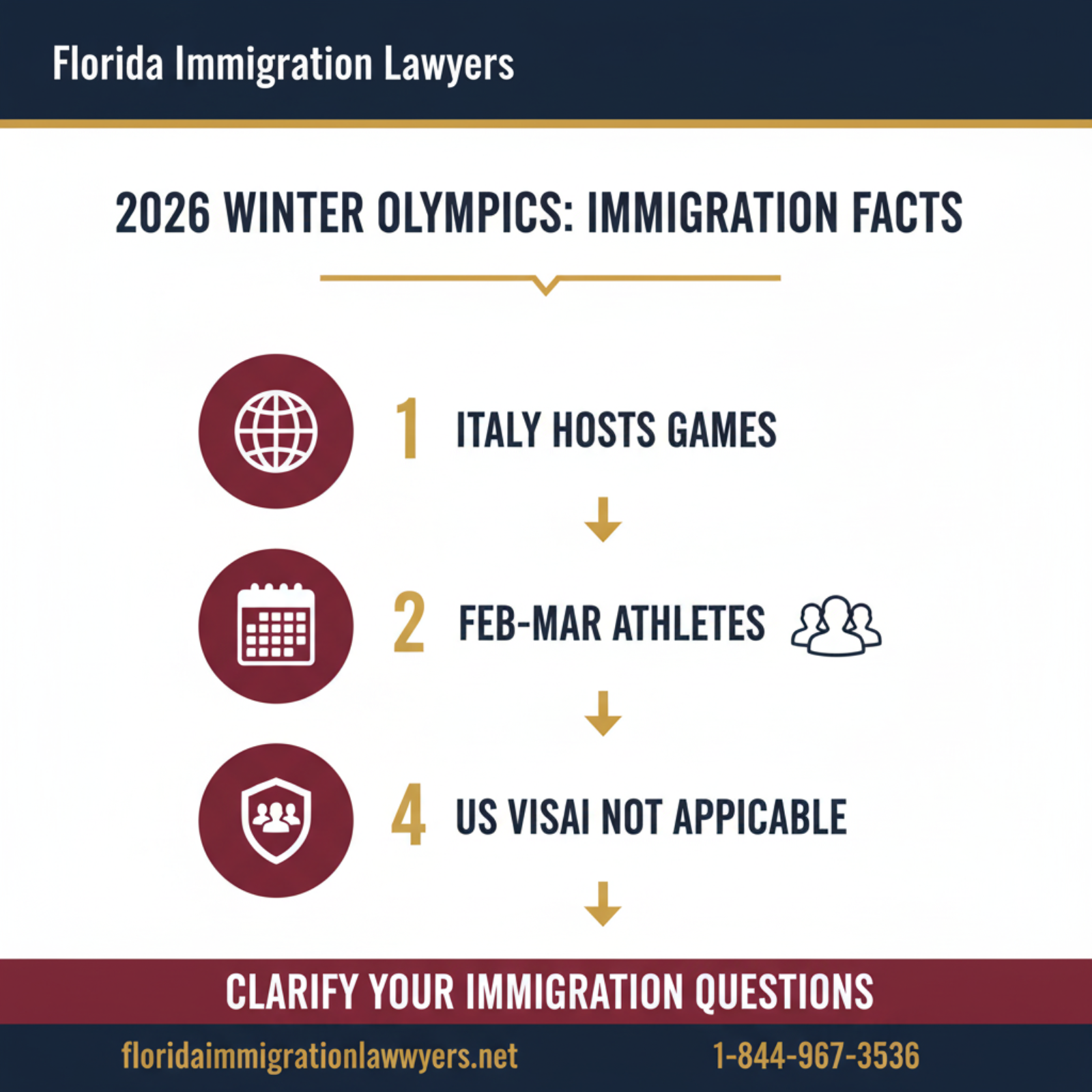
The 2026 Winter Olympics ice hockey events are officially scheduled to take place in Milano Cortina, Italy. While the games themselves are abroad, the U.S. plays a significant role in the preparation, training, and professional lives of many Olympic athletes. Florida, in particular, has become a preferred location for athletes to reside, train, and conduct their off-season activities, making it relevant for immigration purposes.
Many international athletes, including those who may compete in the 2026 Games, establish residency or maintain training bases in Florida. This makes understanding the USCIS immigration process Florida-specific resources vital. Even if the games are overseas, your U.S. immigration status for training, endorsements, or future professional opportunities remains critical.
Florida's Connection to Olympic Hockey and NHL Teams
Florida boasts a strong connection to professional ice hockey, being home to two prominent NHL teams: the Florida Panthers, based in Sunrise, and the Tampa Bay Lightning. These teams frequently feature international players, many of whom have competed in past Olympic Games or aspire to the 2026 Winter Olympics ice hockey tournament. The state's hockey infrastructure is robust, from youth leagues to professional arenas.
The presence of these teams, along with minor league affiliates and numerous training facilities across the state, including in areas like Jacksonville, makes Florida an attractive destination for hockey talent. This environment naturally leads to questions about how international athletes can legally live and work here, highlighting the need for specialized Olympic athlete visas and legal guidance.
Regarding the question, "Are the Florida Panthers going to the Olympics in 2026?", it is important to clarify that the Olympics feature national teams, not NHL club teams directly. However, many individual players from the Florida Panthers and Tampa Bay Lightning are expected to represent their home countries in the 2026 Winter Olympics ice hockey competition. The NHL has agreed to release its players, making this an exciting prospect for fans in Florida.
As for "What teams will play in 2026 Olympic hockey?", the International Ice Hockey Federation (IIHF) manages the qualification process for national teams. Many nations, including the USA, Canada, Sweden, Finland, and others, typically participate. The final lineup will be determined through ongoing qualification tournaments leading up to the Games.
Key Visa Options for 2026 Winter Olympics Ice Hockey Participants
For international athletes, coaches, and support staff aiming to engage with the U.S. sports landscape, particularly in the lead-up to events like the 2026 Winter Olympics ice hockey, several non-immigrant visa categories are commonly utilized. Selecting the correct visa is paramount and often depends on the individual's level of achievement, the nature of their activity in the U.S., and their intent.
These visas allow temporary stay for specific purposes, such as training, competition, or coaching. Understanding the distinctions between each category is vital to prevent delays or denials. A qualified Florida immigration lawyer can help determine the most appropriate visa path for your unique circumstances, especially when navigating the specifics of the USCIS immigration process Florida requires.
O-1 Visa: Individuals with Extraordinary Ability
The O-1 non-immigrant visa is designated for individuals who possess extraordinary ability in the sciences, arts, education, business, or athletics. For 2026 Winter Olympics ice hockey athletes, this visa is often the ideal choice if they can prove sustained national or international acclaim in their sport. The O-1A category is specifically for athletes. (See INA 101(a)(15)(O)).
To qualify, an athlete must demonstrate extraordinary ability through extensive documentation, including awards, media coverage, significant roles, and high salary. This evidence proves recognition in their field, making it a strong option for elite Olympic-level competitors. (Refer to USCIS O-1 Visa Information).
P-1 Visa: Internationally Recognized Athletes
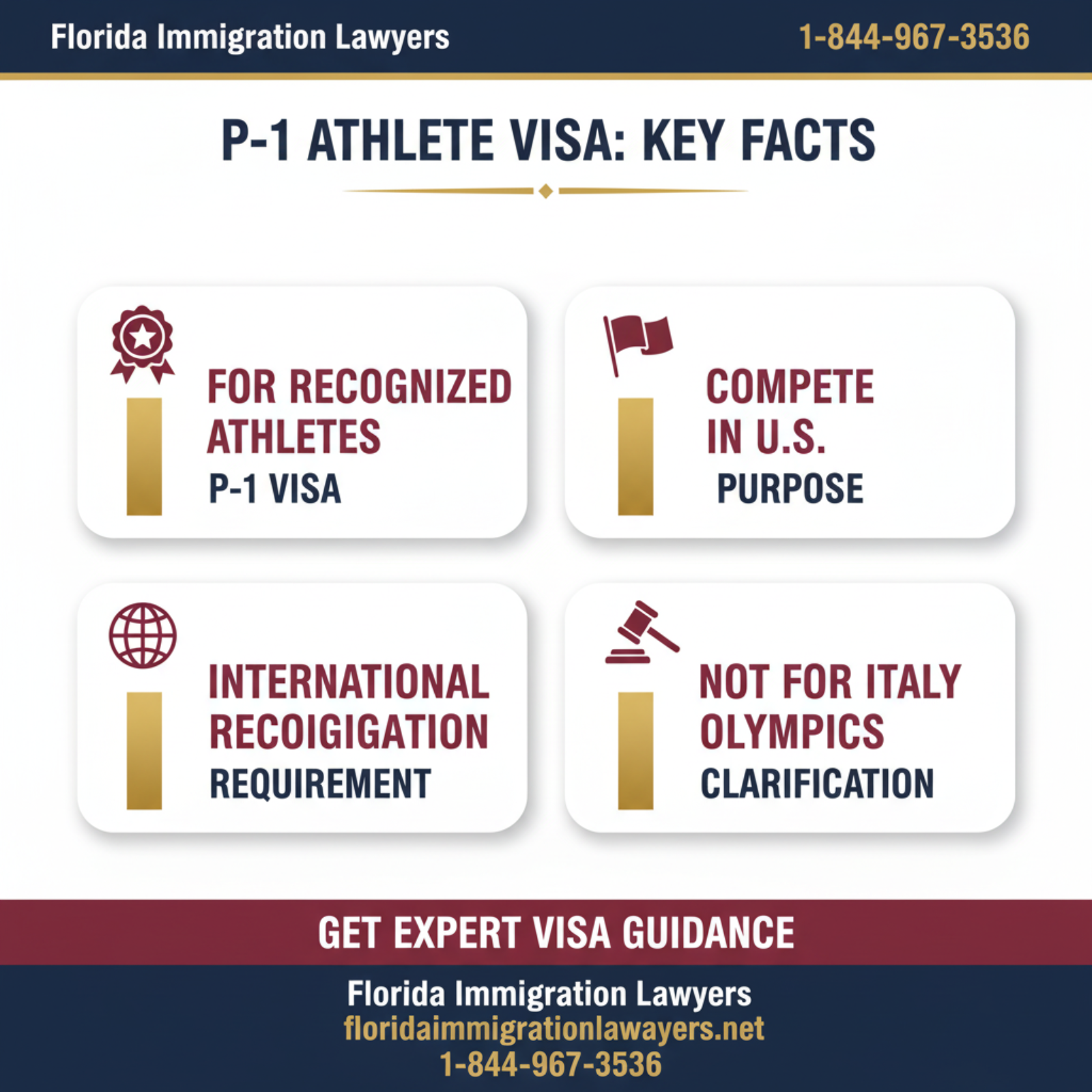
The P-1A non-immigrant visa is available to internationally recognized athletes who are coming to the U.S. to participate in a specific athletic competition as an individual or as part of a team. This visa is highly relevant for 2026 Winter Olympics ice hockey participants and their essential support personnel. It requires proof of international recognition and a contractual agreement for a specific event or season. (See INA 101(a)(15)(P)).
Evidence for a P-1A visa can include participation in major league sports, significant international competitions, or a high international ranking. Essential support personnel, such as coaches and trainers, may also be eligible for P-1S visas if they are integral to the athlete's performance. (Refer to Travel.State.Gov P Visa Information).
It's crucial to understand that both O-1 and P-1 visas are temporary. While they allow for extended stays, they do not automatically lead to permanent residency. However, for athletes with extraordinary achievements, the EB-1A green card category can be a pathway to permanent residency, often building upon the foundation laid by an O-1 visa. This is a common goal for many successful international athletes seeking long-term careers in the U.S.
The Step-by-Step Immigration Process for Athletes in Florida
Navigating the U.S. immigration system for an Olympic athlete visa can seem daunting, but it becomes manageable with a clear, step-by-step approach. This process is generally consistent whether you are applying from Jacksonville or any other part of Florida, but local resources can certainly aid your journey. Here’s a typical progression:
- Initial Consultation and Eligibility Assessment: Your first step should be to consult with an experienced Florida immigration lawyer. They will assess your qualifications, determine the most appropriate visa category (O-1, P-1, or other), and advise on the required evidence. This initial assessment is crucial for laying a strong foundation.
- Petition Filing with USCIS: Once eligibility is confirmed, your attorney will prepare and file Form I-129, Petition for a Nonimmigrant Worker, along with all supporting documentation, with U.S. Citizenship and Immigration Services (USCIS). For athletes, this petition is typically filed by a U.S. employer, agent, or sponsoring organization.
- Petition Adjudication and Approval: USCIS will review your petition and evidence. This process can take several months, though premium processing is available for an additional fee to expedite adjudication. If approved, USCIS will send an I-797 approval notice.
- Visa Application at a U.S. Consulate (for those outside the U.S.): If you are outside the United States, you will then apply for the visa stamp at a U.S. embassy or consulate in your home country. This involves completing Form DS-160, paying fees, and attending a visa interview. You will need your USCIS approval notice.
- Entry into the United States: Upon successful visa approval, you can travel to the U.S. An immigration officer at the port of entry will review your documents and typically grant you admission for the duration of your visa's validity. Ensure all your documents are readily accessible.
- Maintaining Status and Compliance: Once in the U.S., it is vital to maintain your immigration status by adhering to all visa conditions. This includes engaging only in authorized activities, complying with your visa's duration, and notifying USCIS of any significant changes. A Florida immigration lawyer can provide ongoing guidance to ensure compliance throughout your stay, especially important for those training for the 2026 Winter Olympics ice hockey.
Essential Documents for Your Athlete Visa Application
A successful athlete visa application hinges on meticulous documentation. Gathering and organizing the necessary evidence is a critical component of the USCIS immigration process Florida athletes face. Incomplete or improperly presented documents can lead to delays or even denials. Here is a general checklist of documents typically required for O-1 or P-1 visas:
- Passport: Valid passport for at least six months beyond your intended period of stay.
- Visa Petition (Form I-129): The approved petition filed by your U.S. employer, agent, or sponsor.
- Nonimmigrant Visa Application (Form DS-160): The online application submitted for your visa interview.
- Photographs: Recent passport-style photographs meeting U.S. State Department specifications.
- Contracts and Itineraries: Copies of contracts with U.S. teams, leagues, or event organizers, along with detailed itineraries of your activities in the U.S.
- Evidence of Extraordinary Ability/International Recognition: This is the most crucial part for Olympic athlete visas. It includes: major internationally recognized awards, documentation of participation in major events, affidavits from experts, published material about you, evidence of high salary, and membership in associations requiring outstanding achievements.
- Support Letters: Letters of support from U.S. employers, agents, or sponsoring organizations detailing the nature of your work and why your presence is essential.
- Financial Records: Proof of financial stability to support yourself during your stay.
- Educational and Professional Background: Any relevant diplomas, certifications, or professional licenses.
- Dependents' Documents: If applicable, passports, birth certificates, marriage certificates for spouses and children applying for derivative visas (O-3 or P-4).
Carefully compiling this documentation is a cornerstone of a strong application for the 2026 Winter Olympics ice hockey participants. Working with an experienced Florida immigration lawyer ensures no critical piece of evidence is overlooked.
Navigating Timelines and Processing for Olympic-Bound Immigrants
The immigration process for athletes, particularly those aiming for events like the 2026 Winter Olympics ice hockey, requires careful planning and an understanding of potential timelines. USCIS processing times can vary significantly based on the visa category, the specific service center handling the petition, and current caseloads. It is never too early to begin the process, especially given the strict deadlines associated with Olympic participation.
For O-1 and P-1 petitions, standard processing can take several months, often ranging from 3 to 9 months or even longer. This is why many athletes and their sponsoring organizations opt for Premium Processing. For an additional fee, USCIS guarantees a response within 15 calendar days (or 45 days for specific forms), providing much-needed certainty for time-sensitive applications. However, premium processing only expedites the petition's adjudication, not the subsequent visa interview at a U.S. consulate.
After USCIS approves the petition, scheduling a visa interview at a U.S. embassy or consulate abroad can add weeks or even months to the overall timeline, depending on the country and consular workload. Applicants in Florida who are adjusting status (e.g., from another visa to an EB-1A green card) would interact with local USCIS field offices, such as those in Miami, Orlando, or Tampa, or the sub-office in Jacksonville. These offices handle interviews and other in-person services for residents.
Delays can arise from various factors, including requests for additional evidence (RFEs), administrative processing, or security checks. A seasoned Florida immigration lawyer can help you anticipate these challenges and prepare a robust application to minimize potential setbacks, crucial for any athlete preparing for the 2026 Winter Olympics ice hockey tournament. Always factor in ample buffer time for unforeseen circumstances.
Understanding Costs: Fees for Athlete Immigration Applications
The financial aspect of U.S. immigration for athletes can be substantial, encompassing various fees associated with government filings, legal services, and related expenses. While specific amounts can change and are subject to adjustment by government agencies, understanding the categories of costs involved in the USCIS immigration process Florida athletes face is essential for budgeting and planning.
Government filing fees are mandatory and non-refundable. These include the base filing fee for Form I-129, Petition for a Nonimmigrant Worker, and potentially fees for dependents. If you opt for Premium Processing, there is a significant additional fee to expedite the USCIS adjudication. Furthermore, consular processing fees are paid when applying for the visa stamp at a U.S. embassy or consulate abroad.
Legal fees constitute another significant cost. An experienced Florida immigration lawyer provides invaluable assistance, from initial consultation and eligibility assessment to preparing and filing complex petitions, responding to RFEs, and preparing you for interviews. While attorney fees vary based on the complexity of the case and the firm's expertise, investing in skilled legal representation can prevent costly mistakes and delays.
Additional expenses may include fees for obtaining certified translations of foreign documents, courier services, travel costs for interviews, and potentially medical examinations. For organizations sponsoring athletes for the 2026 Winter Olympics ice hockey, these costs are typically part of their budget. For individual athletes, careful financial planning is crucial. It is always best to discuss a clear fee structure with your chosen legal counsel upfront. (Note: Specific fee amounts are not provided here as they are subject to change. Please refer to USCIS Fee Schedule for current information).
The journey to the 2026 Winter Olympics ice hockey competition is challenging enough without the added burden of complex immigration procedures. Our experienced team at Florida Immigration Lawyers understands the unique needs of athletes and their support staff. Do not navigate this process alone. Contact Florida Immigration Lawyers today at 1-844-967-3536 for dedicated legal support.
Common Mistakes to Avoid in Athlete Immigration
Navigating the complex U.S. immigration system, especially for high-stakes events like the 2026 Winter Olympics ice hockey, can be fraught with potential pitfalls. Avoiding common mistakes is crucial for a smooth and successful application. Even minor errors can lead to significant delays, requests for evidence (RFEs), or outright denials, jeopardizing an athlete's ability to compete or train in Florida.
- Choosing the Wrong Visa Category: Applying for a visa that does not accurately reflect your qualifications or intended activities in the U.S. can lead to immediate denial. For instance, attempting to use a B-1 visitor visa for paid athletic competition is a common error. Always consult with a Florida immigration lawyer to select the appropriate Olympic athlete visa.
- Incomplete or Inaccurate Documentation: Failing to provide all required documents or submitting information that is inconsistent or false is a major red flag for USCIS. Every piece of evidence must be meticulously prepared and verified.
- Missing Deadlines: Immigration processes are time-sensitive. Missing filing deadlines, RFE response dates, or interview appointments can result in application abandonment or denial. Strict adherence to timelines is essential.
- Insufficient Evidence of Extraordinary Ability/International Recognition: For O-1 and P-1 visas, merely claiming extraordinary ability is not enough. You must provide compelling, objective evidence that meets the stringent USCIS criteria. Weak evidence is a common cause of RFEs.
- Failure to Establish a U.S. Employer/Sponsor Relationship: Many athlete visas require a U.S.-based employer, agent, or sponsoring organization to file the petition on the athlete's behalf. Without this established relationship, the petition cannot proceed.
- Ignoring Maintenance of Status: Once in the U.S., you must abide by the terms of your visa. Overstaying your visa, engaging in unauthorized employment, or violating other conditions can have severe consequences, including future inadmissibility.
- Not Preparing for the Visa Interview: The consular interview is a critical step. Failing to understand the questions, provide truthful answers, or present oneself professionally can lead to visa denial.
- Underestimating Processing Times: Assuming quick approvals without accounting for standard processing times or potential delays can lead to missed opportunities, especially for a time-bound event like the 2026 Winter Olympics ice hockey. Always plan well in advance.
- Failing to Disclose Prior Immigration Issues: Any past immigration violations, criminal history, or visa denials must be truthfully disclosed. Attempting to conceal such information can result in permanent bars from the U.S.
- Not Seeking Legal Counsel: Attempting to navigate the complex USCIS immigration process Florida without expert legal guidance is perhaps the biggest mistake. An experienced attorney can foresee issues, ensure compliance, and maximize your chances of success.
When to Call a Florida Immigration Lawyer
The U.S. immigration system is intricate, and while some processes appear straightforward, the nuances of athlete visas, especially for high-profile events like the 2026 Winter Olympics ice hockey, often demand expert legal intervention. Knowing when to seek professional help can save you time, stress, and potential heartache. Florida Immigration Lawyers are dedicated to guiding you through every step.
You should contact a Florida immigration lawyer immediately if any of the following scenarios apply to you:
- Complex Eligibility: If your athletic achievements are unique, or you are unsure which visa category best suits your situation (e.g., whether you qualify for O-1 extraordinary ability or P-1 international recognition).
- Previous Visa Denials or Immigration Issues: If you have had past visa denials, deportations, or other immigration violations, navigating the process without legal help is extremely risky. We can help assess waivers and strategize your application.
- Requests for Evidence (RFEs) or Notices of Intent to Deny (NOIDs): Receiving an RFE or NOID from USCIS indicates a problem with your application. A lawyer can help craft a comprehensive and persuasive response to address their concerns effectively.
- Expedited Processing Needs: If you have urgent deadlines related to the 2026 Winter Olympics ice hockey or other competitions, an attorney can advise on premium processing and help ensure your application is perfectly prepared for rapid review.
- Team or Group Applications: Sponsoring an entire team or a group of essential support personnel involves complex coordination and documentation. A lawyer can manage these intricacies efficiently.
- Green Card Aspirations: If your long-term goal is permanent residency in the U.S. (e.g., through an EB-1A green card for extraordinary ability), an attorney can help strategize your path from a non-immigrant visa.
- Family Members' Immigration: If you wish to bring family members to Florida, a lawyer can guide you through family immigration processes to ensure they can join you legally.
- Deportation or Removal Proceedings: In the unfortunate event of facing deportation defense, immediate legal representation is critical to protect your rights and explore all available defenses.
- Citizenship Goals: For those who eventually seek U.S. Citizenship, our firm provides comprehensive guidance through the naturalization process.
At Florida Immigration Lawyers, we are committed to providing personalized and effective legal solutions. Our experienced attorneys understand the intricacies of U.S. immigration law, particularly for athletes. We serve clients across all of Florida, including Jacksonville, Miami, Orlando, and Tampa. Contact us today to discuss your specific needs for the 2026 Winter Olympics ice hockey or any other immigration matter.
About Florida Immigration Lawyers
Florida Immigration Lawyers is a leading law firm dedicated to providing comprehensive and compassionate immigration legal services throughout the state of Florida. Our firm understands the unique challenges and opportunities that immigrants face, from athletes pursuing Olympic dreams to families seeking reunification and businesses hiring global talent. We are committed to achieving the best possible outcomes for our clients.
Our team of highly skilled and experienced attorneys specializes in various areas of immigration law, including visa applications, asylum claims, deportation defense, citizenship, family-based petitions, and business immigration. We pride ourselves on offering personalized strategies tailored to each client's specific circumstances, ensuring meticulous attention to detail and proactive communication.
We believe that everyone deserves access to high-quality legal representation, which is why we offer free consultations and are available 24/7 to address your urgent immigration concerns. Whether you are in Jacksonville, Miami, Orlando, or anywhere else in Florida, our firm is here to serve you. Choose Florida Immigration Lawyers for unparalleled expertise, unwavering advocacy, and a deep commitment to your success.
Visit our website at https://www.floridaimmigrationlawyers.net or call us at 1-844-967-3536 to learn more about how we can assist you.
Sources and References
- U.S. Citizenship and Immigration Services (USCIS)
- U.S. Department of State - Bureau of Consular Affairs
- U.S. Department of Justice - Executive Office for Immigration Review (EOIR)
- 8 U.S.C. Chapter 12 - Immigration and Nationality Act (INA), particularly sections INA 101(a)(15)(O) for O visas and INA 101(a)(15)(P) for P visas.
- 8 CFR (Code of Federal Regulations) - Specific regulations pertaining to nonimmigrant visas for athletes.
- USCIS Policy Manual - Provides guidance on adjudicating petitions for O and P nonimmigrants.
This article provides general legal information and is not intended as legal advice. Every case is unique, and outcomes depend on specific facts and circumstances. Contact an attorney for advice about your particular situation.
Embarking on an immigration journey for the 2026 Winter Olympics ice hockey or any other athletic endeavor requires precise legal strategy and unwavering support. Florida Immigration Lawyers are your trusted partners in navigating the complexities of U.S. immigration law. We are committed to helping you achieve your goals in Florida and beyond.
Do not hesitate to reach out for a confidential, free consultation. Call Florida Immigration Lawyers today at 1-844-967-3536. Se Habla Español - Estamos aquí para ayudarle.
Do Not Navigate This Process Alone
Our experienced immigration attorneys are ready to fight for you. Get a free, confidential consultation today.
Se Habla Español
Frequently Asked Questions
Florida Immigration Lawyers
Immigration Attorney | Founder, Vasquez Law Firm
U.S. Air Force veteran and immigration attorney with thousands of cases resolved. J.D., NCCU School of Law. AILA member. Admitted to the 4th, 5th, and 11th Circuit Courts.
Available 24/7 - Free Evaluations
Related Legal Services
Our Florida immigration attorneys can help you with family immigration services, immigration practice areas and free immigration consultation. Call today at 1-844-967-3536 for a free consultation.
Related Links
Related Topics
Free Legal Consultation
Discuss your case with our experienced attorneys. We're available 24/7.
Se Habla Español - Estamos aquí para ayudarle.
Related Articles
I-601 Waiver Guide for Florida Immigrants | VLF Florida
The I-601 waiver is essential for immigrants in Coral Springs, Florida, facing inadmissibility. Learn about eligibility, documentation, and common mistakes to avoid. Contact Florida Immigration Lawyers for a free consultation.
Understanding U Visa Certification in Florida | VLF Florida
Explore the process of U visa certification in Florida, focusing on law enforcement's role and how it aids crime victims. Contact Florida Immigration Lawyers for guidance.
Immigration Services in Jacksonville, Florida | VLF Florida
Navigating immigration services in Jacksonville, Florida, requires understanding visa processes and legal guidance. Explore our comprehensive guide for expert insights.
Dual Citizenship in Florida: A Comprehensive Guide
Explore the advantages and process of obtaining dual citizenship in Florida. Learn about the naturalization process, common pitfalls to avoid, and when to seek legal assistance. Contact Florida Immigration Lawyers for expert guidance.