USCIS Office & Field Office Locations in Florida: A Comprehensive Guide
Understanding USCIS office and field office locations in Florida is vital for immigrants. This guide covers how to navigate appointments, prepare documents, and avoid common mistakes when interacting with USCIS in 2026. For Kissimmee residents, knowing which regional office serves you is key. Florida Immigration Lawyers offers expert guidance for your immigration journey, providing free consultations and serving clients across the state. Learn how to successfully manage your case with professional legal support.
Navigating the U.S. Citizenship and Immigration Services (USCIS) system in Florida requires understanding the specific roles of various offices. While Kissimmee residents do not have a direct USCIS field office, they typically interact with the Orlando or Miami offices for interviews and specific services. Appointments are almost always mandatory for field office visits.
- USCIS field offices handle interviews and specific case types.
- Application Support Centers (ASCs) are for biometric services.
- Appointments are generally required for any in-person USCIS visit.
- Florida has several key USCIS locations serving diverse areas.
- Always verify your assigned office and appointment details via official notices.
Are you an immigrant in Florida trying to understand where and how to interact with U.S. Citizenship and Immigration Services (USCIS)? The process can seem daunting, especially when trying to locate the correct USCIS office for your specific needs. For residents of Kissimmee and across Florida, knowing which field office serves your area, how to schedule an appointment, and what services are available is crucial for a smooth immigration journey.
This comprehensive guide from Florida Immigration Lawyers will walk you through the various USCIS locations in Florida, including their functions, how to prepare for visits, and what to expect in 2026. We understand the challenges you face and are here to provide clear, actionable information. If you find yourself overwhelmed or need personalized legal guidance, please do not hesitate. Call Florida Immigration Lawyers at 1-844-967-3536 for a free consultation today.
Understanding USCIS Field Office Locations in Florida
Florida is home to a significant immigrant population, and USCIS maintains several facilities across the state to serve these communities. These facilities are primarily divided into two categories: USCIS field offices and Application Support Centers (ASCs). Each plays a distinct role in the immigration process.
A USCIS field office typically handles interviews for various immigration benefits, such as naturalization, adjustment of status, and asylum cases. These offices also manage infopass appointments for urgent issues that cannot be resolved through the USCIS Contact Center.
In contrast, Application Support Centers (ASCs) are dedicated to collecting biometrics-fingerprints, photographs, and signatures. These biometrics are essential for background checks and identity verification. You cannot appear at an ASC without a scheduled appointment from USCIS.
For residents of Kissimmee, Florida, it is important to note that there isn't a direct USCIS field office or ASC within the city limits. Instead, individuals residing in Kissimmee and surrounding Osceola County are typically served by the USCIS offices in Orlando or Miami, depending on the specific case type and jurisdiction. Always verify your assigned office on your official USCIS appointment notice.
Key USCIS Field Offices Serving Florida Residents
Florida hosts several critical USCIS office locations that process a wide array of immigration applications and petitions. Understanding the primary functions and jurisdictions of these offices can help you prepare for your immigration journey.
The USCIS Orlando Field Office serves a large central Florida region, including Kissimmee, Orange, Seminole, Volusia, and Brevard counties. This office often conducts interviews for naturalization, adjustment of status, and other benefit applications for residents in its jurisdiction.
The USCIS Miami Field Office is another major hub, covering South Florida counties like Miami-Dade, Broward, Palm Beach, and Monroe. Given its size and the diversity of the population, it processes a high volume of various immigration cases, including complex asylum claims and family-based petitions.
Beyond these, other crucial facilities include the USCIS Tampa Field Office, serving the greater Tampa Bay area, and various Application Support Centers (ASCs) located throughout the state in cities like Fort Myers, Fort Lauderdale, and West Palm Beach. These ASCs are vital for biometric data collection, a mandatory step for most immigration applications.
Navigating the USCIS Appointment Process in 2026
Securing an USCIS field office appointment is a fundamental step for many immigration processes. In most cases, you cannot simply walk into a USCIS office without a pre-scheduled meeting. This system ensures efficiency and allows officers to prepare for your specific case.
For interviews, USCIS will mail you an official appointment notice (Form I-797C, Notice of Action) specifying the date, time, and location of your interview. It is critical to bring this notice with you. For biometric appointments at an ASC, you will also receive a similar notice outlining your scheduled time and required documents.
If you need to reschedule an appointment, you must follow the instructions on your notice carefully. Generally, this involves writing to the office that sent the notice or calling the USCIS Contact Center. Be aware that rescheduling can delay your case significantly.
For urgent issues that cannot wait for a scheduled appointment or be resolved online or by phone, you may be able to request an InfoPass appointment. However, USCIS has largely phased out the traditional InfoPass system, directing most inquiries to their online tools and the USCIS Contact Center (1-800-375-5283). An in-person appointment is typically only granted for emergency situations or if specifically instructed by USCIS.
How to Prepare for Your USCIS Interview or Biometrics Appointment
Preparation is key to a successful visit to any USCIS office or ASC. Arriving prepared helps ensure your appointment proceeds smoothly and efficiently. This section outlines essential steps for both interviews and biometric screenings.
For interviews, ensure you bring all original documents requested in your appointment notice, along with copies. This includes identification, passports, birth certificates, marriage certificates, and any evidence supporting your application. Dress professionally and arrive early to allow for security checks and unexpected delays.
For biometric appointments, the process is usually quicker. You must bring your appointment notice (Form I-797C) and a valid photo identification, such as a driver's license or passport. No other documents are typically required unless specifically noted on your notice. The staff will capture your fingerprints, photograph, and signature electronically.
Essential Documents for Your USCIS Visit
Proper documentation is paramount when dealing with any USCIS office. The specific documents required will vary significantly depending on the type of application or interview you have. However, certain categories of documents are almost universally important.
This checklist provides a general overview. Always refer to your official USCIS appointment notice and the instructions for your specific application form (e.g., Form N-400 for Naturalization, Form I-485 for Adjustment of Status) for the precise list of required documents.
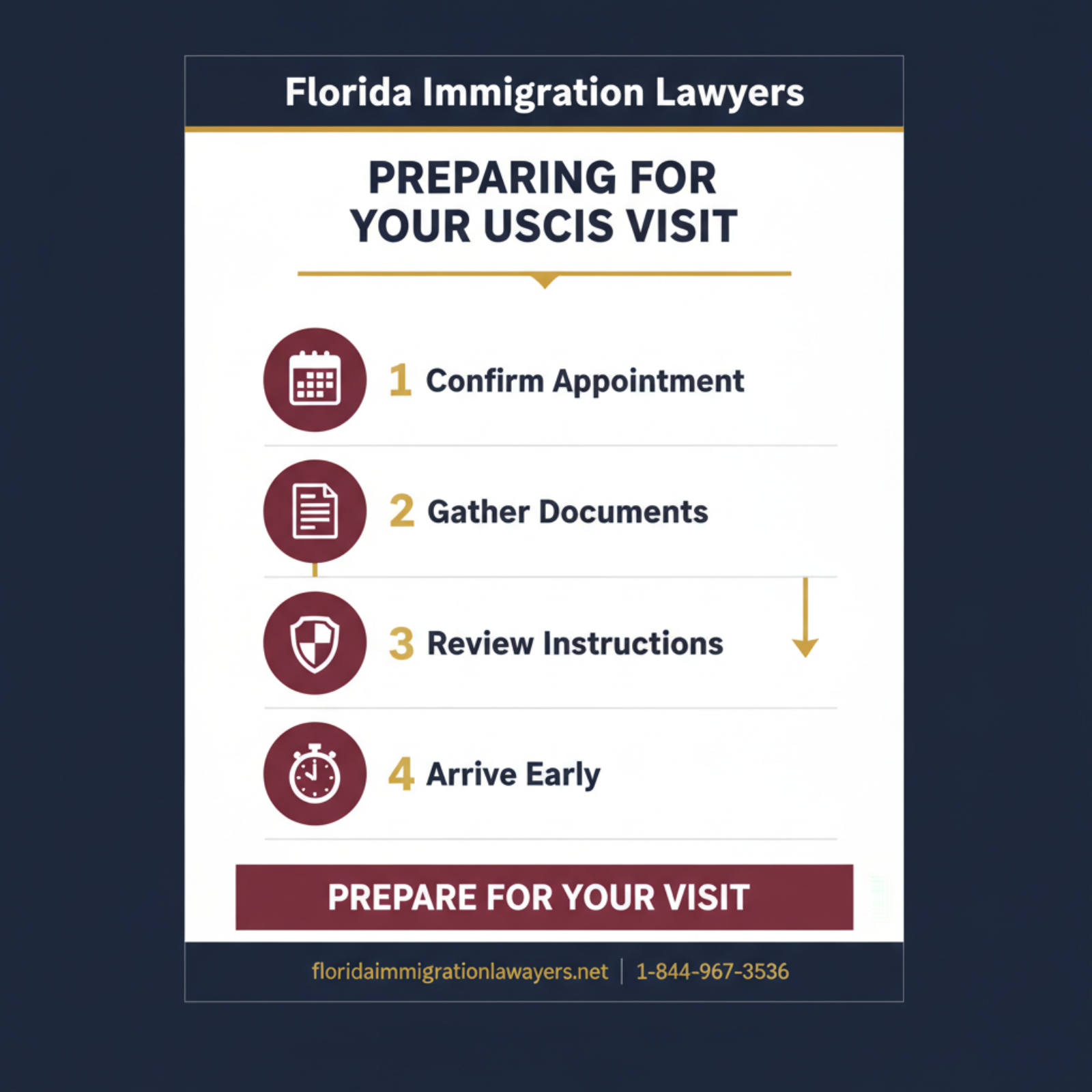
- Official Appointment Notice: The original Form I-797C, Notice of Action, scheduling your interview or biometrics.
- Valid Photo Identification: A government-issued ID such as a passport, state driver's license, or state identification card.
- Proof of Identity and Nationality: Birth certificate, passport, national identity card.
- Proof of Legal Status: Green Card (Form I-551), visa, I-94 arrival/departure record.
- Marriage Certificate (if applicable): For family-based petitions or adjustment of status based on marriage.
- Divorce Decrees or Death Certificates (if applicable): For all prior marriages of you and your spouse.
- Financial Documents: Tax returns, W-2s, pay stubs, bank statements (for certain benefit applications).
- Medical Examination Report (Form I-693): Often required for adjustment of status applications, completed by a USCIS-approved civil surgeon.
- Translation of Foreign Documents: Any document not in English must be accompanied by a certified English translation.
- Supporting Evidence: Any additional documents proving eligibility for your specific benefit, such as photographs, joint bank statements, utility bills, or educational records.
USCIS Processing Times and Cost Factors in Florida (2026)
Understanding the potential timeline and financial obligations is a critical part of planning your immigration journey through a USCIS office. Processing times can vary widely based on the application type, the specific field office or service center, and current caseloads.
USCIS provides estimated processing times on its website, which are regularly updated. These estimates are general guidelines and not guarantees. You can check the status of your case online using your receipt number. Factors like the complexity of your case, the completeness of your application, and responses to Requests for Evidence (RFEs) can all impact your timeline.
Regarding costs, USCIS charges various filing fees for different forms. These fees are subject to change and should always be verified on the official USCIS website (uscis.gov) before filing. Fees are generally non-refundable, even if your application is denied.
Beyond filing fees, other potential costs include fees for medical examinations, translation services, and legal fees if you choose to hire an attorney. Investing in experienced legal counsel can often streamline the process and help avoid costly mistakes, providing significant value even with the associated legal fees.
Do not navigate this complex immigration process alone. The intricacies of dealing with a USCIS office and understanding legal requirements can be overwhelming. Contact Florida Immigration Lawyers today to ensure your case is handled with expertise and care.
Common Mistakes to Avoid When Visiting a USCIS Office
Making errors during your immigration process can lead to delays, denials, or even more serious consequences. When interacting with a USCIS office or preparing for an appointment, being aware of common pitfalls is crucial for a successful outcome. Here are some of the most frequent mistakes we see:
Arriving Without an Appointment: You generally cannot enter a USCIS field office without a pre-scheduled appointment. Attempting to do so will likely result in you being turned away, wasting your time and resources.
Missing or Incomplete Documents: Failing to bring all required original documents and their copies, as listed on your appointment notice or application instructions, is a common reason for delays or an officer's inability to proceed with your case.
Providing Inconsistent Information: Any discrepancies between your current statements, previous applications, or supporting documents can raise red flags and lead to intensive questioning or a denial of your benefit.
Not Updating Your Address: USCIS communicates important notices, including appointment letters, via mail. If you move and do not update your address with USCIS promptly, you could miss critical notifications, leading to case abandonment.
Ignoring Requests for Evidence (RFEs): If USCIS sends an RFE, it means they need more information to process your case. Failing to respond fully and on time will almost certainly lead to a denial.
Misunderstanding Jurisdiction: Going to the wrong USCIS field office or ASC can be a significant setback. Always confirm the specific office assigned to your case on your official notices, especially for residents of areas like Kissimmee who are served by regional offices.
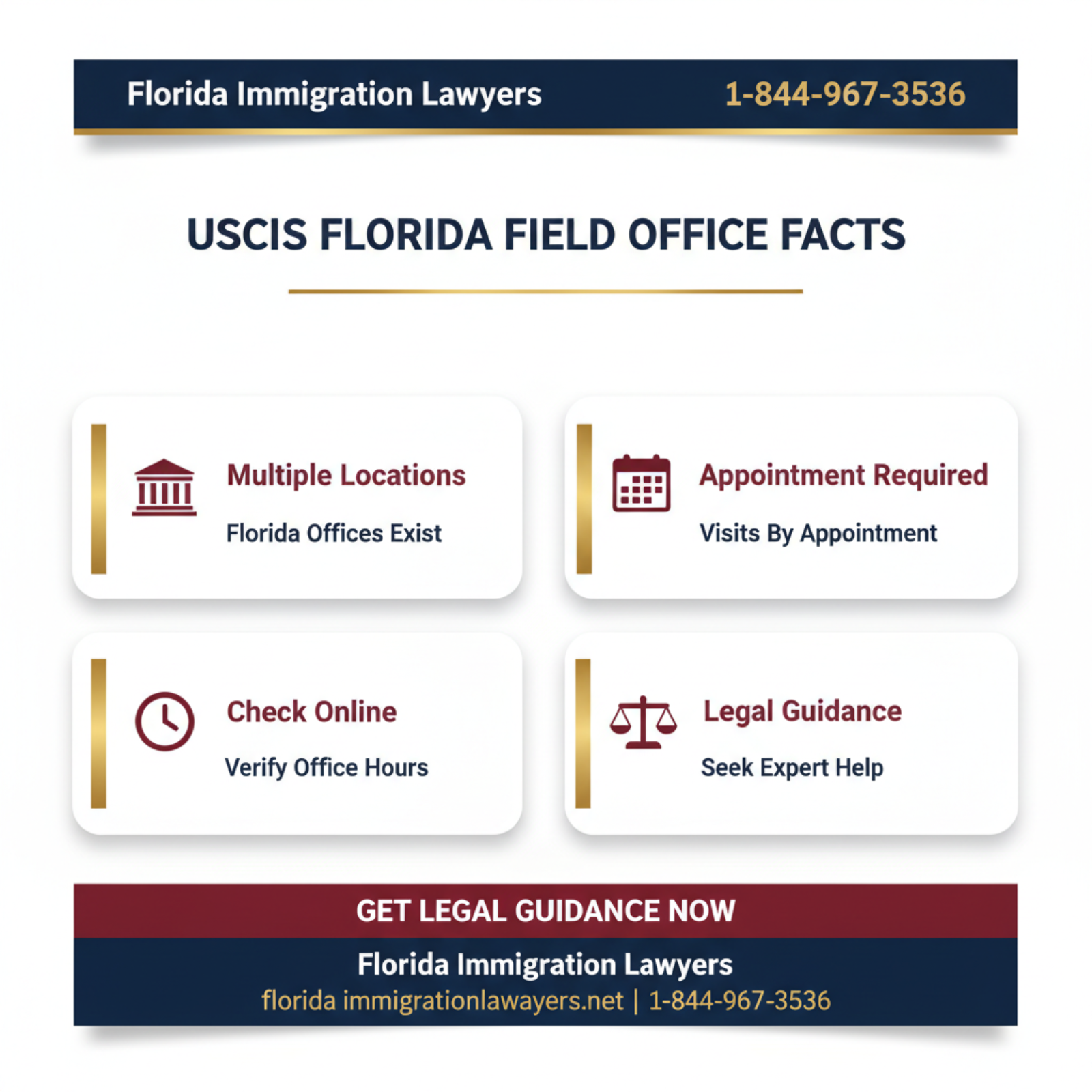
Key Statistics & Data Lying or Misrepresenting Facts: Providing false information or making misrepresentations to USCIS is a serious offense that can result in criminal penalties, deportation, and a permanent bar from receiving immigration benefits.
Failing to Seek Legal Counsel: While not mandatory for all cases, attempting to navigate complex immigration laws without the guidance of an experienced attorney can lead to critical errors that are difficult to rectify later.
Not Preparing for the Interview: Underestimating the importance of an interview, not reviewing your application, and being unable to answer questions clearly can jeopardize your case. Practice your responses and understand your application thoroughly.
Bringing Prohibited Items: Be aware of security protocols at USCIS offices. Certain items, like weapons or large bags, may be prohibited, causing delays during entry.
When to Call Florida Immigration Lawyers for Legal Assistance
The immigration process, especially when involving a USCIS office, can be intricate and fraught with potential complications. While some cases may seem straightforward, others benefit immensely from professional legal guidance. Knowing when to seek legal help can make all the difference in your immigration journey.
You should consider contacting Florida Immigration Lawyers if you face any of the following scenarios: you have a complex case history, such as prior deportations, criminal convictions, or previous denials; you are unsure about which forms to file or how to properly complete them; or you receive a Request for Evidence (RFE) or a Notice of Intent to Deny (NOID).
Furthermore, if you are preparing for a difficult interview, need to appeal a decision, or are concerned about potential misrepresentations or legal bars to your eligibility, our attorneys can provide invaluable assistance. We specialize in various Florida immigration services, including general immigration matters, asylum claims, deportation defense, citizenship applications, and family-based petitions.
Our experienced team at Florida Immigration Lawyers understands the nuances of immigration law and the specific requirements of each USCIS office in Florida. We can help you prepare thoroughly, represent you in interviews, and advocate strongly on your behalf. Don't leave your future to chance.
Addressing Common Questions About USCIS Field Offices (FAQ)
Can I go to the USCIS field office without an appointment? Generally, no. USCIS field offices operate by appointment only. This includes interviews, InfoPass appointments (which are largely replaced by online tools and the Contact Center), and biometric appointments at Application Support Centers (ASCs). Arriving without a scheduled appointment will likely result in refusal of entry.
How do I know which field office is processing my case? Your official USCIS appointment notice (Form I-797C) will clearly state the specific field office assigned for your interview or appointment. For applications not requiring an interview, a USCIS Service Center will process your case, and their location will be on your receipt notice. You can also check your case status online at uscis.gov.
How do I contact the USCIS field office directly? You generally cannot directly contact a specific USCIS field office by phone or email. All general inquiries, appointment rescheduling requests, and case status questions should be directed to the USCIS Contact Center at 1-800-375-5283. They serve as the primary point of contact for the public.
What are the 5 USCIS service centers? The five USCIS Service Centers are: Vermont Service Center, Nebraska Service Center, Texas Service Center, California Service Center, and Potomac Service Center. These centers process various types of applications and petitions that do not require an in-person interview, such as I-130 petitions, I-140 petitions, and certain I-765 applications.
Florida Immigration Lawyers is a premier law firm dedicated to providing exceptional Florida immigration services across the entire state. With a deep understanding of U.S. immigration law and a compassionate approach, we are committed to guiding individuals, families, and businesses through complex legal processes.
Our team offers a wide range of services, including family-based immigration, employment visas, deportation defense, asylum, naturalization, and representation at USCIS office interviews. We pride ourselves on personalized attention, strategic advocacy, and a steadfast commitment to our clients' success.
Why choose us? We are available 24/7, offer free consultations, and serve all of Florida, ensuring that help is always within reach. Our firm is dedicated to protecting your rights and achieving your immigration goals. Visit our website at https://www.floridaimmigrationlawyers.net or call us at 1-844-967-3536.
Sources and References
- U.S. Citizenship and Immigration Services (USCIS)
- Executive Office for Immigration Review (EOIR)
- U.S. Department of State - Bureau of Consular Affairs
- 8 U.S.C. Chapter 12 - Immigration and Nationality Act (INA)
- 8 U.S.C. § 1357 - Powers of immigration officers and employees
- 8 CFR (Code of Federal Regulations) - Immigration Regulations
- INA § 235(b) - Inspection of applicants for admission; expedited removal of inadmissible arriving aliens
This article provides general legal information and is not intended as legal advice. Every case is unique, and outcomes depend on specific facts and circumstances. Contact an attorney for advice about your particular situation.
Navigating the complexities of USCIS and immigration law in Florida can be challenging, but you don't have to face it alone. Florida Immigration Lawyers is here to provide the expert guidance and dedicated representation you deserve. For a free consultation and to discuss your specific immigration needs, call us today at 1-844-967-3536. Se Habla Español - Estamos aquí para ayudarle.
Florida Immigration Lawyers
Legal Team
Our experienced attorneys at Florida Immigration Lawyers have been serving clients across Florida for over 20 years. We specialize in immigration, personal injury, criminal defense, workers compensation, and family law.