Green Card Renewal Florida Process in 2026: Your Essential Guide
Renewing your green card in Florida is a vital process to maintain your legal permanent resident status. This comprehensive guide details the Form I-90 application, necessary documents, expected processing times, and associated costs for 2026. We cover common pitfalls to avoid and highlight when expert legal assistance from Florida Immigration Lawyers can be invaluable. Whether you're in Homestead or elsewhere in Florida, understanding these steps is key to a smooth renewal. Learn how to navigate the USCIS requirements and ensure your application is successful. Get the support you need for your green card renewal.
Renewing your green card in Florida typically involves filing Form I-90, Application to Replace Permanent Resident Card, with USCIS. This process ensures your legal permanent resident status remains valid for another 10 years. It's crucial to understand eligibility, gather necessary documents, and file within the appropriate timeframe to avoid complications.
- File Form I-90 with USCIS to renew your 10-year green card.
- Gather essential documents like your current green card and identification.
- Attend a biometrics appointment as scheduled by USCIS.
- Monitor processing times on the USCIS website for updates.
- Seek legal counsel for complex cases or if your card has expired.
Green Card Renewal Florida Process in 2026: Your Essential Guide
Are you a permanent resident in Florida, perhaps living in Homestead, Miami, or Orlando, and wondering about your green card's expiration date? It's a common concern for many individuals and families building their lives here. Maintaining a valid green card, also known as a Permanent Resident Card, is crucial for continuing your life in the United States without interruption.
The process of renewing your green card can seem daunting, especially with evolving immigration policies and procedures. However, understanding the steps involved and knowing when to seek professional help can make this process smooth and stress-free. This comprehensive guide will walk you through everything you need to know about the green card renewal process in Florida for 2026, focusing on the I-90 application.
Whether your card is nearing its expiration or has already expired, we are here to provide clarity. For personalized guidance and to ensure your application is handled correctly, do not hesitate to call Florida Immigration Lawyers at 1-844-967-3536 for a free consultation. Our experienced team serves clients throughout Florida, including Homestead and surrounding areas.
Understanding Your Green Card Renewal in Florida for 2026
A green card signifies your official status as a lawful permanent resident in the United States. While some green cards, like those for conditional residents, have specific expiration terms, most permanent green cards are valid for a 10-year period. It is essential to renew your green card before it expires to avoid potential issues with employment, travel, and proof of residency.
For individuals residing in Florida, particularly in diverse communities like Homestead, staying informed about immigration requirements is paramount. Your green card serves as proof of your legal right to live and work permanently in the U.S. Carrying a valid green card is generally required by law under INA § 264(e) (8 U.S.C. § 1304(e)).
The renewal process specifically applies to those holding a 10-year green card. If you are a conditional permanent resident, your situation is different; you generally need to file to remove the conditions on your residency, not renew the card. This distinction is critical and often misunderstood by applicants.
If your green card has been lost, stolen, mutilated, or contains incorrect information, you will also use a similar process to replace it. The Form I-90, Application to Replace Permanent Resident Card, is the standard form for both renewal and replacement of a 10-year green card. Understanding these initial distinctions can save you time and prevent misfiling.
The I-90 Application Process: A Step-by-Step Guide for Florida Residents
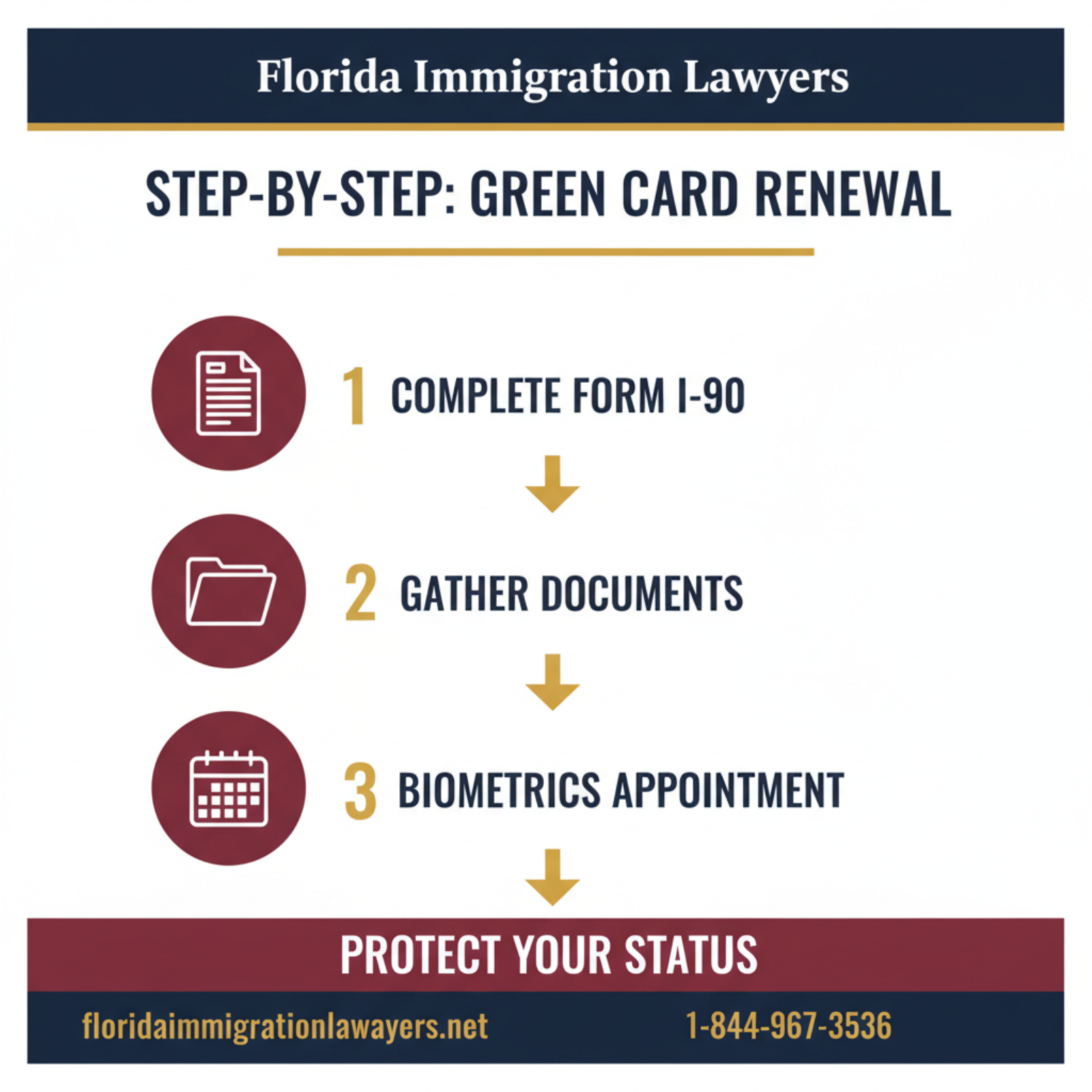
Renewing your green card through Form I-90 is a multi-step process that requires careful attention to detail. Here is a general outline of the steps you can expect to follow as a Florida resident:
-
Determine Your Eligibility for Green Card Renewal
Before you begin, confirm that you are eligible to renew your 10-year green card. This process is for lawful permanent residents whose 10-year card is expiring or has expired. If you are a conditional resident, you will need to file Form I-751 or I-829 to remove conditions, not Form I-90.
You may also need to file Form I-90 if your card was lost, stolen, damaged, or if you need to update personal information. Ensure you meet the criteria for the type of replacement or renewal you are seeking.
-
Gather All Necessary Documents and Information
Collecting your supporting documents is a critical first step. You will need your current Permanent Resident Card, even if it's expired. Other essential items include government-issued identification, recent passport-style photographs, and any official documents proving a legal name change, if applicable.
Having all documents ready before you start filling out the form will help prevent delays. Make sure all copies are clear and legible, as required by USCIS.
-
Complete Form I-90, Application to Replace Permanent Resident Card
You can file Form I-90 either online or by mail. The online green card renewal option is often preferred for its convenience and ability to track your application. Ensure you fill out every section accurately and completely, providing all requested information.
Any errors or omissions can lead to processing delays or even rejection of your application. USCIS provides detailed instructions on their website, which you should review thoroughly before submission.
-
Pay the Required Filing Fees (or Request a Fee Waiver)
There are associated fees for filing Form I-90, which typically include a filing fee and a biometrics service fee. USCIS fee schedules are subject to change, so always check the most current fees on the official USCIS website. Do not send cash through the mail.
In some cases, if you meet specific income requirements, you may be eligible to request a fee waiver by filing Form I-912, Request for Fee Waiver. This can significantly reduce the financial burden of the green card renewal application.
-
Submit Your Application to USCIS
If filing online, follow the instructions on the USCIS website to submit your completed Form I-90 and upload supporting documents. If filing by mail, send your application package to the correct USCIS lockbox facility. The address will depend on your specific situation and is listed in the Form I-90 instructions.
Always send your application with a tracking number if mailing, so you have proof of submission. Keep a copy of your entire application package for your records.
-
Attend Your Biometrics Appointment
After filing, USCIS will send you an appointment notice for biometrics collection at an Application Support Center (ASC). This appointment involves fingerprinting, photographs, and a signature. It is a mandatory step for most green card renewal applicants.
Make sure to attend your appointment on time and bring the required identification and appointment notice. Failure to attend could delay your green card renewal processing time or lead to rejection.
-
Receive Your New Green Card
Once USCIS processes your application and approves it, you will receive your new Permanent Resident Card by mail. This card will typically be valid for another 10 years from its issue date. You can check the status of your green card renewal online using the receipt number provided by USCIS.
The entire immigration process can be complex, and having an experienced attorney from Florida Immigration Lawyers by your side can make a significant difference.
Essential Documents for Your Green Card Renewal Application
A complete application package is vital for a smooth green card renewal process. Missing documents or incorrect information can lead to significant delays. Here is a list of documents typically required:
- Your current Permanent Resident Card (Form I-551), even if expired.
- Government-issued identification (e.g., driver's license, passport).
- Two identical passport-style photographs taken within 30 days of filing.
- Proof of any legal name change (e.g., marriage certificate, court order), if applicable.
- Evidence of your continuous permanent residency (e.g., tax returns, utility bills, lease agreements), particularly if there have been long absences from the U.S. or if there are questions about your residency.
- Any previous notices or documents from USCIS related to your permanent residency.
- Completed Form I-90, Application to Replace Permanent Resident Card.
- Payment for the filing fees or an approved fee waiver request (Form I-912).
- If your card was lost or stolen, a police report or incident report might be beneficial, though not always strictly required by USCIS for I-90 filing.
Green Card Renewal Processing Time and Expectations in 2026
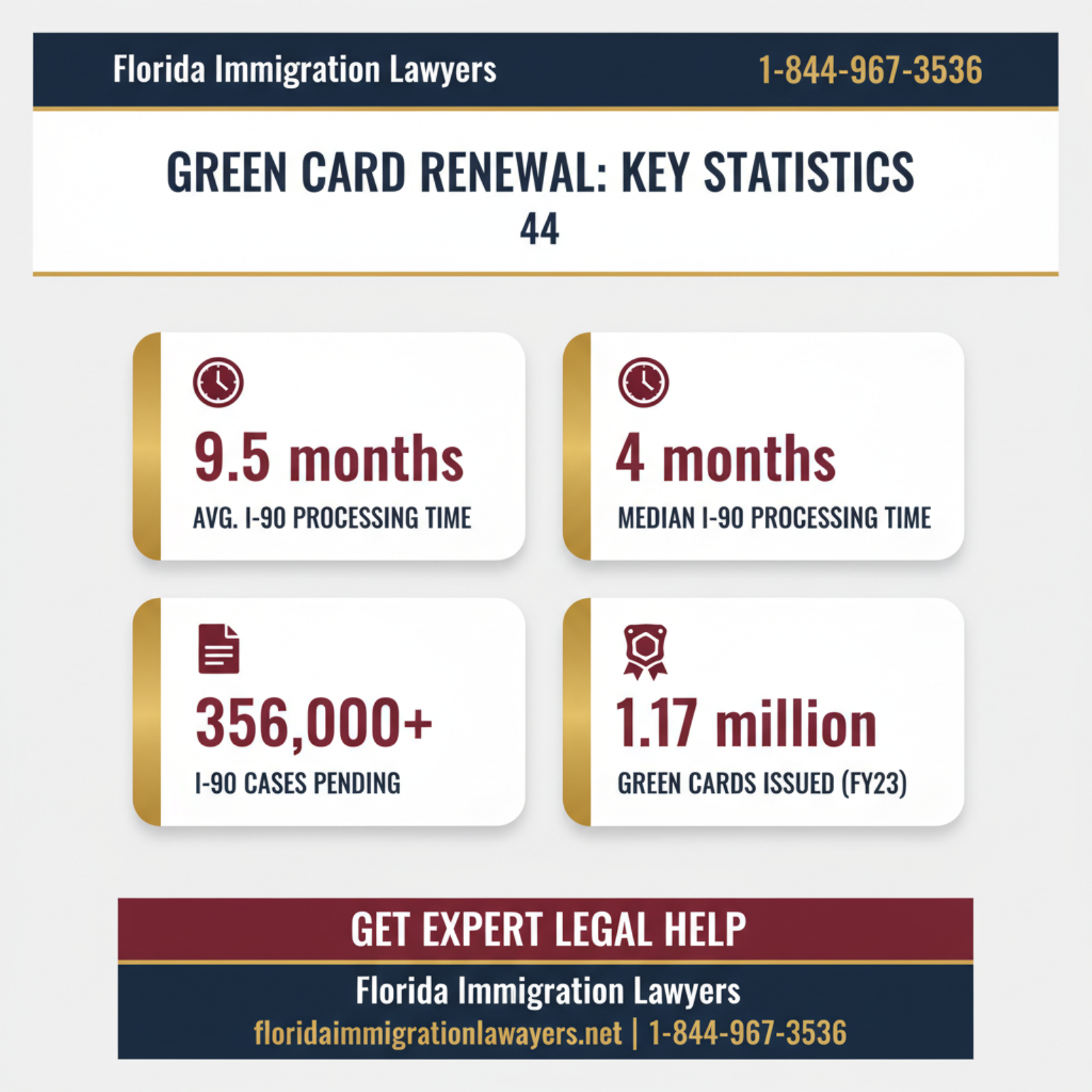
The green card renewal processing time can vary significantly based on several factors, including the volume of applications USCIS receives and the specific service center handling your case. As of 2026, applicants should anticipate a waiting period, but exact times are always subject to change.
Generally, applicants can expect processing times to range from several months to over a year. It is advisable to file your Form I-90 approximately six months before your current green card expires. This allows ample time for processing and helps you avoid any lapse in your permanent resident status.
You can check current processing times for Form I-90 on the USCIS website. Simply select Form I-90 and the appropriate service center. USCIS often provides an extension sticker or an I-797C Notice of Action as temporary proof of status while your new card is being processed. This temporary proof is critical for employment and travel purposes.
If your green card has already expired and you need urgent proof of status for travel or employment, you may need to schedule an InfoPass appointment with USCIS to obtain a temporary I-551 stamp in your passport. This is often necessary if delays in your green card renewal processing time impact your immediate needs. Remember, immigration statistics show varying processing speeds across different offices.
According to 8 CFR § 264.5, an application for a new Alien Registration Card (Form I-551) must be filed with USCIS and outlines the procedures for replacement or renewal. Understanding these regulatory requirements is part of a successful application.
Cost Factors and Fees for Green Card Renewal in Florida
Understanding the costs associated with your green card renewal is an important part of the planning process. The primary fees you will encounter are the USCIS filing fee for Form I-90 and the biometrics service fee. It is crucial to note that these fees are subject to change, so always verify the current amounts on the official USCIS website before filing.
When calculating your total cost, remember to account for potential additional expenses. These might include attorney fees if you choose to hire legal representation, which is highly recommended for complex cases. Other costs could involve professional passport photos, postage, and any translation services if your supporting documents are not in English.
For individuals who face financial hardship, a green card renewal fee waiver may be available. To apply for a fee waiver, you must file Form I-912, Request for Fee Waiver, along with your Form I-90. Eligibility for a fee waiver is based on specific income guidelines or if you receive certain means-tested public benefits. Our firm can help you assess your eligibility for a fee waiver and prepare the necessary documentation.
It is important to submit the correct payment amount with your application. Incorrect payment can lead to your application being rejected and returned, causing significant delays. USCIS accepts various payment methods, which are detailed in the Form I-90 instructions.
Do not navigate this process alone. Contact Florida Immigration Lawyers today to discuss your specific situation and get expert advice on managing costs and ensuring a complete application.
Common Mistakes to Avoid During Your Green Card Renewal
Renewing your green card can be straightforward, but many applicants make common errors that lead to delays or even denials. Avoiding these pitfalls is crucial for a successful green card renewal process.
-
Filing the Wrong Form
A frequent mistake is filing Form I-90 when you should be filing Form I-751 (to remove conditions on a 2-year green card) or Form N-400 (for naturalization). Filing the incorrect form will lead to rejection and wasted time and money.
-
Filing Too Late or Too Early
While it's generally recommended to file within six months of your card's expiration, filing too late can result in a lapse in status or issues with employment and travel. Filing much too early is also unnecessary and could be rejected by USCIS.
-
Incomplete or Inaccurate Information on Form I-90
Every field on Form I-90 must be completed accurately. Missing information, typos, or inconsistent data can cause significant processing delays. Always double-check all entries before submission.
-
Not Including Required Supporting Documents
Failing to include copies of your current green card, identification, or proof of name change (if applicable) will result in a Request for Evidence (RFE) or rejection. Ensure your document checklist is thoroughly reviewed.
-
Incorrect Fee Payment
Submitting an incorrect fee amount, whether too much or too little, or using an unacceptable payment method, will cause USCIS to reject your application. Always verify the current fees on the USCIS website.
-
Missing the Biometrics Appointment
Failing to attend your scheduled biometrics appointment without proper rescheduling can lead to the denial of your application. These appointments are mandatory for identity verification.
-
Not Updating Your Address with USCIS
If you move, you must update your address with USCIS within 10 days of moving. Failure to do so can result in missed notices, RFEs, or even your new green card being sent to the wrong address.
-
Traveling Internationally Without Temporary Proof of Status
If your green card expires while your renewal is pending, do not travel internationally without first obtaining temporary proof of your permanent resident status (e.g., an I-551 stamp in your passport). You may face issues re-entering the U.S.
-
Not Consulting an Attorney for Complex Cases
Attempting to handle a complex green card renewal (e.g., criminal history, long absences, previous immigration violations) without legal counsel can lead to serious adverse outcomes, including deportation defense issues.
-
Using Outdated Forms or Instructions
Immigration forms and instructions are regularly updated by USCIS. Always download the latest version of Form I-90 and its instructions directly from the USCIS website to avoid using an obsolete form.
When to Call Florida Immigration Lawyers for Green Card Renewal Assistance
While the green card renewal process for a 10-year card can be straightforward for some, many situations warrant the expertise of an immigration attorney. Florida Immigration Lawyers are here to provide the guidance you need, ensuring your application is robust and compliant with current laws.
Consider contacting us if you encounter any of the following scenarios:
- Your Green Card is Lost, Stolen, or Damaged: Replacing a lost or stolen card can involve additional steps and concerns about identity theft. We can help navigate this.
- You Have a Criminal Record: Any past arrests or convictions, even minor ones, can complicate your green card renewal and potentially lead to deportation proceedings. Our attorneys specialize in assessing these risks and developing a strong defense.
- You Have Been Absent from the U.S. for Extended Periods: Long absences can raise questions about your intent to maintain permanent residency. We can help you provide evidence of your continuing ties to the U.S.
- You Are a Conditional Permanent Resident: If you have a 2-year green card, you generally need to file to remove conditions (Form I-751 or I-829), not renew with Form I-90. We can guide you through the correct process.
- You Have Changed Your Name: Ensuring all your immigration documents reflect your legal name change accurately is crucial. We can assist with proper documentation and filing.
- You Have Received a Request for Evidence (RFE) or Notice of Intent to Deny (NOID): These notices indicate a problem with your application. Responding correctly and promptly is vital, and legal counsel is highly recommended.
- You Are Considering U.S. Citizenship: If your green card is expiring soon, but you are also eligible for naturalization, it might be more strategic to apply for citizenship instead of renewal. We can help you weigh your options.
- You Need Urgent Proof of Status: If you have an urgent need to travel or prove your status, and your card is expired or processing is delayed, we can help you explore options for obtaining temporary proof.
Our firm, Florida Immigration Lawyers, is dedicated to assisting permanent residents across Florida, including those in Homestead, Miami, and throughout South Florida. We understand the nuances of the immigration system and are committed to protecting your rights and ensuring your continued residency. Contact us today for a consultation to discuss your specific needs.
About Florida Immigration Lawyers
Florida Immigration Lawyers is a leading immigration law firm dedicated to serving individuals and families across the entire state of Florida. Our experienced attorneys provide comprehensive legal services in various areas of immigration law, helping clients achieve their American dream.
We understand the complexities and challenges of the U.S. immigration system. Our firm offers personalized and compassionate representation, focusing on clear communication and effective strategies. From family-based visas and business immigration to asylum and deportation defense, we are equipped to handle a wide range of cases.
Choosing Florida Immigration Lawyers means partnering with a team that genuinely cares about your future. We pride ourselves on our deep legal knowledge, unwavering commitment to our clients, and our success in navigating intricate immigration matters. Our attorneys are available 24/7 to answer your questions and provide support.
For a free consultation to discuss your immigration needs, including green card renewal or any other immigration matter, please call us at 1-844-967-3536 or visit our website at https://www.floridaimmigrationlawyers.net. We are here to help you every step of the way.
Sources and References
- U.S. Citizenship and Immigration Services (USCIS)
- Form I-90, Application to Replace Permanent Resident Card
- USCIS Processing Times
- USCIS Policy Manual: INA § 264(e) - Requirement to Carry Alien Registration Card
- Executive Office for Immigration Review (EOIR)
- 8 U.S.C. Chapter 12 - Immigration and Nationality Act (INA)
- 8 CFR § 264.5 - Application for new Alien Registration Card
This article provides general legal information and is not intended as legal advice. Every case is unique, and outcomes depend on specific facts and circumstances. Contact an attorney for advice about your particular situation.
Do not let your green card expire without taking action. Protect your permanent resident status and secure your future in Florida. Call Florida Immigration Lawyers today at 1-844-967-3536 for a free, confidential consultation. Se Habla Español - Estamos aquí para ayudarle.
Florida Immigration Lawyers
Legal Team
Our experienced attorneys at Florida Immigration Lawyers have been serving clients across Florida for over 20 years. We specialize in immigration, personal injury, criminal defense, workers compensation, and family law.