TPS to Green Card Florida Pathway: Your Guide to Permanent Residency
For TPS holders in Florida, navigating the path to permanent residency can seem daunting. While Temporary Protected Status offers temporary relief, it does not directly lead to a green card. This comprehensive guide outlines the various pathways available, such as family-sponsored petitions and employment-based visas, and explains the critical process of adjustment of status. We delve into eligibility requirements, a step-by-step application guide, essential documentation, and expected timelines. Learn how to avoid common mistakes and understand when expert legal counsel from Florida Immigration Lawyers is indispensable to secure your future in the U.S.
While Temporary Protected Status (TPS) does not directly lead to a green card, many TPS holders in Florida may qualify for permanent residency through other immigration pathways. Common routes include family-sponsored petitions, employment-based visas, or asylum, often requiring an adjustment of status application. Eligibility hinges on individual circumstances, continuous presence, and admissibility.
- TPS offers temporary relief, but not a direct green card path.
- Adjustment of status is a key pathway for many TPS holders.
- Family-based petitions and employment visas are common routes.
- Consulting an immigration lawyer is crucial for eligibility assessment.
- Florida residents can pursue these options with proper legal guidance.
Are you a Temporary Protected Status (TPS) holder in Florida, perhaps in areas like Kissimmee, wondering about your future in the United States? Many individuals like you seek a more permanent solution than temporary relief. Understanding how to transition from TPS to a green card Florida pathway is a critical step towards securing your long-term future. This comprehensive guide will explore the various avenues available, detailing eligibility, the application process, required documents, and what to expect. We understand the complexities and uncertainties you face. Our goal is to provide clear, actionable information to help you navigate this significant journey. Do not face this complex legal process alone. Call Florida Immigration Lawyers at 1-844-967-3536 for a free consultation today. Our dedicated team is here to assist you.
Understanding Temporary Protected Status (TPS) in Florida
Temporary Protected Status (TPS) offers temporary immigration benefits to eligible nationals of certain countries designated by the Secretary of Homeland Security. These designations are typically due to ongoing armed conflict, environmental disaster, or other extraordinary and temporary conditions. While TPS provides protection from deportation and work authorization, it does not, by itself, grant a direct path to a green card. For many in Florida, especially in communities like Kissimmee with diverse immigrant populations, TPS has been a lifeline, offering stability amidst global crises. However, the ultimate goal for many is often permanent residency.
What TPS Provides and What It Doesn't
TPS beneficiaries receive temporary legal status and work authorization for a specific period. This status allows individuals to live and work in the U.S. without fear of removal. It is crucial to understand that TPS is not a visa and does not automatically lead to lawful permanent residency or U.S. citizenship. To obtain a green card, TPS holders must qualify through a separate, underlying immigration category. This distinction is fundamental when planning your TPS to green card Florida pathway.
Eligibility Requirements for TPS Holders Seeking a Green Card in Florida
Transitioning from TPS to a green card Florida pathway involves meeting specific eligibility criteria for an underlying green card category. Your TPS status might offer certain advantages, but it is not a standalone path. Understanding these requirements is the first critical step.
Common Pathways for TPS Holders to Adjust Status
Several avenues exist for TPS holders to pursue a green card. The most common pathways include:
- Family-Sponsored Petitions: If you have a qualifying U.S. citizen or lawful permanent resident relative, they may be able to file an immigrant petition on your behalf. This is a very common route for many individuals.
- Employment-Based Petitions: If you have a job offer from a U.S. employer willing to sponsor you, you might be eligible for an employment-based green card. This often requires specific skills or qualifications.
- Asylum or Refugee Status: For some TPS holders, particularly those from countries facing severe persecution, pursuing asylum may be a viable option. This involves demonstrating a credible fear of persecution.
- Special Immigrant Juvenile Status (SIJS): Certain children who have been abused, neglected, or abandoned by a parent may be eligible for SIJS. This provides a pathway to a green card.
It is important to note that specific eligibility for each pathway varies. Consulting with an experienced immigration attorney at Florida Immigration Lawyers is essential to determine your best course of action. They can assess your unique circumstances and guide you.
Step-by-Step Guide: Navigating the TPS to Green Card Process
The process of moving from TPS to a green card Florida pathway can be intricate, involving multiple forms and agencies. While each case is unique, here is a general step-by-step guide for TPS holders seeking to adjust their status in Florida.
-
Determine Your Eligibility for an Underlying Green Card Category
Before initiating any application, you must identify an appropriate green card category for which you qualify. This could be a family petition (Form I-130), an employment petition (Form I-140), or an asylum application (Form I-589). Your specific situation will dictate the best pathway.
-
File the Immigrant Petition (If Applicable)
If pursuing a family or employment-based green card, your qualifying relative or employer must first file the appropriate petition with USCIS. For family-based cases, this is typically Form I-130, Petition for Alien Relative. For employment-based cases, it is Form I-140, Immigrant Petition for Alien Worker. This petition establishes your eligibility for the visa category.
-
Check Visa Availability (For Certain Categories)
For some family-sponsored and most employment-based categories, a visa number must be immediately available. You can check the Department of State's Visa Bulletin for current availability. If a visa is not immediately available, you may need to wait for your priority date to become current.
-
File Form I-485, Application to Register Permanent Residence or Adjust Status
Once an immigrant petition is approved (if required) and a visa number is available, you can file Form I-485. This form is the core application for adjustment of status. It is filed with U.S. Citizenship and Immigration Services (USCIS) and allows you to apply for a green card from within the United States. You may also file Form I-765 for employment authorization and Form I-131 for advance parole concurrently.
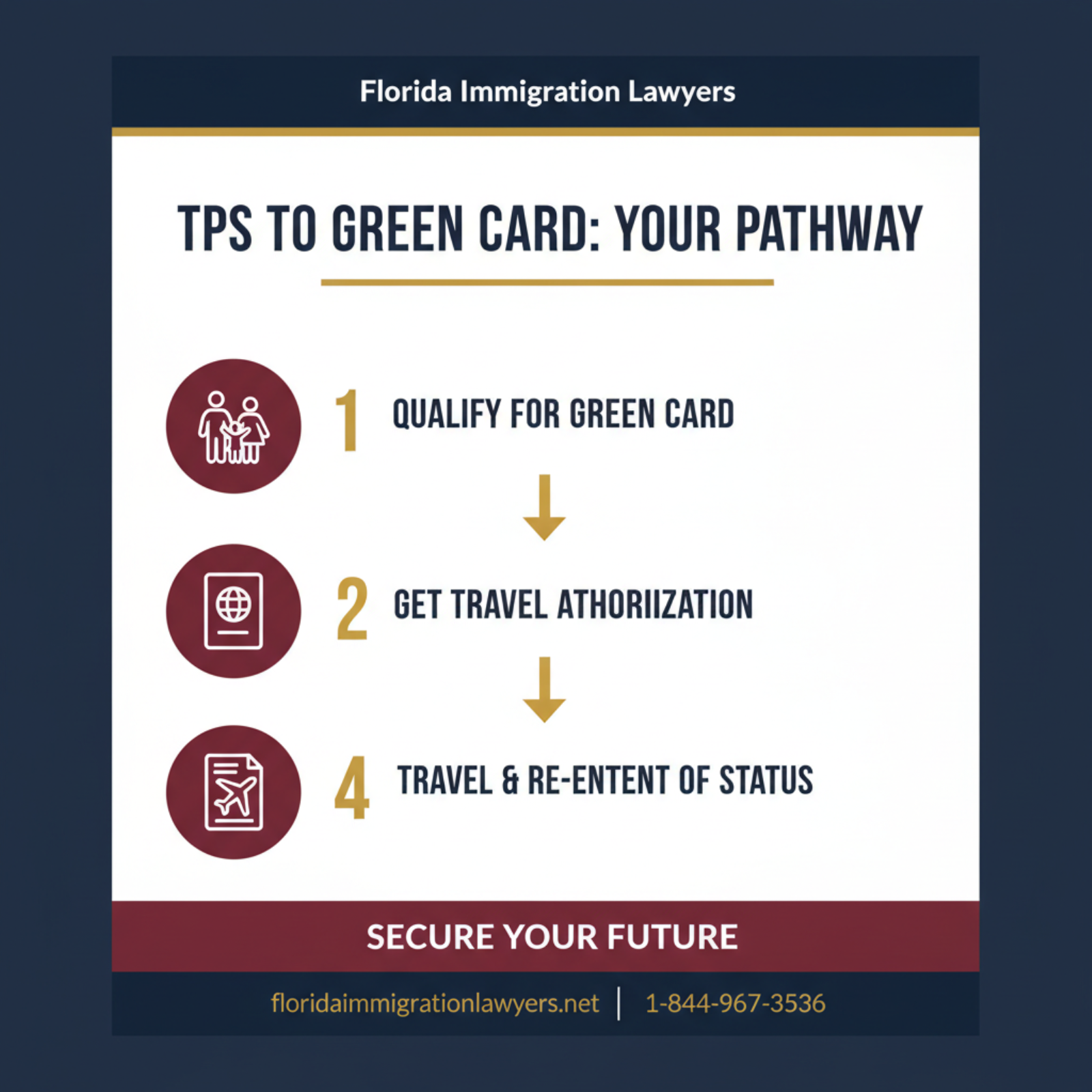
Step-by-Step Process Guide -
Attend Biometrics Appointment
After filing Form I-485, USCIS will schedule you for a biometrics appointment at an Application Support Center (ASC). At this appointment, your fingerprints, photograph, and signature will be taken for background checks. This is a standard part of the process for all adjustment of status applicants.
-
Attend an Interview (If Required)
Many adjustment of status applicants are required to attend an interview with a USCIS officer. This interview, often held at a local USCIS field office in Florida (such as Orlando or Miami), allows the officer to verify the information in your application and ask additional questions. Be prepared to discuss your eligibility and the details of your petition. Your attorney from Florida Immigration Lawyers can prepare you for this interview.
-
Receive a Decision
Following the interview, USCIS will make a decision on your application. If approved, you will receive your green card by mail. If denied, USCIS will provide a written explanation, and you may have options to appeal or refile. An approval means you have successfully navigated your TPS to green card Florida pathway.
Required Documentation for Your Adjustment of Status Application
A successful TPS to green card Florida pathway hinges on submitting a complete and accurate documentation package. Missing or incorrect documents can lead to significant delays or even denial. While the exact list varies by the underlying green card category, common documents include:
- Copy of your birth certificate.
- Copy of your passport biographical page.
- Copy of your Form I-94, Arrival-Departure Record.
- Copies of all previous TPS approval notices (Form I-797).
- Copies of all Employment Authorization Documents (EADs) issued under TPS.
- Medical examination report (Form I-693) completed by a USCIS-approved civil surgeon.
- Two passport-style photographs.
- Proof of your relationship for family-based petitions (e.g., marriage certificate, birth certificates of children).
- Affidavit of Support (Form I-864) from your petitioner, demonstrating financial capability.
- Evidence of your continuous presence in the United States (e.g., utility bills, leases, school records, employment records).
- Police clearance certificates (if applicable).
- Certified copies of court records for any arrests or convictions.
- Any other documents requested by USCIS specific to your case.
Organizing these documents carefully is crucial. Florida Immigration Lawyers can help you compile and review your application packet.
Processing Timelines and Expectations for TPS to Green Card Cases
The journey from TPS to a green card Florida pathway can be lengthy, with processing times varying significantly. Several factors influence how long your application will take.
Factors Affecting Processing Times
- Type of Underlying Petition: Family-based petitions, especially those involving immediate relatives, generally have shorter waiting periods than preference categories. Employment-based petitions also vary.
- USCIS Caseload: The volume of applications at USCIS service centers and field offices directly impacts processing times. Florida's high volume of immigration cases can sometimes lead to longer waits.
- Completeness of Application: Incomplete applications or those with errors will likely result in Requests for Evidence (RFEs), significantly extending the process.
- Interview Requirements: If an interview is required, scheduling delays can add months to the timeline.
- Background Checks: Security and background checks are mandatory and their duration can vary.
General Timeline Expectations
While it is impossible to provide exact dates, you can typically expect the following:
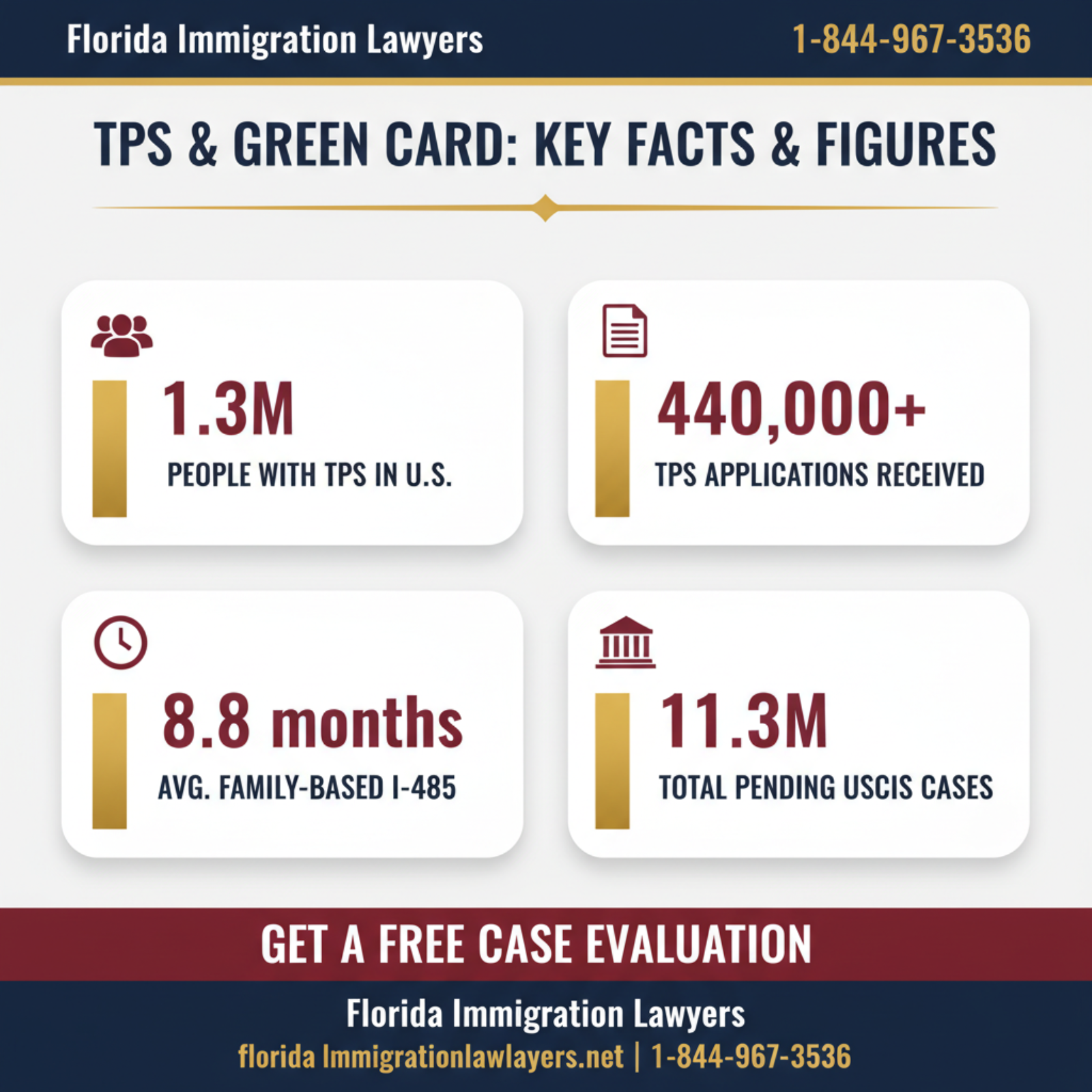
- I-130 Petition (Family-Based): 6-24 months, depending on the relationship and USCIS office.
- I-140 Petition (Employment-Based): 6-18 months, varying by category.
- I-485 Adjustment of Status: 12-36 months after the underlying petition is approved and a visa is available. This can vary greatly by the specific USCIS field office (e.g., Miami, Orlando, Tampa).
You can monitor current processing times on the USCIS website. Remember, these are estimates, and your case may take more or less time. Patience and diligent follow-up are key.
Understanding the Costs: Fees and Financial Considerations
Pursuing a TPS to green card Florida pathway involves various fees that you must budget for. These fees are subject to change, so it is always best to check the latest fee schedule on the USCIS website.
Breakdown of Potential Fees
- USCIS Filing Fees:
- Form I-130 (Petition for Alien Relative): Required if pursuing a family-based green card.
- Form I-140 (Immigrant Petition for Alien Worker): Required for employment-based green cards.
- Form I-485 (Application to Register Permanent Residence or Adjust Status): This is the main application fee for your green card.
- Form I-765 (Application for Employment Authorization): Optional, but highly recommended for continued work authorization during processing.
- Form I-131 (Application for Travel Document - Advance Parole): Optional, allowing you to travel internationally while your I-485 is pending.
- Biometrics Services Fee: A separate fee for fingerprinting and background checks.
- Medical Examination Fees: You will need to pay a USCIS-approved civil surgeon for the required medical examination (Form I-693). These fees vary by provider.
- Attorney Fees: Legal fees for an experienced immigration attorney are an investment in the success of your case. Florida Immigration Lawyers offers transparent fee structures and can discuss these during your free consultation.
- Translation Costs: If any of your supporting documents are not in English, you will need certified translations, incurring additional costs.
It is vital to budget for these expenses to avoid delays. USCIS fees are non-refundable, even if your application is denied. Our firm, Florida Immigration Lawyers, can provide a clear understanding of the costs involved for your specific situation.
Do not navigate this complex immigration process alone. The journey from TPS to a green card Florida pathway is filled with legal intricacies that require expert guidance. Contact Florida Immigration Lawyers today for comprehensive support and peace of mind. Our experienced team is ready to help you.
Common Mistakes to Avoid When Applying for a Green Card from TPS
The TPS to green card Florida pathway is complex, and even minor errors can lead to significant setbacks. Avoiding these common mistakes is crucial for a smooth application process.
-
Failing to Identify a Valid Underlying Green Card Pathway: TPS itself is not a direct path. Many applicants make the mistake of assuming their TPS status automatically grants them green card eligibility without a separate qualifying basis. Always ensure you meet the criteria for a family-based, employment-based, or other specific visa category.
-
Submitting Incomplete or Inaccurate Documentation: USCIS requires a precise and thorough submission. Missing forms, lack of supporting evidence, or errors in personal information are common reasons for Requests for Evidence (RFEs) or denials. Double-check every document carefully.
-
Not Disclosing All Immigration History: Attempting to conceal prior immigration violations, arrests, or unauthorized entries can be detrimental. USCIS conducts thorough background checks, and any undisclosed information can lead to accusations of misrepresentation, potentially resulting in a permanent bar from the U.S.
-
Failing to Maintain Continuous TPS Status: While pursuing a green card, it is vital to maintain your TPS status by re-registering on time. Lapsing in TPS could complicate your adjustment of status application, especially if you lose protection from removal.
-
Traveling Internationally Without Advance Parole: If you have a pending Form I-485 and leave the U.S. without an approved Advance Parole document (Form I-131), your adjustment of status application may be considered abandoned. This can have severe consequences for your case.
-
Missing Deadlines: Immigration processes are strict about deadlines, whether for re-registration, responding to RFEs, or filing petitions. Missing a deadline can jeopardize your entire application and may require starting over.
-
Attempting to Handle Complex Cases Without Legal Counsel: While some forms seem straightforward, the legal nuances of admissibility, waivers, and eligibility criteria are complex. Trying to manage a complicated case without an attorney can lead to critical mistakes that are hard to correct later.
-
Not Updating USCIS of Address Changes: You are legally required to inform USCIS of any change of address within 10 days of moving. Failure to do so can result in missed notices, interview appointments, or even a denial due to non-appearance.
-
Ignoring Admissibility Issues: Certain criminal convictions, prior deportations, or immigration violations can make you inadmissible to the U.S. and ineligible for a green card. These issues must be addressed, often requiring waivers, which are complex legal processes.
-
Not Preparing for the Interview: If an interview is required, being unprepared can lead to inconsistencies in your answers or a failure to provide necessary clarifications. Your attorney can help you prepare thoroughly.
When to Call Florida Immigration Lawyers for Your TPS to Green Card Pathway
Navigating the TPS to green card Florida pathway requires a deep understanding of immigration law. While this guide provides general information, your specific situation is unique and deserves personalized attention. Here are scenarios where contacting Florida Immigration Lawyers is highly recommended:
- Uncertainty About Eligibility: If you are unsure which green card category applies to you, or if you have any questions about meeting the criteria.
- Complex Immigration History: If you have prior deportations, criminal convictions, or previous immigration denials, these issues can significantly complicate your case and require expert legal intervention. Our deportation defense experience is invaluable here.
- Need for Waivers: If you have any grounds of inadmissibility, you may require a waiver. These are complex applications that necessitate professional legal assistance.
- Difficulty Gathering Documents: If you are struggling to obtain necessary documents, especially from your home country, our team can guide you.
- Requests for Evidence (RFEs) or Notices of Intent to Deny (NOIDs): Receiving these from USCIS indicates a problem with your application. Responding correctly and promptly is critical, and a lawyer can formulate the best response.
- Interview Preparation: An attorney can prepare you thoroughly for your USCIS interview, ensuring you are confident and ready to answer all questions accurately.
- General Peace of Mind: For many, the immigration process is a source of immense stress. Having experienced legal counsel provides peace of mind and increases the likelihood of a successful outcome.
Our team at Florida Immigration Lawyers serves clients across the state, including Kissimmee, Orlando, and Miami. We are dedicated to helping individuals like you achieve their dreams of permanent residency. We also assist with family immigration and asylum cases that often intertwine with TPS.
Frequently Asked Questions About TPS to Green Card in Florida
How to transition from TPS to a green card?
Transitioning from TPS to a green card requires qualifying for an underlying immigration category, such as a family-sponsored petition, an employment-based visa, or asylum. Your TPS status provides temporary protection but is not a direct green card pathway. You must file the appropriate immigrant petition and then apply for adjustment of status (Form I-485) with USCIS.
Can immigrants with TPS apply for a green card?
Yes, immigrants with TPS can apply for a green card if they meet the eligibility requirements for a separate green card category. TPS itself does not grant a green card, but it allows individuals to remain in the U.S. and pursue other immigration avenues that may lead to permanent residency.
Does TPS offer a path to citizenship?
TPS does not directly offer a path to U.S. citizenship. It provides temporary legal status and protection from deportation. To become a U.S. citizen, you must first obtain a green card, maintain lawful permanent residency for a required period (typically five years), and then apply for naturalization.
What is the bill to provide a green card pathway for TPS?
Over the years, various legislative proposals have been introduced in Congress to provide a direct green card pathway for TPS holders. As of our last update in 2026, no such comprehensive bill has been enacted into law that creates a universal, direct path from TPS to a green card. Eligibility for permanent residency still relies on existing immigration laws. Always monitor official government sources for legislative updates.
About Florida Immigration Lawyers
Florida Immigration Lawyers is a premier law firm dedicated to serving the diverse immigration needs of individuals and families across Florida. Our experienced attorneys understand the complexities of U.S. immigration law and are committed to providing compassionate, effective legal representation. Whether you are seeking a green card, facing deportation, or navigating family-based petitions, our team is here to guide you. We pride ourselves on our client-focused approach and our unwavering dedication to achieving the best possible outcomes for our clients. We offer services in English and Spanish, ensuring clear communication and culturally sensitive support. Your future in Florida is our priority.
- Comprehensive Services: We handle a wide range of immigration cases, including family-based visas, asylum, and deportation defense.
- Experienced Attorneys: Our legal team brings years of specialized experience to every case.
- Client-Centered Approach: We prioritize your needs and provide personalized strategies.
- Serving All of Florida: From Kissimmee to Miami, we are available statewide.
- Contact Us: Call us at 1-844-967-3536 or visit our website at https://www.floridaimmigrationlawyers.net.
- Free Consultations: We offer complimentary initial consultations to discuss your case.
Sources and References
- U.S. Citizenship and Immigration Services (USCIS) - Temporary Protected Status
- U.S. Citizenship and Immigration Services (USCIS) - Green Card
- Executive Office for Immigration Review (EOIR)
- 8 U.S.C. Chapter 12 - Immigration and Nationality Act (INA)
- 8 CFR Part 244 - Temporary Protected Status
- Immigration and Nationality Act (INA) Section 245 - Adjustment of Status
This article provides general legal information and is not intended as legal advice. Every case is unique, and outcomes depend on specific facts and circumstances. Contact an attorney for advice about your particular situation.
Your journey from TPS to a green card Florida pathway is a significant step towards a secure future. Do not leave your immigration status to chance. Trust the experienced legal professionals at Florida Immigration Lawyers to guide you through every step. We are committed to protecting your rights and helping you achieve permanent residency. Call us now for a free, confidential consultation at 1-844-967-3536. Se Habla Español - Estamos aquí para ayudarle.
Florida Immigration Lawyers
Legal Team
Our experienced attorneys at Florida Immigration Lawyers have been serving clients across Florida for over 20 years. We specialize in immigration, personal injury, criminal defense, workers compensation, and family law.