USCIS Green Card Removal Proceedings Florida: Expert...
Facing USCIS green card removal proceedings in Florida can be an overwhelming experience, threatening your ability to live and work in the U.S. This comprehensive guide from Florida Immigration Lawyers explains the process, from understanding what triggers removal to navigating the I-751 petition and preparing for immigration court. We detail essential documents, timelines, and cost factors, while highlighting common mistakes to avoid. Learn when to seek legal help and why expert representation is crucial to protect your green card status. Our firm serves all of Florida, including Pembroke Pines, offering dedicated support and free consultations.

USCIS green card removal proceedings in Florida are legal processes initiated by the U.S. government to revoke a conditional or permanent resident's status. These often stem from issues like marriage fraud, criminal activity, or abandonment of residency. A robust legal defense is crucial to protect your right to remain in the United States.
- Removal proceedings can lead to deportation.
- Conditional residents must file Form I-751.
- Legal representation is crucial for defense.
- Grounds for removal include fraud or crimes.
- Early action and proper documentation are key.
Imagine building a life in Florida, raising your family, and contributing to your community, only to face the daunting prospect of losing your green card. This unsettling reality can arise from USCIS green card removal proceedings, a serious legal challenge that can threaten your ability to live and work in the United States. Whether you are a conditional resident facing the removal of conditions or a permanent resident accused of grounds for deportation, understanding this process is critical.
In Florida, particularly in vibrant areas like Pembroke Pines, many individuals and families rely on their green card status for stability and peace of mind. When that status is questioned, the stress and uncertainty can be overwhelming. This comprehensive guide from Florida Immigration Lawyers will demystify the process, explain your rights, and outline the steps you can take to protect your future.
We understand the profound impact these proceedings can have on your life. Our goal is to provide clear, actionable information to help you navigate this challenging time. For immediate assistance and personalized guidance, do not hesitate to call Florida Immigration Lawyers at 1-844-967-3536 for a free consultation. We are here to help you understand your options and develop a strong defense strategy.
Understanding USCIS Green Card Removal Proceedings in Florida
USCIS green card removal proceedings are formal legal actions initiated by the U.S. government to determine if a non-citizen should be removed or deported from the United States. These proceedings are distinct from the initial green card application process and often arise due to specific circumstances that challenge an individual's eligibility to maintain their permanent resident status.
For many residents across Florida, from Miami to Orlando, the term "removal proceedings" can evoke significant fear. It is essential to understand that these are legal processes, and you have rights. The government must prove its case, and you have the opportunity to present a defense. This is where experienced legal counsel becomes invaluable.
What Triggers Removal Proceedings for Green Card Holders?
Several factors can lead to USCIS green card removal proceedings. One common scenario involves conditional permanent residents who fail to properly file a petition to remove conditions on residence, typically Form I-751. If you obtained your green card through marriage and it's conditional, you generally have a two-year period to prove your marriage is bona fide.
Other significant triggers include criminal convictions, especially those involving moral turpitude or aggravated felonies. Misrepresentation or fraud during the immigration process, even if unintentional, can also lead to removal. Additionally, abandoning your U.S. residency by spending too much time outside the country can initiate these proceedings. Understanding the specific grounds for removal is the first step in building your defense. (See 8 U.S.C. § 1227 for deportable aliens criteria).
The Role of USCIS and EOIR in the Process
While the term "USCIS green card removal proceedings" is commonly used, it's important to distinguish the roles of different agencies. U.S. Citizenship and Immigration Services (USCIS) is responsible for adjudicating petitions and applications. If USCIS denies a Form I-751 petition to remove conditions, they may refer the case to an Immigration Judge (IJ) at the Executive Office for Immigration Review (EOIR).
The EOIR operates the immigration courts, where removal proceedings are conducted. An Immigration Judge presides over these hearings, listens to arguments from both the government (Department of Homeland Security) and the respondent (the green card holder), and ultimately makes a decision. This judicial process is governed by the Executive Office for Immigration Review (EOIR). Having an attorney who understands both USCIS policies and EOIR court procedures is vital.
Navigating the I-751 Petition to Remove Conditions on Residence
For many conditional green card holders in Florida, the primary pathway to permanent residency involves successfully filing Form I-751, Petition to Remove Conditions on Residence. Failure to properly file this petition, or if USCIS questions the validity of your marriage, can directly lead to USCIS green card removal proceedings.
This petition is critical for those who received their green card based on a marriage that was less than two years old at the time of approval. You and your spouse must generally file Form I-751 jointly within the 90-day period immediately preceding the second anniversary of your conditional green card. Missing this crucial deadline or submitting an incomplete petition can put your status at risk. (Refer to INA Section 216 and 8 U.S.C. § 1186a).
Step-by-Step Guide to Filing Form I-751
Filing the I-751 petition correctly is paramount to avoiding USCIS green card removal proceedings. Follow these steps carefully to ensure a smooth process:
- Determine Your Filing Category: Most file jointly. However, waivers exist for divorce, abuse, or death of the spouse.
- Gather Comprehensive Documentation: Collect extensive evidence proving your marriage is bona fide. This is the most crucial step.
- Complete Form I-751 Accurately: Fill out every section completely and truthfully. Omissions can cause delays or RFEs.
- Pay the Correct Filing Fees: Include the correct filing fee and biometric services fee. Always check the USCIS website for current amounts.
- Assemble and Mail Your Petition: Organize documents neatly, include a table of contents, and mail to the USCIS Lockbox. Keep copies.
- Attend Biometrics Appointment: After filing, attend your scheduled biometrics appointment for fingerprints and photos.
- Respond to RFEs or Interview Notices: Respond promptly and thoroughly to any Request for Evidence (RFE) or interview notice from USCIS.
- Receive Decision: USCIS will send a decision notice. Approval grants a 10-year green card. Denial may lead to removal proceedings.
Special Considerations for I-751 Waivers
If you cannot file Form I-751 jointly, you may be eligible for a waiver. This is a critical option for individuals in Florida whose marriages have ended, or who have experienced difficult circumstances. Waiver categories include divorce after the petition was filed, death of the petitioning spouse, or if you or your child suffered extreme cruelty. An experienced family immigration lawyer is essential for these complex waiver petitions.
Essential Documents for Your I-751 Petition and Defense
A well-prepared document package is your strongest defense against potential USCIS green card removal proceedings. For the I-751 petition, the goal is to prove your marriage was, and continues to be, bona fide and not entered into solely for immigration benefits. Gather as much evidence as possible from the entire period of your conditional residency.
Even if you are facing removal proceedings for other reasons, comprehensive personal and financial documents, along with character references, are vital. These help establish your ties to the U.S. and your good moral character. Organizing your evidence clearly can significantly impact your case.
I-751 Document Checklist (Evidence of Bona Fide Marriage)
Use this checklist to gather evidence for your Form I-751. The more evidence you provide, the stronger your case will be:
- Joint bank account statements showing active use.
- Joint utility bills (electricity, water, gas, internet) addressed to both spouses.
- Joint lease agreements or mortgage documents for your shared Florida residence.
- Birth certificates of children born to the marriage.
- Affidavits from friends, family, and employers attesting to the bona fides of the marriage.
- Photographs of the couple together over time, including with family and friends.
- Joint tax returns filed with the IRS.
- Joint health, life, or auto insurance policies.
- Documents showing joint ownership of assets (cars, property, investments).
- Designation of your spouse as beneficiary on life insurance, retirement accounts, or wills.
- Correspondence addressed to both spouses, or to each spouse at the same address.
- Travel itineraries and tickets for trips taken together.
- Any other documents demonstrating commingling of financial resources and shared responsibilities.
Timeline and Processing Expectations for Green Card Removal Cases
The timeline for USCIS green card removal proceedings varies significantly based on case complexity and court caseload. For I-751 petitions, USCIS processing times can range from several months to over a year. Once filed, USCIS typically extends your conditional residency for an additional 24 or 48 months, allowing you to work and travel while your petition is pending.
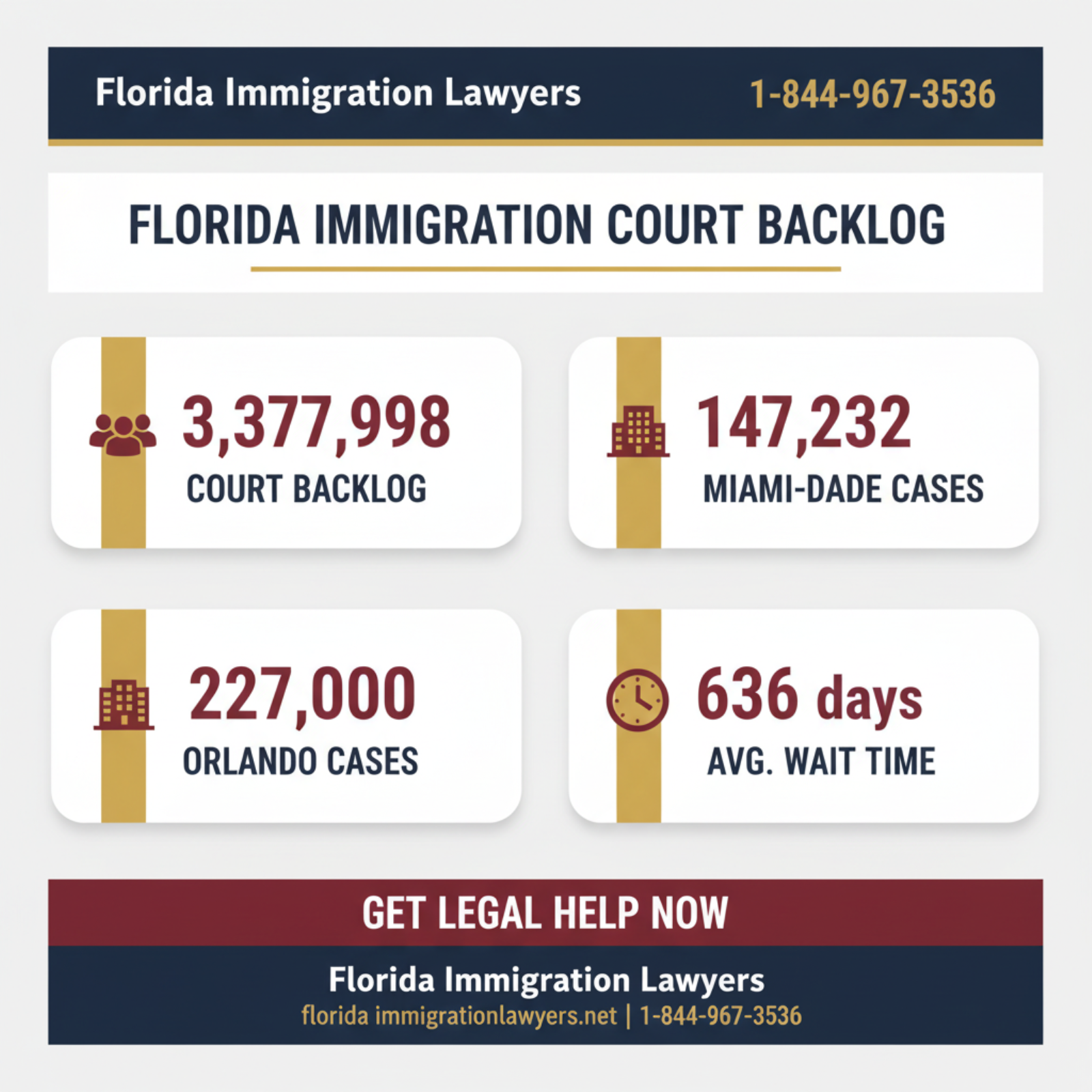
However, an I-751 denial can quickly lead to a Notice to Appear (NTA) in immigration court, initiating formal removal proceedings. The average processing time for removal cases in Florida can be lengthy, sometimes extending for several years due to court backlogs, particularly in the Miami Immigration Court which serves the Pembroke Pines area. Consistent legal support is crucial throughout this extended period.
What to Expect in Immigration Court
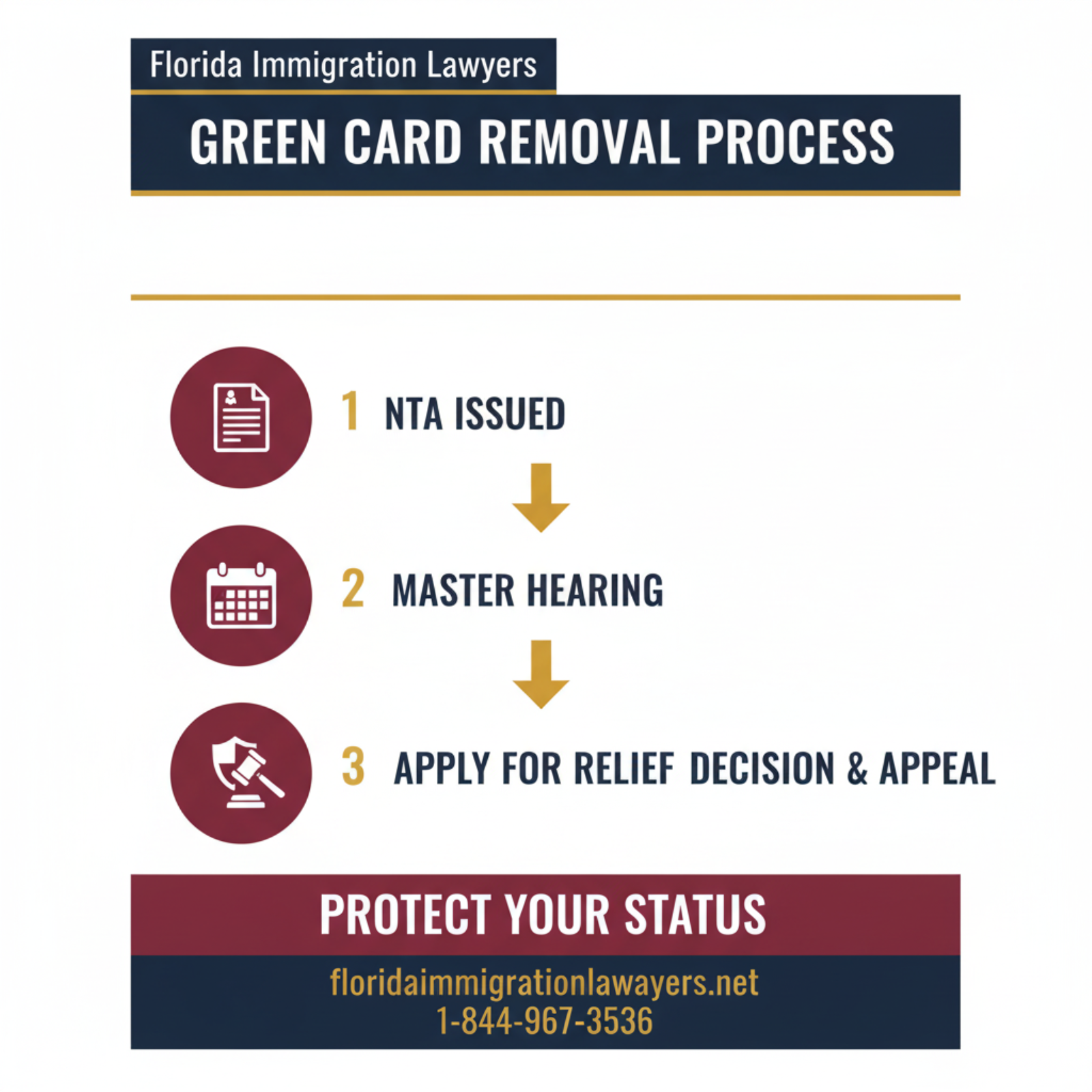
If your case is referred to an Immigration Judge, you will receive an NTA, outlining the government's allegations. Your first court appearance is typically a Master Calendar Hearing (MCH), where the judge explains charges and asks for your plea (admit/deny). You may also request relief from removal at this stage.
Subsequent Individual Hearings (IH) are trial-like proceedings where both sides present evidence, call witnesses, and make legal arguments. These hearings can be lengthy and may require multiple sessions. The Immigration Judge then issues a decision, which can be appealed to the Board of Immigration Appeals (BIA) if you disagree. This entire process can take years, emphasizing the need for consistent legal support.
Cost Factors and Fee Breakdown in Removal Proceedings
Understanding the potential costs associated with USCIS green card removal proceedings and related petitions is crucial. While Florida Immigration Lawyers offers a free initial consultation, there are governmental filing fees and legal expenses to consider throughout the process.
USCIS filing fees are subject to change, so always consult the official USCIS website for the most current information. These fees cover application processing and biometric services. Additionally, legal fees for representation by an experienced immigration lawyer constitute a significant part of the overall cost, but they are an investment in your future.
Typical Fees Involved
- USCIS Form I-751 Filing Fee: For the Petition to Remove Conditions on Residence.
- Biometric Services Fee: Required for fingerprinting and background checks.
- Legal Fees: Vary based on case complexity and attorney experience. Flat fees for I-751 are common, while removal defense may involve retainers and hourly rates.
- Document Translation Fees: For any supporting documents not in English, certified translations are required.
- Expert Witness Fees: In complex cases, expert testimony may incur additional costs.
- Appeal Fees: A separate filing fee is required for appeals to the Board of Immigration Appeals (BIA).
While costs can seem substantial, attempting to navigate these complex legal waters alone can lead to far greater financial and personal consequences, including deportation. Investing in quality legal representation can often save you money and prevent irreversible mistakes in the long run.
Do not navigate this complex and stressful process alone. The stakes are too high. Contact Florida Immigration Lawyers today to discuss your specific situation and learn how our dedicated team can provide the expert guidance and robust defense you need. We are committed to protecting your rights and securing your future in Florida.
Common Mistakes to Avoid in Green Card Removal Proceedings
Facing USCIS green card removal proceedings is a serious matter, and even small errors can have significant consequences. Being aware of these common pitfalls can help you avoid jeopardizing your immigration status in Florida.
- Missing Deadlines: Forgetting to file Form I-751 within the 90-day window, or missing court dates, can lead to automatic denial or an order of removal in absentia.
- Submitting Incomplete or Inaccurate Documentation: Insufficient evidence or false information can lead to an RFE, interview, denial, or fraud accusations.
- Failing to Disclose Criminal History: Hiding past arrests or convictions can be misrepresentation, leading to severe penalties including a permanent bar.
- Leaving the U.S. Without Proper Advice: Traveling internationally while in removal proceedings or with a pending I-751 can complicate your case or prevent re-entry.
- Not Responding to USCIS or Court Notices: Ignoring RFEs, interview notices, or court hearings can lead to adverse decisions without your input.
- Failing to Update Your Address: If USCIS or the court lacks your current address, you may miss crucial notices. File Form AR-11 whenever you move.
- Representing Yourself in Court: Immigration law is complex. Arguing your case before an Immigration Judge without legal training is a major disadvantage.
- Admitting to Charges Without Understanding: Admitting to charges you don't fully understand at Master Calendar Hearings can undermine your defense.
- Not Seeking Legal Counsel Early: Waiting until an NTA is issued or a final order of removal is given severely limits your options. Early engagement with an immigration lawyer is key.
- Lack of Preparation for Interviews: Being unprepared for an I-751 interview can raise red flags. Review your evidence and discuss questions with your attorney.
- Disregarding Florida-Specific Nuances: Immigration courts and USCIS field offices in Florida, like those serving Pembroke Pines, may have specific local practices. An attorney familiar with the local jurisdiction is a significant asset.
When to Call a Florida Immigration Lawyer for Removal Proceedings
The moment you receive any communication suggesting your green card status is at risk, or if you are facing USCIS green card removal proceedings, it is imperative to seek legal counsel immediately. Proactive engagement with an experienced immigration lawyer in Florida can significantly alter the outcome of your case.
Do not wait until a Notice to Appear (NTA) is issued or until you are in immigration court. Early intervention allows your attorney to review your case thoroughly, identify potential defenses, gather necessary evidence, and strategize effectively. This proactive approach can often prevent a situation from escalating.
Specific Scenarios Requiring Legal Help:
- Receipt of a Notice of Intent to Deny (NOID) or Request for Evidence (RFE) for Form I-751: These indicate USCIS concerns. An attorney helps formulate a strong response.
- Receipt of a Notice to Appear (NTA): This officially initiates removal proceedings. Immediate legal representation is essential.
- Denial of Form I-751: If your petition is denied, your case will almost certainly be referred to an Immigration Judge.
- Criminal Charges or Convictions: Even minor criminal issues can have severe immigration consequences. Consult an attorney before pleading guilty.
- Accusations of Marriage Fraud or Misrepresentation: These serious allegations require a robust defense to avoid permanent bars.
- Prolonged Absences from the U.S.: If concerned about abandonment of residency due to extended travel, discuss with a lawyer.
- Facing a Final Order of Removal: While challenging, an attorney may still explore options for appeal or motions to reopen your case.
Florida Immigration Lawyers has extensive experience defending clients in USCIS green card removal proceedings across Florida, including those appearing before the Miami Immigration Court which serves the Pembroke Pines area. We understand the local nuances and federal regulations that govern these complex cases. We are here to stand by your side and fight for your right to remain in the U.S.
Important FAQs About Green Card Removal Proceedings
Many common questions arise when individuals face the prospect of USCIS green card removal proceedings. Here, we address some frequently asked questions to provide clarity.
Understanding these aspects can help you better prepare and make informed decisions. Remember, these answers provide general information; your specific situation requires personalized legal advice.
Can a felon get citizenship through marriage?
Whether a felon can get citizenship through marriage depends heavily on the nature and severity of the crime, and when it occurred. Certain criminal convictions, particularly aggravated felonies, can render an individual inadmissible or deportable, making both green card acquisition and naturalization extremely difficult. However, waivers may be available in some circumstances. It is crucial to discuss your specific criminal record with an experienced citizenship lawyer to assess eligibility and explore potential relief.
Is immigration deporting green card holders?
Yes, immigration authorities can and do deport green card holders if they are found to be removable under U.S. immigration law. While green card holders have more rights than non-immigrants, their status is not absolute. Grounds for deportation include certain criminal convictions, marriage fraud, or abandonment of residency. If a green card holder is placed in USCIS green card removal proceedings, they have the right to appear before an Immigration Judge and present a defense or seek forms of relief from removal. This is why expert legal representation is so vital.
What happens if you marry a U.S. citizen and then divorce?
If you obtained a conditional green card through marriage to a U.S. citizen and then divorce, you typically cannot file the Form I-751 jointly. However, you may be eligible to file a waiver of the joint filing requirement. To qualify, you must demonstrate the marriage was entered into in good faith, not solely for immigration purposes, and that it has since been terminated. Providing strong evidence of a bona fide marriage despite the divorce is essential. An attorney can help you prepare this complex waiver petition.
Can you get a green card if you have diabetes?
Generally, having diabetes itself does not prevent an individual from obtaining a green card. U.S. immigration law focuses on public health grounds of inadmissibility, which typically involve communicable diseases of public health significance. Diabetes is usually not considered a public health concern that would make someone inadmissible. However, if diabetes leads to other severe medical conditions that could make an individual a "public charge," it *could* theoretically become an issue, but this is rare. Most individuals with well-managed diabetes can still pursue a green card. Always consult an immigration medical professional and an attorney for specific health-related concerns.
About Florida Immigration Lawyers
Florida Immigration Lawyers is a leading law firm dedicated to providing exceptional legal representation to immigrants and their families across the entire state of Florida. With a deep understanding of complex U.S. immigration laws, we are committed to helping our clients navigate challenging legal processes, including USCIS green card removal proceedings, with compassion and expertise.
Our experienced attorneys are passionate advocates for immigrant rights, offering personalized strategies tailored to each client's unique situation. We serve communities throughout Florida, from bustling cities like Pembroke Pines and Miami to smaller towns, ensuring that high-quality legal support is accessible when you need it most.
Why Choose Florida Immigration Lawyers?
- Expertise: Our team specializes exclusively in immigration law, providing in-depth knowledge and strategic insights.
- Client-Centered Approach: We prioritize your needs, concerns, and goals, offering empathetic and responsive service.
- Proven Track Record: We have a history of successfully defending clients against removal and securing their immigration status.
- Bilingual Services: Our team is fluent in English and Spanish, ensuring clear communication and cultural understanding.
- Comprehensive Support: From initial consultation to final resolution, we guide you through every step of the legal journey.
If you or a loved one are facing USCIS green card removal proceedings, or have any immigration concerns, trust the dedicated professionals at Florida Immigration Lawyers. We are available 24/7 to answer your questions and offer a free consultation. Visit our website at https://www.floridaimmigrationlawyers.net or call us directly at 1-844-967-3536 to schedule your appointment. Your future in Florida is our priority.
Sources and References
- U.S. Citizenship and Immigration Services (USCIS)
- USCIS Form I-751, Petition to Remove Conditions on Residence
- Executive Office for Immigration Review (EOIR)
- USCIS Fee Schedule
- 8 U.S.C. § 1186a - Conditional permanent resident status for certain alien spouses and sons and daughters
- 8 U.S.C. § 1227 - Deportable aliens
- Code of Federal Regulations (CFR) Title 8 - Aliens and Nationality
- Immigration and Nationality Act (INA) Section 216 - Conditional Permanent Resident Status
- Immigration and Nationality Act (INA) Section 237 - Deportable Aliens
This article provides general legal information and is not intended as legal advice. Every case is unique, and outcomes depend on specific facts and circumstances. Contact an attorney for advice about your particular situation.
Do not face the complexities of USCIS green card removal proceedings alone. Your residency in Florida is too important to leave to chance. Take the crucial first step towards protecting your future by contacting Florida Immigration Lawyers today for a free consultation. Our dedicated team is ready to provide expert legal guidance and robust representation. Call us now at 1-844-967-3536. Se Habla Español - Estamos aquí para ayudarle.
Do Not Navigate This Process Alone
Our experienced immigration attorneys are ready to fight for you. Get a free, confidential consultation today.
Se Habla Español
Frequently Asked Questions
Florida Immigration Lawyers
Immigration Attorney | Founder, Vasquez Law Firm
U.S. Air Force veteran and immigration attorney with thousands of cases resolved. J.D., NCCU School of Law. AILA member. Admitted to the 4th, 5th, and 11th Circuit Courts.
Available 24/7 - Free Evaluations
Related Legal Services
Our Florida immigration attorneys can help you with business immigration, asylum protection and deportation defense. Call today at 1-844-967-3536 for a free consultation.
Related Links
Related Topics
Free Legal Consultation
Discuss your case with our experienced attorneys. We're available 24/7.
Se Habla Español - Estamos aquí para ayudarle.
Related Articles
Expungement Effects on Immigration in Florida | VLF Florida
Explore the effects of expungement on immigration status in Florida. Learn how sealed records can impact your immigration proceedings and what steps to take. Contact Florida Immigration Lawyers for expert guidance.
Understanding Combo Card EAD Advance Parole in Florida
Explore the benefits of the combo card in Florida, which combines an EAD and Advance Parole for those with a pending I-485. Discover application steps and common pitfalls. Contact Florida Immigration Lawyers for assistance.
Immigration Medical Exam: Florida Civil Surgeons Guide
Navigating the U.S. immigration process requires careful attention to many details, especially the mandatory immigration medical exam. For those seeking a green card in Florida, understanding the Form I-693, locating a USCIS-approved civil surgeon, and preparing for the examination are critical steps. This comprehensive guide details the requirements, what to expect during your medical exam, essential documents to bring, and potential costs. We also highlight common mistakes to avoid and explain when seeking legal counsel from Florida Immigration Lawyers can be invaluable. Ensure a smooth application by being well-informed and professionally advised.
Immigration Medical Exam: Find Florida Doctors | VLF Florida
Learn about the immigration medical exam in Florida, including how to find USCIS-designated doctors in Coral Springs. Call for a free consultation with Florida Immigration Lawyers.