TPS Honduras Latest News 2026: Florida Eligibility
Discover the latest 2026 updates on TPS for Honduras and other eligible countries in Florida. Get insights on eligibility, application steps, and common pitfalls. Stay informed and secure your status with guidance from Florida Immigration Lawyers.

As of 2026, the Temporary Protected Status (TPS) for Honduras remains a crucial topic for many Floridians. Eligible countries under TPS include those affected by conflict or disaster. Key points include:
- TPS helps protect eligible immigrants from deportation.
- Eligibility criteria vary based on country conditions.
- Changes in TPS status can impact work permits.
- Stay updated with USCIS for official announcements.
Introduction
Imagine living in Tallahassee, Florida, as a Honduran national, constantly checking for news on Temporary Protected Status (TPS). The uncertainty can be overwhelming. This blog will provide an overview of TPS eligibility, focusing on Honduras and other countries as of 2026. If you need assistance, call Florida Immigration Lawyers at 1-844-967-3536 for a free consultation.
This constant state of vigilance can be incredibly taxing, not only for the individual but for their entire family and the communities they contribute to across Florida. TPS isn't just a legal status; it's a lifeline that allows individuals to work, support their families, and build a stable life, albeit temporarily, away from the dangers in their home country. For many Hondurans in Florida, TPS represents a chance to contribute meaningfully to the state's economy and culture, without the constant fear of sudden deportation. The legal landscape surrounding TPS is complex and frequently subject to change, making reliable information and expert guidance indispensable.
Understanding the nuances of TPS is paramount, especially with the ever-evolving immigration policies. This blog aims to demystify the process, offering a comprehensive overview of TPS eligibility, application procedures, and the specific considerations for Honduran nationals residing in Florida as of 2026. Given the intricate nature of immigration law, attempting to navigate this process alone can lead to critical errors. If you find yourself grappling with uncertainty or need personalized advice, remember that professional legal assistance is readily available. For immediate and expert guidance, call Florida Immigration Lawyers at 1-844-967-3536 for a free consultation – our team is dedicated to providing clarity and support through every step of your immigration journey.
What is Temporary Protected Status (TPS)?
Temporary Protected Status (TPS) is a designation by the U.S. government that allows nationals from certain countries to stay in the U.S. temporarily due to conditions such as armed conflict or natural disasters in their home country. As of 2026, TPS provides legal work authorization and protection from deportation.
The Immigration and Nationality Act (INA) grants the Secretary of Homeland Security the authority to designate a country for TPS. This designation is based on specific, often severe, conditions that make it unsafe for nationals of that country to return, or where the country is unable to handle the return of its nationals adequately. These conditions typically fall into three categories: ongoing armed conflict, environmental disaster (such as earthquakes, hurricanes, or epidemics), or other extraordinary and temporary conditions. The core purpose of TPS is humanitarian, providing a safe haven and allowing individuals to live and work legally in the U.S. without fear of removal during a period of crisis in their homeland.
It's crucial to understand that TPS is, by its very nature, a temporary status. It does not lead directly to permanent residency or a Green Card, though in some cases, individuals with TPS may be able to adjust their status through other immigration avenues if they meet separate eligibility requirements. The designation period for a country typically ranges from 6 to 18 months, after which DHS reviews the conditions in the country to decide whether to extend, redesignate, or terminate TPS. For those in Florida holding TPS, staying current with these official announcements from USCIS is not just recommended but essential to maintaining their legal status and work authorization. Florida Immigration Lawyers can help you stay informed and navigate these critical updates, ensuring you don't miss crucial deadlines.
TPS eligibility is country-specific and depends on ongoing assessments by the Department of Homeland Security (DHS). It's essential for those in Florida to stay informed about the latest updates through official channels like the USCIS.
How Does TPS Affect Hondurans in Florida?
As of 2026, Hondurans in Florida may qualify for TPS due to ongoing conditions in their home country. The U.S. government periodically reviews these conditions to determine whether TPS designation should continue.
For Hondurans residing in Florida, TPS offers a profound sense of stability amidst global uncertainties. Beyond simply protecting individuals from deportation, it grants access to employment authorization documents (EADs), allowing them to secure jobs legally, pay taxes, and contribute significantly to Florida's economy across various sectors, from agriculture and construction to hospitality and healthcare. This legal work status empowers families to achieve financial stability, access essential services, and plan for their children's futures without the constant threat of being uprooted. The stability provided by TPS also fosters stronger, more integrated communities, as individuals can invest in their neighborhoods and participate more fully in civic life.
However, the temporary nature of TPS also means that beneficiaries live with a degree of uncertainty, as the status must be periodically reviewed and extended by the U.S. government. The decision to extend or terminate TPS for Honduras hinges on the Department of Homeland Security's assessment of current conditions in the country. This periodic review process can be a source of significant anxiety for families, as a termination could lead to the loss of work authorization and renewed vulnerability to deportation. It underscores the critical importance of diligent re-registration when required and staying informed about all official announcements. Should you have concerns about your TPS status or need assistance with re-registration, contact Florida Immigration Lawyers at 1-844-967-3536 for expert guidance to protect your future in Florida.
Eligible Hondurans can apply for employment authorization, which allows them to work legally in Florida. This is crucial given the recent increase in deportation orders reported in June 2026. Staying compliant with TPS requirements is vital to maintaining work eligibility and protection from deportation.
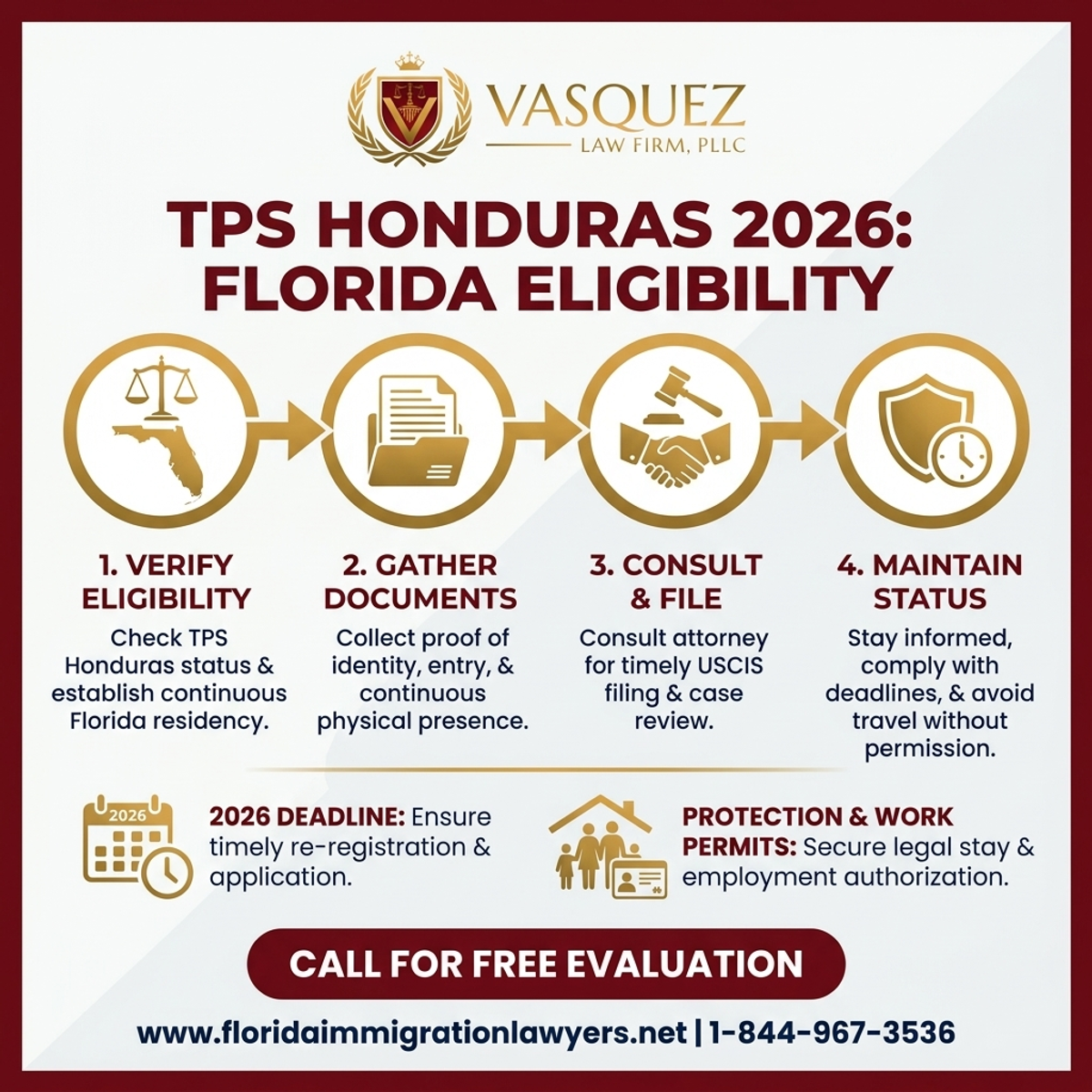
Step-by-Step Process — TPS Honduras Latest News 2026: Florida Eligibility
Which Countries Are Eligible for TPS in 2026?
Countries eligible for TPS in 2026 include those facing severe hardship, such as ongoing armed conflict or environmental disasters. As of now, countries like Honduras, El Salvador, and Haiti remain on the list, but this can change based on new assessments.
The criteria for TPS designation are stringent and require the Secretary of Homeland Security to determine that a country meets specific conditions, such as: ongoing armed conflict posing a serious threat to personal safety; environmental disaster resulting in a substantial, but temporary, disruption of living conditions; or other extraordinary and temporary conditions that prevent nationals from safely returning. For instance, Honduras's initial TPS designation in 1999 followed Hurricane Mitch, and subsequent extensions have often cited persistent challenges including natural disasters, economic instability, and widespread violence. Similarly, countries like El Salvador and Haiti have received TPS designations due to a combination of natural disasters, political instability, and humanitarian crises.
The list of TPS-designated countries is not static; it is a living document that reflects global events and U.S. foreign policy considerations. DHS conducts thorough reviews before making decisions on extension, redesignation, or termination. These reviews involve assessing reports from the State Department, international organizations, and non-governmental organizations regarding the conditions within the designated countries. This dynamic nature means that individuals from countries like Nicaragua, Sudan, or Venezuela, which have also held or currently hold TPS, must remain vigilant. Any change in status can have immediate and profound consequences for thousands of individuals and families. Therefore, relying on official government sources and seeking legal counsel from firms like Florida Immigration Lawyers is paramount to ensure you have the most accurate and up-to-date information regarding your eligibility.
The Department of Homeland Security regularly updates the list of TPS-designated countries. For the most current information, refer to official sources such as the State Department.
Steps to Apply for TPS in Florida
Navigating the TPS application process requires meticulous attention to detail and a thorough understanding of the requirements. Even minor errors or omissions can lead to significant delays, requests for evidence (RFEs), or even outright denial. It's not uncommon for applicants to feel overwhelmed by the paperwork and the legal jargon involved. Therefore, approaching each step with care and, ideally, with professional guidance, is strongly recommended. This comprehensive guide outlines the essential steps to successfully apply for TPS, specifically for those residing in Florida.
Applying for TPS involves several critical steps that must be followed precisely to avoid delays or denials. Here is a step-by-step guide:
- Check Eligibility: Verify if your country is currently designated for TPS and if you meet individual eligibility requirements, such as continuous physical presence and continuous residence in the U.S. since the designated date. Ensure you haven't committed certain crimes that could disqualify you.
- Gather Documents: Collect necessary documents such as identity proof (passport, birth certificate), evidence of nationality, proof of continuous residence in the U.S. (utility bills, rental agreements, employment records), and records of your entry into the U.S. Organize these meticulously.
- Complete Form I-821: Fill out the Application for Temporary Protected Status accurately and completely. This form is the cornerstone of your application. Any inconsistencies or missing information can jeopardize your case.
- Submit Form I-765: If seeking work authorization, include the Application for Employment Authorization (Form I-765). This is crucial for obtaining an Employment Authorization Document (EAD), which allows you to work legally.
- Pay Fees: Ensure you pay the required fees for Form I-821, Form I-765, and the biometrics fee. Check the USCIS website for the most current fee schedule, as these can change. If you qualify for a fee waiver due to financial hardship, submit Form I-912, Request for Fee Waiver, with supporting documentation.
- Submit Application: Send your completed forms, supporting documents, and fee payments (or fee waiver request) to the appropriate USCIS lockbox facility. Always make copies of your entire application package for your records before mailing it.
- Attend Biometrics Appointment: After USCIS processes your application, you will receive a notice to attend a biometrics appointment at an Application Support Center (ASC). This appointment is mandatory for fingerprinting, photographs, and signature collection. Failure to attend will likely lead to denial.
Understanding these steps is the first hurdle; executing them flawlessly is another. The stakes are incredibly high, as your ability to live and work in the U.S. legally depends on the success of this application. Many applicants find the process daunting, particularly when dealing with complex personal histories or navigating the intricacies of immigration law. This is where the expertise of an immigration attorney becomes invaluable. Florida Immigration Lawyers can provide step-by-step assistance, review your documents, ensure all forms are correctly completed, and help you prepare for your biometrics appointment, significantly increasing your chances of a successful application. Don't hesitate to reach out for support.
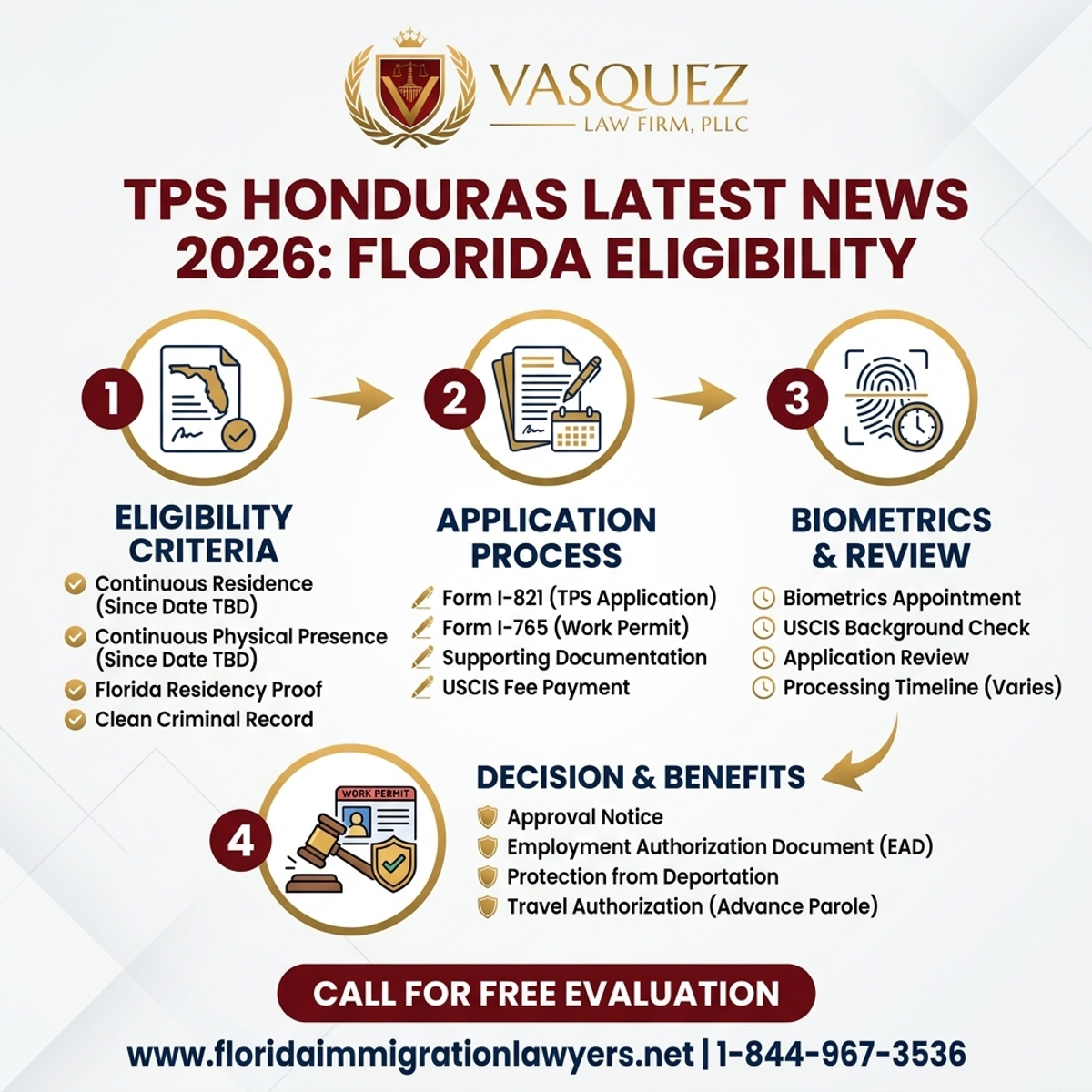
Key Statistics — TPS Honduras Latest News 2026: Florida Eligibility
Timeline and Processing Expectations for TPS Applications
While USCIS strives for efficiency, the processing times for TPS applications can vary significantly due to factors such as caseload volume, staffing levels, and the complexity of individual cases. It's essential for applicants to manage their expectations and understand that these timeframes are estimates. Patience, coupled with proactive monitoring, is key throughout the application journey. The following table outlines typical processing expectations, but always refer to the official USCIS processing times tool for the most current estimates.
| Stage | Typical Timeframe | Notes |
|---|---|---|
| Application Submission | 1-2 weeks | This initial period covers the time it takes for your application package to reach USCIS via mail service. Selecting a reliable shipping method with tracking can provide peace of mind. |
| Receipt Notice | 2-3 weeks | Once USCIS receives your application, they will send a Form I-797, Notice of Action, confirming receipt. This notice contains your receipt number, which is vital for tracking your case online. Keep this document safe. |
| Biometrics Appointment | 4-6 weeks | After receiving your receipt notice, USCIS will schedule a biometrics appointment at a local Application Support Center (ASC). This appointment is mandatory for fingerprinting and photo collection, which are used for background checks. Missing this appointment without rescheduling can lead to application denial. |
| Decision Notice | 6-12 months | The final decision on your TPS application can take several months, varying based on the specific service center's caseload and any requests for additional evidence (RFEs) that might arise. During this period, USCIS conducts thorough background checks and reviews all submitted documentation. |
It's important to note that these are general estimates, and individual cases may take longer, especially if USCIS issues a Request for Evidence (RFE) or if there are complexities in your application. Regularly checking your case status online using the receipt number provided by USCIS is highly recommended. If you experience significant delays beyond the published processing times or receive an RFE, consulting with an experienced immigration attorney from Florida Immigration Lawyers can be invaluable. They can help you understand the reason for the delay, respond effectively to RFEs, and advocate on your behalf to help keep your application on track.
Cost Factors and Fee Breakdown for TPS Applications
Understanding the financial aspects of a TPS application is crucial for proper planning. While the fees are subject to change, applicants must be prepared for several costs associated with filing. USCIS fees are non-refundable, so ensuring accuracy in your application and fee submission is paramount. The following outlines the typical fee structure, but always verify the latest amounts directly on the USCIS website or by contacting Florida Immigration Lawyers for current information.
| Item | Typical Fee | Notes |
|---|---|---|
| Form I-821 | Variable | The fee for this form can vary. In some cases, there might be no fee for the initial filing or re-registration, but it's essential to check the latest USCIS fee schedule for your specific designation. |
| Form I-765 | Variable | This fee is required if you wish to obtain or renew your Employment Authorization Document (EAD). An EAD allows you to work legally in the U.S. |
| Biometrics Fee | Variable | This mandatory fee covers the cost of fingerprinting and background checks conducted at your biometrics appointment. |
It's important to note that fee waivers are available for certain applicants who can demonstrate an inability to pay based on specific income guidelines or receipt of means-tested benefits. If you believe you qualify for a fee waiver, you must submit Form I-912, Request for Fee Waiver, along with your application and supporting documentation. Improperly calculating or submitting fees is a common mistake that can lead to your application being rejected. Beyond the USCIS fees, applicants should also budget for potential legal fees if they choose to hire an attorney, as well as costs for document translation, photocopying, and mailing. While these costs can seem significant, the protection and work authorization offered by TPS often outweigh the financial investment, especially when secured with the help of experienced legal counsel like Florida Immigration Lawyers, who can guide you through the financial aspects and potential fee waiver options.
Do not navigate this process alone. Contact Florida Immigration Lawyers today.
Common Mistakes to Avoid When Applying for TPS
The TPS application process, while designed to offer humanitarian relief, is fraught with potential pitfalls that can jeopardize an applicant's chances. Even seemingly minor errors can lead to significant delays or outright denial, leaving individuals vulnerable to deportation. Being aware of these common mistakes and taking proactive steps to avoid them is paramount for a successful application. Here’s a detailed look at critical errors to steer clear of:
- Missing Deadlines: TPS has specific initial registration and re-registration periods. Filing even a day late can result in denial,
Do Not Navigate This Process Alone
Our experienced immigration attorneys are ready to fight for you. Get a free, confidential consultation today.
Se Habla Español
Or leave your details and we’ll call you:
Free Evaluation in 24 Hours
Or talk to us right now
AI voice assistant — available 24/7
FreeFrequently Asked Questions

William J. Vásquez
Founding Attorney · Vasquez Law Firm
U.S. Air Force veteran and immigration attorney with years of hands-on U.S. immigration experience. J.D., NCCU School of Law. AILA member. Admitted to the 4th, 5th, and 11th Circuit Courts.
Available 24/7 - Free Evaluations
Reviewed for legal accuracy by William J. Vásquez
Licensed in North Carolina; U.S. immigration is federal practice.
Related Legal Services
Our Florida immigration attorneys can help you with business immigration, asylum protection and deportation defense. Call today at 1-844-967-3536 for a free consultation.
Related Links
Related Topics
Free Legal Consultation
Discuss your case with our experienced attorneys. We're available 24/7.
Se Habla Español - Estamos aquí para ayudarle.
Related Articles
Military Naturalization Expedited in Florida Bases
Explore military naturalization options for families at Florida bases, including parole in place benefits in Miami. Learn how to expedite your application with expert guidance from Florida Immigration Lawyers.
Immigration Lawyer Orlando Free Consultation 2026
Explore the cost of an immigration lawyer in Orlando in 2026. Understand attorney fees, what to expect during a consultation, and how to make the best choice for your immigration needs.
Unlawful Presence Waiver Florida: A 2026 Guide
Navigating the I-601A Provisional Unlawful Presence Waiver in Florida is a critical step for many seeking lawful permanent residency. This comprehensive guide for 2026 explains who is eligible, the detailed application process, required documentation, and what to expect regarding timelines and costs. We delve into the crucial concept of 'extreme hardship' and highlight common mistakes to avoid. Whether you're in Jacksonville, Miami, or anywhere in Florida, understanding this waiver is essential. Florida Immigration Lawyers provides expert legal assistance to help you overcome inadmissibility due to unlawful presence and reunite your family.
Formulario I-864 Actualizado in Florida for 2026
Discover the essentials of completing the updated I-864 Affidavit of Support form in Florida for 2026. This guide covers requirements, documents needed, and common mistakes to avoid. Florida Immigration Lawyers are available for personalized assistance.