Refugee Resettlement Florida: Your Guide to Status in 2026
For those seeking safety and a new beginning, understanding refugee resettlement in Florida is vital. This comprehensive guide outlines the step-by-step process, from initial referral by UNHCR to USCIS interviews and integration into Florida communities like Tallahassee, Orlando, and Miami. We cover essential documentation, realistic timelines, and financial considerations, emphasizing the critical support provided by resettlement agencies. Navigating evolving immigration policies requires precise information and expert legal guidance. Florida Immigration Lawyers offers free consultations to help you through every complex stage, ensuring you avoid common mistakes and secure your future in the Sunshine State. Learn how to successfully achieve refugee status and resettlement in Florida with our dedicated support.

Refugee resettlement in Florida involves a complex, multi-stage process for individuals granted refugee status outside the United States and subsequently approved for relocation. It begins with a referral to the U.S. Refugee Admissions Program (USRAP) by entities like the UNHCR, followed by extensive interviews, security checks, and medical screenings. Once approved, refugees are assigned to a resettlement agency in a welcoming state like Florida, often in cities such as Tallahassee, Orlando, or Miami, which provide initial support for housing, employment, and integration. This journey can take several years due to thorough vetting and processing demands.
- Refugee status is determined abroad, distinct from asylum claims made within the U.S.
- The process involves UNHCR referral, USCIS interviews, and rigorous security checks.
- Resettlement agencies in Florida offer critical initial support for new arrivals.
- Understanding legal requirements and timelines is crucial for a successful transition.
For individuals and families fleeing persecution, finding a safe haven and a new beginning is paramount. The path to refugee resettlement Florida offers a beacon of hope, providing a structured process for those seeking protection and a new life in the United Sunshine State. As immigration policies continue to evolve, understanding the precise steps and requirements for obtaining refugee status and successfully resettling in Florida in 2026 is more critical than ever.
Florida, known for its diverse communities and welcoming spirit, has long been a significant destination for refugees seeking to rebuild their lives. From the bustling streets of Miami to the state capital of Tallahassee, communities across Florida are prepared to assist new arrivals. This comprehensive guide will walk you through the intricacies of refugee status, the resettlement process, essential documentation, and the support systems available to you.
Navigating the complex landscape of U.S. immigration law can be daunting, especially when dealing with the emotional and logistical challenges of displacement. This article aims to demystify the process, offering clear, actionable information to help you understand your options and prepare for what lies ahead. Remember, you do not have to face this journey alone. For personalized guidance and expert legal representation, call Florida Immigration Lawyers at 1-844-967-3536 for a free consultation today. Our dedicated team is here to help you every step of the way.
Understanding Refugee Status and Resettlement in Florida
Refugee status, as defined by U.S. immigration law, applies to individuals who are outside their country of nationality or habitual residence and are unable or unwilling to return due to a well-founded fear of persecution based on race, religion, nationality, membership in a particular social group, or political opinion. This definition, codified in the Immigration and Nationality Act (INA) Section 101(a)(42), is critical for understanding who qualifies for the U.S. Refugee Admissions Program (USRAP).
The distinction between a refugee and an asylum seeker is important. Refugees apply for and receive status while still outside the United States, typically through referral by the United Nations High Commissioner for Refugees (UNHCR) or a U.S. embassy. Asylum seekers, on the other hand, are individuals who are already present in the U.S. or at a port of entry and then apply for protection. Florida Immigration Lawyers can assist with both refugee and asylum cases, providing crucial legal support.
Florida plays a vital role in the national refugee resettlement effort. As a state with a long history of welcoming diverse populations, Florida often receives a significant number of refugees each year. Cities like Tallahassee, Jacksonville, Orlando, and Miami host various resettlement agencies that work tirelessly to integrate newcomers into their communities. These agencies are crucial for providing initial support, housing, and social services.
The process of refugee resettlement Florida is federally managed but locally implemented. Various non-profit organizations, often religiously affiliated or community-based, receive federal funding to assist refugees upon arrival. These organizations help refugees find housing, enroll children in school, access healthcare, learn English, and find employment. This comprehensive support system is designed to help refugees achieve self-sufficiency within a few months of their arrival.
The Role of UNHCR and USCIS
The UNHCR is often the first point of contact for many refugees abroad. They identify individuals who meet the international definition of a refugee and refer them to resettlement countries, including the United States. Once referred, the U.S. Citizenship and Immigration Services (USCIS) takes over the vetting process. USCIS officers conduct in-depth interviews, reviewing each case thoroughly to determine eligibility for refugee status under U.S. law.
This rigorous screening process ensures that only those who genuinely qualify and pose no security risk are admitted. The involvement of both international and domestic agencies highlights the comprehensive nature of refugee protection and resettlement. Understanding these roles is fundamental to comprehending the journey of a refugee to a new life in Florida.
The Journey to Refugee Resettlement: A Step-by-Step Guide
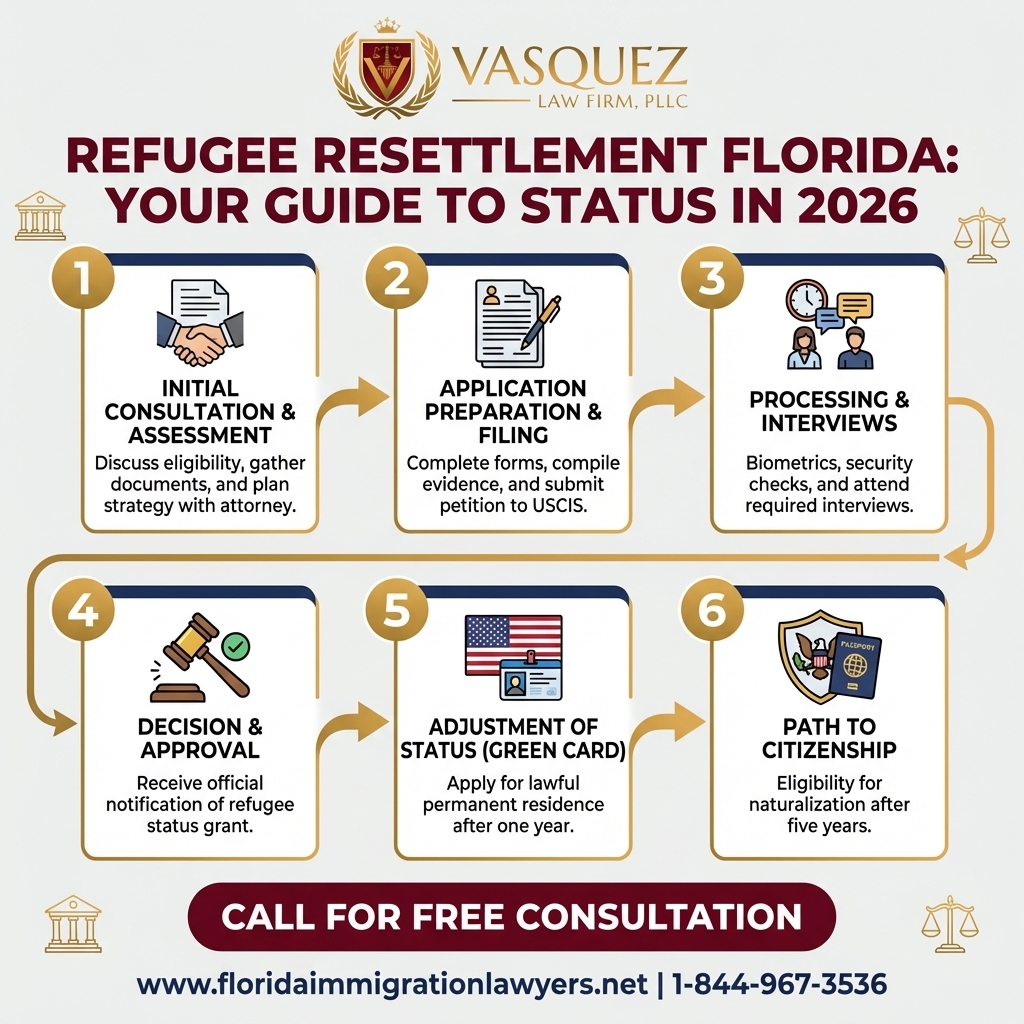
The path to refugee resettlement Florida is a detailed and often lengthy process. While the exact timeline can vary, understanding the general steps involved can help manage expectations and prepare for each stage. This guide outlines the typical journey from identification as a refugee to successful integration into a Florida community.
-
Referral to the U.S. Refugee Admissions Program (USRAP): The journey typically begins with a referral from the UNHCR, a U.S. embassy, or a designated non-governmental organization. These entities identify individuals who meet the refugee definition and are in need of resettlement to a third country. Without such a referral, direct application to the USRAP is generally not possible. This initial step can take considerable time as caseloads are often very high.
-
Pre-screening and Interview by Resettlement Support Centers (RSCs): Once referred, the case is forwarded to one of nine Resettlement Support Centers (RSCs) located around the world. RSCs collect biographical data, prepare cases for USCIS review, and conduct initial pre-screening interviews. They help compile the necessary documentation and ensure the refugee's story is clearly articulated before the formal USCIS interview.
-
USCIS Interview and Adjudication: A USCIS officer conducts a thorough interview with the refugee applicant. This is a critical stage where the applicant must demonstrate a well-founded fear of persecution. The officer reviews all documentation, listens to the applicant's testimony, and determines if they meet the legal definition of a refugee. This interview often takes place in the country of asylum or a nearby processing location.
-
Security Clearances and Medical Examination: If provisionally approved by USCIS, the applicant undergoes extensive security checks by various U.S. government agencies. This multi-layered vetting process is designed to ensure national security. Simultaneously, a medical examination is conducted by an approved physician to screen for communicable diseases and ensure the applicant meets U.S. health admissibility requirements.
-
Cultural Orientation and Assignment to a Resettlement Agency: Prior to departure, refugees attend cultural orientation sessions, providing them with basic information about life in the United States, including laws, customs, and expectations. Concurrently, the Department of State's Bureau of Population, Refugees, and Migration (PRM) assigns the refugee to a specific resettlement agency in a U.S. city, often in Florida, based on factors like family ties, medical needs, and community capacity.
-
Travel to the United States and Initial Resettlement: Once all clearances are complete, travel arrangements are made. Upon arrival in Florida, the assigned resettlement agency meets the refugee at the airport and begins providing immediate support. This includes securing initial housing, furnishing an apartment, helping with school enrollment for children, applying for social security, and connecting them to local resources. The agency works to ensure a smooth transition into their new community.
Essential Documents for Refugee Resettlement in Florida
Preparing the correct documentation is a cornerstone of a successful refugee resettlement Florida process. While many documents are collected and processed by agencies like UNHCR and USCIS, understanding what is needed and having any personal copies readily available can significantly streamline your case. Missing or incorrect documents can cause substantial delays, impacting your journey to a new life.
Here is a general checklist of documents and information typically involved in refugee resettlement. It is crucial to note that specific requirements may vary based on your country of origin, the specific circumstances of your persecution, and the processing agency. Always consult with your legal counsel or case worker to ensure you have everything required for your unique situation.
- UNHCR Registration Documents: Your refugee registration card or proof of registration with UNHCR is often the foundational document, validating your status as a refugee abroad.
- Identity Documents: Any available national identity cards, passports (even if expired), birth certificates, marriage certificates, or other official identification from your country of origin. These help establish your identity and family composition.
- Biographical Information: Detailed personal information including full legal name, date and place of birth, nationality, ethnicity, religion, and family relationships. Accuracy in this information is paramount.
- Proof of Persecution: While not always a physical document, any evidence supporting your claim of persecution, such as police reports, court documents, threats, or media articles, can strengthen your case.
- Medical Records: While a new medical exam will be conducted, any existing medical records, especially vaccination records or information on chronic conditions, can be helpful for continuity of care upon arrival.
- Educational and Employment Records: Diplomas, school transcripts, professional licenses, or employment letters can assist with job placement and educational enrollment in Florida.
- Family Information: Comprehensive details about immediate and extended family members, including names, birthdates, and current locations, especially for any family members who may be joining you or for whom you might later file a petition.
- Travel Documents: Any travel documents issued by the U.S. government or international organizations for your journey to the United States.
Remember, all documents not in English will need to be translated by a certified translator. Retain copies of all submitted documents for your records. If you have concerns about obtaining any of these documents, discuss them immediately with your RSC caseworker or Florida Immigration Lawyers. We can help you understand the requirements and navigate potential challenges.
Timelines and Processing Expectations for Refugee Cases in Florida
The timeline for refugee resettlement Florida can be extensive, often spanning several years from the initial referral to arrival in the United States. This lengthy duration is a direct result of the meticulous vetting process, security checks, and logistical coordination required to ensure the safety and well-being of both refugees and U.S. communities. It is important to approach this process with patience and realistic expectations.
After a UNHCR referral, the initial stages involving pre-screening and USCIS interviews can take anywhere from 1 to 3 years, depending on the volume of cases, the complexity of individual circumstances, and the country of origin. Security clearances, which involve multiple U.S. government agencies, are a critical component and can add another 6 months to 2 years to the overall timeline. These checks are continuously updated, which can sometimes lead to further delays if new information emerges or if a check expires before travel.
Medical examinations are typically scheduled closer to the departure date and usually take a few weeks to process. Once all approvals are in place, the final steps of cultural orientation, assignment to a resettlement agency, and travel arrangements usually occur within a few months. However, unforeseen global events, changes in U.S. immigration policy, or administrative backlogs can always impact these estimates.
For those awaiting resettlement in Florida, state-specific factors generally do not significantly alter federal processing times, as the adjudication is handled at the federal level. However, the availability of resettlement agency capacity in Florida cities like Tallahassee, Orlando, or Miami can influence how quickly a refugee is assigned to a specific location and receives initial support. The U.S. Department of State provides statistics on refugee arrivals by state, reflecting Florida's consistent role in welcoming new populations.
Factors Influencing Processing Times
Several factors can influence the overall processing time for a refugee case:
- Country of Origin: Cases from certain countries may undergo more intensive security screening due to geopolitical considerations.
- Family Composition: Cases involving large families or complex family reunification issues can sometimes take longer to process.
- Security Clearance Renewals: Security checks have expiration dates, and if they expire before travel, they must be re-run, causing delays.
- Policy Changes: Shifts in U.S. immigration policy or the annual refugee admissions ceiling can directly impact processing speeds and availability of slots.
- Administrative Backlogs: High volumes of applications or staffing shortages at USCIS or RSCs can lead to significant delays.
If you are experiencing unusually long delays or have concerns about your case, it is advisable to seek legal counsel. Florida Immigration Lawyers can help investigate the status of your application and advocate on your behalf. Delays can be frustrating, but with proper legal guidance, you can navigate these challenges more effectively. If you are concerned about potential deportation due to delays, learn more about deportation defense options.
Cost Factors and Financial Considerations for Resettlement
Understanding the financial aspects of refugee resettlement Florida is essential for new arrivals. While the U.S. government and resettlement agencies provide initial support, refugees are expected to become self-sufficient relatively quickly. This section outlines the typical costs and available financial assistance.
Refugees generally do not pay for their travel to the United States. These costs are typically covered through a loan from the International Organization for Migration (IOM), which refugees are expected to repay over time. Upon arrival in Florida, resettlement agencies receive federal funds to provide initial assistance, including:
- Housing: Assistance with securing and furnishing initial housing, often for the first 30-90 days.
- Basic Needs: Provision of food, clothing, and essential household items.
- Cash Assistance: Limited financial aid for living expenses, typically for a short period.
- Medical Care: Access to initial health screenings and enrollment in Medicaid or other health programs.
Beyond this initial period, refugees are encouraged to find employment and begin supporting themselves. Resettlement agencies offer job placement services, English language training, and cultural orientation to facilitate this transition. In cities like Tallahassee, employment opportunities vary, and agencies work to match refugees with available jobs that align with their skills and experience.
Legal fees are another consideration. While some refugees may have their cases processed entirely through government agencies, others may benefit from legal representation, especially if their case is complex, involves family reunification, or faces challenges. Florida Immigration Lawyers offers free consultations to discuss your specific needs and can provide transparent information regarding legal service costs, which vary based on the complexity of the case.
Government Assistance Programs
Several federal and state programs are designed to support refugees beyond the initial resettlement phase:
- Refugee Cash Assistance (RCA): Provides temporary financial support for eligible refugees who are not eligible for other federal cash assistance programs.
- Refugee Medical Assistance (RMA): Offers temporary medical coverage for eligible refugees not covered by Medicaid or other health insurance.
- Food Stamps (SNAP): Eligibility for food assistance programs is often extended to refugees to help with food security.
- Employment and Training Services: Programs funded by the Office of Refugee Resettlement (ORR) provide vocational training, job search assistance, and English as a Second Language (ESL) classes.
These programs are vital safety nets, but they are temporary and designed to promote self-sufficiency. Understanding how to access and utilize these resources effectively is a key part of successful integration into Florida society. Our firm can help you navigate these resources or address any legal issues that arise during your resettlement journey.
Do not navigate this process alone. The complexities of refugee resettlement Florida require experienced legal guidance. Contact Florida Immigration Lawyers today for a free consultation and let us help you secure your future.
Common Mistakes to Avoid During Refugee Resettlement
The journey to refugee resettlement Florida is fraught with potential pitfalls that can delay or even jeopardize your case. Avoiding common mistakes is crucial for a smooth and successful transition. Being informed and proactive can save you significant stress and time.
-
Providing Inconsistent Information: Any discrepancies in your story or documentation during interviews can raise red flags and lead to suspicion, potentially resulting in delays or denial. Always be truthful and consistent.
-
Failing to Disclose All Relevant Information: Omitting details, even if seemingly minor, can be interpreted as an attempt to deceive. Full disclosure, guided by legal counsel, is always the best approach.
-
Missing Deadlines or Appointments: The refugee process involves strict deadlines for document submission and mandatory appointments for interviews and medical exams. Missing these can lead to significant delays or even case closure.
-
Not Understanding the Difference Between Refugee and Asylum: Confusing these two distinct legal statuses can lead to incorrect applications or misunderstandings during interviews. Refugees apply from outside the U.S., asylum seekers from within.
-
Failing to Seek Legal Counsel: Attempting to navigate the complex U.S. immigration system without an experienced attorney can lead to critical errors, missed opportunities, and unnecessary delays. An attorney ensures your rights are protected.
-
Poor Preparation for Interviews: Underestimating the importance of USCIS interviews can be detrimental. You must be prepared to articulate your fear of persecution clearly and consistently, often with the help of a translator.
-
Lack of Communication with Resettlement Agencies: Once assigned, maintaining open communication with your resettlement agency is vital. They are your primary resource for initial support; ignoring their outreach can hinder your integration.
-
Not Repaying Travel Loans: Refugees are generally responsible for repaying their travel loans from the IOM. Failing to do so can impact future immigration applications, such as for family members. Check details at State Department.
-
Ignoring Cultural Orientation: The cultural orientation sessions provide invaluable information about life in the U.S. Disregarding this guidance can lead to difficulties in social integration and understanding local laws.
-
Not Updating Contact Information: Moving or changing phone numbers without notifying USCIS and your resettlement agency can result in missed communications about critical case updates or appointments.
When to Call a Florida Immigration Lawyer
While government agencies and resettlement organizations provide significant support for refugee resettlement Florida, there are specific situations where the expertise of a qualified immigration lawyer becomes indispensable. Florida Immigration Lawyers are dedicated to protecting your rights and ensuring a smooth transition.
You should consider contacting an attorney if:
- Your Refugee Status is Denied: If your application for refugee status is denied by USCIS, an attorney can help you understand the reasons for denial and explore potential avenues for appeal or reconsideration, including options for asylum if you are already in the U.S.
- You Face Delays or Lack of Communication: Unexplained, prolonged delays in your processing, or if you are not receiving updates on your case, warrant legal intervention. An attorney can inquire with USCIS or the Executive Office for Immigration Review (EOIR) on your behalf.
- You Have Complex Family Reunification Needs: If you wish to petition for family members to join you in the U.S., or if your family's case is particularly complex, an attorney can guide you through the intricate family immigration process.
- You Have a Criminal Record or Admissibility Issues: Any past legal issues, even minor ones, can complicate your refugee status or eligibility for other benefits. An attorney can assess potential waivers or defense strategies.
- You Experience Issues with Resettlement Services: While rare, if you encounter significant problems with your assigned resettlement agency or feel your rights are not being upheld, legal counsel can provide advocacy.
- You Are Confused About Your Rights and Obligations: Understanding your legal rights and responsibilities as a refugee in the U.S. can be overwhelming. An attorney can clarify these and ensure you are fully informed.
- You Need to Adjust Your Status: After one year of continuous physical presence in the U.S., refugees are generally eligible to apply for adjustment of status to lawful permanent resident (green card holder). An attorney can assist with this crucial step towards citizenship.
Florida Immigration Lawyers has extensive experience in all aspects of immigration law. We offer compassionate and effective legal representation to refugees and immigrants across Florida, including Tallahassee, Orlando, and Miami. Our attorneys are ready to provide the dedicated support you need.
About Florida Immigration Lawyers
Florida Immigration Lawyers is a premier immigration law firm dedicated to serving individuals and families across the entire state of Florida. With a deep understanding of U.S. immigration law and a compassionate approach, we are committed to helping our clients achieve their immigration goals, whether it involves refugee resettlement Florida, asylum, family visas, or naturalization.
Our team of experienced attorneys provides comprehensive legal services, offering expert guidance through every stage of the immigration process. We pride ourselves on clear communication, aggressive advocacy, and a client-centered philosophy. We understand the unique challenges faced by immigrants and refugees, and we strive to provide not just legal advice, but also peace of mind.
We are available 24/7 to address your urgent needs and offer free consultations to discuss your specific situation. Our firm serves all of Florida, ensuring that no matter where you are in the state, expert legal help is within reach. Choose Florida Immigration Lawyers for dedicated, knowledgeable, and empathetic representation. Call us at 1-844-967-3536 or visit www.floridaimmigrationlawyers.net to learn more.
Sources and References
- U.S. Citizenship and Immigration Services (USCIS)
- Executive Office for Immigration Review (EOIR)
- U.S. Department of State - Bureau of Population, Refugees, and Migration (PRM)
- Immigration and Nationality Act (INA) Section 101(a)(42) - Definition of Refugee
- 8 U.S.C. Chapter 12 - Immigration and Nationality Act
- 8 CFR Part 207 - Refugee Status
- 8 CFR Part 209 - Adjustment of Status of Refugees and Aliens Granted Asylum
- United Nations High Commissioner for Refugees (UNHCR)
Related services: asylum application process, withholding of removal, humanitarian protection programs.
This article provides general legal information and is not intended as legal advice. Every case is unique, and outcomes depend on specific facts and circumstances. Contact an attorney for advice about your particular situation. Immigration laws are subject to change, and it is crucial to consult with a qualified legal professional for the most current and accurate guidance.
The journey to refugee resettlement Florida can be life-changing, but it requires careful navigation. Do not leave your future to chance. Let the experienced attorneys at Florida Immigration Lawyers provide the dedicated and knowledgeable legal support you deserve. We are committed to helping you and your family find safety and stability in Florida. Call us today at 1-844-967-3536 for a free, confidential consultation. Se Habla Espanol - Estamos aqui para ayudarle.
Do Not Navigate This Process Alone
Our experienced immigration attorneys are ready to fight for you. Get a free, confidential consultation today.
Se Habla Español
Frequently Asked Questions

William J. Vásquez
Founding Attorney · Vasquez Law Firm
U.S. Air Force veteran and immigration attorney with thousands of cases resolved. J.D., NCCU School of Law. AILA member. Admitted to the 4th, 5th, and 11th Circuit Courts.
Available 24/7 - Free Evaluations
Related Legal Services
Our Florida immigration attorneys can help you with deportation defense, citizenship and naturalization and family immigration services. Call today at 1-844-967-3536 for a free consultation.
Related Links
Related Topics
Free Legal Consultation
Discuss your case with our experienced attorneys. We're available 24/7.
Se Habla Español - Estamos aquí para ayudarle.
Related Articles
E-2 Visa for Florida Business Investors | VLF Florida
Discover how the E-2 investor visa can help you expand your business into Florida. Learn about requirements, the application process, and why Hialeah is an ideal location for investors. Call Florida Immigration Lawyers for a free consultation today.
Immediate Relative Petition in Florida: Key Insights
Filing an immediate relative petition in Florida can bring your family closer by securing a green card for your loved ones. Learn the steps, requirements, and common pitfalls to avoid. Contact Florida Immigration Lawyers for expert guidance and a free consultation.
Green Card Through Marriage in Florida: A 2026 Guide
Obtaining a green card through marriage in Florida involves several steps, including filing Form I-130 and attending an interview. Learn the process and avoid common pitfalls. Contact Florida Immigration Lawyers for guidance.
Diversity Visa: Green Card Lottery in Florida | VLF Florida
Explore the Diversity Visa Lottery process in Florida, including eligibility, application steps, and common pitfalls. Gain insights and expert advice from Florida Immigration Lawyers to maximize your chances of success.