Naturalization Process Florida Timeline 2026: Your Path to U.S. Citizenship
Navigating the naturalization process in Florida can feel complex, but understanding the timeline and requirements is crucial. This comprehensive guide covers the steps to U.S. citizenship, N-400 processing times, eligibility criteria, and common pitfalls for applicants in Florida, especially around Tampa. We provide essential information to help you prepare for your naturalization journey. Discover how Florida Immigration Lawyers can assist you every step of the way to achieve your American dream.
The naturalization process Florida timeline typically ranges from 6 months to over a year, depending on the USCIS field office (like Tampa or Orlando) and individual case complexities. This involves filing Form N-400, attending a biometrics appointment and interview, and taking the Oath of Allegiance. Eligibility requirements, such as continuous residence and good moral character, are fundamental.
- Eligibility is key, requiring continuous residence and good moral character.
- The Form N-400 is the primary application for naturalization.
- Processing times vary by USCIS office and can fluctuate.
- An interview and English/civics test are standard steps.
- Consulting a Florida immigration lawyer can streamline your path to U.S. citizenship.
Are you a lawful permanent resident in Florida dreaming of becoming a U.S. citizen? The naturalization process Florida timeline can seem daunting, but it represents a significant step towards fully embracing life in the United States. Many residents in Tampa and across Florida embark on this journey each year, seeking the stability and rights that come with U.S. citizenship.
This comprehensive guide will walk you through every stage of the naturalization process, focusing on what you can expect in Florida in 2026. We will cover eligibility, the N-400 application, interviews, and the factors influencing your N-400 processing time. Understanding these details is crucial for a successful application.
Don't navigate this complex path alone. For personalized guidance and to understand your specific eligibility, call Florida Immigration Lawyers at 1-844-967-3536 for a free consultation. Our experienced team is here to help you achieve your U.S. citizenship goals.
Understanding the Naturalization Process in Florida
Naturalization is the process by which a lawful permanent resident (Green Card holder) voluntarily becomes a U.S. citizen. This process grants you all the rights and responsibilities of native-born citizens, including the right to vote and hold certain federal jobs. It is a profound commitment to the United States.
For residents of Florida, the naturalization journey involves interacting with U.S. Citizenship and Immigration Services (USCIS) field offices, such as those in Tampa, Orlando, or Miami. Each office handles applications from its specific jurisdiction, influencing local processing times and procedures.
What is Naturalization?
Naturalization allows eligible immigrants to pledge allegiance to the United States and obtain full citizenship. This status offers enhanced security, simplifies international travel, and provides greater civic participation. It culminates a long journey for many individuals and families.
Achieving U.S. citizenship through naturalization is a testament to an individual's dedication to their new home. It solidifies their place within the American community. The process is governed by specific laws and regulations outlined in the Immigration and Nationality Act (INA).
Key Eligibility Requirements for U.S. Citizenship
To be eligible for naturalization, you must meet several strict requirements set forth by USCIS. These requirements ensure that only qualified individuals become citizens. Meeting these criteria is the first and most critical step in the naturalization process Florida timeline.
Generally, applicants must be at least 18 years old, be a lawful permanent resident for a specified period, demonstrate continuous residence and physical presence, and possess good moral character. They must also show an attachment to the principles of the U.S. Constitution and have a basic understanding of English and U.S. civics. These core eligibility criteria are detailed in INA Section 316 (8 U.S.C. § 1427) for general naturalization.
Continuous Residence and Physical Presence
One of the most critical U.S. citizenship requirements is maintaining continuous residence in the U.S. as a lawful permanent resident for at least five years immediately preceding the filing of Form N-400. If you are married to a U.S. citizen, this period may be reduced to three years under INA Section 319 (8 U.S.C. § 1430), provided certain conditions are met.
Continuous residence means you have not left the U.S. for extended periods that break the continuity of your residence. Additionally, you must have been physically present in the U.S. for at least half of the required continuous residence period. Absences from the U.S. can significantly impact your eligibility, especially if they exceed six months.
Good Moral Character (GMC)
Demonstrating good moral character (GMC) is another fundamental eligibility requirement for naturalization. USCIS evaluates your character based on your conduct during the statutory period (typically the 3 or 5 years before filing your application). Your entire history as a permanent resident may also be considered.
Certain actions, such as felony convictions, multiple misdemeanors, or engaging in certain unlawful acts, can indicate a lack of good moral character. These issues can lead to a denial of your N-400 application. It is essential to be truthful and disclose all relevant information about your past, as outlined in 8 CFR Part 316.10.
If you have any concerns about your good moral character, it is highly advisable to consult with a Florida immigration lawyer. They can assess your situation and advise on potential impacts on your U.S. citizenship application.
Step-by-Step Guide to Becoming a U.S. Citizen in Florida
The journey to U.S. citizenship follows a structured path. Understanding each step can help you prepare thoroughly and avoid common pitfalls. This guide outlines the typical stages of the naturalization process Florida timeline.
-
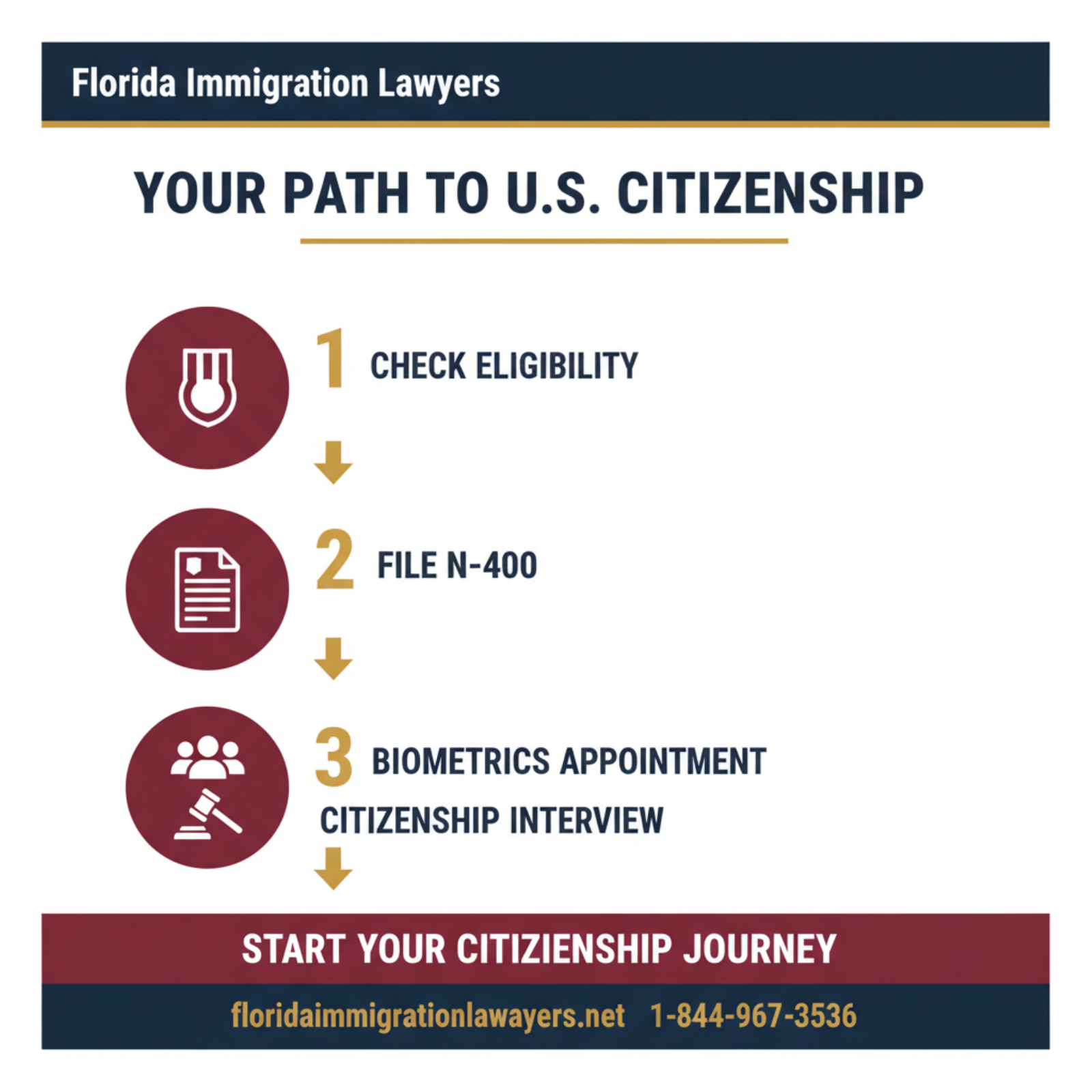
Step 1: Determine Eligibility
Before you even begin, confirm that you meet all the U.S. citizenship requirements. This includes age, lawful permanent resident status, continuous residence, physical presence, good moral character, English language proficiency, and knowledge of U.S. government and history. Reviewing these criteria carefully is paramount.
If you are unsure about any eligibility factor, especially concerning absences or past issues, seeking legal advice from a Florida immigration lawyer is a wise first step. They can help you assess your unique situation.
-
Step 2: Prepare and File Form N-400, Application for Naturalization
Once you confirm eligibility, the next step is to complete and file Form N-400. This application collects extensive personal information, including your residence history, employment, family details, and any criminal record. Accuracy and completeness are critical.
Gather all necessary supporting documents before you begin filling out the form. Any errors or omissions can cause significant delays in your N-400 processing time. We recommend making copies of everything you submit.
-
Step 3: Biometrics Appointment
After filing Form N-400, USCIS will send you an appointment notice for biometrics. This appointment typically occurs within a few weeks to a few months after filing. At the biometrics appointment, USCIS will collect your fingerprints, photograph, and signature.
These biometrics are used for background checks and to verify your identity. It is a mandatory step in the naturalization process Florida timeline and cannot be skipped. Ensure you attend this appointment as scheduled.
-
Step 4: The Naturalization Interview
Following successful background checks, you will receive an interview notice. This interview is a crucial part of the naturalization process where a USCIS officer will review your N-400 application with you. They will ask questions to verify the information you provided and assess your eligibility.
English and Civics Test
During the interview, you will also take an English language test and a civics test. The English test assesses your ability to read, write, and speak basic English. The civics test evaluates your knowledge of U.S. history and government. There are some exceptions to these tests for certain applicants based on age and length of permanent residency.
Thorough preparation for the interview and tests is vital. USCIS provides study materials for the civics test on its website. Practicing English can significantly boost your confidence for this stage.
-
Step 5: Decision on Your Application
After your interview, the USCIS officer will make a decision on your application. They may approve your application, deny it, or request additional information or documentation. Sometimes, a decision is made on the same day, while other times it may take several weeks or months.
If your application is approved, you will receive a notice for your Oath of Allegiance ceremony. If it is denied, the notice will explain the reasons for the denial. You may have options to appeal the decision or refile your application.
-
Step 6: The Oath of Allegiance Ceremony
The final step in becoming a U.S. citizen is taking the Oath of Allegiance at a naturalization ceremony. This is a solemn and meaningful event where you publicly declare your loyalty to the United States. During the ceremony, you will surrender your Green Card.
After taking the oath, you will receive your Certificate of Naturalization, which is proof of your U.S. citizenship. You can then use this certificate to apply for a U.S. passport and register to vote. This marks the culmination of your naturalization process Florida timeline journey.
Essential Documents for Your Naturalization Application
A complete application package is essential for a smooth naturalization process Florida timeline. Missing documents can cause significant delays. Gather these items carefully before filing your Form N-400.
Here is a general checklist of documents you will typically need to submit or bring to your interview:
- Your Green Card (Permanent Resident Card)
- State-issued identification (Driver's License or State ID)
- All passports, current and expired
- Marriage certificate (if applicable)
- Divorce decrees or death certificates for previous spouses (if applicable)
- Birth certificates of your children (if applicable)
- Evidence of selective service registration (for males 18-26)
- Certified court dispositions for any arrests or convictions, even if expunged
- Tax returns for the last five years (or three years if married to a U.S. citizen)
- Proof of payment of child support or alimony (if applicable)
- Travel records, including dates of all trips outside the U.S. since becoming a permanent resident
- Any documents related to military service (if applicable)
- Current filing fee payment (check or money order)
This list is not exhaustive, and USCIS may request additional documents based on your specific case. Always follow the instructions provided with the Form N-400 carefully. A Florida immigration lawyer can help you ensure your documentation is complete and accurate.
Naturalization Process Florida Timeline & Processing Expectations for 2026
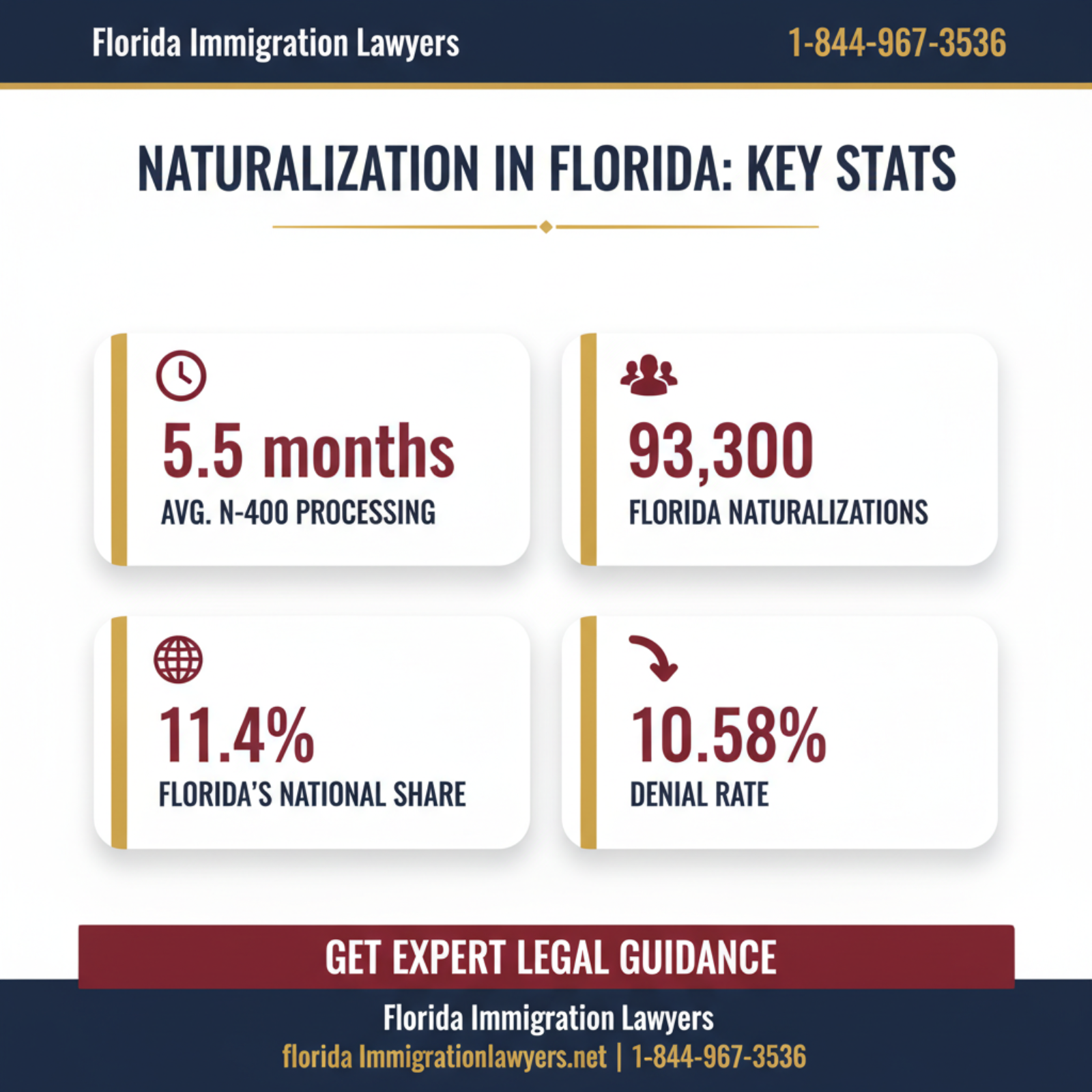
One of the most common questions applicants have is, "How long is the processing time for naturalization in Florida?" The answer is not always straightforward, as the naturalization process Florida timeline can vary significantly. Factors include the specific USCIS field office, current caseloads, the complexity of your individual case, and whether you respond promptly to requests for evidence.
As of 2026, USCIS continues to strive for efficiency, but applicants should prepare for a range of processing times. While some cases might be processed in six to eight months, others could take over a year. The USCIS processing times tool on their website provides estimates for each field office, including Tampa, Orlando, and Miami.
"Is USCIS processing faster in 2025?" While USCIS aims to reduce backlogs, processing times fluctuate. It's difficult to predict exact improvements year-over-year. The best approach is to monitor the official USCIS website for the most current data on USCIS processing times Florida. Your local field office's workload heavily influences your **N-400 processing time**.
For example, anecdotal evidence suggests that processing times in Tampa, Florida, might differ from those in Miami or Jacksonville. These variations are normal. We recommend checking the USCIS online tool frequently for updates relevant to your specific location. Be patient, but also be prepared to respond quickly to any USCIS communications.
Costs Associated with Naturalization: Fees and Financial Planning
The naturalization process involves several costs, primarily the USCIS filing fee for Form N-400. This fee is subject to change, so it's crucial to check the most current amount on the USCIS website before filing. There may also be a separate biometrics services fee, though it's often included in the N-400 fee.
Applicants with limited income may be eligible for a fee waiver or reduced fee. USCIS provides specific guidelines for these options. It's important to apply for a waiver if you qualify, as this can alleviate a significant financial burden associated with your U.S. citizenship application.
Beyond government fees, you might also consider the cost of legal assistance. Hiring a Florida immigration lawyer can be an invaluable investment. Legal fees cover professional guidance, assistance with documentation, interview preparation, and representation, potentially saving you time and avoiding costly mistakes in the long run. These fees vary based on the complexity of your case and the services required.
Planning for these expenses is an important part of your naturalization process Florida timeline. Ensure you have the necessary funds or have explored fee waiver options before beginning your application to avoid delays.
The journey to U.S. citizenship is deeply personal and often involves complex legal requirements. Trying to navigate the naturalization process Florida timeline without professional guidance can lead to delays or even denials. Do not navigate this process alone. Contact Florida Immigration Lawyers today for expert assistance, ensuring your application is strong and accurate from the start.
Common Mistakes to Avoid During Naturalization
The path to U.S. citizenship is filled with specific requirements, and even minor errors can lead to significant setbacks. Being aware of common mistakes can help you avoid them and ensure a smoother naturalization process Florida timeline.
-
Incomplete or Inaccurate Form N-400
Submitting an N-400 application with missing information or errors is a frequent cause of delays. USCIS may send a Request for Evidence (RFE) or even deny your application if it's not thoroughly completed. Always double-check every section and ensure all questions are answered truthfully and accurately.
-
Failure to Meet Continuous Residence Requirements
Many applicants misunderstand the continuous residence and physical presence rules. Extended trips outside the U.S. can break your continuous residence. Ensure you track your travel dates meticulously and understand how they impact your eligibility before filing.
-
Lack of Good Moral Character
Failing to disclose past criminal history, even minor offenses or those expunged, can be seen as a lack of good moral character. USCIS conducts thorough background checks. Any misrepresentation can lead to a denial and potentially more serious immigration consequences. Always be honest and provide all requested documentation.
-
Not Disclosing All Relevant Information
Beyond criminal history, applicants sometimes omit other crucial details, such as past marriages, children, or financial obligations. Full disclosure is mandatory. Any attempt to conceal information can be detrimental to your U.S. citizenship application.
-
Missing Deadlines or Appointments
USCIS operates on strict timelines. Missing a biometrics appointment, an interview, or failing to respond to an RFE by the deadline can result in your application being denied or administratively closed. Always keep track of all correspondence and respond promptly.
-
Inadequate Preparation for the Interview
The naturalization interview is a critical stage. Many applicants underestimate the importance of preparing for the English and civics tests, or for the questions about their N-400 application. A lack of preparation can lead to failure and the need to re-interview.
-
Ignoring Changes in Law or Policy
Immigration laws and policies can change. An application filed years ago under old rules may not be compliant with current regulations. Staying informed or consulting a Florida immigration lawyer is essential to ensure your application meets the latest requirements for naturalization.
When to Call a Lawyer for Your Naturalization Application
While some naturalization cases are straightforward, many can benefit significantly from legal counsel. A Florida immigration lawyer can provide invaluable support throughout the naturalization process Florida timeline, helping you navigate complex legal issues and avoid common pitfalls.
You should consider contacting Florida Immigration Lawyers if you encounter any of the following scenarios:
- You have a criminal record, even if it's minor or from years ago. Certain offenses can bar you from demonstrating good moral character.
- You have had extended absences from the U.S. that might affect your continuous residence or physical presence requirements.
- Your previous immigration applications have been denied or encountered problems.
- You have concerns about your ability to pass the English or civics test, or you qualify for an exemption.
- You have unique circumstances, such as military service, marriage to a U.S. citizen with a complex history, or other factors that make your case non-standard.
- You have received a Request for Evidence (RFE) or a Notice of Intent to Deny (NOID) from USCIS.
- You are facing deportation defense proceedings or have an order of removal.
- Your underlying Green Card was obtained through a complex process, such as family immigration with issues or asylum.
Our firm specializes in helping individuals like you achieve their dream of U.S. citizenship. We understand the specific challenges faced by applicants in Florida, including those in Tampa and surrounding areas. Don't take chances with your future. Contact our firm for expert advice tailored to your specific situation.
About Florida Immigration Lawyers
Florida Immigration Lawyers is a leading immigration law firm dedicated to serving individuals and families across the entire state of Florida. With years of experience and a deep understanding of U.S. immigration law, our compassionate and skilled legal team is committed to providing exceptional service and achieving the best possible outcomes for our clients.
We offer comprehensive legal services for a wide range of immigration matters, including naturalization, family-based visas, employment visas, asylum, and deportation defense. Our firm prides itself on personalized attention, clear communication, and unwavering advocacy for our clients.
Why choose Florida Immigration Lawyers? We offer free consultations, are available 24/7 to address your urgent needs, and our bilingual staff ensures that language is never a barrier to quality legal representation. We are passionate about helping our Florida community navigate the complexities of immigration law. Call us at 1-844-967-3536 or visit https://www.floridaimmigrationlawyers.net to learn more.
Sources and References
- U.S. Citizenship and Immigration Services (USCIS)
- Form N-400, Application for Naturalization - USCIS
- USCIS Check Case Processing Times
- USCIS Policy Manual - Volume 12, Part D, Chapter 2 (Eligibility Requirements)
- Executive Office for Immigration Review (EOIR) - U.S. Department of Justice
- Immigration and Nationality Act (INA) Section 316 (8 U.S.C. § 1427) - General Requirements for Naturalization
- Immigration and Nationality Act (INA) Section 319 (8 U.S.C. § 1430) - Naturalization of Spouses of U.S. Citizens
- 8 Code of Federal Regulations (CFR) Part 316 - General Requirements for Naturalization
This article provides general legal information and is not intended as legal advice. Every case is unique, and outcomes depend on specific facts and circumstances. Contact an attorney for advice about your particular situation.
Achieving U.S. citizenship is a momentous occasion, and at Florida Immigration Lawyers, we are dedicated to helping you reach that goal. Our experienced legal team understands the intricacies of the naturalization process Florida timeline and is ready to provide the support you need. Don't leave your future to chance. Call us today at 1-844-967-3536 for a free, confidential consultation. Se Habla Español - Estamos aquí para ayudarle.
Florida Immigration Lawyers
Legal Team
Our experienced attorneys at Florida Immigration Lawyers have been serving clients across Florida for over 20 years. We specialize in immigration, personal injury, criminal defense, workers compensation, and family law.