Green Card Renewal Florida: Your 2026 Guide to I-90 Process
For permanent residents in Florida, renewing your green card is essential to maintain legal status. This 2026 guide details the Form I-90 process, from eligibility and required documents to understanding fees and processing times. Learn how to navigate your green card renewal smoothly, whether you're in Hialeah or elsewhere in the state. Avoid common mistakes and understand when legal assistance is crucial. Florida Immigration Lawyers provides expert guidance, ensuring your application is accurate and submitted correctly. Contact us for a free consultation to secure your future as a permanent resident.

Renewing your green card in Florida typically involves filing Form I-90, Application to Replace Permanent Resident Card, with USCIS. This process ensures your continued legal permanent resident status. You generally need to file within six months of your card's expiration date, providing necessary documentation and paying applicable fees. The process can often be completed online or by mail, with varying processing times.
- File Form I-90 with USCIS to renew your permanent resident card.
- Start the green card renewal process within six months of expiration.
- Gather essential documents like your expiring green card and identification.
- Processing times vary, so plan ahead for your green card renewal.
- Consult an attorney for complex cases or specific guidance.
As a permanent resident in Florida, your green card is your vital proof of status. Whether you're enjoying the vibrant community of Hialeah, the sunny beaches of Miami, or the bustling cities across our state, ensuring your legal documentation is current is paramount. The prospect of renewing your permanent resident card, often called a green card renewal, can seem daunting, but understanding the process is the first step towards a smooth transition.
This comprehensive guide from Florida Immigration Lawyers will walk you through the specifics of the green card renewal process for 2026, focusing on what you need to know if you reside in Florida. We'll cover everything from eligibility and documentation to filing procedures and what to expect after you submit your application. Our goal is to demystify the Form I-90 process and empower you with the knowledge to maintain your legal status.
Do not let the complexities of immigration law overwhelm you. For personalized assistance and to ensure your application is handled correctly, call Florida Immigration Lawyers at 1-844-967-3536 for a free consultation. Our dedicated team is here to support you every step of the way.
Understanding Your Green Card Renewal in Florida
Your permanent resident card, or green card, is typically valid for 10 years. For conditional permanent residents, the card is valid for 2 years and requires a different process to remove conditions (Form I-751). This guide focuses on the renewal of a 10-year green card using Form I-90.
Living in Florida, you are part of a diverse and dynamic immigrant community. Maintaining your legal status as a permanent resident is crucial for employment, travel, and enjoying the full benefits of your residency. A timely green card renewal ensures there are no disruptions to your life.
Who Needs to Renew Their Green Card?
You generally need to renew your green card if it is expired or will expire within the next six months. This applies to most permanent resident cardholders with a 10-year validity period. You may also need to replace your card if it was lost, stolen, damaged, or contains incorrect information, or if you have legally changed your name.
It's important to note that renewing your green card does not mean you are reapplying for permanent residency. It is simply updating your proof of status. Your status as a permanent resident is already established. If you are eligible for naturalization, you may consider applying for U.S. citizenship instead of renewing your green card, as this would eliminate the need for future renewals.
Key Reasons for Filing Form I-90
Form I-90, officially known as the Application to Replace Permanent Resident Card, is the primary form used for green card renewal. You would file this form for several reasons, including:
- Your previous card has expired or will expire within 6 months.
- Your previous card was lost, stolen, mutilated, or destroyed.
- You never received the previous card.
- Your card has incorrect data due to a USCIS error.
- Your card has incorrect data not due to a USCIS error (requires a fee).
- You have legally changed your name.
- You are a commuter immigrant (Form I-551) and are taking up permanent residence in the U.S.
- You have reached your 14th birthday and were issued a card that expires after your 16th birthday.
Understanding the specific reason for your application is critical, as it impacts the questions you answer on the I-90 form and potentially the required documentation. For residents of Hialeah and other Florida communities, staying informed is key.
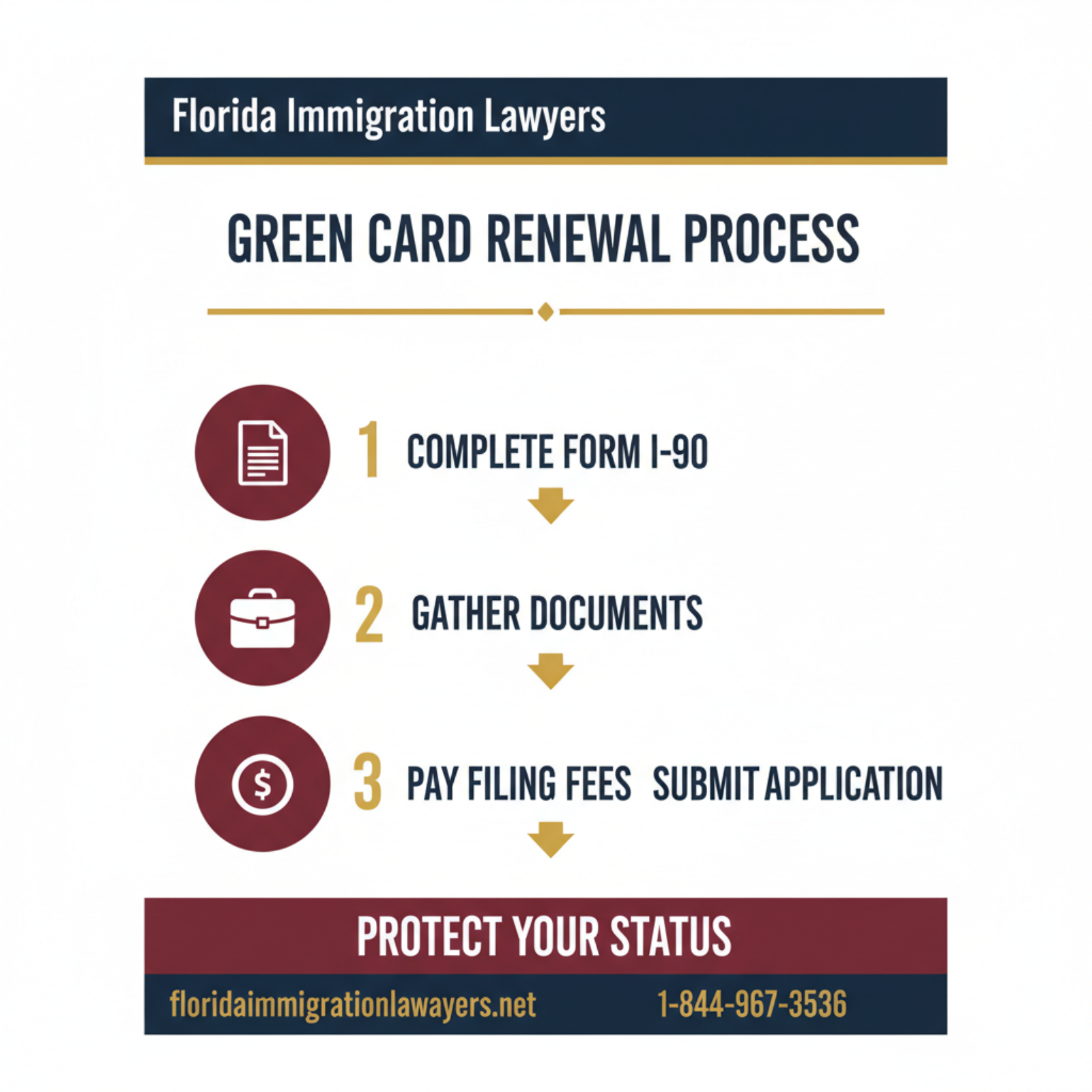
The Step-by-Step Green Card Renewal Process (Form I-90)
The green card renewal process, while standardized nationwide, has particular considerations for Florida residents who interact with various USCIS field offices such as those in Miami, Orlando, or Tampa. Following these steps carefully will help ensure a smooth application.
-
Determine Your Eligibility and Reason for Renewal:
Before you begin, confirm that you are a 10-year permanent resident and that your reason for filing Form I-90 fits one of the categories listed above. If you are a conditional resident, you must file Form I-751 instead. If you are close to being eligible for U.S. citizenship, consider exploring that path as an alternative to renewal. Our team at Florida Immigration Lawyers can help you assess your options, including naturalization.
-
Gather Required Documents:
Collect all necessary supporting documents. The most critical item is your expiring or expired green card. Depending on your specific situation (e.g., name change, lost card), you may need additional evidence. We will provide a detailed checklist shortly. Ensure all documents are clear and legible.
-
Complete Form I-90, Application to Replace Permanent Resident Card:
You can file Form I-90 either online through the USCIS website or by mail. Filing online is generally recommended for its convenience and ability to track your application. If you choose to file online, you will create a USCIS online account. Be meticulous when filling out the form; any errors can cause delays. Answer all questions truthfully and accurately.
For those preferring a physical application, you can download the Green Card Renewal Form PDF from the USCIS website and mail it to the appropriate address. Always refer to the most current instructions provided by USCIS for filing addresses and procedures.
-
Pay the Filing Fee (if applicable):
Most applicants are required to pay a filing fee for Form I-90, plus a biometric services fee. Fee amounts are subject to change, so always check the official USCIS website for the most current information. Fee waivers may be available for certain low-income individuals. Do not send cash through the mail. Acceptable payment methods include money order, personal check, cashier's check, or credit card (using Form G-1450). If filing online, you can pay directly through the USCIS online system.
-
Submit Your Application:
If filing online, submit your completed form and uploaded documents through your USCIS account. If filing by mail, send your completed Form I-90, supporting documents, and payment to the address specified in the form instructions. It is advisable to send mail applications via certified mail with a return receipt requested to confirm delivery.
-
Attend Biometrics Appointment:
After submitting your application, USCIS will send you an appointment notice for biometrics (fingerprints, photograph, signature). This appointment will typically take place at a local Application Support Center (ASC) in Florida, such as the one in Hialeah or other major cities. It is mandatory to attend this appointment. Bring your appointment notice and a valid photo ID.
-
Receive Your New Green Card:
Once your application is processed and approved, USCIS will mail your new permanent resident card to the address you provided. Ensure your address is always up-to-date with USCIS to avoid delays or lost mail. You can update your address online through your USCIS account or by filing Form AR-11, Alien's Change of Address Card.
Essential Documents for Your I-90 Application
Having all your documents in order is critical for a successful green card renewal. The exact documents required can vary slightly depending on your specific reason for filing Form I-90. However, some documents are universally important.
General Documents for Green Card Renewal
- Copy of your expiring or expired Permanent Resident Card (Form I-551).
- Copy of a government-issued identification document (e.g., driver's license, state ID).
- Passport-style photographs (if required, check current I-90 instructions).
Additional Documents for Specific Situations
- Lost, Stolen, or Damaged Card: A sworn statement explaining the circumstances of the loss or damage, along with any police reports if applicable.
- Name Change: A copy of your marriage certificate, divorce decree, or court order showing your legal name change.
- Incorrect Information Due to USCIS Error: The card containing the error, along with any supporting documentation that proves the correct information (e.g., birth certificate, passport).
- Incorrect Information Not Due to USCIS Error: The card containing the error, along with supporting documentation that proves the correct information. Note that this scenario typically requires payment of the filing fee.
It is always advisable to keep copies of all documents submitted for your own records. Do not send original documents unless specifically requested by USCIS. For Floridians, having these documents organized before you begin the I-90 application will save time and reduce stress.
Green Card Renewal Processing Times and What to Expect in 2026
One of the most common questions we receive at Florida Immigration Lawyers is, "How long will my green card renewal take?" Processing times for Form I-90 can fluctuate significantly based on various factors, including the volume of applications USCIS receives and the specific service center handling your case. While we cannot guarantee specific timelines, we can offer general expectations for 2026.
Current Processing Time Estimates
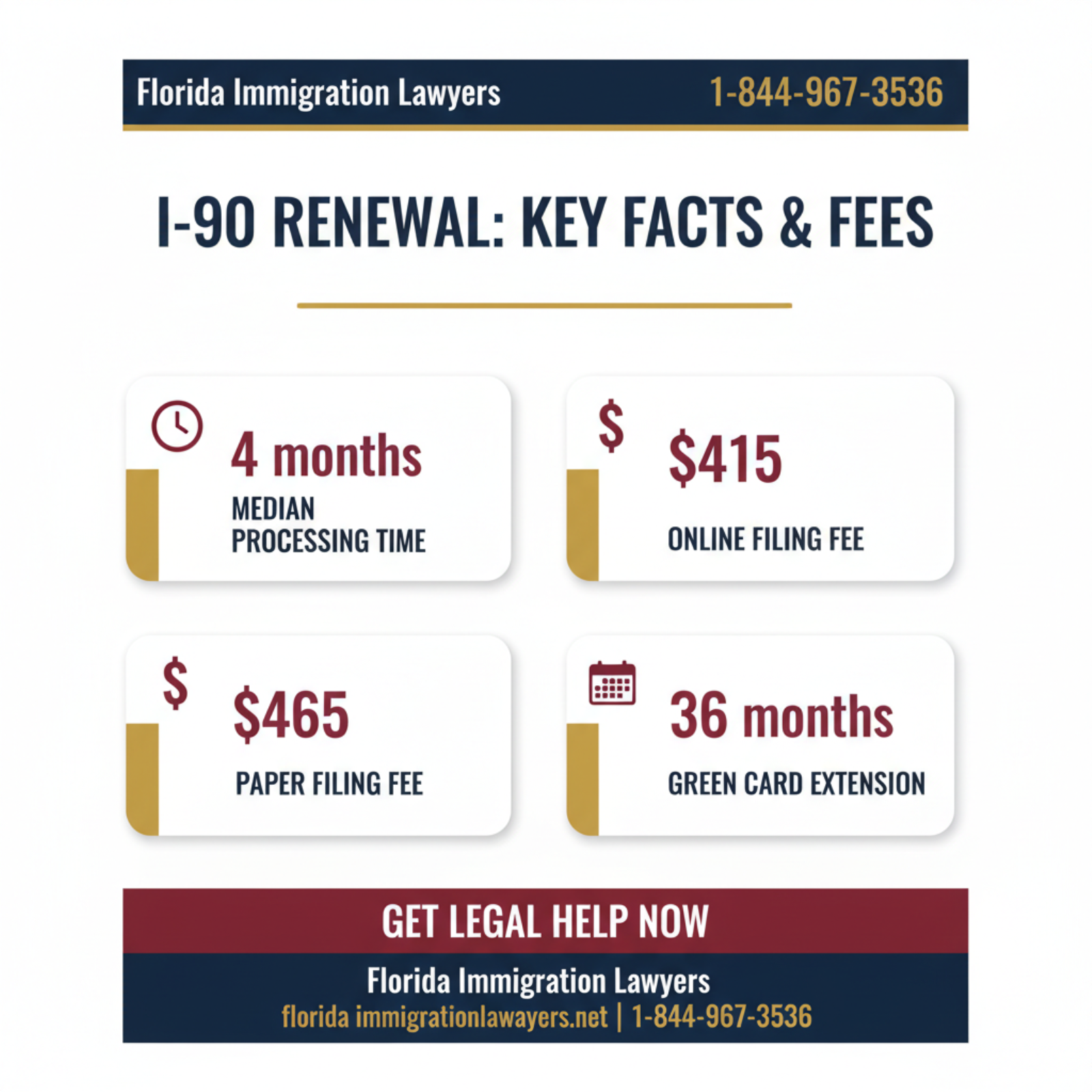
Typically, green card renewal processing time can range from several months to over a year. The USCIS website provides a tool to check current processing times by form type and field office or service center. We strongly recommend checking this resource regularly for the most up-to-date information relevant to your application.
It is crucial to file your Form I-90 well in advance of your green card's expiration date, ideally within six months. This allows ample time for processing and helps prevent gaps in your proof of status. If your card expires while your renewal application is pending, USCIS may issue an extension sticker or an I-797C, Notice of Action, which can serve as temporary proof of your permanent resident status for up to 24 months from the expiration date on your card. This is particularly important for travel and employment.
What Happens After Filing?
After you file your application, you will receive a receipt notice (Form I-797C) from USCIS confirming they have received your Form I-90. This notice is important for tracking your case status online using the receipt number provided. You will then receive a biometrics appointment notice. After biometrics, your case will be reviewed, and eventually, a decision will be made.
Throughout this period, especially for those in Florida who may need to travel or maintain employment, having proof of your extended status is vital. Always carry your expired green card along with your I-797C notice if your card has expired but your renewal is pending. For any concerns about your individual case timeline, do not hesitate to contact Florida Immigration Lawyers.
Understanding Green Card Renewal Costs and Fees
The cost associated with your green card renewal is an important consideration. It primarily consists of the USCIS filing fee for Form I-90 and, in most cases, a biometric services fee. These fees are subject to change, so always verify the current amounts directly on the official USCIS website before filing.
I-90 Filing Fee Breakdown
As of early 2026, the filing fee for Form I-90 typically applies to most applicants, alongside a separate biometric services fee. There are specific circumstances where the filing fee may be waived, such as if USCIS made an error on your previous card. However, the biometric services fee is almost always required unless you are exempt by age or specific circumstances.
It is important to prepare for these costs. If you are facing financial hardship, you may be eligible to request a fee waiver by submitting Form I-912, Request for Fee Waiver. Eligibility for a fee waiver is based on specific income guidelines or receipt of means-tested benefits. Our attorneys can help you determine if you qualify.
Do not navigate this complex process alone. Contact Florida Immigration Lawyers today to ensure your application is complete and correctly filed. We are here to provide expert guidance tailored to your specific situation.
Common Mistakes to Avoid During Green Card Renewal
Renewing your green card should be a straightforward process, but common errors can lead to delays or even denial. Being aware of these pitfalls can save you significant time and stress, particularly for residents navigating the USCIS system in Florida.
-
Filing the Wrong Form:
A common mistake is filing Form I-90 when you should be filing Form I-751 (Petition to Remove Conditions on Residence) for a 2-year conditional green card. Filing the incorrect form will lead to rejection and significant delays.
-
Failing to Renew on Time:
Waiting until your green card is already expired can create issues, especially with employment or travel. While you can still renew an expired card, it is best to file within six months of its expiration. This ensures continuous valid proof of status.
-
Incomplete or Inaccurate Form I-90:
Missing information, incorrect dates, or typographical errors on your Form I-90 can cause your application to be rejected or delayed. Double-check every section before submission. This is a primary reason for RFE (Request for Evidence) notices.
-
Not Including All Required Documents:
Failing to submit copies of your expiring green card or other necessary supporting evidence will lead to processing delays. Always refer to the latest USCIS instructions and our document checklist.
-
Incorrect Fee Payment:
Sending the wrong fee amount, using an outdated payment method, or failing to include the biometric fee will result in your application being returned. Always verify current fees on the USCIS website.
-
Missing the Biometrics Appointment:
Failure to attend your scheduled biometrics appointment without proper rescheduling can lead to denial of your application. These appointments are mandatory for identity verification.
-
Not Updating Your Address with USCIS:
If you move while your green card renewal application is pending, you must update your address with USCIS immediately using Form AR-11. Failure to do so can result in important notices or your new green card being sent to the wrong address.
-
Assuming You Cannot Travel with an Expired Card:
While challenging, it is often possible to travel internationally with an expired green card and a valid I-797C notice extending your status. However, it's always best to consult with an attorney before making travel plans.
-
Not Seeking Legal Advice for Complex Cases:
If you have a criminal record, previous immigration violations, or other complexities, attempting to renew your green card without legal counsel can be risky. An attorney can identify potential issues and advise on the best course of action.
-
Falling for Scams:
Be wary of individuals or organizations that promise expedited processing or guaranteed results for a high fee. Only licensed attorneys or accredited representatives can provide legal advice. Always verify credentials.
When to Call a Lawyer for Your Green Card Renewal
While the green card renewal process for a 10-year card is often straightforward, there are many situations where the expertise of an immigration attorney becomes invaluable. Florida Immigration Lawyers is here to provide the guidance you need, ensuring your application is handled with precision and care.
Specific Scenarios Requiring Legal Help
- Criminal History: If you have any arrests or convictions, even minor ones, they could impact your eligibility for renewal. An attorney can assess the implications and help you prepare a strong case.
- Previous Deportation or Removal Orders: These are serious issues that require immediate legal counsel. Do not attempt to file without professional guidance.
- Extended Stays Outside the U.S.: If you have spent significant time outside the United States, especially more than six months at a time, your continuous residency may be questioned. An attorney can help explain the impact on your status.
- Lost or Stolen Card with Complex History: While losing a card is common, if your immigration history has complexities, an attorney can help ensure all aspects are addressed in your replacement application.
- USCIS Errors or Discrepancies: If you believe USCIS made an error on your previous card, an attorney can help you gather evidence and clearly articulate your case.
- Conditional Green Card Holders: If you have a 2-year conditional green card, you must file Form I-751 to remove conditions, not Form I-90. An attorney can guide you through this distinct and often more complex process.
- Considering Naturalization: If you are eligible for U.S. citizenship, an attorney can help you weigh the pros and cons of renewing your green card versus applying for naturalization, and guide you through the citizenship process. Our firm specializes in citizenship applications.
Why Choose Florida Immigration Lawyers?
Our experienced immigration attorneys understand the nuances of U.S. immigration law and the specific needs of Florida's diverse population, from Hialeah to Jacksonville. We offer comprehensive services for all aspects of permanent resident status, including general immigration matters, deportation defense, and family-based petitions.
We are committed to providing empathetic, client-focused representation. Our goal is to make your green card renewal as stress-free as possible, ensuring you maintain your legal status and continue to thrive in Florida. Do not leave your future to chance. Let us be your trusted legal partners.
About Florida Immigration Lawyers
Florida Immigration Lawyers is a leading immigration law firm dedicated to serving individuals and families across the entire state of Florida. With a deep understanding of U.S. immigration laws and a commitment to our clients, we provide expert legal representation for a wide range of immigration matters.
Our firm specializes in areas such as family immigration, business immigration, asylum claims, deportation defense, and naturalization. We are passionate about helping immigrants achieve their American dreams, offering personalized strategies and unwavering support through every legal challenge.
Choosing Florida Immigration Lawyers means choosing a team that is available 24/7, offers free consultations, and is fluent in both English and Spanish to better serve our diverse clientele. We pride ourselves on our client-centered approach and our track record of success. Your immigration journey is our priority.
Visit our website at https://www.floridaimmigrationlawyers.net to learn more about our services or to schedule your free consultation today. We are here to help you navigate the complexities of immigration law with confidence.
Sources and References
- U.S. Citizenship and Immigration Services (USCIS) - Form I-90
- U.S. Citizenship and Immigration Services (USCIS) - Form I-912
- USCIS Policy Manual
- 8 U.S.C. § 1304 - Forms for registration and fingerprinting
- 8 CFR Part 264 - Registration and Fingerprinting of Aliens
- Immigration and Nationality Act (INA) § 264 - Forms for Registration and Fingerprinting
This article provides general legal information and is not intended as legal advice. Every case is unique, and outcomes depend on specific facts and circumstances. Contact an attorney for advice about your particular situation.
Your journey as a permanent resident in Florida is important, and maintaining your status through a timely green card renewal is a crucial step. Do not delay in securing your future. If you have questions about the I-90 process or need assistance with your application, our compassionate and knowledgeable team is ready to help.
Reach out to Florida Immigration Lawyers today for a free, confidential consultation. Call us at 1-844-967-3536. Se Habla Español - Estamos aquí para ayudarle.
Do Not Navigate This Process Alone
Our experienced immigration attorneys are ready to fight for you. Get a free, confidential consultation today.
Se Habla Español
Or leave your details and we’ll call you:
Free Evaluation in 24 Hours
Or talk to us right now

AI voice assistant — available 24/7
FreeFrequently Asked Questions

William J. Vásquez
Founding Attorney · Vasquez Law Firm
U.S. Air Force veteran and immigration attorney with years of hands-on U.S. immigration experience. J.D., NCCU School of Law. AILA member. Admitted to the 4th, 5th, and 11th Circuit Courts.
Available 24/7 - Free Evaluations
Reviewed for legal accuracy by William J. Vásquez
Licensed in North Carolina; U.S. immigration is federal practice.
Related Legal Services
Our Florida immigration attorneys can help you with immigration practice areas, free immigration consultation and experienced immigration attorneys. Call today at 1-844-967-3536 for a free consultation.
Related Links
Related Topics
Free Legal Consultation
Discuss your case with our experienced attorneys. We're available 24/7.
Se Habla Español - Estamos aquí para ayudarle.
Related Articles
Schedule A Nurse Immigration in Florida 2026 Guide
Discover the comprehensive guide to Schedule A nurse immigration in Florida for 2026. This specialized pathway allows foreign registered nurses to bypass the standard labor certification process, leading to an expedited EB-3 Green Card. Learn about eligibility requirements, the step-by-step application process, expected timelines, and associated costs. We also cover unique challenges for foreign nurses in Florida, including state licensing and the vital role of sponsoring hospitals. Avoid common mistakes and understand when professional legal assistance from Florida Immigration Lawyers is essential for a successful permanent residency application. Our firm provides expert guidance for nurses seeking to thrive in Florida's healthcare system.
Orlando Immigration Lawyer: Free Consultation Guide 2026
Discover how an Orlando immigration lawyer can provide essential guidance through complex U.S. immigration processes. This comprehensive guide details the benefits of a free consultation, outlines common immigration services, explains how to prepare for your meeting, and discusses typical timelines and fee structures in Florida for 2026. Learn to avoid common mistakes and understand when professional legal counsel is indispensable, especially amidst evolving immigration policies. Florida Immigration Lawyers offers expert support for visas, green cards, citizenship, and deportation defense across the state.
Removal Conditional Green Card Process in Florida 2026
For individuals with a two-year conditional green card obtained through marriage, the process of removing conditions is a critical next step. This involves filing Form I-751, Petition to Remove Conditions on Residence, within a strict 90-day window before expiration. This guide, relevant for 2026, details the required documentation, filing timelines, potential costs, and crucial waivers for special circumstances like divorce or abuse. It also highlights common mistakes to avoid and emphasizes the importance of demonstrating a bona fide marriage to USCIS. For residents across Florida, from Gainesville to Miami, understanding these requirements is vital to transitioning to permanent residency. Seeking expert legal guidance from Florida Immigration Lawyers can significantly enhance your chances of a successful outcome, providing peace of mind throughout this complex immigration process.
Cancellation of Removal Attorney Fees in Florida 2026
Facing deportation in Florida? Learn about Cancellation of Removal, a vital defense that allows certain non-citizens to remain in the U.S. This guide covers eligibility, the step-by-step process in Florida immigration courts, essential documentation, and typical timelines as of 2026. We delve into the critical differences between LPR and non-LPR cancellation, including the challenging "exceptional and extremely unusual hardship" standard. Understand the factors influencing cancellation of removal attorney fees, common mistakes to avoid, and when to seek expert legal counsel. Florida Immigration Lawyers offers comprehensive deportation defense services to protect your future in Florida.