Naturalization Process Florida Timeline: Your 2026 Citizenship Guide
This comprehensive guide from Florida Immigration Lawyers details the naturalization process Florida timeline for 2026. Learn about eligibility requirements, the step-by-step N-400 application process, expected USCIS processing times in Florida, and crucial documents needed for U.S. citizenship. We cover common mistakes to avoid and explain when to seek legal assistance to ensure a smooth journey to becoming a U.S. citizen. Get expert insights into cost factors and how to prepare for your naturalization interview.
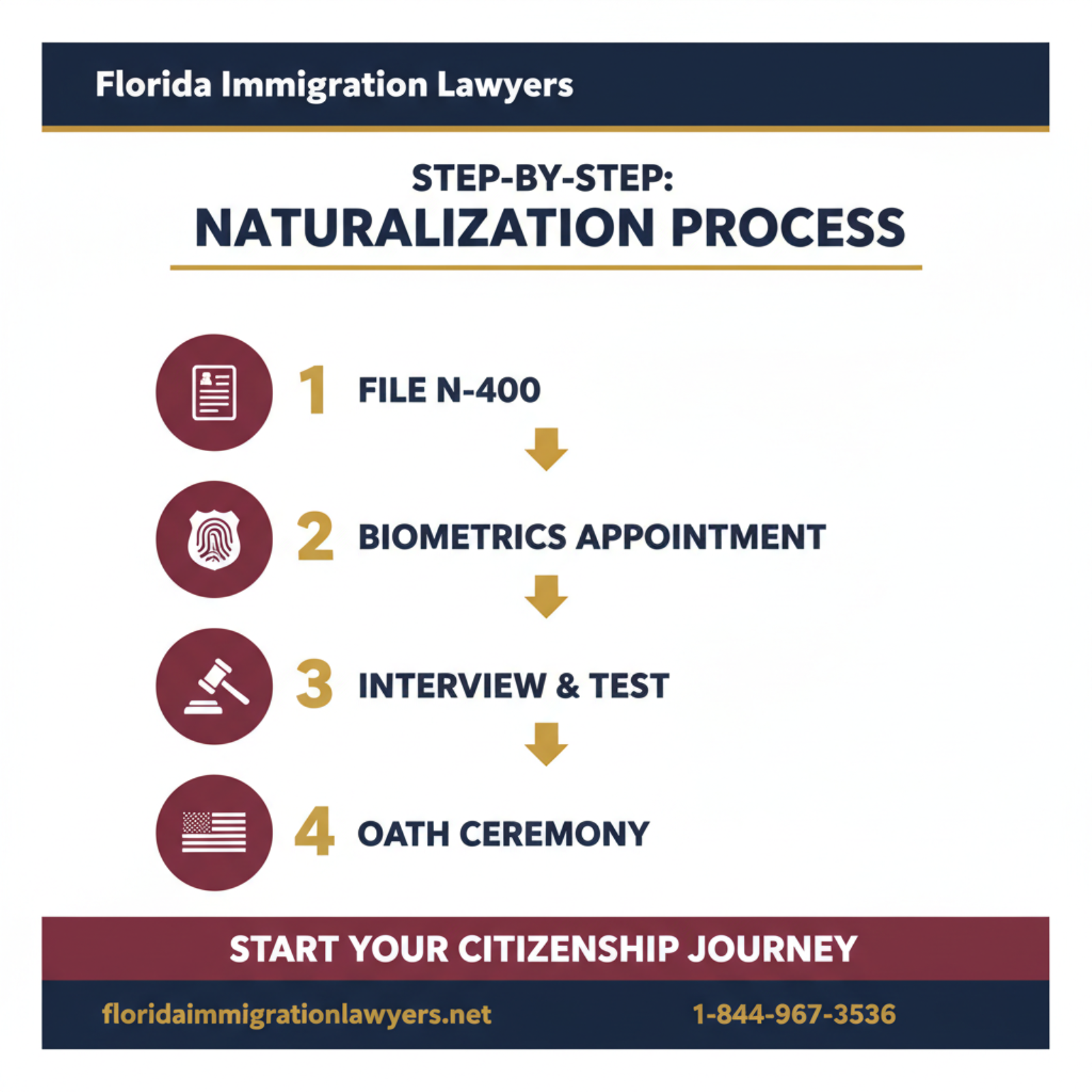
The naturalization process in Florida typically takes 8-18 months, varying by USCIS field office workload and individual circumstances. Filing Form N-400, attending biometrics, an interview, and the oath ceremony are key steps to U.S. citizenship. Consulting an attorney can help streamline your timeline.
- Understand eligibility requirements (e.g., green card holder for 3 or 5 years).
- Prepare and submit Form N-400, Application for Naturalization.
- Attend biometrics appointment and a naturalization interview.
- Successfully pass the English and civics tests.
- Participate in the Oath of Allegiance ceremony to become a U.S. citizen.
Naturalization Process Florida Timeline: Your 2026 Citizenship Guide
Dreaming of becoming a U.S. citizen in Florida? The journey to naturalization is a significant milestone, offering countless opportunities and security. However, navigating the complex legal landscape and understanding the precise naturalization process Florida timeline can feel overwhelming.
This comprehensive guide from Florida Immigration Lawyers will walk you through every step of the naturalization process for 2026. We will cover eligibility, the Form N-400 application, expected processing times, and crucial tips to help you achieve U.S. citizenship.
Do not embark on this important journey without expert guidance. For personalized assistance with your naturalization process, call Florida Immigration Lawyers at 1-844-967-3536 for a free consultation. We are here to help you understand your options and prepare a strong case.
Understanding U.S. Naturalization in Florida for 2026
Naturalization is the process by which a lawful permanent resident (green card holder) can become a U.S. citizen. This status grants you rights and responsibilities, including the right to vote, hold federal employment, and travel with a U.S. passport. For many in Florida, especially in diverse areas like Tampa, achieving citizenship is a lifelong goal.
The core requirements for naturalization are outlined in the Immigration and Nationality Act (INA) Section 316, codified at 8 U.S.C. § 1427. Generally, you must be at least 18 years old, be a lawful permanent resident for a specific period, demonstrate continuous residence and physical presence in the U.S., show good moral character, and pass English and civics tests.
Florida is home to a vibrant immigrant community, and the USCIS Tampa Field Office processes a significant number of N-400 applications. Understanding the local context and the specific requirements for naturalization in Florida is crucial for a smooth process.
The Step-by-Step Naturalization Process in Florida
The path to U.S. citizenship involves several distinct stages. Each step in the naturalization process requires careful attention to detail and adherence to USCIS guidelines. Here is a detailed guide for Florida residents:
-
Determine Your Eligibility: Before filing, ensure you meet all requirements. Most applicants must be 18, a green card holder for at least 5 years (or 3 years if married to a U.S. citizen, as per INA 319(a)), and have maintained continuous residence. You must also demonstrate physical presence and good moral character.
-
Prepare and File Form N-400, Application for Naturalization: This is the official application form. Complete it accurately and thoroughly, providing all requested information and supporting documents. Ensure every question is answered truthfully to avoid delays or denials.
-
Attend Your Biometrics Appointment: After filing your N-400 application, USCIS will send you an appointment notice for biometrics. This involves fingerprinting, photographs, and a signature. These are used for background checks and identity verification.
-
Complete the Naturalization Interview: You will receive a notice for an interview with a USCIS officer. During this interview, the officer will verify the information on your N-400, assess your English proficiency (reading, writing, speaking), and test your knowledge of U.S. history and government (civics test). You should be prepared to discuss your application in detail.
-
Receive a Decision from USCIS: After your interview, the USCIS officer will make a decision. This could be an approval, a continuance (if more information is needed), or a denial. If approved, you will receive a notice for the Oath of Allegiance ceremony.
-
Take the Oath of Allegiance: This is the final step where you formally become a U.S. citizen. You will attend a ceremony and take an oath, pledging allegiance to the United States. After the ceremony, you will receive your Certificate of Naturalization, a crucial document proving your citizenship.
Each of these steps is critical. Skipping a step or making an error can significantly delay your naturalization timeline. For detailed guidance on your specific situation, consider consulting with an attorney at Florida Immigration Lawyers for Citizenship assistance.
Essential Documents for Your Naturalization Application
A well-organized set of documents is vital for a successful N-400 application. Missing or incorrect documents can lead to delays or requests for evidence. Here is a general checklist of items you may need:
- Your Permanent Resident Card (Green Card).
- Your state-issued identification (e.g., Florida driver's license or ID card).
- All passports and travel documents (current and expired).
- Marriage certificate, if applicable (for 3-year rule eligibility).
- Divorce decrees or annulment certificates, if applicable.
- Children's birth certificates, if applicable.
- Proof of selective service registration, if applicable.
- Tax returns for the past 3-5 years (to prove continuous residence and good moral character).
- Court disposition documents for any arrests, citations, or criminal charges, even if dismissed.
- Documentation for any periods of absence from the U.S.
- Any previous USCIS correspondence or immigration documents.
It is important to provide certified translations for any documents not in English. Always keep copies of everything you submit to USCIS.
Naturalization Timeline and USCIS Processing Expectations for Florida Applicants
The naturalization process Florida timeline can vary significantly. While USCIS aims for efficiency, the actual time it takes to become a U.S. citizen depends on several factors, including the volume of applications, the specific USCIS field office, and the complexity of your individual case.
Typical USCIS Processing Times for N-400 Applications
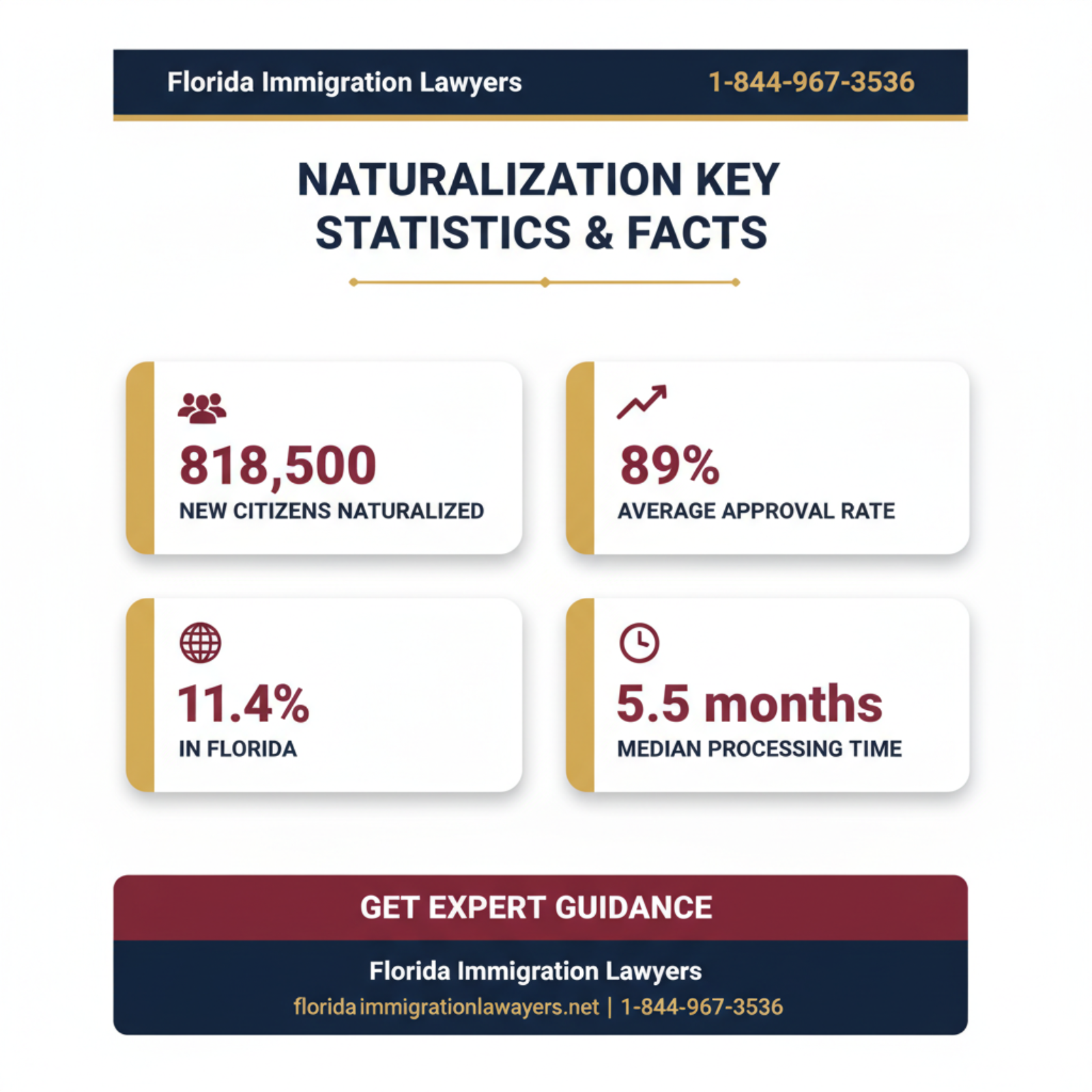
As of early 2026, the average USCIS processing times for Form N-400 generally range from 8 to 18 months from the date of filing until the Oath of Allegiance. However, these are averages, and some cases may be processed faster or slower. You can check the most current processing times directly on the USCIS website for the Tampa Field Office.
Factors Influencing Your Naturalization Timeline
Several elements can impact how long your naturalization process will take:
- USCIS Field Office Workload: Offices like Tampa, Miami, and Orlando experience different application volumes, affecting local processing speed.
- Completeness of Your Application: An accurately completed N-400 application with all required documents can prevent delays.
- Responses to Requests for Evidence (RFEs): If USCIS requests additional information, your prompt response is crucial.
- Background Checks: The time it takes for security checks to clear can vary.
- Interview Performance: Successfully passing your English and civics tests on the first attempt can prevent continuances.
- Legal Complications: Issues such as a criminal record, significant travel outside the U.S., or previous immigration violations will likely extend your timeline.
Staying informed about your case status is important. You can track your N-400 application online using the receipt number provided by USCIS.
Cost Factors and Fee Breakdown for U.S. Citizenship
Applying for U.S. citizenship involves certain fees. While USCIS fees are subject to change, it is important to be aware of the typical costs involved in the naturalization process.
USCIS Filing Fees for Form N-400
The primary cost is the filing fee for Form N-400, Application for Naturalization. This fee typically includes the biometrics services fee. USCIS offers fee waivers for eligible low-income applicants. Always check the official USCIS website (uscis.gov/n-400) for the most current fee amounts and waiver guidelines.
Potential Attorney Fees
While not mandatory, many applicants choose to hire an immigration attorney. Attorney fees cover legal advice, assistance with preparing and reviewing the N-400 application, representation at the interview, and handling any complexities that may arise. This investment can significantly reduce stress and improve the likelihood of a successful outcome.
Other Potential Costs
You might also incur costs for obtaining necessary documents (e.g., birth certificates, marriage licenses), certified translations, or travel expenses for appointments. Budgeting for these potential expenses is a wise step in your naturalization process.
Do not navigate this process alone. Contact Florida Immigration Lawyers today to discuss your naturalization case and understand all associated costs. We offer transparent fee structures and dedicated support.
Common Mistakes to Avoid During Your Naturalization Journey
The naturalization process is complex, and even small errors can lead to significant delays or even denial of your N-400 application. Be aware of these common pitfalls:
-
Incomplete or Inaccurate Form N-400: Failing to answer all questions truthfully and completely, or making simple clerical errors, can trigger Requests for Evidence (RFEs) or outright denial. Ensure all sections are filled out meticulously.
-
Failing to Disclose All Criminal History: Even minor infractions, arrests, or traffic citations must be disclosed, regardless of whether they were expunged or dismissed. USCIS conducts thorough background checks, and non-disclosure can be considered misrepresentation.
-
Not Meeting Continuous Residence or Physical Presence Requirements: Spending too much time outside the U.S. can break your continuous residence. Understand the rules for trips abroad and their impact on your eligibility for U.S. citizen green card holders.
-
Lack of English Proficiency: While some exemptions exist, most applicants must demonstrate an ability to read, write, and speak basic English. Failure to pass this portion of the interview will result in a continuance.
-
Insufficient Knowledge of U.S. Civics: The civics test covers U.S. history and government. You must correctly answer a certain number of questions to pass. Inadequate preparation can lead to a failed interview.
-
Not Updating Your Address with USCIS: Moving without notifying USCIS using Form AR-11 can cause you to miss crucial notices, including interview appointments, potentially leading to case abandonment.
-
Failure to Register for Selective Service: Males between ages 18 and 26 living in the U.S. (including green card holders) are generally required to register for Selective Service. Failure to do so can negatively impact your good moral character determination.
-
Poor Moral Character Issues: Serious criminal offenses, tax evasion, or other acts that demonstrate a lack of good moral character can disqualify you from naturalization. The look-back period for good moral character is typically 5 years (or 3 years for spouses of U.S. citizens).
-
Missing Deadlines: Failing to respond to RFEs or attend scheduled appointments can lead to your application being denied or closed. Always pay close attention to USCIS deadlines.
-
Not Seeking Legal Advice for Complex Cases: If you have any concerns about your eligibility, past issues, or the complexity of your case, attempting to navigate the naturalization process alone can be a costly mistake.
When to Call a Florida Immigration Lawyer for Naturalization Assistance
While some straightforward cases might proceed smoothly, many applicants find the naturalization process daunting. An experienced immigration attorney can be an invaluable asset, especially if you encounter specific challenges. Here are scenarios where you should definitely consult with Florida Immigration Lawyers:
- Complex Eligibility Requirements: If you are unsure whether you meet the continuous residence, physical presence, or good moral character requirements due to extended travel, past legal issues, or unique circumstances.
- Criminal History: Any arrest, conviction, or legal encounter, no matter how minor, can impact your good moral character and eligibility. An attorney can assess your record and advise on disclosure and potential waivers.
- Previous Denials or Immigration Issues: If your prior N-400 application was denied, or if you have any history of immigration violations, legal counsel is essential to understand the reasons and strategize a new approach.
- Extended Absences from the U.S.: If you have traveled outside the U.S. for periods longer than six months, an attorney can help determine if your continuous residence has been broken and how to address it.
- Difficulty with English or Civics: If you have concerns about passing the English or civics tests, an attorney can help identify potential exemptions or guide you through the preparation process.
- Concerns About the Interview: If you are nervous about the interview process or have complex answers to questions on your N-400 application, an attorney can prepare you or even accompany you to the interview.
- Need for Peace of Mind: Even in seemingly simple cases, having a legal expert review your application and guide you through the process can provide immense peace of mind.
Florida Immigration Lawyers offers dedicated services for naturalization and general immigration matters. Our team understands the nuances of the law and the local USCIS procedures in Florida. Do not risk your dream of U.S. citizenship; let us help you navigate this journey successfully. Visit our attorneys page to learn more about our experienced legal team.
About Florida Immigration Lawyers
Florida Immigration Lawyers is a premier law firm dedicated to serving individuals and families throughout Florida with their immigration needs. With a deep understanding of U.S. immigration law, our experienced attorneys provide compassionate and effective legal representation.
We specialize in a wide range of immigration services, including family-based immigration, business immigration, asylum claims, deportation defense, and, of course, the naturalization process. Our commitment is to achieve the best possible outcomes for our clients, helping them build successful lives in the United States.
We pride ourselves on our client-focused approach, offering personalized attention and clear communication every step of the way. When you choose Florida Immigration Lawyers, you gain a dedicated advocate who will fight for your rights and guide you through the complexities of the immigration system.
Contact us today for a free consultation: 1-844-967-3536. We are available 24/7 and serve clients across all of Florida. Learn more at https://www.floridaimmigrationlawyers.net.
Sources and References
- U.S. Citizenship and Immigration Services (USCIS)
- USCIS Form N-400, Application for Naturalization
- USCIS Policy Manual, Volume 12 - Citizenship and Naturalization
- 8 U.S.C. Chapter 12 - Immigration and Nationality Act (INA)
- 8 U.S.C. § 1427 - Requirements for Naturalization (INA Section 316)
- 8 U.S.C. § 1430(a) - Naturalization of Spouses of U.S. Citizens (INA Section 319(a))
- 8 CFR Part 316 - General Requirements for Naturalization
This article provides general legal information and is not intended as legal advice. Every case is unique, and outcomes depend on specific facts and circumstances. Contact an attorney for advice about your particular situation.
The journey to U.S. citizenship is an important one, and understanding the naturalization process Florida timeline is key to success. Do not leave your future to chance. Let the experienced attorneys at Florida Immigration Lawyers guide you through every step.
Call us today at 1-844-967-3536 for a free consultation. Se Habla Español - Estamos aquí para ayudarle.
Florida Immigration Lawyers
Legal Team
Our experienced attorneys at Florida Immigration Lawyers have been serving clients across Florida for over 20 years. We specialize in immigration, personal injury, criminal defense, workers compensation, and family law.