Motion to Reopen Immigration Case in Florida: Key Steps
Filing a motion to reopen an immigration case in Florida may be your opportunity to present new evidence and seek a favorable outcome. Learn the steps, requirements, and potential outcomes. Contact Florida Immigration Lawyers for a free consultation.

Filing a motion to reopen an immigration case in Florida can provide a second chance in removal proceedings. Here's what you need to know:
- A motion to reopen must be based on new evidence.
- It must be filed within 90 days of a final decision.
- The decision to grant a motion is discretionary.
- Consulting an attorney is highly recommended.
Introduction
If you or a loved one is facing deportation in Florida, understanding your legal options is crucial. A motion to reopen an immigration case can be a lifeline for those seeking to present new evidence or argue that conditions have changed since the original decision. This article will guide you through the steps, requirements, and potential outcomes of filing a motion to reopen in Florida, particularly focusing on Kissimmee and surrounding areas. Call Florida Immigration Lawyers at 1-844-967-3536 for a free consultation.
The threat of deportation carries immense emotional and practical burdens, not just for the individual but for their entire family. It can mean separation from loved ones, loss of livelihood, and the disruption of a life built in the United States. In Florida, a state with a diverse immigrant population, the need for robust legal defense is particularly acute. A motion to reopen offers a vital opportunity to revisit a past decision, providing a glimmer of hope when all other avenues seem exhausted.
This legal mechanism acknowledges that circumstances can evolve, new facts can emerge, or critical evidence might have been overlooked or unavailable during initial proceedings. For individuals in Kissimmee, Orlando, and across the Sunshine State, understanding this complex process is paramount. It’s not merely a procedural step; it’s a chance to present a compelling narrative that could change the trajectory of your future and allow you to remain with your family and community.
Navigating the intricacies of immigration law requires precision and expertise. This article aims to demystify the process of filing a motion to reopen, outlining the essential steps, strict requirements, and potential challenges. We’ll also highlight how experienced legal counsel, such as Florida Immigration Lawyers, can significantly enhance your chances of success. If you believe your case warrants a second look, don't hesitate to reach out to us at 1-844-967-3536 for a confidential, free consultation.
What is a Motion to Reopen in Immigration Court?
A motion to reopen is a request to an immigration court to review a case again due to new facts or evidence that were not available during the original proceedings. As of 2026, these motions must generally be filed within 90 days of the final administrative order.
Filing a motion to reopen is a critical step if new information arises that could significantly impact the case outcome. The Board of Immigration Appeals (BIA) may grant this motion if it believes the new evidence could alter the original decision.
This legal recourse is distinct from an appeal, which challenges errors of law or fact made in the original decision based on the existing record. A motion to reopen, by contrast, introduces new material facts or evidence that were not previously considered. This could include changes in country conditions that impact an asylum claim, newly discovered documents proving eligibility for relief, or even a change in personal circumstances, such as marriage to a U.S. citizen, which might open new avenues for relief from removal.
The Board of Immigration Appeals (BIA) or the Immigration Judge (IJ) holds significant discretion in deciding whether to grant a motion to reopen. They will meticulously assess whether the new evidence is truly material, was unavailable at the time of the previous hearing, and if presented, would likely lead to a different outcome. This high bar emphasizes the need for meticulously prepared and compelling evidence, often requiring expert testimonials or detailed affidavits.
For example, consider a case where an individual was ordered removed but later discovers a crucial document from their home country proving their eligibility for a specific form of relief that was unknown or inaccessible during their initial proceedings. Or perhaps, country conditions in their homeland have drastically deteriorated, making return unsafe, a fact that was not true at the time of their original hearing. In such scenarios, a motion to reopen provides a vital avenue to present these new, compelling facts. Florida Immigration Lawyers understand the nuances of presenting such evidence effectively to the court.
Key Requirements
To file a motion to reopen, you must demonstrate that the new evidence was not available and could not have been discovered or presented at the original hearing. This requirement ensures that only genuine new developments are considered.
This 'materiality' and 'unavailability' standard is rigorously applied. It's not enough to simply present evidence that was available but overlooked; you must show a legitimate reason why it couldn't have been presented before. This could involve demonstrating that a document was newly issued, that a witness was previously unreachable, or that a legal precedent was established only after your final order. Successfully meeting this burden often requires detailed explanations, supporting affidavits, and a clear timeline of events. An attorney from Florida Immigration Lawyers can help you meticulously document and argue why your evidence meets these strict criteria, transforming a complex legal challenge into a structured, persuasive argument.
How to File a Motion to Reopen in Florida
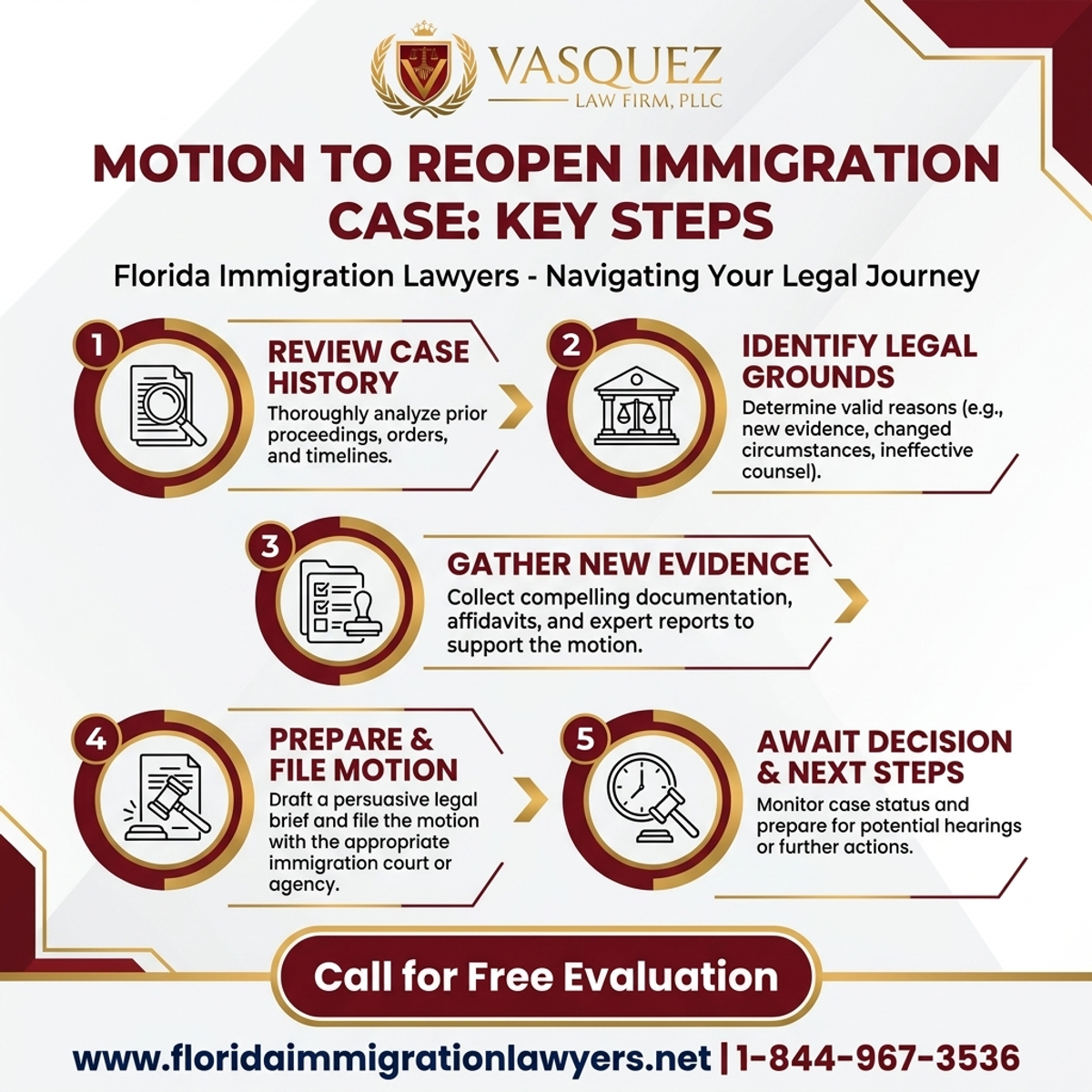
Filing a motion to reopen involves several steps and careful preparation. Here’s a step-by-step guide:
- Gather New Evidence: Compile any new evidence that supports your case, such as new legal precedents, changes in personal circumstances, or newly discovered facts.
- Prepare the Motion: Draft a detailed motion that includes all necessary information, such as the new evidence, legal arguments, and why the evidence was not previously available.
- Submit the Motion: File the motion with the appropriate immigration court. Ensure you meet all filing deadlines and procedural requirements.
- Await a Decision: The court will review the motion and decide whether to reopen the case. This decision is discretionary and based on the merits of the new evidence.
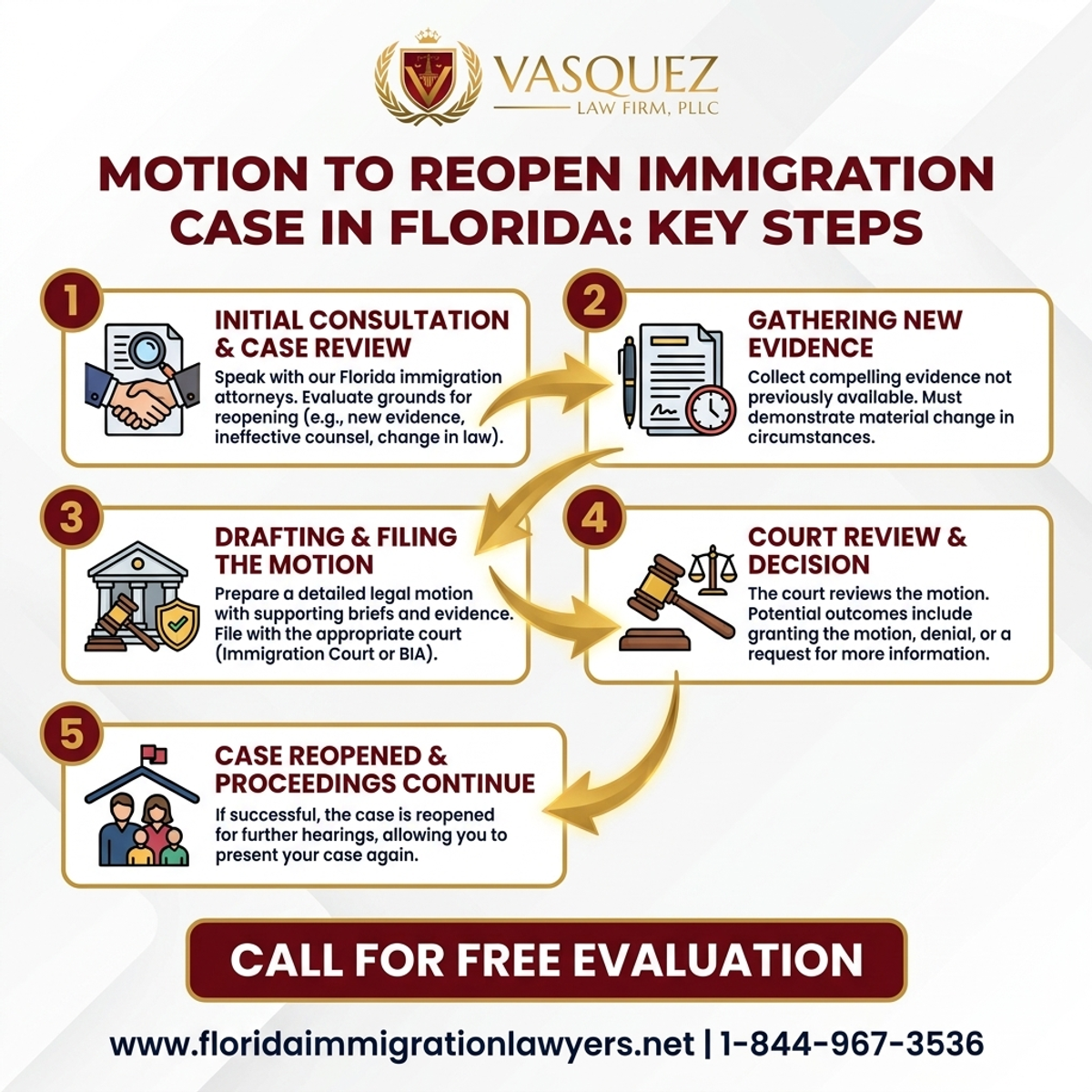
Step-by-Step Process — Motion to Reopen Immigration Case in Florida: Key Steps
It is highly recommended to work with an experienced immigration attorney to navigate this complex process.
The process is not merely a formality; it's a strategic legal endeavor that demands precision and a deep understanding of immigration law. Each step is critical, and a misstep can lead to delays or outright denial, potentially closing the door on your last chance to remain in the U.S. This is why thorough preparation and expert guidance are indispensable.
Let's delve deeper into what each step entails. When you gather new evidence, think broadly about anything that has changed or become known since your last hearing. This could range from updated medical records if your health condition has worsened, new expert opinions on country conditions, or even proof of new family ties that qualify you for different forms of relief. The evidence must be credible, relevant, and directly address why the previous decision should be reconsidered.
When you prepare the motion, you are essentially crafting a persuasive legal argument. This involves not only presenting the new evidence but also explaining why it's significant, how it impacts your case, and why it was previously unavailable. You must cite relevant immigration laws and precedents to support your arguments. This often includes a detailed memorandum of law, which is a complex legal document best drafted by an attorney. The team at Florida Immigration Lawyers excels at constructing such compelling legal arguments, ensuring every detail is meticulously addressed.
Finally, submitting the motion requires adherence to strict procedural rules, including proper formatting, filing fees, and serving all parties involved, such as the Department of Homeland Security (DHS). Failure to follow these rules can result in rejection. The period while you await a decision can be stressful, but it's important to remember that the court's review is comprehensive. They will weigh the new evidence against the existing record, considering all factors before making a discretionary decision. An experienced attorney can provide updates and prepare you for potential next steps, including possible interviews or further hearings. For assistance with any of these crucial steps, contact Florida Immigration Lawyers at 1-844-967-3536.
Document Checklist for a Motion to Reopen
- New evidence or documentation supporting your case
- Original court decision documents
- Completed motion to reopen form
- Proof of service to all parties involved
- Any other supporting affidavits or declarations
Having a comprehensive checklist ensures that you provide all necessary documentation to support your motion, reducing the risk of denial due to incomplete submission.
Beyond merely listing items, understanding the purpose of each document is key to a successful submission. For instance, the 'new evidence' isn't just a collection of papers; it's the heart of your argument, demonstrating a material change in circumstances or facts. 'Original court decision documents' are crucial for the court to quickly reference the prior ruling and understand the context of your motion. The 'completed motion to reopen form' (Form EOIR-42B for Immigration Court, or I-290B for USCIS, depending on jurisdiction) must be filled out accurately and completely, as any errors can lead to rejection.
'Proof of service' confirms that all opposing parties, particularly the Department of Homeland Security, have been properly notified of your motion, upholding due process. Finally, 'supporting affidavits or declarations' from witnesses, experts, or even yourself, can provide critical context and credibility to your new evidence, explaining its significance and why it was previously unavailable. A thorough checklist, meticulously followed, is your first line of defense against procedural pitfalls. Florida Immigration Lawyers can help you compile and organize every piece of documentation, ensuring nothing is overlooked.
Timeline and Processing Expectations
| Stage | Typical Timeframe | Notes |
|---|---|---|
| Filing | Within 90 days | From the final order date |
| Review | Several weeks to months | Depends on court backlog |
| Decision | Varies | Discretionary by court |
Processing times can vary significantly depending on the court’s workload and the complexity of the case. It's essential to file promptly and correctly to avoid unnecessary delays.
Key Statistics — Motion to Reopen Immigration Case in Florida: Key Steps
The 90-day filing deadline is generally strict, with very limited exceptions, such as for asylum claims based on changed country conditions or for motions based on joint agreement with the Department of Homeland Security. Missing this deadline is one of the most common reasons for denial, underscoring the urgency of acting swiftly once new evidence comes to light.
Once filed, the review period can indeed be lengthy and unpredictable. Immigration courts and the Board of Immigration Appeals often face substantial backlogs, meaning your motion may sit for several months before a decision is rendered. During this waiting period, it's crucial to remain patient and avoid making any assumptions about your case's status. Your attorney will monitor developments and communicate any updates. The ultimate decision is discretionary, meaning even with strong new evidence, the court retains the authority to deny the motion if it does not find the arguments sufficiently compelling. This highlights the importance of not just submitting evidence, but presenting a persuasive legal argument that stands up to scrutiny. Florida Immigration Lawyers can help manage expectations and provide ongoing support throughout this challenging timeline.
Cost Factors and Fee Breakdown
| Item | Typical Fee | Notes |
|---|---|---|
| Filing Fee | Varies | Check current USCIS fees |
| Attorney Fees | Varies | Depends on case complexity |
| Additional Costs | Varies | May include document preparation |
Understanding potential costs can help you budget effectively for the legal process. Fees may change, so always verify current amounts with reliable sources.
Investing in a motion to reopen is an investment in your future and your ability to remain in the United States. While the filing fee is a fixed cost set by the government (currently $110 for motions to reopen filed with the Board of Immigration Appeals, but always subject to change and specific to the court), attorney fees represent the value of expert legal guidance. These fees can vary significantly based on the complexity of your case, the amount of evidence that needs to be gathered, and the time required to draft a compelling legal argument. Some firms offer flat fees for motions, while others bill hourly.
Additional costs can include obtaining certified translations of foreign documents, expert witness fees if specialized testimony is required, or even travel expenses for witnesses. It’s important to have a clear understanding of all potential expenses upfront. While the costs may seem daunting, the potential outcome – the chance to remain in the U.S. – often far outweighs the financial investment. Many individuals may also qualify for a fee waiver for the government filing fee if they can demonstrate financial hardship. Discussing these cost factors and payment options with Florida Immigration Lawyers during your free consultation can help you plan effectively and ensure you're prepared for the financial aspects of your case.
Common Mistakes to Avoid
Filing a motion to reopen is a high-stakes endeavor, and even minor errors can have catastrophic consequences. The immigration system is unforgiving of procedural missteps, and the burden is entirely on the applicant to present a flawless case. Understanding and actively avoiding common pitfalls is as crucial as gathering strong evidence.
One of the most critical aspects is the strict adherence to deadlines. The 90-day window is not flexible for most cases, and courts are generally reluctant to accept late filings without extraordinary circumstances, such as a showing of ineffective assistance of counsel or changed country conditions for asylum cases. Similarly, the quality and relevance of your new evidence are paramount. Simply presenting more evidence is not enough; it must be new, material, and previously unavailable.
Navigating the complexities of this process without professional legal guidance is akin to navigating a minefield blindfolded. The rules are intricate, the stakes are high, and the legal language can be bewildering. Many individuals, attempting to save costs, end up making errors that are far more expensive to rectify, if they can be rectified at all. This is precisely why the expertise of a dedicated immigration attorney is not just recommended, but often essential for a successful outcome.
- Missing Deadlines: Failing to file within the 90-day window can result in automatic denial.
- Insufficient Evidence: Not providing adequate new evidence can weaken your motion.
- Incorrect Forms: Using outdated or incorrect forms can delay or invalidate your filing.
- Lack of Legal Argument: Failing to connect new evidence to legal arguments reduces credibility.
- Ignoring Previous Orders: Not addressing why previous decisions should be reconsidered.
- Not Serving All Parties: Failing to notify all involved parties can lead to dismissal.
- Not Consulting an Attorney: Attempting to navigate the process without legal guidance can lead to mistakes.
When to Call a Lawyer
Consulting with a lawyer is crucial if you are facing deportation or if your case involves complex legal issues. A qualified attorney can help gather evidence, prepare legal arguments, and ensure all procedural requirements are met. Florida Immigration Lawyers offer experienced guidance to help you through this challenging process. Call us if you experience any of the warning signs mentioned above or need assistance with your motion to reopen.
The moment you
Sources and References
- U.S. Citizenship and Immigration Services (USCIS)
- Executive Office for Immigration Review (EOIR)
- U.S. Department of State - Bureau of Consular Affairs
- Immigration and Nationality Act (INA), 8 U.S.C. Chapter 12
Do Not Navigate This Process Alone
Our experienced immigration attorneys are ready to fight for you. Get a free, confidential consultation today.
Se Habla Español
Frequently Asked Questions
Harold Estrada-Rodriguez
Florida Immigration Attorney · FL Bar No. 1041171
Florida Bar attorney handling Florida-jurisdiction immigration matters. Bilingual representation, free consultations.
Available 24/7 - Free Evaluations
Related Legal Services
Our Florida immigration attorneys can help you with deportation defense, citizenship and naturalization and family immigration services. Call today at 1-844-967-3536 for a free consultation.
Related Links
Related Topics
Free Legal Consultation
Discuss your case with our experienced attorneys. We're available 24/7.
Se Habla Español - Estamos aquí para ayudarle.
Related Articles
DV-2027 Registration Period: Diversity Visa in Florida
The DV-2027 registration period for the Diversity Visa Lottery is crucial for those seeking U.S. residency. Learn how to apply and avoid common pitfalls in this comprehensive guide.
Immigration Lawyer Orlando Free Consultation: Your 2026
Understanding the cost of an immigration lawyer in Florida, especially in areas like Orlando, is crucial for anyone navigating the U.S. immigration system in 2026. This comprehensive guide from Florida Immigration Lawyers explores what a free consultation entails, how attorney fees are structured for various case types like family petitions, employment visas, or deportation defense, and the typical timelines involved. We detail essential documents, government filing fees, and critical mistakes to avoid. Our aim is to provide clarity on the financial aspects and procedural steps, ensuring you are well-prepared for your immigration journey. Learn how expert legal guidance can make a significant difference in achieving your immigration goals.
DACA Florida 2026 Guide: Renewing Your Deferred Action
Renewing your DACA status in Florida for 2026 is a crucial process for thousands of Dreamers. This comprehensive guide from Florida Immigration Lawyers provides essential information on eligibility criteria, step-by-step application procedures, necessary documentation, and expected processing timelines. Understand the specific forms required, the importance of timely submission, and the potential costs involved. We also delve into the challenges posed by the evolving legal landscape surrounding DACA and offer insights into common mistakes to avoid during your renewal. Given the program's ongoing legal scrutiny, securing expert legal assistance is more important than ever. Our firm stands ready to assist DACA recipients across Florida, offering free consultations and dedicated support to ensure a smooth and successful renewal.
Dual Citizenship Lawyer: Tips for Your Florida Interview
Preparing for a citizenship interview in Florida? Discover key tips to navigate the process effectively. Learn what to expect during your interview and how to prepare thoroughly to ensure success.
