Immigration Lawyer Orlando Free Consultation: Your 2026
Understanding the cost of an immigration lawyer in Florida, especially in areas like Orlando, is crucial for anyone navigating the U.S. immigration system in 2026. This comprehensive guide from Florida Immigration Lawyers explores what a free consultation entails, how attorney fees are structured for various case types like family petitions, employment visas, or deportation defense, and the typical timelines involved. We detail essential documents, government filing fees, and critical mistakes to avoid. Our aim is to provide clarity on the financial aspects and procedural steps, ensuring you are well-prepared for your immigration journey. Learn how expert legal guidance can make a significant difference in achieving your immigration goals.

An immigration lawyer Orlando free consultation in 2026 typically offers an initial assessment of your immigration situation without charge. This allows potential clients to discuss their case basics, understand possible legal pathways, and learn about the attorney's experience and fee structure before committing financially. While not a deep dive into complex legal strategy, it provides crucial guidance on whether you have a viable case and what steps might follow. Understanding this initial step is key to navigating the broader costs of immigration legal services in Florida.
- Free consultations provide initial case assessment.
- They help clarify legal options and attorney fees.
- Prepare documents for a productive first meeting.
- Costs vary by case type, complexity, and attorney experience.
- Many Florida firms, including ours, offer this valuable first step.
Navigating the complex landscape of U.S. immigration law can be overwhelming, especially when you are unsure about the financial commitment involved. For many individuals and families across Florida, including those in Orlando, the journey often begins with a critical question: Can I find an immigration lawyer Orlando free consultation in 2026? Understanding the availability and scope of free consultations, alongside the typical costs of immigration legal services, is essential for informed decision-making. This comprehensive guide from Florida Immigration Lawyers aims to demystify attorney fees, processing timelines, and common pitfalls, offering clarity for your immigration journey.
At Florida Immigration Lawyers, we understand the anxieties that come with immigration matters. Our mission is to provide compassionate, expert legal representation throughout Florida, from Miami to Tallahassee, and right here in Orlando. We believe that everyone deserves access to quality legal advice. If you are seeking an immigration lawyer Orlando free consultation to discuss your options, do not hesitate to reach out. Call Florida Immigration Lawyers today at 1-844-967-3536 for a free consultation and take the first step towards securing your future.
What Does an Immigration Lawyer Orlando Free Consultation Entail in 2026?
An immigration lawyer Orlando free consultation in 2026 typically serves as an introductory meeting where you can discuss the general facts of your immigration case with an attorney without incurring an initial fee. This session is designed for a preliminary assessment, allowing the lawyer to understand your situation and determine if they can assist you. It is a valuable opportunity to gauge the attorney's expertise and approach.
During a free consultation, you can expect to provide a brief overview of your immigration goals, any past immigration history, and relevant personal details. The attorney will listen to your story, ask clarifying questions, and offer an initial opinion on the viability of your case. They will often outline potential legal pathways, discuss the types of services their firm provides, and explain their general fee structure for different case categories. This initial meeting is crucial for both parties to determine if there is a good fit for representation.
It is important to understand that a free consultation is generally not a deep dive into complex legal strategy or extensive document review. It is an exploratory session, not a substitute for comprehensive legal advice on your specific case. However, it provides a vital first step, allowing you to understand the scope of your legal needs and receive preliminary guidance. Preparing a concise summary of your situation and any relevant documents can make your free consultation in Orlando highly productive, setting a clear path forward for your immigration journey in Florida.
How Are Immigration Lawyer Costs Determined in Florida for 2026 Cases?
Immigration lawyer costs in Florida for 2026 cases are primarily determined by several factors, including the complexity of the case, the attorney's experience and specialization, and the firm's location. Different case types, such as family-based petitions, employment visas, deportation defense, or asylum claims, each have unique legal requirements and corresponding fee structures. A straightforward visa renewal will typically cost less than a complex deportation defense case involving multiple hearings.
Attorneys generally employ one of two main fee structures: flat fees or hourly rates. Flat fees are common for predictable cases like visa applications, green card petitions, or naturalization applications, where the attorney charges a single, all-inclusive price for the entire service. Hourly rates are more typical for cases with unpredictable time demands, such as litigation, complex waivers, or appeals, where the attorney charges for the actual time spent working on the case. Retainer agreements, where an upfront payment is made against which hourly fees are billed, are also common.
Geographic location within Florida can also influence costs. For instance, attorney fees in major metropolitan areas like Miami or Orlando might differ slightly from those in smaller cities like Tallahassee or Gainesville, reflecting varying overheads and market demands. Furthermore, a highly experienced attorney specializing in a niche area of immigration law may command higher fees due to their specialized knowledge and track record of success. It is crucial to get a clear understanding of the fee structure during your initial consultation.
Understanding Immigration Attorney Fee Structures (As of 2026)
| Item | Typical Fee Structure | Notes |
|---|---|---|
| Family-Based Petitions (e.g., I-130, I-485) | Flat Fee | Ranges vary based on complexity (e.g., adjustment of status vs. consular processing). |
| Employment-Based Visas (e.g., H-1B, L-1) | Flat Fee or Hybrid | Often includes employer sponsorship and detailed documentation. |
| Deportation Defense | Hourly Rate / Retainer | Highly variable due to court appearances, evidence, and unpredictable timelines. |
| Asylum Applications | Flat Fee / Hourly Rate | Can be flat for initial application, hourly for court proceedings. |
| Naturalization (N-400) | Flat Fee | Generally straightforward, but can increase with criminal history or complex residency issues. |
| Waivers (e.g., I-601, I-212) | Flat Fee / Hourly Rate | Requires extensive documentation and legal argument, complexity drives cost. |
| Initial Consultation (Free) | No Charge | Preliminary case review, not in-depth legal advice. |
Navigating the Immigration Legal Process: A Step-by-Step Guide for Florida Residents
For Florida residents, navigating the immigration legal process can seem daunting, but breaking it down into manageable steps with the help of an experienced attorney makes it more accessible. Whether you are in Orlando, Tampa, or Jacksonville, the general process remains consistent. Understanding these stages is crucial for managing expectations and preparing effectively for your immigration journey.
The first step after an initial free consultation is formalizing the attorney-client relationship. This involves signing a retainer agreement that clearly outlines the scope of services, the fee structure, and payment terms. Once this is established, your attorney will begin the detailed work of gathering all necessary documentation. This phase is critical and often time-consuming, requiring close collaboration between you and your legal team to ensure all required evidence is collected and accurate.
Following document preparation, your attorney will draft and file the appropriate petitions or applications with the relevant government agencies, such as U.S. Citizenship and Immigration Services (USCIS) or the National Visa Center (NVC). After submission, you will enter a waiting period during which the government processes your application. This may involve biometric appointments, requests for additional evidence (RFEs), or interviews. Your attorney will guide you through each of these steps, preparing you for interviews and responding to any government inquiries. Finally, upon approval, you will receive your visa, green card, or citizenship, completing a significant milestone in your immigration journey.
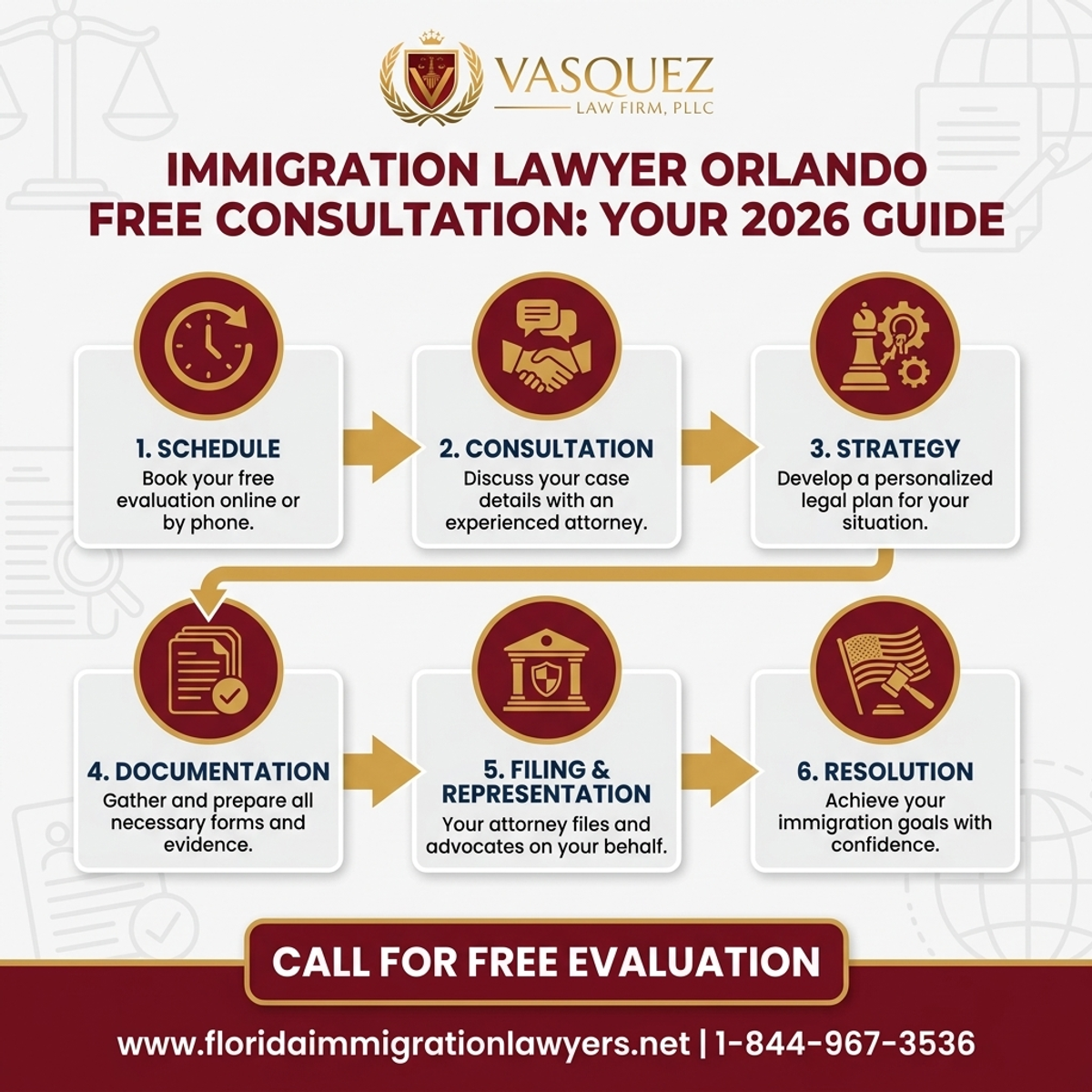
Step-by-Step Process — Immigration Lawyer Orlando Free Consultation: Your 2026 Guide
- Initial Free Consultation: Discuss your case with an immigration lawyer Orlando free consultation to assess options and potential pathways. This is your first contact with legal professionals to understand feasibility.
- Retainer Agreement & Case Strategy: If you decide to proceed, you will sign a formal agreement. Your attorney will then develop a tailored legal strategy based on your specific circumstances and immigration goals.
- Document Gathering & Preparation: Your legal team will provide a comprehensive checklist of required documents, assisting you in collecting and organizing all necessary evidence, forms, and supporting materials.
- Petition/Application Filing: The attorney will meticulously prepare and submit your application or petition to the appropriate government agency, such as USCIS, the Department of State, or the Executive Office for Immigration Review (EOIR).
- Government Processing & Communication: After filing, your case undergoes government review. This may include biometric appointments, responding to Requests for Evidence (RFEs), or attending interviews. Your attorney will manage all communications.
- Interview Preparation & Representation: If an interview is required (e.g., for a green card or naturalization), your attorney will thoroughly prepare you and, in many cases, accompany you to the interview to provide support and legal representation.
- Decision & Follow-Up: Upon receiving a decision, your attorney will review it with you and advise on any next steps, whether it's receiving your immigration benefit, addressing an appeal, or planning for future immigration goals.
Essential Documents and Information for Your Florida Immigration Case
Preparing for an immigration case in Florida, whether for a family petition in Miami or an employment visa in Tallahassee, requires meticulous attention to documentation. The specific documents needed will vary significantly depending on the type of immigration benefit you are seeking. However, there are common categories of information and documents that nearly all applicants will need to gather. Having these readily available can significantly expedite the processing of your case and streamline your initial consultations.
Generally, you will need personal identification documents such as passports, birth certificates, and sometimes national identity cards from your home country. Evidence of your immigration history in the U.S., including previous visas, I-94 records, and any past applications or denials, is also critical. For family-based petitions, marriage certificates, divorce decrees, and birth certificates of family members are essential. Employment-based cases will require educational credentials, professional licenses, and letters of employment.
Financial documentation is often required to demonstrate that you will not become a public charge, including tax returns, pay stubs, bank statements, and affidavits of support from U.S. sponsors. Any criminal history, no matter how minor or long ago, must be fully disclosed, along with certified court dispositions. It is always better to provide more information than less. Your immigration lawyer in Orlando or elsewhere in Florida will provide a detailed checklist tailored to your specific situation, ensuring you gather everything necessary for a strong application.
- Proof of Identity and Nationality: Valid passport, birth certificate, national ID card from your country of origin.
- Immigration History: Copies of all previous visas, I-94 records, entry stamps, past immigration applications (approved or denied), and any USCIS notices.
- Marital/Family Documents: Marriage certificates, divorce decrees, birth certificates of spouse and children, adoption decrees if applicable.
- Financial Records: Tax returns (recent 3-5 years), pay stubs, employment verification letters, bank statements, affidavits of support (Form I-864) from U.S. sponsors.
- Educational and Professional Credentials: Diplomas, transcripts, professional licenses, CV/resume, employment offer letters (for employment-based visas).
- Police and Court Records: Certified copies of any arrest records, court dispositions, or conviction records, even if charges were dismissed or expunged. Full disclosure is vital.
- Medical Examination Records: Results from a USCIS-approved civil surgeon (often required later in the process).
- Proof of Relationship: Photos, correspondence, joint bank accounts, property deeds (for family-based petitions).
- Biographic Information: Addresses for the last five years, employment history, and educational history.
What are the Typical Timelines for Florida Immigration Cases in 2026?
The typical timelines for Florida immigration cases in 2026 can vary significantly, heavily influenced by the specific type of application, the processing backlogs at USCIS or the Executive Office for Immigration Review (EOIR), and the applicant's country of origin. As of 2026, while efforts are continually made to streamline processes, some categories still experience considerable wait times. It is crucial to manage expectations and understand that these timelines are estimates, subject to change based on policy shifts and operational capacities.
For family-based petitions, particularly those requiring consular processing, the wait times can extend for several years, depending on the visa category and the priority date. Employment-based petitions generally have shorter processing times, though certain categories like EB-2 or EB-3 can still involve significant waits for applicants from high-demand countries. Asylum cases, especially those in immigration court, can take many years to resolve, often involving multiple hearings and appeals. The recent news context, indicating expiring work permits and evolving immigration numbers, further emphasizes the dynamic nature of these timelines.
Even for relatively straightforward applications like naturalization (Form N-400), processing times can range from several months to over a year, depending on the local USCIS field office (e.g., Orlando, Miami, Tampa). Factors such as the completeness of the application, responses to Requests for Evidence (RFEs), and scheduling of interviews all play a role. Your immigration lawyer will provide the most current estimates based on official government sources and their experience with similar cases in Florida, helping you prepare for the journey ahead.
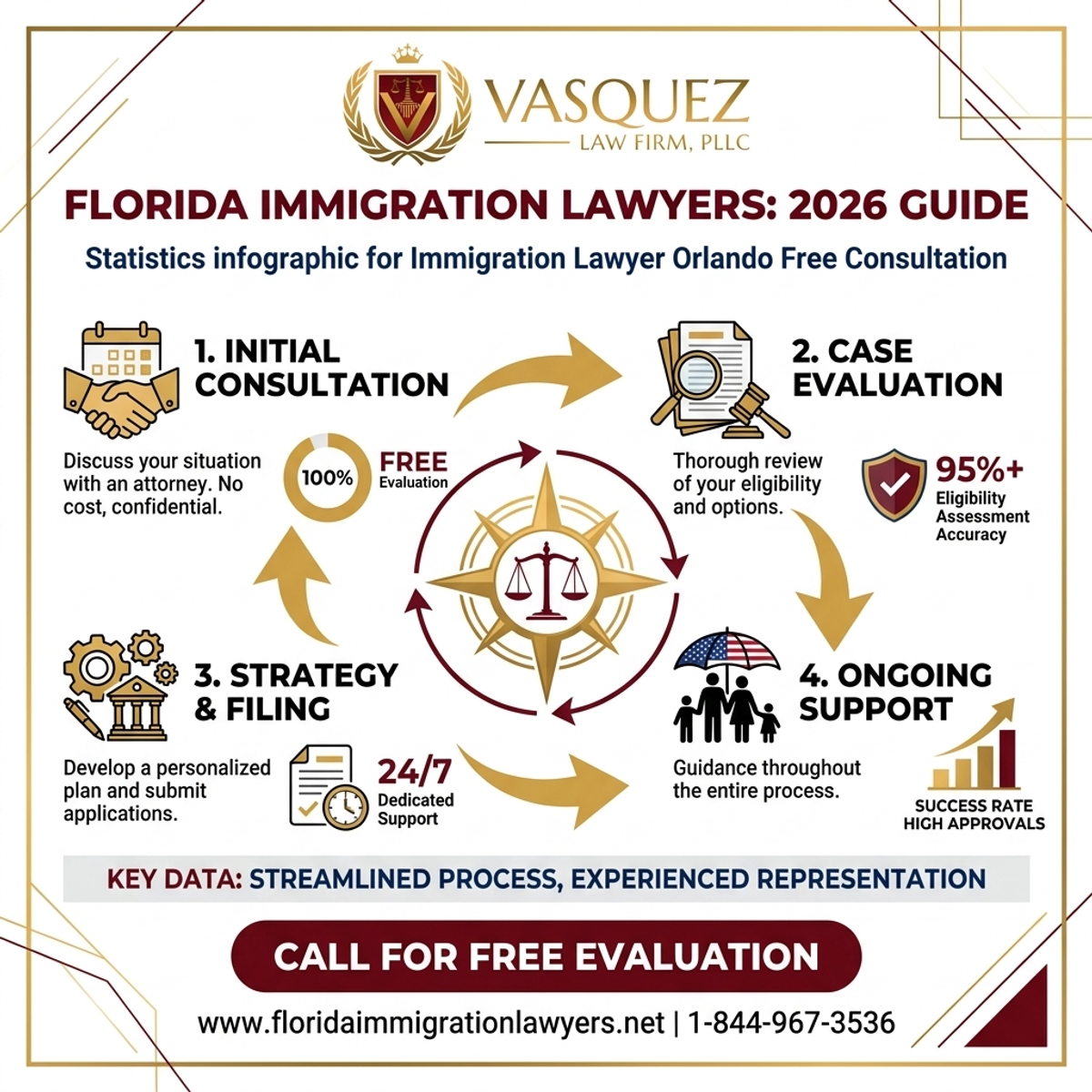
Key Statistics — Immigration Lawyer Orlando Free Consultation: Your 2026 Guide
Typical Immigration Case Timelines (As of 2026)
| Stage | Typical Timeframe | Notes |
|---|---|---|
| Family-Based Petition (I-130) | 6-24 months (initial approval) | Varies greatly by relationship category (immediate relative vs. preference categories). |
| Adjustment of Status (I-485) | 12-36 months | Dependent on underlying visa availability, local USCIS office workload (e.g., Orlando, Miami). |
| Consular Processing | 6-24 months (after I-130 approval) | Involves National Visa Center (NVC) processing and embassy/consulate interview scheduling. |
| Employment-Based Petitions (I-140) | 6-18 months | Can be expedited with premium processing for an additional fee. |
| Naturalization (N-400) | 8-18 months | Includes application review, biometrics, interview, and oath ceremony. |
| Asylum Applications (Affirmative) | 12-60+ months | Initial interview often within months, but decision can take years, especially if referred to court. |
| Deportation/Removal Proceedings | 24-60+ months | Highly variable, depending on court docket, judge, and complexity of defense. |
Understanding Government Filing Fees and Other Expenses for Florida Immigration Cases
Beyond attorney fees, applicants for immigration benefits in Florida must also account for a range of government filing fees and other associated expenses. These fees are set by the U.S. government and are subject to change, often without much advance notice. It is crucial to distinguish these fees from the legal fees paid to your immigration lawyer, as they are separate and must be paid directly to the respective government agencies. As of 2026, these costs remain a significant part of the overall immigration process.
The primary agency collecting fees is USCIS, which charges for virtually every application and petition form, from I-130 family petitions to N-400 naturalization applications. The Department of State also charges fees for visa applications processed through U.S. embassies and consulates abroad, as well as for medical examinations required for many visa categories. Additionally, applicants may incur costs for biometric services, which are mandatory for identity verification and background checks.
Other potential expenses include fees for obtaining certified copies of documents (birth certificates, marriage licenses), translation services if documents are not in English, and travel costs for interviews or appointments, especially if you reside far from a USCIS field office or a U.S. embassy. While your immigration lawyer in Orlando or elsewhere can advise you on the current fee schedule and help you prepare payments, these costs are ultimately your responsibility. It is important to budget for these expenses to avoid delays in your immigration process.
For the most current government filing fees, always refer to the official websites of USCIS and the Department of State. These sources provide the definitive and up-to-date information on all required government charges. Consulting with an attorney from Florida Immigration Lawyers can help you understand the full financial picture for your specific case, ensuring you are prepared for all aspects of the process.
Do not navigate this complex process alone. The stakes are too high to take chances with your future. Contact Florida Immigration Lawyers today for expert guidance and representation. We are ready to help you understand your options and secure your immigration goals.
Common Mistakes to Avoid in Florida Immigration Cases
Navigating immigration law requires precision and a thorough understanding of regulations. Even minor errors can lead to significant delays, denials, or even deportation. Being aware of common mistakes can help you avoid costly setbacks in your Florida immigration case.
- Providing Incomplete or Inaccurate Information: Submitting forms with missing fields or incorrect details is a frequent cause of Requests for Evidence (RFEs) or outright denials. Always double-check every entry.
- Misrepresenting Facts or Submitting Fraudulent Documents: Any form of misrepresentation, whether intentional or accidental, can lead to severe consequences, including a permanent bar from the U.S. and criminal charges under 8 U.S.C. § 1325. Honesty is paramount.
- Missing Deadlines: Immigration processes are time-sensitive. Failing to file applications, respond to RFEs, or appear for interviews by the specified deadlines can result in case closure or denial.
- Not Disclosing Full Immigration or Criminal History: Applicants often try to omit past arrests, deportations, or visa overstays, thinking it will help their case. USCIS and other agencies have access to extensive databases. Full disclosure allows your attorney to address potential issues proactively.
- Failing to Update Contact Information: Moving without notifying USCIS or EOIR of a change of address can cause you to miss crucial notices, interview appointments, or decisions, leading to case abandonment.
- Trying to Self-Represent in Complex Cases: While tempting to save on immigration lawyer costs, handling intricate cases like deportation defense, asylum claims, or complex waivers without legal expertise often leads to unfavorable outcomes.
- Not Preparing Adequately for Interviews: Underestimating the importance of an interview can result in poor performance. Thorough preparation with your attorney is key to confidently answering questions and presenting your case effectively.
- Ignoring Minor Legal Issues: Even seemingly minor infractions, like traffic violations or old arrests, can have immigration consequences. Always consult with your attorney about any legal issues.
- Assuming All Immigration Lawyers Are Equal: Not all attorneys specialize in immigration law, and not all immigration lawyers have experience with every type of case. Ensure you choose a lawyer with relevant expertise for your specific needs.
- Paying Scammers or Unlicensed Practitioners: Be wary of individuals who promise guaranteed results or charge unusually low fees without proper credentials. Only work with licensed attorneys.
- Not Understanding the Fee Structure: Failing to clarify the total immigration lawyer cost, including hourly rates, flat fees, and potential additional expenses, can lead to unexpected financial burdens.
When to Call an Immigration Lawyer in Florida
While some immigration processes appear straightforward, the vast majority benefit from the guidance of a skilled attorney. Knowing when to call an immigration lawyer in Florida, whether for an immigration lawyer Orlando free consultation or full representation, can make a crucial difference in the outcome of your case. You should always consider seeking legal counsel if your situation involves any complexity, uncertainty, or potential risks.
Specific scenarios that warrant immediate legal consultation include receiving a Notice to Appear (NTA) in Immigration Court, facing deportation or removal proceedings, or if you have a criminal history—even minor offenses. If you have previously been denied an immigration benefit, had a visa revoked, or overstayed a previous visa, an attorney can help analyze the reasons for denial and strategize a path forward. Complex family situations, such as prior marriages or adoptions, or intricate employment-based petitions, also benefit immensely from legal expertise.
Furthermore, if you are applying for asylum or refugee status, navigating the specific requirements and proving your claim of persecution is incredibly challenging without legal representation. Business immigration, investor visas, or complex waivers also demand specialized knowledge. Even if you believe your case is simple, a free consultation with Florida Immigration Lawyers can provide peace of mind and confirm you are on the right track. We are here to offer clarity and robust representation for all your immigration needs across Florida.
About Florida Immigration Lawyers
Florida Immigration Lawyers is a leading law firm dedicated to providing exceptional immigration legal services to individuals and businesses throughout the state of Florida. Our team of experienced attorneys is committed to guiding clients through every step of the complex U.S. immigration system with professionalism, integrity, and compassion. We understand the profound impact immigration matters have on lives and families, and we strive to achieve the best possible outcomes for our clients.
We offer a comprehensive range of immigration services, including family-based immigration, employment visas, deportation defense, asylum and refugee claims, naturalization, and waivers. Our attorneys are well-versed in the latest immigration laws and policies, ensuring that our advice is always current and effective. We pride ourselves on clear communication, personalized attention, and a client-focused approach that sets us apart.
Choosing Florida Immigration Lawyers means choosing a partner who will stand by you. We are available 24/7 to address urgent concerns and offer free consultations to help you understand your legal options. From our offices serving Orlando, Miami, Tallahassee, and beyond, we are here to provide the expert legal guidance you deserve. Contact us today at 1-844-967-3536 or visit our website at floridaimmigrationlawyers.net to schedule your free consultation.
Sources and References
- U.S. Citizenship and Immigration Services (USCIS)
- USCIS - Our Fees
- Executive Office for Immigration Review (EOIR)
- U.S. Department of State - Bureau of Consular Affairs
- U.S. Department of State - Fees for Visa Services
- 8 U.S. Code § 1325 - Improper entry by alien
- Immigration and Nationality Act (INA) - INA § 204 (Petition for Immigrant Status)
- Immigration and Nationality Act (INA) - INA § 240 (Removal Proceedings)
- Code of Federal Regulations (CFR) - 8 CFR (Aliens and Nationality)
Related services: immigration practice areas, family immigration services, experienced immigration attorneys, free immigration consultation.
This article provides general legal information and is not intended as legal advice. Every case is unique, and outcomes depend on specific facts and circumstances. Contact an attorney for advice about your particular situation.
Your immigration journey is too important to navigate without expert guidance. For reliable, experienced, and compassionate legal representation in Florida, turn to Florida Immigration Lawyers. We offer free consultations to help you understand your options and develop a strong strategy for your case. Call us today at 1-844-967-3536 to schedule your free consultation. Se Habla Español - Estamos aquí para ayudarle.
Do Not Navigate This Process Alone
Our experienced immigration attorneys are ready to fight for you. Get a free, confidential consultation today.
Se Habla Español
Frequently Asked Questions
Harold Estrada-Rodriguez
Florida Immigration Attorney · FL Bar No. 1041171
Florida Bar attorney handling Florida-jurisdiction immigration matters. Bilingual representation, free consultations.
Available 24/7 - Free Evaluations
Related Legal Services
Our Florida immigration attorneys can help you with experienced immigration attorneys, business immigration and asylum protection. Call today at 1-844-967-3536 for a free consultation.
Related Links
Related Topics
Free Legal Consultation
Discuss your case with our experienced attorneys. We're available 24/7.
Se Habla Español - Estamos aquí para ayudarle.
Related Articles
DV-2027 Registration Period: Diversity Visa in Florida
The DV-2027 registration period for the Diversity Visa Lottery is crucial for those seeking U.S. residency. Learn how to apply and avoid common pitfalls in this comprehensive guide.
DACA Florida 2026 Guide: Renewing Your Deferred Action
Renewing your DACA status in Florida for 2026 is a crucial process for thousands of Dreamers. This comprehensive guide from Florida Immigration Lawyers provides essential information on eligibility criteria, step-by-step application procedures, necessary documentation, and expected processing timelines. Understand the specific forms required, the importance of timely submission, and the potential costs involved. We also delve into the challenges posed by the evolving legal landscape surrounding DACA and offer insights into common mistakes to avoid during your renewal. Given the program's ongoing legal scrutiny, securing expert legal assistance is more important than ever. Our firm stands ready to assist DACA recipients across Florida, offering free consultations and dedicated support to ensure a smooth and successful renewal.
Dual Citizenship Lawyer: Tips for Your Florida Interview
Preparing for a citizenship interview in Florida? Discover key tips to navigate the process effectively. Learn what to expect during your interview and how to prepare thoroughly to ensure success.
Why Is Form N-600 Taking So Long? Delays in 2026
For families in Florida seeking to confirm their child's U.S. citizenship via Form N-600, delays are a common and frustrating reality in 2026. USCIS backlogs, thorough background checks, and Requests for Evidence (RFEs) are leading causes of extended processing times, often stretching beyond typical expectations. Understanding the intricate eligibility requirements for derived or acquired citizenship, meticulously preparing all necessary documentation, and responding promptly to any USCIS inquiries are crucial steps to mitigate delays. This comprehensive guide from Florida Immigration Lawyers explores the N-600 process, common pitfalls, and when professional legal assistance is indispensable for families across the state, including Orlando. Navigate the complexities with confidence and expert support.