Military Naturalization Florida: Expedited Path to Citizenship
For military personnel stationed in Florida, achieving U.S. citizenship through military naturalization is an expedited and often fee-exempt process. This guide details the unique benefits available under INA Sections 328 and 329, providing a step-by-step overview of the N-400 application for service members at bases like MacDill AFB. Learn about the specific eligibility requirements, the crucial documents needed, and what to expect regarding timelines for expedited processing as of 2026. We also cover potential costs, common mistakes to avoid, and when legal assistance from Florida Immigration Lawyers is essential to navigate complex cases. Secure your future in the nation you serve with guidance.
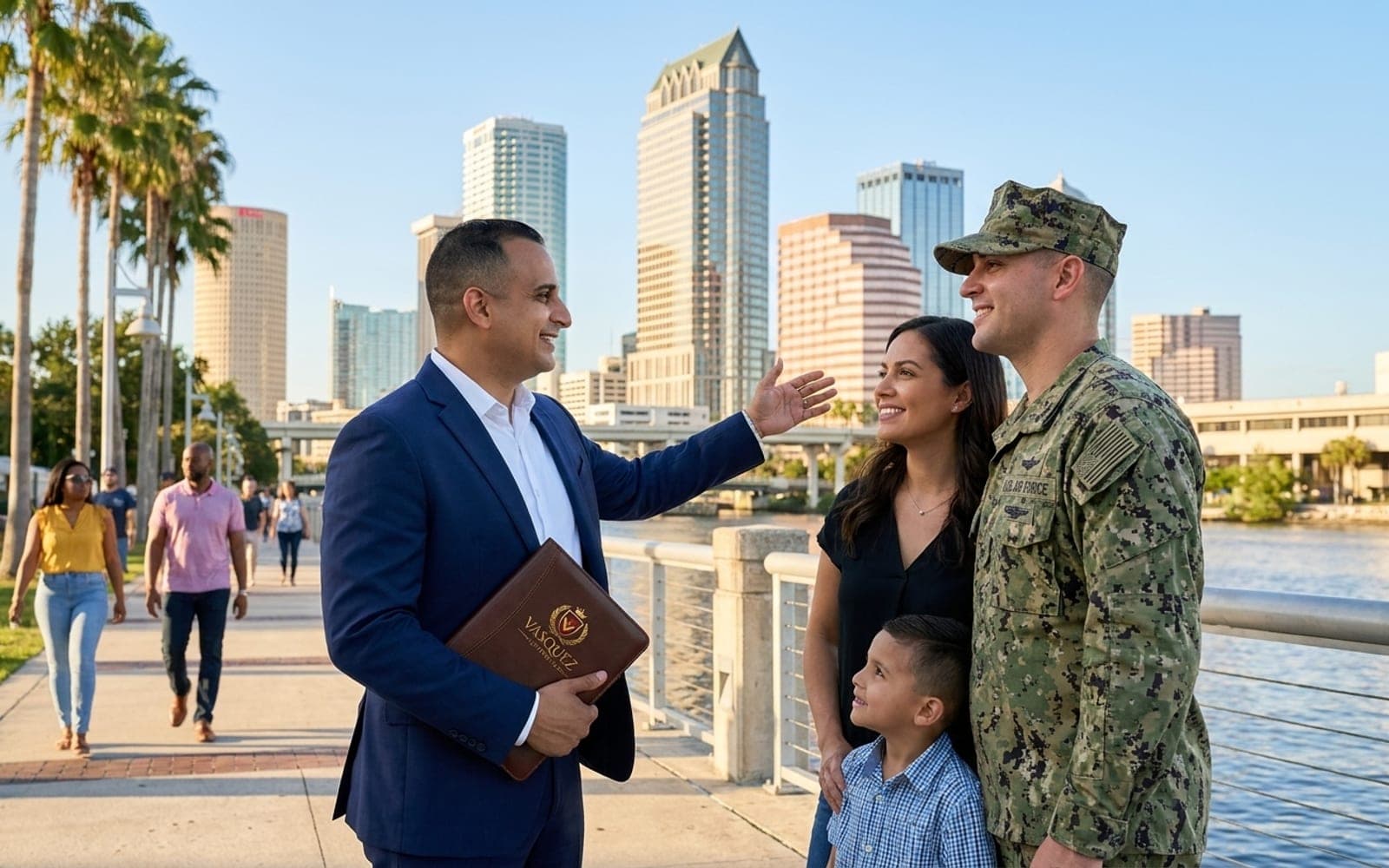
Military naturalization in Florida provides an expedited pathway to U.S. citizenship for eligible service members, and in some cases, their families. This process, governed by sections of the Immigration and Nationality Act (INA), often waives typical residency and fee requirements, recognizing the sacrifices made by those serving our nation. Service members stationed at bases like MacDill AFB, Pensacola NAS, or Homestead ARB can apply using Form N-400, Application for Naturalization, under special provisions. The process is designed to be faster, often concluding within months, and is available both domestically and overseas. Consulting with an experienced Florida immigration lawyer is crucial to navigate the specific requirements and ensure a smooth application.
- Expedited processing for U.S. military service members.
- Waiver of many fees and residency requirements.
- Eligibility extends to those serving honorably during peacetime or wartime.
- Available for service members stationed in Florida and overseas.
- Legal guidance is highly recommended for a successful application.
For brave men and women serving in the U.S. Armed Forces, the dream of American citizenship often comes with unique benefits and an expedited pathway. If you are a service member or a qualifying family member stationed in Florida, understanding the military naturalization process is critical. Florida, home to numerous vital military installations such as MacDill Air Force Base in Tampa, Naval Air Station Pensacola, and Naval Air Station Jacksonville, is a hub for military personnel seeking to solidify their ties to the nation they loyally serve. The U.S. government recognizes the profound sacrifices made by military personnel and offers special provisions under the Immigration and Nationality Act (INA) to streamline their journey to becoming U.S. citizens.
This comprehensive guide from Florida Immigration Lawyers will walk you through the intricacies of military naturalization, covering eligibility, the application process, required documentation, timelines, and potential costs. We will delve into how service members in Florida can leverage these provisions, address common pitfalls, and highlight when professional legal assistance becomes indispensable. Our goal is to empower you with the knowledge needed to navigate this important step toward U.S. citizenship. Call Florida Immigration Lawyers at 1-844-YO-PELEO for a free consultation to discuss your specific situation and learn how we can assist you.
What are the eligibility requirements for military naturalization in Florida?
To qualify for military naturalization in Florida, service members must meet specific criteria outlined in the Immigration and Nationality Act (INA) Sections 328 and 329. Generally, an applicant must be a lawful permanent resident (green card holder) or, in some cases, have served honorably for at least one year. These provisions allow for the waiver of many standard naturalization requirements, such as continuous residency and physical presence in the U.S. Applicants must also demonstrate good moral character, an understanding of English, and knowledge of U.S. history and government, although some waivers apply for certain disabilities or length of service. Honorable service is paramount, and applicants must not have been dishonorably discharged from the U.S. Armed Forces.
The eligibility for military naturalization is primarily governed by INA Sections 328 and 329. Section 328 applies to those who have served honorably in the U.S. Armed Forces for at least one year at any time, even if they are no longer serving. This provision waives the typical residency and physical presence requirements. Service members must be lawful permanent residents at the time of their interview and demonstrate good moral character for the statutory period (typically five years, but can be shorter based on service). They must also meet the English and civics requirements, although exceptions exist for those with certain medical conditions.
Section 329 applies to those who have served honorably during designated periods of hostilities (wartime). This provision is even more generous, allowing individuals to naturalize even without being a lawful permanent resident if they enlisted or were inducted in the U.S., American Samoa, Swains Island, or on board a public vessel. They must have served honorably for any period during a designated period of hostilities and apply while still in service or within six months of an honorable discharge. This pathway is a significant benefit for foreign nationals who join the military. For those stationed at bases like MacDill AFB, the local USCIS field office in Tampa is well-versed in processing these applications, often prioritizing them due to the expedited nature of military cases. Understanding which section applies to your service is crucial for a successful application.
Special Considerations for Military Families
While the direct naturalization benefits primarily apply to service members, certain family members may also benefit. Spouses of U.S. citizens serving in the military who are stationed abroad may be eligible for naturalization under INA 319(b) without meeting the usual residency requirements, provided they intend to reside in the U.S. immediately following naturalization. This is particularly relevant for military families in Florida whose loved ones may be deployed overseas. Children of U.S. citizen service members may also derive citizenship automatically if certain conditions are met, often without the need for a separate naturalization application. These provisions underscore the government's commitment to supporting military families. Our team at Florida Immigration Lawyers can help assess the eligibility of both service members and their families, ensuring all potential avenues to citizenship are explored.
How does the N-400 military application process work for service members?
The N-400 military application process for service members is streamlined to expedite citizenship. It begins with filing Form N-400, Application for Naturalization, marking the specific military provisions. USCIS often provides dedicated support for military applications, including expedited processing of fingerprinting (biometrics) and interviews. Unlike civilian applicants, military personnel may attend their naturalization interviews at military installations or overseas U.S. embassies and consulates. The process culminates in a naturalization ceremony, which can also be held on base or even abroad, allowing service members to become citizens without significant disruption to their duties.
The process of applying for naturalization as a service member involves several key steps, designed to be as efficient as possible. As of 2026, the general steps include:
-
Determine Eligibility: First, ensure you meet the requirements under INA 328 or 329. This involves verifying your honorable service, whether you are a lawful permanent resident (if applicable), and your good moral character. Service members should obtain a certified copy of their Form N-426, Request for Certification of Military or Naval Service, which is crucial for proving honorable service. This form is completed by a superior officer and submitted with the N-400.
-
Complete Form N-400: Fill out Form N-400, Application for Naturalization. Be sure to clearly indicate that you are applying under the military provisions by marking the appropriate boxes. While many fees are waived for military applicants, it's essential to complete all sections accurately. For those stationed in Florida, specific instructions for filing with the USCIS Lockbox facility are provided on the USCIS website.
-
Gather Supporting Documents: Collect all necessary documents, including your military service records (DD-214, N-426), green card (if applicable), passport photos, and any other personal identification or legal documents. A detailed checklist is provided in the next section.
-
Submit Application: Mail your completed N-400 and supporting documents to the designated USCIS Lockbox facility. It is advisable to send the application via certified mail with a return receipt to confirm delivery. USCIS will then send a receipt notice (Form I-797C, Notice of Action) confirming receipt of your application.
-
Biometrics Appointment: After filing, USCIS will send an appointment notice for biometrics (fingerprints, photograph, and signature). For military applicants, these appointments are often expedited and can sometimes be completed at military installations or U.S. embassies/consulates overseas. This data is used for background checks.
-
Interview: You will receive a notice for a naturalization interview. For service members, interviews may be scheduled at a local USCIS field office (e.g., Tampa, Orlando, Miami for those in Florida), or, if deployed, at a U.S. embassy, consulate, or military installation abroad. During the interview, an USCIS officer will review your application, ask questions about your eligibility, and administer the English and civics tests (unless waived).
-
Decision and Oath Ceremony: If your application is approved, you will receive a notice for an Oath of Allegiance ceremony. These ceremonies can also be held at military bases or overseas. Upon taking the Oath, you become a U.S. citizen and receive your Certificate of Naturalization. This is a momentous occasion, often celebrated with fellow service members and family.
What documents are needed for an expedited military naturalization application?
For an expedited military naturalization application, service members must compile a specific set of documents to prove their eligibility and identity. The most critical document is Form N-426, Certification of Military or Naval Service, which verifies honorable service. Other essential documents include a copy of the applicant's green card (if applicable), military identification, passport-style photographs, and proof of any name changes. Dependents applying under special provisions will need additional documents, such as marriage certificates or birth certificates, to establish their relationship to the service member. Thorough preparation of these documents is vital for a smooth and quick processing of the application.
A complete and accurate submission of documents is crucial for avoiding delays in your military naturalization application. Here is a comprehensive checklist:
- Form N-400, Application for Naturalization: The primary application form, completed and signed.
- Form N-426, Request for Certification of Military or Naval Service: This form must be completed and certified by an authorized military official. It confirms your honorable service, which is the cornerstone of military naturalization.
- Photocopy of your Permanent Resident Card (Green Card): If you are a lawful permanent resident applying under INA 328.
- Two Passport-Style Photographs: Must meet USCIS specifications (2x2 inches, white background, unmounted, unretouched).
- Photocopy of your military identification card.
- Photocopies of all pages of your passport(s): Both current and expired, if available.
- Photocopies of your birth certificate.
- Photocopies of marriage certificate(s): If you are married and your spouse is a U.S. citizen or permanent resident, or if you are applying under provisions related to your marriage.
- Photocopies of divorce decrees or death certificates: For any previous marriages of yourself or your spouse.
- Evidence of name change: If applicable (e.g., marriage certificate, court order).
- Records of arrests, citations, or convictions: Even if expunged or dismissed, provide certified court dispositions. This is crucial for demonstrating good moral character.
- Proof of payment for any child support or alimony obligations.
- Tax returns or tax transcripts: Especially if you have lived outside the U.S. for extended periods.
- Any documents proving your honorable discharge: Such as a DD-214, if you are no longer serving.
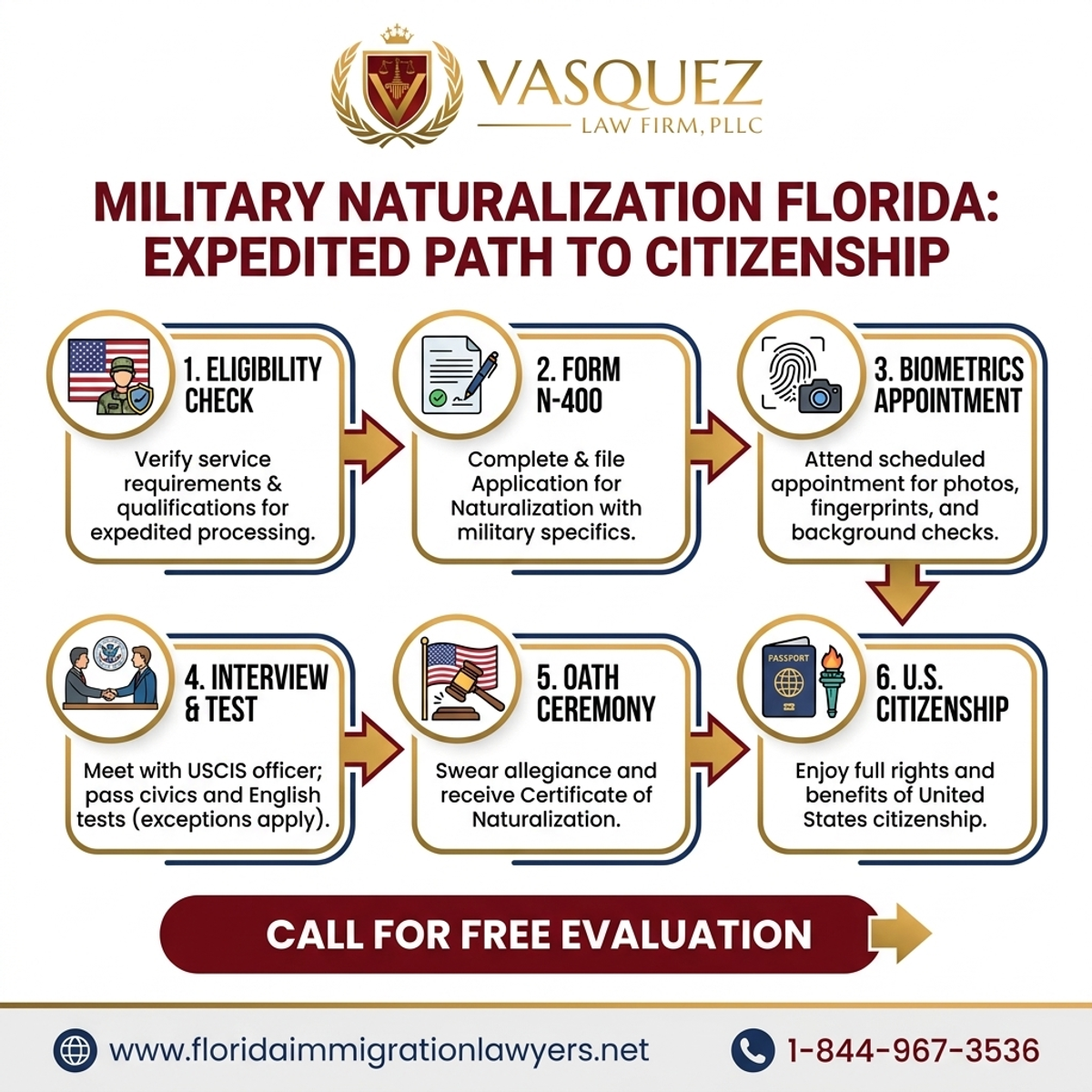
Step-by-Step Process — Military Naturalization Florida: Expedited Path to Citizenship
Ensuring every document is meticulously prepared and included will significantly contribute to the efficiency of your application. Missing or incorrect documents are a primary cause of delays and Requests for Evidence (RFEs) from USCIS.
How long does military naturalization take in Florida as of 2026?
As of 2026, military naturalization in Florida typically takes significantly less time than standard civilian naturalization, often ranging from 3 to 9 months from filing to oath ceremony. The expedited processing is a direct benefit for service members, with USCIS prioritizing these applications. Factors influencing the exact timeline include the volume of applications at the relevant USCIS field office (such as Tampa or Orlando), the completeness of the application, and the applicant's deployment status. While individual cases vary, the government's commitment to swiftly naturalizing military personnel ensures a generally faster path.
The expedited nature of military naturalization is one of its most compelling advantages. While civilian naturalization can take 12-18 months or even longer, military applications are typically processed much faster. Here’s a general timeline:
| Stage | Typical Timeframe (As of 2026) | Notes |
|---|---|---|
| Application Submission to Receipt Notice | 1-3 weeks | USCIS sends Form I-797C confirming receipt. |
| Receipt Notice to Biometrics Appointment | 3-6 weeks | Expedited scheduling for military applicants. |
| Biometrics to Interview Scheduling | 1-4 months | Can be faster if applicant is deployed or at an overseas location. |
| Interview to Decision | Immediate to 2 weeks | Often decided on the spot, or within a few days. |
| Decision to Oath Ceremony | 2-8 weeks | Can be held on base, at a USCIS office, or even overseas. |
| Total Processing Time | 3-9 months (approx.) | Highly dependent on individual circumstances and USCIS workload. |
It's important to remember that these are typical timeframes. Each case is unique, and unexpected delays can occur, such as requests for additional evidence or issues with background checks. Being proactive and responsive to any USCIS requests can help maintain the expedited pace of your application. Florida-based service members will likely interact with the USCIS Tampa Field Office or other regional offices, which generally have efficient processing for military cases.
What are the costs associated with military naturalization and fee waivers?
One of the significant benefits of military naturalization is the waiver of many standard USCIS fees. As of 2026, eligible service members applying under INA 328 or 329 are generally exempt from paying the Form N-400 filing fee and the biometrics fee. This exemption significantly reduces the financial burden of applying for citizenship. However, applicants may still incur costs for obtaining necessary supporting documents, such as birth certificates, marriage licenses, or certified court records, as well as potential legal fees if they choose to hire an attorney. These waivers are a direct acknowledgment of military service, making citizenship more accessible.
The financial aspect of naturalization can be a concern for many applicants. However, military service members benefit from substantial fee waivers. Here’s a breakdown of typical costs and waivers:
| Item | Typical Fee (As of 2026) | Notes |
|---|---|---|
| Form N-400 Filing Fee | Waived for Military | Mandatory waiver for eligible service members. |
| Biometrics Fee | Waived for Military | Mandatory waiver for eligible service members. |
| Medical Examination Fee | Varies ($200-$500) | Required only if you have certain medical conditions or seek a disability waiver for English/civics tests. Not always required for military naturalization unless specific waivers are sought. |
| Passport Photos | $10-$20 | Small out-of-pocket expense. |
| Certified Copies of Documents | Varies ($10-$50 per document) | Costs for obtaining official birth certificates, marriage licenses, court records, etc. |
| Attorney Fees | Varies (Free Consultation) | While not mandatory, legal representation can be invaluable. Florida Immigration Lawyers offers free consultations. |
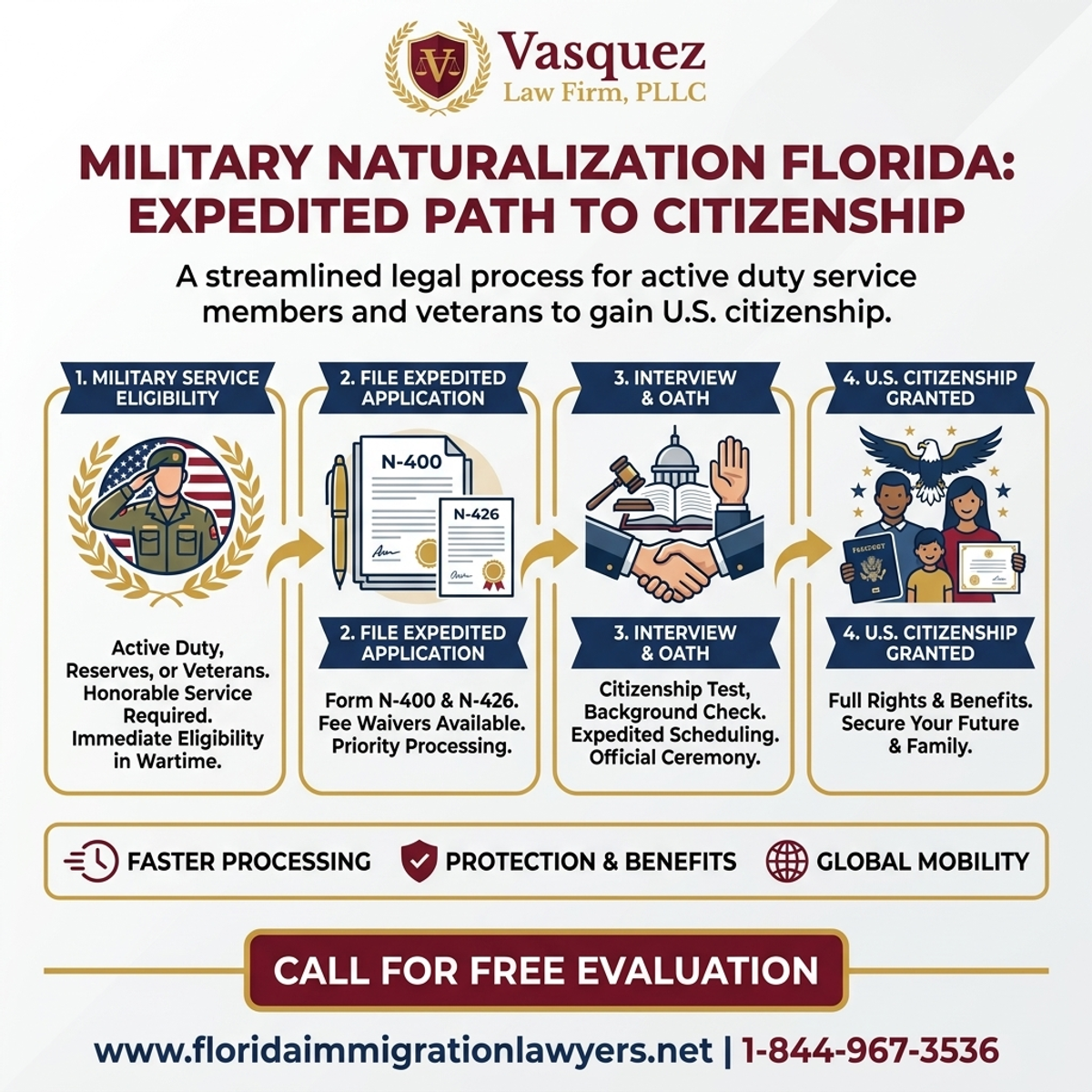
Key Statistics — Military Naturalization Florida: Expedited Path to Citizenship
It is crucial to note that while the USCIS filing and biometrics fees are waived, applicants are responsible for other incidental costs. These can include transportation to appointments, mailing costs, and fees for obtaining certified copies of personal documents from government agencies. Always check the official USCIS website for the most current fee information, although military waivers typically remain consistent. These fee exemptions underscore the government's recognition of military service and aim to remove financial barriers to citizenship for those who serve.
Do not navigate this process alone. Contact Florida Immigration Lawyers today. Our experienced team is ready to provide the guidance and support you need to secure your U.S. citizenship.
Benefits of Military Naturalization for Service Members and Families
Military naturalization offers a host of significant benefits beyond simply acquiring U.S. citizenship. For service members, it can open doors to career advancement within the military, as certain positions and security clearances may require citizenship. It also provides a stronger sense of belonging and integration into the nation they protect. For military families, naturalization provides stability, ease of international travel, and access to a wider range of government benefits and protections. Children of U.S. citizens born abroad can often acquire citizenship automatically, simplifying their status. The ability to vote, hold public office, and serve on a jury are fundamental rights that come with citizenship, further empowering service members in their civilian lives after service. For those stationed at Florida bases, this means full participation in the vibrant communities surrounding installations like MacDill or Pensacola.
Overcoming Challenges and Seeking Legal Assistance at Florida Bases
While the military naturalization process is expedited, it is not without its challenges. Deployments, frequent transfers, and the complexities of gathering documentation from various sources can complicate matters. Service members stationed at Florida bases might face unique challenges related to their specific duties or deployment schedules. For instance, being deployed overseas can impact interview scheduling, though USCIS has provisions for interviews at U.S. embassies or consulates. Additionally, any prior arrests, even minor ones, or issues with good moral character can significantly jeopardize an application and require expert legal intervention. Navigating these complexities alone can be daunting, potentially leading to delays or even denials. This is where the expertise of Florida Immigration Lawyers becomes invaluable. We understand the nuances of military service and immigration law, providing tailored advice and representation to ensure a smooth path to citizenship, whether you are at MacDill, Jacksonville, or Homestead.
Common Mistakes to Avoid in Military Naturalization
Navigating the military naturalization process, while expedited, still requires careful attention to detail. Avoiding common mistakes can prevent significant delays or even denial of your application.
-
Failing to Obtain Form N-426: This form, certified by your commanding officer, is critical proof of honorable service. Without it, USCIS cannot verify your military eligibility, leading to delays or rejection. Ensure it's accurately completed and signed.
-
Incomplete or Inaccurate N-400 Form: Any missing information, incorrect dates, or unanswered questions on your N-400 application can trigger a Request for Evidence (RFE) or an interview delay. Double-check every section before submission.
-
Not Disclosing All Arrests/Citations: Even minor infractions, expunged records, or incidents that didn't lead to conviction must be disclosed. Failure to do so is considered misrepresentation and can result in a denial based on a lack of good moral character, potentially leading to deportation proceedings.
-
Assuming All Fees Are Waived: While USCIS filing and biometrics fees are waived for military applicants, you are still responsible for costs like passport photos, certified copies of documents, or attorney fees. Misunderstanding this can lead to unexpected expenses.
-
Missing Deadlines or Appointments: Failing to respond to RFEs, missing biometrics appointments, or not showing up for your interview can result in the abandonment or denial of your application. Always keep track of USCIS communications.
-
Lack of English or Civics Knowledge (if not waived): If you are not eligible for a waiver, you must pass the English and civics tests. Neglecting to prepare adequately can lead to failure and require re-testing, extending your timeline.
-
Not Updating USCIS of Address Changes: Military personnel frequently move. Failing to inform USCIS of every address change via Form AR-11 within 10 days can lead to missed notices and application issues, potentially impacting your status.
-
Dishonorable Discharge or Desertion: Any negative marks on your military record, especially a dishonorable discharge or desertion, will almost certainly disqualify you from military naturalization benefits and may lead to severe immigration consequences.
-
Failing to Seek Legal Counsel for Complex Cases: If you have a criminal record, previous immigration violations, or complex family situations, attempting to navigate the process alone can be detrimental. Legal expertise is crucial in such scenarios.
-
Not Preparing for the Interview: While expedited, the interview is still a formal process. Be prepared to answer questions about your application, military service, and good moral character. Review your N-400 thoroughly.
When to Call a Lawyer for Military Naturalization
While military naturalization offers a clear path, certain situations warrant immediate legal consultation to protect your interests and ensure a successful outcome. You should call Florida Immigration Lawyers if you have any criminal history, including minor arrests or convictions, as these can impact your good moral character assessment. If you have previously been denied naturalization or have any prior immigration violations, legal counsel is essential to address these issues effectively. Complex family situations, such as divorces, child support issues, or dependents living abroad, also benefit from an attorney's guidance. Furthermore, if you are currently deployed or anticipate deployment during the application process, a lawyer can help coordinate with USCIS to ensure your application progresses smoothly. Any doubts about your eligibility, the documentation required, or how to respond to USCIS requests are strong indicators that professional legal assistance is needed. Our team is experienced in handling the unique challenges faced by service members in Florida.
About Florida Immigration Lawyers
Florida Immigration Lawyers is an immigration law firm dedicated to serving military personnel and their families across the Sunshine State. With a deep understanding of the unique challenges and benefits associated with military naturalization, our experienced attorneys provide compassionate, strategic, and effective legal representation. We are committed to helping service members stationed at MacDill AFB, Pensacola NAS, Jacksonville NAS, Homestead ARB, and throughout Florida achieve their dream of U.S. citizenship. Our firm offers comprehensive services, from initial eligibility assessments and document preparation to representation during interviews and addressing complex legal issues. We pride ourselves on offering personalized attention and clear communication, ensuring you feel supported every step of the way. We are available 24/7 for your convenience and offer free consultations. Call us today at 1-844-YO-PELEO or visit www.floridaimmigrationlawyers.net to learn how we can assist you in securing your future in the United States.
Sources and References
- U.S. Citizenship and Immigration Services (USCIS) - Military Members and Their Families
- Executive Office for Immigration Review (EOIR)
- U.S. Department of State - Travel.State.Gov
- 8 U.S.C. Chapter 12 - Immigration and Nationality Act (INA) Sections 328, 329, and 319(b)
- 8 CFR Part 328 - Naturalization of Persons Who Served in the Armed Forces of the United States During Hostilities
- 8 CFR Part 329 - Naturalization of Persons Who Served in the Armed Forces of the United States
- USCIS Policy Manual, Volume 12, Part I - Military Members and Their Families
Related services: citizenship test preparation, dual citizenship guidance, family-based immigration.
This article provides general legal information and is not intended as legal advice. Every case is unique, and outcomes depend on specific facts and circumstances. Contact an attorney for advice about your particular situation.
Your service to our nation is commendable, and securing your U.S. citizenship is a privilege you have earned. Do not let the complexities of immigration law stand in your way. Contact Florida Immigration Lawyers today at 1-844-YO-PELEO for a free, confidential consultation. We are here to support you every step of the way. Se Habla Espanol - Estamos aqui para ayudarle.
If you need legal assistance, learn more about speak with a citizenship lawyer, or call us at 1-844-YO-PELEO for a free consultation.
Do Not Navigate This Process Alone
Our experienced immigration attorneys are ready to fight for you. Get a free, confidential case review today.
Se Habla Español
Or leave your details and we’ll call you:
Free Evaluation in 24 Hours
Or talk to us right now
AI voice assistant — available 24/7
FreeFrequently Asked Questions

William J. Vásquez
Founding Attorney · Vasquez Law Firm
U.S. Air Force veteran and immigration attorney with years of hands-on U.S. immigration experience. J.D., NCCU School of Law. AILA member. Admitted to the 4th, 5th, and 11th Circuit Courts.
Available 24/7 - Free Evaluations
Reviewed for legal accuracy by William J. Vásquez
Licensed in North Carolina; U.S. immigration is federal practice.
Related Legal Services
Our Florida immigration attorneys can help you with asylum protection, citizenship and naturalization and immigration practice areas. Call today at 1-844-YO-PELEO for a free case review.
Related Links
Related Topics
Free Legal Case Review
Discuss your case with our experienced attorneys. We're available 24/7.
Se Habla Español - Estamos aquí para ayudarle.
Related Articles
DUI Immigration Consequences in Florida 2026
A DUI conviction in Florida can have severe immigration consequences, potentially leading to inadmissibility, deportation, or denial of immigration benefits. For non-citizens, a DUI is not just a traffic offense but a serious criminal matter that federal immigration law scrutinizes closely. Factors like multiple offenses, injury, or property damage can escalate a simple DUI to a Crime Involving Moral Turpitude (CIMT) or even an aggravated felony, triggering mandatory detention and removal proceedings. Understanding the specific nature of your Florida conviction and its interpretation under the Immigration and Nationality Act (INA) is crucial. This article outlines how DUIs impact immigration status, the grounds for inadmissibility and deportation, a step-by-step guide to navigating the process, essential documentation, and expected timelines for 2026. We also highlight common mistakes to avoid and when to seek legal counsel from an experienced immigration attorney. Florida Immigration Lawyers offers comprehensive support for individuals facing these challenging situations, providing expert guidance through complex legal landscapes.
Dual Citizenship Lawyer in Florida: What You Need to Know
For Florida residents, the concept of dual citizenship, or holding two passports, offers a compelling blend of opportunities and challenges. While the U.S. generally permits dual nationality, the path to achieving this status requires a meticulous understanding of both U.S. immigration laws and the citizenship policies of your country of origin. This guide explores the definition of dual citizenship, the detailed step-by-step process for U.S. naturalization, and the significant benefits and potential pitfalls involved. We cover essential documentation, typical timelines, and cost considerations for 2026, providing crucial insights for anyone in Orlando, Miami, or across Florida considering this important legal step. Learn about common mistakes to avoid and understand when to seek professional legal counsel to navigate this complex process successfully. Florida Immigration Lawyers is here to provide expert, bilingual support for your dual citizenship journey.
EAD Advance Parole Combo Card in Florida: What You Need
An EAD advance parole combo card allows individuals with pending adjustment applications to both work and travel abroad without jeopardizing their green card application. Learn how to apply in Florida, what documents you need, and common mistakes to avoid.
EAD Advance Parole Combo Card in Florida 2026
For individuals with a pending Form I-485, Application to Register Permanent Residence or Adjust Status, the EAD Advance Parole Combo Card is an essential document. This single card combines the authorization to work legally in the U.S. (Employment Authorization Document - EAD) with permission to travel internationally and re-enter without abandoning your green card application (Advance Parole). This guide from Florida Immigration Lawyers provides a comprehensive overview for applicants in Florida in 2026, covering eligibility, the step-by-step application process, required documents, expected processing times, and associated costs. We also highlight common mistakes to avoid and when to seek legal counsel to ensure a smooth and successful immigration journey. Understanding this vital card is key to maintaining stability while awaiting your permanent residency approval.