Japan Immigration News 2026: Florida Residents' Guide &
For Florida residents eyeing Japan in 2026, staying updated on immigration news is essential. This guide covers visa application steps, COE requirements, and crucial documents for various visa types, from temporary visits to work and student stays. Learn about processing timelines, potential costs, and common mistakes to avoid. We highlight the role of the Consulate-General of Japan in Miami and emphasize the importance of accurate applications. Florida Immigration Lawyers offers expert assistance to navigate these complexities, ensuring a smooth process for individuals in Hollywood, Miami, and across the state. Contact us for a free consultation to discuss your Japan immigration plans.

Staying informed about japan immigration news for 2026 is crucial for Florida residents planning to visit or move. Changes in visa policies, Certificate of Eligibility (COE) requirements, and application procedures can significantly impact your plans. Understanding these updates helps ensure a smooth process. Florida Immigration Lawyers offers expert guidance to navigate these complexities effectively.
- Japan's immigration policies are subject to ongoing updates.
- A Certificate of Eligibility (COE) is often required for long-term stays.
- Visa applications are typically processed through the Japan Consulate Miami for Florida residents.
- Consulting with a Florida immigration attorney can prevent common application errors.
- Be aware of processing times and required documentation for 2026.
Are you a Florida resident, perhaps from Hollywood or the greater Miami area, dreaming of experiencing Japan's vibrant culture, pursuing educational opportunities, or even establishing a business presence? The prospect of moving or traveling internationally is exciting, but navigating immigration laws can feel daunting. Staying current with japan immigration news is essential for a successful journey.
This comprehensive guide will illuminate the latest updates, requirements, and processes for Japan immigration in 2026, specifically tailored for those residing in the Sunshine State. We understand your concerns and are here to help you understand what you need to know. For personalized assistance with your Japan immigration questions, call Florida Immigration Lawyers at 1-844-967-3536 for a free consultation.
Understanding Japan Immigration News in Florida for 2026
The relationship between Florida and Japan is rich with cultural exchange, economic partnerships, and historical ties. Many Florida residents, from students in Gainesville to professionals in Hollywood and Tampa, find themselves drawn to Japan for various reasons. As we look towards 2026, it is important to understand how evolving global and bilateral policies might influence immigration procedures.
Japan, like any sovereign nation, regularly reviews and updates its immigration policies to reflect economic needs, demographic shifts, and international relations. For Florida residents, particularly those in South Florida, the Consulate-General of Japan in Miami serves as the primary point of contact for visa applications. Keeping an eye on announcements from this consulate, as well as official Japanese government sources, is paramount.
Key Updates and Trends Affecting Florida Residents
While specific changes for 2026 are continually developing, several trends are expected to persist. Japan continues to seek skilled foreign workers and highly specialized professionals, potentially streamlining pathways for certain employment visas. Additionally, there may be continued emphasis on student exchange programs, fostering educational ties between our regions.
Florida's diverse population, including a significant number of individuals with international backgrounds, often has family members or business interests abroad. This makes any shift in international travel or immigration policies, including those from Japan, highly relevant. For instance, temporary visitor visas, as described under 8 CFR Part 214, are generally straightforward but can be impacted by global health situations or security concerns, even when applying for a Japanese visa.
The Certificate of Eligibility (COE) remains a cornerstone for most long-term visas. This document, issued by the Ministry of Justice in Japan, confirms that an applicant meets the conditions for landing in Japan. Obtaining a COE can be the most time-consuming part of the application process. Staying informed about the latest requirements for a COE Japan visa is vital, and our firm can assist you in understanding these nuances.
Navigating the Japan Visa Application Process: A Step-by-Step Guide
Applying for a Japanese visa from Florida involves several critical steps. While the exact requirements vary by visa category, the general process remains consistent. Careful preparation and adherence to guidelines are essential for a successful outcome.
Initial Steps and Determining Your Visa Category
Before initiating any application, you must accurately identify the purpose of your visit to Japan. This determination dictates the specific visa category you will pursue. Common categories include temporary visitor (tourism, short-term business), student, work (e.g., highly skilled professional, specified skills), spouse/dependent, and long-term resident visas.
Misclassifying your visa type can lead to significant delays or even outright denial. For instance, applying for a tourist visa when your true intent is to work is a serious misrepresentation. If you are unsure which category applies to your situation, seeking legal counsel early can prevent costly errors and potential inadmissibility issues, which are broadly covered under sections like INA 212(a).
-
Determine Your Visa Type: Clearly define the purpose and duration of your stay in Japan. Research the specific requirements for that visa category on the official website of the Consulate-General of Japan in Miami or Travel.State.Gov's Japan page. This initial research is crucial for gathering the correct documentation.
-
Gather Required Documents: Collect all necessary paperwork, ensuring each document is valid, up-to-date, and meets the consulate's specifications. This often includes your passport, visa application form, photographs, and supporting evidence for your purpose of visit.
-
Apply for a Certificate of Eligibility (COE) - If Applicable: For most long-term visas (work, student, long-term resident), your sponsor in Japan (employer, school, family member) must apply for a COE on your behalf. This process takes place in Japan and can take several weeks or months. Once issued, the COE is sent to you in Florida.
-
Complete the Visa Application Form: Fill out the Japanese visa application form accurately and completely. Ensure all information matches your supporting documents. Any discrepancies can raise red flags and cause delays.
-
Submit Your Application to the Consulate: Schedule an appointment, if required, and submit your completed application package, including your COE (if applicable), to the Consulate-General of Japan in Miami. Ensure you adhere to their specific submission procedures, which may involve in-person submission or mail-in options, depending on the visa category and consulate policies.
-
Attend an Interview (If Requested): While not all visa categories require an interview, be prepared to attend one if the consulate requests it. During the interview, you may be asked to clarify information in your application or explain your intentions for visiting Japan. Honesty and consistency are key.
-
Receive Your Visa: If your application is approved, your visa will be affixed to your passport. Verify all details on the visa are correct before departing from Florida. Congratulations, you are now ready for your journey to Japan!
Essential Documents for Your Japan Visa Application
The success of your Japan visa Florida application heavily relies on providing a complete and accurate set of documents. Missing or incorrect paperwork is a leading cause of delays and denials. This list provides a general overview, but always check the specific requirements for your visa type with the Consulate-General of Japan in Miami.
-
Valid Passport: Your passport must be valid for at least six months beyond your intended stay in Japan and have at least two blank pages for the visa stamp.
-
Visa Application Form: Fully completed and signed. These forms are typically available on the consulate's website.
-
Passport-Sized Photographs: Usually two, recent, color photos meeting specific size and background requirements.
-
Certificate of Eligibility (COE): Required for most long-term visas (work, student, spouse). This document is crucial and proves your eligibility for a specific status in Japan. Your sponsor in Japan obtains this for you.
-
Proof of Financial Means: Bank statements, employment letters, or scholarship letters demonstrating you have sufficient funds to cover your expenses during your stay in Japan. This is particularly important for temporary visitor visas.
-
Itinerary/Travel Plans: Flight bookings (round-trip), hotel reservations, and a detailed daily itinerary for temporary visitors. For long-term visas, this might include confirmation of accommodation.
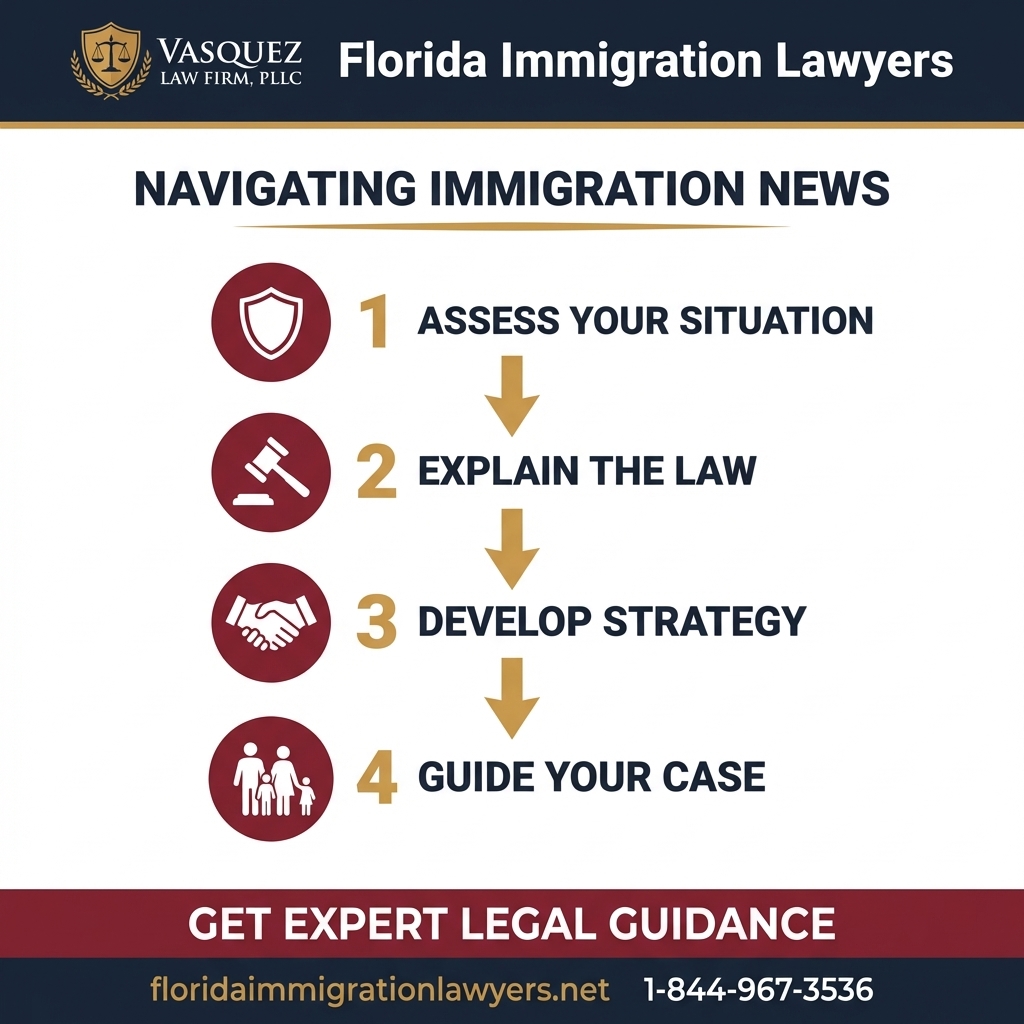
japan immigration news - Step-by-Step Process -
Letter of Invitation (If Applicable): For business or family visits, a letter from your host in Japan explaining the purpose of your visit and their relationship to you.
-
Proof of Relationship (If Applicable): For spouse or dependent visas, marriage certificates, birth certificates, or other documents proving your familial relationship.
-
Educational/Employment Documents: For student visas, an acceptance letter from a Japanese educational institution. For work visas, an employment contract or letter from your sponsoring company in Japan.
-
Criminal Record Check: Depending on the visa type and your background, a police clearance certificate may be required. Issues here can lead to inadmissibility under INA 212(a)(2).
Timeline and Processing Expectations for Japan Visas in 2026
Understanding the processing times for Japan visas is crucial for planning your journey from Florida. While some temporary visitor visas can be processed relatively quickly, more complex categories, especially those requiring a COE, can take significantly longer. It is always wise to apply well in advance of your intended travel date.
For temporary visitor visas, processing times at the Consulate-General of Japan in Miami generally range from 5 business days to a few weeks, depending on the volume of applications and the completeness of your submission. However, these are estimates and can fluctuate. Always check the consulate's website for the most current information.
For visas requiring a Certificate of Eligibility (COE), the process is multi-phased. First, your sponsor in Japan must apply for the COE, which can take anywhere from one to three months, or sometimes even longer, depending on the type of visa and the Japanese immigration office's workload. Once the COE is issued and sent to you in Florida, you then submit your visa application to the Miami consulate. The consulate's processing of a COE-based visa typically takes about 5 business days, but again, this can vary.
Factors that can influence processing times include: the specific visa category, the completeness and accuracy of your application, the volume of applications at the consulate, and any additional inquiries or documentation requests from the Japanese authorities. Applying during peak travel seasons or holidays may also extend processing times. We recommend submitting your application several months before your desired departure, especially for long-term stays.
Cost Factors and Fee Breakdown for Japan Immigration
While Japan visa fees are generally modest, the overall cost of immigrating or traveling to Japan from Florida involves more than just the application fee. It is important to budget for all potential expenses to avoid financial surprises.
Visa application fees for Japan are typically set by the Japanese government and can vary by nationality and visa type. These fees are subject to change, so we will not list specific amounts here. You should always consult the official website of the Consulate-General of Japan in Miami for the most current fee schedule. Fees are usually paid in cash or by money order at the time of application submission.
Beyond the direct visa fee, consider the following cost factors:
-
Certificate of Eligibility (COE) Costs: While there isn't typically a direct application fee for the COE itself, the process may involve costs for your sponsor in Japan, such as mailing fees or fees for obtaining supporting documents.
-
Document Preparation: Costs associated with obtaining official documents like birth certificates, marriage certificates, police clearances, or university transcripts. This might also include notarization or apostille services.
-
Translation Services: If any of your supporting documents are not in English or Japanese, you will likely need to pay for certified translation services. This is a common requirement for international visa applications.
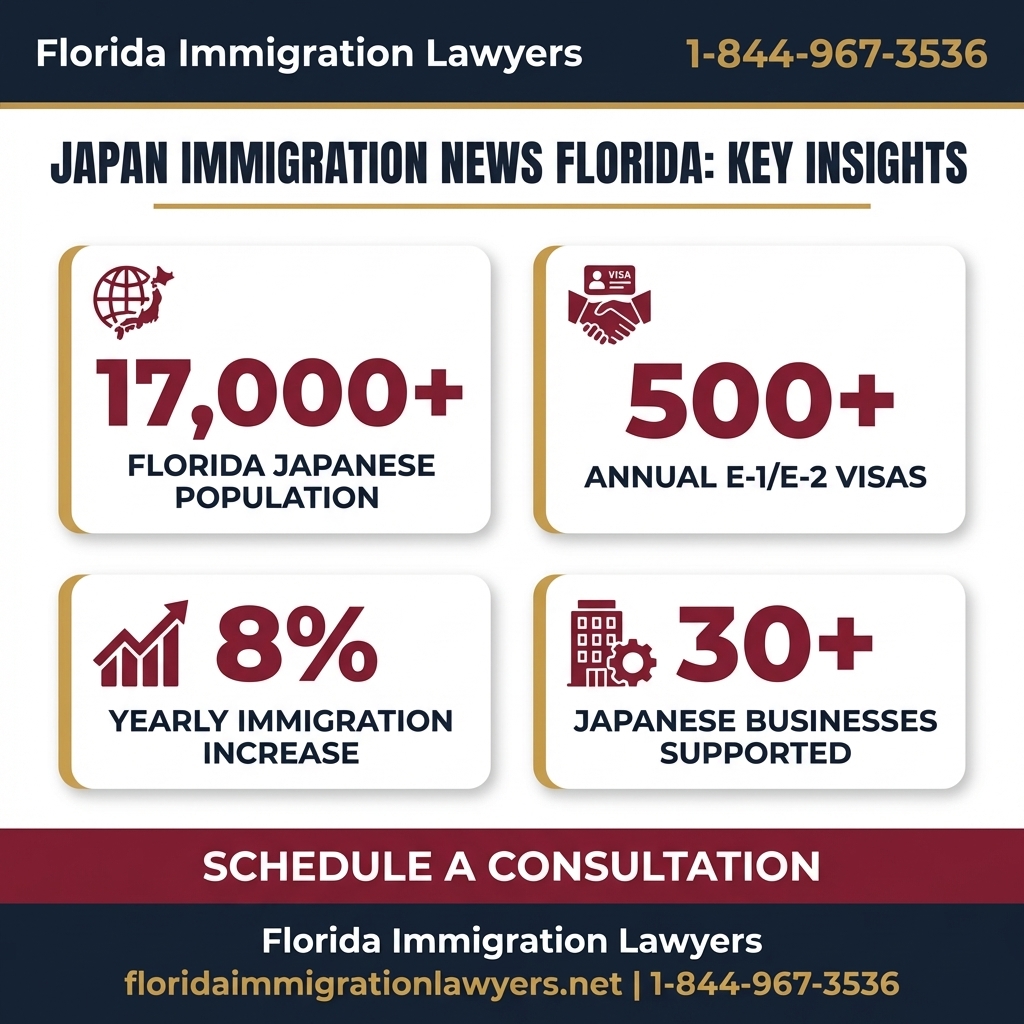
japan immigration news - Key Statistics -
Travel Expenses: Airfare from Florida to Japan, accommodation costs, and daily living expenses while in Japan. Proof of sufficient funds for these expenses is a standard visa requirement.
-
Legal Consultation Fees: Engaging the services of an experienced immigration attorney, such as those at Florida Immigration Lawyers, will incur legal fees. However, this investment can save you significant time, stress, and potential costs associated with application denials or delays.
-
Health Insurance: It is highly advisable, and often mandatory for long-term stays, to secure comprehensive health insurance for your time in Japan. This can be a significant recurring cost.
Do not navigate this complex process alone. The nuances of international immigration, especially with evolving policies, require experienced guidance. Contact Florida Immigration Lawyers today to ensure your application is handled with precision and care.
Common Mistakes to Avoid in Your Japan Visa Application
Applying for a visa can be a detailed process, and even minor errors can lead to significant setbacks. Being aware of common pitfalls can help Florida residents avoid unnecessary delays or denials when applying for a Japan visa.
-
Incomplete Application Forms: Failing to fill out every section of the application form, even if it seems irrelevant, can lead to rejection. Double-check that all required fields are completed accurately.
-
Missing or Incorrect Documents: This is perhaps the most frequent mistake. Applicants often forget a document, submit an expired one, or provide a photocopy when an original is required. Always refer to the official checklist provided by the Consulate-General of Japan in Miami.
-
Misunderstanding Visa Categories: Applying for the wrong visa type for your intended purpose in Japan. For example, trying to work on a temporary visitor visa (which is illegal) will result in a denial and potentially impact future applications.
-
Insufficient Proof of Funds: Not being able to demonstrate adequate financial means to support yourself during your stay in Japan. This is a critical requirement, especially for temporary visitor and student visas.
-
Late Application Submission: Waiting until the last minute to apply. Processing times can vary, and unexpected delays are common. Submitting your application far in advance is always recommended, especially if you need a COE Japan.
-
Discrepancies in Information: Providing inconsistent information across different documents or between your application and what you state during an interview. This can raise suspicions about your true intentions.
-
Poor Quality Passport Photos: Submitting photos that do not meet the strict size, background, and quality requirements. These seemingly small details are important.
-
Not Checking for Latest Updates: Failing to stay informed about the most recent japan immigration news or changes in requirements. Policies can evolve, and relying on outdated information is risky.
-
Lack of a Clear Purpose: Not being able to articulate a clear and convincing reason for your visit to Japan, especially during an interview. Your intentions must be transparent and legitimate.
-
Ignoring Previous Immigration Issues: Not disclosing past visa denials from any country, overstays, or other immigration-related problems. Such issues can lead to inadmissibility and should be addressed transparently with legal counsel.
When to Call a Lawyer for Japan Immigration Matters
While many Japan visa applications are straightforward, certain situations warrant the expertise of an immigration attorney. Florida Immigration Lawyers can provide invaluable assistance, ensuring your application is robust and addresses any potential complexities. Our firm serves clients across Florida, from Hollywood and Miami to Orlando and Jacksonville, offering comprehensive immigration services.
You should consider contacting an attorney if you encounter any of the following scenarios:
-
Previous Visa Denials: If you have been denied a Japanese visa or a visa to any other country in the past, an attorney can help you understand the reasons for the denial and strategize on how to overcome those issues in a new application.
-
Complex Visa Categories: For intricate work visas, investor visas, or highly specialized professional visas, the requirements can be extensive and nuanced. An attorney specializing in business immigration can ensure all criteria are met.
-
Criminal History: Any past arrests, convictions, or even minor infractions can affect your eligibility for a Japanese visa. An attorney can assess your situation and advise on how to address potential inadmissibility concerns under laws like INA 212(a)(2).
-
Unclear Eligibility: If you are unsure which visa category applies to you, or if your circumstances are unique, an attorney can provide clarity and guide you through the correct process. This often involves navigating specific sections of the Immigration and Nationality Act (INA).
-
Family-Based Applications: When applying for a spouse or dependent visa, ensuring all familial relationships are properly documented and meet Japanese legal standards can be complex. Our family immigration team can assist.
-
Urgent or Time-Sensitive Cases: While attorneys cannot guarantee faster processing, they can ensure your application is submitted perfectly the first time, minimizing potential delays caused by errors or requests for additional information.
-
Navigating USCIS and EOIR Matters: While applying for a Japan visa, you might also have ongoing U.S. immigration matters, perhaps with the USCIS Miami Field Office or the Orlando Immigration Court (part of EOIR). Our firm handles a wide range of immigration cases, providing holistic support.
The immigration landscape is constantly shifting, and having an expert like those at Florida Immigration Lawyers on your side can make all the difference. We are committed to protecting your interests and guiding you through every step.
About Florida Immigration Lawyers
Florida Immigration Lawyers is a leading law firm dedicated to providing exceptional immigration legal services to individuals and families across the entire state of Florida. With a deep understanding of complex immigration laws and a compassionate approach, we strive to achieve the best possible outcomes for our clients.
Our experienced attorneys offer a wide range of services, including assistance with visas, green cards, citizenship, asylum, deportation defense, and more. We pride ourselves on personalized attention, clear communication, and unwavering advocacy. Whether you are in Hollywood, Miami, Orlando, or any other part of Florida, our team is here to help you navigate your immigration journey.
We understand the challenges and anxieties that come with immigration matters. That's why we offer free consultations to discuss your case and provide honest, professional advice. Our firm is available 24/7, ensuring that you can reach us when you need us most. Choose Florida Immigration Lawyers for dedicated and effective legal representation.
Phone: 1-844-967-3536
Website: https://www.floridaimmigrationlawyers.net
Sources and References
- U.S. Citizenship and Immigration Services (USCIS)
- U.S. Department of State - Bureau of Consular Affairs (Japan)
- Executive Office for Immigration Review (EOIR)
- 8 U.S.C. Chapter 12 - Immigration and Nationality Act (INA)
- 8 CFR Part 214 - Nonimmigrant Classes
- Consulate-General of Japan in Miami (Official website for specific visa requirements)
This article provides general legal information and is not intended as legal advice. Every case is unique, and outcomes depend on specific facts and circumstances. Contact an attorney for advice about your particular situation.
Navigating international immigration can be complex, but you don't have to face it alone. Whether you're planning a short visit or a long-term stay in Japan, the experienced team at Florida Immigration Lawyers is ready to assist you. We are dedicated to providing clear, compassionate, and effective legal guidance. Call us today at 1-844-967-3536 for a free consultation. Se Habla Español - Estamos aquí para ayudarle.
Do Not Navigate This Process Alone
Our experienced immigration attorneys are ready to fight for you. Get a free, confidential consultation today.
Se Habla Español
Frequently Asked Questions
Florida Immigration Lawyers
Immigration Attorney | Founder, Vasquez Law Firm
U.S. Air Force veteran and immigration attorney with thousands of cases resolved. J.D., NCCU School of Law. AILA member. Admitted to the 4th, 5th, and 11th Circuit Courts.
Available 24/7 - Free Evaluations
Related Legal Services
Our Florida immigration attorneys can help you with immigration practice areas, free immigration consultation and experienced immigration attorneys. Call today at 1-844-967-3536 for a free consultation.
Related Links
Related Topics
Free Legal Consultation
Discuss your case with our experienced attorneys. We're available 24/7.
Se Habla Español - Estamos aquí para ayudarle.
Related Articles
Asylum Interview Preparation in Florida: Key Steps
Preparing for your asylum interview in Florida can make the difference in securing protection. Learn the essential steps and tips to succeed. Call Florida Immigration Lawyers for a free consultation.
Understanding the Naturalization Process Timeline in Florida
Navigating the naturalization process in Florida is crucial for those aspiring to become U.S. citizens. This guide outlines the timeline, steps, and common mistakes, ensuring you're well-prepared. Call Florida Immigration Lawyers at 1-844-967-3536 for personalized assistance and a free consultation.
Immigration Services in Jacksonville, Florida | VLF Florida
Explore comprehensive immigration services in Jacksonville, Florida. Navigate your immigration journey with expert legal guidance from Florida Immigration Lawyers. Call us for a free consultation today!
Understanding Citizenship Application Delays in Florida
Facing delays in your citizenship application in Florida? Learn about the causes, how to manage them, and when to seek legal help. Our guide provides insights into the N-400 process and offers practical advice for applicants in Tallahassee. Contact us for a free consultation.