Immigration Medical Exam in Florida: Your I-693 Guide for
The immigration medical exam is a mandatory step for many seeking permanent residency in the U.S. This comprehensive guide details the process for Florida residents, including finding a USCIS-approved civil surgeon and understanding Form I-693. We cover everything from required documents and the examination steps to potential costs and common mistakes to avoid. Learn how to navigate this crucial requirement effectively to ensure your immigration application proceeds smoothly. Florida Immigration Lawyers offers expert guidance for your immigration medical exam, helping you prepare for a successful outcome. Contact us for a free consultation.

The immigration medical exam is a mandatory part of the U.S. immigration process for many applicants, ensuring public health and safety. Conducted by a USCIS-approved civil surgeon Florida, this exam includes a physical, mental health evaluation, and a review of your vaccination history. The results are documented on Form I-693, which must be submitted in a sealed envelope to USCIS. Proper completion is vital for your application's success.
- Mandatory for many U.S. immigration applications.
- Conducted by a USCIS-designated civil surgeon.
- Includes physical exam, mental health review, and vaccination check.
- Results are submitted on Form I-693 in a sealed envelope.
- Essential for preventing health-related inadmissibility.
Embarking on a new life in Florida is an exciting journey, and for many, it involves navigating various immigration requirements. One of the most critical steps in this process is completing the immigration medical exam. This essential evaluation ensures that applicants meet the health-related standards for entry into the United States, as mandated by immigration law.
For individuals residing in Coral Springs, Broward County, or anywhere across the Sunshine State, understanding the specifics of this exam, including Form I-693 and the role of a USCIS-approved civil surgeon Florida, is paramount. This comprehensive guide will walk you through every aspect, from finding the right doctor to submitting your results, helping you prepare confidently for this crucial hurdle.
Do not let uncertainty delay your American dream. For personalized guidance and to ensure your immigration journey in Florida proceeds smoothly, call Florida Immigration Lawyers at 1-844-967-3536 for a free consultation today.
Understanding the Immigration Medical Exam in Florida
The immigration medical exam is a fundamental requirement for many foreign nationals seeking to adjust their status to a lawful permanent resident (green card holder) in the United States. This examination is designed to identify certain health conditions that could make an applicant inadmissible under U.S. immigration law.
The primary goal is to protect public health while also ensuring that individuals who may require specific medical care are identified. For applicants in Florida, whether you are in Miami, Orlando, Tampa, or our local community of Coral Springs, this process is standardized across the country but often has local nuances in terms of finding providers.
The results of your immigration medical exam are recorded on USCIS Form I-693, Report of Medical Examination and Vaccination Record. This form is a critical document that must be properly completed by a civil surgeon Florida and submitted to U.S. Citizenship and Immigration Services (USCIS).
Understanding the requirements of Form I-693 and the role of the designated civil surgeon is key to avoiding delays or complications in your immigration application. We will delve into these aspects to provide clarity for your situation.
Your Step-by-Step Guide to the I-693 Immigration Medical Exam
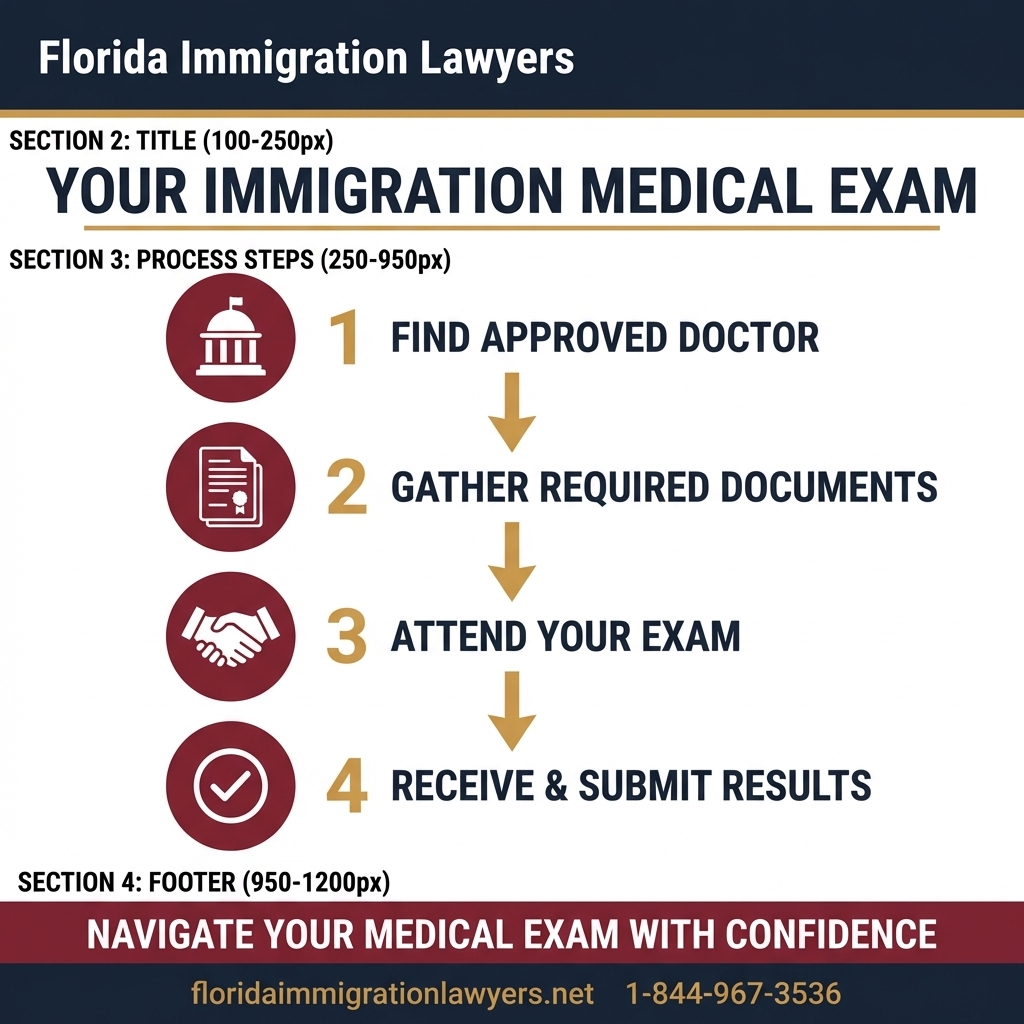
Navigating the immigration medical exam process can seem daunting, but breaking it down into manageable steps can help. Here is a clear guide for residents of Florida:
-
Find an Approved Civil Surgeon: Only doctors designated by USCIS as civil surgeons are authorized to perform the USCIS medical exam near me. You cannot use your regular family doctor unless they hold this specific designation. USCIS provides an online search tool to help you locate approved civil surgeons in your area, including Coral Springs and across Florida.
Tip: Visit the USCIS "Find a Civil Surgeon" page to ensure you choose an officially recognized provider. - Schedule Your Appointment: Once you have identified a civil surgeon Florida, contact their office to schedule your immigration physical exam. Be sure to inform them that you need an immigration medical examination for Form I-693. Inquire about their fees, required documents, and any specific instructions they may have.
- Prepare Required Documents: Gather all necessary identification and medical records before your appointment. This preparation will streamline the process and prevent potential delays. We will detail a comprehensive document checklist in the next section.
- Undergo the Examination: The immigration medical exam typically involves a review of your medical history, a physical examination, mental health evaluation, and verification of your vaccination status. The civil surgeon will also order specific lab tests, such as those for tuberculosis, syphilis, and gonorrhea, as required by the Centers for Disease Control and Prevention (CDC).
- Receive the Sealed Envelope: After completing the exam and any necessary follow-up tests or vaccinations, the civil surgeon will complete Form I-693. They will then place the form and all supporting documents in a sealed envelope. It is absolutely critical that you DO NOT open this envelope. If the seal is broken, USCIS will reject the form, requiring you to get a new exam.
- Submit Form I-693: You will submit the sealed Form I-693 envelope to USCIS. Depending on your specific immigration application, you might submit it concurrently with your Form I-485 (Application to Register Permanent Residence or Adjust Status), or you may bring it to your green card interview. Your immigration attorney can advise on the best timing for submission.
Essential Documents for Your Immigration Medical Exam
To ensure a smooth and efficient immigration medical exam, gather the following documents and information before your appointment with a civil surgeon Florida:
- Valid Government-Issued Photo Identification: This could be your passport, driver's license, or another official ID. Bring your unexpired passport if you have one.
- Form I-693: You should fill out Part 1 of Form I-693 with your personal information before your appointment. Do not sign it until instructed by the civil surgeon.
- Vaccination Records: Bring any immunization records you possess. The civil surgeon will review these to determine if you need additional vaccinations to meet U.S. requirements.
- Medical History: Prepare a list of your past and present medical conditions, hospitalizations, surgeries, and any medications you are currently taking. Include details about mental health conditions, if applicable.
- List of Prior Addresses: Some civil surgeons may request a list of countries you have lived in for extended periods, particularly for tuberculosis screening purposes.
- Payment for the Exam: Be prepared to pay the civil surgeon's fees, which are not covered by USCIS application fees.
- Glasses or Contact Lenses: If you wear them, bring them to your exam.
- Interpreter: If you do not speak English fluently, you may need to bring an interpreter to ensure clear communication during your USCIS medical exam near me.
What the Civil Surgeon Checks During Your Immigration Medical Exam
During your immigration physical exam, the designated civil surgeon Florida will conduct a thorough evaluation to check for specific health conditions that are outlined in U.S. immigration law. These checks are mandated by CDC Technical Instructions for Civil Surgeons and 8 U.S.C. § 1182(a)(1) of the Immigration and Nationality Act (INA).
The examination typically focuses on several key areas:
- Communicable Diseases of Public Health Significance: This includes screening for diseases like tuberculosis (TB), syphilis, and gonorrhea. You will likely undergo blood tests for syphilis and gonorrhea, and a chest X-ray for TB if required based on initial skin or blood tests.
- Physical or Mental Disorders with Associated Harmful Behavior: The civil surgeon will assess your mental health to determine if you have any disorder that may pose a threat to yourself or others. This is not meant to exclude individuals with common mental health conditions but rather those with specific behavioral concerns.
- Drug Abuse or Addiction: A history or current evidence of drug abuse or addiction can lead to inadmissibility. The civil surgeon will inquire about your substance use history.
- Vaccination Requirements: You must demonstrate proof of vaccination against a range of preventable diseases, including mumps, measles, rubella, polio, tetanus and diphtheria toxoids, pertussis, Haemophilus influenzae type B, hepatitis A and B, and varicella (chickenpox), among others. If you lack certain vaccinations, the civil surgeon can administer them at your appointment, often for an additional fee.
The goal is to ensure that you meet the health standards without unnecessary hurdles, and our firm can help you understand these requirements.
Timeline and Processing for Your Immigration Medical Exam
The timeline for your immigration medical exam involves several factors, from scheduling the appointment to the validity of the completed Form I-693. Understanding these aspects is crucial for a smooth application process, especially for those navigating the system in Florida.
Once your civil surgeon Florida completes and signs Form I-693, it is generally valid for two years from the date of the civil surgeon’s signature. This means you must submit the sealed envelope to USCIS within this two-year window. If your application process extends beyond this period, you may need to undergo another exam.
The processing time for the immigration medical exam itself typically takes one to two weeks, depending on the civil surgeon's office and whether additional tests or vaccinations are needed. For example, if a chest X-ray is required for TB screening, it might add a few days to the overall process. Timely completion of all medical requirements helps prevent Requests for Evidence (RFEs) from USCIS field offices in Florida, such as those in Miami, Orlando, or Tampa.
It is important to coordinate your USCIS medical exam near me with your overall immigration application timeline. Your attorney at Florida Immigration Lawyers can help you strategically plan when to undergo the exam to maximize the validity period of your I-693 and align it with your other filing deadlines. This proactive approach can significantly reduce potential delays in your adjustment of status application.
Factors Affecting I-693 Validity and Submission
The two-year validity period for Form I-693 begins on the date the civil surgeon signs your completed report. It is critical to note this date and plan your submission accordingly. Factors such as a delay in your green card interview or a Request for Evidence (RFE) from USCIS can cause your I-693 to expire before your case is adjudicated.
To mitigate this risk, many applicants in Florida choose to submit the sealed I-693 package with their Form I-485 application. Alternatively, you can bring it to your interview if instructed by USCIS. An experienced immigration attorney can help you determine the optimal time for submission based on your individual case timeline and current USCIS processing trends for your specific immigration category.
Cost Factors for Your Immigration Medical Exam
Understanding the costs associated with the immigration medical exam is an important part of preparing for your immigration journey. The fees for this exam are separate from and in addition to any USCIS filing fees, and they are paid directly to the civil surgeon Florida.
The cost of an immigration physical exam can vary significantly depending on several factors:
- Civil Surgeon's Fees: These fees cover the physical examination, review of your medical history, and completion of Form I-693. Prices can range widely across different providers and regions within Florida, from Coral Springs to Jacksonville.
- Required Lab Tests: The cost of blood tests for syphilis and gonorrhea, and potentially a chest X-ray for tuberculosis, will be added to the base fee. These are mandatory tests.
- Vaccinations: If your vaccination records are incomplete or you lack required immunizations, the civil surgeon may administer them during your visit. Each vaccine will incur an additional charge.
- Follow-up Visits: In some cases, if a medical condition requires further evaluation or treatment, additional visits to the civil surgeon or a specialist may be necessary, incurring more costs.
- Interpreter Fees: If you require an interpreter and the civil surgeon's office does not provide one, you may need to hire your own, adding to the expense.
While some applicants might search for a "cheap immigration medical exam near me," it is crucial to prioritize the quality and compliance of the examination over the lowest price. An improperly conducted exam can lead to rejection of your I-693 and necessitate a costly re-examination, further delaying your application. Always confirm the exact services included in the quoted price when contacting a civil surgeon.
Do not navigate this complex process alone. The requirements for the immigration medical exam and Form I-693 can be intricate, and errors can have significant consequences for your immigration case. Contact Florida Immigration Lawyers today for expert assistance, ensuring every step is handled correctly and efficiently. We are here to help you succeed.
Even a minor oversight during the immigration medical exam can lead to significant delays or even a denial of your immigration application. Be vigilant and avoid these common pitfalls:
- Not Using an Approved Civil Surgeon: Only doctors designated by USCIS can perform the exam. Using an unauthorized physician will result in the rejection of your Form I-693. Always verify their designation through the USCIS website.
- Opening the Sealed Envelope: The completed Form I-693 and supporting documents must remain in a sealed envelope provided by the civil surgeon. Opening it, even slightly, invalidates the document, requiring a new and costly re-examination.
- Incomplete Vaccination Records: Failing to provide comprehensive vaccination records or to receive required immunizations during the exam is a frequent reason for RFEs. Ensure you have all necessary vaccines or are prepared to receive them.
- Hiding Medical History: Attempting to conceal past or present medical conditions, especially those related to communicable diseases or mental health, can lead to serious inadmissibility issues and accusations of misrepresentation. Honesty is paramount.
- Delaying the Exam: Form I-693 has a validity period, typically two years from the civil surgeon's signature. Delaying the immigration medical exam too long can result in an expired form by the time USCIS reviews your application, leading to an RFE.
- Not Bringing Required Identification: Forgetting your passport or other valid government-issued photo ID can cause the civil surgeon to refuse to conduct the exam, forcing you to reschedule.
- Assuming All Tests Are Included in the Base Fee: Many civil surgeons quote a base fee that does not include all required lab tests or vaccinations. Always clarify the full cost upfront to avoid surprises.
- Failing to Understand Follow-up Requirements: If the civil surgeon Florida identifies a condition requiring further evaluation or treatment, failing to comply with these follow-up instructions can jeopardize your medical clearance.
- Submitting an Outdated Form I-693 Version: USCIS regularly updates its forms. Ensure the civil surgeon uses the most current version of Form I-693 to prevent rejection.
- Not Disclosing Criminal History (if health-related): While primarily a medical exam, certain health conditions linked to criminal behavior (e.g., drug abuse leading to arrests) can surface. Be prepared to discuss these honestly with your legal counsel.
While the immigration medical exam seems straightforward, certain situations warrant the immediate guidance of an experienced immigration attorney. Florida Immigration Lawyers is here to provide the support you need, especially if you encounter any of the following:
- Complex Medical History: If you have a history of serious medical conditions, mental health disorders, or communicable diseases, an attorney can help you understand potential inadmissibility issues and explore available waivers. This is crucial under U.S. immigration law.
- Previous Visa Denials or Immigration Issues: A prior denial, especially if related to health grounds, means your current application will face heightened scrutiny. Our attorneys can help address these past issues proactively.
- Concerns About Inadmissibility: If you are worried about meeting the health-related grounds of inadmissibility, such as those related to drug abuse or specific infectious diseases, we can assess your situation and advise on the best course of action.
- Requests for Evidence (RFEs) for Form I-693: If USCIS sends an RFE regarding your immigration medical exam, it indicates a problem with the submitted form. Our firm can help you understand the RFE and respond appropriately and timely.
- Need for a Waiver: In some cases, even if you are found inadmissible on health grounds, a waiver might be available. Navigating the waiver application process is complex and requires expert legal assistance. Our firm can assist with asylum or deportation defense cases where medical issues might be a factor.
- General Confusion or Anxiety: The immigration process is stressful. If you feel overwhelmed by the requirements of the I-693 or any part of your application, our team can provide peace of mind and clear guidance. We assist with family immigration and business immigration cases across Florida.
Do not risk your immigration future by making assumptions or errors. Our dedicated team at Florida Immigration Lawyers is well-versed in all aspects of Florida immigration medical requirements and can provide invaluable assistance. Contact us for a comprehensive review of your case.
Florida Immigration Lawyers is a premier law firm dedicated to serving the diverse immigrant community across all of Florida. With offices strategically located to serve clients from Coral Springs to Jacksonville, we provide compassionate, effective, and results-driven legal representation for a wide range of immigration matters.
Our experienced team understands the complexities and emotional toll of the immigration process. We are committed to guiding you through every step, offering clear advice and unwavering support. From family-based petitions to business immigration, citizenship applications, and defense against deportation, our firm stands ready to protect your rights and pursue your American dream.
Why choose Florida Immigration Lawyers? We offer free consultations, are available 24/7 to address your urgent concerns, and pride ourselves on our client-focused approach. Our bilingual team ensures that language is never a barrier to quality legal assistance. Trust us to be your advocates in the intricate world of immigration law.
Contact Florida Immigration Lawyers today:
Phone: 1-844-967-3536
Website: https://www.floridaimmigrationlawyers.net
Sources and References
- U.S. Citizenship and Immigration Services (USCIS)
- USCIS: Find a Civil Surgeon
- USCIS: Form I-693, Report of Medical Examination and Vaccination Record
- Centers for Disease Control and Prevention (CDC): Technical Instructions for Civil Surgeons
- 8 U.S.C. § 1182(a)(1) - Inadmissible aliens - Health-related grounds.
- 8 CFR § 212.1 - Documentary requirements for nonimmigrants and immigrants.
- USCIS Policy Manual, Volume 8, Part B - Health-Related Grounds of Inadmissibility.
This article provides general legal information and is not intended as legal advice. Every case is unique, and outcomes depend on specific facts and circumstances. Contact an attorney for advice about your particular situation. Laws are subject to change, and this content reflects information as of April 1, 2026.
Your journey to a new life in Florida deserves expert legal support. Do not leave your immigration medical exam to chance. Contact Florida Immigration Lawyers today for a free, no-obligation consultation. Our dedicated team is ready to guide you through every step. Call us now at 1-844-967-3536.
Se Habla Español - Estamos aquí para ayudarle.
Do Not Navigate This Process Alone
Our experienced immigration attorneys are ready to fight for you. Get a free, confidential consultation today.
Se Habla Español
Frequently Asked Questions
Florida Immigration Lawyers
Immigration Attorney | Founder, Vasquez Law Firm
U.S. Air Force veteran and immigration attorney with thousands of cases resolved. J.D., NCCU School of Law. AILA member. Admitted to the 4th, 5th, and 11th Circuit Courts.
Available 24/7 - Free Evaluations
Related Legal Services
Our Florida immigration attorneys can help you with business immigration, asylum protection and deportation defense. Call today at 1-844-967-3536 for a free consultation.
Related Links
Related Topics
Free Legal Consultation
Discuss your case with our experienced attorneys. We're available 24/7.
Se Habla Español - Estamos aquí para ayudarle.
Related Articles
Understanding the Naturalization Process Timeline in Florida
Navigating the naturalization process in Florida is crucial for those aspiring to become U.S. citizens. This guide outlines the timeline, steps, and common mistakes, ensuring you're well-prepared. Call Florida Immigration Lawyers at 1-844-967-3536 for personalized assistance and a free consultation.
Immigration Services in Jacksonville, Florida | VLF Florida
Explore comprehensive immigration services in Jacksonville, Florida. Navigate your immigration journey with expert legal guidance from Florida Immigration Lawyers. Call us for a free consultation today!
Understanding Citizenship Application Delays in Florida
Facing delays in your citizenship application in Florida? Learn about the causes, how to manage them, and when to seek legal help. Our guide provides insights into the N-400 process and offers practical advice for applicants in Tallahassee. Contact us for a free consultation.
VAWA Self-Petition for Abused Spouse in Florida | VLF Florida
Learn how to file a VAWA self-petition in Florida as an abused spouse. Discover eligibility requirements, process steps, and when to seek legal help. Call Florida Immigration Lawyers for a free consultation.
