Immigration Court Proceedings Florida: Your Guide to
Facing immigration court proceedings in Florida can be overwhelming. This comprehensive guide from Florida Immigration Lawyers demystifies the process, covering what to expect, critical steps, necessary documentation, and potential timelines. Learn about removal proceedings, the role of EOIR and immigration judges, and common mistakes to avoid. We provide essential information for individuals in Homestead, Miami, and throughout Florida. Discover when to seek legal counsel and how Florida Immigration Lawyers offers compassionate, expert assistance. Call us for a free consultation.

Immigration court proceedings in Florida involve a legal process where an immigration judge determines if a non-citizen should be removed from the U.S. These cases, often called removal proceedings, address eligibility for relief or defense against deportation. Individuals receive a Notice to Appear (NTA) and must present their case before the Executive Office for Immigration Review (EOIR).
- Immigration court cases are formal legal proceedings.
- You have the right to legal representation.
- Many forms of relief from removal may be available.
- Strict deadlines apply, requiring prompt action.
- Seeking experienced legal counsel is crucial for success.
Facing immigration court proceedings in Florida can feel like navigating a complex maze with high stakes. Perhaps you or a loved one in Homestead, Miami, or anywhere across the Sunshine State has received a Notice to Appear (NTA), plunging you into the daunting world of removal proceedings. The thought of appearing before an immigration judge, understanding intricate legal terms, and presenting your case can be overwhelming. You are not alone in feeling this way.
This comprehensive guide from Florida Immigration Lawyers is designed to demystify the immigration court process for you. We will walk you through what to expect, the critical steps involved, necessary documentation, and potential timelines. Our goal is to empower you with the knowledge needed to face these challenges. Do not hesitate to seek professional guidance. Call Florida Immigration Lawyers at 1-844-967-3536 for a free consultation today.
Understanding Immigration Court Proceedings in Florida
Immigration court proceedings are formal administrative hearings overseen by an immigration judge, part of the Executive Office for Immigration Review (EOIR) within the U.S. Department of Justice. These proceedings determine whether a non-citizen is removable from the United States or eligible for some form of relief that would allow them to remain. For many individuals in Florida, including those in communities like Homestead, these proceedings are a critical juncture in their lives.
An individual typically enters removal proceedings after receiving a Notice to Appear (NTA), Form I-862. This document alleges specific grounds of removability and charges the individual with violating U.S. immigration law. The NTA also schedules the initial hearing, known as a Master Calendar Hearing, before an immigration judge. Understanding these fundamental aspects is the first step toward building a strong defense.
What are Removal Proceedings?
Removal proceedings are the legal actions initiated by the Department of Homeland Security (DHS) to deport a non-citizen from the United States. While often used interchangeably, "removal" is the modern legal term for what was previously known as "deportation." The outcome of these proceedings can profoundly impact your future and your ability to live in the U.S. with your family.
During these proceedings, the government must prove its allegations of removability. You, as the respondent, have the opportunity to challenge those allegations, present evidence, and apply for any available forms of relief from removal. These forms of relief can range from asylum to adjustment of status, depending on your specific circumstances.
The Role of EOIR and Immigration Judges
The Executive Office for Immigration Review (EOIR) is the component of the Department of Justice responsible for administering and interpreting federal immigration laws. This includes conducting immigration court proceedings, appellate reviews, and administrative naturalization hearings. EOIR aims to provide fair and timely adjudication of immigration cases.
An immigration judge presides over these hearings, acting as an impartial arbiter. They are responsible for hearing evidence, ruling on motions, and ultimately deciding whether a non-citizen should be removed or granted relief. While judges are independent, they operate within the framework of the Immigration and Nationality Act (INA) and federal regulations. Their decisions are subject to review by the Board of Immigration Appeals (BIA).
Navigating the Immigration Court Process in Florida
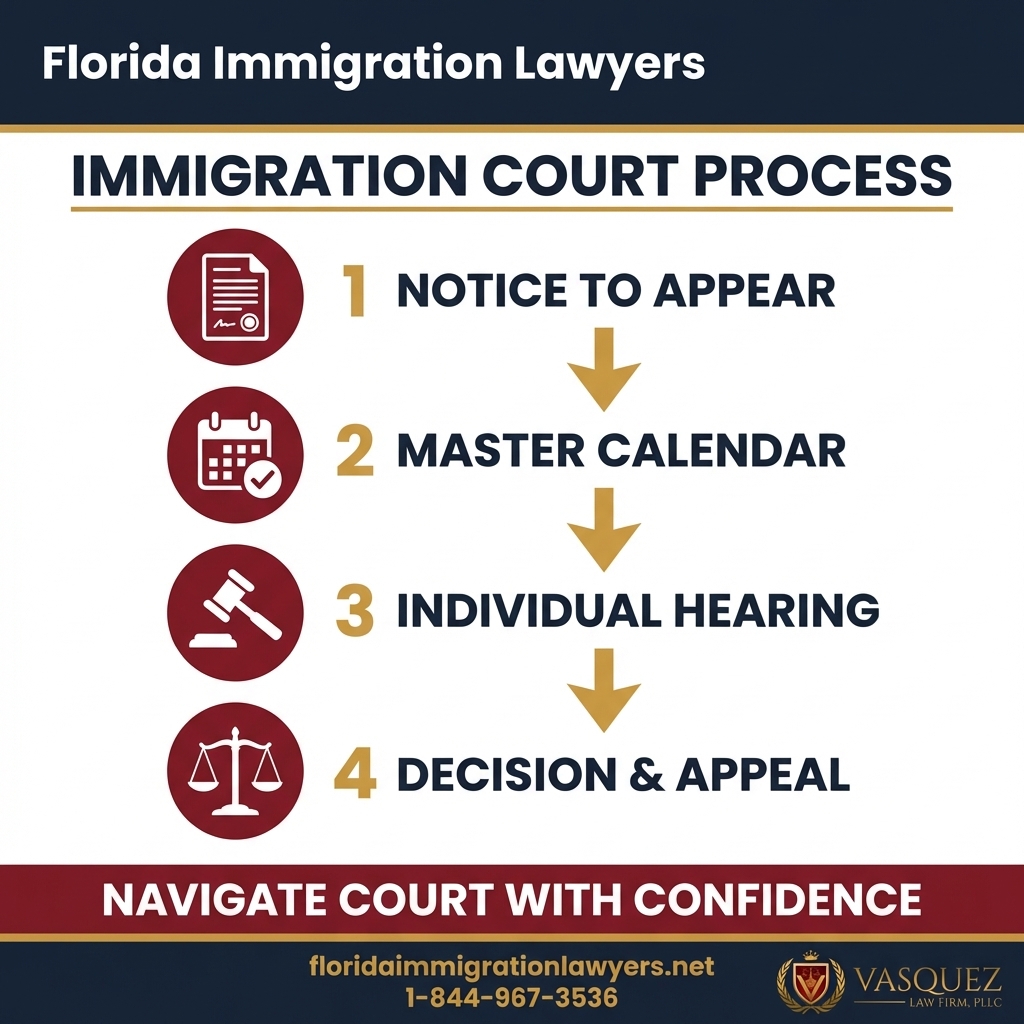
The immigration court process can be lengthy and complex, often taking years to resolve. For those in Florida, particularly in areas served by the Miami Immigration Court, understanding each stage is vital. Here is a general step-by-step guide to what you can expect:
- Receiving a Notice to Appear (NTA): This is the official document that begins your removal proceedings. It outlines the charges against you and specifies when and where your first hearing will take place. Review this document carefully with your attorney to understand the allegations.
- Master Calendar Hearing (MCH): This is your initial appearance before an immigration judge. At this hearing, the judge will confirm your identity, ensure you understand the charges, and ask you to admit or deny the factual allegations and charges of removability. You will also state your intention to seek relief from removal. This is a procedural hearing, not where your case is argued in full.
- Filing Applications for Relief: If you intend to seek relief from removal, such as asylum, cancellation of removal, or adjustment of status, your attorney will typically file the necessary applications and supporting documentation after the MCH. Deadlines for these filings are strict and must be adhered to. For example, asylum applications generally must be filed within one year of your arrival in the U.S., unless an exception applies.
- Individual Hearing (Merits Hearing): This is the main evidentiary hearing where you and your attorney present your case for relief from removal. You will testify, present witnesses, and submit evidence to support your application. The government attorney (DHS counsel) will also present their case and may cross-examine you and your witnesses. This hearing can be lengthy and may span multiple days.
- Immigration Judge's Decision: After hearing all evidence and arguments, the immigration judge will issue a decision. This decision may be delivered orally at the end of the individual hearing or in writing at a later date. The judge will either order you removed from the U.S., or grant your application for relief, allowing you to remain.
- Appeals Process: If either you or the government is dissatisfied with the immigration judge's decision, you typically have 30 days to file an appeal with the Board of Immigration Appeals (BIA). The BIA is the highest administrative body for interpreting and applying immigration laws. Further appeals can be made to a U.S. Circuit Court of Appeals. Navigating these appeals requires specialized legal knowledge.
Essential Documents for Your Immigration Court Case
Preparing for immigration court involves gathering a comprehensive set of documents to support your defense or application for relief. The specific documents needed will vary significantly based on the type of relief you are seeking and the grounds for your removal proceedings. However, some general categories are almost always relevant. Working with an experienced attorney from Florida Immigration Lawyers is crucial to ensure you have everything required.
Here is a general checklist of documents you may need:
- Your Notice to Appear (NTA) and any other court notices.
- Identification documents, such as passport, birth certificate, or national ID.
- Proof of your entry and immigration history in the U.S. (e.g., I-94 arrival/departure record, visa stamps).
- Marriage certificates, birth certificates of children, and other family relationship documents.
- Financial records (tax returns, pay stubs, bank statements) to show financial stability or hardship.
- Medical records, especially if you are seeking asylum based on medical conditions or have significant health issues.
- Police clearance certificates from all places you have resided, both in the U.S. and abroad.
- Affidavits or sworn statements from witnesses who can testify on your behalf.
- Evidence of community ties in the U.S., such as letters from employers, schools, or community leaders.
- Documents proving any specific eligibility requirements for the relief you seek (e.g., proof of persecution for asylum, continuous physical presence for cancellation of removal).
- Any prior immigration applications or petitions you have filed with USCIS or other agencies.
Organizing these documents meticulously is vital. Missing or incomplete documentation can delay your case or even lead to an unfavorable outcome.
Immigration Court Timelines and What to Expect
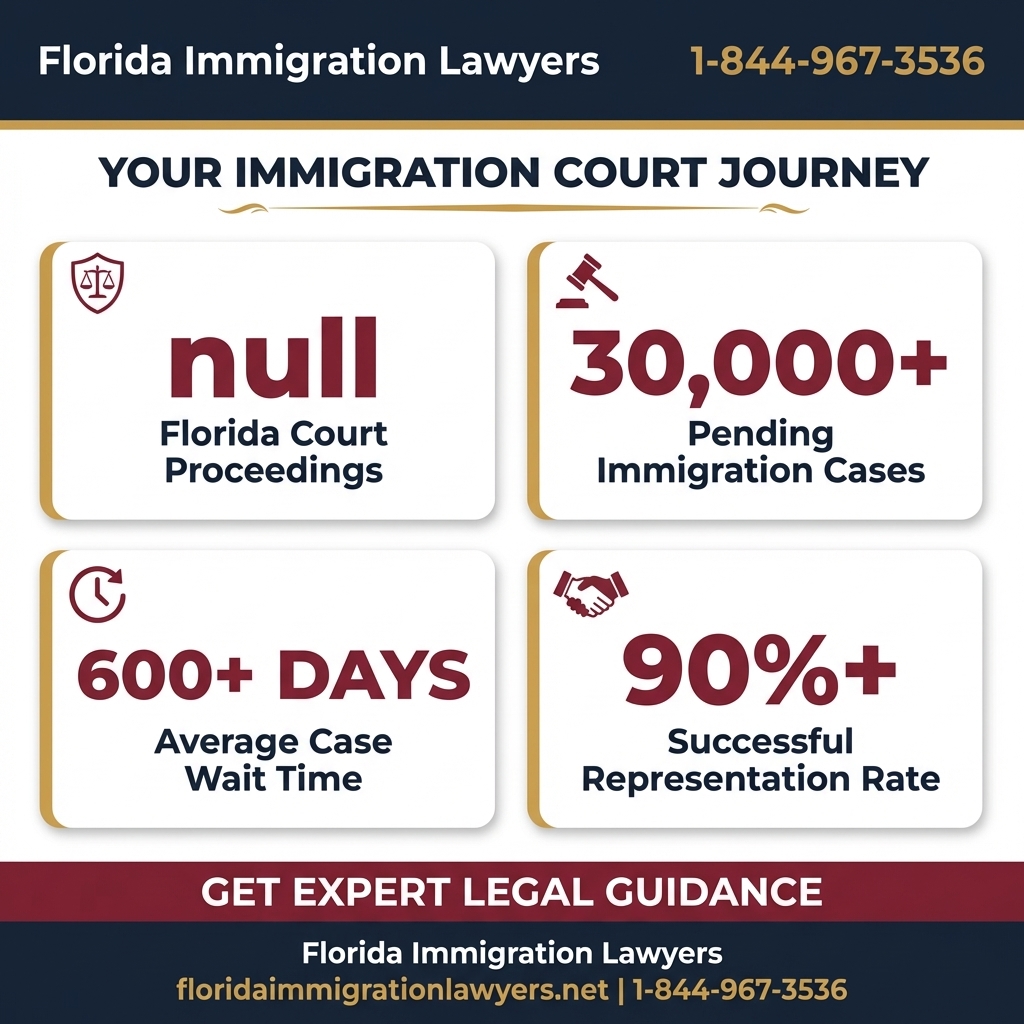
The length of immigration court proceedings in Florida can vary dramatically, ranging from several months to many years. This variability depends on numerous factors, including the complexity of your case, the type of relief sought, the volume of cases at your specific immigration court (e.g., Miami Immigration Court), and the availability of immigration judges. As of 2026, many Florida courts continue to face significant backlogs.
Generally, a Master Calendar Hearing might be scheduled a few months after receiving your NTA. However, individual hearings, where the merits of your case are heard, are often scheduled much further out, sometimes one to three years after the initial MCH. Appeals to the BIA can add another one to two years to the process, and federal court appeals even longer. It is important to prepare for a potentially lengthy process and maintain consistent communication with your legal counsel. Your attorney can provide a more personalized estimate based on current court dockets and your specific circumstances.
Understanding Costs in Immigration Court Cases
Navigating immigration court proceedings involves various costs, and it is important to be prepared. These expenses can include government filing fees for applications for relief, legal fees for your attorney, and other miscellaneous costs. While we cannot provide exact filing fee amounts as they are subject to change by USCIS and EOIR, we can outline the general categories of expenses.
Government filing fees are typically associated with applications for relief such as asylum (Form I-589, generally no fee), adjustment of status (Form I-485), or cancellation of removal (Form EOIR-42B). Fee waivers may be available for certain applications based on financial hardship, but eligibility is strict. Legal fees will depend on the complexity of your case, the experience of your attorney, and the amount of work required. Florida Immigration Lawyers offers transparent fee structures and discusses all costs upfront during your free consultation. Other costs might include fees for obtaining documents, translation services, expert witness fees, or travel expenses for hearings.
Do not navigate this process alone. The complexities of immigration court proceedings demand experienced legal guidance. Contact Florida Immigration Lawyers today to ensure your rights are protected and your case is presented effectively. We are here to help you every step of the way.
Frequently Asked Questions (FAQs)
Understanding the nuances of immigration court proceedings can be challenging, and many common questions arise. Here, we address some of the most frequently asked questions to provide clarity for individuals in Florida.
Does removal proceedings mean deportation?
Yes, in modern immigration law, "removal proceedings" is the legal term for the process that can lead to a non-citizen's deportation from the United States. While the term "deportation" is still commonly used and understood, the Immigration and Nationality Act (INA) uses "removal" to encompass both deportation and exclusion proceedings. If an immigration judge orders you removed and no appeal is successful, you will be required to leave the U.S.
What's happening with immigration in Florida?
Florida, especially South Florida with its large immigrant population in areas like Homestead and Miami, is a focal point for immigration issues. As of early 2026, Florida's immigration courts continue to manage one of the highest caseloads in the nation, with hundreds of thousands of pending cases. State-level legislation and policies often intersect with federal immigration law, creating a dynamic and sometimes challenging environment for immigrants. These developments underline the critical need for up-to-date legal counsel when facing any immigration matter in Florida.
How to look up immigration court hearings?
You can generally check the status of an immigration court case or hearing schedule through the Executive Office for Immigration Review (EOIR) automated phone system at 1-800-898-7180. You will need the alien registration number (A-number) of the individual whose case you are looking up. This system provides information on upcoming hearings, past decisions, and appeals. Additionally, your attorney can access more detailed information through the EOIR online portal.
Can ICE deport you before your court date?
In some circumstances, yes. While individuals in removal proceedings typically have the right to a hearing before an immigration judge, there are exceptions. For instance, individuals subject to expedited removal orders at the border or those with certain criminal convictions may face immediate deportation without a full hearing. Also, if you fail to appear for a scheduled hearing, an immigration judge can issue an in absentia removal order, which can lead to deportation without further court dates. It is crucial to attend all scheduled hearings or have legal representation present.
Common Mistakes to Avoid in Immigration Court
Navigating immigration court proceedings is fraught with potential pitfalls. Avoiding common mistakes can significantly improve your chances of a favorable outcome. Here are several critical errors to be aware of:
- Missing Court Dates: Failing to appear for a Master Calendar Hearing or Individual Hearing can result in an "in absentia" removal order, meaning the immigration judge can order you deported without your presence. This is one of the most serious mistakes you can make.
- Not Seeking Legal Representation: While you have the right to represent yourself, immigration law is incredibly complex. Individuals with legal representation are significantly more likely to achieve a positive outcome. An experienced attorney understands the law, court procedures, and available forms of relief.
- Lying or Misrepresenting Facts: Providing false information or misrepresenting facts to an immigration judge or DHS counsel can lead to severe consequences, including permanent bars to immigration benefits or criminal charges. Always be truthful.
- Missing Deadlines: Immigration court has strict deadlines for filing applications, submitting evidence, and filing appeals. Missing these deadlines, even by a day, can result in the denial of your application or the loss of your right to appeal.
- Failing to Provide Sufficient Evidence: Your case for relief must be supported by compelling evidence. Insufficient documentation or weak evidence can undermine your claims, regardless of their merit.
- Not Updating Your Address with EOIR: If you move, you must notify the immigration court (EOIR) of your new address immediately. Failure to do so means you might not receive critical court notices, potentially leading to missed hearings and removal orders.
- Discussing Your Case with Others (Without Counsel): Be cautious about discussing the specifics of your case with anyone other than your attorney. Statements made to others could potentially be used against you.
- Not Understanding the Charges Against You: It is crucial to fully comprehend the specific grounds of removability alleged in your Notice to Appear (NTA). Your defense strategy depends on addressing these charges directly.
- Failing to Understand Available Relief: Many non-citizens are unaware of the various forms of relief from removal they might be eligible for, such as asylum, withholding of removal, Convention Against Torture relief, cancellation of removal, or adjustment of status. An attorney can identify all potential avenues.
- Appearing Unprepared for Hearings: Hearings require preparation, including understanding potential questions, reviewing evidence, and practicing testimony. Appearing unprepared can weaken your credibility and case.
When to Call a Lawyer for Immigration Court Proceedings
The decision to hire an attorney for immigration court proceedings is one of the most critical choices you will make. While you have the right to represent yourself, the complexities of immigration law, the high stakes involved, and the formality of court procedures make legal representation highly advisable. You should call Florida Immigration Lawyers immediately if any of the following scenarios apply to you:
- You have received a Notice to Appear (NTA) for removal proceedings.
- You or a family member has been detained by ICE and is facing deportation.
- You are unsure about the charges against you or your eligibility for relief.
- You have a criminal record, which can significantly complicate immigration cases.
- You are seeking asylum or other forms of humanitarian relief.
- You have a prior removal order or have been previously deported.
- You are considering appealing an immigration judge's decision.
- You feel overwhelmed by the process and need clear, professional guidance.
An experienced deportation defense Florida attorney from our firm can help you understand your rights, prepare your defense, gather necessary evidence, represent you in court, and navigate the appeals process. Do not face this challenge alone.
About Florida Immigration Lawyers
Florida Immigration Lawyers is a leading immigration law firm dedicated to serving individuals and families across all of Florida, including communities like Homestead, Miami, Orlando, and Tampa. We understand the profound impact immigration issues have on your life, and we are committed to providing compassionate, effective, and results-driven legal representation. Our team of skilled attorneys specializes in a wide range of immigration services, including deportation defense, asylum, family-based immigration, business immigration, and citizenship applications.
Why choose us? We offer personalized attention, deep expertise in immigration law, and a steadfast commitment to our clients' success. Our attorneys are available 24/7 to address your urgent needs and provide free consultations to help you understand your options without financial obligation. We are proud to offer bilingual services, ensuring that "Se Habla Español" is not just a phrase, but a core part of our client service. Visit our website at https://www.floridaimmigrationlawyers.net or call us at 1-844-967-3536 to begin your journey toward a more secure future.
Sources and References
- U.S. Citizenship and Immigration Services (USCIS)
- Executive Office for Immigration Review (EOIR)
- U.S. Immigration and Customs Enforcement (ICE)
- 8 U.S.C. Chapter 12 - Immigration and Nationality Act (INA)
- 8 CFR (Code of Federal Regulations) - Immigration Regulations
- INA Section 240 - Removal Proceedings Generally
This article provides general legal information and is not intended as legal advice. Every case is unique, and outcomes depend on specific facts and circumstances. Contact an attorney for advice about your particular situation. Immigration laws are subject to change.
If you are facing immigration court proceedings in Florida, time is of the essence. Do not face the complexities of the legal system alone. Florida Immigration Lawyers is here to provide the experienced and compassionate representation you deserve. Call us today at 1-844-967-3536 for a free consultation. Se Habla Español - Estamos aquí para ayudarle.
Do Not Navigate This Process Alone
Our experienced immigration attorneys are ready to fight for you. Get a free, confidential consultation today.
Se Habla Español
Frequently Asked Questions
Florida Immigration Lawyers
Immigration Attorney | Founder, Vasquez Law Firm
U.S. Air Force veteran and immigration attorney with thousands of cases resolved. J.D., NCCU School of Law. AILA member. Admitted to the 4th, 5th, and 11th Circuit Courts.
Available 24/7 - Free Evaluations
Related Legal Services
Our Florida immigration attorneys can help you with citizenship and naturalization, family immigration services and immigration practice areas. Call today at 1-844-967-3536 for a free consultation.
Related Links
Related Topics
Free Legal Consultation
Discuss your case with our experienced attorneys. We're available 24/7.
Se Habla Español - Estamos aquí para ayudarle.
Related Articles
Asylum Interview Preparation in Florida: Key Steps
Preparing for your asylum interview in Florida can make the difference in securing protection. Learn the essential steps and tips to succeed. Call Florida Immigration Lawyers for a free consultation.
Understanding the Naturalization Process Timeline in Florida
Navigating the naturalization process in Florida is crucial for those aspiring to become U.S. citizens. This guide outlines the timeline, steps, and common mistakes, ensuring you're well-prepared. Call Florida Immigration Lawyers at 1-844-967-3536 for personalized assistance and a free consultation.
Immigration Services in Jacksonville, Florida | VLF Florida
Explore comprehensive immigration services in Jacksonville, Florida. Navigate your immigration journey with expert legal guidance from Florida Immigration Lawyers. Call us for a free consultation today!
Understanding Citizenship Application Delays in Florida
Facing delays in your citizenship application in Florida? Learn about the causes, how to manage them, and when to seek legal help. Our guide provides insights into the N-400 process and offers practical advice for applicants in Tallahassee. Contact us for a free consultation.