Green Card Holders Issued New Warning: Florida 2026
Green card holders in Florida are facing new warnings in 2026 regarding travel, residency, and compliance with immigration laws. This comprehensive guide from Florida Immigration Lawyers details the potential impacts of these updates, common pitfalls to avoid, and essential steps to protect your permanent resident status. Learn about re-entry risks, the importance of carrying your green card, and how criminal convictions can affect your status. We provide a step-by-step guide to maintaining your residency and a crucial document checklist. Discover when to seek legal assistance and how our firm can help you navigate these complex changes with confidence. Don't risk your status; get informed and seek legal counsel.
Green card holders in Florida face new warnings in 2026, primarily concerning travel, maintaining residency, and avoiding actions that could jeopardize their status. It is crucial to always carry your physical green card, understand re-entry requirements, and stay informed about evolving immigration policies. Proactive legal consultation can help protect your permanent resident status.
- Always carry your valid Form I-551 (green card).
- Be aware of travel restrictions and re-entry risks.
- Avoid actions that could lead to inadmissibility or deportability.
- Update your address with USCIS promptly.
- Consult an immigration lawyer for personalized advice.
Are you a green card holder living in Florida, perhaps in the vibrant community of Hollywood or nearby? The landscape of U.S. immigration law is constantly shifting, and recent developments suggest that green card holders issued new warning regarding their rights and responsibilities in 2026. This article will help you understand these critical updates, your rights, and how to protect your permanent resident status in Florida.
Staying informed is not just recommended; it's essential for your peace of mind and legal security. Navigating these changes can be complex, and a single misstep could have significant consequences. For personalized guidance on these new warnings and how they affect your specific situation, call Florida Immigration Lawyers at 1-844-YO-PELEO for a free consultation.
Understanding the New Warning for Green Card Holders in Florida
The term "new warning" for green card holders often signals increased scrutiny or modified enforcement priorities from immigration agencies. For residents of Florida, a state with a significant immigrant population, these warnings carry particular weight. They can impact everything from international travel to maintaining continuous residency.
In 2026, the focus appears to be on ensuring lawful permanent residents strictly adhere to immigration regulations. This includes rules around physical presence, criminal conduct, and proper documentation. Understanding these areas is the first step toward safeguarding your status.
What Constitutes a "Warning" for Permanent Residents?
A warning for green card holders can manifest in various ways. It might be an advisory from a government agency, increased questioning at ports of entry, or heightened enforcement in certain areas. These are not always formal legislative changes but rather shifts in how existing laws are applied.
For instance, an advisory might remind all lawful permanent residents (LPRs) to always carry their physical Form I-551, the green card. Failure to do so, while not always leading to immediate deportation, can result in delays, detention, and increased scrutiny at checkpoints. This is especially relevant for those traveling through Florida's numerous international airports and seaports.
The Landscape of Immigration Enforcement in Florida
Florida is a frontline state for immigration enforcement, given its extensive coastline and international travel hubs. Agencies like U.S. Customs and Border Protection (CBP) and U.S. Immigration and Customs Enforcement (ICE) maintain a strong presence here. Any new warnings or policy shifts are often felt acutely by the state's immigrant communities.
The specific implications for **green card holders issued new warning** can vary. However, a common theme is the emphasis on maintaining one's lawful status without interruption and avoiding any actions that could render one inadmissible or deportable. Our firm, Florida Immigration Lawyers, regularly monitors these developments to provide up-to-date advice to our clients across the state, including those in Hollywood and surrounding areas.
If you have concerns about your permanent resident status or are facing immigration challenges, our experienced attorneys can help. Learn more about our comprehensive immigration law services.
Key Areas of Concern for Florida Green Card Holders
Several specific areas demand heightened attention from green card holders in Florida. These issues, if not properly managed, can lead to serious immigration consequences, including denial of re-entry or initiation of deportation proceedings.
Travel Outside the U.S.: Risks of Re-Entry
One of the most significant concerns for **green card holders issued new warning** often revolves around international travel. While LPRs generally have the right to travel abroad, prolonged absences can be problematic. Staying outside the U.S. for more than six months can create a presumption that you have abandoned your permanent residency.
If you plan to travel for an extended period, it is wise to consult an attorney or apply for a re-entry permit (Form I-131) before you leave. This document proves your intent to return and can protect your status. Always review the latest travel advisories from official sources like travel.state.gov before making travel plans.
Criminal Convictions: Even Minor Offenses Can Trigger Deportation
For green card holders, any encounter with the criminal justice system can have severe immigration consequences. Certain crimes, even misdemeanors, can render an LPR deportable or inadmissible. These include crimes involving moral turpitude, aggravated felonies, and drug offenses.
It is crucial to understand that immigration law defines crimes differently than state criminal law. A conviction that seems minor in a Florida state court could be a deportable offense under federal immigration statutes. If you are arrested, it is imperative to seek legal counsel from an attorney experienced in both criminal and immigration law immediately.
Public Charge Rule Considerations
While the 2019 public charge rule changes were largely rescinded, the underlying principle remains: an individual who is likely to become a primary recipient of public assistance may be deemed inadmissible. While this primarily affects those seeking to adjust status or gain admission, green card holders should still be mindful of how extensive reliance on certain public benefits could be interpreted, particularly if they leave and seek re-entry.
For the most current information regarding public charge policies, refer to the official USCIS Policy Manual.
Failure to Update Address (AR-11)
All non-U.S. citizens, including green card holders, are legally required to notify USCIS of any change of address within 10 days of moving. This is done by filing Form AR-11, Alien's Change of Address Card. Failure to comply with this requirement, as outlined in 8 CFR 265.1, can lead to serious issues, including missed notices about your case or even deportation proceedings.
Many green card holders are unaware of this crucial requirement. Ensure your address is always up-to-date with USCIS to avoid unnecessary complications. This simple step can prevent significant problems down the line.
Protecting Your Status: A Step-by-Step Guide
Given the potential new warnings, taking proactive steps is vital for all Florida green card holders. This guide outlines essential actions you can take to protect your permanent resident status.
-
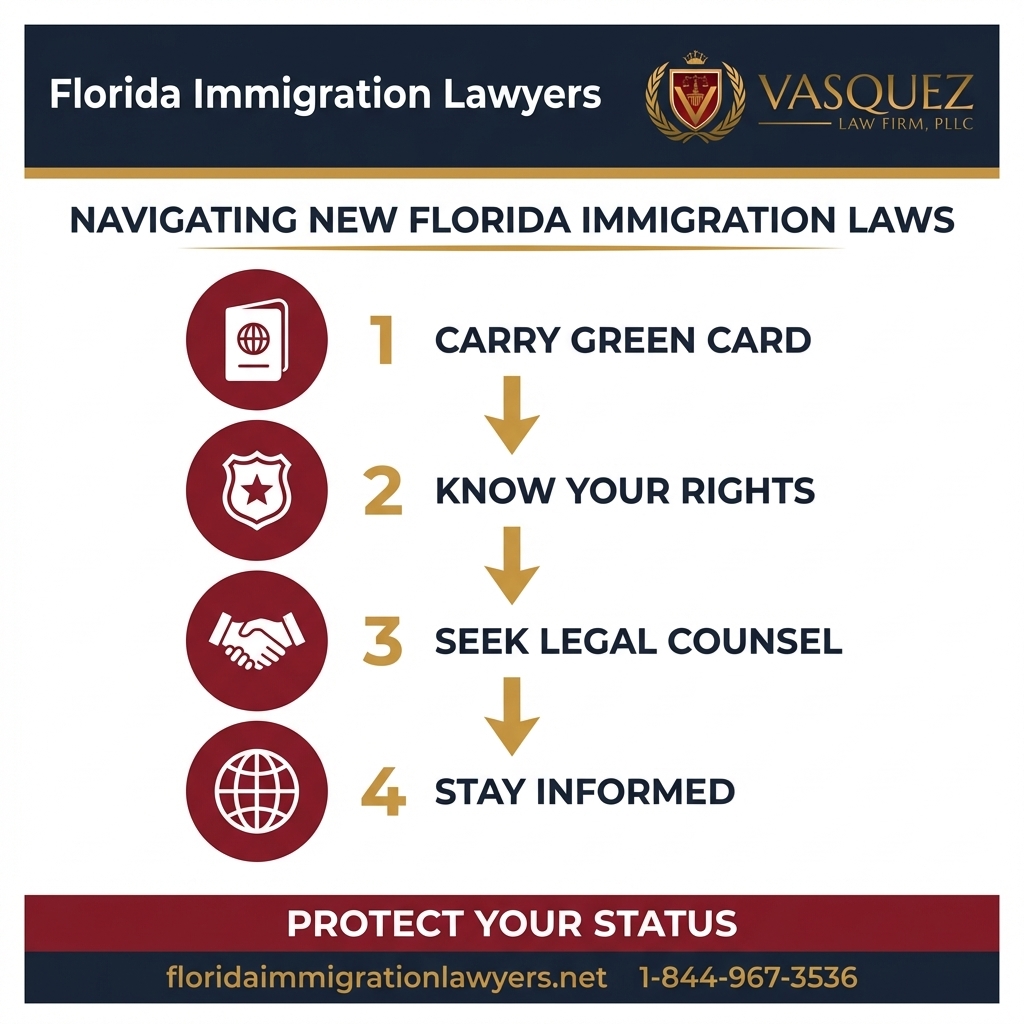
Always Carry Your Green Card (Form I-551): This is your primary proof of lawful permanent residency. Federal law (8 U.S.C. 1304(e)) requires all aliens 18 years and older to carry their registration document. While not carrying it might not always lead to immediate deportation, it can result in detention, questioning, or fines. Keep your physical card safe and accessible, especially when traveling within or outside the U.S.
-
Know Your Rights: As a green card holder, you have specific rights under U.S. law. You have the right to remain silent, the right to speak with a lawyer, and the right to refuse searches without a warrant. Do not sign anything you do not understand. If you are stopped by immigration officials, calmly state that you are a lawful permanent resident and wish to speak with an attorney. This knowledge is your first line of defense against potential issues.
-
Avoid Actions That Could Jeopardize Your Status: Be mindful of your activities. This includes avoiding criminal offenses, not engaging in voter fraud, and understanding the implications of prolonged stays outside the U.S. Even seemingly minor infractions can be magnified under immigration law. Consult an attorney if you have any doubts about an action's potential impact on your status.
-
Seek Legal Counsel Proactively: Do not wait for a problem to arise. If you anticipate any issues, such as extended travel, a criminal charge, or questions about your status, consult with an experienced immigration lawyer. Proactive advice can prevent costly and stressful problems. Our team at Florida Immigration Lawyers is ready to assist you.
green card holders issued new warning - Step-by-Step Process -
Stay Informed: Immigration laws and policies can change rapidly. Regularly check official government websites like USCIS.gov for updates. Subscribing to reputable immigration news sources can also help you stay current. Knowledge is power when it comes to protecting your immigration status.
Following these steps can significantly reduce your risk of encountering issues with your green card status. For any concerns related to potential deportation, our deportation defense services are available to protect your rights.
Essential Document Checklist for Green Card Holders
Having the correct documents readily available is crucial, especially in light of any new warnings. Prepare a comprehensive set of documents that you can access quickly if needed.
- Valid Green Card (Form I-551): This is paramount. Ensure it is not expired. If it is, begin the renewal process immediately by filing Form I-90.
- Passport (from your home country): While not strictly required for re-entry to the U.S. as an LPR, it is necessary for international travel and can serve as a secondary form of identification.
- Travel Documents (if applicable): If you have a re-entry permit or refugee travel document, ensure it is current and carried with your green card when traveling internationally.
- Proof of Continuous Residence in the U.S.: Documents like tax returns, utility bills, mortgage statements, or lease agreements can demonstrate your intent to reside permanently in the U.S., especially if you have traveled extensively.
- Marriage Certificates, Birth Certificates, or Divorce Decrees: These are important if your green card was obtained through a family petition and your marital or family status has changed. They may be needed if you apply for naturalization later.
- Employment Authorization Document (EAD): While your green card itself grants work authorization, if you also hold an EAD, keep it current.
Proper documentation is key to proving your status and eligibility. For assistance with family-related immigration matters and document preparation, visit our family immigration page.
Navigating Potential Challenges: Re-entry and Deportation
Despite careful planning, green card holders may still face challenges, particularly concerning re-entry to the U.S. or potential deportation proceedings. Understanding these processes is vital.
What Happens if Denied Re-Entry?
If a green card holder is denied re-entry at a U.S. port of entry, it typically means CBP believes you are inadmissible. Common reasons include abandonment of residency (e.g., prolonged absence), certain criminal convictions, or misrepresentation. You may be placed in secondary inspection and questioned extensively.
In some cases, you might be asked to sign Form I-407, Record of Abandonment of Lawful Permanent Resident Status. Never sign this form without consulting an attorney. Signing it means voluntarily giving up your green card. Instead, you have the right to request a hearing before an immigration judge to contest the inadmissibility finding.
Understanding the NTA (Notice to Appear)
An NTA, or Notice to Appear, is a document issued by the Department of Homeland Security (DHS) that formally charges an individual with being removable (deportable) from the United States. It initiates removal proceedings in immigration court. An NTA will specify the charges against you and instruct you to appear before an immigration judge.
Receiving an NTA is a serious matter. It means the government believes you are subject to deportation. This could happen for various reasons, including certain criminal convictions, immigration violations, or misrepresentation. For information on immigration court procedures, you can visit the Executive Office for Immigration Review (EOIR) at justice.gov/eoir.
Importance of Legal Representation in Immigration Court
If you receive an NTA or are placed in removal proceedings, securing experienced legal representation is critical. An immigration lawyer can analyze the charges against you, identify potential defenses, and guide you through the complex court process. They can advocate on your behalf, present evidence, and argue for forms of relief from removal, such as cancellation of removal or asylum.
Attempting to navigate immigration court without an attorney significantly reduces your chances of a favorable outcome. The stakes are incredibly high, as the outcome determines your right to remain in the U.S.
Do not navigate this process alone. Contact Florida Immigration Lawyers today.
Common Mistakes Florida Green Card Holders Must Avoid
Even with the best intentions, green card holders can make mistakes that jeopardize their status. Being aware of these common pitfalls, especially in the context of any new warnings, is crucial for permanent residents in Florida.
-
Not Carrying Your Physical Green Card: As mentioned, federal law requires you to carry your Form I-551. Failure to do so can lead to detention and questioning by immigration officials, even if you are just traveling within Florida or to a neighboring state. Always keep it with you.
-
Staying Outside the U.S. for Too Long: Absences of six months or more can create a presumption of abandonment of residency. Absences of one year or more automatically break continuous residency for naturalization purposes. If you must travel extensively, obtain a re-entry permit.
-
Committing Certain Crimes: Even minor offenses can have severe immigration consequences. Crimes involving moral turpitude, aggravated felonies, or drug offenses can lead to deportation. Always consult an immigration attorney if you are arrested.
-
Lying on Immigration Forms or to Officials: Any misrepresentation or fraud in immigration matters, whether on forms or during interviews, can lead to permanent bars from the U.S. and denial of benefits. Honesty is always the best policy.
-
Failing to Update Address (Form AR-11): This is a frequently overlooked requirement. Notifying USCIS of a change of address within 10 days is mandatory. Missing this can lead to missed notices and even removal proceedings.
-
Not Filing Taxes: LPRs are U.S. taxpayers. Failure to file federal income taxes can be seen as an abandonment of your intent to reside permanently in the U.S. Always meet your tax obligations.
-
Believing All Online Information is Accurate: The internet is full of misinformation. Always verify information with official government sources or a qualified immigration attorney. Relying on unofficial advice can be detrimental.
-
Ignoring Official Notices: Do not ignore mail or calls from USCIS, ICE, or immigration courts. These communications are often time-sensitive and critical to your case. Seek legal advice immediately if you receive such a notice.
-
Traveling Without Legal Advice After Past Issues: If you have previous immigration violations, criminal history, or have been in removal proceedings, do not travel internationally without first consulting an attorney. Your re-entry could be denied.
-
Assuming Naturalization is Not Necessary: While a green card provides many benefits, it is not citizenship. Naturalization offers greater security against deportation and further rights. Consider applying for U.S. citizenship when eligible.
-
Lending Your Green Card to Others: Your green card is your personal identification document. Lending it to anyone else for any reason is a serious offense that can lead to its revocation and criminal penalties.
-
Not Understanding Conditional Green Card Terms: If you have a conditional green card (valid for two years), you must file Form I-751 to remove the conditions before it expires. Failing to do so can lead to the termination of your permanent resident status.
When to Call a Florida Immigration Lawyer
Understanding when to seek legal assistance is paramount for green card holders, especially with new warnings and potential policy shifts. Proactive legal counsel can often prevent minor issues from escalating into major problems.
You should contact Florida Immigration Lawyers immediately if any of these scenarios apply to you:
- Before Extensive International Travel: If you plan to be outside the U.S. for an extended period (over six months), consult an attorney to discuss a re-entry permit.
- If You Receive a Notice to Appear (NTA): An NTA means you are facing removal proceedings. This is an urgent situation requiring immediate legal representation.
- If You Are Arrested or Charged with a Crime: Any criminal charge, regardless of how minor it seems, can impact your immigration status. Seek an attorney with immigration law experience.
- If Your Green Card is Lost, Stolen, or Expired: You need to replace or renew it promptly. An attorney can guide you through the Form I-90 application process.
- If You Want to Naturalize: Applying for U.S. citizenship is a complex process. An attorney can assess your eligibility, prepare your application, and represent you during the interview.
- If You Have Questions About Your Specific Situation: Every immigration case is unique. If you have any doubts or concerns about your status, travel plans, or compliance with regulations, a free consultation can provide clarity.
Our experienced attorneys at Florida Immigration Lawyers are here to provide the guidance and representation you need. We understand the specific challenges faced by immigrants in Florida, from Hollywood to Miami and beyond. Don't wait for a crisis to unfold; let us help you protect your future. Contact us today.
About Florida Immigration Lawyers
Florida Immigration Lawyers is an immigration law firm dedicated to serving individuals and families across the entire state of Florida. With a deep understanding of complex U.S. immigration laws and a commitment to our clients, we strive to provide compassionate, effective, and results-driven legal representation.
Our team of skilled attorneys focuses on a wide range of immigration services, including family-based petitions, employment visas, asylum claims, deportation defense, naturalization, and more. We pride ourselves on offering personalized attention, clear communication, and strategic solutions tailored to each client's unique needs.
Why Choose Florida Immigration Lawyers?
- Experience: Our attorneys possess extensive experience in all facets of immigration law.
- Client-Centered Approach: We prioritize your needs and work tirelessly to achieve the strongest possible outcome.
- Bilingual Services: Our team is fluent in English and Spanish, ensuring effective communication.
- Accessibility: We are available 24/7 to address your urgent concerns.
- Free Consultations: We offer free initial consultations to discuss your case and outline your options.
Protect your future and your family's future with the trusted legal guidance of Florida Immigration Lawyers. Call us at 1-844-YO-PELEO or visit our website at https://www.floridaimmigrationlawyers.net to schedule your free consultation today. We are here to help you navigate the complexities of immigration law with confidence.
Sources and References
- U.S. Citizenship and Immigration Services (USCIS)
- Executive Office for Immigration Review (EOIR)
- U.S. Department of State - International Travel
- 8 U.S.C. Chapter 12 - Immigration and Nationality Act (INA)
- INA Section 212 - General Classes of Aliens Ineligible for Visas and Admission; Waivers of Inadmissibility
- INA Section 237 - Deportable Aliens
- 8 CFR 265.1 - Notices of address
- USCIS Policy Manual
This article provides general legal information and is not intended as legal advice. Every case is unique, and outcomes depend on specific facts and circumstances. Contact an attorney for advice about your particular situation.
The immigration landscape for green card holders in Florida is dynamic, and staying informed is your best defense. If you have questions or concerns about your status, travel plans, or any new warnings, do not hesitate to seek professional legal guidance. Our dedicated team at Florida Immigration Lawyers is here to provide the support and representation you need.
Contact Florida Immigration Lawyers today for a free consultation at 1-844-YO-PELEO. Se Habla Español - Estamos aquí para ayudarle.
Do Not Navigate This Process Alone
Our experienced immigration attorneys are ready to fight for you. Get a free, confidential case review today.
Se Habla Español
Or leave your details and we’ll call you:
Free Evaluation in 24 Hours
Or talk to us right now

AI voice assistant — available 24/7
FreeFrequently Asked Questions

William J. Vásquez
Founding Attorney · Vasquez Law Firm
U.S. Air Force veteran and immigration attorney with years of hands-on U.S. immigration experience. J.D., NCCU School of Law. AILA member. Admitted to the 4th, 5th, and 11th Circuit Courts.
Available 24/7 - Free Evaluations
Reviewed for legal accuracy by William J. Vásquez
Licensed in North Carolina; U.S. immigration is federal practice.
Related Legal Services
Our Florida immigration attorneys can help you with immigration practice areas, free immigration consultation and business immigration. Call today at 1-844-YO-PELEO for a free case review.
Related Links
Related Topics
Free Legal Case Review
Discuss your case with our experienced attorneys. We're available 24/7.
Se Habla Español - Estamos aquí para ayudarle.
Related Articles
DUI Immigration Consequences in Florida 2026
A DUI conviction in Florida can have severe immigration consequences, potentially leading to inadmissibility, deportation, or denial of immigration benefits. For non-citizens, a DUI is not just a traffic offense but a serious criminal matter that federal immigration law scrutinizes closely. Factors like multiple offenses, injury, or property damage can escalate a simple DUI to a Crime Involving Moral Turpitude (CIMT) or even an aggravated felony, triggering mandatory detention and removal proceedings. Understanding the specific nature of your Florida conviction and its interpretation under the Immigration and Nationality Act (INA) is crucial. This article outlines how DUIs impact immigration status, the grounds for inadmissibility and deportation, a step-by-step guide to navigating the process, essential documentation, and expected timelines for 2026. We also highlight common mistakes to avoid and when to seek legal counsel from an experienced immigration attorney. Florida Immigration Lawyers offers comprehensive support for individuals facing these challenging situations, providing expert guidance through complex legal landscapes.
Dual Citizenship Lawyer in Florida: What You Need to Know
For Florida residents, the concept of dual citizenship, or holding two passports, offers a compelling blend of opportunities and challenges. While the U.S. generally permits dual nationality, the path to achieving this status requires a meticulous understanding of both U.S. immigration laws and the citizenship policies of your country of origin. This guide explores the definition of dual citizenship, the detailed step-by-step process for U.S. naturalization, and the significant benefits and potential pitfalls involved. We cover essential documentation, typical timelines, and cost considerations for 2026, providing crucial insights for anyone in Orlando, Miami, or across Florida considering this important legal step. Learn about common mistakes to avoid and understand when to seek professional legal counsel to navigate this complex process successfully. Florida Immigration Lawyers is here to provide expert, bilingual support for your dual citizenship journey.
Immigration Lawyer Orlando Free Consultation in Florida
For individuals and families in Orlando, Florida, navigating the complexities of U.S. immigration law requires expert guidance. An immigration lawyer in Orlando offers crucial support for everything from visa applications and green card processes to naturalization and deportation defense. This comprehensive guide details what a free consultation covers, providing a step-by-step overview of immigration pathways, essential document checklists, and expected timelines in 2026. We also highlight common mistakes to avoid, discuss the critical role of legal counsel in deportation and asylum cases, and explain why choosing a local Orlando immigration attorney is beneficial. Florida Immigration Lawyers is dedicated to serving the diverse community of Orlando with compassionate, effective legal solutions, ensuring you receive personalized advice and robust representation for a successful immigration journey.
EAD Advance Parole Combo Card in Florida: What You Need
An EAD advance parole combo card allows individuals with pending adjustment applications to both work and travel abroad without jeopardizing their green card application. Learn how to apply in Florida, what documents you need, and common mistakes to avoid.