Understanding Good Moral Character for Naturalization in Florida
Learn about the importance of good moral character for naturalization in Florida. Understand how it impacts your N-400 application and what steps to take to ensure a successful process.
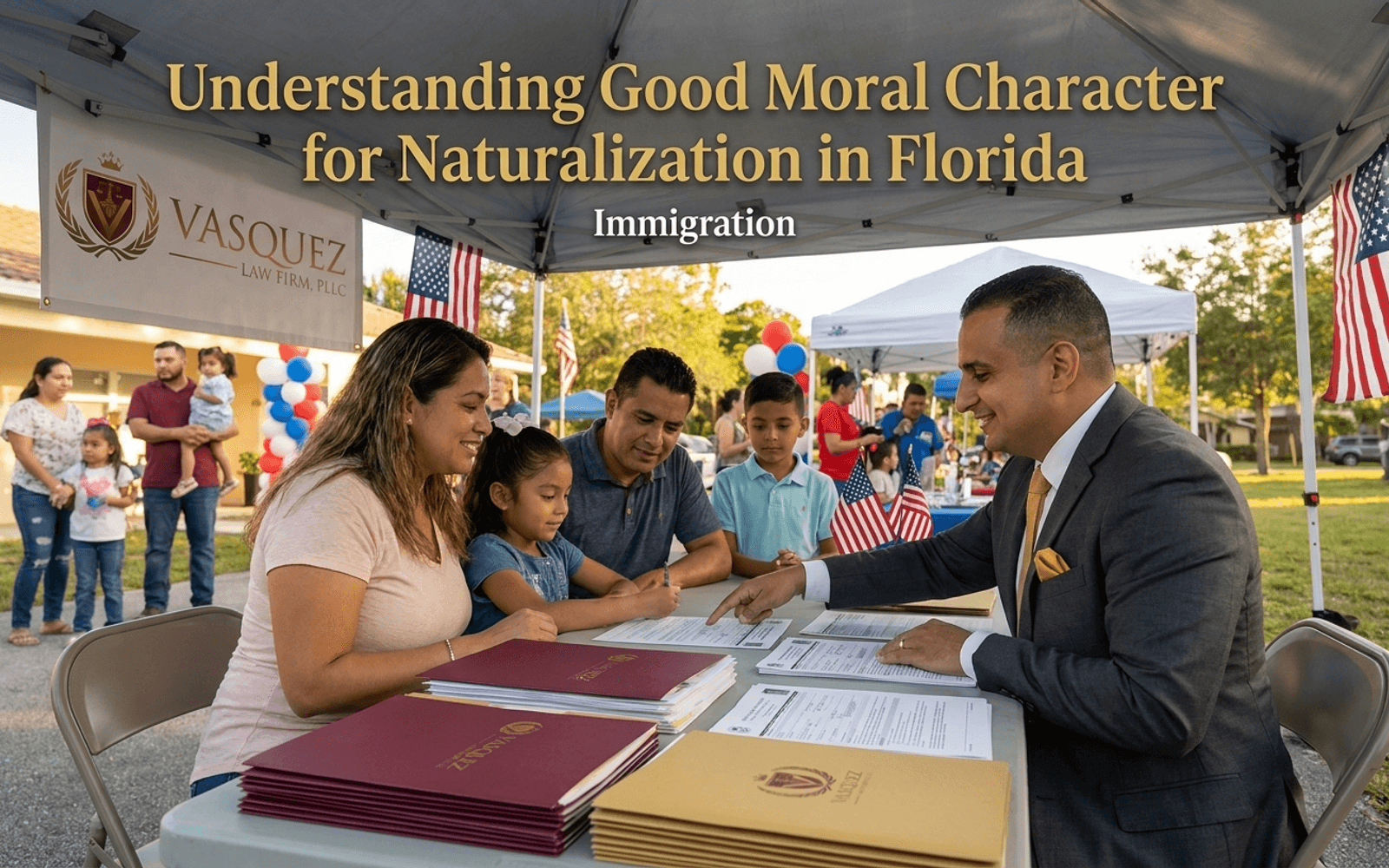
Good moral character is a crucial requirement for naturalization in Florida, especially for those in Homestead. To qualify, applicants must demonstrate their adherence to moral and legal standards over the last five years, as assessed through the N-400 form. Key factors include criminal history, tax records, and community involvement. Contact Florida Immigration Lawyers at 1-844-YO-PELEO for a free consultation.
- Essential for N-400 naturalization process
- Impacts eligibility and approval chances
- Requires clean criminal record
- Focus on recent five-year history
Introduction
Naturalization is a significant step for many immigrants in Florida, allowing them to become U.S. citizens and enjoy the full benefits that come with citizenship. These benefits extend beyond mere residency, encompassing the right to vote, hold federal employment, obtain a U.S. passport, and petition for close family members to immigrate. For residents in Homestead and surrounding areas, this transition represents a profound commitment to their adopted country, and in return, the U.S. government expects a demonstration of adherence to its values and laws.
However, one critical aspect of this process is proving good moral character, a foundational requirement that underscores the integrity and trustworthiness expected of new citizens. This isn't just a formality; it's a careful assessment by U.S. Citizenship and Immigration Services (USCIS) to ensure applicants uphold the moral and legal standards of American society. Your journey to citizenship is a testament to your dedication, and demonstrating good moral character is a cornerstone of that journey.
In this article, we will explore what constitutes good moral character, delving into the specific criteria USCIS evaluates, how it directly affects your N-400 application, and why it's particularly important for applicants residing in Florida. We'll provide practical insights, common pitfalls to avoid, and essential tips to help you navigate this crucial requirement successfully. If you're considering applying for naturalization and want to ensure your application reflects your commitment to good moral character, call Florida Immigration Lawyers at 1-844-YO-PELEO for a free consultation. Our team is ready to provide the guidance you need to achieve your citizenship dreams.
Understanding Good Moral Character
Good moral character refers to the conduct that measures up to the standards of average citizens in the community where the applicant resides. It is an essential criterion in the naturalization process, as outlined in the Immigration and Nationality Act (INA) and assessed during the review of your N-400 application. The USCIS examines your behavior over the past five years, although certain actions outside this period can also influence the decision.
For applicants in Florida, demonstrating good moral character involves maintaining a clean criminal record, fulfilling tax obligations, and participating positively in the community. The USCIS will consider any arrests, convictions, or other legal issues that might suggest a lack of integrity or honesty. It's important to understand that "good moral character" is not merely the absence of bad acts, but also the presence of positive attributes. This includes being truthful, law-abiding, and contributing to the well-being of your community.
The USCIS assesses good moral character based on a comprehensive review of your life. While the primary focus is on the five years immediately preceding your N-400 application (or three years if applying based on marriage to a U.S. citizen), certain severe offenses or patterns of behavior from outside this period can still be considered. These might include serious felonies, multiple arrests, or a history of immigration fraud. The officer will look for honesty, integrity, and a respect for the rule of law. For instance, consistently paying taxes, registering for selective service (if applicable), and avoiding any criminal entanglements are strong indicators of good moral character.
A real-world example might involve an applicant who had a minor misdemeanor charge seven years ago. While outside the five-year statutory period, if that applicant has since maintained a spotless record, volunteered in their community, and consistently paid taxes, USCIS is more likely to view them favorably. Conversely, an applicant with multiple recent traffic violations, even if minor, could raise concerns about their respect for laws. It's crucial to disclose all relevant information and, if in doubt, consult with Florida Immigration Lawyers at 1-844-YO-PELEO to understand how your specific history might be interpreted.
Step-by-Step Guide to the N-400 Application Process
The naturalization process, while ultimately rewarding, involves a series of meticulously outlined steps. Each stage demands attention to detail and a thorough understanding of USCIS requirements. Navigating these steps correctly is paramount to a successful outcome, especially when demonstrating good moral character is a central theme throughout your application.
- Prepare Your Application: Gather all necessary documents like your green card, travel records, and tax returns. This initial phase is critical; ensure you have all required identification, proof of residency, and any legal documents pertaining to your moral character.
- Complete the N-400 Form: Accurately fill out all sections, paying special attention to questions about your moral character. Honesty and completeness are non-negotiable here. Any omissions or misrepresentations, even unintentional, can lead to serious complications or denial.
- Submit Your Application: Send your completed form along with the required documents and fees to the USCIS. Double-check that all supporting evidence is attached and that the correct fees are included.
- Attend the Biometrics Appointment: You'll be scheduled to provide fingerprints, photos, and signatures. This data is used for background checks, which are a vital part of the good moral character assessment. Do not miss this appointment.
- Interview and Testing: Prepare for your naturalization interview where your knowledge of U.S. history and government will be tested. During this interview, the USCIS officer will also review your N-400 application, specifically probing into your good moral character. Be prepared to discuss any criminal history, tax issues, or other relevant aspects of your life.
- Oath Ceremony: If approved, you will be invited to attend an oath ceremony, officially becoming a U.S. citizen. This is the final step, symbolizing your full integration into American society.
Throughout this entire process, consistency and transparency are key. USCIS officers are trained to identify discrepancies, and any red flags concerning your moral character will be thoroughly investigated. Seeking legal counsel from Florida Immigration Lawyers can provide invaluable assistance at each stage, helping you anticipate potential issues and present your case in the most favorable light. Call 1-844-YO-PELEO for guidance.
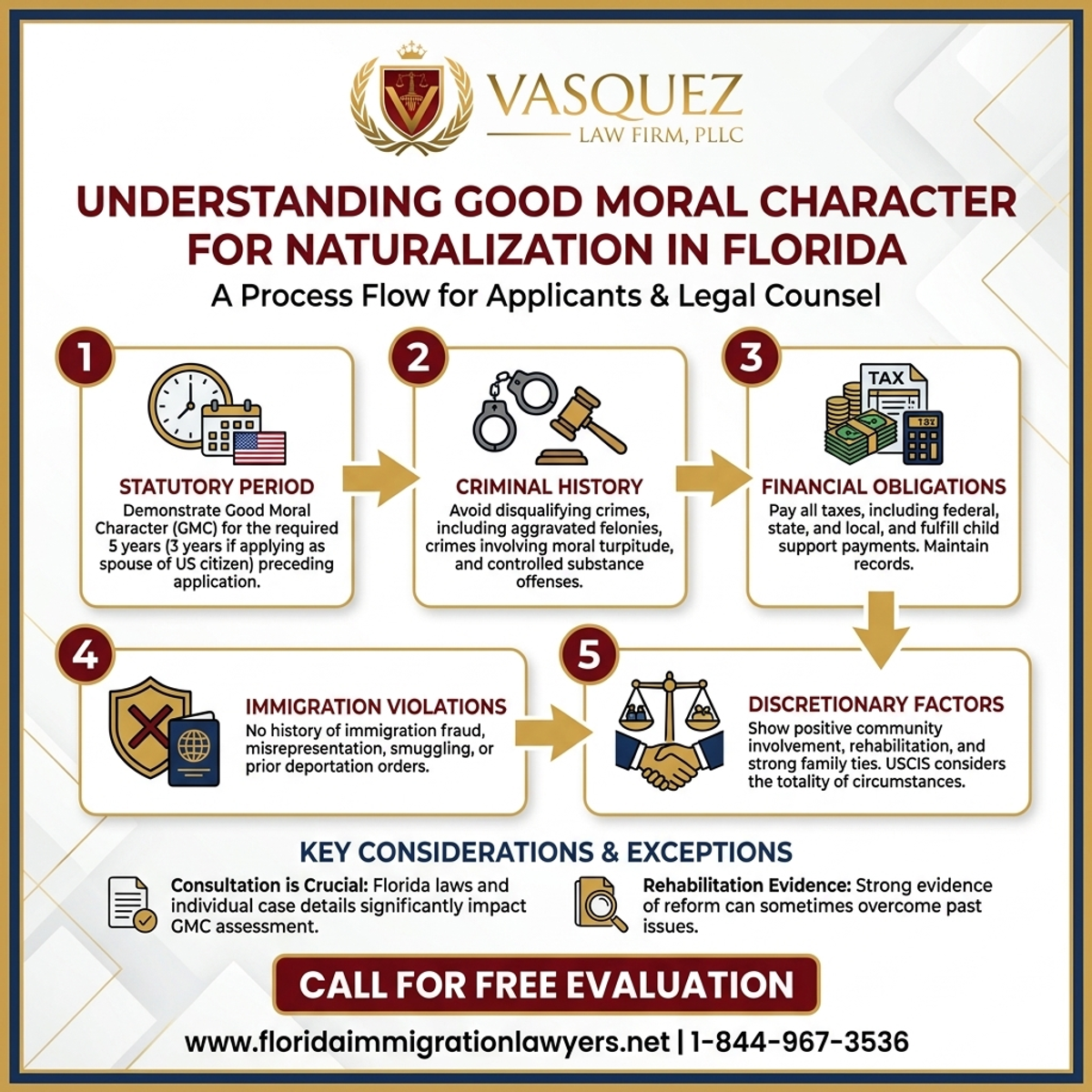
Step-by-Step Process — Understanding Good Moral Character for Naturalization in Florida
Document Checklist for Proving Good Moral Character
Presenting a robust collection of documents is essential to unequivocally prove your good moral character to USCIS. These documents serve as tangible evidence, painting a clear picture of your adherence to legal standards and your positive contributions to society. Simply stating you possess good moral character is insufficient; you must be able to back it up with verifiable records.
- Valid green card
- Certified copies of court and arrest records, if applicable. Even if charges were dismissed or expunged, full disclosure is critical. USCIS has access to various databases, and failing to disclose can be interpreted as a lack of good moral character.
- Tax returns for the last five years. These demonstrate financial responsibility and compliance with federal and state laws. If you have outstanding taxes, proof of a payment plan or resolution is essential.
- Proof of community involvement or volunteer work. Letters from organizations, awards, or photos can showcase your commitment to your community.
- Character references from credible individuals. These should be from U.S. citizens or lawful permanent residents who know you well and can attest to your good character, honesty, and law-abiding nature.
- Proof of selective service registration (for males aged 18-26). Failure to register can be a serious impediment to naturalization.
- Marriage certificates, divorce decrees, and birth certificates for dependents, if applicable, to establish family stability and support.
Each item on this checklist plays a vital role in building a compelling case for your good moral character. For instance, tax returns not only show financial compliance but also a commitment to supporting the public infrastructure. Character references, especially from employers, religious leaders, or community figures, offer a personal testimony to your integrity and standing within your local community. Organizing these documents meticulously and ensuring their accuracy will significantly streamline your application process and strengthen your claim. Florida Immigration Lawyers can help you compile and review these crucial documents, ensuring nothing is overlooked.
Timeline and Processing Expectations
The naturalization process in Florida can take several months to complete, and sometimes even longer, depending on various factors. It's crucial for applicants to manage their expectations regarding the timeline, as processing times can fluctuate based on USCIS workload, the complexity of individual cases, and the specific field office handling your application. While the general stages remain consistent, the duration of each stage can vary significantly.
- Biometrics Appointment: Within 5-8 weeks of application submission
- Initial Review: 6-10 months after biometrics
- Interview Schedule: 12-16 months from the application date
- Oath Ceremony: Typically 1-2 months post-interview
It's important to note that these are average estimates. Factors such as a criminal history, previous immigration issues, or even simple errors on your N-400 form can prolong the process as USCIS may issue Requests for Evidence (RFEs) or schedule follow-up interviews. Maintaining open communication with Florida Immigration Lawyers can help you stay informed about any changes or delays in your application status. Our team at 1-844-YO-PELEO is dedicated to keeping clients updated and prepared for every phase of their naturalization journey.
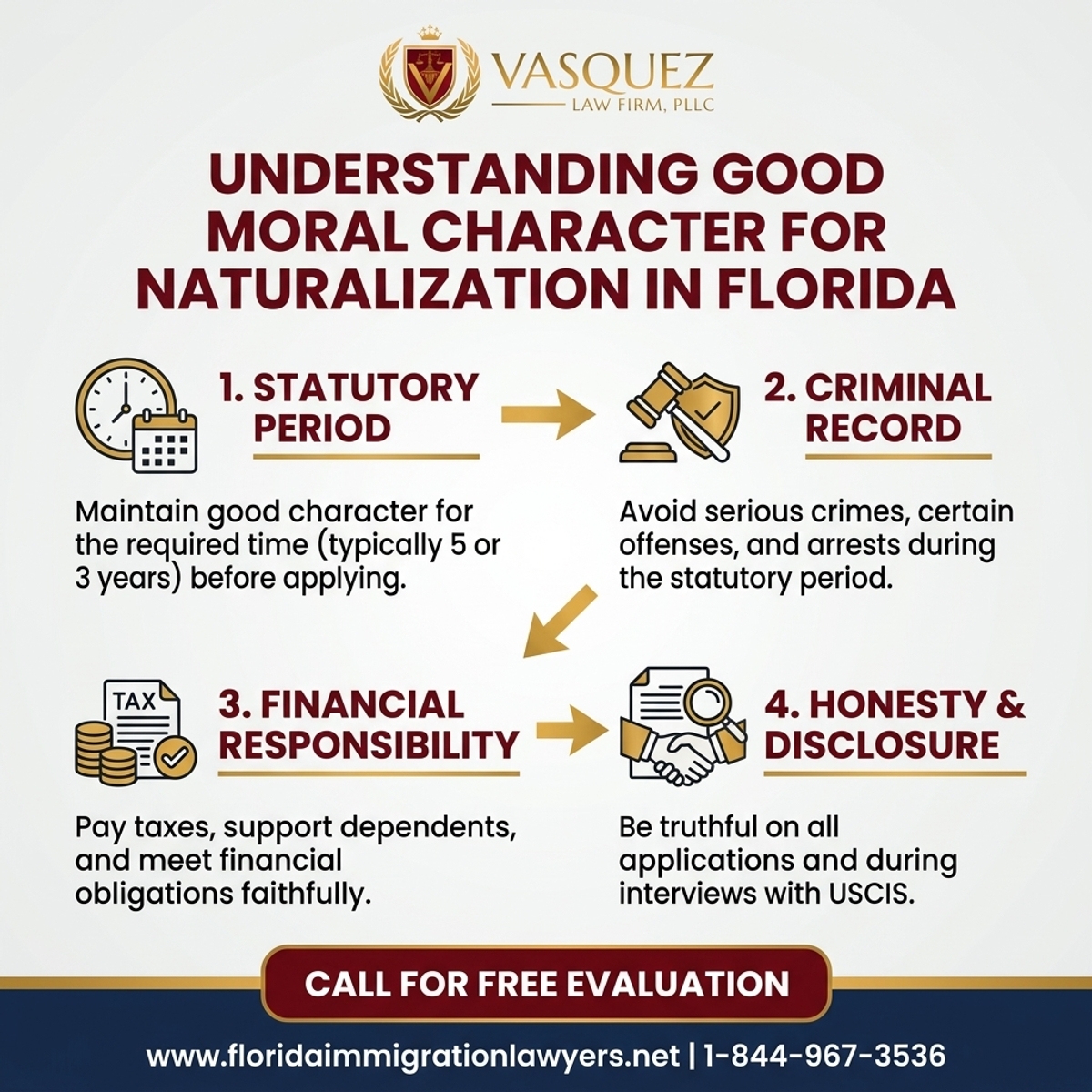
Key Statistics — Understanding Good Moral Character for Naturalization in Florida
Cost Factors and Fee Breakdown
Applying for naturalization involves several fees, which may vary based on your specific circumstances. These generally include an application fee and a biometrics fee, both of which are non-refundable. It's important to check the latest fee schedule on the USCIS website as they are subject to change and can be updated periodically. For some applicants who meet specific income guidelines, fee waivers or reduced fees may be available, making the process more accessible. Eligibility for these waivers is strict and requires careful documentation.
Beyond the standard USCIS fees, additional costs might include legal fees if you choose to work with an experienced immigration attorney. While this is an additional investment, it is one we highly recommend for the strongest possible outcome, especially if your case involves complexities related to good moral character. An attorney can help you prepare your application flawlessly, gather all necessary evidence, and represent you during the interview, significantly increasing your chances of approval and avoiding costly delays or denials.
Consider the legal fees as an investment in peace of mind and a smooth process. Attempting to navigate the intricate naturalization requirements, particularly those concerning good moral character, without professional guidance can lead to errors that result in denials, appeals, or even deportation proceedings, which are far more expensive and emotionally taxing than initial legal consultation. Do not navigate this process alone. Contact Florida Immigration Lawyers today at 1-844-YO-PELEO for a free consultation to understand the full scope of costs and how our experience can benefit your application.
Common Mistakes to Avoid
The path to naturalization is fraught with potential pitfalls, and even seemingly minor errors can have significant consequences, especially when they touch upon your good moral character. Avoiding these common mistakes is paramount to a successful application and preventing delays, denials, or even more severe immigration repercussions. Understanding these traps beforehand can save you immense stress and resources.
- Failing to Disclose Criminal History: Omitting past offenses, no matter how minor or old they seem, can lead to denial and possible deportation. USCIS has access to extensive databases, and any attempt to conceal information will be viewed as a serious lack of good moral character.
- Not Paying Taxes: Delinquencies, evasion, or failure to file tax returns can severely impact your good moral character assessment. It demonstrates a disregard for U.S. law and civic responsibility. If you have tax issues, address them before applying or provide proof of a payment plan.
- Providing Incomplete Documentation: Missing documents can delay or derail your application. USCIS requires specific evidence, and an incomplete submission will lead to Requests for Evidence (RFEs), prolonging your process.
- Ignoring Legal Advice:
Sources and References
- U.S. Citizenship and Immigration Services (USCIS)
- Executive Office for Immigration Review (EOIR)
- U.S. Department of State - Bureau of Consular Affairs
- Immigration and Nationality Act (INA), 8 U.S.C. Chapter 12
Do Not Navigate This Process Alone
Our experienced immigration attorneys are ready to fight for you. Get a free, confidential case review today.
Se Habla Español
Or leave your details and we’ll call you:
Free Evaluation in 24 Hours
Or talk to us right now
AI voice assistant — available 24/7
FreeFrequently Asked Questions

William J. Vásquez
Founding Attorney · Vasquez Law Firm
U.S. Air Force veteran and immigration attorney with years of hands-on U.S. immigration experience. J.D., NCCU School of Law. AILA member. Admitted to the 4th, 5th, and 11th Circuit Courts.
Available 24/7 - Free Evaluations
Reviewed for legal accuracy by William J. Vásquez
Licensed in North Carolina; U.S. immigration is federal practice.
Related Legal Services
Our Florida immigration attorneys can help you with asylum protection, citizenship and naturalization and immigration practice areas. Call today at 1-844-YO-PELEO for a free case review.
Related Links
Related Topics
Free Legal Case Review
Discuss your case with our experienced attorneys. We're available 24/7.
Se Habla Español - Estamos aquí para ayudarle.
Related Articles
Immigration Lawyer Orlando Free Consultation in Florida
For individuals and families in Orlando, Florida, navigating the complexities of U.S. immigration law requires expert guidance. An immigration lawyer in Orlando offers crucial support for everything from visa applications and green card processes to naturalization and deportation defense. This comprehensive guide details what a free consultation covers, providing a step-by-step overview of immigration pathways, essential document checklists, and expected timelines in 2026. We also highlight common mistakes to avoid, discuss the critical role of legal counsel in deportation and asylum cases, and explain why choosing a local Orlando immigration attorney is beneficial. Florida Immigration Lawyers is dedicated to serving the diverse community of Orlando with compassionate, effective legal solutions, ensuring you receive personalized advice and robust representation for a successful immigration journey.
Fiance Visa in Miami: 2026 Process Guide for Florida
For U.S. citizens in Florida, bringing a foreign fiancé(e) to the U.S. requires navigating the K-1 Fiance Visa process. This guide details the 2026 requirements, step-by-step application, essential documents, and expected timelines. Learn about filing Form I-129F with USCIS, consular interviews, and the crucial Adjustment of Status after marriage. We cover typical fees, common mistakes to avoid, and when to seek legal assistance. Florida Immigration Lawyers offers expert guidance for couples in Miami, Orlando, and across Florida, ensuring a smooth path to uniting with your loved one. Get a free case review today.
Immigration Lawyer Services in Orlando, Florida
Explore immigration consultation services in Orlando, Florida, with a qualified immigration lawyer. Learn what to expect and understand your options for family and business immigration needs.
Fraud Prevention and Detection Fee: What to Know in Florida
Explore the fraud prevention and detection fee essential for immigration processes in Florida. Discover how it impacts applications like the I-601 waiver and learn key steps to navigate this requirement effectively.