Understanding the Asylum One-Year Deadline in Florida
Navigating the asylum one-year deadline in Florida is crucial for those seeking refuge in the U.S. Learn about the process, exceptions, and how Florida Immigration Lawyers can help.
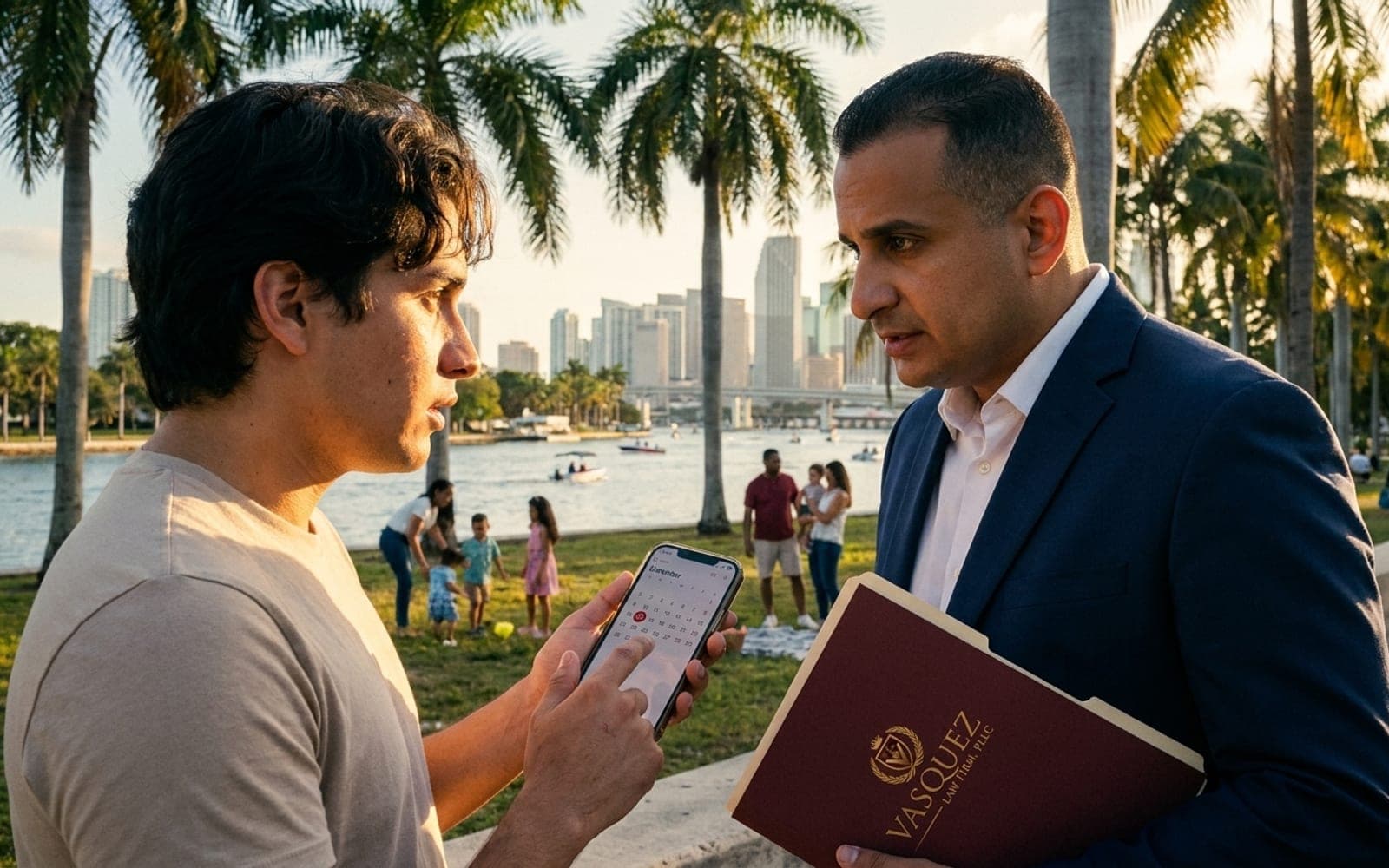
- File Form I-589 ASAP
- Understand exceptions for changed circumstances
- Contact a lawyer for guidance
Introduction
Imagine arriving in the United States seeking refuge, only to face a complex legal landscape that could determine your future. In Florida, the asylum one-year filing deadline is a crucial aspect of your asylum journey. This article explains the intricacies of the one-year deadline, its implications in Miami and other Florida regions, and how you can navigate this complex process. Call Florida Immigration Lawyers at 1-844-YO-PELEO for a free consultation.
Seeking asylum is a profound step, often taken under immense duress and with the hope of finding safety and a new beginning. However, the path is fraught with legal complexities, and understanding critical deadlines is paramount. The one-year filing rule for asylum in the U.S. is one such cornerstone, designed to ensure that claims are brought forward promptly, reflecting the urgency of the persecution faced.
For individuals and families arriving in Florida, whether through its bustling international airports or its extensive coastlines, the clock starts ticking the moment they enter the country. This deadline is not merely a bureaucratic formality; it is a fundamental requirement that, if missed, can have severe and often irreversible consequences, potentially jeopardizing your entire asylum claim and leading to removal proceedings. Our goal here is to demystify this critical requirement, provide actionable insights, and emphasize the indispensable role of expert legal guidance from Florida Immigration Lawyers.
Understanding the Asylum One-Year Deadline
The one-year filing deadline for asylum seekers is enshrined in U.S. immigration law under the Immigration and Nationality Act (INA). According to the INA, individuals must file for asylum within one year of their last arrival in the United States. This rule is strictly enforced by the Miami Immigration Court and other courts throughout Florida. Missing this deadline can severely impact your ability to remain in the U.S.
There are exceptions, such as changed circumstances that materially affect your eligibility for asylum or extraordinary circumstances relating to the delay in filing. In Florida, changed circumstances might include new threats in your home country, or changes in your personal situation that affect your eligibility.
The rationale behind the one-year deadline is rooted in the belief that individuals genuinely fleeing persecution would seek protection promptly upon arriving in a safe country. This rule aims to prevent fraudulent claims and ensure the integrity of the asylum system. The "last arrival" clause is particularly important; it refers to the most recent entry into the U.S., even if you have entered and exited multiple times. For example, if you entered the U.S. five years ago, left for a brief period, and then re-entered six months ago, your one-year clock would typically start from that most recent re-entry date.
Navigating these exceptions requires a thorough understanding of immigration law and a compelling presentation of evidence. "Changed circumstances" can encompass a wide range of events, such as the emergence of new, country-wide persecution in your homeland, a change in government that targets your specific social group, or a significant personal event like marriage or divorce that alters your family unit's eligibility. For instance, if a new political regime takes power in your home country after your arrival and begins persecuting individuals like you, this could constitute a changed circumstance. Similarly, "extraordinary circumstances" could include a severe illness that incapacitated you, a legal disability, or even egregious errors by a previous attorney that prevented timely filing. Proving these exceptions is a high bar, and the burden rests squarely on the applicant to demonstrate why the delay was reasonable and beyond their control. This is where the expertise of Florida Immigration Lawyers becomes invaluable, as they can help you gather the necessary documentation and articulate your case effectively to the Miami Immigration Court or USCIS.
It's crucial to understand that merely claiming changed or extraordinary circumstances is not enough; you must provide corroborating evidence and a detailed explanation. For example, if you claim a new threat in your home country, you would need to provide news articles, human rights reports, or affidavits from witnesses to substantiate your claim. Without robust evidence, your application, even with a valid exception, may face denial. This strict enforcement underscores why proactive engagement with legal counsel is not just helpful, but often essential for a successful outcome in Florida.
Step-by-Step Guide to Filing for Asylum
- Gather Necessary Documents: Collect evidence of persecution, identity documents, and any supporting affidavits.
- Complete Form I-589: Fill out the Application for Asylum and for Withholding of Removal accurately.
- Submit Your Application: File your application with the USCIS Miami office, ensuring it’s within the one-year deadline.
- Attend the Interview: Prepare for your interview by understanding the questions and providing honest answers.
- Await Decision: The decision may take several months, depending on the backlog at the Miami field office.
1. Gather Necessary Documents: This initial phase is critical. Beyond basic identity documents like passports and birth certificates, you must compile compelling evidence of the persecution you've suffered or fear. This can include police reports, medical records detailing injuries, psychological evaluations, news articles, human rights reports, and sworn affidavits from witnesses who can corroborate your story. The stronger and more diverse your evidence, the more credible your claim will appear to USCIS or the immigration court. Begin collecting these documents as soon as possible, as some may be difficult to obtain.
2. Complete Form I-589: Form I-589 is the cornerstone of your asylum application. It requires detailed information about your personal history, your reasons for seeking asylum, and any past interactions with U.S. immigration authorities. Accuracy and completeness are paramount; any inconsistencies or omissions could raise red flags. It is highly recommended to seek assistance from an experienced immigration attorney, such as those at Florida Immigration Lawyers, to ensure every section is filled out correctly and that your narrative of persecution is clearly and consistently presented.
3. Submit Your Application: Once Form I-589 is completed and all supporting documents are attached, you must submit it to the appropriate USCIS Service Center. For most applicants in Florida, this means mailing it. Always send your application via certified mail with a return receipt requested, or through a delivery service that provides tracking. This creates a verifiable record of your submission date, which is crucial for proving you met the one-year deadline. Remember, the postmark date is usually what counts for the deadline.
4. Attend the Interview: After your application is filed, you will typically be scheduled for an asylum interview at a USCIS Asylum Office, such as the one in Miami. This interview is your opportunity to explain your story in detail to an asylum officer. Preparation is key: review your application thoroughly, practice answering potential questions, and be ready to provide a truthful and consistent account of your experiences. If you are not fluent in English, ensure you have a competent, neutral interpreter. Your attorney from Florida Immigration Lawyers will prepare you for this crucial step and may accompany you to the interview.
5. Await Decision: Following the interview, the asylum officer will review your case and make a decision. This process can take several months, or even longer, due to the substantial backlog of cases. If your case is approved, you will be granted asylum. If it is not approved by USCIS, and you are not in lawful immigration status, your case will typically be referred to an immigration judge for defensive asylum proceedings. It is vital to remain patient and continue to cooperate with your legal team, providing any additional information requested promptly.
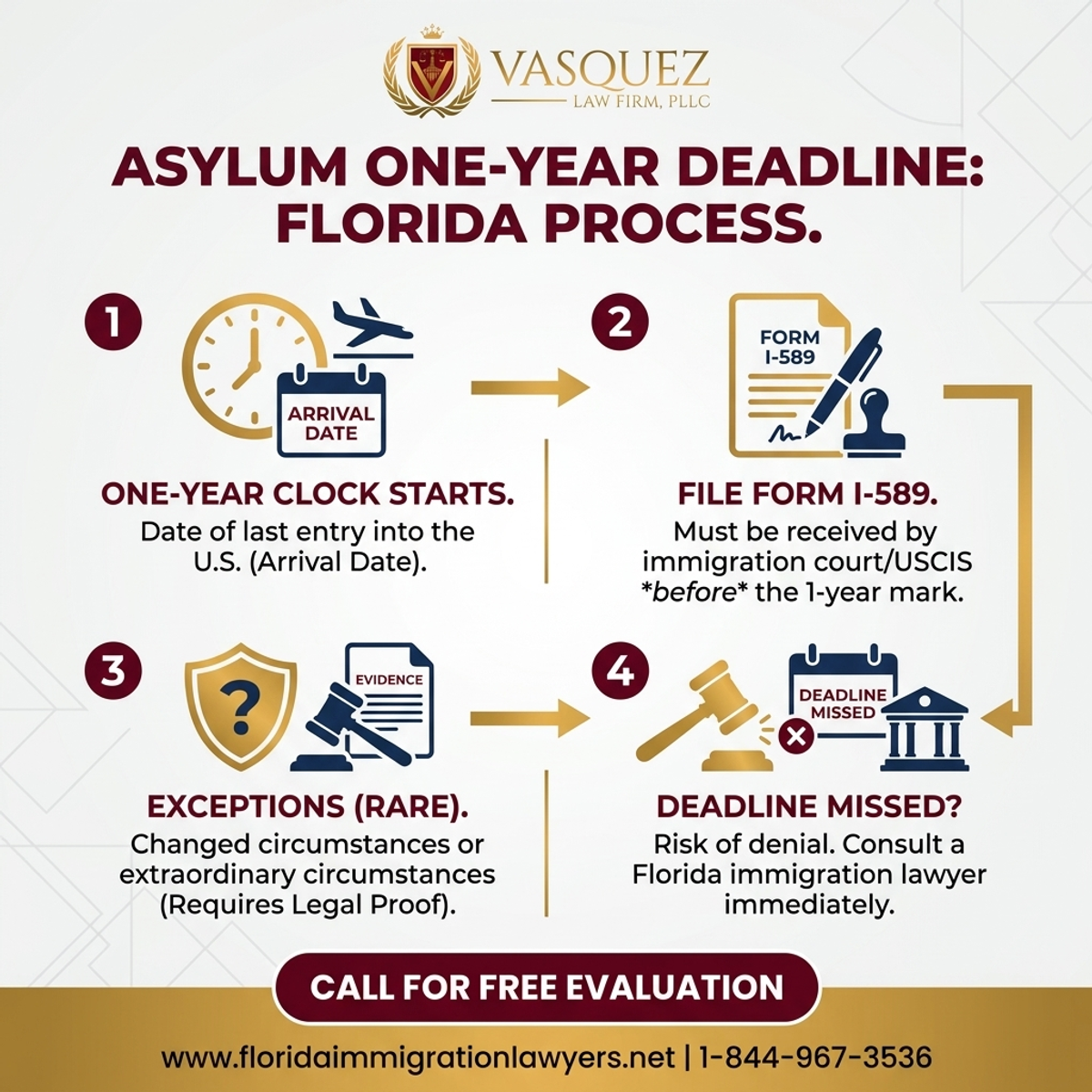
Step-by-Step Process — Understanding the Asylum One-Year Deadline in Florida
Document Checklist for Asylum Seekers
- Valid passport and any other travel documents
- Form I-589, Application for Asylum
- Proof of identity, such as a birth certificate
- Evidence of persecution or threats in your home country
- Affidavits from witnesses or experts
- Medical records if applicable
A meticulously organized and comprehensive set of documents can significantly strengthen your asylum claim. Each item on this checklist serves a specific purpose in establishing your identity, your eligibility, and the credibility of your fear of persecution.
- Valid passport and any other travel documents: These are essential for proving your identity and your last date of entry into the U.S.
- Form I-589, Application for Asylum: This is the official application form that must be completed accurately and thoroughly, detailing your claim.
- Proof of identity, such as a birth certificate: Further corroborates your identity and can be critical if travel documents are unavailable.
- Evidence of persecution or threats in your home country: This is arguably the most crucial category. It can include police reports, court documents, newspaper articles, human rights reports, photos, videos, or any other tangible proof of the harm you've suffered or fear.
- Affidavits from witnesses or experts: Sworn statements from individuals who witnessed your persecution, or from country condition experts who can speak to the general situation in your home country, can add significant weight to your claim.
- Medical records if applicable: If you suffered physical injuries or psychological trauma due to persecution, medical and psychological evaluations and records are vital evidence.
Remember, all documents not in English must be accompanied by a certified English translation. Organizing these documents clearly and chronologically will not only make the review process smoother for immigration officials but also demonstrate your diligence. Florida Immigration Lawyers can assist you in identifying, collecting, and organizing all necessary evidence, ensuring no critical piece is overlooked.
Timeline and Processing Expectations
In Florida, particularly in Miami, the asylum process can be lengthy due to high application volumes. Initially, after filing Form I-589, you may receive a receipt notice within a few weeks. The asylum interview may be scheduled several months later. It is crucial to attend all scheduled interviews and hearings to avoid delays or denials. Generally, the entire process, from filing to decision, can take anywhere from six months to a year, depending on your case specifics and the current backlog.
The reality for asylum seekers in Florida is that while some cases are processed relatively quickly, many face significant delays. The USCIS Asylum Office in Miami, like others across the country, manages a substantial caseload, contributing to extended waiting periods for interviews and final decisions. Factors influencing this timeline include the volume of new applications, the complexity of individual cases, and the availability of asylum officers. For those whose cases are referred to immigration court for defensive asylum, the process can be even more protracted, potentially spanning several years due to court backlogs and scheduling challenges.
It's important to differentiate between affirmative asylum, where you apply directly with USCIS, and defensive asylum, which occurs when you are already in removal proceedings before an immigration judge. Each path has its own procedural nuances and timelines. Regardless of the path, maintaining an up-to-date address with USCIS and the Executive Office for Immigration Review (EOIR) is non-negotiable. Missing a crucial notice or interview appointment due to an outdated address can lead to severe consequences, including denial or an order of removal. Your legal team at Florida Immigration Lawyers will help you monitor your case status and ensure all communications are received and addressed promptly, guiding you through each phase of this often-lengthy journey.
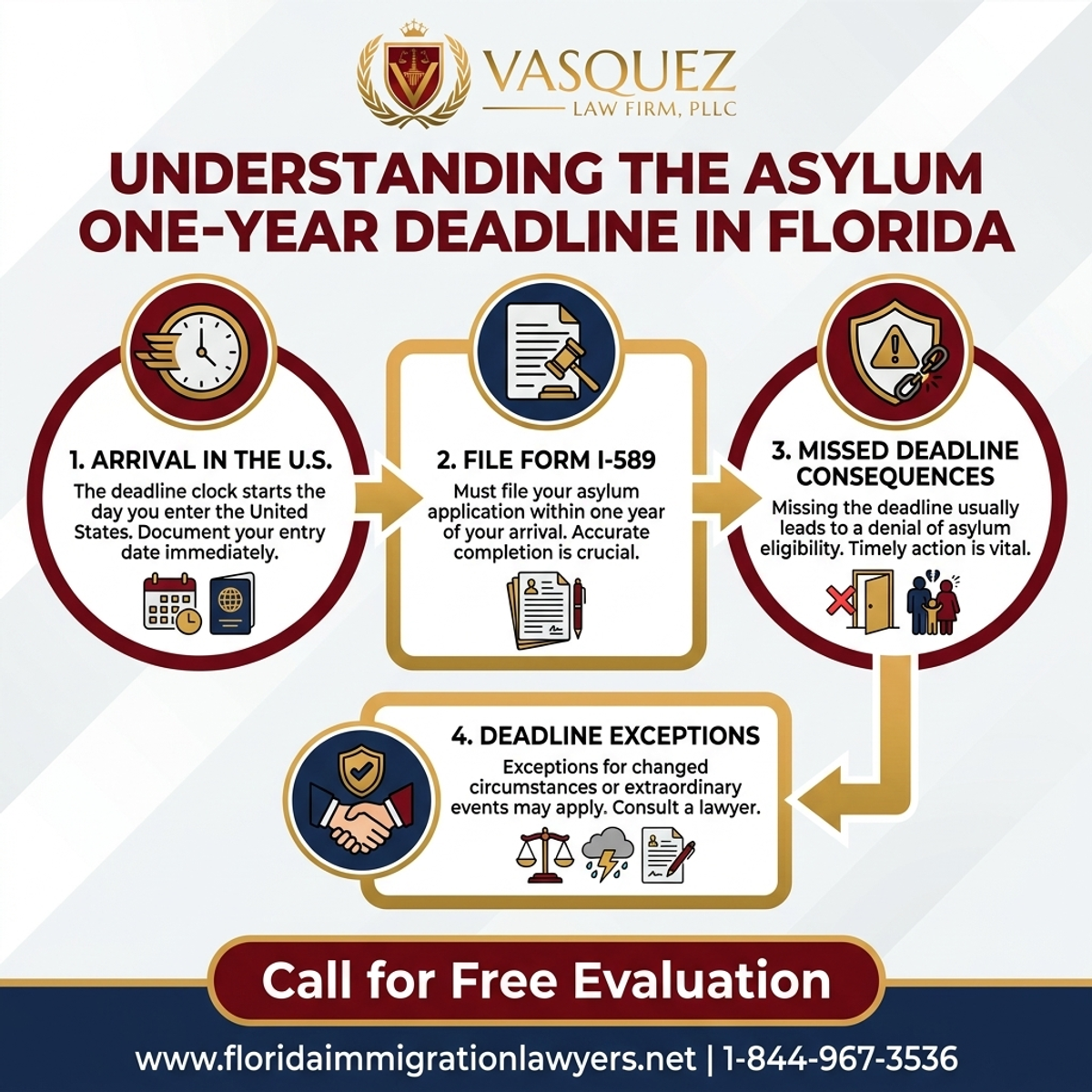
Key Statistics — Understanding the Asylum One-Year Deadline in Florida
Cost Factors and Fee Breakdown
While there is no filing fee for Form I-589, other costs may arise, such as legal fees, document translations, and travel expenses for interviews. Hiring an attorney increases your chances of success but adds to the cost. Many firms, including Florida Immigration Lawyers, offer free initial consultations to discuss potential fees and payment plans.
Do not navigate this process alone. Contact Florida Immigration Lawyers today.
Understanding the financial aspects of an asylum claim is important for planning. While the U.S. government does not charge a fee to file Form I-589, the associated costs can still accumulate. Legal fees represent a significant investment, but they provide invaluable expertise. Attorneys may charge flat fees for the entire asylum process, or hourly rates depending on the complexity of the case. It's crucial to discuss these structures upfront during your free consultation with Florida Immigration Lawyers, who are committed to transparency regarding their services and costs.
Beyond legal representation, other potential expenses include certified translation services for any non-English documents, which are mandatory for USCIS submission. You might
Sources and References
- U.S. Citizenship and Immigration Services (USCIS)
- Executive Office for Immigration Review (EOIR)
- U.S. Department of State - Bureau of Consular Affairs
- Immigration and Nationality Act (INA), 8 U.S.C. Chapter 12
Do Not Navigate This Process Alone
Our experienced immigration attorneys are ready to fight for you. Get a free, confidential case review today.
Se Habla Español
Or leave your details and we’ll call you:
Free Evaluation in 24 Hours
Or talk to us right now
AI voice assistant — available 24/7
FreeFrequently Asked Questions

William J. Vásquez
Founding Attorney · Vasquez Law Firm
U.S. Air Force veteran and immigration attorney with years of hands-on U.S. immigration experience. J.D., NCCU School of Law. AILA member. Admitted to the 4th, 5th, and 11th Circuit Courts.
Available 24/7 - Free Evaluations
Reviewed for legal accuracy by William J. Vásquez
Licensed in North Carolina; U.S. immigration is federal practice.
Related Legal Services
Our Florida immigration attorneys can help you with asylum protection, citizenship and naturalization and immigration practice areas. Call today at 1-844-YO-PELEO for a free case review.
Related Links
Related Topics
Free Legal Case Review
Discuss your case with our experienced attorneys. We're available 24/7.
Se Habla Español - Estamos aquí para ayudarle.
Related Articles
EAD Advance Parole Combo Card in Florida 2026
For individuals with a pending Form I-485, Application to Register Permanent Residence or Adjust Status, the EAD Advance Parole Combo Card is an essential document. This single card combines the authorization to work legally in the U.S. (Employment Authorization Document - EAD) with permission to travel internationally and re-enter without abandoning your green card application (Advance Parole). This guide from Florida Immigration Lawyers provides a comprehensive overview for applicants in Florida in 2026, covering eligibility, the step-by-step application process, required documents, expected processing times, and associated costs. We also highlight common mistakes to avoid and when to seek legal counsel to ensure a smooth and successful immigration journey. Understanding this vital card is key to maintaining stability while awaiting your permanent residency approval.
Immigration Lawyer Orlando Free Consultation in Florida
For individuals and families in Orlando, Florida, navigating the complexities of U.S. immigration law requires expert guidance. An immigration lawyer in Orlando offers crucial support for everything from visa applications and green card processes to naturalization and deportation defense. This comprehensive guide details what a free consultation covers, providing a step-by-step overview of immigration pathways, essential document checklists, and expected timelines in 2026. We also highlight common mistakes to avoid, discuss the critical role of legal counsel in deportation and asylum cases, and explain why choosing a local Orlando immigration attorney is beneficial. Florida Immigration Lawyers is dedicated to serving the diverse community of Orlando with compassionate, effective legal solutions, ensuring you receive personalized advice and robust representation for a successful immigration journey.
USCIS Oath Ceremony Schedule 2026: Your Guide to Citizenship
Achieving U.S. citizenship culminates in the naturalization oath ceremony, a pivotal moment for immigrants in Florida. This comprehensive guide from Florida Immigration Lawyers details the USCIS oath ceremony schedule for 2026, outlining what to expect from your Form N-445 notice to the final pledge of allegiance. We cover the entire naturalization process, including eligibility requirements, the step-by-step application (Form N-400), necessary documents, typical timelines for Florida field offices like Orlando, Miami, and Tampa, and associated costs. Learn how to prepare for your ceremony, avoid common mistakes that could delay your path, and understand when legal counsel becomes indispensable. Our firm is dedicated to providing expert guidance, ensuring a smooth and successful journey to becoming a U.S. citizen. Get a free case review from our bilingual team today.
Annual Asylum Fee: Preparation for Florida Interviews
As of 2026, there is no annual asylum fee in the U.S. Preparing for your asylum interview in Florida is crucial for success. Learn more about the process, necessary documentation, and common mistakes to avoid. Florida Immigration Lawyers are here to help.