DUI Immigration Consequences in Florida: What You Need to
Understanding the immigration consequences of a DUI conviction in Florida is crucial for non-citizens. This article explores potential impacts like deportation and inadmissibility, offering guidance and resources for those facing such challenges.

- DUI can affect your immigration status and lead to deportation.
- Understanding the legal implications is crucial for avoiding complications.
- Consulting an immigration lawyer can help navigate the complexities.
Introduction
Facing a DUI charge in Naples, Florida, can be daunting, especially for immigrants. The consequences can extend beyond fines and license suspension, affecting your immigration status with severe repercussions like deportation or inadmissibility. This article explores the potential impact of a DUI conviction on immigration status in Florida, with a specific focus on Naples and surrounding areas.
For non-citizens, a DUI charge introduces a complex layer of legal challenges, as it intertwines state criminal law with federal immigration statutes. The stakes are incredibly high, potentially jeopardizing years of effort to build a life in the United States. Understanding these intricate connections is not just advisable; it's absolutely essential for protecting your future.
The emotional and financial toll of a DUI conviction can be immense, but for immigrants, the added threat of removal from the country creates an unparalleled level of stress. Early intervention and expert legal guidance are critical to navigating this dual legal landscape successfully. Florida Immigration Lawyers are here to help you understand your rights and options.
If you or a loved one is dealing with these issues, call Florida Immigration Lawyers at 1-844-967-3536 for a free consultation to discuss your case.
What Are the Immigration Consequences of a DUI in Florida?
As of 2026, a DUI conviction in Florida can lead to serious immigration consequences. These include deportation and inadmissibility for non-citizens, affecting their ability to reside or enter the United States. The severity depends on factors like prior convictions and the specifics of the DUI offense.
For instance, aggravated DUI cases or those involving harm to others may be treated more seriously than standard DUIs. Florida has specific statutes that govern these implications, and legal guidance is crucial to navigate the aftermath.
Florida's immigration courts, such as those in Miami and Orlando, handle these cases, and each decision is based on unique circumstances, highlighting the need for expert legal representation.
Beyond the immediate criminal penalties, a DUI conviction can trigger various grounds of deportability or inadmissibility under the Immigration and Nationality Act (INA). While a single, simple DUI may not automatically be classified as a Crime Involving Moral Turpitude (CIMT) or an Aggravated Felony, certain aggravating factors can elevate it to a level that has severe immigration ramifications. For example, a DUI involving serious bodily injury, a felony DUI, or multiple DUI convictions can be interpreted by immigration authorities as grounds for removal.
The interaction between state criminal law and federal immigration law is highly complex. A plea bargain that seems favorable in criminal court (e.g., reducing a charge) might still have devastating immigration consequences if not carefully structured with an immigration attorney's insight. This is why it's critical to have legal counsel from Florida Immigration Lawyers who understand both criminal defense and immigration law, ensuring that any resolution in criminal court does not inadvertently trigger deportation proceedings or jeopardize your ability to adjust status or naturalize.
Even if a DUI does not immediately lead to deportation, it can still impact your ability to apply for future immigration benefits, such as a green card, DACA renewal, or U.S. citizenship. It can also affect your ability to travel internationally and re-enter the United States. These long-term consequences underscore why immigrants facing DUI charges must seek comprehensive legal advice from a firm like Florida Immigration Lawyers to protect their status and future.
How Does a DUI Affect Inadmissibility and Deportation?
A DUI can make you inadmissible, meaning you may be denied entry into the U.S. or face deportation. This is particularly true for aggravated DUI offenses, which are considered crimes of moral turpitude. Additionally, repeated offenses can lead to severe immigration consequences.
Under the Immigration and Nationality Act (INA), specific sections outline these consequences, emphasizing the importance of legal compliance and defense strategies for immigrants.
To clarify, inadmissibility refers to circumstances that prevent a non-citizen from entering the United States or from adjusting their status to a lawful permanent resident (green card holder). Deportability, on the other hand, refers to grounds for removal for non-citizens who are already residing within the U.S. A DUI conviction can trigger both, depending on the specifics of the offense and the individual's immigration history. For instance, if you travel outside the U.S. after a DUI conviction, you might be deemed inadmissible upon attempting to re-enter.
The classification of a DUI as a Crime Involving Moral Turpitude (CIMT) is a critical distinction. While a simple DUI, without aggravating factors, is generally not considered a CIMT by itself, an aggravated DUI (such as one involving reckless behavior, serious injury to another person, or a felony conviction) often is. CIMTs are serious grounds for inadmissibility and deportability. Furthermore, multiple DUI convictions, even if individually not CIMTs, can sometimes be aggregated to show a pattern of criminal behavior that could lead to immigration issues, including a finding of lack of good moral character for naturalization.
Another severe classification is that of an “aggravated felony.” While most DUIs are not aggravated felonies, if a DUI results in a sentence of one year or more, or if it is combined with other offenses, it can potentially be classified as such under immigration law. An aggravated felony conviction almost always leads to mandatory detention and expedited deportation, with very limited avenues for relief. This highlights the absolute necessity of having an experienced immigration attorney from Florida Immigration Lawyers review your case to identify and mitigate these severe risks.
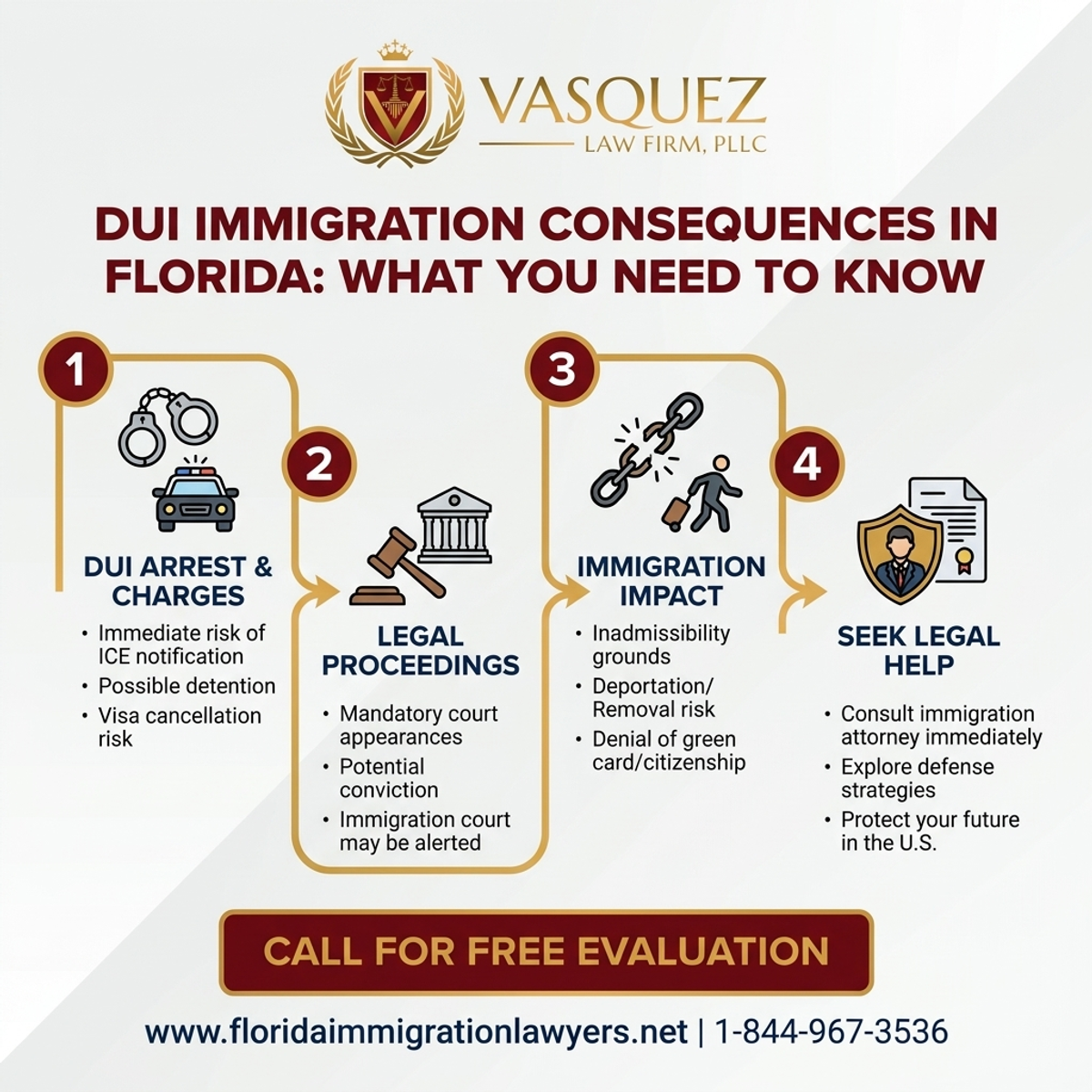
Step-by-Step Process — DUI Immigration Consequences in Florida: What You Need to Know
| Offense | Immigration Impact | Notes |
|---|---|---|
| Standard DUI | Potential deportation | Depends on history and circumstances |
| Aggravated DUI | Inadmissible/deportable | Considered more severe |
Steps to Take After a DUI Arrest in Florida as an Immigrant
After a DUI arrest, prompt action is vital. Here are steps to protect your status:
- Contact an Immigration Attorney: Immediately seek legal advice to understand your options and rights. An immigration attorney, like those at Florida Immigration Lawyers, possesses a unique understanding of how state criminal charges intersect with federal immigration law. They can advise you on potential immigration consequences, work with your criminal defense attorney, or guide you directly to ensure your criminal defense strategy does not inadvertently jeopardize your immigration status.
- Document Everything: Keep a record of all legal communications and court documents. This includes police reports, arrest records, court summons, bail bond paperwork, and any correspondence with law enforcement or legal counsel. Comprehensive documentation is critical for building a strong defense, identifying discrepancies, and ensuring that no detail is overlooked as your case progresses through both the criminal and immigration systems.
- Attend All Hearings: Missing a court date can lead to additional charges and complications. Failing to appear in criminal court can result in a warrant for your arrest, additional criminal charges, and further legal entanglement. In immigration court, missing a hearing can lead to an 'in absentia' deportation order, which is extremely difficult to reverse and can severely jeopardize your ability to remain in the U.S.
- Explore Legal Defenses: Work with your attorney to examine possible defenses or plea options. This involves not only challenging the DUI charge itself but also exploring plea agreements that are 'immigration-safe.' An experienced attorney from Florida Immigration Lawyers can help negotiate with prosecutors for outcomes that minimize or avoid negative immigration consequences, such as avoiding classifications as a CIMT or aggravated felony.
Taking these proactive steps can significantly influence the outcome of your case. The dual nature of criminal and immigration proceedings means that actions taken in one arena can have profound and often unforeseen effects in the other. Therefore, having dedicated legal counsel is not just beneficial, but absolutely essential for immigrants facing DUI charges in Florida.
Document Checklist for Immigrants Facing DUI Charges
Having the right documents can make a significant difference. Ensure you have:
- Immigration status documents (visa, green card)
- Police report and court documents
- Proof of residency in Florida
- Character references or letters of support
Gathering these documents promptly allows your attorney to thoroughly assess your situation and build the strongest possible defense. Your immigration status documents, such as your visa, green card, I-94 arrival/departure record, or any notices from USCIS or immigration court, are crucial for your attorney to understand your current legal standing and identify potential avenues for relief or defense.
The police report and all court-related documents provide essential details about the charges against you, the evidence collected, and your court schedule. These are the foundation of your criminal defense. Proof of residency, including utility bills, lease agreements, bank statements, and employment records, can help establish your ties to the community, which can be beneficial in certain immigration proceedings, such as bond hearings or when seeking discretionary relief.
Finally, character references or letters of support from employers, community leaders, or family members can demonstrate your good moral character and positive contributions to society. While not always directly impacting the criminal charge, these can be invaluable in immigration proceedings, especially if you need to apply for waivers or demonstrate equities in your favor. A comprehensive collection of these documents empowers Florida Immigration Lawyers to advocate effectively on your behalf.
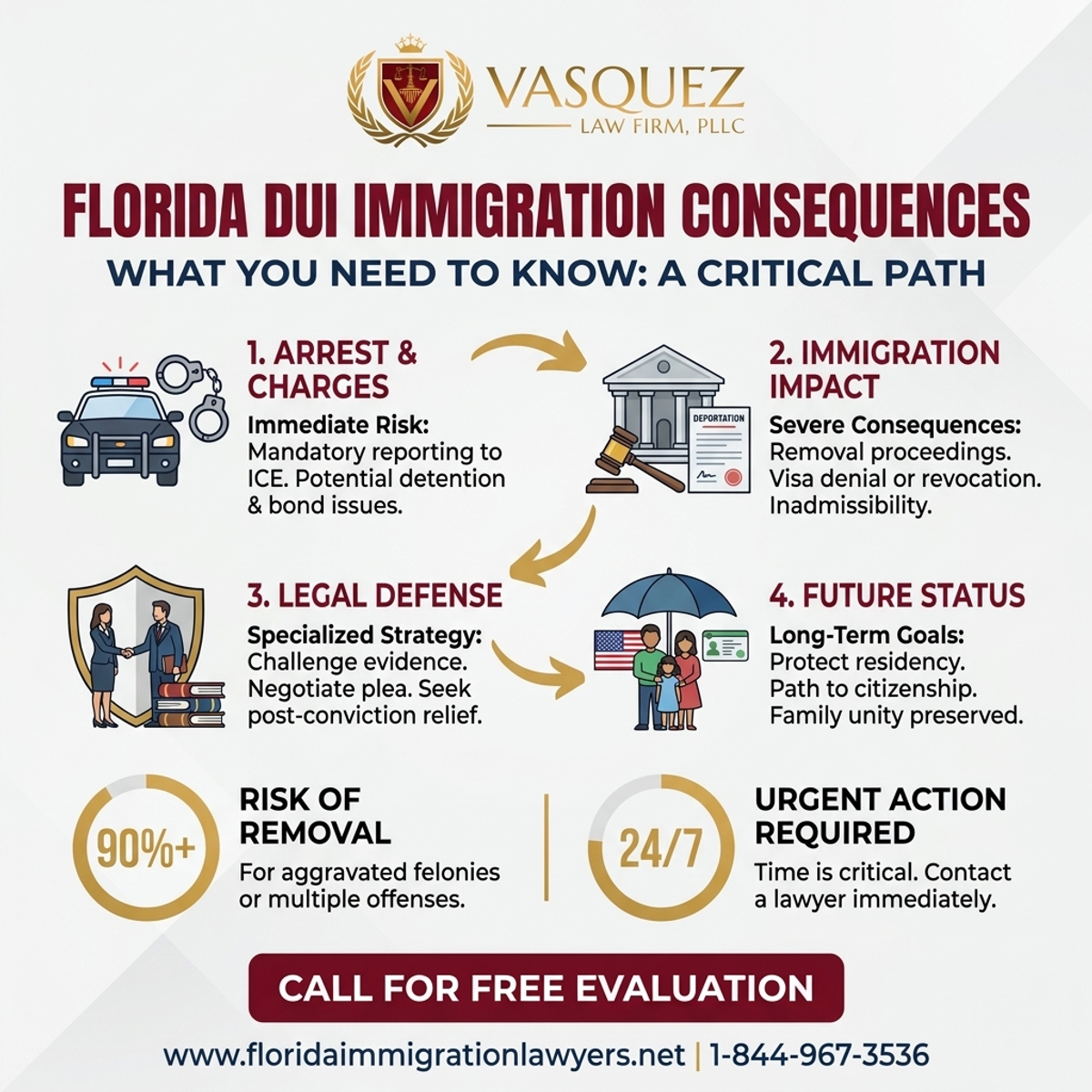
Key Statistics — DUI Immigration Consequences in Florida: What You Need to Know
What Are the Typical Processing Times for DUI Cases and Immigration Proceedings?
Processing times for DUI cases and subsequent immigration proceedings can vary. Generally, a DUI case in Florida might take several months to conclude, while immigration proceedings can extend from months to years depending on the case's complexity and court backlog.
The duration of a criminal DUI case in Florida is influenced by various factors, including the specific county court's caseload, the complexity of the evidence, whether the case goes to trial, and the time required for plea negotiations. A simple first-time misdemeanor DUI might resolve in 3-6 months, but more complex cases involving injuries, felony charges, or extensive discovery can easily take over a year to reach a conclusion.
Following a criminal conviction, the immigration consequences can initiate a separate, often longer, legal journey. Immigration court proceedings, especially in busy jurisdictions like Miami or Orlando, are frequently subject to significant backlogs. The type of immigration relief sought, the availability of judges, and the need for appeals can stretch these proceedings from six months to several years. This extended timeline underscores the importance of having consistent and dedicated legal representation from Florida Immigration Lawyers throughout the entire process.
Navigating these dual timelines can be incredibly stressful for immigrants, as their future in the U.S. remains uncertain for prolonged periods. An experienced immigration attorney can help manage expectations, provide updates, and strategically plan each step to minimize delays and work towards the most favorable outcome possible.
| Stage | Typical Timeframe | Notes |
|---|---|---|
| DUI Court Case | 3-6 months | Varies by court schedule |
| Immigration Hearing | 6-24 months | Depends on case complexity |
Cost Factors and Fee Breakdown for Handling DUI and Immigration Cases
The costs for handling DUI and immigration cases in Florida can vary widely. Here's a general breakdown:
| Item | Typical Fee | Notes |
|---|---|---|
| Attorney Fees | Varies | Depends on case complexity |
| Court Costs | Varies | Includes processing fees |
| Additional Fees | Varies | May include fines or penalties |
Attorney fees are often the most significant component of legal costs. These can vary based on the attorney's experience, the complexity of your DUI charge (e.g., misdemeanor vs. felony, first offense vs. repeat offense), and whether the case involves both criminal defense and immigration representation. Some attorneys may charge a flat fee for specific services, while others work on an hourly basis. It's crucial to discuss fee structures transparently during your initial consultation with Florida Immigration Lawyers.
Beyond attorney fees, you will likely incur various court costs and additional fees. These can include court filing fees, administrative costs, mandatory DUI school enrollment fees, costs for installing an ignition interlock device, and potential fines or penalties imposed by the court. If your case proceeds to immigration court, there may be additional filing fees for applications or waivers. While these costs can seem substantial, viewing them as an investment in protecting your immigration status and future in the U.S. is essential.
Understanding all potential cost factors upfront can help you plan financially and avoid surprises. Florida Immigration Lawyers are committed to providing clear information regarding fees and will work with you to explore all available options to manage the costs associated with your defense and immigration proceedings.
Do not navigate this process alone. Contact Florida Immigration Lawyers today.
Common Mistakes to Avoid When Facing DUI Charges as an Immigrant
- Failing to Consult an Attorney: Not seeking legal help can lead to severe consequences, as a criminal defense attorney might not fully understand the intricate immigration implications of a DUI, and an immigration attorney is crucial for navigating the dual legal systems effectively.
- Missing Court Dates: This can result in additional legal troubles, including warrants for arrest, new criminal charges, and even 'in absentia' deportation orders, severely jeopardizing your ability to remain in the U.S.
- Ignoring Immigration Impact: Overlooking how a DUI affects immigration status can be detrimental, as even a seemingly minor criminal conviction can trigger grounds for deportation, inadmissibility, or denial of future immigration benefits.
- Not Documenting the Case: Failing to keep meticulous records of police reports, court documents, and all communications can weaken your defense and make it challenging for your attorney to build a comprehensive case.
- Underestimating the Charge: Treating a DUI as a minor issue can have severe outcomes, as federal immigration law often views these offenses much more seriously than state criminal law, potentially leading to disproportionate immigration consequences.
- Delaying Action: Waiting too long to address the case can complicate matters, limit available legal options, and significantly reduce the chances of achieving a favorable outcome in both criminal and immigration proceedings.
- Providing Inconsistent Information: Inconsistent statements to police, immigration officials, or even different legal representatives can harm your credibility and undermine your defense, making it harder to secure positive results.
Avoiding these common pitfalls is paramount for any immigrant facing DUI charges in Florida. The best defense is a proactive and informed one, guided by experienced legal counsel who understands both criminal and immigration law. Florida Immigration Lawyers can help you steer clear of these mistakes and protect your future.
When to Call a Lawyer
Engaging a lawyer is critical if you've been charged with a DUI, especially if you are an immigrant. Scenarios that necessitate legal help include receiving a DUI charge, facing deportation, or having a complex immigration history. A lawyer can help navigate legal challenges and work to protect your rights.
The moment you are arrested or charged with a DUI, it is imperative to contact an attorney. Early legal intervention can make a significant difference, as a lawyer can advise you on your rights, such as remaining silent, and begin gathering evidence immediately. This proactive approach can help prevent common mistakes that could harm your case in the long run.
For immigrants, the need for specialized legal counsel is even greater. An attorney from Florida Immigration Lawyers can assess your specific immigration status, identify potential immigration consequences of the DUI, and work to structure a criminal defense that minimizes or avoids these severe outcomes. They can also represent you in immigration court if removal proceedings are initiated, advocating for waivers or other forms of relief. Do not delay; your future in the U.S. may depend on swift legal action.
About Florida Immigration Lawyers
Florida Immigration Lawyers offers expert legal services across all immigration matters. We are dedicated to providing compassionate and effective representation to all clients, ensuring their rights and status are protected. Contact us at 1-844-967-3536 or visit our website for more information. We are available 24/7 and offer free consultations.
Sources and References
- U.S. Citizenship and Immigration Services (USCIS)
- Executive Office for Immigration Review (EOIR)
- U.S. Department of State
- 8 U.S.C. Chapter 12 - Immigration and Nationality Act
Related services: asylum and refugee protection, immigration waivers, humanitarian protection programs, DACA renewal and applications.
This article provides general legal information and is not intended as legal advice. Every case is unique, and outcomes depend on specific facts and circumstances. Contact an attorney for advice about your particular situation.
Contact Florida Immigration Lawyers today at 1-844-967-3536 for a free consultation. Se Habla Español - Estamos aquí para ayudarle.
If you need legal assistance, learn more about speak with a deportation defense lawyer, or call us at 1-844-967-3536 for a free consultation.
Do Not Navigate This Process Alone
Our experienced immigration attorneys are ready to fight for you. Get a free, confidential consultation today.
Se Habla Español
Or leave your details and we’ll call you:
Free Evaluation in 24 Hours
Or talk to us right now

AI voice assistant — available 24/7
FreeFrequently Asked Questions

William J. Vásquez
Founding Attorney · Vasquez Law Firm
U.S. Air Force veteran and immigration attorney with years of hands-on U.S. immigration experience. J.D., NCCU School of Law. AILA member. Admitted to the 4th, 5th, and 11th Circuit Courts.
Available 24/7 - Free Evaluations
Reviewed for legal accuracy by William J. Vásquez
Licensed in North Carolina; U.S. immigration is federal practice.
Related Legal Services
Our Florida immigration attorneys can help you with immigration practice areas, free immigration consultation and experienced immigration attorneys. Call today at 1-844-967-3536 for a free consultation.
Related Links
Related Topics
Free Legal Consultation
Discuss your case with our experienced attorneys. We're available 24/7.
Se Habla Español - Estamos aquí para ayudarle.
Related Articles
Military Naturalization Expedited in Florida Bases
Explore military naturalization options for families at Florida bases, including parole in place benefits in Miami. Learn how to expedite your application with expert guidance from Florida Immigration Lawyers.
Immigration Lawyer Orlando Free Consultation 2026
Explore the cost of an immigration lawyer in Orlando in 2026. Understand attorney fees, what to expect during a consultation, and how to make the best choice for your immigration needs.
Expungement Immigration Consequences in Florida: What to
Expungement can affect immigration status in Florida. Learn how a sealed record impacts your path to citizenship and what steps to take in Tallahassee.
Naturalization Ceremony Locations and Schedule 2026 in
Navigating the naturalization process to become a U.S. citizen in Florida requires careful attention to detail, from meeting eligibility criteria to attending the final oath ceremony. This comprehensive guide for 2026 details the step-by-step application process, including preparing Form N-400, understanding document requirements, and navigating interview and civics tests. We also provide crucial information on typical processing timelines and the various costs involved. For residents in Naples, Miami, Orlando, and across Florida, knowing the general locations and schedules for naturalization ceremonies is key. Avoid common mistakes that can delay your application and learn when professional legal assistance is essential. Florida Immigration Lawyers offers expert guidance for a smooth path to citizenship. Contact us for a free consultation at 1-844-967-3536.