Expungement Immigration Consequences in Florida: What to
Expungement can affect immigration status in Florida. Learn how a sealed record impacts your path to citizenship and what steps to take in Tallahassee.

- Expunged records may still affect immigration decisions.
- USCIS and immigration courts may access sealed records.
- Consulting an attorney is recommended for personalized advice.
Introduction
Imagine you've worked hard to build a life in Florida, only to find out that a past criminal record could jeopardize your immigration status. If you're in Tallahassee or any other part of Florida, understanding the impact of expungement on immigration is crucial. This blog will cover the effects of expungement on immigration, particularly in Florida, and what you need to consider. Call Florida Immigration Lawyers at 1-844-967-3536 for a free consultation.
Navigating the complex intersection of state criminal law and federal immigration regulations can be daunting. Many individuals mistakenly believe that once a criminal record is expunged or sealed, it completely disappears and will have no bearing on their future immigration applications. This common misconception can lead to severe consequences, including denial of visas, green cards, or even deportation.
Our goal is to demystify this critical area of law, providing clear, actionable insights for immigrants residing in the Sunshine State. We will explore the nuances of how Florida's expungement laws interact with federal immigration policies, offering practical guidance on protecting your immigration future. Understanding these distinctions is not just beneficial; it's essential for anyone with a past brushes with the law seeking to maintain or gain legal status in the U.S.
What Are the Immigration Consequences of Expungement?
As of 2026, expungement does not erase the immigration consequences of a criminal record. Even if your record is expunged, immigration authorities may still consider it when evaluating your case. USCIS and immigration courts have access to sealed records, which can influence decisions related to visas, green cards, and citizenship applications.
Expungement can improve your chances of favorable outcomes, but it does not guarantee them. The U.S. immigration system considers the moral character and criminal history of applicants, and an expunged record may still be relevant.
The fundamental reason for this disparity lies in the difference between state and federal law. While a Florida expungement order removes a criminal record from public view and, in many cases, allows you to legally deny its existence in most contexts within the state, federal agencies like USCIS and the Executive Office for Immigration Review (EOIR) operate under federal statutes. The Immigration and Nationality Act (INA) has its own definitions of convictions and criminal conduct, and federal authorities are generally not bound by state expungement orders. They maintain access to databases that can reveal these expunged records, treating them as if they still exist for immigration purposes.
For instance, if you were convicted of a crime involving moral turpitude (CIMT) in Florida, and that record was later expunged, USCIS could still deem you inadmissible or deportable based on that underlying offense. This is especially true for offenses that trigger grounds of inadmissibility (preventing entry or adjustment of status) or deportability (leading to removal from the U.S.). The impact can range from delays in processing applications to outright denials, and in severe cases, initiation of removal proceedings. Consulting with Florida Immigration Lawyers can help you understand the specific implications for your case.
How to Expunge a Criminal Record in Florida
In Florida, expungement involves a legal process that generally removes a criminal record from public view. The process includes several steps:
- Eligibility Assessment: Determine if your record qualifies for expungement under Florida law.
- Application: File a petition for expungement with the court where the arrest or conviction occurred.
- Certificate of Eligibility: Obtain this certificate from the Florida Department of Law Enforcement (FDLE).
- Court Hearing: Attend a court hearing where a judge decides on your expungement request.
- Final Order: If approved, the judge will issue an order to expunge your record.
Each step requires careful attention to detail and compliance with Florida statutes.
The eligibility assessment is the crucial first step. Not all criminal records can be expunged in Florida. Generally, only certain misdemeanors and some non-violent felonies are eligible, and only if you have never been adjudicated guilty of any criminal offense in any jurisdiction, or if the charges were dropped, dismissed, or resulted in an acquittal. Serious violent felonies, sex offenses, and certain drug offenses are typically ineligible. It's also important to note that you can generally only expunge or seal one criminal record in your lifetime in Florida, making the decision and process even more significant.
Navigating the application process and obtaining the Certificate of Eligibility from the FDLE can be intricate. This certificate confirms that your criminal history meets the state's criteria for expungement. Any errors or omissions in your application can lead to significant delays or even outright denial. A knowledgeable attorney, like those at Florida Immigration Lawyers, can guide you through preparing accurate documentation and effectively presenting your case to the court, ensuring all statutory requirements are met to maximize your chances of a favorable outcome.
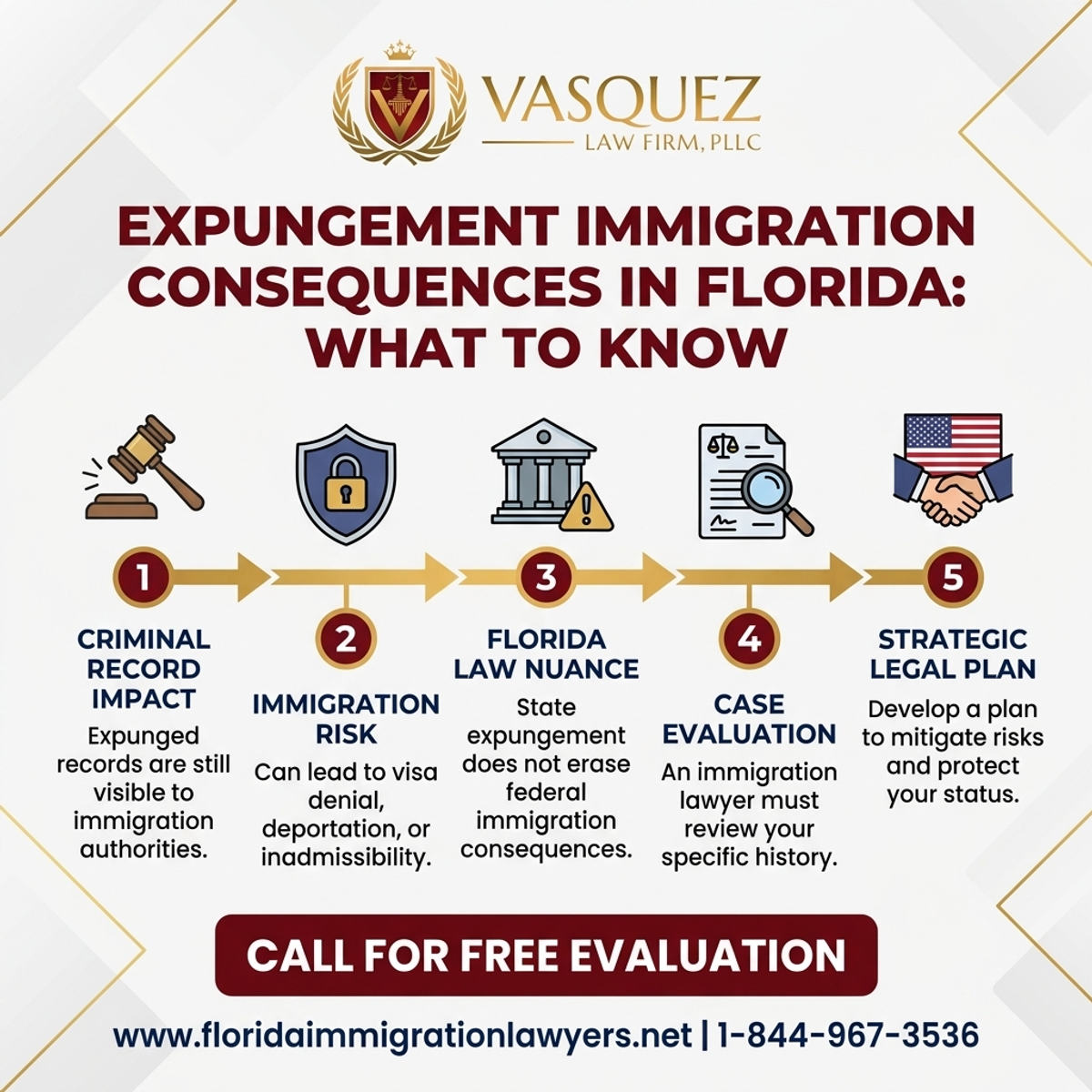
Step-by-Step Process — Expungement Immigration Consequences in Florida: What to Know
Document Checklist for Expungement
To initiate an expungement, you need the following documents:
- Completed expungement petition form
- Certificate of Eligibility from FDLE
- Copy of the arrest record
- Affidavit stating the need for expungement
- Order of dismissal or completion of sentence
Gathering all necessary documentation is a critical step that requires meticulous attention to detail. Missing or incorrect documents can significantly prolong the expungement process or even lead to a denial. It's advisable to start collecting these items as early as possible, as some records may take time to retrieve from various agencies.
Beyond the primary list, you may also need supporting documents such as certified court dispositions, proof of identity, and fingerprint cards. Each document serves to verify your eligibility and provide a complete picture of your case to both the FDLE and the court. Organizing these documents thoroughly before filing can streamline the entire process and demonstrate your commitment to resolving your past record, which an experienced attorney from Florida Immigration Lawyers can assist with.
Timeline and Processing Expectations
Understanding the timeline for the expungement process can help manage expectations:
| Stage | Typical Timeframe | Notes |
|---|---|---|
| Eligibility Assessment | 2-4 weeks | Initial consultation with an attorney |
| FDLE Certificate | 3-6 months | Processing time for eligibility certificate |
| Court Hearing | 1-3 months | Varies by court schedule |
| Final Order | Immediate to 1 month | Dependent on judge's schedule |
The total duration for an expungement in Florida can vary significantly, typically ranging from 6 to 12 months, sometimes longer depending on the complexity of the case and the specific jurisdiction's backlog. Factors such as the accuracy of your application, the responsiveness of various government agencies, and the court's calendar all play a role in the overall timeline.
While these timeframes are general estimates, patience is key. It's important to remain proactive by following up on your application status and promptly responding to any requests for additional information. An immigration attorney can help manage these expectations and keep your case moving forward efficiently, providing updates and advocating on your behalf throughout the process.
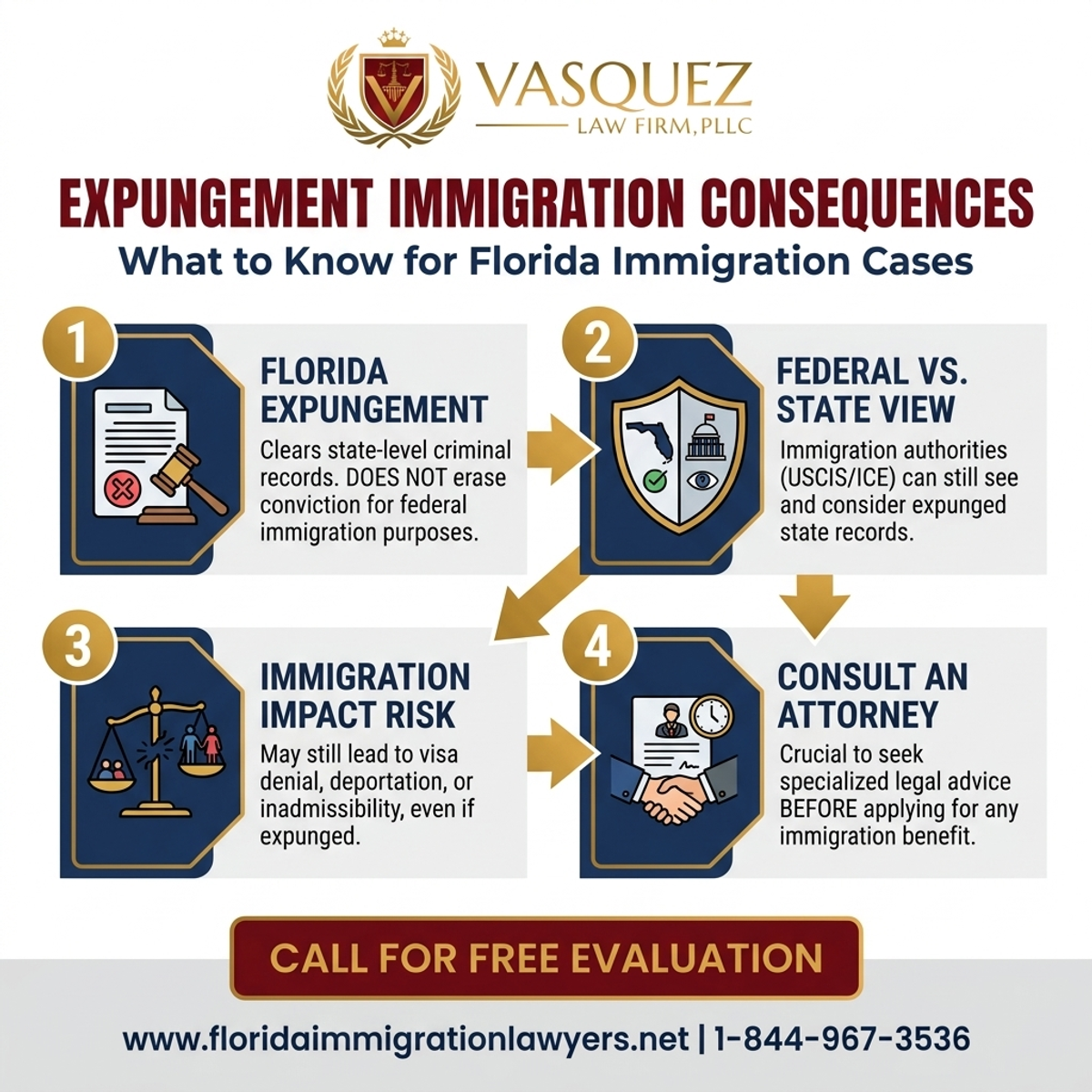
Key Statistics — Expungement Immigration Consequences in Florida: What to Know
Cost Factors and Fee Breakdown
Costs associated with expungement vary. Typical expenses include:
| Item | Typical Fee | Notes |
|---|---|---|
| Attorney Fees | Varied | Dependent on case complexity |
| FDLE Certificate | Varied | State processing fee |
| Court Filing | Varied | Local court fees |
Investing in the expungement process is an investment in your future, both personally and for your immigration prospects. While the exact costs can fluctuate, understanding the potential financial commitment upfront is essential. Attorney fees typically represent the largest portion of the expense, reflecting the lawyer's expertise, time, and effort in navigating the intricate legal requirements, from initial eligibility assessment to court representation.
Beyond attorney fees, you will encounter administrative costs such as the processing fee for the FDLE Certificate of Eligibility and various court filing fees, which vary by county. There might also be additional expenses for obtaining certified copies of documents, fingerprinting, and potentially fees for expert witnesses if your case presents unique challenges. Florida Immigration Lawyers offers transparent fee structures and can discuss all potential costs during your free consultation at 1-844-967-3536, helping you plan effectively.
Middle CTA
Do not navigate this process alone. Contact Florida Immigration Lawyers today.
Common Mistakes to Avoid
- Assuming Expungement Clears Immigration Issues: This is perhaps the most critical misunderstanding. While expungement helps with state-level background checks, federal immigration authorities still have access to these records and can use them to determine inadmissibility or deportability.
- Not Consulting an Attorney: Attempting to handle expungement or subsequent immigration applications without legal counsel can lead to costly errors. An experienced attorney understands the nuances of both criminal and immigration law, providing crucial guidance.
- Delaying the Expungement Process: Procrastination can be detrimental. The sooner you address an eligible criminal record, the better your chances of mitigating its long-term impact on your immigration status, especially as laws can change.
- Incomplete Documentation: Submitting an expungement petition with missing or incorrect documents will inevitably lead to delays or outright denial. Meticulous preparation is essential for a smooth process.
- Ignoring Court Orders: Failure to comply with any court requirements or deadlines during the expungement process can result in the dismissal of your petition, forcing you to start over or lose eligibility.
- Misunderstanding Eligibility: Not all records qualify for expungement in Florida. Attempting to expunge an ineligible record wastes time and resources, highlighting the importance of a thorough initial assessment.
- Failing to Address All Convictions: Overlooking past convictions, even minor ones from years ago or from other states, can severely impact your immigration case. A comprehensive criminal history review is paramount.
Avoiding these common pitfalls requires diligent effort and a clear understanding of the legal landscape. Many immigrants, eager to clear their names, rush into expungement without fully grasping its federal immigration limitations. This can create a false sense of security, only for them to face unexpected challenges when applying for a green card or citizenship years later.
For example, an individual might successfully expunge a misdemeanor shoplifting charge in Florida, believing their record is clean. However, when applying for naturalization, USCIS could still view this as a 'crime involving moral turpitude' (CIMT), potentially leading to a denial of citizenship based on a lack of 'good moral character.' This scenario underscores why a comprehensive strategy, developed with an attorney from Florida Immigration Lawyers, is vital before proceeding with any expungement or immigration application.
Frequently Asked Questions About Expungement and Immigration in Florida
Understanding the interplay between expungement and immigration law can be complex. Here are some common questions we encounter, along with practical advice to help you navigate your situation.
Q: Can an expunged record prevent me from getting a green card?
A: Yes, an expunged record can still prevent you from obtaining a green card. Federal immigration law operates independently of state expungement orders. USCIS and immigration courts often consider the underlying criminal conduct, even if the state record is sealed or expunged. This means that an expunged conviction might still trigger grounds of inadmissibility, making it crucial to consult with Florida Immigration Lawyers to assess your specific situation and strategize accordingly before applying.
Q: What's the difference between expungement and sealing in Florida, and how does it affect immigration?
A: In Florida, expungement means the physical destruction of your criminal record, while sealing means placing it under seal, making it inaccessible to the public. For immigration purposes, both sealed and expunged records are generally treated the same way: federal authorities can still access them. Neither process fully erases the federal immigration consequences. Understanding this distinction is vital, and an attorney can help clarify how either status impacts your specific immigration case.
Q: Do I need to disclose an expunged record on immigration forms?
A: Absolutely, yes. You must always disclose an expunged or sealed record on immigration forms, even if Florida law allows you to deny its existence in other contexts. Failure to disclose can be considered misrepresentation or fraud, leading to severe immigration penalties, including a permanent bar from the U.S. Honesty and transparency are paramount. Always consult with Florida Immigration Lawyers to ensure accurate and complete disclosure on all federal immigration applications.
Q: What if my expungement was from another state, not Florida?
A: The principle remains largely the same regardless of the state where the expungement occurred. Federal immigration law generally does not recognize state expungement orders for immigration purposes. Therefore, a record expunged in California, New York, or any other state will likely still be accessible and considered by USCIS and immigration courts. Each state's expungement laws vary, so understanding the specifics of your original record and its federal implications is crucial. Seek expert advice from Florida Immigration Lawyers.
Q: How can Florida Immigration Lawyers help me with my expunged record and immigration case?
A: Florida Immigration Lawyers can provide comprehensive assistance by evaluating your criminal history, assessing its specific impact on your immigration goals, and developing a tailored legal strategy. We help you understand federal immigration definitions of convictions, prepare necessary waivers, and represent you before USCIS or in immigration court. Our team ensures accurate disclosure and navigates complex legal arguments to protect your immigration status, even with an expunged record. Call us at 1-844-967-3536 for a free consultation.
When to Call a Lawyer
If you face the risk of deportation or denial of immigration benefits due to a criminal record, consulting with a lawyer is critical. Look for signs such as receiving notices from USCIS or being contacted by immigration enforcement. Florida Immigration Lawyers can provide guidance and representation tailored to your situation.
The moment you suspect a past criminal record, even one you believe is expunged, could impact your immigration status, it's time to seek legal counsel. This includes situations where you are applying for a visa, a green card (adjustment of status), or U.S. citizenship (naturalization). Proactive engagement with an attorney can help identify potential issues early and develop a strategy to mitigate risks before they escalate.
Furthermore, if you receive a Request for Evidence (RFE) from USCIS concerning your criminal history, a Notice to Appear (NTA) in immigration court, or are detained by ICE, immediate legal intervention is paramount. These are clear indicators that your immigration status is at serious risk. Our team at Florida Immigration Lawyers specializes in navigating these complex scenarios, offering robust defense and strategic planning to protect your rights and future in the United States. Don't wait for a crisis; contact us at 1-844-967-3536.
About Florida Immigration Lawyers
Florida Immigration Lawyers is a dedicated law firm serving all of Florida, offering expertise in immigration law. Whether you need help with expungement, deportation defense, or family immigration, our team is here for you. Call us at 1-844-967-3536 or visit our website at www.floridaimmigrationlawyers.net. Available 24/7, we provide free consultations and bilingual services.
Our commitment extends beyond just legal representation; we strive to be a compassionate guide through what can often be one of the most stressful periods in an individual's life. We understand the stakes involved in immigration cases, especially when criminal records are a factor, and we approach each client's situation with the personalized attention and strategic insight it deserves. Our goal is to empower you with knowledge and provide effective advocacy.
Sources and References
- U.S. Citizenship and Immigration Services (USCIS)
- Executive Office for Immigration Review (EOIR)
- 8 U.S.C. Chapter 12 - Immigration and Nationality Act
Related services: immigration practice areas, family immigration services, citizenship and naturalization.
This article provides general legal information and is not intended as legal advice. Every case is unique, and outcomes depend on specific facts and circumstances. Contact an attorney for advice about your particular situation.
Final CTA
Se Habla Español - Estamos aquí para ayudarle. Call Florida Immigration Lawyers at 1-844-967-3536 for a free consultation today.
If you need legal assistance, learn more about learn about our immigration practice, or call us at 1-844-967-3536 for a free consultation.
Do Not Navigate This Process Alone
Our experienced immigration attorneys are ready to fight for you. Get a free, confidential consultation today.
Se Habla Español
Or leave your details and we’ll call you:
Free Evaluation in 24 Hours
Or talk to us right now

AI voice assistant — available 24/7
FreeFrequently Asked Questions

William J. Vásquez
Founding Attorney · Vasquez Law Firm
U.S. Air Force veteran and immigration attorney with years of hands-on U.S. immigration experience. J.D., NCCU School of Law. AILA member. Admitted to the 4th, 5th, and 11th Circuit Courts.
Available 24/7 - Free Evaluations
Reviewed for legal accuracy by William J. Vásquez
Licensed in North Carolina; U.S. immigration is federal practice.
Related Legal Services
Our Florida immigration attorneys can help you with free immigration consultation, experienced immigration attorneys and business immigration. Call today at 1-844-967-3536 for a free consultation.
Related Links
Related Topics
Free Legal Consultation
Discuss your case with our experienced attorneys. We're available 24/7.
Se Habla Español - Estamos aquí para ayudarle.
Related Articles
Military Naturalization Expedited in Florida Bases
Explore military naturalization options for families at Florida bases, including parole in place benefits in Miami. Learn how to expedite your application with expert guidance from Florida Immigration Lawyers.
Immigration Lawyer Orlando Free Consultation 2026
Explore the cost of an immigration lawyer in Orlando in 2026. Understand attorney fees, what to expect during a consultation, and how to make the best choice for your immigration needs.
SIJS Eligibility and Application Process in Florida 2026
Special Immigrant Juvenile Status (SIJS) offers a critical pathway to legal residency for vulnerable children in Florida who have been abused, neglected, or abandoned. This comprehensive guide, updated for 2026, details SIJS eligibility, the multi-step application process involving both Florida state courts and USCIS, required documentation, typical processing timelines, and associated costs. We emphasize the crucial role of a state court order and explain how SIJS provides protection from deportation and a path to a Green Card. Learn about common mistakes to avoid and when it's essential to seek legal assistance from experienced Florida immigration attorneys to secure a child's future.
Deportation Defense Attorney Florida: What You Need to Know
Facing deportation in Orlando? Learn how a deportation defense attorney can help you navigate removal proceedings and protect your rights. Call Florida Immigration Lawyers at 1-844-967-3536 for a free consultation.