DACA News 2026 Florida: Key Updates for Dreamers in Orlando
For DACA recipients in Florida, particularly in Orlando, staying informed about DACA news 2026 is critical. While new applications are paused due to ongoing litigation, current DACA holders can typically renew their status. This comprehensive guide from Florida Immigration Lawyers provides essential updates, a step-by-step renewal process, and a document checklist. We cover eligibility, processing times, cost factors, and crucial advice for travel. Understanding common mistakes and knowing when to seek legal counsel can protect your future. Contact Florida Immigration Lawyers at 1-844-967-3536 for a free consultation to navigate these complex federal policies.

Navigating DACA news 2026 in Florida requires vigilance due to ongoing legal challenges. While new applications are generally paused, current DACA recipients in Orlando and across Florida can typically renew their status. Understanding the latest USCIS policies and deadlines is crucial. Seek legal counsel to protect your status.
- New DACA applications remain on hold.
- Current DACA recipients can generally renew.
- Ongoing legal battles impact DACA's long-term future.
- Advance Parole for travel remains an option for some.
- Consult an immigration lawyer for personalized guidance.
For thousands of young people across Florida, particularly in vibrant communities like Orlando, the Deferred Action for Childhood Arrivals (DACA) program represents a pathway to stability and opportunity. As we move into 2026, the landscape of DACA news 2026 continues to evolve, bringing both hope and uncertainty to Dreamers and their families. Staying informed about the latest developments is not just important; it is essential for protecting your future.
This comprehensive guide from Florida Immigration Lawyers aims to clarify the current state of DACA, outline renewal processes, and address common concerns for recipients throughout the Sunshine State. We understand the anxieties you may face, and our goal is to provide clear, actionable information. Do not navigate these complex legal waters alone. Call Florida Immigration Lawyers at 1-844-967-3536 for a free consultation to discuss your specific DACA situation.
Understanding DACA in 2026: An Overview for Florida Dreamers
The Deferred Action for Childhood Arrivals (DACA) program, established in 2012, offers protection from deportation and work authorization to eligible young undocumented immigrants. In 2026, DACA continues to operate under the shadow of persistent legal challenges. Federal court orders generally mean that U.S. Citizenship and Immigration Services (USCIS) is prohibited from approving new DACA applications.
However, for current DACA recipients in Florida, including those in Orlando, Miami, and Tampa, renewals are generally still being processed. This situation underscores the critical need for vigilance and timely action. The program's future remains subject to ongoing litigation, particularly from states challenging its legality, which could lead to further changes.
Florida is home to a significant population of DACA recipients who contribute greatly to our communities and economy. The impact of DACA extends beyond individuals, affecting families, businesses, and the cultural fabric of our state. Understanding these dynamics is crucial for any Dreamer in Florida seeking to maintain their status.
Eligibility for DACA Renewal in Florida
While new DACA applications are largely halted, many current recipients remain eligible for renewal. To renew your DACA status in 2026, you must generally meet specific criteria. These include having previously received DACA and never having departed the United States without first obtaining advance parole.
You must also have continuously resided in the United States since you submitted your most recent DACA request that was approved. Furthermore, individuals with felony convictions, significant misdemeanors, or three or more other misdemeanors are typically ineligible. It is vital to ensure you meet all these requirements before initiating your renewal process.
For those in Florida, no state-specific laws override these federal eligibility requirements. Your eligibility is determined by federal immigration statutes and USCIS policy. Consulting with an experienced immigration lawyer can help you confirm your eligibility and address any potential concerns.
Step-by-Step Guide to DACA Renewal in 2026
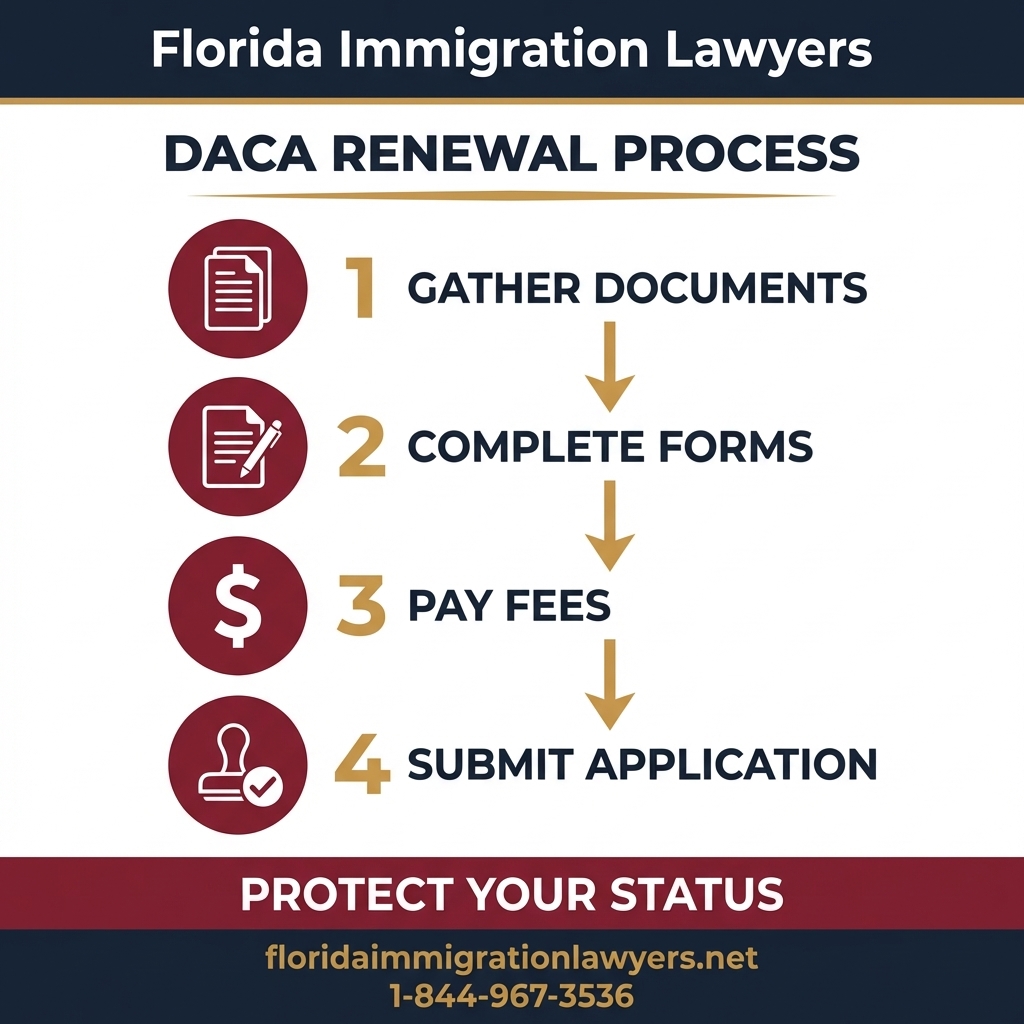
Renewing your DACA status can feel daunting, but following a clear, step-by-step process can simplify it. We recommend starting your renewal application 120 to 150 days before your current DACA and Employment Authorization Document (EAD) expire. This timeframe allows for potential processing delays.
- Gather Required Documents: Collect all necessary personal and immigration documents. This includes your previous DACA approval notices, your current EAD, and evidence of continuous residence. A comprehensive checklist is provided in the next section to assist you.
- Complete Forms I-821D and I-765: Carefully fill out Form I-821D (Consideration of Deferred Action for Childhood Arrivals) and Form I-765 (Application for Employment Authorization). Ensure all information is accurate and consistent with previous applications. An error can lead to delays or rejection.
- Prepare Supporting Evidence: Compile all supporting documentation. This typically includes proof of identity, evidence of continuous residence since your last DACA approval, and any court dispositions for arrests, even minor ones. Organize your documents clearly and logically.
- Pay Filing Fees: Include the required USCIS filing fees for both Forms I-821D and I-765, along with the biometrics fee. These fees are subject to change, so always check the most current amounts on the USCIS website. Do not send cash.
- Mail Your Application: Send your complete application package to the correct USCIS Lockbox facility. The address depends on your state of residence. Use certified mail with a return receipt to track delivery and confirm receipt.
- Attend Biometrics Appointment: If required, you will receive a notice for a biometrics appointment at a local Application Support Center. This appointment is crucial; missing it without rescheduling can jeopardize your application.
- Receive Decision: USCIS will review your application and send you a decision. If approved, you will receive a new I-797 approval notice and a new EAD. If denied, a Notice of Intent to Deny (NOID) or a denial letter will explain the reasons.
Essential Documents for Your DACA Renewal Application
Having all the correct documents prepared in advance is vital for a smooth DACA renewal process. Missing or incorrect documentation is a common reason for delays or denials. We recommend creating a checklist and organizing your documents in a clear folder.
- Previous DACA Approval Notices: Copies of your Form I-797, Notice of Action, from prior DACA approvals.
- Current Employment Authorization Document (EAD): A copy of your unexpired or recently expired DACA-based work permit.
- Proof of Identity: A copy of your passport, birth certificate with photo ID, or state-issued driver's license/ID.
- Proof of Continuous Residence: Documentation showing you have lived in the U.S. since your last DACA approval. This can include school records, employment records, utility bills, tax returns, medical records, or bank statements.
- Court Dispositions: If you have ever been arrested or cited for any offense, even if charges were dropped or expunged, you must provide certified court dispositions.
- Two Passport-Style Photos: Ensure these photos meet USCIS specifications.
- Marriage Certificate/Divorce Decree: If your name has changed since your last DACA approval.
DACA Processing Times and Cost Factors in 2026
Understanding the expected timeline and financial commitment for DACA renewal is essential for planning. USCIS processing times can vary significantly based on caseloads, policy changes, and the specific service center handling your application. While USCIS provides estimated processing times on its website, it is always wise to apply well in advance of your expiration date.
For DACA renewals, processing can typically take anywhere from 3 to 6 months, though some cases may be faster or slower. You can check the status of your case online using your receipt number. The Orlando USCIS Field Office may have specific local considerations, but the overall processing is handled centrally.
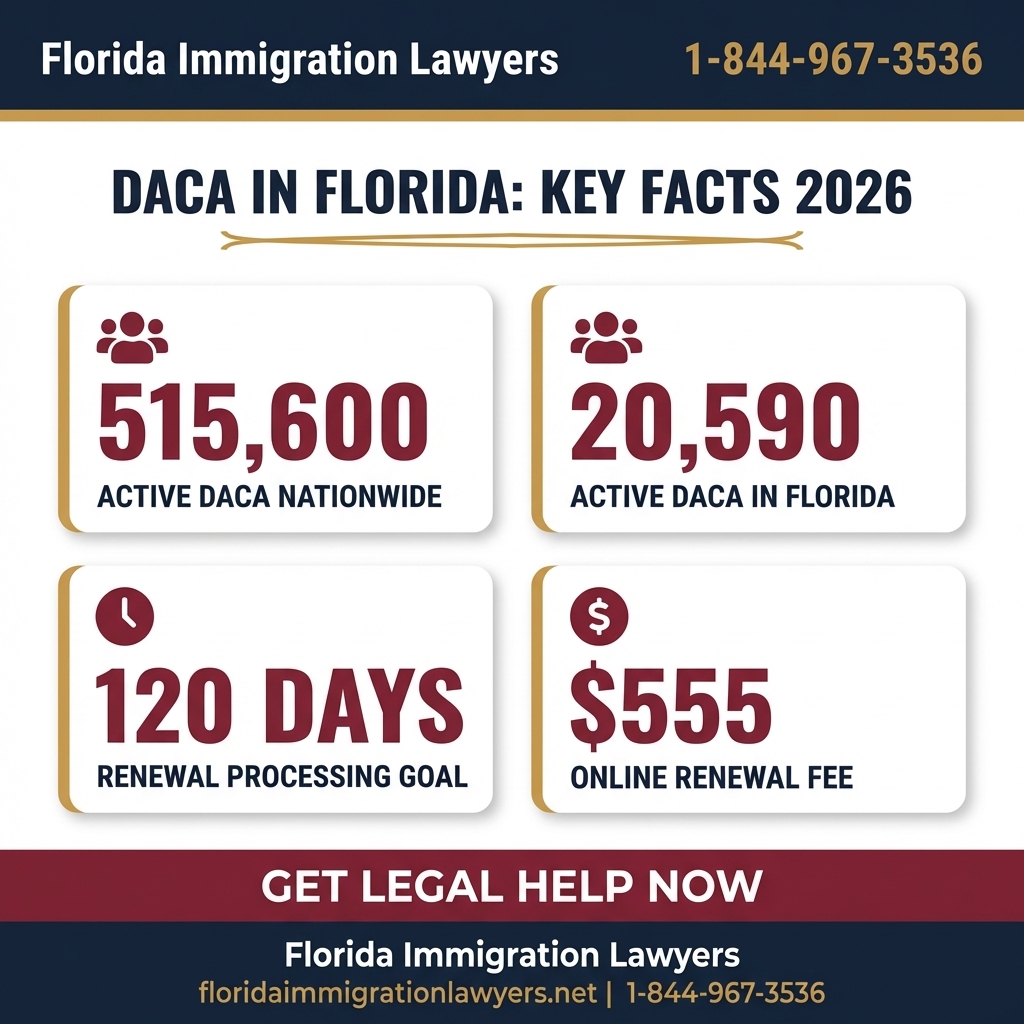
Regarding cost, there are several fees associated with DACA renewal. These generally include the filing fee for Form I-821D, the filing fee for Form I-765, and a biometrics service fee. USCIS fees are subject to change, and we cannot state specific amounts here. Always verify the current fees directly on the USCIS website. Additionally, you may incur costs for gathering documents, such as obtaining certified court records. Legal fees for attorney assistance, while an investment, can be invaluable in ensuring your application is complete and accurate.
Navigating DACA Challenges and Travel in Florida
For DACA recipients in Florida, understanding your rights and limitations, especially regarding travel, is crucial. Generally, DACA recipients can travel freely within the United States. There are no federal restrictions on domestic travel for individuals with DACA status. However, it is always advisable to carry your DACA approval notice (Form I-797) and your valid EAD as proof of your immigration status.
International travel is a different matter. DACA recipients wishing to travel outside the U.S. must apply for and receive Advance Parole (Form I-131) from USCIS before departing. Advance Parole is typically granted for humanitarian, educational, or employment purposes. Traveling internationally without approved Advance Parole can lead to a denial of re-entry into the United States, potentially jeopardizing your DACA status and ability to return. This is a critical risk, as outlined in INA Section 212(a)(9) and other provisions regarding inadmissibility.
While Florida has no specific laws prohibiting DACA recipients from traveling within its borders, it is always wise to be aware of your surroundings and rights, particularly given the proximity to international borders and potential for immigration enforcement. Always consult with an experienced deportation defense attorney before planning any international travel.
Frequently Asked Questions About DACA in 2026
The DACA program continues to generate many questions due to its evolving legal status. Here are answers to some of the most common inquiries we receive from Dreamers in Florida.
What will happen with DACA in 2026?
In 2026, DACA's fate largely remains in the hands of the courts and Congress. Based on current legal precedent, new DACA applications are generally not being processed. However, USCIS continues to accept and process renewal applications for existing DACA recipients. The long-term future of DACA is uncertain and could be impacted by new court rulings or potential legislative action. It is essential to stay informed about any federal policy changes or judicial decisions.
Can DACA recipients travel within the US in 2026?
Yes, DACA recipients can generally travel within the United States in 2026 without issue. You should carry your DACA approval notice and your Employment Authorization Document (EAD) as proof of your status. However, international travel requires an approved Advance Parole document, Form I-131, which must be obtained from USCIS before you leave the country. Traveling internationally without it can result in serious immigration consequences.
Can you still renew DACA in 2026?
Yes, if you are a current DACA recipient and meet the eligibility criteria, you can still renew your DACA status in 2026. USCIS is actively processing renewal applications. It is crucial to submit your renewal application well in advance of your current DACA expiration date, ideally 120-150 days prior, to avoid any lapse in your status or employment authorization.
Is DACA allowed in Florida?
DACA is a federal program, and federal immigration law applies nationwide, including in Florida. Therefore, DACA is indeed 'allowed' in Florida in the sense that DACA recipients residing in Florida are subject to the same federal DACA policies as those in other states. Florida state laws do not supersede federal immigration regulations regarding DACA eligibility or benefits. Dreamers in Florida continue to benefit from the program under federal guidelines.
Do not navigate this process alone. Contact Florida Immigration Lawyers today.
Common Mistakes to Avoid in Your DACA Case
Navigating the DACA renewal process can be intricate, and even minor errors can lead to significant delays or denials. Being aware of common pitfalls can help you avoid unnecessary complications and protect your status.
- Filing Late: Allowing your DACA status to expire before filing your renewal can result in a lapse in your work authorization and may complicate your ability to renew. File well within the recommended 120-150 day window.
- Incomplete or Inaccurate Forms: Submitting forms with missing information or errors is a leading cause of Requests for Evidence (RFEs) or outright denials. Double-check every field for accuracy and completeness.
- Missing Supporting Documentation: Failing to include all required evidence, such as proof of continuous residence or certified court dispositions, will delay your application. Ensure your package is comprehensive.
- Undisclosed Criminal History: Even minor arrests or citations, regardless of the outcome, must be disclosed. Failing to do so can be considered misrepresentation and lead to severe consequences, including denial and potential deportation defense issues.
- Not Seeking Legal Advice: DACA policies are complex and constantly changing. Attempting to navigate the process without legal guidance can lead to costly mistakes. An experienced attorney can provide invaluable support.
- Traveling Internationally Without Advance Parole: Leaving the U.S. without an approved Form I-131 (Advance Parole) can result in being barred from re-entry, potentially ending your DACA status. Never travel abroad without prior approval.
- Ignoring USCIS Requests for Evidence (RFE): If USCIS sends an RFE, it means they need more information. Failing to respond fully and on time can lead to a denial of your application.
- Submitting Incorrect Filing Fees: USCIS will return applications with incorrect fee amounts. Always verify the current fees on the USCIS website before submitting your payment.
- Not Keeping Copies of Your Application: Always make and retain a complete copy of your entire application package, including all forms, supporting documents, and proof of mailing. This is crucial for your records.
- Failing to Update Address with USCIS: If you move, you must update your address with USCIS within 10 days. Failure to do so can result in missed notices, RFEs, or even denial of your application.
When to Call a DACA Immigration Lawyer
While many DACA renewals can be straightforward, certain situations absolutely warrant the expertise of an immigration attorney. If your DACA case presents any complexities, seeking legal counsel is highly advisable to protect your status and future. An attorney can help you navigate the intricacies of immigration law, including adherence to 8 C.F.R. § 274a.12(c)(14) regarding employment authorization.
You should contact an attorney if you have any criminal history, even minor arrests, or if you have ever been placed in deportation proceedings. Questions about Advance Parole, especially regarding eligibility or the risks of international travel, also necessitate legal guidance. Any significant changes in your personal circumstances, such as marriage, divorce, or new dependents, may impact your DACA eligibility and should be discussed with a lawyer.
If you receive a Request for Evidence (RFE) or a Notice of Intent to Deny (NOID) from USCIS, it is a critical moment to seek immediate legal assistance. These notices indicate a problem with your application that, if not properly addressed, could lead to denial. Florida Immigration Lawyers has extensive experience with DACA cases and can provide the expert advice and representation you need. We can help you understand the latest DACA news 2026 and apply it to your specific situation.
About Florida Immigration Lawyers
Florida Immigration Lawyers is a leading immigration law firm dedicated to serving the immigrant community across the entire state of Florida, including vibrant cities like Orlando, Miami, and Tampa. We understand the profound impact immigration law has on individuals and families, and we are committed to providing compassionate, effective, and client-focused legal representation. Our attorneys are highly experienced in all facets of immigration law, from routine applications to complex litigation.
We offer a comprehensive range of immigration services designed to meet the diverse needs of our clients. Our practice areas include DACA assistance, family immigration, citizenship and naturalization, asylum, deportation defense, and business immigration. We pride ourselves on offering personalized strategies tailored to each client's unique circumstances, ensuring the best possible outcome.
Choose Florida Immigration Lawyers for our unwavering dedication, deep legal expertise, and a commitment to transparency and communication. We are available 24/7 to address your concerns and offer free consultations to help you understand your legal options. Visit our website at www.floridaimmigrationlawyers.net or call us at 1-844-967-3536. We are here to help you secure your future in Florida.
Sources and References
- U.S. Citizenship and Immigration Services (USCIS) - Deferred Action for Childhood Arrivals (DACA)
- Executive Office for Immigration Review (EOIR) - Immigration Courts
- U.S. Department of State - Travel.State.Gov
- 8 U.S.C. § 1227 (Immigration and Nationality Act Section 237 - Deportable Aliens)
- 8 C.F.R. § 274a.12(c)(14) (Employment Authorization)
- USCIS Policy Manual, Volume 1, Part A, Chapter 3 (Deferred Action)
This article provides general legal information and is not intended as legal advice. Every case is unique, and outcomes depend on specific facts and circumstances. Contact an attorney for advice about your particular situation.
Your future as a DACA recipient in Florida is too important to leave to chance. The legal landscape is constantly shifting, and having experienced legal counsel by your side can make all the difference. Florida Immigration Lawyers is dedicated to providing compassionate and effective representation for Dreamers across Florida, including Orlando, Miami, and Tampa. We are here to help you understand the latest DACA news 2026 and navigate your renewal process with confidence. Call us today at 1-844-967-3536 for a free, confidential consultation. Se Habla Español - Estamos aquí para ayudarle.
Do Not Navigate This Process Alone
Our experienced immigration attorneys are ready to fight for you. Get a free, confidential consultation today.
Se Habla Español
Or leave your details and we’ll call you:
Free Evaluation in 24 Hours
Or talk to us right now

AI voice assistant — available 24/7
FreeFrequently Asked Questions

William J. Vásquez
Founding Attorney · Vasquez Law Firm
U.S. Air Force veteran and immigration attorney with years of hands-on U.S. immigration experience. J.D., NCCU School of Law. AILA member. Admitted to the 4th, 5th, and 11th Circuit Courts.
Available 24/7 - Free Evaluations
Reviewed for legal accuracy by William J. Vásquez
Licensed in North Carolina; U.S. immigration is federal practice.
Related Legal Services
Our Florida immigration attorneys can help you with business immigration, asylum protection and deportation defense. Call today at 1-844-967-3536 for a free consultation.
Related Links
Related Topics
Free Legal Consultation
Discuss your case with our experienced attorneys. We're available 24/7.
Se Habla Español - Estamos aquí para ayudarle.
Related Articles
I-601 Waiver Lawyer Florida: Comprehensive Guide 2026
For many immigrants in Florida, overcoming grounds of inadmissibility is a critical step towards securing their future in the U.S. An I-601 waiver provides a pathway to address issues like unlawful presence, certain criminal convictions, or immigration fraud. This comprehensive guide, relevant for 2026, explains who needs an I-601 waiver, how to prove "extreme hardship" to a qualifying U.S. citizen or lawful permanent resident relative, and the step-by-step application process. We also cover typical timelines, cost factors, and crucial mistakes to avoid. Florida Immigration Lawyers offers expert guidance for I-601 waiver applications across the state, ensuring you build the strongest possible case and navigate the complex legal requirements effectively. Contact us for a free consultation to discuss your specific situation.
Immigration Lawyer Orlando Free Consultation in 2026
Navigating the complexities of U.S. immigration law requires expert guidance. For those in Orlando and across Florida, a free consultation with an immigration lawyer can provide crucial insights into your legal options without financial commitment. This comprehensive guide from Florida Immigration Lawyers details why an initial consultation is essential, what services immigration attorneys offer, the step-by-step process, typical timelines, and associated costs. We also highlight common mistakes to avoid and when it's critical to seek professional legal assistance. Our firm serves all of Florida, including Naples and Collier County, ensuring accessible, high-quality representation for families, businesses, asylum seekers, and individuals facing deportation. Understand your rights and build a strong case with trusted legal partners.
Stem OPT Immigration Lawyer: 2026 Florida Guide
For F-1 students in Florida, the STEM OPT extension offers a vital 24-month work authorization after their initial OPT. This guide, updated for 2026, covers eligibility, the step-by-step application process, required documents, and critical timelines. Graduates from Florida universities in STEM fields must navigate strict USCIS regulations, including the E-Verify employer requirement. Learn how to avoid common mistakes and when to seek professional legal assistance from a dedicated stem OPT immigration lawyer to ensure a successful application and continued career growth in the U.S. Florida Immigration Lawyers offers expert guidance for students across the state.
Dual Citizenship Lawyer: Navigating Delays in Florida
Facing citizenship delays in Florida can be challenging, but understanding the process and knowing your options is key. Learn how a dual citizenship lawyer can assist you in navigating N-400 processing and USCIS backlogs in Hialeah.