Citizenship Application Delay in Florida: What to Know
Facing citizenship application delays in Florida? Discover the key reasons behind N-400 processing backlogs in 2026 and learn how to navigate them effectively. Whether you're in Homestead or elsewhere in Florida, our guide provides actionable insights and tips to help manage your citizenship journey. Contact Florida Immigration Lawyers for personalized support.
Citizenship Application Delay in Florida: What to Know
The journey to U.S. citizenship is a significant milestone for many immigrants, offering a sense of belonging, increased rights, and new opportunities. However, for individuals in Florida pursuing naturalization through the N-400 application, encountering unexpected delays can be a source of immense frustration and uncertainty. Understanding the common causes of these delays and knowing the steps you can take to address them is crucial. This comprehensive guide will delve into the intricacies of citizenship application delays specifically impacting Florida residents, offering insights and actionable advice.
Understanding the Naturalization Process and Potential Roadblocks
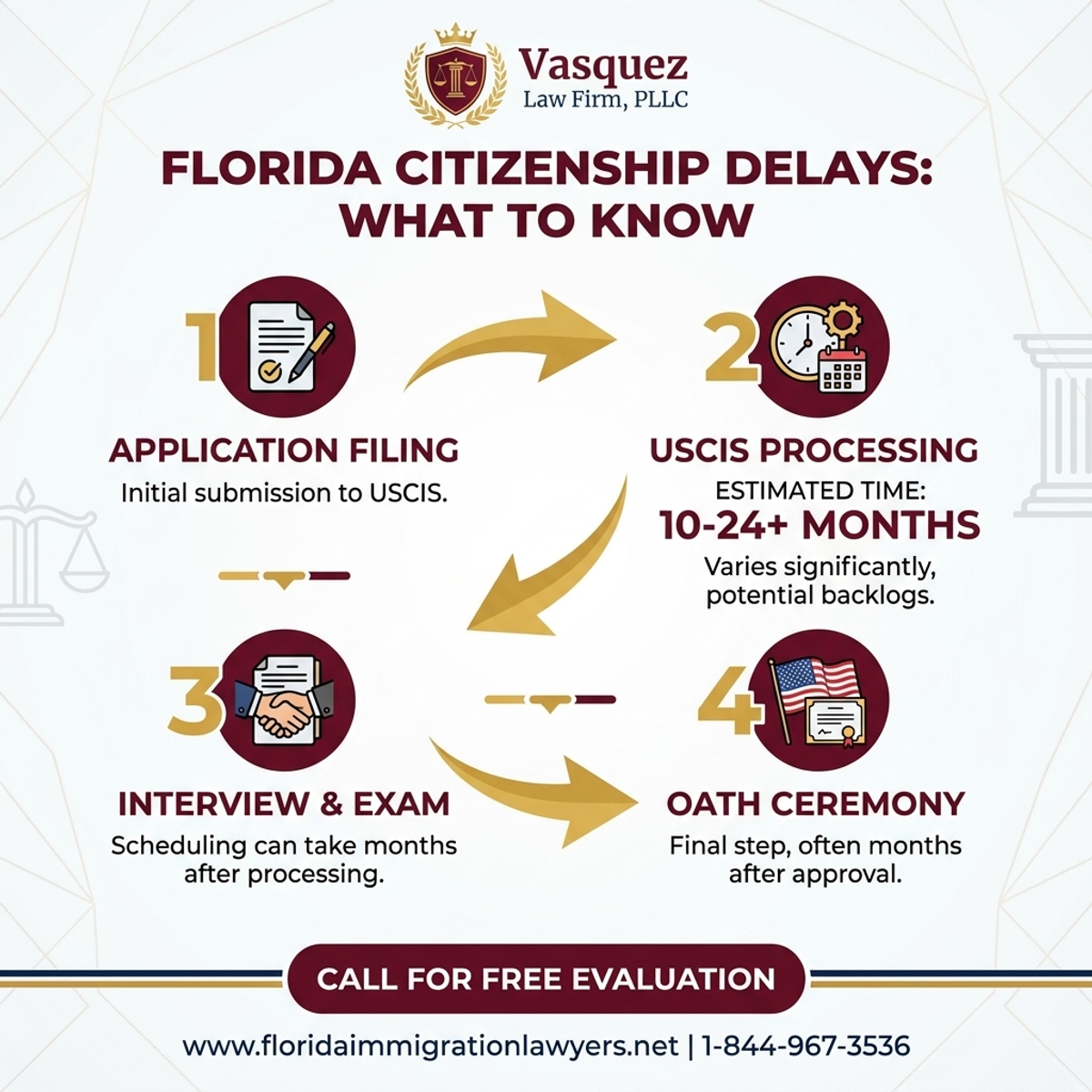
The naturalization process, while seemingly straightforward, involves several critical stages, each with its own potential for delays. Generally, it begins with filing Form N-400, Application for Naturalization, with U.S. Citizenship and Immigration Services (USCIS). Following this, applicants typically undergo biometric appointments, an interview with a USCIS officer, and finally, an Oath of Allegiance ceremony. Throughout this process, various factors can cause unexpected slowdowns.
Common roadblocks include extensive background checks, requests for additional evidence (RFEs), interview backlogs, and administrative processing issues. For many, the waiting period can extend far beyond the published processing times, leading to anxiety and a feeling of being stuck in limbo. It's important to remember that while some delays are standard, others may indicate a more complex issue with your application or a systemic problem within USCIS. Navigating these complexities often requires a deep understanding of U.S. immigration law and procedures.
Why Florida Applicants Face Unique Challenges
Florida, with its large and diverse immigrant population, is home to several major USCIS field offices, including those in Miami, Orlando, Tampa, and Jacksonville. These offices process a high volume of naturalization applications, which can inherently contribute to longer processing times compared to less populated areas. The sheer number of applications, coupled with fluctuating staffing levels and resource allocation, often creates significant backlogs.
Furthermore, Florida's unique demographic landscape means that many applicants may have complex immigration histories, which can necessitate more extensive review and verification. Factors such as prior visa types, periods of unauthorized stay, or interactions with law enforcement can all contribute to a more prolonged adjudication process. The state's proximity to international borders also means that security checks might be more rigorous for certain applicants, adding another layer of potential delay. Understanding these localized challenges is key to setting realistic expectations and preparing for potential hurdles in your naturalization journey.
Common Causes of N-400 Processing Delays
While USCIS aims for efficiency, several factors frequently contribute to the prolonged processing of N-400 applications. These delays can be frustrating, but identifying the root cause is the first step toward finding a resolution. Understanding these common culprits can help applicants anticipate potential issues and prepare accordingly.
USCIS Backlog and Resource Constraints
Perhaps the most significant and widespread cause of delays is the sheer volume of applications USCIS receives. The agency operates with finite resources, and periods of high application rates, coupled with budget constraints or staffing shortages, can lead to substantial backlogs. This is a systemic issue that often affects all types of immigration applications, including naturalization. When a field office or service center is overwhelmed, processing times inevitably extend, sometimes by many months or even years beyond the published estimates. These backlogs are often exacerbated by unforeseen events, such as government shutdowns, natural disasters, or global pandemics, which can disrupt operations and further strain resources. While USCIS continually works to address these backlogs through various initiatives, the impact on individual applicants can be substantial, leading to prolonged waiting periods.
Issues with Background Checks and Security Clearances
Every naturalization applicant undergoes rigorous background checks conducted by various federal agencies, including the FBI. These checks are designed to ensure national security and public safety. If there are any discrepancies, incomplete records, or hits on security databases, the process can be significantly delayed. Even minor issues, such as common names that match individuals with criminal records, can trigger additional scrutiny. Furthermore, applicants with complex travel histories, prior arrests (even if charges were dropped), or associations that raise security concerns may face extended review periods. These security clearances are often outside the direct control of USCIS, as they depend on the responsiveness of other government entities. Delays in this area are particularly opaque, as USCIS is typically unable to provide specific details due to security protocols, leaving applicants in the dark about the status of their background checks. In some cases, a delay in background checks might even uncover issues that could lead to deportation defense proceedings, highlighting the critical nature of thorough legal review.
Request for Evidence (RFE) and Notice of Intent to Deny (NOID)
If your initial N-400 application is incomplete or lacks sufficient supporting documentation, USCIS will issue a Request for Evidence (RFE). This requires you to submit additional documents or information to prove your eligibility. While an RFE is a standard part of the process, it inevitably adds time to your application. Similarly, a Notice of Intent to Deny (NOID) indicates that USCIS intends to deny your application and provides you with an opportunity to submit a response. Both RFEs and NOIDs require careful and timely responses. Failure to respond adequately or on time will lead to further delays or even a denial of your application. These requests often arise from ambiguities in an applicant's history, such as periods of residency, marital status, or criminal records. Proper preparation and meticulous documentation from the outset can help minimize the chances of receiving an RFE or NOID, thereby streamlining the process.
Step-by-Step Process — Citizenship Application Delay in Florida: What to Know
Applicant-Related Errors or Incompleteness
Sometimes, delays stem from errors or omissions in the application itself. Incorrectly filled forms, missing signatures, failure to include all required supporting documents, or providing inconsistent information can all lead to an RFE or a delay in processing while USCIS attempts to clarify the discrepancies. Even seemingly minor mistakes can cause significant setbacks. It is crucial to review your application thoroughly before submission and ensure all information is accurate and complete. Seeking assistance from an experienced immigration attorney can significantly reduce the likelihood of these common errors, ensuring your application is robust and well-supported from the start. For applicants with complex personal histories, such as those who have previously sought asylum, ensuring all documentation is consistent and accurately presented is even more vital.
Changes in Law or Policy
Immigration laws and policies are subject to change, often with little notice. New regulations, executive orders, or shifts in USCIS policy can impact how applications are processed, potentially leading to delays as the agency adapts to new guidelines. These changes can sometimes introduce new requirements or alter existing procedures, causing a temporary slowdown across the board. Staying informed about the latest immigration policy developments is challenging for individuals but is a core responsibility for immigration legal professionals.
Interview Rescheduling or Complex Cases
Occasionally, USCIS may need to reschedule your naturalization interview due to unforeseen circumstances, such as officer unavailability or administrative errors. While this is not common, it can add several weeks or months to your processing time. Additionally, some cases are inherently more complex than others. For example, applicants with a history of criminal convictions, extensive foreign travel, or previous immigration violations may require more in-depth review, leading to longer processing times. Cases involving national security concerns or those requiring inter-agency coordination can also experience significant delays as they move through various layers of review.
What to Do When Your Citizenship Application is Delayed
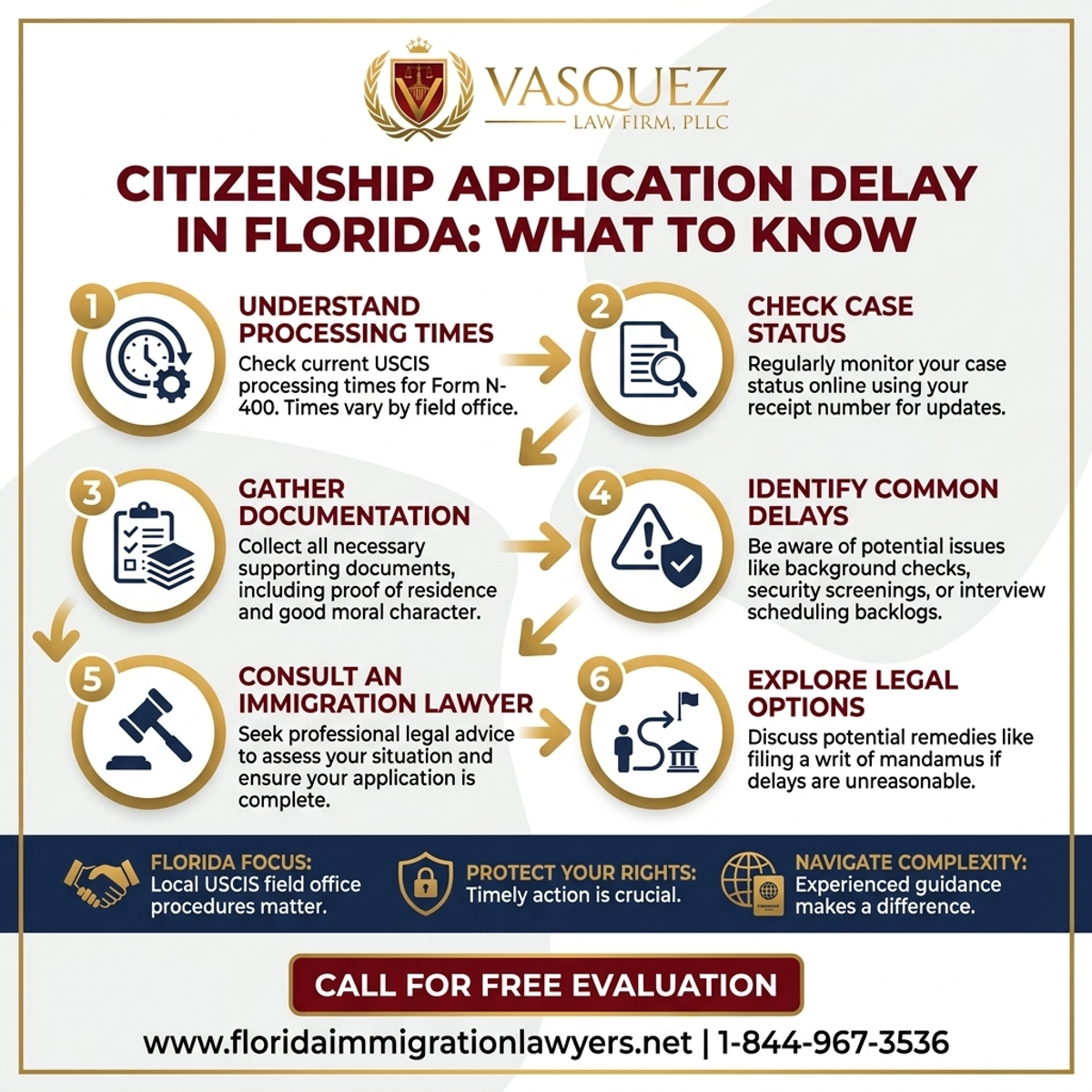
If you find your N-400 application experiencing an unreasonable delay, there are several proactive steps you can take to investigate and potentially expedite the process. Staying informed and taking action is key to navigating these challenging situations.
Checking Case Status Online
The first and most immediate step is to regularly check your case status online using the USCIS Case Status Online tool. You will need your receipt number (EAC, WAC, LIN, SRC, NBC, MSC, or IOE) to track your application's progress. While this tool provides updates, it often offers limited detail, indicating only the last action taken or if your case is still within normal processing times.
Contacting USCIS
If your case is outside the normal processing times listed on the USCIS website, you can contact USCIS directly. You can submit an e-request online, which generates an inquiry into your case. Alternatively, you can call the USCIS Contact Center. Be prepared to provide your application details and explain the nature of your delay. While these inquiries can sometimes prompt action, they often result in generic responses, especially if the delay is due to a widespread backlog.
Congressional Inquiry
For persistent and unexplained delays, reaching out to your U.S. Senator or Representative can be an effective strategy. Congressional offices have dedicated staff who can make inquiries on behalf of their constituents to federal agencies like USCIS. While they cannot directly influence the outcome of your case, a congressional inquiry can sometimes prompt USCIS to review your application more closely and provide a more detailed explanation for the delay.
Seeking Legal Counsel
Perhaps the most impactful step you can take is to consult with an experienced immigration attorney. An attorney can review your case, identify potential issues, and advise you on the best course of action. They can communicate with USCIS on your behalf, respond to RFEs, and, if necessary, pursue legal remedies for unreasonable delays. An attorney's expertise can be invaluable in navigating the complexities of immigration law and advocating for your rights.
Legal Remedies for Unreasonable Delays: The Writ of Mandamus
When all administrative avenues have been exhausted and your naturalization application remains unreasonably delayed, a legal remedy known as a Writ of Mandamus may be an option. This is a powerful legal tool used in federal court to compel a government agency, in this case, USCIS, to perform its duty.
What is a Writ of Mandamus?
A Writ of Mandamus is a court order that commands a government official or agency to perform a specific act that they are legally obligated to do. In the context of immigration, it is filed in federal district court to compel USCIS to make a decision on a pending N-400 application when the delay has become unreasonable. It does not ask the court to approve the application, but rather to force USCIS to act – either approve, deny, or schedule an interview.
When is it Appropriate?
A Writ of Mandamus is typically considered a last resort, used only after an applicant has exhausted all administrative remedies (e.g., checking online status, contacting USCIS, congressional inquiries) and the delay is clearly outside of normal processing times and without reasonable explanation. There is no strict definition of what constitutes an “unreasonable” delay, but generally, if an application has been pending for more than a year beyond the published processing times, or if there has been no meaningful activity on the case for an extended period (e.g., 6-12 months post-interview), a Writ of Mandamus may be appropriate. The decision to file should always be made in consultation with an experienced immigration attorney who can assess the specifics of your case and determine its viability.
Key Statistics — Citizenship Application Delay in Florida: What to Know
The Process and Requirements
Filing a Writ of Mandamus involves preparing and submitting a complaint to a federal district court, typically in the jurisdiction where the applicant resides. The complaint must clearly state the facts of the case, demonstrate that the applicant has exhausted administrative remedies, and show that USCIS has a clear duty to act and has failed to do so. The lawsuit names the relevant government officials (e.g., the Director of USCIS, the Secretary of Homeland Security) as defendants. After the complaint is filed, the government is served and must respond. Often, the mere filing of a Writ of Mandamus prompts USCIS to expedite the review of the application, leading to a decision or an interview being scheduled, thereby resolving the issue without needing to go through a full court battle.
Benefits of Filing
The primary benefit of a Writ of Mandamus is its effectiveness in compelling USCIS to act. It shifts the burden of inaction from the applicant to the government, often resulting in a quicker resolution. It provides a legal avenue for applicants who feel their rights are being violated by indefinite delays. While it requires legal expertise and can incur legal fees, the peace of mind and the potential for a timely resolution often outweigh the costs for those facing prolonged uncertainty. Our dedicated team of attorneys is well-versed in handling such complex litigation and can guide you through every step of this process. To discuss if this is the right option for your situation, please don't hesitate to contact us for a consultation.
The Role of an Experienced Immigration Attorney
Navigating the complexities of U.S. immigration law, especially when facing application delays, can be overwhelming. This is where the expertise of an experienced immigration attorney becomes invaluable. An attorney serves as your advocate, guide, and legal representative throughout the naturalization process.
An attorney can help you by:
- Reviewing Your Case Thoroughly: Identifying potential issues that could cause delays or lead to RFEs before they arise.
- Communicating with USCIS: Handling all correspondence and inquiries with USCIS on your behalf, ensuring proper legal terminology and procedures are followed.
- Responding to RFEs and NOIDs: Crafting comprehensive and timely responses to requests for evidence or notices of intent to deny, significantly increasing your chances of approval.
- Preparing for Interviews: Helping you prepare for your naturalization interview, ensuring you understand the types of questions asked and how to present your case effectively.
- Filing Legal Actions: If necessary, filing a Writ of Mandamus or other legal challenges to compel USCIS to make a decision on your application.
- Advocacy and Support: Providing ongoing support and advocacy, ensuring your rights are protected throughout the entire process.
Having a knowledgeable legal professional by your side can alleviate stress, prevent costly mistakes, and significantly improve the likelihood of a successful and timely outcome for your citizenship application. Don't let delays derail your American dream; seek legal assistance to ensure your journey to citizenship is as smooth as possible.
Conclusion
Citizenship application delays in Florida, while common, do not have to be insurmountable. By understanding the potential causes, proactively monitoring your case, and knowing when to seek professional legal assistance, you can effectively navigate these challenges. Whether it's through diligent follow-up with USCIS, congressional inquiries, or, if necessary, legal action like a Writ of Mandamus, there are avenues to pursue a resolution. The journey to U.S. citizenship is a profound one, and with the right knowledge and support, you can overcome obstacles and achieve your goal of becoming a naturalized citizen.
Sources and References
- U.S. Citizenship and Immigration Services (USCIS)
- Executive Office for Immigration Review (EOIR)
- U.S. Department of State - Bureau of Consular Affairs
- Immigration and Nationality Act (INA), 8 U.S.C. Chapter 12
Do Not Navigate This Process Alone
Our experienced immigration attorneys are ready to fight for you. Get a free, confidential case review today.
Se Habla Español
Or leave your details and we’ll call you:
Free Evaluation in 24 Hours
Or talk to us right now

AI voice assistant — available 24/7
FreeFrequently Asked Questions

William J. Vásquez
Founding Attorney · Vasquez Law Firm
U.S. Air Force veteran and immigration attorney with years of hands-on U.S. immigration experience. J.D., NCCU School of Law. AILA member. Admitted to the 4th, 5th, and 11th Circuit Courts.
Available 24/7 - Free Evaluations
Reviewed for legal accuracy by William J. Vásquez
Licensed in North Carolina; U.S. immigration is federal practice.
Related Legal Services
Our Florida immigration attorneys can help you with immigration practice areas, free immigration consultation and business immigration. Call today at 1-844-YO-PELEO for a free case review.
Related Links
Related Topics
Free Legal Case Review
Discuss your case with our experienced attorneys. We're available 24/7.
Se Habla Español - Estamos aquí para ayudarle.
Related Articles
DUI Immigration Consequences in Florida 2026
A DUI conviction in Florida can have severe immigration consequences, potentially leading to inadmissibility, deportation, or denial of immigration benefits. For non-citizens, a DUI is not just a traffic offense but a serious criminal matter that federal immigration law scrutinizes closely. Factors like multiple offenses, injury, or property damage can escalate a simple DUI to a Crime Involving Moral Turpitude (CIMT) or even an aggravated felony, triggering mandatory detention and removal proceedings. Understanding the specific nature of your Florida conviction and its interpretation under the Immigration and Nationality Act (INA) is crucial. This article outlines how DUIs impact immigration status, the grounds for inadmissibility and deportation, a step-by-step guide to navigating the process, essential documentation, and expected timelines for 2026. We also highlight common mistakes to avoid and when to seek legal counsel from an experienced immigration attorney. Florida Immigration Lawyers offers comprehensive support for individuals facing these challenging situations, providing expert guidance through complex legal landscapes.
Immigration Lawyer Orlando Free Consultation in Florida
For individuals and families in Orlando, Florida, navigating the complexities of U.S. immigration law requires expert guidance. An immigration lawyer in Orlando offers crucial support for everything from visa applications and green card processes to naturalization and deportation defense. This comprehensive guide details what a free consultation covers, providing a step-by-step overview of immigration pathways, essential document checklists, and expected timelines in 2026. We also highlight common mistakes to avoid, discuss the critical role of legal counsel in deportation and asylum cases, and explain why choosing a local Orlando immigration attorney is beneficial. Florida Immigration Lawyers is dedicated to serving the diverse community of Orlando with compassionate, effective legal solutions, ensuring you receive personalized advice and robust representation for a successful immigration journey.
EAD Advance Parole Combo Card in Florida 2026
For individuals with a pending Form I-485, Application to Register Permanent Residence or Adjust Status, the EAD Advance Parole Combo Card is an essential document. This single card combines the authorization to work legally in the U.S. (Employment Authorization Document - EAD) with permission to travel internationally and re-enter without abandoning your green card application (Advance Parole). This guide from Florida Immigration Lawyers provides a comprehensive overview for applicants in Florida in 2026, covering eligibility, the step-by-step application process, required documents, expected processing times, and associated costs. We also highlight common mistakes to avoid and when to seek legal counsel to ensure a smooth and successful immigration journey. Understanding this vital card is key to maintaining stability while awaiting your permanent residency approval.
EAD Advance Parole Combo Card in Florida: What You Need
An EAD advance parole combo card allows individuals with pending adjustment applications to both work and travel abroad without jeopardizing their green card application. Learn how to apply in Florida, what documents you need, and common mistakes to avoid.