Asylum Interview Preparation Florida: Your 2026 Guide to...
Preparing for your asylum interview in Florida, especially in 2026, demands meticulous attention to detail and a clear understanding of USCIS requirements. This comprehensive guide covers everything from reviewing your I-589 application and gathering essential documents to understanding interview timelines and avoiding common mistakes. Learn how to effectively present your case and why expert legal representation from Florida Immigration Lawyers is invaluable. We serve clients across Florida, including Kissimmee, offering free consultations to help you secure your future.

To prepare for your asylum interview in Florida, you must thoroughly review your I-589 application, gather all supporting documents, and practice answering potential questions honestly and consistently. Understanding the nuances of U.S. asylum law and the specific challenges faced by applicants in regions like Kissimmee is crucial for a successful outcome in 2026.
- Review your I-589 application meticulously for accuracy.
- Compile all original and translated supporting evidence.
- Prepare to discuss your fear of persecution in detail.
- Understand the role of the Asylum Officer and the interview process.
- Consider a mock interview to build confidence and refine your narrative.
Navigating Asylum Interview Preparation in Florida for 2026
Facing an asylum interview can be one of the most critical moments in your journey towards finding safety and stability in the United States. For individuals and families in Florida, particularly in vibrant communities like Kissimmee, understanding the intricate process of asylum interview preparation Florida is paramount. This guide provides comprehensive insights into what to expect and how to prepare effectively for your USCIS interview in 2026.
The U.S. asylum process, governed by complex federal laws, requires careful attention to detail and a clear presentation of your case. Our goal is to equip you with the knowledge needed to approach your interview with confidence. We understand the unique challenges faced by asylum seekers and are here to help you navigate every step.
Do not navigate this complex process alone. For personalized guidance and to ensure your case is presented effectively, call Florida Immigration Lawyers at 1-844-967-3536 for a free consultation. Our experienced team serves clients throughout Florida, including Kissimmee, Orlando, and Miami, providing dedicated support for your asylum journey.
Understanding the Asylum Interview Process in Florida
The affirmative asylum interview is a non-adversarial meeting with a USCIS Asylum Officer. Its purpose is to determine if you meet the definition of a refugee under U.S. law, which is a person who has a well-founded fear of persecution on account of race, religion, nationality, membership in a particular social group, or political opinion.
For applicants residing in Florida, your asylum interview will typically take place at the USCIS Asylum Office in Miami. This office serves the entire state, and understanding its procedures is a key part of your asylum interview preparation Florida. The interview is your primary opportunity to tell your story and provide evidence supporting your claim.
Key Aspects of the Affirmative Asylum Interview
The interview is conducted in a private setting, often with a translator provided by USCIS if you are not fluent in English. You have the right to bring your own translator, but they must be fluent in both English and your native language and cannot be a witness, your attorney, or a representative for your case. Your attorney also has the right to be present.
The Asylum Officer will ask questions about your asylum process application, your personal history, and the persecution you fear. They are looking for consistency, credibility, and evidence that your fear is well-founded and meets the legal criteria. This is why thorough asylum interview preparation Florida is so vital.
Step-by-Step Guide to Asylum Interview Preparation in Florida
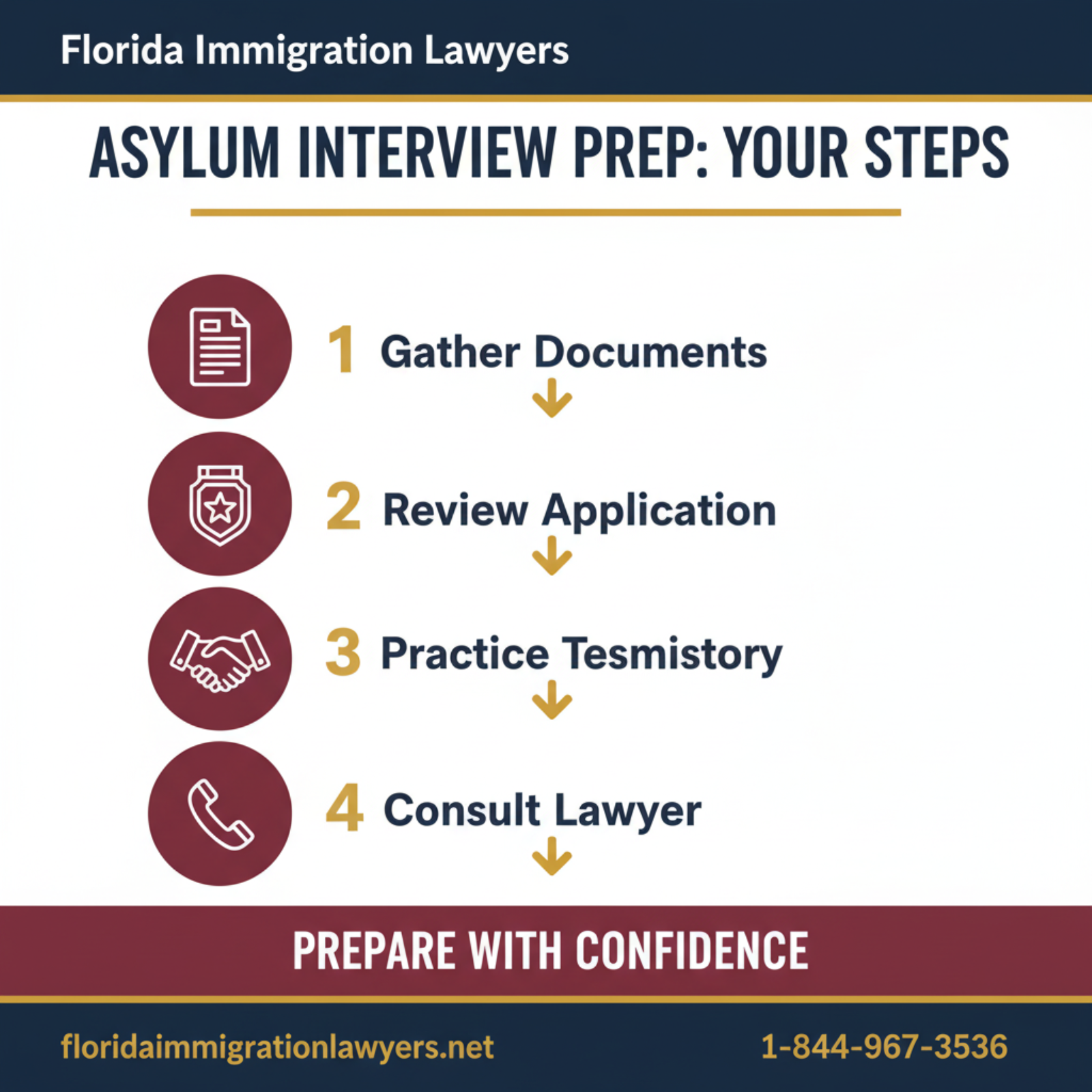
Successful asylum interview preparation Florida requires a methodical approach. Follow these steps to maximize your chances of a positive outcome.
-
Review Your I-589 Application Thoroughly
Your Form I-589, Application for Asylum and for Withholding of Removal, is the foundation of your case. Read every question and answer carefully. Ensure all information is accurate, complete, and consistent with your current understanding of events. Any discrepancies, even minor ones, can raise concerns about your credibility. Remember, the Asylum Officer will use this document as their primary reference during your interview.
-
Gather and Organize All Supporting Documentation
Collect every piece of evidence that supports your claim of persecution. This includes identity documents, birth certificates, marriage certificates, police reports, medical records, court documents, letters from human rights organizations, news articles, and affidavits from witnesses. Organize these documents logically, creating multiple copies for yourself, your attorney, and the Asylum Officer. Ensure all foreign language documents are accompanied by certified English translations.
-
Prepare Your Personal Narrative
Be ready to articulate your story clearly, chronologically, and with sufficient detail. Practice recounting the events that led you to fear persecution, focusing on the specific threats or harm you faced. The Asylum Officer needs to understand why you cannot return to your home country. Emphasize the nexus between your persecution and one of the five protected grounds (race, religion, nationality, social group, or political opinion).
-
Anticipate USCIS Asylum Interview Questions
While specific questions vary, many common themes arise. Expect questions about your background, family, education, employment, and political or religious affiliations. You will be asked about the persecution you suffered or fear, who perpetrated it, and why you believe it was connected to a protected ground. Prepare for follow-up questions that delve deeper into specific details. Consider engaging in a mock asylum interview with your attorney to practice your responses.
Step-by-Step Process Guide -
Understand Country Conditions Information
Research the current human rights situation in your home country. Be aware of reports from organizations like the U.S. Department of State, Amnesty International, and Human Rights Watch. While you are not expected to be an expert, a basic understanding of country conditions can strengthen your claim and show diligence. This context helps the Asylum Officer understand the broader environment of your persecution.
-
Prepare for the Interview Day Logistics
Plan your travel to the Miami Asylum Office well in advance. Arrive early, dressed professionally. Bring your interview notice, identification, original documents, and your attorney (if applicable). Be prepared for security checks. Maintaining a calm and respectful demeanor throughout the process is important. Remember, this interview is your chance to present your case fully.
-
Maintain Credibility and Consistency
Honesty is paramount. Answer all questions truthfully, even if the information is difficult to share. If you do not remember a detail, state that you do not recall. If you do not understand a question, ask for clarification. Consistency between your I-589 application, your testimony, and your supporting documents is crucial for establishing credibility. Any inconsistencies could undermine your claim.
Essential Document Checklist for Your Asylum Interview
A well-organized set of documents is critical for your asylum interview preparation Florida. Bring originals and copies of everything. This comprehensive checklist will help you gather what you need.
- Interview Notice: The official letter from USCIS scheduling your interview.
- Identification: Passport, national ID card, or any other government-issued ID.
- Form I-589 Application: A complete copy of your submitted application.
- Birth Certificates: For yourself and any dependents included in your application.
- Marriage Certificate: If applicable, for yourself and your spouse.
- Children's Birth Certificates: For all children included in your application.
- Photographs: Recent passport-style photos for yourself and all dependents.
- Proof of Relationship: Birth certificates, marriage certificates, or other documents demonstrating family ties.
- Evidence of Persecution: Police reports, medical records, court documents, news articles, letters from human rights organizations, witness affidavits, photos of injuries or destruction.
- Country Conditions Reports: Any relevant reports or articles about human rights in your home country.
- Educational and Employment Records: Diplomas, transcripts, work contracts, or letters of employment.
- Any Previous Immigration Documents: Entry stamps, visas, I-94 records, previous applications.
- Translator Certification: If you bring your own translator, their certification of fluency.
- Attorney's G-28 Form: If you are represented by an attorney.
Timeline and Processing Expectations for Asylum in Florida
The timeline for asylum cases can vary significantly. While USCIS aims to schedule interviews within 45 days of filing the I-589, backlogs and policy changes can impact this. Many applicants find themselves waiting for asylum interview date for months, or even years, especially in high-volume offices like Miami.
After your interview, the Asylum Officer typically has 10 business days to issue a decision. However, if your case requires further review or if security checks are pending, the decision may be delayed. If you are granted asylum, you will receive an approval notice. If your case is not approved by the Asylum Officer, and you are not in lawful immigration status, your case will generally be referred to an Immigration Judge for deportation defense proceedings before the Executive Office for Immigration Review (EOIR).
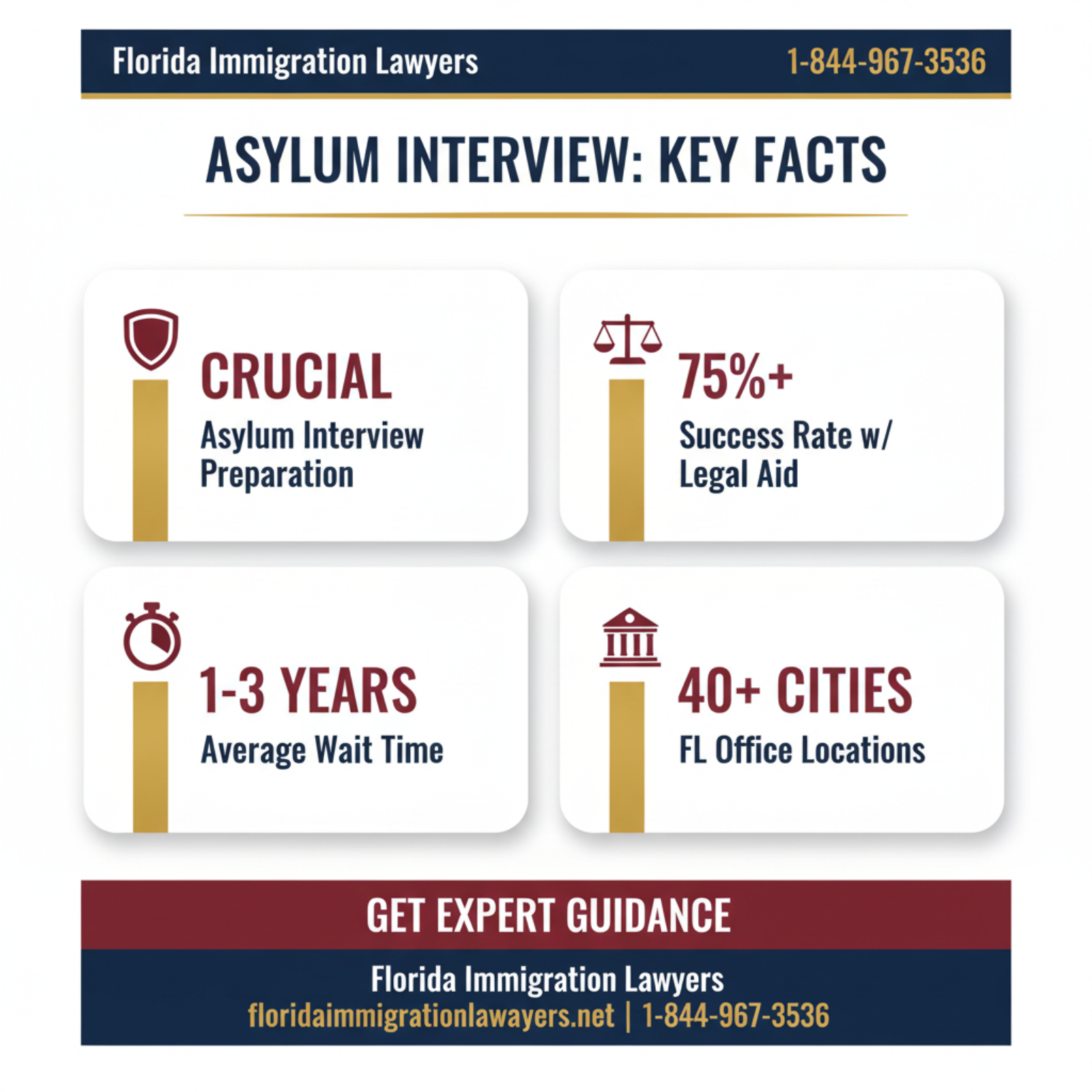
Understanding these potential delays and outcomes is a crucial part of your asylum interview preparation Florida. It is important to remain patient and continue to work closely with your attorney throughout this period. Current processing times can be checked on the USCIS website.
Cost Factors and Fee Breakdown for Asylum Applications
One significant advantage of applying for affirmative asylum is that there are generally no filing fees associated with Form I-589, Application for Asylum and for Withholding of Removal. This makes the initial application process more accessible for individuals seeking protection.
However, while the I-589 itself is free, there are other potential costs associated with your asylum interview preparation Florida:
- Attorney Fees: Legal representation is highly recommended, and attorneys charge for their time and expertise. Fees can vary based on the complexity of your case and the attorney's experience.
- Translation Costs: If you have documents in a foreign language, you will need to pay for certified English translations.
- Document Gathering Costs: Fees for obtaining police reports, medical records, or other official documents from your home country or third parties.
- Travel Expenses: Costs associated with traveling to the USCIS Asylum Office in Miami for your interview, especially if you reside in other parts of Florida like Kissimmee or the Panhandle.
- Medical Examinations: While not required for the asylum interview itself, a medical exam (Form I-693) will be required later if you adjust status to lawful permanent resident based on asylum.
Investing in these areas, particularly legal counsel, can significantly strengthen your case and improve your chances of success. Our firm offers transparent fee structures and can discuss payment options during your free consultation.
Do not navigate this complex process alone. The stakes are too high to risk making a mistake. Contact Florida Immigration Lawyers today for dedicated support and expert legal guidance throughout your asylum journey.
Common Mistakes to Avoid During Your Asylum Interview
Even with thorough asylum interview preparation Florida, applicants can make mistakes that jeopardize their case. Being aware of these pitfalls can help you avoid them.
-
Inconsistencies with Your I-589 Application: Providing information during the interview that contradicts what you wrote on your Form I-589 can severely undermine your credibility. The Asylum Officer meticulously compares your testimony with your application. Always review your application carefully before the interview.
-
Lack of Specificity: General statements about fear or persecution without concrete examples and details may not be convincing. You must be able to articulate specific incidents, dates, locations, and individuals involved. Practice telling your story with specific details.
-
Failing to Bring All Required Documents: Arriving at the interview without original documents, certified translations, or copies can cause delays or even lead to a denial. USCIS expects you to be fully prepared with all supporting evidence. Refer to our document checklist to ensure you have everything.
-
Not Disclosing All Relevant Information: Withholding information, even if it feels embarrassing or irrelevant, can be detrimental. The Asylum Officer needs a complete picture. Be honest and forthcoming about all aspects of your claim and background.
-
Attempting to Guess or Fabricate Answers: If you don't know an answer or don't remember a detail, simply state that. Fabricating information or guessing can be perceived as dishonesty and severely damage your credibility. It is better to say "I don't recall" than to invent an answer.
-
Not Understanding the Questions: If you don't understand a question, ask the Asylum Officer or translator to repeat or rephrase it. Answering a question incorrectly because of a misunderstanding can lead to misinterpretations of your testimony. Take your time and ensure clarity.
-
Appearing Inconsistent or Untruthful: Your demeanor, body language, and the consistency of your story are all assessed. Maintaining eye contact (where culturally appropriate), speaking clearly, and appearing earnest are important. Any sign of deception can negatively impact your case.
-
Failing to Explain Country Conditions: While the officer knows general conditions, linking your specific persecution to broader country conditions strengthens your case. Show awareness of the situation in your home country and how it relates to your fear. This helps the officer understand the context of your claim.
-
Not Addressing "Firm Resettlement": If you lived in another country between leaving your home country and arriving in the U.S., be prepared to explain why you didn't seek asylum there. USCIS may consider you "firmly resettled" elsewhere, which could bar you from asylum in the U.S. This is a critical legal point.
When to Call a Lawyer for Your Asylum Case
While you have the right to represent yourself, navigating the complexities of U.S. immigration law, especially for asylum, is incredibly challenging. An experienced experienced immigration attorneys can significantly improve your chances of success. Here are specific scenarios where legal counsel is invaluable for your asylum interview preparation Florida:
- Complex Persecution Claims: If your story involves intricate legal issues, multiple forms of persecution, or a less common protected ground, an attorney can help articulate your case effectively.
- Credibility Concerns: If you have inconsistencies in your past statements, criminal history, or other factors that might raise credibility issues, an attorney can help address these proactively.
- Previous Denials or Referrals: If you have previously been denied asylum or referred to an Immigration Judge, an attorney is essential to navigate the appeals process or deportation defense.
- Changes in Law or Country Conditions: Immigration law is constantly evolving. An attorney stays updated on the latest legal developments and how they might affect your case.
- Fear of English Language Barrier: Even with a USCIS translator, having your own attorney who can ensure accurate translation and intervene if needed provides an extra layer of protection.
- Lack of Documentation: If you struggle to obtain sufficient documentation, an attorney can advise on alternative evidence and strategies.
- Trauma-Informed Support: Discussing past trauma can be re-traumatizing. An attorney can help you prepare to share your story in a way that is legally effective while being mindful of your well-being.
At Florida Immigration Lawyers, we offer comprehensive support for immigration law cases, including asylum. Our attorneys have extensive experience preparing clients for their USCIS interviews and representing them throughout the process. We understand the unique needs of Florida residents, including those in Kissimmee and surrounding areas. Do not hesitate to contact us for support.
About Florida Immigration Lawyers
Florida Immigration Lawyers is a leading immigration law firm dedicated to serving individuals and families across the entire state of Florida. With a deep understanding of U.S. immigration law and a compassionate approach, we strive to provide exceptional legal representation to our diverse clientele.
Our firm specializes in a wide range of immigration services, including asylum claims, family-based immigration cases, deportation defense, citizenship applications, and business immigration. We are committed to protecting your rights and helping you achieve your immigration goals, offering personalized strategies tailored to your unique circumstances.
Why choose Florida Immigration Lawyers? We pride ourselves on our client-focused service, extensive legal knowledge, and unwavering dedication. Our team is available 24/7 to address your concerns and provide timely assistance. We offer free consultations to discuss your case and outline the best path forward.
Contact us today at 1-844-967-3536 or visit https://www.floridaimmigrationlawyers.net to learn more about how we can assist you with your immigration needs. Serving all of Florida, we are your trusted partners in immigration law.
Sources and References
- U.S. Citizenship and Immigration Services (USCIS) - Asylum
- Executive Office for Immigration Review (EOIR)
- 8 U.S.C. § 1158 - Asylum (Immigration and Nationality Act Section 208)
- 8 CFR § 208 - Procedures for Asylum and Withholding of Removal
- USCIS Policy Manual, Volume 7 - Asylum and Refugee
This article provides general legal information and is not intended as legal advice. Every case is unique, and outcomes depend on specific facts and circumstances. Contact an attorney for advice about your particular situation.
Secure Your Future: Contact Florida Immigration Lawyers Today
Your journey to asylum is a profound one, and proper asylum interview preparation Florida is crucial for a positive outcome. Do not leave your future to chance. Our dedicated team at Florida Immigration Lawyers is here to provide the expert legal guidance and support you need every step of the way.
Whether you are in Kissimmee, Orlando, Miami, or anywhere else in Florida, we are ready to assist you with your asylum application and interview preparation. We offer free, confidential consultations to discuss your specific situation and develop a tailored strategy.
Call us now at 1-844-967-3536 for your free consultation. Se Habla Español - Estamos aquí para ayudarle.
Do Not Navigate This Process Alone
Our experienced immigration attorneys are ready to fight for you. Get a free, confidential consultation today.
Se Habla Español
Or leave your details and we’ll call you:
Free Evaluation in 24 Hours
Or talk to us right now
AI voice assistant — available 24/7
FreeFrequently Asked Questions

William J. Vásquez
Founding Attorney · Vasquez Law Firm
U.S. Air Force veteran and immigration attorney with years of hands-on U.S. immigration experience. J.D., NCCU School of Law. AILA member. Admitted to the 4th, 5th, and 11th Circuit Courts.
Available 24/7 - Free Evaluations
Reviewed for legal accuracy by William J. Vásquez
Licensed in North Carolina; U.S. immigration is federal practice.
Related Legal Services
Our Florida immigration attorneys can help you with citizenship and naturalization, family immigration services and immigration practice areas. Call today at 1-844-967-3536 for a free consultation.
Related Links
Related Topics
Free Legal Consultation
Discuss your case with our experienced attorneys. We're available 24/7.
Se Habla Español - Estamos aquí para ayudarle.
Related Articles
Immigration Lawyer Orlando Free Consultation 2026
Discover how to find an immigration lawyer in Orlando offering a free consultation. Understand the services available and why choosing Florida Immigration Lawyers can make a difference in your case.
Military Naturalization Expedited in Florida Bases
Explore military naturalization options for families at Florida bases, including parole in place benefits in Miami. Learn how to expedite your application with expert guidance from Florida Immigration Lawyers.
K-3 Visa Timeline in Florida: What to Expect
Learn the K-3 visa timeline process in Florida, including steps, costs, and documentation. Understand your options in 2026 with guidance from Florida Immigration Lawyers.
Orlando Immigration Lawyer: Free Consultation 2026
Navigating immigration law in Orlando requires expert guidance. This comprehensive guide provides essential information on visa applications, Green Card processes, naturalization, and deportation defense in Florida for 2026. Discover common mistakes to avoid, when to seek legal counsel, and how a free consultation with an Orlando immigration lawyer can clarify your path. Florida Immigration Lawyers offers compassionate and effective legal support for all your immigration needs, serving Orlando, Kissimmee, and the entire state.