Annual Asylum Fee Florida 2026: Essential Guide for Applicants
For asylum seekers in Florida, understanding the 2026 annual asylum fee is paramount. This crucial guide from Florida Immigration Lawyers breaks down who needs to pay, how to make payments to USCIS or EOIR, and what vital deadlines to observe. We cover common pitfalls, provide a detailed document checklist, and explain the impact of this fee on your pending asylum application. Learn how to navigate these requirements successfully to protect your case. If you have questions about your I-589 annual fee or need personalized legal advice, contact our experienced team for a free consultation. Ensure your asylum journey in Florida stays on track with expert guidance.
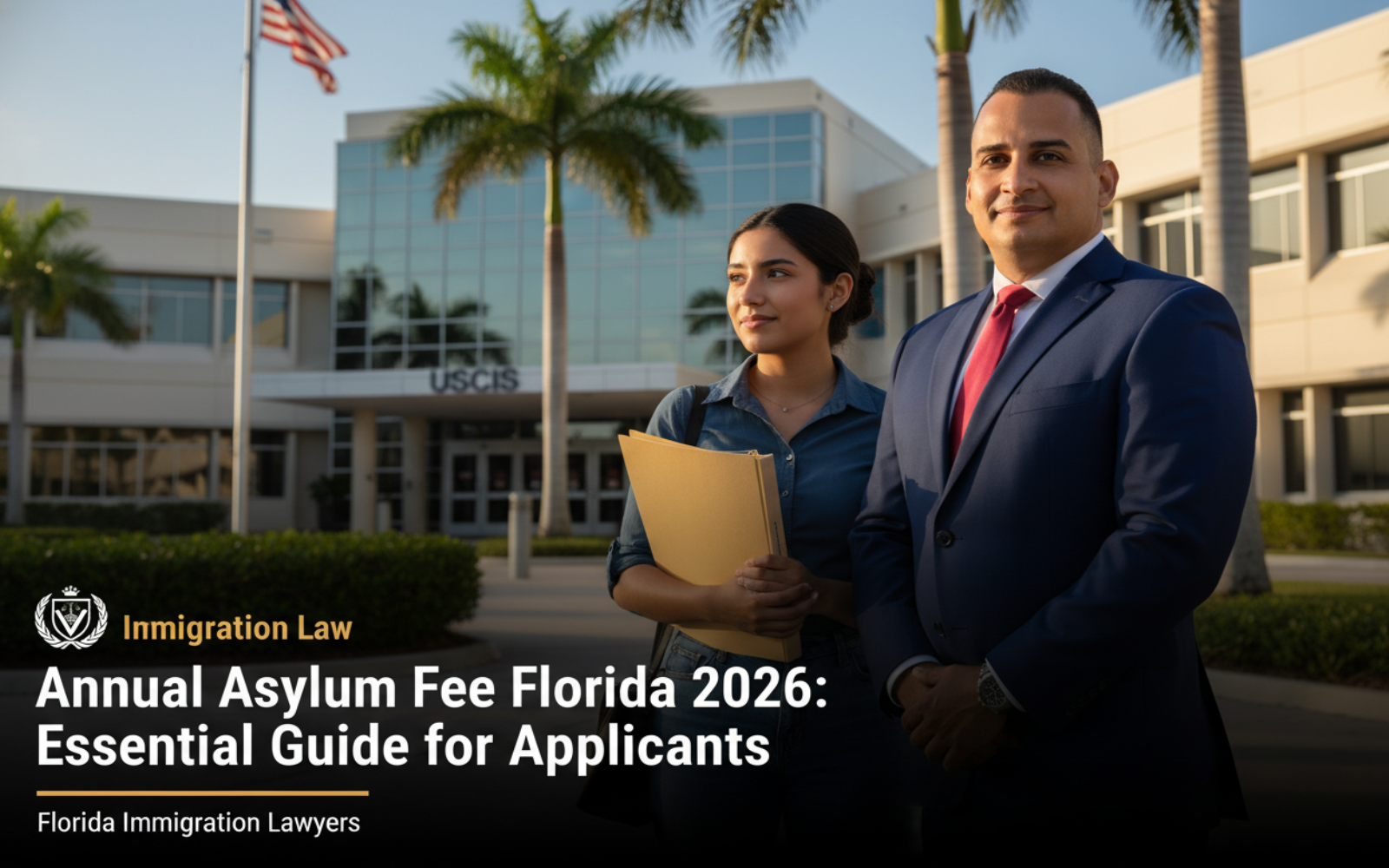
The annual asylum fee is a mandatory charge for certain asylum applicants whose Form I-589 application has been pending for an extended period, typically over one year, as of October 1st of each fiscal year. This fee, part of the evolving immigration landscape, helps cover processing costs. Not all applicants are subject to it, and understanding your eligibility is key to avoiding delays in your asylum case. It is crucial to stay informed about USCIS guidelines for 2026.
- Certain asylum applicants with pending Form I-589 for over a year must pay.
- The fee applies annually, usually starting October 1st.
- Eligibility criteria and payment methods are set by USCIS and EOIR.
- Failure to pay can lead to dismissal of your asylum application.
- Consulting an attorney is vital for clarification and compliance.
Navigating the complex world of U.S. immigration law can feel overwhelming, especially when new requirements like the annual asylum fee are introduced. If you are an asylum seeker in Florida, particularly in areas like Orlando, understanding your obligations for 2026 is critical. This fee, while intended to support the immigration system, adds another layer of complexity to an already challenging process. We understand the anxieties and uncertainties you may face as you pursue protection and a new life in the United States.
This comprehensive guide from Florida Immigration Lawyers aims to demystify the annual asylum fee for 2026. We will explain who is subject to this fee, how to ensure timely payment, and why compliance is absolutely essential for the success of your asylum application. Our goal is to provide you with clear, actionable information so you can navigate this requirement with confidence. For personalized guidance and to discuss your specific situation, do not hesitate to call Florida Immigration Lawyers at 1-844-967-3536 for a free consultation. We are here to help you understand every step of your immigration journey.
Understanding the 2026 Annual Asylum Fee in Florida
The concept of an annual asylum fee has been a significant development in immigration policy, reflecting ongoing efforts to manage the asylum system. For the fiscal year 2026, this fee continues to impact a specific subset of asylum applicants. It is not a fee for filing the initial Form I-589, Application for Asylum and for Withholding of Removal, but rather a recurring charge for cases that have remained pending for an extended duration. This policy aims to help offset the costs associated with processing a high volume of asylum claims.
The fee typically applies to individuals whose asylum applications have been pending for at least one year as of a specified date, usually October 1st of the relevant fiscal year. This means that if your Form I-589 was filed before October 1, 2025, and is still pending on October 1, 2026, you may be required to pay the annual asylum fee for that fiscal year. The specific amount and exact triggering dates are determined by U.S. Citizenship and Immigration Services (USCIS) and the Executive Office for Immigration Review (EOIR), which oversees immigration courts.
For asylum seekers in Florida, understanding these rules is particularly important. Florida is a major hub for immigration, with a diverse population and significant numbers of asylum applicants. Whether you are in Orlando, Miami, Tampa, or elsewhere in the state, your local USCIS field office or immigration court will adhere to these federal guidelines. Staying informed about the latest announcements from USCIS and EOIR is crucial to ensure compliance with the USCIS annual asylum fee requirements.
Who is Subject to the Annual Asylum Fee?
Determining who must pay the annual asylum fee can be confusing. Generally, the fee applies to individuals who have an Application for Asylum and for Withholding of Removal (Form I-589) that has been pending for a full year or more. This includes both affirmative asylum applications filed with USCIS and defensive asylum applications filed with an immigration court (EOIR).
There are typically specific exemptions. For example, unaccompanied alien children are usually exempt. Additionally, individuals who have already been granted asylum or whose applications have been denied and are no longer pending may not be required to pay. However, if your case is still actively under review by USCIS or an immigration judge, you are likely subject to this annual charge. This is where the guidance of an experienced immigration lawyer becomes invaluable. We can help clarify your individual situation.
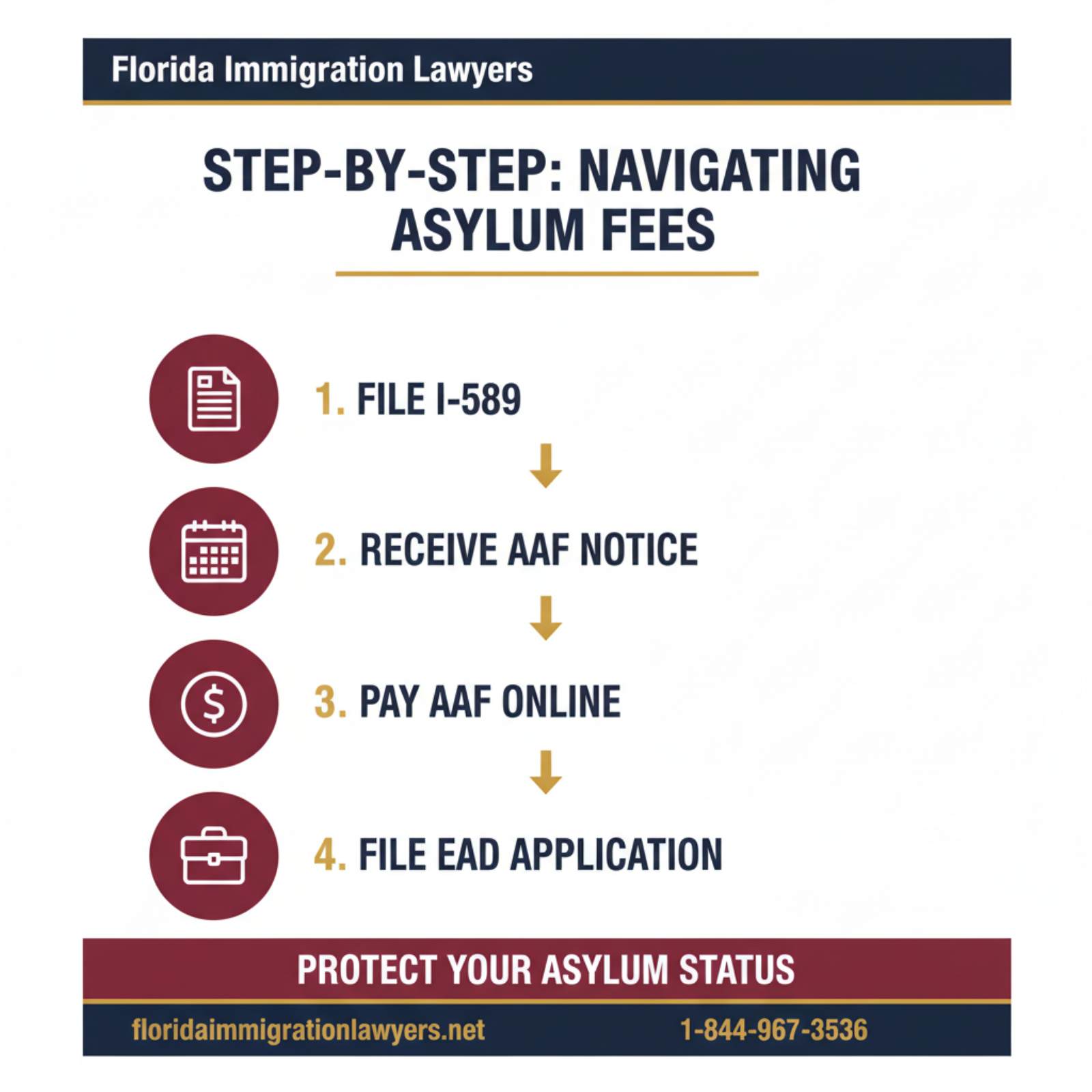
Step-by-Step Guide to Managing Your Annual Asylum Fee
Successfully managing your annual asylum fee requires careful attention to detail and adherence to deadlines. Missing a payment or failing to understand the requirements can have severe consequences for your asylum case. Follow these steps to ensure you remain compliant with the 2026 regulations.
-
Determine Your Eligibility
First, confirm whether you are actually required to pay the annual asylum fee for 2026. Review the date you filed your Form I-589. If it was filed before October 1, 2025, and your application is still pending with USCIS or an immigration court on October 1, 2026, you are likely subject to the fee. Consult official USCIS guidance or speak with an attorney to confirm your status. This initial step is critical to avoid unnecessary payments or, conversely, to ensure you meet your obligations.
-
Monitor Official Announcements
USCIS and EOIR regularly update their fee schedules and policies. It is your responsibility to stay informed about the exact fee amount and payment deadlines for the 2026 fiscal year. Check the official USCIS Fee Schedule and EOIR websites regularly. These announcements will provide precise instructions on when and how to pay the EOIR annual asylum fee or the USCIS version. Florida Immigration Lawyers can assist you in staying updated on these critical changes.
-
Locate Your Case Information
Before making a payment, you will need specific case information. For USCIS cases, this typically includes your Alien Registration Number (A-Number) and potentially your receipt number for the Form I-589. For EOIR cases, you will need your A-Number and possibly your court case number. Having this information readily available will streamline the payment process and ensure your payment is correctly applied to your asylum application. Inaccurate information can lead to payment processing errors and delays.
-
Understand Payment Methods
USCIS and EOIR generally offer several methods for paying fees. This may include online payments through a designated portal, payment by mail with a check or money order, or in some instances, in-person payments. For the annual asylum fee, online payment through the EOIR Payment Portal or a USCIS online system is often the most efficient method. Be sure to follow the instructions precisely to avoid any issues. Always obtain and keep a receipt for your payment.
-
Meet the Payment Deadline
Strict deadlines apply to the annual asylum fee. Failure to pay by the specified deadline can result in serious consequences, including the dismissal of your asylum application. Mark your calendar and set reminders once the official deadlines for 2026 are announced. If you anticipate difficulties in meeting the deadline, contact an immigration attorney immediately to explore any potential options, though fee waivers for this specific fee are generally not permitted.
-
Retain Proof of Payment
After making your payment, always keep a copy of your receipt or confirmation. This proof of payment is vital in case there are any discrepancies or questions regarding your fee payment in the future. You may need to present this receipt to USCIS or the immigration court as evidence of compliance. Ensure you have a digital and/or physical copy stored securely.
Document Checklist for Annual Asylum Fee Compliance
While the annual asylum fee itself doesn't require an extensive package of supporting documents, having certain information and records readily available will make the payment process much smoother. Being prepared can help you avoid last-minute stress and potential errors.
- Alien Registration Number (A-Number): This unique identifier is crucial for all immigration proceedings.
- Form I-589 Receipt Number: If your application was filed affirmatively with USCIS, this number helps track your case.
- Immigration Court Case Number: If your asylum application is defensive and pending with EOIR, this number is essential.
- Proof of Identity: A government-issued ID may be required for certain payment methods or inquiries.
- Payment Method Details: Credit/debit card information, bank account details for electronic funds transfer, or check/money order details.
- Correspondence from USCIS/EOIR: Any notices regarding your asylum application or fee requirements should be kept.
- Proof of Previous Payments: If you have paid this fee in prior years, retain those receipts as well.
- Contact Information: Your current address, phone number, and email address, ensuring they match what USCIS/EOIR have on file.
Timeline and Processing Expectations for the Annual Asylum Fee
The timeline for the annual asylum fee revolves primarily around the fiscal year. The fee typically applies to applications pending as of October 1st of each year. Once announced, there is usually a specific window, often a few months, during which the fee must be paid. For 2026, expect announcements regarding the specific payment period in late 2025 or early 2026. It is imperative to pay within this designated window.
Processing of the payment itself is usually quick if submitted online through the correct portal. However, it is not uncommon for it to take a few days for the payment to be reflected in your case status. If you pay by mail, allow additional time for mail delivery and processing. USCIS and EOIR do not typically send a specific receipt that needs to be filed with your asylum application; your payment confirmation is your proof. However, always be prepared to provide it if requested.
It's important to understand that paying the annual asylum fee does not expedite the processing of your asylum application. It merely ensures that your application remains active and is not dismissed for non-compliance. Asylum processing times can vary significantly based on factors like the complexity of your case, the volume of applications, and the specific USCIS field office (e.g., Orlando) or immigration court handling your case. We encourage you to regularly check your case status online and consult with Florida Immigration Lawyers for updates and advice.
Cost Factors and Fee Breakdown for the Annual Asylum Fee
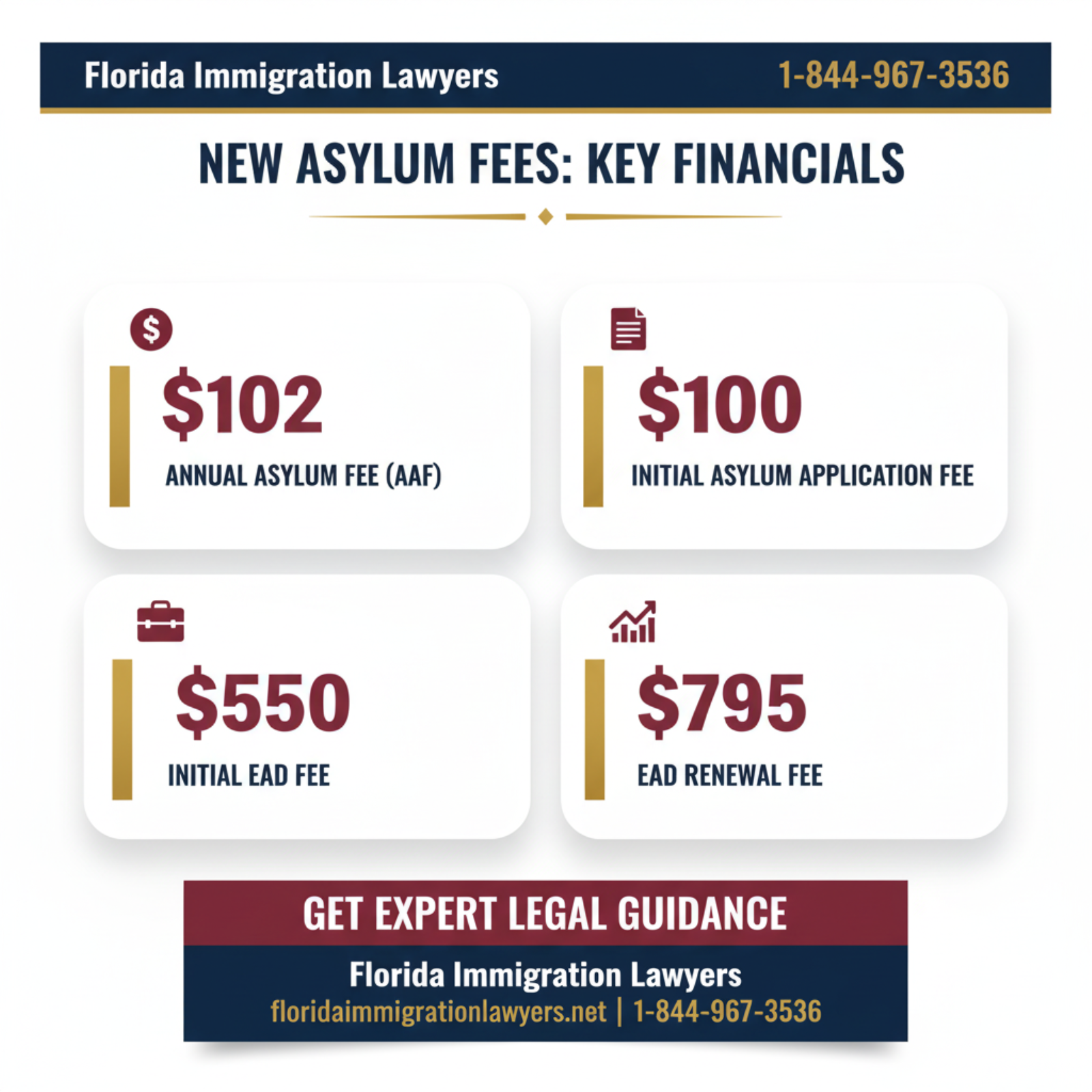
While we cannot provide specific dollar amounts as fees are subject to change, the annual asylum fee is a standardized charge. It is set by regulation and is typically a fixed amount for all eligible applicants. This fee is separate from the initial filing fees that may apply to other immigration forms. It is also important to distinguish it from the Form I-589 application itself, which generally does not have a filing fee.
Unlike some other USCIS fees, the annual asylum fee typically does not offer options for fee waivers or reduced fees. This means that if you are determined to be subject to the fee, you will likely need to pay the full amount. This can pose a significant financial burden for some asylum seekers. However, paying the fee is a non-negotiable step to maintain the viability of your asylum claim. Always refer to the most current USCIS and EOIR fee schedules for the exact amount applicable in 2026.
Beyond the fee itself, consider potential costs associated with legal assistance. While not a direct fee from the government, hiring an experienced immigration attorney can be an invaluable investment. An attorney can help you navigate the complexities of eligibility, ensure timely payment, and address any issues that arise, potentially saving you from costly mistakes or delays in your asylum process. Florida Immigration Lawyers offers free consultations to discuss your needs.
Do not navigate this process alone. The stakes in an asylum case are incredibly high, and compliance with all fee requirements, including the annual asylum fee, is non-negotiable. Contact Florida Immigration Lawyers today to ensure your application remains on track and to receive expert guidance throughout your journey. We are here to advocate for you.
Common Mistakes to Avoid with the Annual Asylum Fee
-
Ignoring Fee Notices
One of the most critical errors is failing to pay attention to official notices from USCIS or EOIR regarding the annual asylum fee. These notices often contain essential information about deadlines and payment methods. Ignoring them can lead to missing the payment window and potential dismissal of your asylum application. Always open and review all mail from immigration authorities promptly.
-
Assuming Exemption Without Confirmation
Some asylum seekers mistakenly believe they are exempt from the fee without verifying their eligibility. While certain categories, such as unaccompanied minors, are exempt, it's crucial to confirm your status. An incorrect assumption can result in non-payment and severe repercussions for your case. Always seek professional advice if you are unsure about your exemption status.
-
Missing the Payment Deadline
The deadlines for the annual asylum fee are strict. Failing to submit payment by the specified date can lead to a Notice of Intent to Dismiss (NOID) or even outright dismissal of your asylum application. Mark your calendar, set reminders, and act well in advance of the deadline, especially if paying by mail. Delays can be detrimental to your future in Florida.
-
Using Incorrect Payment Methods
USCIS and EOIR have specific accepted payment methods. Attempting to pay with an unaccepted method, or sending payment to the wrong address, can cause significant delays or lead to your payment being rejected. Always refer to the official instructions for the correct payment channels, whether it's the EOIR Payment Portal or a USCIS online system.
-
Not Retaining Proof of Payment
After paying the I-589 annual fee, it is absolutely essential to keep a clear record and receipt. If there's any dispute or question about your payment in the future, this proof will be your only defense. Always save confirmation emails, print receipts, or retain copies of checks/money orders. This documentation can protect your asylum application.
-
Confusing the Annual Fee with Other Fees
Some applicants confuse the annual asylum fee with other immigration fees, such as those for work permits (Form I-765) or other applications. These are distinct charges. The annual asylum fee is specifically for the pending asylum application itself. Misapplying funds or misunderstanding which fee is due can create significant problems. Always verify the specific fee you are paying.
-
Providing Inaccurate Case Information
When making an online payment, ensure all case information, such as your A-Number and case number, is entered accurately. A simple typo can result in your payment not being correctly associated with your asylum application, leading to a notice of non-payment. Double-check all details before submitting. This includes your name and date of birth.
-
Delaying Consultation with an Attorney
If you have questions or concerns about the annual asylum fee, delaying consultation with an experienced immigration attorney can be a costly mistake. An attorney can clarify your obligations, help resolve payment issues, and ensure overall compliance. Proactive legal advice is always better than reactive problem-solving, especially for such a vital aspect of your asylum case.
When to Call a Lawyer for Your Annual Asylum Fee
While paying the annual asylum fee may seem like a straightforward administrative task, certain situations warrant immediate legal counsel. The complexities of immigration law, combined with the high stakes of an asylum application, mean that professional guidance can be indispensable. Florida Immigration Lawyers are here to assist you.
You should contact an attorney if you receive a notice of intent to dismiss your asylum application due to non-payment of the annual asylum fee. This is a red flag that requires urgent action. Similarly, if you are unsure whether you are subject to the fee, or if you believe you are exempt but have received a payment notice, an attorney can clarify your obligations and help you respond appropriately. We can review your specific circumstances and advise on the best course of action to protect your asylum claim.
Furthermore, if you encounter technical difficulties with the EOIR Payment Portal or USCIS online payment system, or if your payment is rejected for unknown reasons, an attorney can help troubleshoot the issue. Navigating bureaucratic hurdles can be frustrating and time-consuming. Our team at Florida Immigration Lawyers has extensive experience with these systems and can help ensure your payment is successfully processed. We also assist with addressing any discrepancies related to your USCIS annual asylum fee receipt.
Any time you feel overwhelmed or uncertain about any aspect of your asylum case, including fee requirements, it is wise to seek legal advice. Our services extend to helping you understand all aspects of asylum law, from initial application to potential appeals, and including critical compliance steps like paying the annual asylum fee. We serve clients across Florida, including Orlando, and are dedicated to providing compassionate and effective legal representation.
About Florida Immigration Lawyers
Florida Immigration Lawyers is a leading law firm dedicated to providing exceptional immigration legal services across the entire state of Florida. With a deep understanding of U.S. immigration law and a compassionate approach, we proudly serve individuals and families seeking to build new lives and secure their futures in the United States. Our firm is committed to upholding the rights of immigrants and offering robust legal representation.
We offer a comprehensive range of immigration services, including asylum applications, deportation defense, family-based petitions, business immigration, citizenship and naturalization, and assistance with complex immigration challenges. Our experienced attorneys are well-versed in the intricacies of USCIS and EOIR procedures, including requirements like the annual asylum fee. We understand the unique challenges faced by immigrants in Florida, from Orlando to Miami, and tailor our strategies to meet your specific needs.
Choosing Florida Immigration Lawyers means choosing a team that is available 24/7 to address your concerns. We offer free, no-obligation consultations to discuss your case and provide clear, honest assessments. Our bilingual staff ensures that language is never a barrier to receiving quality legal advice. We are proud to be your trusted partners in navigating the U.S. immigration system, advocating tirelessly for your rights and aspirations. Call us at 1-844-967-3536 or visit https://www.floridaimmigrationlawyers.net to learn how we can assist you.
Sources and References
- U.S. Citizenship and Immigration Services (USCIS)
- Executive Office for Immigration Review (EOIR)
- USCIS Filing Fees Information
- EOIR Payment Portal (Pay.gov)
- 8 U.S.C. Chapter 12 - Immigration and Nationality Act (INA)
- 8 CFR Part 103 - Adjudication of Applications or Petitions
- INA Section 208 (8 U.S.C. § 1158) - Asylum
This article provides general legal information and is not intended as legal advice. Every case is unique, and outcomes depend on specific facts and circumstances. Contact an attorney for advice about your particular situation. Immigration laws are subject to change.
Understanding and complying with the annual asylum fee for 2026 is an essential part of your asylum journey in Florida. Do not let confusion or missed deadlines jeopardize your future. Florida Immigration Lawyers is here to provide the expert legal support you need. We offer dedicated representation and guidance for asylum seekers across all of Florida, including Orlando, Miami, and Tampa. For a free, confidential consultation to discuss your specific case and ensure compliance, please call us today at 1-844-967-3536. Se Habla Español - Estamos aquí para ayudarle.
Need help with Immigration?
Our Florida immigration attorneys offer free consultations. Call today or schedule online.
Frequently Asked Questions
Florida Immigration Lawyers
Legal Team
Our experienced attorneys at Florida Immigration Lawyers have been serving clients across Florida for over 20 years. We specialize in immigration, personal injury, criminal defense, workers compensation, and family law.