Family Petition Immigration Lawyer Miami: Your Guide 2026
Navigating the family petition process in Florida can be complex, but with the right legal guidance, reuniting with your loved ones is possible. This guide from Florida Immigration Lawyers provides a comprehensive overview of the I-130 family petition, detailing the step-by-step process, essential documentation, expected timelines for 2026, and associated costs. We cover critical distinctions between immediate relatives and family preference categories, offering insights into USCIS procedures relevant to Miami and Coral Springs residents. Learn about common mistakes to avoid and understand when expert legal assistance is essential. Our firm is dedicated to simplifying your journey, ensuring your application is meticulously prepared, and advocating for your family's future in the United States.
A family petition in Miami, typically initiated by filing Form I-130, allows U.S. citizens or lawful permanent residents to sponsor eligible family members for immigration to the United States. This complex process involves demonstrating a valid relationship, meeting financial requirements, and navigating various USCIS and consular procedures. An experienced family petition immigration lawyer in Miami can provide essential guidance and representation.
- Immediate relatives (spouses, minor children, parents of U.S. citizens) have no visa quota.
- Other family members fall under preference categories with annual visa limits.
- The process generally involves filing Form I-130, followed by adjustment of status or consular processing.
- Documentation of the relationship and financial support (I-864) is crucial.
- Legal assistance is highly recommended to avoid common pitfalls and ensure a smooth process.
Family Petition Immigration Lawyer Miami: Your Essential Guide for 2026
Is your family separated by borders, dreaming of a life together in sunny Florida? The journey to reunite with loved ones through a family petition can feel overwhelming, especially with the ever-changing landscape of immigration law. For many in Miami, Coral Springs, and across Florida, navigating the complexities of an I-130 family petition requires expert legal guidance.
At Florida Immigration Lawyers, we understand the emotional weight and critical importance of family reunification. We are dedicated to helping families like yours achieve their dreams. This comprehensive guide will walk you through the family petition process, highlight key considerations, and explain how a skilled family petition immigration lawyer in Miami can be your strongest ally.
Do not face this intricate process alone. Call Florida Immigration Lawyers at 1-844-967-3536 for a free consultation. Our team is ready to assist you.
Understanding the Family Petition Process in Florida
The core of family-based immigration is the Form I-130, Petition for Alien Relative. This form is filed by a U.S. citizen or lawful permanent resident (LPR) – the petitioner – on behalf of a qualifying family member – the beneficiary. The goal is to establish a legitimate family relationship that allows the beneficiary to immigrate to the United States.
The U.S. immigration system categorizes family relationships into two main groups: immediate relatives and family preference categories. Understanding which category your loved one falls into is crucial, as it significantly impacts processing times and visa availability.
Immediate Relatives vs. Preference Categories
Immediate Relatives: This category includes spouses of U.S. citizens, unmarried children under 21 of U.S. citizens, and parents of U.S. citizens (if the U.S. citizen is at least 21 years old). A significant advantage for immediate relatives is that there are no annual numerical limits on the number of visas issued. This generally means a faster path to a green card once the I-130 is approved.
Family Preference Categories: These categories are subject to annual numerical limitations, which can lead to longer waiting times, sometimes several years or even decades, depending on the country of origin and the specific preference category. These include:
- First Preference (F1): Unmarried sons and daughters (21 years of age or older) of U.S. citizens.
- Second Preference (F2A): Spouses and children (unmarried and under 21) of lawful permanent residents.
- Second Preference (F2B): Unmarried sons and daughters (21 years of age or older) of lawful permanent residents.
- Third Preference (F3): Married sons and daughters of U.S. citizens.
- Fourth Preference (F4): Brothers and sisters of U.S. citizens (if the U.S. citizen is at least 21 years old).
The current availability of visas for these categories is published monthly in the Visa Bulletin by the U.S. Department of State. This bulletin is a critical tool that your family petition immigration lawyer in Miami will monitor closely.
The Role of USCIS and Florida Field Offices
U.S. Citizenship and Immigration Services (USCIS) is the government agency responsible for adjudicating family petitions. In Florida, USCIS maintains field offices in major cities like Miami, Orlando, and Tampa. While I-130 petitions are typically filed centrally, interviews or requests for evidence may be handled by local offices. Our firm, serving Coral Springs and all of Florida, is familiar with the procedures and expectations of these local offices.
Understanding the specific requirements for each category and how to present a strong case is where the expertise of a Florida immigration lawyer becomes invaluable. We ensure that your petition meets all legal standards and stands the best chance of approval.
Step-by-Step Guide to Filing Your I-130 Family Petition
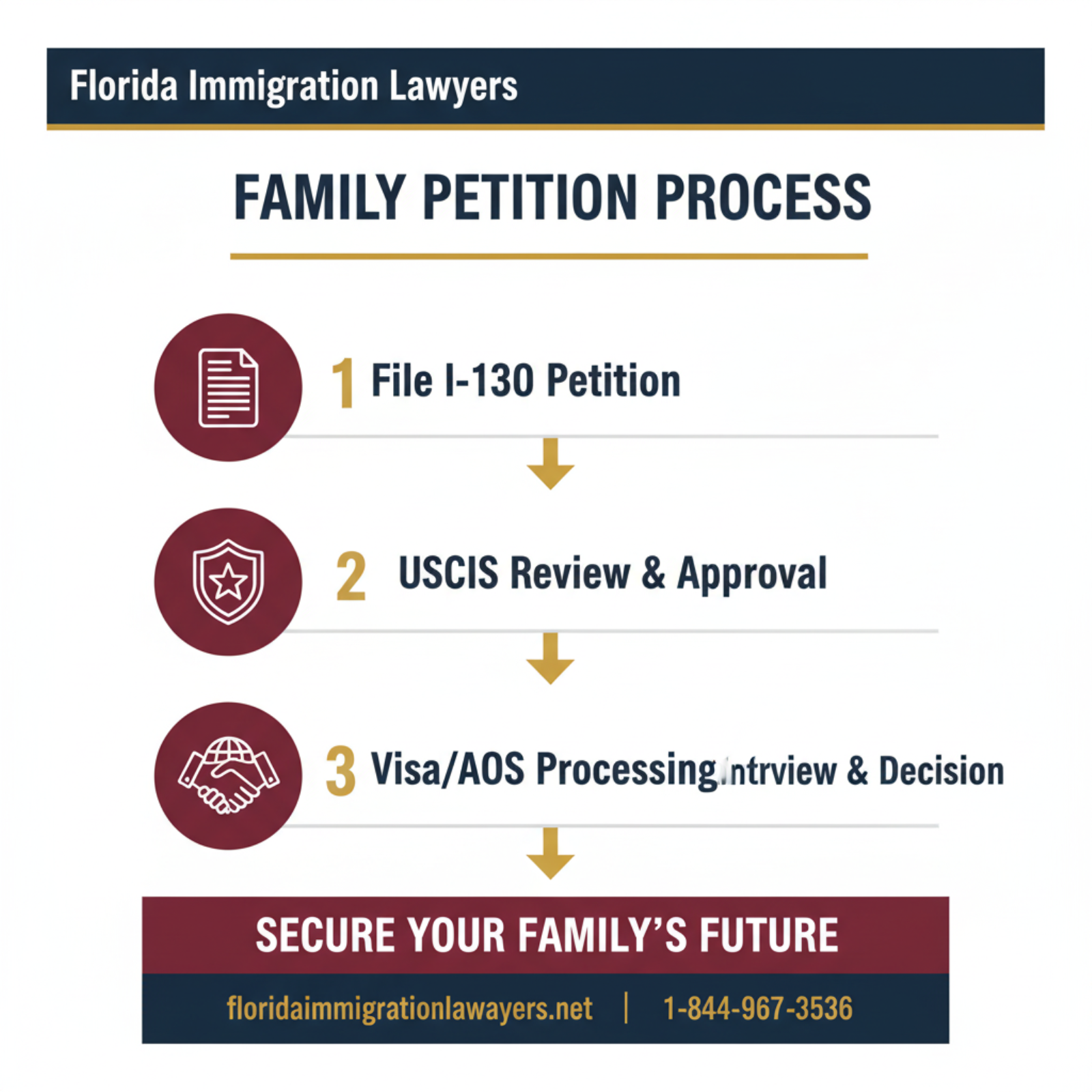
Filing an I-130 petition is a multi-stage process. Each step requires careful attention to detail and adherence to strict guidelines. Here is a general overview of what you can expect:
-
Determine Eligibility: First, confirm that the petitioner is a U.S. citizen or LPR and that the beneficiary qualifies as an immediate relative or falls into one of the family preference categories. The relationship must be legally recognized and provable.
-
Gather Required Documents: Collect all necessary documentation to prove the petitioner's status and the qualifying relationship. This is a critical step, and missing documents can cause significant delays. We will provide a detailed checklist later in this guide.
-
File Form I-130, Petition for Alien Relative: The U.S. citizen or LPR petitioner files Form I-130 with USCIS, along with all supporting documents and the applicable filing fee. This form officially requests that USCIS recognize the familial relationship.
-
USCIS Processing and Approval: USCIS reviews the petition and supporting evidence. They may issue a Request for Evidence (RFE) if more information is needed. If approved, USCIS sends an approval notice (Form I-797) to the petitioner.
-
National Visa Center (NVC) Processing or Adjustment of Status:
- Consular Processing (Beneficiary Abroad): If the beneficiary is outside the U.S., the approved petition is sent to the National Visa Center (NVC). The NVC collects additional documents, fees, and schedules an interview at a U.S. Embassy or Consulate abroad.
- Adjustment of Status (Beneficiary in U.S.): If the beneficiary is already in the U.S. and eligible, they may be able to adjust their status to a lawful permanent resident without leaving the country. This typically involves filing Form I-485, Application to Register Permanent Residence or Adjust Status, concurrently with or after the I-130.
-
Interview: Whether through consular processing or adjustment of status, the beneficiary will typically undergo an interview. This interview is conducted by a USCIS officer (for adjustment of status) or a consular officer (for consular processing) to verify information and ensure eligibility.
-
Visa Issuance or Green Card: If the interview is successful, and all requirements are met, the beneficiary will either receive an immigrant visa to enter the U.S. (consular processing) or a green card directly (adjustment of status). This marks the successful completion of the family petition process.
Throughout these steps, a skilled family petition immigration lawyer in Miami can offer invaluable support, from preparing your forms to representing you during interviews. Our team at Florida Immigration Lawyers is well-versed in both consular processing and adjustment of status procedures, helping clients from Miami to Coral Springs.
Essential Document Checklist for Your Family Petition
The success of your I-130 petition heavily relies on submitting a complete and accurate set of documents. While specific requirements vary by case, here is a general checklist of commonly needed items:
- Form I-130, Petition for Alien Relative: Completed and signed.
- Proof of Petitioner's U.S. Citizenship or LPR Status: U.S. birth certificate, naturalization certificate, U.S. passport, or green card (Form I-551).
- Proof of Qualifying Relationship:
- For Spouses: Marriage certificate, joint financial documents (bank statements, tax returns), joint leases or property deeds, birth certificates of shared children, affidavits from friends/family attesting to the bona fide marriage, photos together.
- For Children: Birth certificate showing parent-child relationship.
- For Parents: Petitioner's birth certificate showing parent's name.
- For Siblings: Birth certificates of both petitioner and beneficiary, showing common parent(s).
- Biographic Information: Form G-325A (if applicable), passport photos of both petitioner and beneficiary.
- Form I-864, Affidavit of Support: Required from the petitioner to demonstrate financial ability to support the beneficiary and prevent them from becoming a public charge. Includes tax returns, employment letters, and pay stubs.
- Beneficiary's Birth Certificate and Passport: Or other national identity documents.
- Police Clearance Certificates: From countries where the beneficiary has resided for specific periods (for consular processing).
- Medical Examination Report: Completed by a USCIS-approved civil surgeon (for adjustment of status) or panel physician (for consular processing).
- Translations: Any document not in English must be accompanied by a certified English translation.
Organizing these documents can be daunting. A family immigration attorney in Miami like those at Florida Immigration Lawyers can help you compile a robust application package, ensuring no critical documents are overlooked.
Timeline and Processing Expectations for Family Visas in 2026
The timeline for a family petition can vary significantly based on several factors, including the type of relationship, the beneficiary's country of origin, and current USCIS caseloads. While it's impossible to provide exact dates, we can offer general expectations for 2026.
USCIS I-130 Processing Times
As of 2026, USCIS processing times for Form I-130 can range from a few months to over a year, depending on the service center handling the petition and the relationship category. Immediate relative petitions are generally processed faster. You can check current USCIS processing times online, but remember these are estimates and can fluctuate.
Visa Bulletin and Wait Times for Preference Categories
For family preference categories, the wait time extends beyond USCIS I-130 approval. Beneficiaries must wait for their priority date to become current according to the Visa Bulletin. This could mean several years of waiting, especially for categories like F4 (siblings of U.S. citizens) or for beneficiaries from high-demand countries like Mexico or the Philippines.
Your family petition immigration lawyer in Miami will help you understand your priority date and monitor the Visa Bulletin to anticipate when a visa number may become available. This foresight allows for timely preparation of subsequent application stages.
Cost Factors and Fee Breakdown for an I-130 Petition
Understanding the financial aspects of a family petition is essential for planning. The total cost involves government filing fees, medical examination fees, and potentially legal fees. Please note that government fees are subject to change, and specific amounts should always be verified on the official USCIS website.
- USCIS Filing Fees: The primary government fee is for filing Form I-130. There are additional fees for related forms like Form I-485 (Adjustment of Status) or immigrant visa application fees for consular processing.
- Medical Examination Fees: All immigrant visa applicants must undergo a medical examination by an authorized physician. These fees are paid directly to the doctor and vary by provider.
- Affidavit of Support Related Costs: While filing Form I-864 itself does not incur a separate fee, gathering supporting financial documents (e.g., tax transcripts) might have minor associated costs.
- Translation and Document Procurement Fees: If you need documents translated into English or require certified copies of birth certificates, marriage licenses, etc., these services will incur costs.
- Attorney Fees: Hiring an experienced family petition immigration lawyer in Miami is an investment in the success and efficiency of your case. Legal fees vary depending on the complexity of your situation and the services required. Florida Immigration Lawyers offers transparent fee structures.
Considering the significant investment of time and money, ensuring your application is meticulously prepared from the outset can prevent costly delays or denials. We offer free consultations to discuss your specific case and provide an estimate of legal costs.

Do not navigate this process alone. Contact Florida Immigration Lawyers today for expert assistance with your family petition.
Common Mistakes to Avoid in Your Family Petition
Even a small error can lead to significant delays or even denial of your family petition. Avoiding these common pitfalls is crucial for a smooth process.
-
Incomplete or Incorrect Forms: Submitting forms with missing information or errors is a leading cause of RFEs (Requests for Evidence) or outright denials. Consequences include prolonged processing times and the need to refile.
-
Insufficient Evidence of Relationship: Failing to provide compelling evidence that your relationship is genuine and not solely for immigration purposes can lead to intense scrutiny. This is especially true for spousal petitions.
-
Not Meeting Financial Requirements (I-864): The Affidavit of Support (Form I-864) is critical. If the petitioner's income does not meet the poverty guidelines, a co-sponsor may be needed. Failure to meet these requirements can lead to denial.
-
Missing Deadlines: USCIS and NVC provide strict deadlines for responding to RFEs or submitting documents. Missing these deadlines can result in the abandonment or denial of your case.
-
Failure to Disclose Prior Immigration Issues: Any previous immigration violations, criminal history, or deportations must be disclosed. Hiding information can lead to allegations of misrepresentation and permanent bars from the U.S.
-
Not Updating Contact Information: Moving without notifying USCIS or the NVC can cause you to miss crucial notices, RFEs, or interview appointments, leading to significant setbacks.
-
Trying to Navigate Complex Cases Alone: While some straightforward cases might seem manageable, situations involving prior marriages, criminal records, or previous immigration denials are highly complex. Without legal expertise, you risk making irreversible mistakes.
-
Lack of Preparation for the Interview: The interview is a critical stage. Being unprepared to answer questions about your relationship or immigration history can raise red flags and jeopardize your approval.
-
Ignoring Legal Advice: If you do consult an attorney, failing to follow their guidance on documentation, interview preparation, or specific legal strategies can undermine your case.
-
Assuming All Cases are the Same: Each family petition is unique. What worked for a friend or relative might not apply to your situation due to differences in relationship type, country of origin, or personal history.
-
Not Understanding the Visa Bulletin: For preference categories, misunderstanding how the Visa Bulletin works can lead to incorrect expectations about timelines and when to proceed with the next steps.
A proactive approach and the guidance of an experienced family petition immigration lawyer in Miami can help you avoid these common pitfalls and ensure your case progresses smoothly. Our attorneys at Florida Immigration Lawyers are adept at identifying potential issues before they become problems.
When to Call a Lawyer for Your Family Petition
While some simple cases might seem manageable, the nuances of immigration law make legal representation beneficial for almost every family petition. There are specific scenarios where contacting a family petition immigration lawyer in Miami is not just advisable, but essential:
- Complex Family Situations: If there have been previous marriages, divorces, or adoptions, proving the validity of your current relationship can be challenging.
- Criminal History: If either the petitioner or beneficiary has a criminal record, this can significantly impact eligibility and may require waivers.
- Previous Immigration Violations: Past deportations, unlawful presence, or visa overstays for the beneficiary can complicate the process, potentially leading to deportation defense issues.
- Prior Denials: If a previous petition was denied, understanding the reasons for denial and strategizing a new approach requires legal expertise.
- Beneficiary is Abroad: Navigating consular processing, especially with varying embassy requirements, benefits greatly from legal guidance.
- Financial Issues: If the petitioner struggles to meet the income requirements for the Affidavit of Support, an attorney can advise on co-sponsors or other solutions.
- Requests for Evidence (RFEs): Responding effectively to an RFE requires a thorough understanding of what USCIS is asking for and how to provide adequate proof.
- Concerns about Interviews: Preparation for the USCIS or consular interview is crucial. An attorney can help you understand what to expect and how to present your case confidently.
- Seeking Guidance in Coral Springs or Miami: For residents in Florida, having a local attorney who understands the regional context and USCIS office nuances can be a significant advantage.
At Florida Immigration Lawyers, we offer comprehensive services for family-based immigration, including I-130 petitions, adjustment of status, consular processing, and even naturalization once you qualify. Our attorneys are dedicated to protecting your family's future. Contact us today to discuss your unique situation.
About Florida Immigration Lawyers
Florida Immigration Lawyers is a leading immigration law firm passionately committed to serving individuals and families across the Sunshine State. With offices strategically located to serve clients from Miami, Coral Springs, and throughout Florida, we bring unparalleled expertise and a compassionate approach to every case.
Our dedicated team of attorneys specializes in a wide array of immigration matters, including family petitions, employment-based visas, asylum, deportation defense, and citizenship. We understand that behind every case is a person with hopes and dreams, and we strive to provide personalized, effective legal solutions.
Why Choose Florida Immigration Lawyers?
- Expertise: Our attorneys possess in-depth knowledge of U.S. immigration law and stay updated on the latest policy changes for 2026 and beyond.
- Client-Centered Approach: We prioritize your needs, offering clear communication, honest advice, and empathetic support throughout your journey.
- Proven Track Record: We have a history of successfully reuniting families and helping individuals achieve their immigration goals.
- Bilingual Services: Se habla español. Our team is fully equipped to assist our diverse clientele in both English and Spanish.
- Accessibility: We are available 24/7 to answer your urgent questions and offer free, no-obligation consultations to assess your case.
Your immigration journey is too important to leave to chance. Trust the experienced advocates at Florida Immigration Lawyers to guide you. Call us now at 1-844-967-3536 or visit our website at https://www.floridaimmigrationlawyers.net to schedule your free consultation.
Sources and References
- U.S. Citizenship and Immigration Services (USCIS)
- U.S. Department of State - Visa Bulletin
- Executive Office for Immigration Review (EOIR)
- Immigration and Nationality Act (INA) Sections 201, 203 (8 U.S.C. §§ 1151, 1153) - Classification of preference immigrants.
- 8 Code of Federal Regulations (CFR) Part 204 - Petitions to Classify Alien Relatives for Issuance of Immigrant Visas.
- 8 U.S.C. Chapter 12 - Immigration and Nationality Act.
This article provides general legal information and is not intended as legal advice. Every case is unique, and outcomes depend on specific facts and circumstances. Contact an attorney for advice about your particular situation.
Reuniting your family is a profound goal, and the process, while challenging, is achievable with the right support. Let Florida Immigration Lawyers be your trusted partner. We are here to simplify the complexities, protect your rights, and advocate tirelessly for your family's future in Florida.
Do not delay your family's future. Schedule your free consultation with a dedicated family petition immigration lawyer in Miami today. Call 1-844-967-3536. Se Habla Español - Estamos aquí para ayudarle.
Need help with Immigration?
Our Florida immigration attorneys offer free consultations. Call today or schedule online.
Frequently Asked Questions
Florida Immigration Lawyers
Legal Team
Our experienced attorneys at Florida Immigration Lawyers have been serving clients across Florida for over 20 years. We specialize in immigration, personal injury, criminal defense, workers compensation, and family law.