Advance Parole Travel Document in Florida
Discover how Advance Parole helps Florida residents with pending adjustments travel safely. Learn about eligibility, application steps, and common pitfalls. Contact Florida Immigration Lawyers for guidance.
What is Advance Parole?
Advance Parole is a travel document that allows certain immigrants to travel outside the U.S. and return lawfully. It is especially relevant for those with a pending adjustment of status (Form I-485). Without it, leaving the U.S. could be considered abandoning your green card application. In Florida, especially in diverse cities like St. Petersburg, it's a vital part of the immigration process.
Essentially, Advance Parole acts as a re-entry permit that grants permission to an applicant for adjustment of status to travel abroad and return to the U.S. while their I-485 application is still under review. This is particularly important because, under immigration law, departing the U.S. without Advance Parole typically signifies an abandonment of your pending green card application, forcing you to start the entire process over again upon your return, often from outside the country. This can lead to significant delays, financial burdens, and even bars from re-entry depending on your previous immigration history.
It's crucial to understand that Advance Parole is not a visa; it does not guarantee re-entry, but rather permits you to seek parole into the U.S. upon your return. The final decision rests with the Customs and Border Protection (CBP) officer at the port of entry. However, with a valid Advance Parole document, most individuals with a pending I-485 can re-enter without issues, provided there are no new grounds of inadmissibility. This provides immense peace of mind for individuals and families in Florida who may have urgent reasons to travel internationally.
How to Apply for Advance Parole
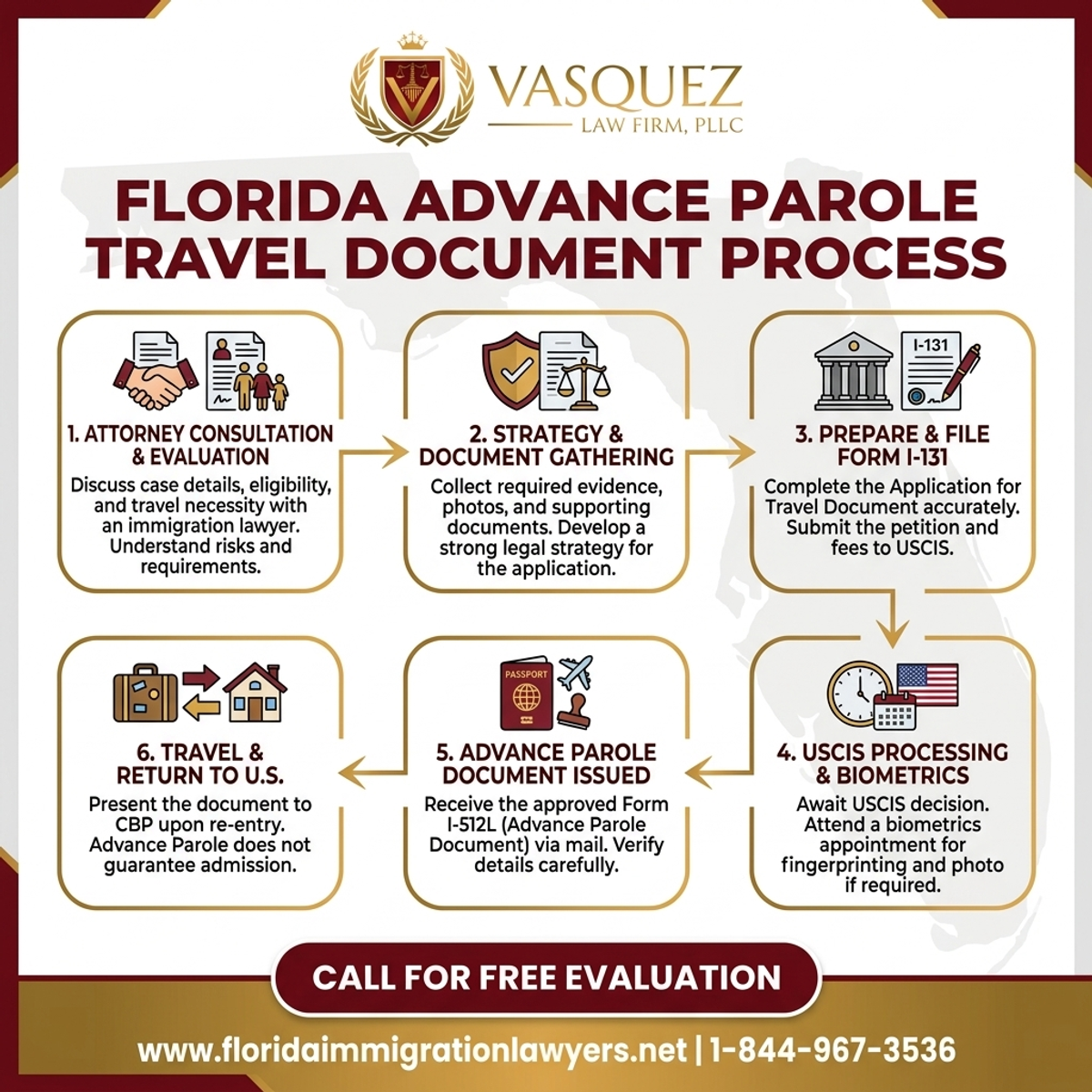
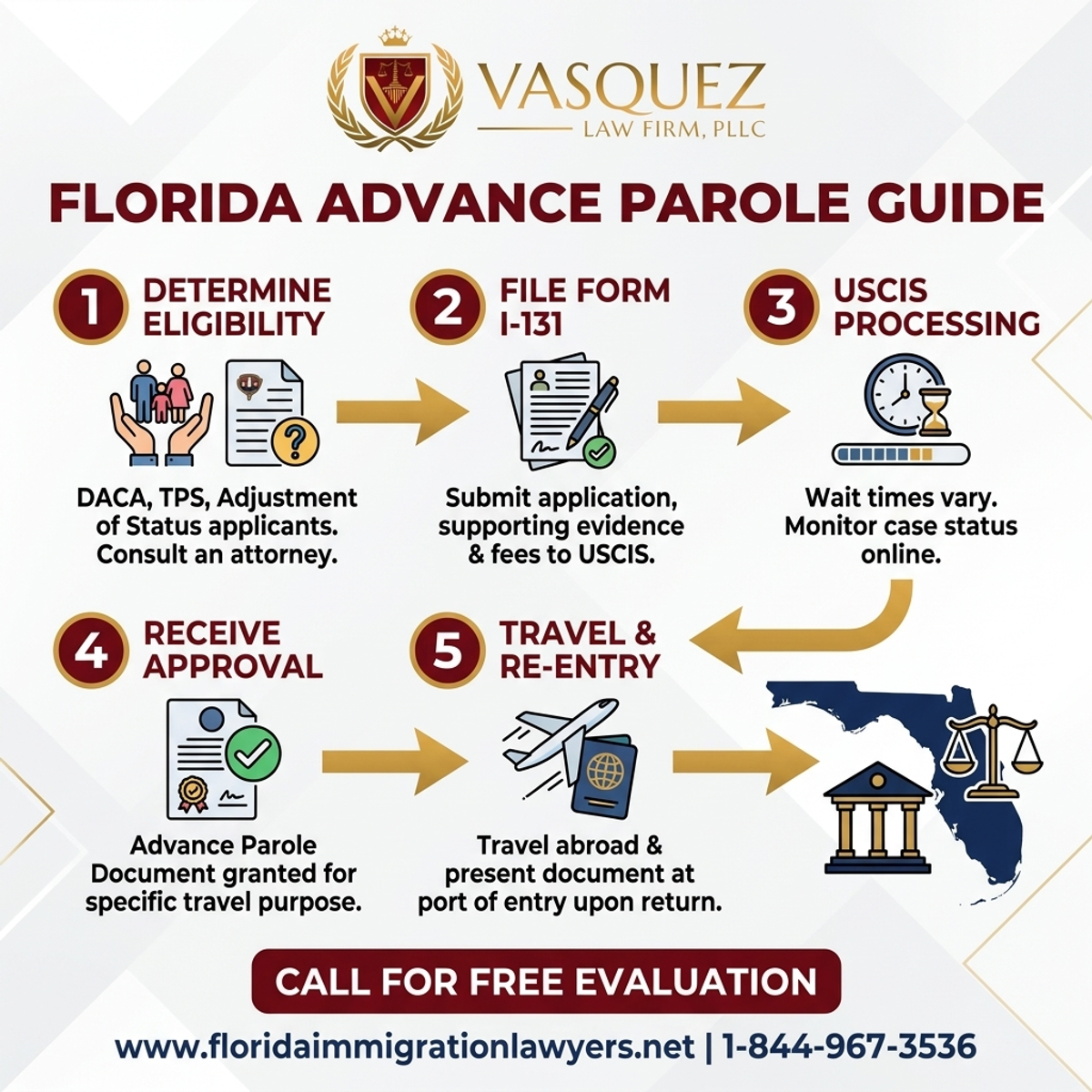
- Determine Eligibility: Most applicants with a pending I-485 are eligible. However, those with certain immigration violations might not be. Eligibility is a critical first step. Generally, if you have a pending Form I-485, Application to Register Permanent Residence or Adjust Status, you are eligible to apply for Advance Parole. However, individuals who are in removal proceedings, have certain criminal convictions, or have previously violated immigration laws might face challenges or be ineligible. It's also important to note that those applying for a K-1 fiancé(e) visa adjustment of status have specific rules regarding travel. Consulting with Florida Immigration Lawyers can help you confirm your eligibility before you invest time and money into the application process.
- Complete Form I-131: This form is essential for requesting Advance Parole. Ensure all details are correct to avoid delays. Form I-131, Application for Travel Document, is the primary form used to request Advance Parole. Accuracy is paramount when filling out this form. Any discrepancies, missing information, or errors can lead to requests for evidence (RFEs), significant delays, or even denial of your application. Pay close attention to personal details, travel dates (if known), and the specific type of travel document you are requesting. It’s advisable to double-check every field and ensure consistency with other immigration documents you’ve submitted to USCIS.
- Submit Supporting Documents: These include your I-485 receipt, passport-sized photos, and proof of pending adjustment. A robust set of supporting documents is vital for a successful application. Beyond the I-485 receipt notice and two passport-style photos, you should include a copy of a government-issued identification (like your passport or driver's license), and any other evidence that supports your need for travel, such as a letter explaining the purpose of your trip (e.g., family emergency, business meeting, academic conference). While not always mandatory, a clear explanation can sometimes expedite review or prevent questions.
- Pay the Required Fee: Check the latest fee on the USCIS website. The filing fee for Form I-131 must be submitted with your application. It's imperative to check the most current fee schedule on the USCIS website, as fees are subject to change without prior notice. If you filed your Form I-485 after July 30, 2007, and it is still pending, you may not need to pay a separate fee for Form I-131 if you are applying for Advance Parole. However, this fee waiver typically applies only if you are also filing for employment authorization (Form I-765) concurrently or have already done so. Always verify your specific situation with the USCIS guidelines or an attorney.
- Await Approval: Processing times vary, but typically range from 3 to 5 months. Check the status online via USCIS. After submitting your application, you will receive a receipt notice from USCIS. This notice contains a case number that allows you to track the status of your application online through the USCIS website. It's crucial not to travel outside the U.S. until you have received and physically possess your approved Advance Parole document. Traveling before approval will almost certainly lead to the abandonment of your I-485 application. Plan your travel well in advance, considering the fluctuating processing times.
Step-by-Step Process — Advance Parole Travel Document in Florida
Document Checklist for Form I-131
A meticulous approach to gathering your documents is paramount for a smooth Advance Parole application process. An incomplete submission is one of the most common reasons for delays or outright rejections. Ensure you have every item listed below, and consider making copies for your records.
- Completed Form I-131
- Copy of I-485 receipt notice
- Two passport-sized photos
- Copy of government-issued ID
- Evidence of pending adjustment status
- Any previously issued Advance Parole document (if applicable)
- A letter explaining the urgent need for travel (e.g., medical emergency, funeral, job offer – though not always required, it can be beneficial for expedited processing requests)
Organizing these documents systematically will not only help you during the application phase but also serve as a crucial reference if USCIS issues a Request for Evidence (RFE). Keeping a binder with all your immigration paperwork, including copies of everything submitted, is a practical tip recommended by Florida Immigration Lawyers.
Processing Times and Expectations
Processing times for Advance Parole applications can vary. Generally, it takes 3 to 5 months. However, recent changes in immigration policies might affect these timelines. For the most current updates, residents in Florida, including St. Petersburg, should regularly check the USCIS website.
It's important to set realistic expectations regarding processing times. While the general range is 3 to 5 months, these are averages and can fluctuate significantly based on various factors, including the volume of applications USCIS is receiving, staffing levels, and specific policy changes. For instance, during peak travel seasons or following major legislative updates, processing times may extend beyond the typical estimates. Always refer to the USCIS website's 'Check Case Processing Times' tool, which provides the most up-to-date information for each service center.
A critical piece of practical advice is to avoid making any non-refundable travel arrangements until you have physically received your Advance Parole document. Even if the online status shows approval, you must have the physical document in hand before departing the U.S. An approved but unreceived document offers no protection. If you have an urgent, unforeseen need to travel, such as a life-or-death emergency, it may be possible to request an expedited processing of your Form I-131. This typically requires compelling evidence of the emergency and direct contact with USCIS, often with the assistance of an experienced immigration attorney like those at Florida Immigration Lawyers.
Key Statistics — Advance Parole Travel Document in Florida
Cost Factors and Fee Breakdown
The cost of filing Form I-131 can vary. It's important to check the latest fees on the USCIS forms page. Note that fees are subject to change. Consulting with an immigration lawyer can help you understand any additional costs you might incur.
Currently, the filing fee for Form I-131 is a specific amount, which you can find on the USCIS website. However, a significant benefit for many applicants is that if you filed your Form I-485 after July 30, 2007, and it is still pending, you generally do not need to pay a separate fee for Advance Parole when filing Form I-131. This fee exemption often applies when you also concurrently file for employment authorization (Form I-765) or have already done so, as the fee for the I-485 package covers these associated applications. Always confirm the exact fee situation based on your specific filing dates and concurrent applications.
Beyond the USCIS filing fee (or lack thereof, in certain cases), applicants should consider other potential costs. These might include fees for passport-style photos, postage for mailing documents, and, most importantly, legal fees if you choose to retain an immigration attorney. While not mandatory, the expertise of Florida Immigration Lawyers can be invaluable in ensuring your application is correctly prepared, minimizing the risk of delays or denials, and ultimately saving you time and potential stress. They can clarify complex fee structures and help you avoid unexpected expenses.
Do not navigate this process alone. Contact Florida Immigration Lawyers today.
Common Mistakes to Avoid
- Traveling Without Approval: Leaving before receiving your Advance Parole can lead to denial of your re-entry. This is arguably the most critical mistake. Even if you have an urgent reason to travel, departing the U.S. without the physical Advance Parole document in hand will almost certainly result in your adjustment of status application being considered abandoned. This means you would lose your place in line and potentially face significant obstacles to re-enter the U.S. and re-apply for a green card. Always wait for the approved document.
- Incorrect Form Details: Mistakes on Form I-131 can delay processing. Errors in personal information, dates, or travel plans can trigger Requests for Evidence (RFEs) from USCIS, significantly prolonging the processing time. In some cases, major inaccuracies could even lead to a denial. Double-check every field, ensuring consistency with your passport and other immigration documents.
- Ignoring USCIS Notifications: Missing a request for additional information can lead to denial. USCIS communicates important updates and requests via mail. Failing to respond to an RFE or a Notice of Intent to Deny (NOID) within the specified timeframe can result in the denial of your application. Regularly check your mail and consider linking your case to an online account for electronic notifications.
- Not Checking Processing Times: Failing to track your application's progress can cause unnecessary stress. While general estimates exist, actual processing times fluctuate. Regularly checking the USCIS website for current processing times and your specific case status can help manage expectations and allow you to plan more effectively.
- Assuming Automatic Approval: Each application is reviewed individually; never assume approval is guaranteed. Eligibility does not equate to automatic approval. USCIS officers review each case on its merits, considering all submitted evidence and your immigration history. Maintain a complete and accurate application to maximize your chances of approval.
- Not Consulting an Attorney: Missing out on professional advice can lead to costly mistakes. Immigration law is complex and constantly evolving. An experienced immigration attorney can identify potential issues, ensure all documentation is correct, and provide strategic advice tailored to your unique situation. This proactive step can save significant time and money in the long run.
- Failing to Submit Complete Documentation: Incomplete applications can be rejected without review. A common pitfall is submitting an application with missing required documents, such as passport photos, copies of IDs, or the I-485 receipt. USCIS may reject such applications without processing them, requiring you to resubmit and restart the entire waiting period.
- Overlooking Expiry Dates: Not renewing your Advance Parole in time can disrupt your plans. Advance Parole documents are typically valid for a specific period, often one year. If your travel plans extend beyond its validity or if you anticipate needing to travel again after its expiration, you must apply for a renewal well in advance.
- Ignoring Legal Changes: Immigration laws change frequently; stay informed to avoid issues. Immigration policies and regulations are subject to frequent updates. What was true last year might not be true today. Staying informed, ideally through reliable legal counsel, is vital to avoid complications.
- Traveling Under Different Status: Ensure your status is consistent with your application to avoid complications. If you hold a non-immigrant visa (e.g., H-1B, L-1) and have a pending I-485, traveling on Advance Parole can sometimes affect your non-immigrant status. Discuss with an attorney whether traveling on Advance Parole is the best option for your specific circumstances, especially if you wish to maintain your underlying non-immigrant status.
Frequently Asked Questions (FAQs)
Here are answers to some common questions regarding Advance Parole for individuals with pending adjustment of status in Florida.
When to Call a Lawyer
Legal assistance is critical when dealing with immigration complexities. Contact an attorney if you face application delays, receive a denial, or have criminal records. Florida Immigration Lawyers provide guidance on navigating these challenges, ensuring you understand your rights and options.
Beyond these immediate concerns, a lawyer's expertise is invaluable if your travel needs are particularly complex or urgent. For instance, if you require expedited processing due to a family emergency or if you have a history of prior immigration violations or arrests, an attorney can advocate on your behalf with USCIS. They can also help interpret complex immigration laws and advise on the best course of action to protect your pending green card application.
Choosing to work with an experienced legal team, such as Florida Immigration Lawyers, can significantly reduce stress and increase the likelihood of a successful outcome. We are equipped to handle intricate cases, from preparing robust applications to responding effectively to RFEs or denials. Don't take chances with your immigration future; secure guidance. Call us at 1-844-YO-PELEO for a free consultation.
About Florida Immigration Lawyers
Florida Immigration Lawyers is dedicated to providing comprehensive immigration services across Florida. Our team offers experience in family immigration, deportation defense, asylum applications, and more. We are available 24/7 for free consultations. Call us at 1-844-YO-PELEO or visit our website.
With a deep understanding of both federal immigration laws and the unique needs of Florida's diverse immigrant communities, we pride ourselves on delivering personalized and effective legal solutions. Our commitment extends to ensuring every client understands their rights and options, empowering them through what can often be a daunting legal process. Whether you are in St. Petersburg, Orlando, Miami, or anywhere else in the Sunshine State, our firm is your trusted partner for all immigration matters.
Our attorneys are not just legal professionals; they are advocates passionate about helping individuals achieve their American dream. From initial consultation to the final resolution of your case, we provide compassionate and strategic representation. We invite you to experience the difference that dedicated and knowledgeable legal support can make in your immigration journey. Reach out to Florida Immigration Lawyers today.
Sources and References
- U.S. Citizenship and Immigration Services (USCIS)
- Executive Office for Immigration Review (EOIR)
- 8 U.S.C. Chapter 12 - Immigration and Nationality Act
Related services: immigration practice areas, family immigration services, citizenship and naturalization.
This article provides general legal information and is not intended as legal advice. Every case is unique, and outcomes depend on specific facts and circumstances. Contact an attorney for advice about your particular situation.
For assistance with Advance Parole and more, contact Florida Immigration Lawyers at 1-844-YO-PELEO. Se Habla Español - Estamos aquí para ayudarle.
If you need legal assistance, learn more about our immigration legal services, or call us at 1-844-YO-PELEO for a free consultation.
Do Not Navigate This Process Alone
Our experienced immigration attorneys are ready to fight for you. Get a free, confidential case review today.
Se Habla Español
Or leave your details and we’ll call you:
Free Evaluation in 24 Hours
Or talk to us right now

AI voice assistant — available 24/7
FreeFrequently Asked Questions

William J. Vásquez
Founding Attorney · Vasquez Law Firm
U.S. Air Force veteran and immigration attorney with years of hands-on U.S. immigration experience. J.D., NCCU School of Law. AILA member. Admitted to the 4th, 5th, and 11th Circuit Courts.
Available 24/7 - Free Evaluations
Reviewed for legal accuracy by William J. Vásquez
Licensed in North Carolina; U.S. immigration is federal practice.
Related Legal Services
Our Florida immigration attorneys can help you with immigration lawyer cost in Florida, experienced immigration attorneys and asylum protection. Call today at 1-844-YO-PELEO for a free case review.
Related Links
Related Topics
Free Legal Case Review
Discuss your case with our experienced attorneys. We're available 24/7.
Se Habla Español - Estamos aquí para ayudarle.
Related Articles
EB-5 Investor Green Card in Florida: A 2026 Guide
Explore how to obtain an EB-5 investor green card in Florida. Learn about the investment requirements, processes, and benefits of participating in this program. Discover how Florida's economic landscape can be an ideal setting for your investment. Contact Florida Immigration Lawyers for a free case review.
Certificate of Eligibility for Expungement in Florida 2026
For non-U.S. citizens in Florida, understanding how a state expungement impacts immigration status is critical. A certificate of eligibility for expungement in Florida allows a criminal record to be sealed or expunged under state law. However, federal immigration agencies often disregard such state-level relief, still considering the original criminal offense as a conviction for immigration purposes. This can have severe implications for visa applications, green card eligibility, naturalization, and even lead to deportation. This guide clarifies the Florida expungement process, its limited effect on federal immigration law, and key steps to protect your status in 2026. Learn about common mistakes, required documents, timelines, and when to seek expert legal counsel from Florida Immigration Lawyers to navigate these complex issues effectively.
What to Expect at Your First Immigration Consultation in Orlando
What happens at a first immigration consultation in Orlando, which documents to bring, and how to prepare for questions about visas, green cards, citizenship and court cases.
U Visa for Crime Victims in Florida: A 2026 Guide
For non-citizen crime victims in Florida, the U visa offers a critical pathway to safety and legal status. This specialized immigration relief is available to individuals who have suffered substantial physical or mental abuse as a result of certain criminal activities and have been, or are willing to be, helpful to law enforcement in the investigation or prosecution of those crimes. Understanding the eligibility criteria, the intricate application process with USCIS, and the vital role of law enforcement certification is paramount for a successful application. This guide provides a detailed overview for 2026, including step-by-step instructions, expected timelines, and cost considerations, emphasizing the importance of legal assistance to navigate the complexities and avoid common pitfalls. Florida Immigration Lawyers stands ready to assist victims across the state, ensuring they receive the protection and justice they deserve.