Abrego Garcia Deportation: Florida Legal Help for Due Process
The Abrego Garcia deportation case highlights the critical importance of due process in immigration proceedings. This comprehensive guide details the deportation process in Florida, from receiving a Notice to Appear to potential appeals. Learn about essential documents, processing timelines, and cost factors involved in deportation defense. We also cover common mistakes to avoid and when to seek legal counsel. Florida Immigration Lawyers offers expert guidance and dedicated support for those facing removal proceedings in Florida. Protect your rights and future with experienced legal representation. Contact us for a free consultation.
The Abrego Garcia deportation case highlights critical due process rights for individuals facing removal in Florida. Understanding these rights, from the Notice to Appear (NTA) to court hearings and potential appeals, is essential. Seeking qualified legal counsel can significantly impact your defense. Florida Immigration Lawyers are here to protect your rights and guide you through complex proceedings.
- Due process is fundamental in deportation cases.
- Legal representation is crucial for effective defense.
- Understand your Notice to Appear and court procedures.
- Deportation defense strategies exist, even in complex situations.
- Florida Immigration Lawyers offer expert guidance.
Imagine receiving a Notice to Appear (NTA) from immigration authorities, signaling the start of a deportation process. This can be a terrifying experience, filled with uncertainty and fear about your future in the United States. The high-profile Abrego Garcia deportation case in Florida brought national attention to the complexities and critical importance of due process in immigration proceedings. It underscored how vital it is for individuals to understand their rights and have a strong legal defense.
If you or a loved one are facing similar challenges in Florida, you are not alone. This comprehensive guide will demystify the deportation process, outline your legal rights, and explain how expert legal representation can make a profound difference. We will explore the steps involved, common mistakes to avoid, and why having a dedicated Florida immigration lawyer by your side is indispensable. Call Florida Immigration Lawyers at 1-844-967-3536 for a free consultation to discuss your unique situation.
Understanding Abrego Garcia Deportation and Due Process in Florida
The Abrego Garcia deportation case serves as a poignant reminder of the serious implications of immigration enforcement actions. Kilmar Abrego Garcia's situation, marked by allegations of mistaken identity and challenges to his due process, highlighted the need for every individual to have their day in court and access to legal protections. In Florida, as across the nation, immigrants facing deportation are entitled to specific due process rights.
The Significance of Due Process Rights
These rights include the right to notice of the charges against you, the right to present evidence, cross-examine witnesses, and be represented by an attorney at no expense to the government. These fundamental protections ensure fairness. They are central to any legitimate legal process.
Immigration Courts in Florida
The immigration court system, overseen by the Executive Office for Immigration Review (EOIR), is where these proceedings unfold. Navigating these courts, whether in Miami, Orlando, or Bradenton, requires a deep understanding of immigration law and procedure. Protecting your rights during a deportation proceeding is paramount.
The Deportation Process: A Step-by-Step Guide for Florida Residents
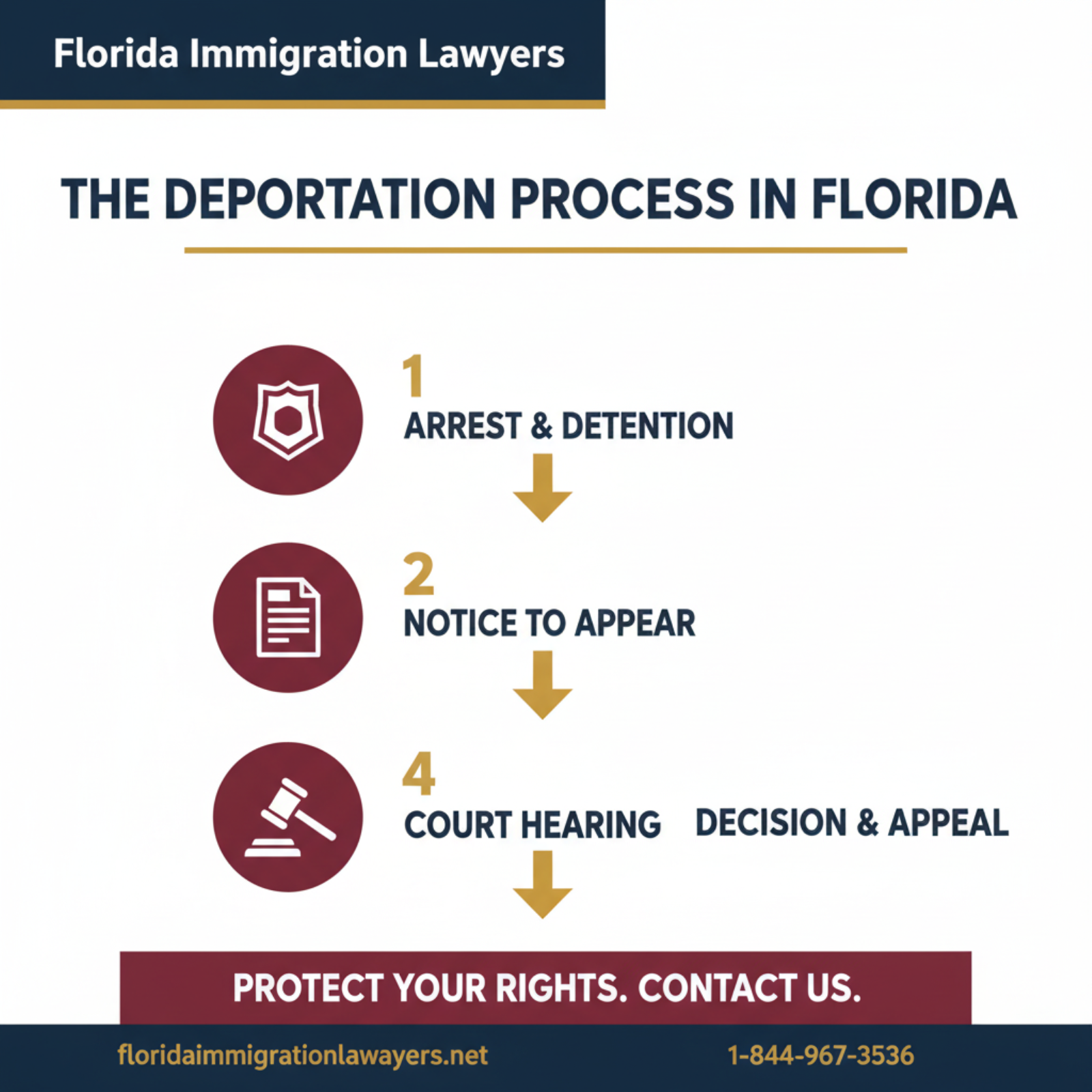
Facing deportation can feel overwhelming, but understanding the process can empower you. While the specifics of the Abrego Garcia deportation case had unique elements, the general steps for removal proceedings are consistent. Here is a typical overview of the deportation process in Florida:
- Issuance of a Notice to Appear (NTA): The process typically begins when U.S. Immigration and Customs Enforcement (ICE) issues a Form I-862, Notice to Appear. This document formally charges you with being removable from the United States and specifies the legal grounds for deportation. It will also indicate the time and place of your first hearing before an Immigration Judge. It is crucial to review this document carefully and understand the allegations.
- Master Calendar Hearing: Your first appearance before an Immigration Judge is usually a Master Calendar Hearing. This is a preliminary hearing where the judge confirms your identity, ensures you understand the charges, and asks you to state whether you admit or deny the allegations in the NTA. You will also have the opportunity to request a continuance to find legal counsel or to file applications for relief from removal.
- Pleading to the Charges and Designating Country of Removal: During the Master Calendar Hearing, you will formally respond to the charges. If you admit the factual allegations and concede removability, the judge will proceed to discuss forms of relief. If you deny the allegations or contest removability, the judge may schedule an Individual Hearing to hear evidence. You must also designate a country to which you would prefer to be removed if ordered deported.
- Applying for Relief from Removal: If you are found removable, you may be eligible to apply for various forms of relief from deportation. These can include asylum, withholding of removal, cancellation of removal, adjustment of status, or waivers. Each form of relief has specific eligibility requirements, and you must file the necessary application forms and supporting documentation within the judge's deadlines.
- Individual Hearing (Merits Hearing): If you apply for relief, the judge will schedule an Individual Hearing. This is a full evidentiary hearing where you and your attorney present your case, offer testimony, introduce evidence, and call witnesses. The government attorney (ICE counsel) will also present their case. This hearing is your opportunity to demonstrate why you should be allowed to remain in the U.S.
- Decision by the Immigration Judge: After considering all evidence and testimony, the Immigration Judge will issue a decision. The judge may grant your application for relief, deny it, or order you removed from the U.S. This decision can be delivered orally or issued in writing at a later date.
- Appeals Process: If either you or the government are dissatisfied with the Immigration Judge's decision, you generally have 30 days to file an appeal with the Board of Immigration Appeals (BIA). The BIA reviews the judge's decision for legal and factual errors. Further appeals can potentially be made to a U.S. Circuit Court of Appeals. Pursuing an appeal is a complex legal strategy that requires experienced counsel.
- Execution of Removal Order: If all appeals are exhausted or waived and an order of removal becomes final, ICE will execute the removal order. This involves physically removing the individual from the United States. There are specific procedures and regulations governing the execution of removal orders.
Essential Document Checklist for Deportation Defense
Preparing a robust defense against deportation, as highlighted by cases like the Abrego Garcia deportation, relies heavily on comprehensive documentation. Gathering the right evidence is critical for demonstrating your eligibility for relief or challenging the government's claims. While specific documents vary based on your case, here is a general checklist:
- Identification Documents: Passport, birth certificate, national identity cards, driver's license, or state ID.
- Immigration Documents: Any previous visas, I-94 records, green card (Form I-551), employment authorization documents (EAD), or prior immigration applications.
- Notice to Appear (NTA): The official document initiating your removal proceedings.
- Proof of Residence in the U.S.: Utility bills, lease agreements, property deeds, bank statements, or school records showing continuous presence.
- Evidence of Good Moral Character: Letters of support from community members, employers, religious leaders; proof of volunteer work; tax returns; police clearance certificates (if applicable).
- Financial Documents: Tax returns, pay stubs, bank statements, and proof of financial support for dependents.
- Family Information: Birth certificates of U.S. citizen or legal permanent resident (LPR) children, spouses, or parents; marriage certificates; divorce decrees.
- Medical Records: If you have severe health conditions or require specific medical care unavailable in your home country.
- Criminal Records (if any): Certified disposition of any arrests or convictions. It is crucial to disclose all criminal history to your attorney.
- Humanitarian or Asylum Claim Evidence: Affidavits from witnesses, country condition reports, news articles, photos, medical reports detailing persecution or torture.
- Evidence of Hardship: Documents demonstrating extreme and unusual hardship to qualifying relatives if you are deported. This might include medical records, psychological evaluations, school records, or financial dependency statements.
Organizing these documents meticulously will greatly assist your immigration lawyer in building a strong defense strategy.
Timeline and Processing Expectations for Deportation Cases in Florida
The timeline for deportation cases in Florida can vary significantly depending on several factors. These include the complexity of your case, the specific immigration court (e.g., Miami Immigration Court, Orlando Immigration Court), the judge's docket, and the type of relief you are seeking. The Abrego Garcia deportation case itself demonstrated how legal challenges can extend the timeline.
Initial Hearings typically begin a few weeks to several months after the NTA is issued. However, backlogs in Florida immigration courts can sometimes extend this wait. If an Individual Hearing is scheduled, it could be months or even over a year after your initial Master Calendar Hearing. Judges often schedule these hearings far in advance due to their heavy caseloads.
After an Individual Hearing, a judge may issue a decision immediately or take several weeks. If an appeal to the Board of Immigration Appeals (BIA) is filed, that process can take anywhere from several months to a year or more. Further appeals to the Circuit Courts of Appeals can add another year or two. It is important to remember that these are general estimates. An experienced Florida immigration lawyer can provide a more personalized assessment of your case's potential timeline and help manage expectations.
Cost Factors and Fee Breakdown in Deportation Defense
Navigating a deportation case involves various costs beyond legal fees. While it is impossible to provide exact figures, understanding the potential financial aspects is crucial. The investment in legal defense is often a necessary one to protect your future in Florida.
Attorney Fees and Filing Costs
Attorney fees are typically the largest component. Legal fees for deportation defense can vary widely based on the complexity of the case, the experience of the attorney, and the amount of work required. Some attorneys charge hourly rates, while others offer flat fees for specific stages. Government filing fees are required for various applications for relief from removal, set by USCIS and subject to change. Some individuals may be eligible for fee waivers based on their income.
Additional Expenses to Consider
Other costs include translation and interpretation fees if documents are not in English or if an interpreter is needed for court. In complex cases, expert witness fees for psychologists or country conditions experts may be necessary. There are also miscellaneous expenses like travel to court hearings or obtaining certified records. Florida Immigration Lawyers offers free consultations to discuss your case and provide a clear understanding of potential costs. Investing in quality legal representation can prevent more severe financial and personal consequences down the line.
The complexities of the immigration system, especially when facing a deportation order, can be overwhelming. Do not navigate this process alone. The stakes are incredibly high, impacting your life and the lives of your family in Florida. Contact Florida Immigration Lawyers today for dedicated support and skilled representation. Our team is ready to fight for your rights.
Common Mistakes to Avoid in Deportation Proceedings
The Abrego Garcia deportation case demonstrated that even seemingly minor issues can escalate into significant legal battles. Avoiding common pitfalls can dramatically improve your chances of a favorable outcome in Florida. Here are critical mistakes to steer clear of:
- Failing to Appear in Court: Missing a scheduled immigration court hearing is one of the most serious mistakes you can make. If you fail to appear, the Immigration Judge will likely issue an "in absentia" order of removal against you, making it much harder to reopen your case. Always confirm your hearing dates and times.
- Providing False Information: Lying or providing fraudulent documents to immigration authorities or the court can lead to severe penalties, including permanent bars from future immigration benefits and criminal charges. Always be truthful with your attorney and the court.
- Not Seeking Legal Counsel: Attempting to represent yourself in deportation proceedings, especially given the complexities of immigration law, is highly risky. An experienced immigration lawyer understands the law, court procedures, and available defenses.
- Missing Filing Deadlines: Immigration court proceedings have strict deadlines for filing applications and documents. Missing these deadlines can result in the denial of your applications for relief or even the dismissal of your case. Timely submission is key to a successful defense.
- Discussing Your Case with ICE Without an Attorney: Anything you say to an ICE agent can be used against you. If you are detained or questioned, politely state that you wish to speak with your attorney before answering any questions. Exercise your right to counsel.
- Not Understanding the Charges in Your NTA: It is crucial to fully comprehend why the government believes you are deportable. If you do not understand the allegations in your Notice to Appear, you cannot effectively prepare a defense. Your attorney will explain these to you thoroughly.
- Ignoring Changes of Address: If you move, you must notify the immigration court and USCIS of your new address within five days. Failure to do so can result in you missing important notices, including hearing dates, which can lead to an in absentia removal order.
- Failing to Gather Sufficient Evidence: A strong defense requires compelling evidence. Not providing enough documentation or not gathering the correct types of evidence can weaken your case significantly. Your attorney will guide you on what is needed to support your claims.
- Committing New Crimes: Any new arrests or criminal convictions while in removal proceedings can severely jeopardize your case. This can potentially disqualify you from certain forms of relief and make deportation more likely. Maintain a clean record.
- Underestimating the Seriousness of Your Case: Deportation is a life-altering event. Treating the proceedings lightly or failing to dedicate the necessary time and resources to your defense can have permanent, devastating consequences for you and your family. Take every step seriously.
When to Call a Lawyer for Abrego Garcia Deportation and Other Immigration Cases
The moment you receive a Notice to Appear or become aware of any immigration enforcement action against you, it is time to contact an attorney. The complexities highlighted by the Abrego Garcia deportation case underscore the immediate need for expert legal guidance. Florida Immigration Lawyers are prepared to assist you in various scenarios:
- You Receive a Notice to Appear (NTA): This is your official notification that the government believes you are removable. An attorney can help you understand the charges and prepare your defense from day one.
- You are Detained by ICE: If you or a loved one are taken into ICE custody, a lawyer can work to secure your release on bond and begin building your deportation defense.
- You Have a Criminal Record: Criminal convictions, even minor ones, can have significant immigration consequences. An attorney can assess the impact of your record and identify potential waivers or defenses.
- You Believe You Are Eligible for Relief: Whether it is asylum, cancellation of removal, or adjustment of status, an attorney can determine your eligibility and help you prepare and file the necessary applications.
- Your Case Involves Complex Legal Issues: If your situation involves intricate legal questions, previous immigration violations, or a history of multiple entries, the expertise of a lawyer is invaluable.
- You Need to File an Appeal: Appealing an adverse decision from an Immigration Judge or the BIA requires specialized knowledge of appellate procedures and legal arguments.
Do not wait until it is too late. Early intervention by an experienced Florida immigration lawyer can significantly improve your chances of success. We provide services across Florida, from Miami to Jacksonville, ensuring you have access to top-tier legal representation. For more information on specific defense strategies, visit our deportation defense page.
About Florida Immigration Lawyers
Florida Immigration Lawyers is a leading immigration law firm dedicated to serving individuals and families across the entire state of Florida. We understand the profound impact that immigration matters have on people's lives, and we are committed to providing compassionate, effective, and zealous legal representation. Our firm prides itself on its deep knowledge of U.S. immigration law and our unwavering commitment to our clients.
We offer a comprehensive range of immigration legal services, including:
- Deportation Defense (Learn more about our Deportation Defense services)
- Asylum and Refugee Claims (Explore Asylum options)
- Family-Based Immigration (Family Immigration solutions)
- Citizenship and Naturalization (Path to Citizenship)
- Business and Employment Immigration (Business Immigration services)
- Visa Applications and Adjustment of Status (General Immigration assistance)
Why choose Florida Immigration Lawyers? Our experienced attorneys are available 24/7 to provide immediate assistance. We offer free consultations to evaluate your case and discuss your options without financial obligation. Our firm has a proven track record of success in complex immigration cases, and we are dedicated to achieving the best possible outcome for you. We serve all of Florida, including Miami, Orlando, Tampa, and Jacksonville. Visit our website at https://www.floridaimmigrationlawyers.net or call us directly at 1-844-967-3536 to speak with a dedicated immigration attorney. You can also contact us through our online form or learn more about our attorneys.
Sources and References
- U.S. Citizenship and Immigration Services (USCIS)
- Executive Office for Immigration Review (EOIR)
- 8 U.S.C. Chapter 12 - Immigration and Nationality Act (INA)
- INA § 240, 8 U.S.C. § 1229a - Removal Proceedings
- 8 CFR Part 1003 - Executive Office for Immigration Review
- USCIS Policy Manual - Adjudicator's Field Manual
This article provides general legal information and is not intended as legal advice. Every case is unique, and outcomes depend on specific facts and circumstances. Contact an attorney for advice about your particular situation.
Facing the possibility of deportation is a serious challenge, but you do not have to face it alone. Florida Immigration Lawyers is here to provide the expert legal guidance and compassionate support you need. Protect your future and your family's well-being. Call us today at 1-844-967-3536 for a free consultation. Se Habla Español - Estamos aquí para ayudarle.
Frequently Asked Questions
Florida Immigration Lawyers
Legal Team
Our experienced attorneys at Florida Immigration Lawyers have been serving clients across Florida for over 20 years. We specialize in immigration, personal injury, criminal defense, workers compensation, and family law.