Exclusive Citizenship Act of 2025 Florida: What You Need to Know
Understand the Exclusive Citizenship Act of 2025 in Florida. Learn its potential impact on your immigration status. Contact Florida Immigration Lawyers for a free consultation.

Exclusive Citizenship Act of 2025 Florida: What You Need to Know
Florida has long been a state at the forefront of policy innovation, and the proposed Exclusive Citizenship Act of 2025 is no exception. This groundbreaking legislation, if enacted, could fundamentally reshape the landscape of immigration and residency within the Sunshine State. For individuals, families, and businesses, understanding the nuances of this Act is not just important—it's critical. This comprehensive guide aims to demystify the Act, explore its potential ramifications, and provide actionable insights for those who may be affected. Given the complex nature of immigration law and the potential for significant legal challenges, staying informed and seeking expert legal counsel is paramount.
Understanding the Exclusive Citizenship Act of 2025: Key Provisions and Intent
The Exclusive Citizenship Act of 2025 (ECA) is a proposed state-level statute in Florida that seeks to establish a distinct set of criteria for what the state defines as "exclusive citizenship" or "state-recognized residency." Unlike federal immigration laws, which govern entry, naturalization, and permanent residency in the United States, the ECA aims to create a parallel, state-specific framework. Proponents argue that the Act is designed to protect state resources, enhance public safety, and ensure that only individuals who meet stringent state-defined criteria can access certain state benefits, services, and even employment opportunities within Florida. The Act is expected to outline specific requirements that could include a combination of long-term physical presence, financial self-sufficiency, a clean criminal record within the state, and potentially even a demonstration of civic engagement or adherence to state-specific values. The implications of such an act are far-reaching, potentially creating a two-tiered system where individuals legally present in the U.S. under federal law might not qualify for "exclusive citizenship" in Florida, leading to significant disparities in access and rights within the state. This section will delve into the specific articles and clauses that define these new state-level requirements, examining how they might intersect or conflict with existing federal statutes. Understanding the intent behind the ECA, whether it's resource management, demographic control, or a broader political statement, is crucial for anticipating its practical effects and potential legal vulnerabilities. The Act's architects emphasize a desire for greater state autonomy in managing its population and resources, asserting a right to define who qualifies for full participation in Florida's society, independent of federal classifications.
This state-centric approach marks a significant departure from traditional immigration policy, where federal law typically reigns supreme. The Act's proponents often cite concerns over the strain on state infrastructure, educational systems, and healthcare services, arguing that a more selective approach to state residency is necessary for sustainable growth and resource management. They envision a Florida where state benefits are reserved for those who have demonstrated a long-term commitment and contribution to the state's economy and social fabric, moving beyond mere federal legal presence.
Critics, however, view the ECA as a thinly veiled attempt to create a hostile environment for certain populations, potentially leading to widespread discrimination and legal chaos. They contend that such an act would not only be unconstitutional but also economically detrimental, alienating a significant portion of Florida's workforce and consumer base. The debate surrounding the ECA is therefore not just legal, but deeply economic and social, reflecting broader ideological divides on immigration and state sovereignty.
Eligibility Criteria and Restrictions Under the ECA
The proposed Act is expected to introduce a rigorous set of eligibility criteria that could significantly restrict access to state-level benefits and protections. While the precise details are still under legislative discussion, early drafts suggest requirements such as a minimum of five years of continuous residency in Florida, proof of employment or financial independence, a comprehensive background check covering state and local criminal records, and potentially even a civics test focused on Florida's history and governance. Crucially, the Act may also impose restrictions on individuals who have previously accessed certain public assistance programs or who have any history of minor infractions that would not typically impact federal immigration status. These restrictions could create a complex maze for many long-term residents, including those who are otherwise legally present in the United States under federal law, such as green card holders or individuals with valid work visas. The Act's focus on "exclusive" citizenship implies a higher bar than mere legal presence, aiming to differentiate between federal immigration status and state-sanctioned belonging. Navigating these new criteria will require careful attention to detail and a thorough understanding of one's personal circumstances.
Consider a scenario where a long-term Florida resident, a lawful permanent resident for fifteen years, previously received temporary SNAP benefits during a period of unemployment. Under the ECA, this past assistance could potentially disqualify them from achieving 'exclusive citizenship,' even if they are now financially stable and employed. Similarly, a student on an F-1 visa, despite contributing to Florida's academic landscape for years, might find their path to state-recognized residency blocked due to their temporary federal status, regardless of their intent to remain and contribute post-graduation.
These stringent requirements highlight the Act's intent to establish a distinct class of residents, separate from those recognized solely by federal immigration law. It means individuals must not only maintain their federal legal status but also proactively meet and continually demonstrate adherence to Florida's unique criteria. Preparing for such an environment will necessitate meticulous record-keeping and a proactive understanding of how every aspect of one's life, from employment history to public assistance usage, could be scrutinized under the new state framework.
Impact on Current Immigration Pathways and Federal Preemption
One of the most contentious aspects of the Exclusive Citizenship Act is its potential conflict with established federal immigration law. The U.S. Constitution grants the federal government primary authority over immigration. Therefore, any state law that attempts to create its own "citizenship" or significantly alter the rights of federally recognized immigrants within its borders is likely to face immediate legal challenges based on the doctrine of federal preemption. The Act could potentially invalidate or undermine federal immigration statuses such as Permanent Resident (Green Card) status, asylum seeker status, or even certain non-immigrant visas, at least within the state of Florida. For example, an individual granted asylum by the federal government might find their access to state-funded healthcare or education restricted under the ECA. Similarly, those on H-1B visas might face new hurdles in obtaining state professional licenses. This tension between state and federal authority creates a highly uncertain environment for immigrants and legal residents alike. The Act's proponents argue that it addresses state-specific issues that federal law does not adequately cover, while opponents contend it is an unconstitutional overreach. The legal battles surrounding this Act are expected to be protracted and could ultimately reach the U.S. Supreme Court, significantly impacting how states can legislate on matters touching immigration. For detailed information on federal immigration processes, individuals can refer to official resources like uscis.gov.
For instance, an engineer holding an H-1B visa, who has lived and worked in Florida for several years, might suddenly find their professional license renewal jeopardized if the state requires 'exclusive citizenship' for certain regulated professions. This could force skilled workers to leave the state, impacting Florida's economy and innovation sectors. The uncertainty generated by such a conflict could deter future immigrants and even current federal legal residents from settling or remaining in Florida, preferring states with clearer and less restrictive policies regarding their rights and access to services.
Potential Legal Challenges and Constitutional Implications
The Exclusive Citizenship Act of 2025 is poised to ignite a firestorm of legal challenges, primarily centered on its constitutionality and its conflict with federal law. The Supremacy Clause of the U.S. Constitution generally dictates that federal laws are supreme to state laws when there is a direct conflict. Immigration law has historically been an area of federal dominance. Legal experts anticipate challenges from civil rights organizations, immigrant advocacy groups, and potentially even the federal government itself. Arguments will likely focus on federal preemption, equal protection under the Fourteenth Amendment, and due process concerns. The Act could be challenged for creating a discriminatory classification of residents, denying rights and privileges based on a state-defined status that contradicts federal classifications. Furthermore, questions will arise regarding the state's authority to define "citizenship" or "residency" in a manner that effectively creates a separate class of individuals who, despite being legally present in the U.S., are treated as second-class residents within Florida. The outcome of these legal battles will not only determine the fate of the ECA but could also set a significant precedent for states attempting to exert greater control over immigration-related matters. Understanding these legal underpinnings is crucial for anyone seeking to challenge or navigate the Act. For insights into federal legal proceedings and the Department of Justice's role, visit justice.gov.
One of the most prominent legal arguments against the ECA will undoubtedly invoke the Equal Protection Clause of the Fourteenth Amendment. This clause mandates that states cannot deny any person within their jurisdiction the equal protection of the laws. By creating a two-tiered system of residents—those with 'exclusive citizenship' and those without, despite both groups potentially being federally authorized to reside in the U.S.—the Act could be seen as creating arbitrary and discriminatory classifications. Such a classification might be subject to strict judicial scrutiny, requiring the state to demonstrate a compelling government interest and that the law is narrowly tailored to achieve that interest.
Further challenges could arise under the Due Process Clause, arguing that the Act deprives individuals of fundamental rights, such as the right to work or access essential services, without adequate procedural safeguards or a legitimate governmental purpose. The process for applying for or being denied 'exclusive citizenship' would also face scrutiny to ensure it provides fair notice and opportunity to be heard. Historically, federal courts have been wary of state attempts to regulate immigration in ways that impinge upon federally recognized statuses or create undue burdens on specific populations.
The legal battle over the ECA will not be a swift one. It is likely to involve multiple injunctions, appeals, and could ultimately culminate in a landmark Supreme Court decision, similar to Arizona v. United States (2012), which struck down several provisions of Arizona's state immigration law. The precedent set by the ECA's fate will have profound implications for the balance of power between state and federal governments on immigration matters across the entire nation. Individuals concerned about these complex legal issues should consult with experienced Florida Immigration Lawyers to understand their rights and potential legal avenues.
Federal Preemption and State Authority in Immigration
The principle of federal preemption is a cornerstone of American constitutional law, ensuring that states do not undermine or contradict federal statutes and policies. In the realm of immigration, this principle has been consistently upheld by the Supreme Court, affirming the federal government's broad and exclusive authority. The Exclusive Citizenship Act, by attempting to define a state-specific "citizenship" and impose restrictions on individuals based on criteria that may conflict with federal immigration statuses, directly challenges this established legal framework. States have traditionally been limited to enacting laws that have an "indirect or peripheral" effect on immigration, such as regulating employment practices to prevent the hiring of undocumented workers, rather than creating their own immigration classifications. The ECA, however, appears to venture into the core area of defining who belongs and what rights they possess within the state, a domain traditionally reserved for federal legislation. This direct confrontation with federal authority will be the primary battleground for legal challenges, with opponents arguing that Florida is attempting to legislate in an area where it lacks constitutional power. The implications extend beyond Florida, as other states might follow suit if the ECA withstands judicial scrutiny, leading to a fragmented and chaotic national immigration system.
Past Supreme Court cases, such as Plyler v. Doe (1982), have affirmed certain rights for individuals regardless of their immigration status, particularly regarding access to public education. While Plyler dealt with undocumented children, the principle that states cannot create a separate, inferior class of residents without compelling justification and federal alignment remains a powerful legal precedent. The ECA's attempt to redefine who qualifies for state-level benefits and protections directly confronts this established jurisprudence, making its legal standing highly precarious.
The potential for a patchwork of state-specific 'citizenship' laws across the U.S. would create an administrative nightmare and significant confusion for individuals and businesses alike. Imagine a lawful permanent resident moving from Florida to Georgia, only to find that Georgia has its own, different set of 'exclusive citizenship' criteria. This fragmentation would undermine the uniformity and predictability that federal immigration law aims to provide, hindering interstate commerce and the free movement of people within the nation. The federal government, through the Department of Justice, would likely view such state-level overreach as a direct challenge to its constitutional mandate.
Who is Affected by the Exclusive Citizenship Act?
The reach of the Exclusive Citizenship Act is broad and could impact a diverse range of individuals residing in Florida. Primarily, it targets non-U.S. citizens, including lawful permanent residents (Green Card holders), individuals with various non-immigrant visas (such as H-1B, L-1, F-1 students), asylum seekers, refugees, and even those with Temporary Protected Status (TPS). While U.S. citizens by birth or naturalization would not be directly affected in terms of their federal citizenship, the Act could indirectly impact their families if spouses or children fall into the affected categories. For example, a U.S. citizen married to a lawful permanent resident who doesn't meet the ECA's criteria might find their spouse unable to access certain state benefits or employment opportunities. Businesses that employ a diverse workforce could also face new compliance burdens and potential legal liabilities if they are required to verify "exclusive citizenship" status for state-
Beyond the direct impact on individuals' status, the ECA could create significant ripple effects across Florida's economy and social fabric. For instance, a small business owner who relies on a diverse workforce, including many H-2B visa holders for seasonal labor or L-1 visa holders for specialized management, might face new bureaucratic hurdles and potential fines if their employees do not meet the state's 'exclusive citizenship' requirements. This could lead to labor shortages, increased operational costs, and a less competitive business environment.
Families with mixed immigration statuses will also bear a heavy burden. Consider a U.S. citizen parent whose child, born abroad, is a lawful permanent resident but has not yet met Florida's specific residency duration or financial independence criteria. That child might be denied access to state university scholarships or certain state-funded healthcare programs, creating immense stress and potential financial hardship for the entire family. Such scenarios highlight how the Act could inadvertently penalize U.S. citizens through its impact on their family members.
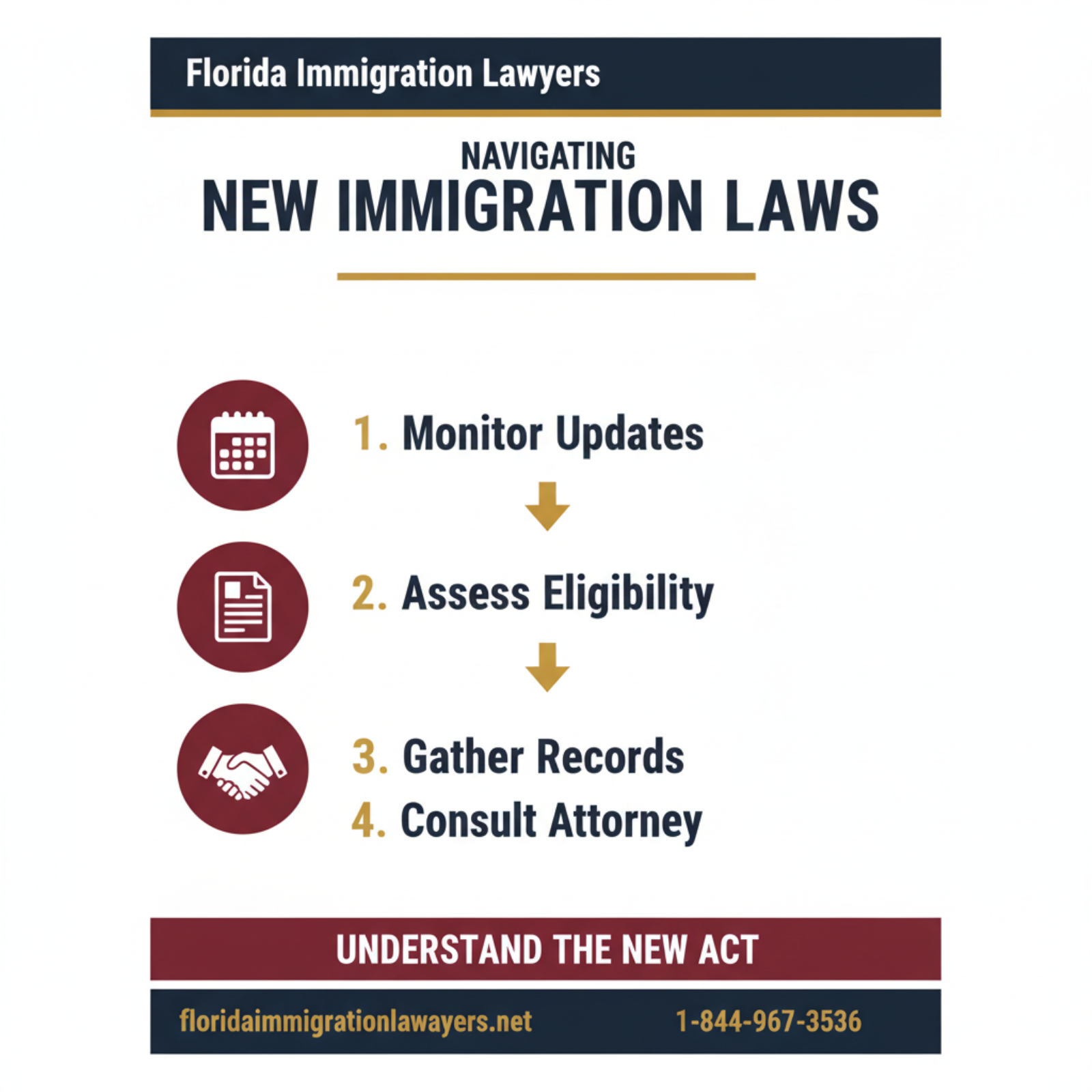

Even individuals who believe they are securely positioned under federal law should not assume immunity. The Act's broad scope and potential for evolving interpretations mean that a proactive approach is essential. Keeping meticulous records of residency, employment, and financial stability, as well as staying informed about legislative developments, will be critical. For personalized guidance and to understand how the ECA might specifically impact your unique situation, it is highly advisable to consult with experienced Florida Immigration Lawyers. They can provide tailored advice and help you navigate these complex legal waters. You can reach them at 1-844-967-3536 for a consultation.
Frequently Asked Questions
Florida Immigration Lawyers
Legal Team
Our experienced attorneys at Florida Immigration Lawyers have been serving clients across Florida for over 20 years. We specialize in immigration, personal injury, criminal defense, workers compensation, and family law.