TPS Honduras Extension 2026: Florida Immigrants Guide
For Honduran nationals in Florida, the TPS Honduras Extension 2026 demands urgent attention. This guide details the crucial re-registration process, document requirements, and key deadlines to protect your status and work authorization. Due to ongoing litigation, TPS for Honduras has been extended, impacting thousands of individuals across Florida. Missing the re-registration window can lead to severe consequences, including loss of protection and potential deportation. Learn how to navigate these complexities and avoid common mistakes. Florida Immigration Lawyers offers expert guidance to ensure your application is accurate and timely. Contact us for a free consultation to secure your future.
The Temporary Protected Status (TPS) for Honduras has been extended, allowing eligible Honduran nationals in Florida to maintain their protected status through at least June 30, 2024, with associated Employment Authorization Documents (EADs) automatically extended. Re-registration for the **TPS Honduras extension 2026** is crucial to avoid loss of status and work authorization. This article provides essential steps and information for beneficiaries in Florida.
- Re-registration is mandatory to maintain TPS benefits.
- Deadlines are critical for submitting your application.
- Gather all necessary documents, including identity and residency proof.
- Consulting an experienced Florida immigration lawyer is highly recommended.
- Failure to re-register can lead to loss of status and potential deportation.
For many Honduran nationals residing in Florida, the news of the **TPS Honduras extension 2026** brings both relief and a call to action. Temporary Protected Status offers a vital lifeline, protecting individuals from deportation and allowing them to work legally in the United States. However, this protection is not automatic or permanent; it requires diligent re-registration.
If you are a TPS beneficiary from Honduras living anywhere in Florida, including Tampa, Orlando, Miami, or Jacksonville, understanding the specifics of this extension is paramount. This comprehensive guide from Florida Immigration Lawyers will walk you through the re-registration process, document requirements, and critical timelines to ensure your continued protection. Do not risk your status by missing crucial steps or deadlines.
We understand the complexities and anxieties that come with immigration processes. Our goal is to provide clear, actionable information to help you navigate this period successfully. For personalized guidance and to ensure your application is handled correctly, we urge you to **call Florida Immigration Lawyers at 1-844-967-3536 for a free consultation** today. Our dedicated team is ready to assist you.
Understanding TPS Honduras Extension 2026 in Florida
Temporary Protected Status (TPS) is a humanitarian immigration benefit granted by the U.S. government to eligible nationals of designated countries experiencing conditions that make it unsafe for their citizens to return home. These conditions can include armed conflict, environmental disaster, or other extraordinary and temporary circumstances. For Honduras, TPS was initially designated in 1999 following Hurricane Mitch.
The designation for Honduras has seen several extensions over the years. Most recently, due to ongoing litigation (primarily the *Ramos v. Mayorkas* injunction, also known as *Ramos v. Nielsen*), the termination of TPS for Honduras has been enjoined, effectively extending the validity of TPS for eligible Hondurans. This means that beneficiaries who previously held TPS are generally eligible to maintain their status, provided they re-register correctly and on time. The current framework extends protections through at least June 30, 2024, with associated work permits extended further, impacting eligibility and re-registration processes well into 2026.
Who is Eligible for TPS Honduras?
To be eligible for the **TPS Honduras extension 2026**, individuals must generally meet several criteria. You must be a national of Honduras, or a person without nationality who last habitually resided in Honduras. You must have been continuously residing in the United States since the initial designation date, and continuously physically present since a specified date.
Furthermore, you must not have been convicted of any felony or two or more misdemeanors committed in the United States. Certain other inadmissibility grounds can also make you ineligible. It is crucial to review the latest Federal Register notices issued by the Department of Homeland Security (DHS) for the most accurate and up-to-date eligibility requirements. Consulting with a Florida immigration lawyer can help you determine your specific eligibility.
Importance of Timely Re-registration
The re-registration period for TPS is not merely a formality; it is a mandatory step to maintain your protected status and associated benefits, such as employment authorization. Missing the re-registration deadline can lead to the loss of your TPS status, making you vulnerable to removal proceedings and losing your right to work legally.
For Honduran nationals in Florida, especially in areas with large immigrant communities like Miami-Dade, Broward, and Hillsborough counties, understanding and adhering to these deadlines is critical. USCIS typically announces specific re-registration periods through Federal Register notices. These periods are often limited, making prompt action essential. An experienced attorney from Florida Immigration Lawyers can help you stay informed about these vital deadlines and ensure your application is submitted on time.
Step-by-Step Guide to Re-registering for TPS Honduras
Re-registering for **TPS Honduras extension 2026** involves several key steps. Following this guide carefully will help ensure a smooth process. Remember that each case is unique, and legal advice is always recommended.
-
Review the Latest Federal Register Notice: Always start by checking the most recent official announcements from USCIS and the Department of Homeland Security. These notices provide the exact re-registration period, specific forms required, and any updated eligibility criteria. You can typically find these on the USCIS website.
-
Complete Required Forms: The primary forms for TPS re-registration are Form I-821, Application for Temporary Protected Status, and Form I-765, Application for Employment Authorization (if you wish to obtain or renew an EAD). If you are applying for an EAD, you must also submit Form I-765. Ensure all sections are filled out accurately and completely. Any errors or omissions can cause delays or even rejection.
-
Gather Supporting Documentation: You will need to provide evidence of your identity, nationality, and continuous residence and physical presence in the U.S. since the specified dates. This includes your passport, birth certificate, previous TPS approval notices, and various utility bills, school records, or medical records from Florida that demonstrate your continuous presence. A detailed list is provided in the next section.
-
Pay Required Fees (or Request a Fee Waiver): There are typically fees associated with Form I-821 and Form I-765. Check the USCIS website for current fee amounts, as they can change. If you cannot afford the fees, you may be eligible to apply for a fee waiver by submitting Form I-912, Request for Fee Waiver. Providing sufficient evidence of your inability to pay is crucial for a successful waiver request.
-
Submit Your Application Package: Mail your completed forms, supporting documents, and fees (or fee waiver request) to the designated USCIS Lockbox facility. The mailing address will be specified in the Federal Register notice or on the USCIS website. Make sure to keep copies of everything you submit for your records. Sending your application via certified mail with a return receipt can provide proof of delivery.
-
Attend Biometrics Appointment: After USCIS receives your application, you will typically receive a notice to attend a biometrics appointment at an Application Support Center (ASC). This appointment is mandatory for fingerprinting and photographs. Failing to attend can lead to denial of your application. Be sure to bring the appointment notice and a valid photo ID.
-
Monitor Your Case Status: You can check the status of your application online using the receipt number provided by USCIS. Be prepared for potential processing delays. If USCIS needs more information, they will send a Request for Evidence (RFE). Respond promptly and thoroughly to any RFEs to avoid further delays or denial.
Essential Documents for Your TPS Honduras Re-registration
Gathering the correct documents is a critical part of the **TPS Honduras renewal** process. A complete and accurate submission can prevent delays and RFEs. Here is a general checklist of documents you will likely need:
- Form I-821, Application for Temporary Protected Status
- Form I-765, Application for Employment Authorization (if desired)
- Form I-912, Request for Fee Waiver (if applicable)
- Two passport-style photos
- Proof of identity and nationality (e.g., copy of Honduran passport, birth certificate with photo ID)
- Proof of continuous residence in the U.S. since the specified date (e.g., utility bills, rent receipts, school records, medical records, employment records, bank statements, tax returns, dated letters from churches or other organizations in Florida). These documents should cover the entire period from the designated date to the present.
- Proof of continuous physical presence in the U.S. since the specified date (often the same documents as continuous residence)
- Copy of your most recent Form I-797, Approval Notice for TPS, or other evidence of prior TPS grants
- Copy of your most recent EAD (if applicable)
- Court dispositions for any arrests or criminal charges, even if dismissed
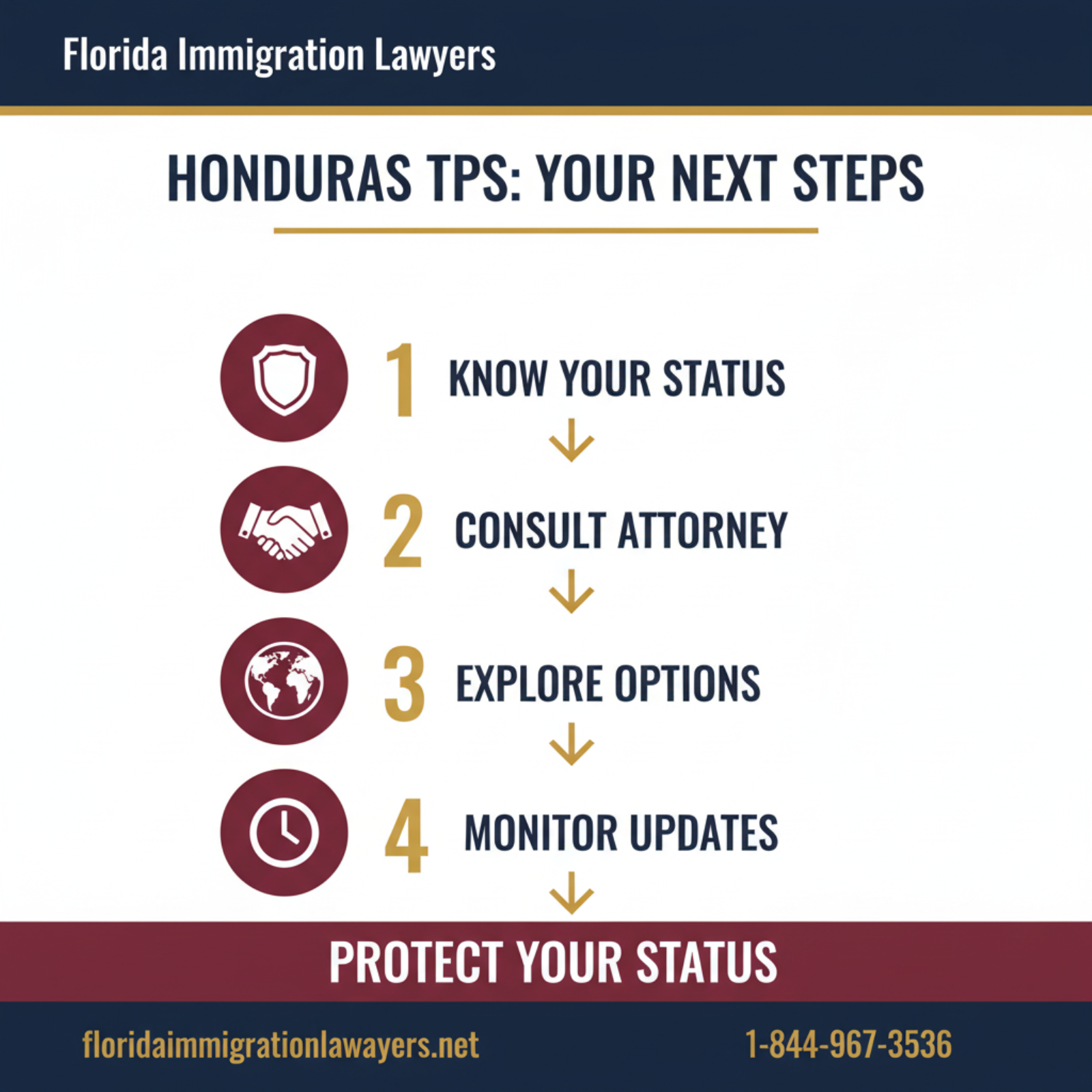
Remember to submit copies of your documents, not originals, unless specifically requested by USCIS. Organizing your documents clearly, perhaps with tabs or labels, can also aid in efficient processing. A Florida immigration lawyer can help you compile a robust application package.
Navigating the TPS Honduras Processing Timeline and Expectations
The processing times for **USCIS TPS Honduras** applications can vary significantly. While USCIS strives for efficiency, factors such as the volume of applications, staffing levels, and the complexity of individual cases can influence how long it takes to receive a decision. It is important to set realistic expectations and plan accordingly.
Typically, after submitting your re-registration package, you can expect to receive a receipt notice within a few weeks. The biometrics appointment usually follows within one to three months. The final decision on your TPS re-registration and EAD can take several months, sometimes up to a year or more. USCIS often provides automatic extensions for EADs for TPS beneficiaries, especially during re-registration periods, to prevent gaps in employment authorization. Always check the latest Federal Register notices and USCIS website for current automatic EAD extension dates.
It is wise to re-register as early as possible within the designated window. This proactive approach helps mitigate stress and potential issues with work authorization. If you have an expiring EAD and have re-registered, keep proof of your timely re-registration and the Federal Register notice announcing the automatic extension. This documentation can be presented to your employer to demonstrate your continued work authorization.
Do not navigate this process alone. The stakes are too high. **Contact Florida Immigration Lawyers today** to secure your future and protect your status. Our experienced team is ready to provide the dedicated support you deserve.
Understanding TPS Honduras Application Costs and Fees
Applying for the **TPS Honduras extension 2026** involves certain government filing fees. These fees are set by USCIS and are subject to change, so it is crucial to check the most current fee schedule on the USCIS website before submitting your application. Generally, there are fees for filing Form I-821 (Application for Temporary Protected Status) and Form I-765 (Application for Employment Authorization).
For re-registrants, the fee for Form I-821 is often waived. However, if you are also applying for an Employment Authorization Document (EAD) using Form I-765, there will typically be a fee for that. Additionally, a biometrics services fee is usually required for all applicants, regardless of age, unless a fee waiver is granted. It is essential to include the correct payment amount with your application, or a properly filed Form I-912, Request for Fee Waiver.
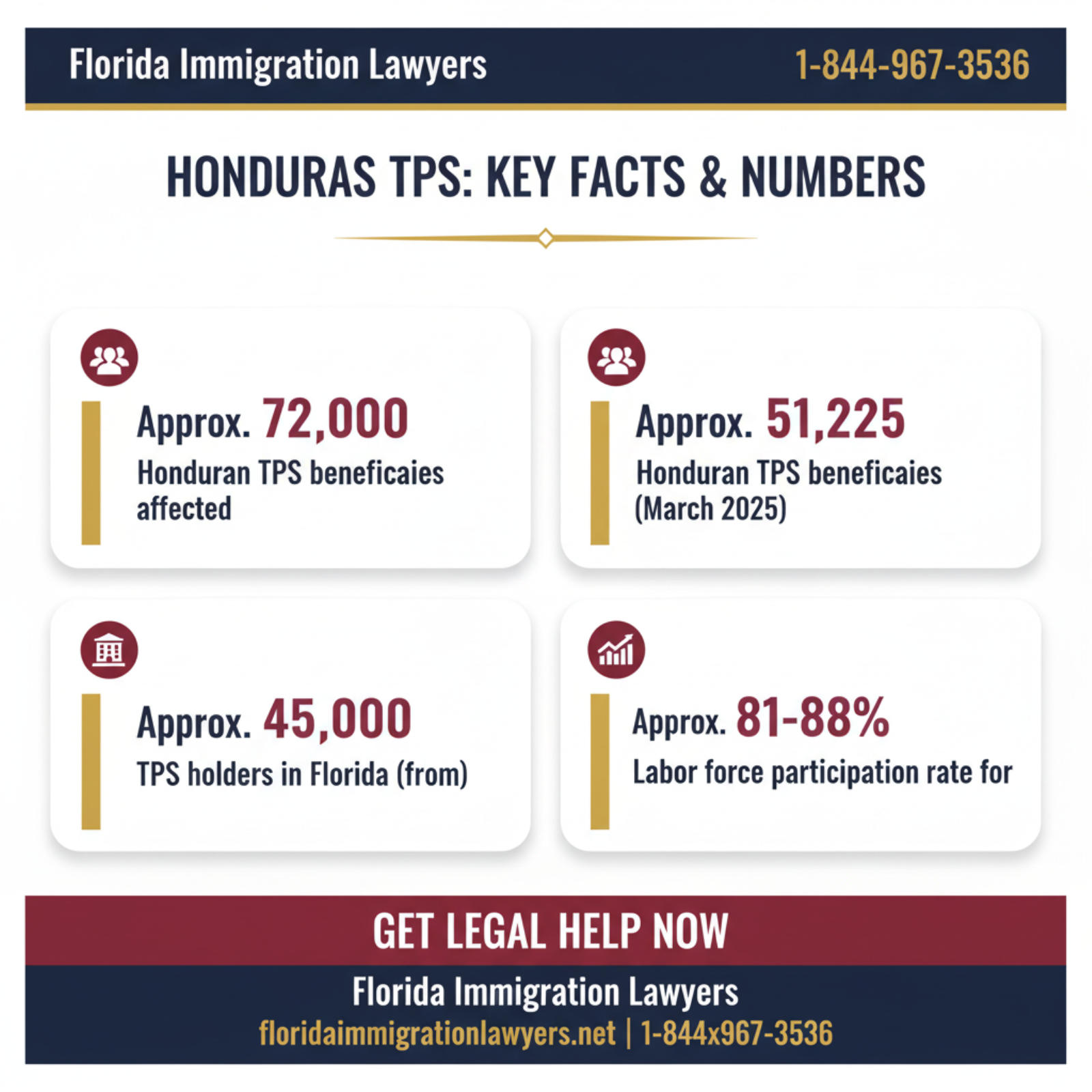
Failure to include the correct fees or a valid fee waiver request will result in your application being rejected and returned. This can cause significant delays and potentially lead to missing the re-registration deadline. If you are experiencing financial hardship, explore the option of a fee waiver. Eligibility for a fee waiver depends on your household income and public benefits received. An immigration lawyer in Florida can help you assess your eligibility for fee waivers and ensure all payments are handled correctly.
Common Mistakes to Avoid During TPS Honduras Re-registration
Re-registering for **TPS Honduras extension 2026** can be complex, and even small errors can have significant consequences. Avoiding these common mistakes is crucial for a successful application:
-
Missing the Re-registration Deadline: This is perhaps the most critical mistake. USCIS sets specific windows for re-registration, and failing to submit your application within this period can lead to the loss of your TPS status and work authorization. Always check the latest Federal Register notices for precise dates.
-
Incomplete or Inaccurate Forms: Any missing information, incorrect dates, or unanswered questions on Form I-821 or Form I-765 can cause delays or outright rejection. Double-check every field for accuracy and completeness before submission.
-
Insufficient Supporting Documentation: Not providing enough evidence of identity, nationality, or continuous residence and physical presence is a common pitfall. Ensure you have a wide range of documents covering the entire required period. Gaps in documentation can lead to RFEs.
-
Incorrect Fees or Missing Fee Waiver: Submitting the wrong payment amount or failing to include a properly completed Form I-912 when requesting a fee waiver will cause your application to be returned. Always verify current fees on the USCIS website.
-
Failing to Attend Biometrics Appointment: If you receive a biometrics appointment notice, it is mandatory to attend. Missing this appointment without rescheduling can lead to the denial of your application. Respond promptly to all USCIS notices.
-
Not Disclosing Criminal History: Even minor arrests or charges, even if dismissed, must be disclosed. Failing to do so can be considered misrepresentation and lead to severe immigration consequences, including inadmissibility and denial of TPS.
-
Submitting Original Documents: Unless specifically requested, always send copies of your supporting documents, not originals. USCIS is not responsible for returning original documents, which could be vital for other purposes.
-
Ignoring Requests for Evidence (RFEs): If USCIS sends an RFE, it means they need more information. Failing to respond fully and on time will almost certainly lead to a denial. Seek legal help to craft a thorough response.
-
Assuming Automatic Renewal of EAD: While EADs are often automatically extended during re-registration, you must confirm the specific dates and conditions. Do not assume your EAD is valid indefinitely without official notification.
-
Not Seeking Legal Counsel for Complex Cases: If you have a criminal record, previous immigration violations, or a complicated travel history, attempting to re-register without legal guidance is risky. These factors can complicate your eligibility.
When to Seek Legal Counsel for Your TPS Honduras Case
While this guide provides general information, the complexities of immigration law mean that individual circumstances can significantly impact your **TPS Honduras extension 2026** application. Knowing when to consult an experienced Florida immigration lawyer can make all the difference between approval and denial.
You should strongly consider contacting Florida Immigration Lawyers if any of the following scenarios apply to you: you have any criminal history, no matter how minor or old; you have previous immigration violations, such as an order of deportation or removal; you have traveled outside the U.S. after your initial TPS grant; you are unsure about your continuous residence or continuous physical presence dates; you have received a Request for Evidence (RFE) or a Notice of Intent to Deny (NOID) from USCIS; or if you simply feel overwhelmed by the process and want to ensure everything is done correctly.
Our attorneys at Florida Immigration Lawyers are well-versed in TPS regulations and the specific nuances of the *Ramos* litigation and subsequent Federal Register notices affecting Honduran nationals. We can help you gather the necessary documentation, accurately complete your forms, prepare compelling fee waiver requests, and respond effectively to any USCIS inquiries. Protecting your status and your ability to live and work in Florida is our priority. Can people with TPS still get deported? Yes, if they commit certain crimes or violate other immigration laws, even with TPS. This is why legal counsel is so critical.
About Florida Immigration Lawyers
Florida Immigration Lawyers is a leading immigration law firm dedicated to serving individuals and families across the entire state of Florida. With a deep understanding of U.S. immigration laws and a compassionate approach, we provide comprehensive legal services to help our clients achieve their immigration goals.
Our experienced attorneys specialize in a wide range of immigration matters, including Temporary Protected Status, asylum applications, deportation defense, citizenship, family-based visas, and business immigration. We are committed to providing personalized attention, strategic advice, and vigorous representation to every client.
Choosing Florida Immigration Lawyers means choosing a firm that puts your needs first. We pride ourselves on our accessibility, offering free consultations and being available 24/7 to answer your urgent questions. Our bilingual staff ensures that language is never a barrier to receiving quality legal assistance. Whether you are in Tampa, Miami, Orlando, or anywhere else in Florida, we are here to fight for your rights and guide you through every step of your immigration journey. Visit our attorneys page to learn more about our team, or contact us directly.
Sources and References
- U.S. Citizenship and Immigration Services (USCIS) - Temporary Protected Status
- Executive Office for Immigration Review (EOIR)
- 8 U.S.C. § 1254a - Temporary Protected Status
- 8 CFR Part 244 - Temporary Protected Status
- Federal Register Notices regarding TPS for Honduras (e.g., 86 FR 50720, 89 FR 15616)
- *Ramos v. Mayorkas* (formerly *Ramos v. Nielsen*) injunctions and related court orders
This article provides general legal information and is not intended as legal advice. Every case is unique, and outcomes depend on specific facts and circumstances. Contact an attorney for advice about your particular situation. Immigration laws are subject to change.
The **TPS Honduras extension 2026** offers a critical opportunity for eligible individuals to maintain their legal status and work authorization in Florida. Do not let this chance pass you by due to confusion or missed deadlines. Our dedicated team at Florida Immigration Lawyers is here to provide the expert legal guidance you need.
Ensure your future is secure. **Call Florida Immigration Lawyers today for a free consultation at 1-844-967-3536.** Se Habla Español - Estamos aquí para ayudarle.
Frequently Asked Questions
Florida Immigration Lawyers
Legal Team
Our experienced attorneys at Florida Immigration Lawyers have been serving clients across Florida for over 20 years. We specialize in immigration, personal injury, criminal defense, workers compensation, and family law.