Immigration Rights in Florida: Know Your Legal Protections with ICE
For immigrants in Florida, understanding your rights when interacting with ICE is essential. This guide covers your right to remain silent, the need for a judicial warrant to enter your home, and the right to an attorney. Learn how to protect yourself, what documents to carry, and common mistakes to avoid. If you're in West Palm Beach, Miami, or anywhere in Florida, knowing your legal protections is paramount. Florida Immigration Lawyers offers free consultations to help you navigate these critical situations and safeguard your future.
Knowing your immigration rights in Florida is crucial for protecting yourself and your family. All individuals in the U.S., regardless of immigration status, possess certain constitutional protections, especially when interacting with law enforcement like ICE. These include the right to remain silent, the right to an attorney, and the right to refuse searches without a warrant. Understanding these rights empowers you to navigate complex situations effectively and lawfully.
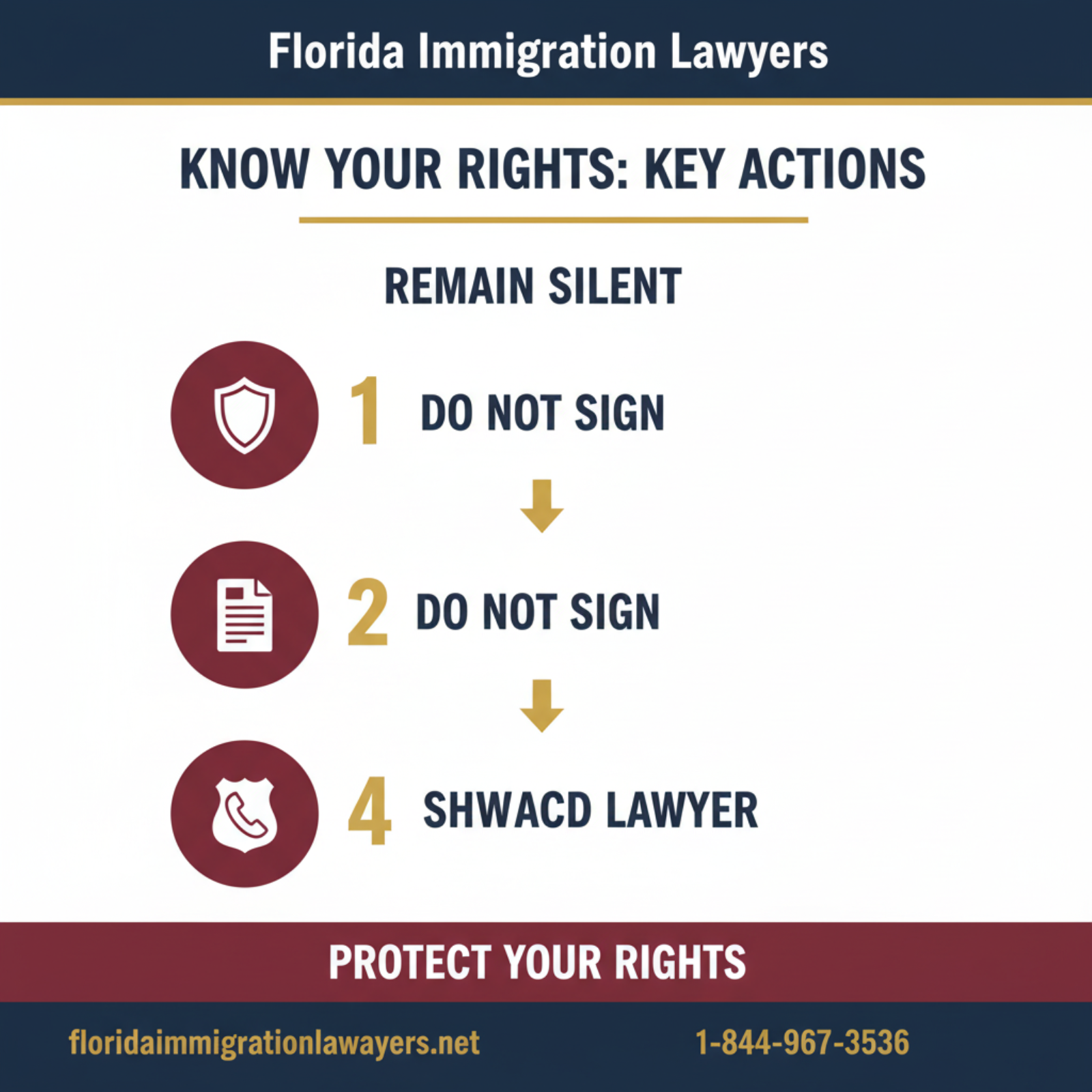
- You have the right to remain silent.
- You have the right to speak with an attorney.
- Do not open your door to ICE without a warrant.
- Do not sign anything without consulting a lawyer.
- Carry a 'Know Your Rights' card.
Immigration Rights in Florida: Know Your Legal Protections with ICE
Navigating the complexities of immigration law in Florida can be incredibly challenging and often frightening. For many, the prospect of interacting with U.S. Immigration and Customs Enforcement (ICE) agents creates significant anxiety. Understanding your immigration rights is not just a legal formality; it is an essential tool for your protection and peace of mind.
Whether you reside in West Palm Beach, Miami, Orlando, or anywhere else in the Sunshine State, knowing your legal protections empowers you. This comprehensive guide will walk you through your fundamental rights, explain how to interact with ICE, and provide crucial information to help you safeguard your future.
Our goal at Florida Immigration Lawyers is to ensure you are well-informed and prepared. We believe that everyone deserves to understand their legal standing and have access to expert legal counsel when needed. Call Florida Immigration Lawyers at 1-844-967-3536 for a free consultation and let us help you understand your options.
Understanding Your Immigration Rights in Florida
Florida is home to a diverse immigrant population, making it vital for individuals and families to be aware of their know your rights Florida protections. These rights stem from the U.S. Constitution and federal immigration laws, applying to all persons within U.S. borders, regardless of their immigration status.
It's important to remember that while immigration agents have specific authorities, these powers are not limitless. You retain fundamental constitutional protections that cannot be violated. Knowing these protections can make a significant difference in how an interaction with ICE unfolds.
Your Right to Remain Silent
The Fifth Amendment to the U.S. Constitution grants everyone the right to remain silent. This means you are not required to answer questions about your citizenship, immigration status, or any other personal information when questioned by ICE agents or other law enforcement.
You can simply state, "I wish to remain silent." Anything you say can be used against you in immigration or criminal proceedings. It is always safest to exercise this right, especially without legal counsel present.
Right to an Attorney
You have the right to speak with an attorney before answering any questions. If you are detained, you should immediately request to speak with a lawyer. ICE agents are required to provide you with access to legal counsel upon request.
Do not sign any documents presented by ICE without first understanding them and consulting with an attorney. These documents can have serious and lasting consequences for your immigration status.
Do Not Open Your Door Without a Warrant
ICE agents generally cannot enter your home without a warrant signed by a judge. This warrant must specifically name you or your address. If agents are at your door, ask them to slide the warrant under the door or hold it up to a window for you to inspect.
A warrant for arrest (Form I-200) or a warrant for deportation (Form I-205) issued by an immigration officer is not the same as a judicial warrant. You are not required to open your door for these administrative warrants. If agents do not have a judicial warrant, you can keep your door closed.
Right to Refuse Searches
You have the right to refuse a search of your person, belongings, or home without a warrant or your consent. Do not consent to any searches. Clearly state, "I do not consent to this search."
If agents claim to have a warrant, inspect it carefully. Ensure it is a judicial warrant, signed by a judge, and specifies the place to be searched and the items to be seized. An administrative warrant from ICE does not authorize a search of your home without your consent.
Interacting with ICE: A Step-by-Step Guide for Immigrants in Florida
Knowing your ICE legal rights is crucial for protecting yourself during an encounter with immigration agents. These steps provide a clear framework for how to respond if you are approached by ICE in Florida.
-
Remain Calm and Silent: If ICE agents approach you, try to remain calm. You have the right to remain silent. Do not answer questions about your citizenship, immigration status, or where you were born. Politely state, "I wish to remain silent and would like to speak with my attorney."
-
Ask for Identification and Purpose: Ask the agent for their name, agency, and badge number. Also, ask why they are stopping you. You do not have to provide your identification or answer questions until they state their purpose and identify themselves. Note down any information you can.
-
Request an Attorney: If you are detained or arrested, immediately state that you want to speak with an attorney. Do not say anything, sign anything, or make any decisions without legal counsel. You have the right to call a lawyer or have a lawyer call you.
-
Do Not Open Your Door Without a Judicial Warrant: If ICE agents come to your home, do not open the door unless they have a judicial warrant signed by a judge. Ask them to slide the warrant under the door or hold it up to a window. An administrative warrant (Form I-200 or I-205) is not sufficient for entry without your consent. If they do not have a judicial warrant, keep your door closed and do not let them in.
-
Do Not Consent to Searches: If agents ask to search your belongings, car, or home, clearly state, "I do not consent to this search." They may only search with a judicial warrant or if they have probable cause and see something in plain view. Never give consent.
-
Document the Encounter: If possible and safe to do so, document the encounter. This could involve taking notes, asking a witness to observe, or safely recording the interaction (check local laws regarding recording). Note agent names, badge numbers, vehicle descriptions, and time/location.
-
Know Your Rights Card: Carry a "Know Your Rights" card with you at all times. This card, often provided by immigrant advocacy groups or attorneys, states your rights in English and Spanish and provides contact information for legal help. Present this card to agents if questioned.
-
Report and Seek Legal Help: After any interaction with ICE, contact an experienced immigration attorney immediately. Report any potential abuses or violations of your rights. Florida Immigration Lawyers is here to provide guidance and representation.
Essential Documents for Protecting Your Immigration Rights
Having your immigration documents in order and understanding their significance is a key aspect of protecting your immigrant rights Florida. These documents serve as proof of your legal status and can be critical during interactions with ICE or other authorities.
Always carry copies of important documents, but keep original, valuable documents in a safe place. Never give original documents to anyone unless specifically required by law and you have confirmed the legitimacy of the request.
Types of Immigration Documents
- Permanent Resident Card (Green Card): If you are a lawful permanent resident, you are required by law (8 U.S.C. § 1304(e)) to carry your Green Card with you at all times. This proves your lawful status.
- Employment Authorization Document (EAD): If you have work authorization, your EAD card serves as proof of your right to work in the U.S.
- Visa and I-94 Record: For non-immigrants (e.g., those on tourist, student, or work visas), your visa in your passport and your I-94 arrival/departure record are essential. The I-94 indicates your authorized period of stay.
- Court Orders or Release Papers: If you have been released from immigration detention, carry copies of any bond papers, release orders, or court documents that outline your current legal situation.
- "Know Your Rights" Card: As mentioned, this simple card can be a powerful tool to assert your rights silently and effectively.
It is generally advisable to keep your original passport, birth certificate, and other vital records in a secure location. Carry clear photocopies or digital copies on your phone, but be prepared to present physical copies if requested by an immigration officer. For specific guidance on what documents to carry, consult with an immigration attorney.
Navigating Immigration Timelines and Processing Expectations
Understanding the general timelines for immigration processes can help manage expectations, especially regarding potential interactions related to your status. While this article focuses on immigration rights during enforcement, it's helpful to know how application processing affects your overall immigration journey.
Immigration processing times vary significantly based on the type of application, the specific USCIS field office (e.g., Miami, Orlando, Tampa), and current caseloads. These timelines are subject to change and are often lengthy.
Typical Processing Times
For common applications, processing can take months or even years. For example, family-based petitions (Form I-130) often take over a year. Adjustment of status applications (Form I-485) can also range from several months to several years, depending on various factors.
It is important to regularly check the USCIS website for current processing times. Delays are common, and patience is often required. If your application is pending, you generally have a legal basis to be in the U.S., but this does not grant immunity from ICE enforcement actions if other issues arise.
Staying informed about your application status and any potential Florida immigration law update is crucial. An experienced immigration lawyer can help you monitor your case and advise you on any changes that might affect your status or rights.
Understanding Immigration Costs and Legal Fees
Pursuing an immigration case or needing legal representation to protect your immigration rights can involve various costs. These typically include government filing fees and attorney fees. It is important to understand these financial aspects when planning your immigration journey or seeking legal assistance.
USCIS Filing Fees
The U.S. Citizenship and Immigration Services (USCIS) charges fees for most applications and petitions. These fees can vary significantly depending on the form (e.g., Form I-485 for adjustment of status, Form I-130 for family petitions). USCIS fees are subject to change, so it's always best to check the official USCIS website for the most current amounts.
Some individuals may be eligible for fee waivers based on their income or receipt of public benefits. An attorney can help determine if you qualify for a fee waiver and assist with the application process.
Attorney Fees Explained
Legal fees for immigration services vary based on the complexity of the case, the attorney's experience, and the services required. For defending your legal rights against deportation or during an ICE encounter, legal fees are an investment in your future and protection.

Florida Immigration Lawyers offers transparent fee structures. During your initial free consultation, we will discuss the potential costs involved in your case, allowing you to make informed decisions. We understand that legal costs can be a concern and strive to provide excellent value and support.
Do not navigate this process alone. Contact Florida Immigration Lawyers today to discuss your situation and understand how we can protect your rights and guide you through the complexities of immigration law.
Common Mistakes Immigrants Make When Facing ICE
Understanding know your rights immigration flyer information is vital, but equally important is being aware of common missteps that can jeopardize your case. Avoiding these mistakes can significantly strengthen your position when interacting with ICE or other law enforcement in Florida.
-
Voluntarily Opening the Door to ICE Without a Warrant: This is one of the most frequent errors. Opening your door without a judicial warrant allows agents to enter your home, potentially leading to detention or arrest. Always ask for a warrant and inspect it carefully before granting entry.
-
Answering Questions About Immigration Status: You have the right to remain silent. Providing information about your citizenship or immigration status can inadvertently provide ICE with evidence to use against you. Simply state you wish to remain silent.
-
Signing Documents You Don't Understand: Never sign anything presented by an ICE agent without fully understanding its contents and consulting with an attorney. You might unknowingly waive important rights or agree to voluntary departure, which can have severe consequences.
-
Consenting to Searches: Giving consent to a search of your home, vehicle, or personal belongings can lead to the discovery of evidence that may be used to detain or deport you. Always clearly state, "I do not consent to this search."
-
Providing False Information: Lying to a federal agent, including an ICE officer, can lead to criminal charges and severely damage your immigration case. Always be truthful if you choose to speak, but remember your right to remain silent.
-
Not Carrying Your Green Card (if applicable): Lawful permanent residents are required to carry their Green Card. Failure to do so can lead to detention and further questioning. Always have it with you.
-
Not Seeking Legal Counsel Early: Delaying contacting an attorney can limit your options and reduce your chances of a positive outcome. Early legal intervention is crucial, especially in deportation defense or complex cases.
-
Ignoring Court Notices: Failure to appear for scheduled immigration court hearings can result in a removal order issued in absentia, making it much harder to resolve your case later. Always respond to official notices promptly.
-
Believing Misinformation: Relying on rumors or advice from non-legal sources can be dangerous. Immigration law is complex and constantly changing. Always verify information with a qualified immigration attorney or official government sources.
-
Not Documenting Interactions: If safe and possible, failing to document an encounter with ICE (e.g., agent names, badge numbers, vehicle details, time, location) can make it harder to report misconduct or build a defense later.
When to Seek Legal Counsel for Your Immigration Rights
Even with a strong understanding of your immigration rights, the legal landscape is intricate. There are specific scenarios where the guidance of an experienced immigration attorney becomes not just helpful, but absolutely essential. Florida Immigration Lawyers is here to provide that critical support.
You should consider contacting our firm immediately if:
- You are detained by ICE: If you or a family member is arrested or detained by immigration authorities, immediate legal intervention is critical. We can help assess the situation, communicate with detention centers, and work towards release.
- You receive a Notice to Appear (NTA): An NTA initiates removal (deportation) proceedings in immigration court. This is a serious legal matter requiring expert defense. Our deportation defense attorneys are ready to represent you.
- ICE agents visit your home or workplace: Any interaction with ICE, especially at your residence or place of employment, warrants immediate legal advice. We can help you understand your options and next steps.
- You are unsure of your immigration status: If you are unclear about your legal standing or have concerns about past immigration issues, a consultation can provide clarity and strategize solutions.
- You are considering applying for immigration benefits: Whether it's a family-based visa, asylum, or citizenship, the application process is complex. Our firm ensures your applications are correctly filed and your rights protected.
- You believe your rights have been violated: If you suspect misconduct or a violation of your constitutional rights during an interaction with ICE, it is crucial to speak with an attorney to explore legal remedies.
Our team understands the unique challenges faced by immigrants in Florida. We are committed to providing compassionate, effective, and strategic legal representation to protect your legal rights and pursue the best possible outcome for your case.
About Florida Immigration Lawyers
Florida Immigration Lawyers is a leading immigration law firm dedicated to serving individuals and families across the entire state of Florida, including West Palm Beach, Miami, Orlando, and Tampa. Our mission is to provide expert, compassionate, and effective legal representation in all areas of immigration law.
We understand the profound impact immigration matters have on your life. Our experienced attorneys are committed to upholding your immigration rights and guiding you through every step of your legal journey. From complex deportation defense to family petitions and business immigration, we offer a full spectrum of services.
Why choose Florida Immigration Lawyers? We offer personalized attention, a deep understanding of immigration law, and a relentless dedication to our clients. We are available 24/7 and offer free consultations to help you get started. Your peace of mind and success are our top priorities.
Visit our website at https://www.floridaimmigrationlawyers.net or call us anytime at 1-844-967-3536. We are here to help you navigate the immigration system with confidence.
Sources and References
- U.S. Citizenship and Immigration Services (USCIS)
- U.S. Immigration and Customs Enforcement (ICE)
- Executive Office for Immigration Review (EOIR)
- 8 U.S.C. Chapter 12 - Immigration and Nationality Act (INA)
- INA Section 287(a) - Powers of Immigration Officers
- 8 CFR 287.1 - Authority of Immigration Officers
- U.S. Constitution, Fifth Amendment
This article provides general legal information and is not intended as legal advice. Every case is unique, and outcomes depend on specific facts and circumstances. Contact an attorney for advice about your particular situation.
Do not face the complexities of immigration law alone. Empower yourself with knowledge and experienced legal representation. Contact Florida Immigration Lawyers today at 1-844-967-3536 for your free consultation. Se Habla Español - Estamos aquí para ayudarle.
Frequently Asked Questions
Florida Immigration Lawyers
Legal Team
Our experienced attorneys at Florida Immigration Lawyers have been serving clients across Florida for over 20 years. We specialize in immigration, personal injury, criminal defense, workers compensation, and family law.