TPS Honduras Extension 2026: Florida Renewal Guide & Legal Help
For thousands of Hondurans residing in Florida, the Temporary Protected Status (TPS) program offers vital protection and work authorization. With the recent announcements regarding the TPS Honduras extension 2026, understanding the re-registration process is more critical than ever. This comprehensive guide details eligibility, required documents, key timelines, and potential costs. We also address common pitfalls and explain when legal assistance from an experienced immigration lawyer in Florida can make all the difference for your case. Stay informed to protect your status.
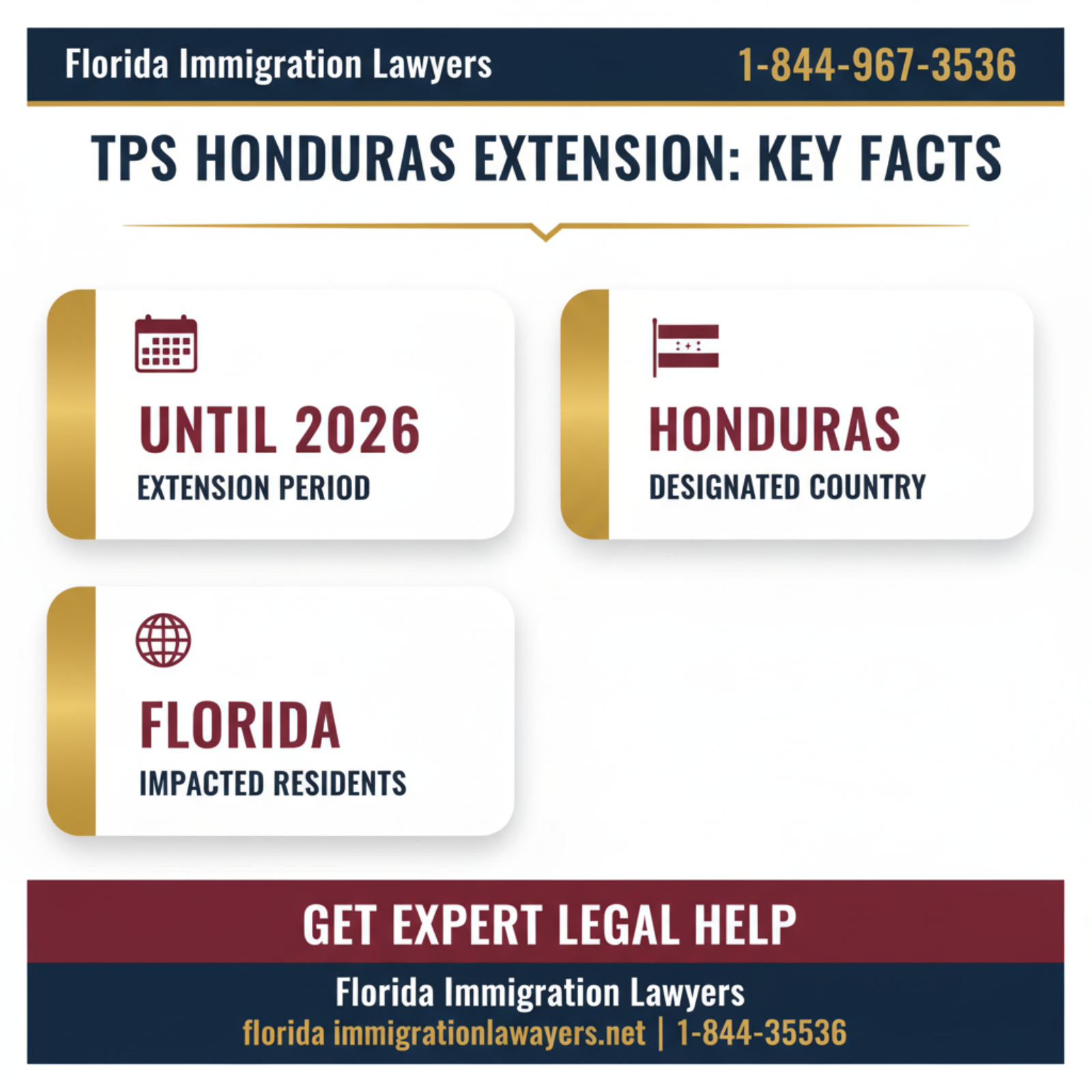
The **TPS Honduras extension 2026** offers continued protection for eligible Honduran nationals in the U.S., including many in Florida. Re-registration with USCIS is required to maintain Temporary Protected Status and work authorization. Understanding deadlines and documentation is crucial to avoid lapses.
- Honduras TPS is extended through July 5, 2025, with automatic EAD extension through June 30, 2026.
- Eligible individuals must re-register during the designated period.
- The process involves Forms I-821 and I-765 (for work authorization).
- Consulting an immigration lawyer in Florida is recommended for complex cases.
- Failure to re-register promptly can lead to loss of status and potential deportation.
TPS Honduras Extension 2026: Florida Renewal Guide & Legal Help
Are you a Honduran national in Florida with Temporary Protected Status (TPS)? The recent announcements regarding the **TPS Honduras extension 2026** are vital for your continued stay and work authorization. Navigating immigration processes can be complex, with evolving deadlines and requirements.
Many families in Gainesville, Miami, Orlando, and across Florida rely on TPS for stability. Understanding this extension, including re-registration and eligibility, is paramount. This guide from Florida Immigration Lawyers provides clarity and actionable steps for your **TPS Honduras extension 2026**.
Do not risk your status by missing critical deadlines or submitting an incomplete application. For personalized guidance and to ensure correct re-registration, **call Florida Immigration Lawyers at 1-844-967-3536 for a free consultation.** Our experienced team is ready to assist you.
Understanding TPS for Hondurans in Florida: An Overview
Temporary Protected Status (TPS) is a humanitarian benefit for eligible nationals from designated countries. This designation occurs due to armed conflict, environmental disaster, or other extraordinary conditions preventing safe return.
Honduras received its initial TPS designation on January 5, 1999, after Hurricane Mitch. The status has since seen multiple extensions due to persistent challenges. The **TPS Honduras extension 2026** continues this vital protection for thousands of Honduran immigrants in Florida and nationwide.
For Florida's significant Honduran population, this extension brings both relief and the responsibility to re-register. The current extension keeps TPS for Honduras in effect until at least July 5, 2025. Employment Authorization Documents (EADs) for eligible beneficiaries are automatically extended through June 30, 2026.
Eligibility for **USCIS TPS Honduras** requires continuous physical presence and residence in the U.S. since specific dates. You must also meet other basic TPS requirements, such as no certain criminal convictions. If unsure about eligibility, consult an immigration lawyer in Florida.
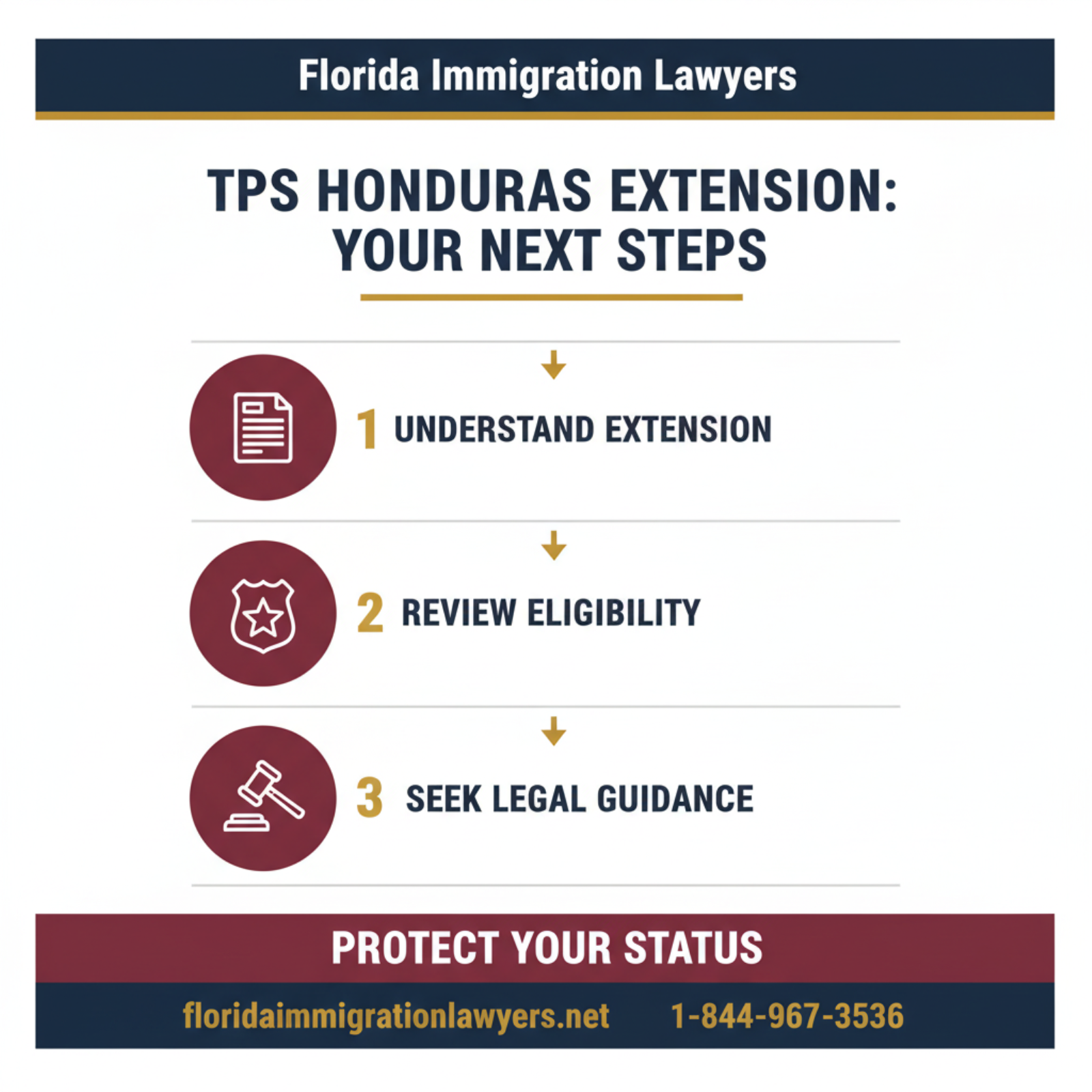
Step-by-Step Guide to Re-registering for TPS Honduras Extension 2026
Re-registering for TPS is critical to maintain your protected status. Here is a detailed guide for Honduran nationals in Florida:
- Understand the Re-registration Period: USCIS announces specific periods for re-registration. This period typically follows the official Federal Register notice. Submitting your application within this window is vital.
- Complete Form I-821, Application for Temporary Protected Status: This is the primary form. Fill every section accurately. Errors or omissions can delay your application or lead to a Request for Evidence (RFE).
- Complete Form I-765, Application for Employment Authorization (Optional): File Form I-765 if you need work authorization. This form secures an Employment Authorization Document (EAD), essential for legal employment in Florida.
- Pay Required Fees or Apply for a Fee Waiver: Fees apply for Forms I-821, I-765, and biometric services. If you cannot afford them, apply for a fee waiver using Form I-912. Ensure you meet criteria.
- Gather Supporting Documentation: Collect proof of identity, nationality, continuous residence, and continuous physical presence. All documents must be current and translated if not in English.
- Attend Biometrics Appointment: USCIS will send a notice for a mandatory biometrics appointment at an Application Support Center (ASC). Failure to attend can result in application denial.
- Monitor Your Application Status: Track your application online using the receipt number. Be ready to respond promptly to any RFEs or USCIS notices.
An experienced immigration lawyer in Florida can help prepare and submit your re-registration, minimizing errors and ensuring compliance with all **TPS Honduras requirements**. This is beneficial for those in areas like Gainesville or Tampa.
Essential Document Checklist for Your TPS Application
Having documents in order is crucial for a smooth **TPS Honduras extension 2026** re-registration. Here is a checklist of typically required documents:
- Proof of Identity and Nationality:
- Copy of your Honduran birth certificate.
- Copy of your Honduran passport (if available).
- Copy of your national identity document (e.g., Cédula de Identidad).
- Proof of Continuous Residence in the U.S.: (showing U.S. residence since the designated date)
- Employment records (pay stubs, W-2 forms).
- Rent receipts, utility bills, or mortgage statements.
- School records for yourself or children.
- Medical records, bank statements.
- Affidavits from friends, neighbors, or employers.
- Proof of Continuous Physical Presence in the U.S.: (showing no departure from U.S. since a specific date)
- Dated receipts, bills, or letters.
- Medical or hospital records.
- Attestations by church or organization officials.
Step-by-Step Process Guide - Two Passport-Style Photos: Must meet USCIS specifications.
- Previous TPS Documentation:
- Copy of your previous Form I-797, Approval Notice for TPS.
- Copy of your previous Employment Authorization Document (EAD).
All non-English documents need a certified English translation. An **immigration lawyer Florida** can help review your documents for your **USCIS TPS Honduras** submission.
Navigating TPS Honduras Extension 2026: Timelines and Processing Expectations
Understanding timelines for your **TPS Honduras extension 2026** is critical. The official extension for Honduras is currently until July 5, 2025. However, Employment Authorization Documents (EADs) for eligible beneficiaries are automatically extended through June 30, 2026.
This means your current EAD based on TPS Honduras remains valid, even if its printed expiration date has passed, provided you meet eligibility. USCIS processing times vary, but automatic EAD extension ensures legal work status while re-registration processes.
The automatic extension applies only to EADs issued under the most recent TPS designation for Honduras. Florida employers must accept these auto-extended EADs as valid employment authorization. USCIS provides guidance for employers on verification.
Stay informed about any **TPS Honduras extension 2026 update** directly from USCIS. Official announcements are the definitive source. Florida Immigration Lawyers can help monitor updates and ensure prompt responses.
Cost Factors and Fees for TPS Re-registration in Florida
Re-registering for the **TPS Honduras extension 2026** typically involves fees. USCIS fees are subject to change; always check the current schedule on their website. Generally, costs include:
- Form I-821, Application for Temporary Protected Status: A filing fee may apply, sometimes waived during re-registration.
- Form I-765, Application for Employment Authorization: A filing fee applies if requesting a new or renewed EAD.
- Biometric Services Fee: This fee covers fingerprinting and background checks, usually required for all applicants.
Always pay by money order, personal check, cashier's check, or credit card using Form G-1450. Do not send cash. Make payments to "U.S. Department of Homeland Security."
If you cannot afford fees, you may qualify for a fee waiver. Submit Form I-912, Request for Fee Waiver, with documentation of financial hardship. This includes proof of means-tested benefits or household income below 150% of Federal Poverty Guidelines.
Navigating fees and waivers can be confusing. An **immigration lawyer Florida** can help determine fee waiver eligibility and ensure correct submission. This addresses common concerns about the **TPS Honduras renewal fee** exemption.
Do not navigate this process alone. The complexities of immigration law, especially concerning a **TPS Honduras extension 2026**, can be overwhelming. **Contact Florida Immigration Lawyers today at 1-844-967-3536** for expert assistance and peace of mind. We are here to support you every step of the way.
Common Mistakes to Avoid During TPS Re-registration
Re-registering for TPS Honduras is a precise process where small errors have significant consequences. Avoid these common mistakes:
- Missing the Re-registration Deadline: This is critical. Failure to submit your application within the designated period leads to loss of TPS status. Mark your calendar and submit early.
- Incomplete Forms: Blank fields or unanswered questions result in a Request for Evidence (RFE) or denial. Double-check every section of Forms I-821 and I-765.
- Incorrect Fees or No Fee Waiver Request: Submitting the wrong fee or forgetting Form I-912 (if eligible) will cause rejection. Verify the current **TPS Honduras renewal fee** on the USCIS website.
- Lack of Supporting Documentation: Insufficient proof of identity, nationality, continuous residence, or physical presence leads to delays or denial. Ensure all documents are included.
- Poor Quality Photocopies: Submit clear, legible copies. Blurry copies may not be accepted by USCIS.
- Not Attending Biometrics Appointment: Missing your biometrics appointment without rescheduling can deny your application. It is mandatory.
- Failing to Disclose Criminal History: All criminal convictions, even minor, must be disclosed. Failure can lead to severe immigration consequences, including denial and potential deportation.
- Incorrectly Answering Eligibility Questions: Misunderstanding or incorrectly answering TPS eligibility questions can jeopardize your application. Be honest and accurate.
- Not Updating Address with USCIS: Notify USCIS of a new address within 10 days using Form AR-11. Missing notices can critically impact your case.
- Submitting Untranslated Documents: Non-English documents require a certified English translation. Failure to provide this results in document rejection.
- Believing TPS is Automatic: The **TPS Honduras extension 2026** requires active re-registration to maintain status. It is not automatic.
- Not Seeking Legal Advice for Complex Cases: With criminal history, previous immigration violations, or other complications, attempting re-registration without legal counsel is risky.
When to Call a Lawyer for Your TPS Honduras Extension 2026
While this guide offers general information, some situations demand an experienced **immigration lawyer Florida**. Your TPS status is vital. Contact Florida Immigration Lawyers if any of these apply:
- You have a criminal record, even minor. Certain convictions disqualify you from TPS.
- You have been previously ordered deported or removed from the U.S.
- You have had issues with previous TPS applications or other immigration benefits.
- You are unsure about meeting continuous physical presence or residence requirements.
- You traveled outside the U.S. without proper authorization while on TPS.
- You received a Request for Evidence (RFE) or Notice of Intent to Deny (NOID) from USCIS.
- You need assistance with a fee waiver application or are unsure how to proceed.
- You wish to explore other immigration pathways beyond TPS, like asylum or family-based petitions.
- You desire the peace of mind of expert review and representation for your application.
Our team at Florida Immigration Lawyers understands the unique challenges faced by the Honduran community in Florida, from Gainesville to Miami. We provide compassionate and effective legal representation for your **TPS Honduras extension 2026** and all immigration needs. We can help navigate complex **USCIS TPS Honduras** regulations.
About Florida Immigration Lawyers
Florida Immigration Lawyers is a leading law firm serving the diverse immigration needs of individuals and families across all of Florida. With deep understanding of U.S. immigration law, we offer expert legal guidance and zealous representation.
Our services include assistance with Temporary Protected Status (TPS) applications and re-registrations, asylum claims, deportation defense, citizenship applications, family-based immigration, and business immigration. We provide personalized attention and strategic solutions.
Choosing Florida Immigration Lawyers means partnering with a team dedicated to your future. We are available 24/7 for your questions and offer free consultations. Let us be your trusted advocate. Visit our attorneys page to learn more.
Phone: 1-844-967-3536
Website: https://www.floridaimmigrationlawyers.net
Frequently Asked Questions About TPS Honduras Extension 2026
Here are answers to common questions regarding the **TPS Honduras extension 2026**:
1. Will TPS for Honduras be extended in 2026?
As of early 2026, the current TPS Honduras extension expires July 5, 2025, with EADs automatically extended through June 30, 2026. Further extensions are possible but not guaranteed, depending on conditions in Honduras and future DHS decisions. Always check official USCIS announcements.
2. Is TPS for Honduras terminated?
No, TPS for Honduras has not been terminated. Despite past attempts, court injunctions and government actions have ensured its continuation. Latest official announcements confirm its extension, requiring re-registration for eligible individuals to maintain status.
3. Can people with TPS still get deported?
Yes, TPS offers temporary protection but not permanent status. It can be terminated. Individuals with TPS may be deported for certain criminal offenses, national security grounds, or failing to re-register on time. Adhere to all immigration laws and re-registration requirements.
4. What countries qualify for TPS 2026?
The list of TPS-designated countries changes. As of early 2026, countries generally qualifying include Afghanistan, Burma (Myanmar), Cameroon, El Salvador, Ethiopia, Haiti, Honduras, Nepal, Nicaragua, Somalia, South Sudan, Sudan, Syria, Ukraine, Venezuela, and Yemen. Always check the official USCIS website for the most current list and specific dates.
Sources and References
- U.S. Citizenship and Immigration Services (USCIS) - Temporary Protected Status
- U.S. Citizenship and Immigration Services (USCIS) - Form I-821, Application for Temporary Protected Status
- Executive Office for Immigration Review (EOIR) - Immigration Court Locations
- 8 U.S.C. § 1254a - Temporary Protected Status (Immigration and Nationality Act Section 244)
- 8 CFR Part 244 - Temporary Protected Status
- USCIS Policy Manual, Volume 7, Part B, Chapter 5 - Temporary Protected Status
This article provides general legal information and is not intended as legal advice. Every case is unique, and outcomes depend on specific facts and circumstances. Contact an attorney for advice about your particular situation.
Do not leave your immigration future to chance. If you are a Honduran national in Florida needing assistance with your **TPS Honduras extension 2026**, Florida Immigration Lawyers is here to help. Our dedicated team provides expert legal counsel and support throughout the re-registration process. **Call us today at 1-844-967-3536 for a free consultation.** Se Habla Español - Estamos aquí para ayudarle.
Frequently Asked Questions
Florida Immigration Lawyers
Legal Team
Our experienced attorneys at Florida Immigration Lawyers have been serving clients across Florida for over 20 years. We specialize in immigration, personal injury, criminal defense, workers compensation, and family law.