Visa Bulletin October 2025: Florida Immigration Updates
Navigating the Visa Bulletin October 2025 in Florida? Understand key updates for family and employment-based immigration. Learn how it impacts your green card process. Call Florida Immigration Lawyers for a free consultation.
Visa Bulletin October 2025: Key Updates for Florida Immigration
The Visa Bulletin is an indispensable resource for anyone navigating the complex landscape of U.S. immigration. Published monthly by the U.S. Department of State, it provides critical information on the availability of immigrant visas for family-sponsored and employment-based categories. For Florida residents, understanding the nuances of the Visa Bulletin October 2025 is paramount, as it directly impacts when you can apply for or receive your green card.
As an SEO expert, we understand that staying informed is the first step toward a successful immigration journey. This comprehensive guide will break down the October 2025 Visa Bulletin, offering insights into projected movements, potential challenges, and strategic advice tailored for individuals and families in Florida. Whether you're awaiting a family reunification or pursuing an employment-based green card, the information contained within this bulletin will dictate your next steps. Don't navigate these complex waters alone; contact Florida Immigration Lawyers at 123-456-7890 for expert guidance.
Understanding the Visa Bulletin: A Crucial Tool for Immigrants
The Visa Bulletin serves as a roadmap for prospective immigrants, indicating when their priority date becomes current. Your priority date is generally the date your immigrant petition (Form I-130 or I-140) was properly filed with USCIS. The bulletin features two main charts for most categories: "Final Action Dates" and "Dates for Filing." The U.S. Citizenship and Immigration Services (USCIS) determines each month which chart applicants residing in the U.S. should use for filing their Adjustment of Status (Form I-485) applications. It's crucial to check both the Department of State's Visa Bulletin and USCIS's website for the most up-to-date filing instructions.
The Final Action Dates chart indicates when a visa can actually be issued or an adjustment of status application can be approved. The Dates for Filing chart allows certain applicants to submit their adjustment of status applications earlier, even if a visa number isn't immediately available. Understanding the distinction and knowing which chart to follow is vital for timely application submission and avoiding unnecessary delays. For many Florida residents, interpreting these dates correctly can be the difference between a smooth process and prolonged uncertainty. Consulting with an experienced immigration attorney can provide clarity and ensure you're always on the right track.
Family-Sponsored Preferences: October 2025 Projections and Impact
Family-sponsored immigration remains a cornerstone of the U.S. system, allowing U.S. citizens and lawful permanent residents (LPRs) to sponsor relatives for green cards. The October 2025 Visa Bulletin will reveal critical movements for these categories, which are often characterized by significant backlogs, particularly for certain countries. The family-sponsored categories include:
F1: Unmarried Sons and Daughters of U.S. Citizens
This category often sees moderate wait times, but demand can cause fluctuations. Applicants in Florida should monitor this category closely for any advancements or retrogressions.
F2A: Spouses and Children (under 21) of Permanent Residents
Historically, F2A has been the most favorable family-sponsored category, often being current or having very short wait times. We anticipate this trend to largely continue, making it a priority for many Florida families.
F2B: Unmarried Sons and Daughters (21 years of age or older) of Permanent Residents
This category typically experiences longer wait times than F2A due to higher demand and per-country limits. Florida applicants should prepare for a potentially extended waiting period.
F3: Married Sons and Daughters of U.S. Citizens
F3 is known for its substantial backlogs, and October 2025 is unlikely to bring dramatic advancements. Strategic planning and patience are key for those in this category.
F4: Brothers and Sisters of U.S. Citizens
This category has the longest wait times, often spanning over a decade for many countries. Applicants in Florida should maintain realistic expectations and plan accordingly.
For Florida families, understanding these categories and their specific movements in the October 2025 bulletin is crucial for planning your next steps. Retrogressions can be disheartening, while advancements offer a glimmer of hope. Regardless of the movement, having a clear strategy is essential. For personalized advice on family-based immigration, consult Florida Immigration Lawyers at 123-456-7890.
Employment-Based Preferences: Navigating October 2025 in Florida
Employment-based immigration offers pathways to permanent residency for skilled workers, professionals, and investors. The October 2025 Visa Bulletin will be particularly significant as it marks the start of a new fiscal year, potentially resetting annual visa quotas. This can sometimes lead to favorable movements, though per-country limits often create substantial backlogs for high-demand countries. The primary employment-based categories include:
EB-1: Priority Workers
This category includes individuals of extraordinary ability, outstanding professors/researchers, and multinational executives/managers. It is often current or has minimal backlogs, making it an attractive option for highly qualified individuals in Florida.
EB-2: Professionals Holding Advanced Degrees or Persons of Exceptional Ability
While generally more backlogged than EB-1, this category remains popular. For certain countries, significant wait times persist. Florida professionals should monitor this closely.
EB-3: Skilled Workers, Professionals, and Other Workers
This category often experiences longer backlogs, especially for individuals from countries with high demand. The October 2025 bulletin will indicate if any significant shifts occur for Florida-based skilled workers.
EB-4: Certain Special Immigrants
This includes religious workers, broadcasters, and certain other special immigrants. Movements in this category can be unpredictable, and applicants should consult the bulletin regularly.
Step-by-Step Process Guide EB-5: Immigrant Investors
The EB-5 program, which grants green cards to foreign investors who make qualifying investments in U.S. businesses, has seen reforms. The October 2025 bulletin will reflect the availability of visas under the new set-aside categories for rural areas, high unemployment areas, and infrastructure projects, which could be beneficial for investors looking to contribute to Florida's economy.
Florida's diverse economy, with strong sectors in healthcare, technology, tourism, and agriculture, means many residents fall into these employment-based categories. Staying updated on the USCIS guidelines and the Visa Bulletin is crucial. If you have questions about your eligibility or the impact of the October 2025 bulletin on your employment-based green card application, contact Florida Immigration Lawyers at 123-456-7890 for expert assistance.
Strategies for Expediting Your Green Card Process in Florida
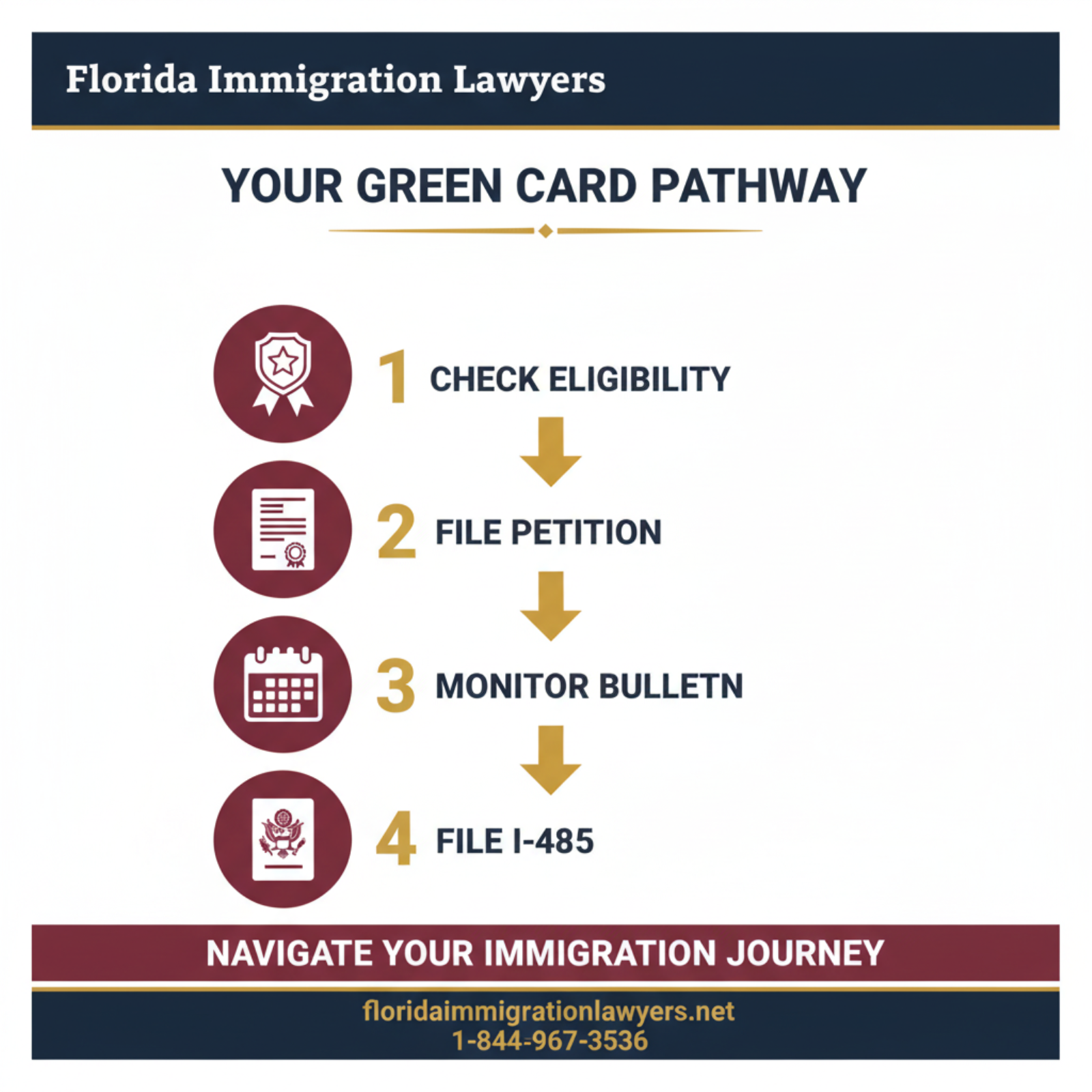
While the Visa Bulletin dictates the pace of visa availability, there are proactive strategies you can employ to optimize your green card journey, particularly for Florida residents facing unique circumstances. One such strategy is concurrent filing, where eligible applicants can submit their I-130 or I-140 petition simultaneously with their I-485 Adjustment of Status application. This is only possible when your priority date is current under the "Dates for Filing" chart (or "Final Action Dates," as directed by USCIS) for your specific category and country. Concurrent filing can significantly streamline the process by allowing USCIS to process both petitions concurrently, potentially saving months or even years of waiting.
Maintaining lawful immigration status throughout your waiting period is another non-negotiable strategy. Any lapse in status can jeopardize your eligibility for adjustment of status and may lead to serious complications, including potential deportation proceedings. It's essential to diligently track your visa expiration dates, apply for extensions when necessary, and ensure continuous compliance with all immigration laws. Furthermore, meticulous documentation is paramount. Having all required forms, supporting evidence, and translations prepared accurately and completely can prevent Requests for Evidence (RFEs) or outright denials, which inevitably cause delays. Even if your priority date isn't current, proactively gathering and organizing your documents means you'll be ready to file the moment your date becomes current.
For those facing complex situations, such as past immigration violations, criminal history, or fears of persecution in their home country, exploring alternative avenues or seeking waivers might be necessary. This could involve considering options like asylum if you meet the criteria, or pursuing specific waivers to overcome inadmissibility issues. These are highly complex areas requiring specialized legal expertise. Consulting with experienced immigration attorneys who understand the nuances of U.S. immigration law and the specific challenges faced by Florida's diverse immigrant population is crucial. They can help you identify the most viable strategies, prepare robust applications, and represent you effectively before USCIS or the immigration courts, ensuring you navigate the process with confidence. For guidance on these strategies, reach out to Florida Immigration Lawyers at 123-456-7890.
The Role of Immigration Attorneys in Your Visa Journey
Navigating the U.S. immigration system, especially with the monthly fluctuations of the Visa Bulletin, can be overwhelming. This is where the expertise of an experienced immigration attorney becomes invaluable. An attorney can help you accurately interpret the complex charts and projections of the Visa Bulletin, advising you on whether to use the "Dates for Filing" or "Final Action Dates" chart for your Adjustment of Status application. They will assess your unique situation, including your priority date, country of chargeability, and preference category, to provide a clear understanding of your eligibility and timeline.
Beyond interpretation, an attorney plays a critical role in preparing and submitting your application. They ensure that all forms are correctly filled out, all necessary supporting documentation is gathered, and deadlines are met. This meticulous attention to detail can prevent common errors that lead to delays or denials. For complex cases involving waivers, appeals, or potential issues with maintaining status, an attorney can advocate on your behalf, representing you before USCIS or in immigration court. Their knowledge of current immigration laws and policies, including any Florida-specific procedural nuances, provides a significant advantage.
Choosing the right legal partner is paramount. Florida Immigration Lawyers possess the local expertise and deep understanding of federal immigration law to guide you through every step of your green card journey. From initial consultation to final approval, having a dedicated legal team by your side can alleviate stress and increase your chances of a successful outcome. Don't leave your future to chance; contact Florida Immigration Lawyers at 123-456-7890 to schedule a consultation and secure your path to permanent residency.
Conclusion
The Visa Bulletin October 2025 is a critical document for thousands of individuals and families in Florida pursuing their dream of permanent residency in the United States. While the information can be complex and subject to change, staying informed and proactive is key. Understanding the movements in both family-sponsored and employment-based categories, distinguishing between Final Action Dates and Dates for Filing, and implementing strategic planning are essential steps.
Remember that the immigration journey is often long and filled with potential challenges. Having experienced legal counsel can make all the difference, helping you interpret the bulletin, navigate complex requirements, and advocate for your best interests. Don't navigate these waters alone. Reach out to Florida Immigration Lawyers at 123-456-7890 today for a consultation and let our expertise guide you toward a successful future in Florida.
Need help with Immigration?
Our Florida immigration attorneys offer free consultations. Call today or schedule online.
Frequently Asked Questions
Florida Immigration Lawyers
Legal Team
Our experienced attorneys at Florida Immigration Lawyers have been serving clients across Florida for over 20 years. We specialize in immigration, personal injury, criminal defense, workers compensation, and family law.