TPS Honduras 2026: Florida Guide for Status and Renewal
For Honduran nationals in Florida, understanding the evolving landscape of Temporary Protected Status (TPS) as 2026 approaches is crucial. This comprehensive guide details the re-registration process, eligibility requirements, and the impact of ongoing legal challenges on TPS Honduras. Learn about essential documents, potential costs, and common mistakes to avoid. Navigating these complexities can be daunting, but with expert legal assistance, you can protect your status and future. Florida Immigration Lawyers offers free consultations to help you understand your options and ensure a smooth process. Stay informed and secure your immigration future.

Temporary Protected Status (TPS) for Honduras has faced significant legal challenges and potential termination. While specific deadlines and designations can change, eligible Hondurans in Florida must diligently monitor updates and prepare for re-registration processes to maintain their protected status and work authorization through 2026 and beyond. Seeking legal counsel is crucial for navigating these complex requirements and protecting your immigration future.
- TPS for Honduras is subject to ongoing litigation and potential changes.
- Re-registration is typically required to maintain TPS benefits.
- Eligibility criteria must be met consistently to retain your status.
- Consulting an immigration lawyer in Florida is vital for accurate guidance.
- Stay informed about USCIS announcements and deadlines.
Navigating TPS Honduras 2026: Your Essential Florida Guide
Are you a Honduran national in Florida concerned about your Temporary Protected Status (TPS) as 2026 approaches? The landscape of immigration law, especially concerning TPS, can be complex and ever-changing. Many individuals and families in Miami and throughout Florida rely on TPS for their stability and peace of mind.
Understanding the current status, potential extensions, and the re-registration process for TPS Honduras 2026 is absolutely critical. This comprehensive guide will walk you through the essential information you need to protect your immigration status. We will cover eligibility, the application process, timelines, and common pitfalls to avoid.
The uncertainty surrounding TPS extensions, particularly for Honduras, can be overwhelming. Our goal is to provide clear, actionable information to help you navigate this challenging period. Do not face this journey alone. Call Florida Immigration Lawyers at 1-844-967-3536 for a free consultation today. Our experienced team is ready to assist you.
Understanding Temporary Protected Status (TPS) for Honduras
Temporary Protected Status (TPS) is a humanitarian immigration benefit granted by the United States to eligible nationals of certain countries. These designations occur when conditions in the country prevent its nationals from returning safely, or when the country cannot handle the return of its nationals adequately. Such conditions typically include armed conflict, environmental disasters, or other extraordinary and temporary circumstances.
Honduras was initially designated for TPS in January 1999 following Hurricane Mitch. Since then, the status has been extended numerous times. However, the designation for Honduras has faced legal challenges and attempts at termination in recent years, creating significant anxiety for thousands of Hondurans across Florida.
The Evolving Legal Landscape of TPS Honduras
The status of TPS Honduras 2026 is particularly complex due to ongoing litigation. In 2018, the Department of Homeland Security (DHS) announced the termination of TPS for Honduras, along with several other countries. This decision led to various lawsuits, including Ramos v. Nielsen (later Ramos v. Mayorkas), which challenged these terminations.
Court injunctions in these cases have temporarily prevented the termination of TPS for Honduras. This means that, for now, TPS protections for eligible Hondurans remain in effect. However, these injunctions are not permanent, and the legal battle continues. The outcome of these cases will significantly impact the future of TPS Honduras extension 2026 and beyond.
For Honduran nationals in Florida, staying informed about these legal developments is paramount. The situation can change rapidly, and what is true today may be different tomorrow. We understand the stress this uncertainty causes for your family and your ability to work and live in peace in communities like Miami, Orlando, and Tampa.
Who is Eligible for TPS Honduras?
To be eligible for Temporary Protected Status Florida, individuals must generally meet several criteria. These include being a national of Honduras, having continuously resided in the U.S. since a specific date set by DHS, and having been continuously physically present in the U.S. since another specific date.
Applicants must also pass security and background checks. Certain criminal offenses or national security concerns can render an individual ineligible for TPS. It is crucial to understand that TPS does not lead directly to permanent residency or citizenship, but it provides protection from deportation and work authorization during its validity.
Step-by-Step Guide to Re-registering for TPS Honduras 2026
Even with legal challenges pending, eligible Honduran TPS beneficiaries must typically re-register during designated periods to maintain their status. This process is vital to ensure you retain your protection and work authorization.
Here is a general step-by-step guide for re-registration. Always refer to the latest USCIS TPS Honduras announcements for precise instructions and deadlines.
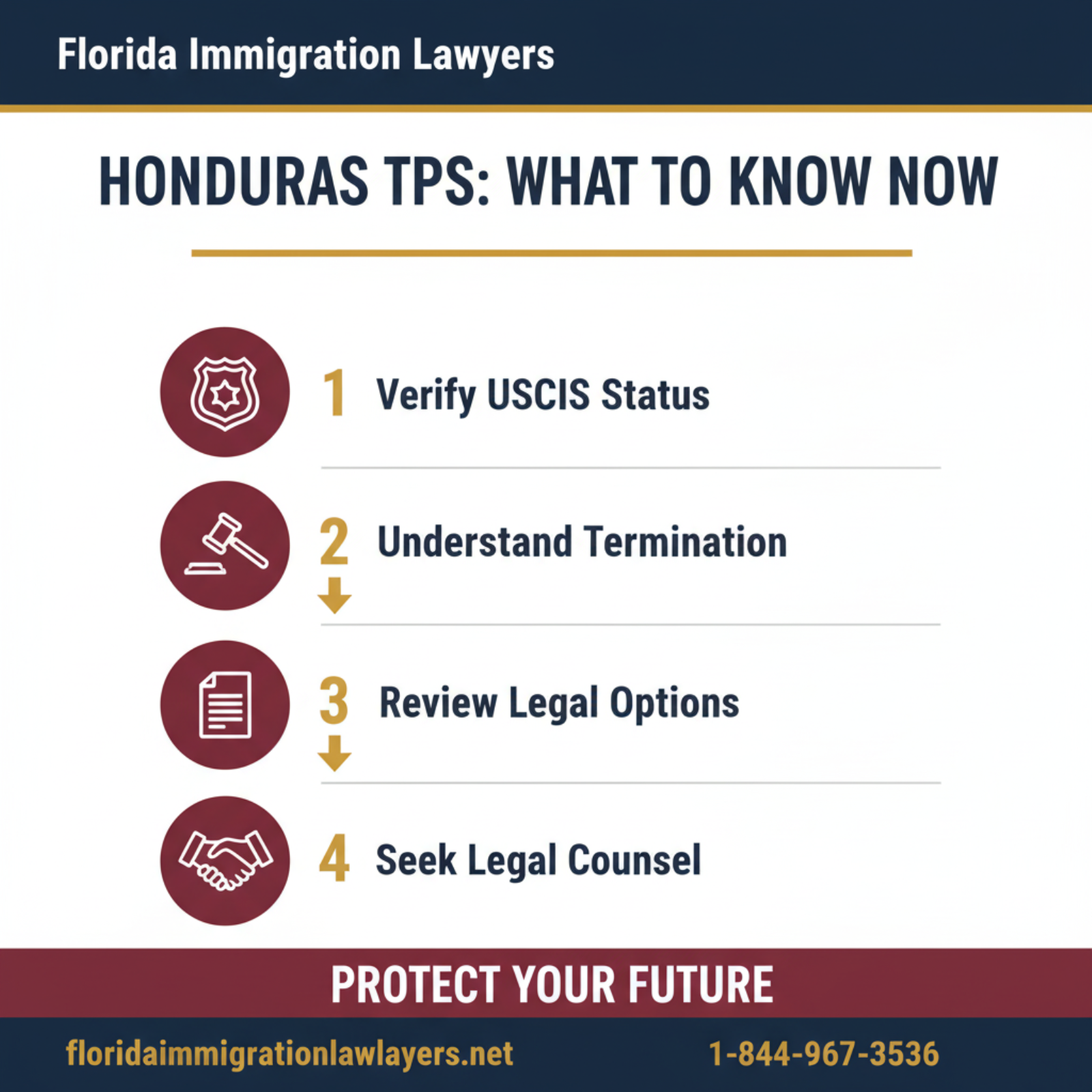
- Monitor USCIS Announcements: The first and most critical step is to stay vigilant for official announcements from U.S. Citizenship and Immigration Services (USCIS). These announcements will specify the re-registration period, new deadlines, and any updated procedures for the TPS Honduras extension 2026. You can typically find this information on the USCIS TPS webpage.
- File Form I-821, Application for Temporary Protected Status: You must complete and submit Form I-821. This is the primary application for TPS. Ensure all sections are filled out accurately and completely. Any errors or omissions can lead to delays or rejection.
- File Form I-765, Application for Employment Authorization: If you wish to obtain or renew your Employment Authorization Document (EAD), you must also file Form I-765. This allows you to legally work in the United States. Many TPS beneficiaries in Florida rely on this document to support their families.
- File Form I-601, Application for Waiver of Grounds of Inadmissibility (If Applicable): If you have certain grounds of inadmissibility that apply to you, such as criminal convictions or immigration violations, you may need to file Form I-601. This is a complex form, and legal assistance is highly recommended if you believe it applies to your situation.
- Pay Required Fees or Request a Fee Waiver: There are government filing fees associated with Forms I-821 and I-765. You must pay these fees unless you qualify for and properly request a fee waiver using Form I-912, Request for Fee Waiver. Be aware that fees can change, so always check the current USCIS fee schedule.
- Attend Biometrics Appointment: After filing your applications, USCIS will typically send you a notice to attend a biometrics appointment at an Application Support Center (ASC). During this appointment, your fingerprints, photograph, and signature will be collected for background checks. Missing this appointment without rescheduling can jeopardize your application.
- Respond to Requests for Evidence (RFEs): USCIS may send you a Request for Evidence (RFE) if they need additional information or documentation to process your application. It is crucial to respond promptly and thoroughly to all RFEs by the specified deadline. Failure to do so can result in denial.
- Receive Decision: Once USCIS has reviewed your application and all supporting documents, they will issue a decision. If approved, you will receive an approval notice and, if requested, a new EAD.
Essential Document Checklist for TPS Honduras Re-registration
Gathering the correct documents is a critical part of the TPS Honduras 2026 re-registration process. Missing or incorrect documentation can lead to significant delays or even denial of your application. Organize your documents carefully before submission.
Here is a comprehensive checklist of documents you will generally need:
- Proof of Identity and Nationality:
- Copy of your Honduran birth certificate.
- Copy of your Honduran passport (if available).
- Copy of your national identity document from Honduras (Cédula de Identidad).
- Any previous EADs issued under TPS.
- Proof of Continuous Residence in the U.S.:
- Rental agreements or mortgage statements.
- Utility bills (electricity, water, gas) in your name.
- Employment records (pay stubs, W-2 forms, letters from employers).
- School records (transcripts, diplomas, attendance records).
- Medical records (hospital bills, doctor's notes).
- Bank statements showing transactions within the U.S.
- Affidavits from friends, family, or employers attesting to your residence.
- Receipts for money sent or received.
- Proof of Continuous Physical Presence in the U.S.:
- This often overlaps with proof of continuous residence.
- Travel records (though TPS generally requires you to remain in the U.S.).
- Current Immigration Documents:
- Copy of your I-94 Arrival/Departure Record.
- Copies of any prior USCIS notices or decisions related to your immigration status.
- Photographs:
- Two identical passport-style photographs taken within 30 days of filing.
- Fee Waivers (If Applicable):
- Form I-912, Request for Fee Waiver, along with supporting documentation demonstrating inability to pay.
- Criminal History Records (If Applicable):
- Certified copies of all court dispositions for any arrests or convictions, regardless of how minor the offense was.
- Even if charges were dismissed or expunged, it is best to disclose them and provide documentation.
Always submit copies of documents, not originals, unless specifically requested by USCIS. Keep a complete copy of everything you submit for your own records. This attention to detail is crucial for any application related to your immigration status for Hondurans.
TPS Honduras 2026: Timeline and Processing Expectations
The processing times for TPS applications, including re-registrations, can vary significantly. Several factors influence how quickly USCIS processes your case, including the volume of applications, the complexity of individual cases, and current agency backlogs. For USCIS TPS Honduras applications, the legal challenges further complicate predictions.
Typical Processing Stages and Timeframes
- Re-registration Period: USCIS typically announces a specific re-registration window, usually 60 days long. It is crucial to file your application within this timeframe. Missing the deadline without good cause can result in loss of your TPS benefits.
- Receipt Notice: Within a few weeks of mailing your application, you should receive a Form I-797C, Notice of Action, confirming receipt of your application. This notice is important for tracking your case.
- Biometrics Appointment: A notice for your biometrics appointment typically arrives 3-8 weeks after USCIS receives your application. The appointment itself usually occurs 2-4 weeks after the notice.
- Employment Authorization Document (EAD) Auto-Extension: In many cases, USCIS provides an automatic extension of existing EADs for a certain period, allowing beneficiaries to continue working while their re-registration is pending. Always check the latest Federal Register notice for specific auto-extension dates for TPS Honduras extension 2026.
- Case Decision: A final decision on your TPS re-registration can take anywhere from a few months to over a year. The legal uncertainties surrounding Honduras's TPS designation can prolong this period. You can check your case status online using the receipt number provided on your I-797C notice.
Factors Affecting Processing Times in Florida
In Florida, high volumes of immigration applications at USCIS field offices in Miami, Orlando, and Tampa can sometimes lead to longer processing times. Additionally, if your application requires a Request for Evidence (RFE) or involves complex issues, it will naturally take longer to process. The dynamic legal situation for TPS Honduras 2026 also introduces an element of unpredictability.
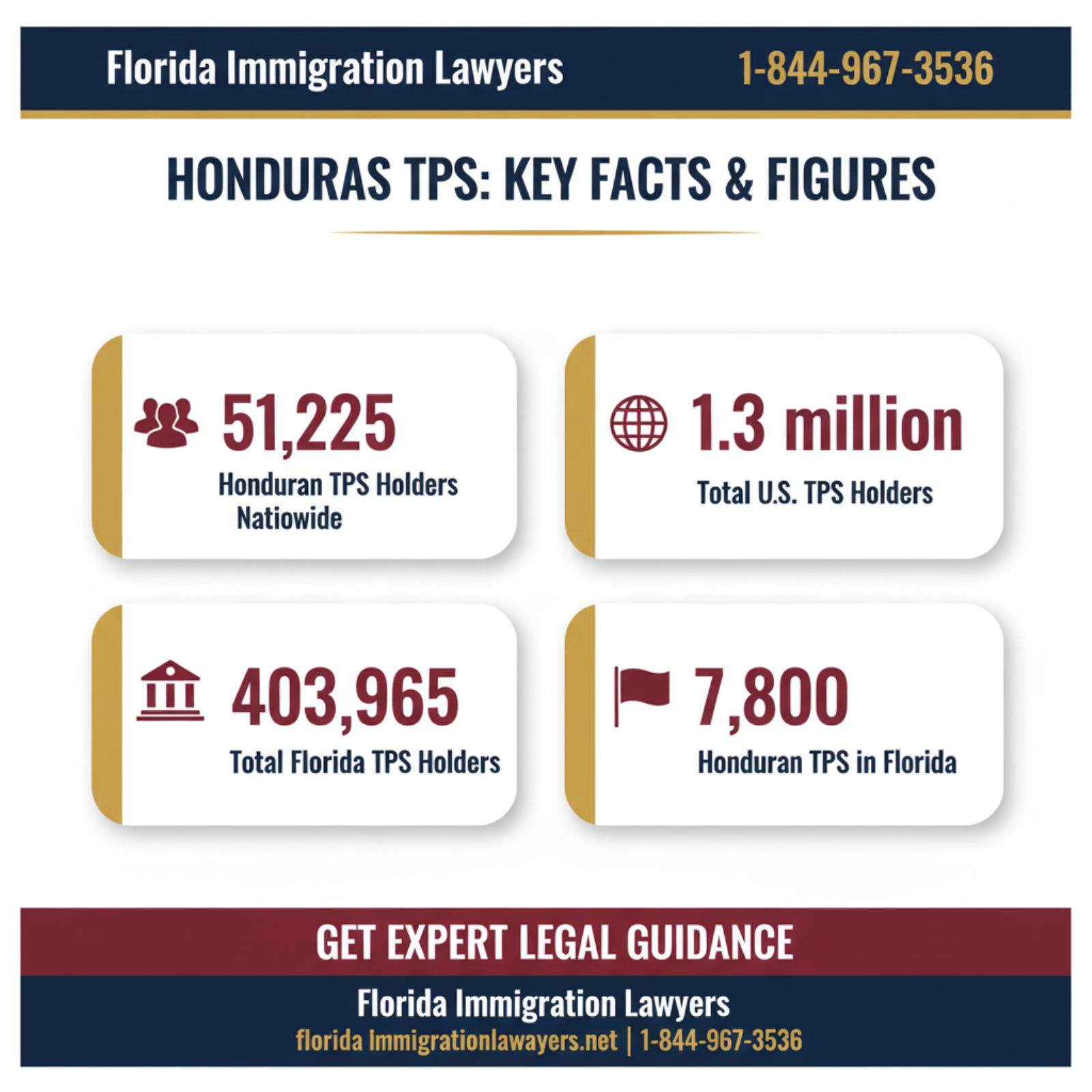
It is important to remain patient but proactive. If you notice unusually long delays or have not received expected notices, consulting with an immigration attorney can help you determine if there is an issue with your application or if an inquiry with USCIS is warranted.
Cost Factors and Fee Breakdown for TPS Honduras Applications
Understanding the costs associated with applying for or re-registering for Temporary Protected Status Florida is essential for financial planning. While USCIS fees are standard across the U.S., other costs like legal fees can vary.
USCIS Filing Fees
The primary government costs are the filing fees for the required forms. These fees are subject to change, so always verify the current amounts on the official USCIS website before submitting your application. Typically, you can expect fees for:
- Form I-821, Application for Temporary Protected Status: There is a fee for this application, which includes the biometrics service fee.
- Form I-765, Application for Employment Authorization: There is a separate fee for this application if you are requesting an EAD.
- Biometrics Services Fee: This fee is typically included within the I-821 fee for initial applicants but may be separate or included for re-registrants depending on the specific Federal Register notice.
Some applicants may be eligible for a fee waiver if they can demonstrate an inability to pay. This typically involves submitting Form I-912, Request for Fee Waiver, along with supporting documentation such as proof of receiving means-tested benefits, household income below 150% of the Federal Poverty Guidelines, or financial hardship.
Legal Fees for TPS Honduras 2026 Guidance
While it is possible to file TPS applications on your own, the complexities of the process, especially with the ongoing legal challenges for TPS Honduras 2026, make legal representation highly advisable. An experienced immigration lawyer can ensure your application is complete, accurate, and properly supported.
Legal fees for TPS cases can vary based on the complexity of your situation, the services required (e.g., initial application vs. re-registration, fee waiver assistance, responding to RFEs), and the law firm's fee structure. Many firms, including Florida Immigration Lawyers, offer free initial consultations to discuss your case and provide a clear understanding of potential legal costs.
Other Potential Costs
Beyond USCIS and legal fees, you might encounter other costs:
- Document Translation: If any of your supporting documents are not in English, you will need to provide certified English translations.
- Photocopying and Postage: Costs associated with copying documents and mailing your application to USCIS.
- Travel Expenses: To attend biometrics appointments or consult with your attorney.
Planning for these expenses ahead of time can help alleviate financial stress during the application process for your immigration status for Hondurans.
The journey to maintain your TPS status can be filled with uncertainty and intricate legal details. Do not navigate this process alone. Contact Florida Immigration Lawyers today for dedicated support and expert guidance on your TPS Honduras 2026 application. Our team is committed to protecting your future.
Common Mistakes to Avoid When Applying for TPS Honduras 2026
Navigating the TPS re-registration process requires meticulous attention to detail. Even minor errors can lead to significant delays, Requests for Evidence (RFEs), or even denial of your application. Here are some common mistakes to avoid:
- Missing the Re-registration Deadline: Failing to submit your application within the designated re-registration period is one of the most critical errors. Unless there are extraordinary circumstances, missing this deadline can result in the loss of your TPS status and work authorization. Always monitor USCIS announcements closely.
- Incomplete or Inaccurate Forms: Submitting forms with missing information, incorrect dates, or unanswered questions is a frequent mistake. USCIS will likely issue an RFE or deny your application if it's incomplete. Double-check every field before submission.
- Insufficient Supporting Documentation: Not providing enough evidence for continuous residence, physical presence, or identity can weaken your case. Ensure you have a robust collection of documents as outlined in the checklist, and that all copies are clear and legible.
- Failure to Disclose Criminal History: Attempting to hide or omit any arrests, charges, or convictions, even minor ones or those that were expunged, is a serious mistake. This can lead to allegations of misrepresentation and potentially bar you from receiving any immigration benefit. Always disclose and provide certified court documents.
- Not Attending Biometrics Appointments: Missing your scheduled biometrics appointment without properly rescheduling can lead to your application being considered abandoned or denied. Make sure to attend or reschedule promptly if unforeseen circumstances arise.
- Sending Original Documents: Unless specifically requested, never send original documents to USCIS. Always send clear photocopies. Keep your originals safe and a complete copy of your entire submission package for your records.
- Ignoring Requests for Evidence (RFEs): Failing to respond to an RFE by the specified deadline, or providing an inadequate response, will almost certainly result in the denial of your application. Read RFEs carefully and provide all requested information and documents.
- Not Updating Your Address with USCIS: If you move, you must notify USCIS of your new address within 10 days using Form AR-11, Alien's Change of Address Card. Failure to do so can result in missed notices, appointments, or decisions, jeopardizing your case.
- Assuming Automatic Extension of Benefits: While EADs for TPS beneficiaries are often automatically extended, it's crucial to verify the specific auto-extension period for TPS Honduras extension 2026 through official Federal Register notices. Do not assume your benefits continue indefinitely without confirmation.
- Not Seeking Legal Advice for Complex Cases: If you have any criminal history, prior immigration violations, or issues with continuous residence/physical presence, attempting to navigate TPS without legal counsel is risky. An attorney can help identify and address potential problems.
When to Call Florida Immigration Lawyers for Your TPS Honduras Case
While some TPS re-registration cases may seem straightforward, the current legal environment surrounding TPS Honduras 2026 makes expert legal guidance invaluable. There are specific scenarios where contacting an experienced immigration attorney, like those at Florida Immigration Lawyers, is not just recommended but crucial.
Scenarios Requiring Legal Assistance:
- Initial TPS Application: If you are applying for TPS for the first time (which may be possible if the designation is extended or re-designated), the process is more complex than re-registration. An attorney can ensure proper filing and documentation.
- Criminal History: Any arrest, charge, or conviction, no matter how minor or old, can impact your TPS eligibility. An attorney can assess your criminal record, advise on its implications, and help prepare any necessary waivers or explanations. This is critical for protecting your immigration status for Hondurans.
- Previous Immigration Violations: If you have prior deportation orders, voluntary departures, or other immigration violations, these can create bars to TPS eligibility. A lawyer can analyze your immigration history and strategize the best approach.
- Issues with Continuous Residence or Physical Presence: If you have gaps in your residence in the U.S. or have traveled outside the country without proper authorization, proving continuous residence and physical presence can be challenging. An attorney can help compile compelling evidence.
- Receiving a Request for Evidence (RFE): If USCIS sends you an RFE, it means they need more information. A lawyer can help you understand what is being requested, gather the necessary documents, and formulate a comprehensive and timely response.
- Receiving a Notice of Intent to Deny (NOID): A NOID is a serious indication that USCIS intends to deny your application. This is a critical point where legal intervention is essential to present a strong argument against denial.
- If Your TPS Was Previously Denied or Terminated: If you have faced a prior denial or termination of TPS, an attorney can review the reasons and advise on potential options for appeal or re-application.
- Seeking Other Immigration Pathways: TPS is temporary. If you wish to explore options for permanent residency or other long-term visas, an attorney can assess your eligibility for other benefits, such as family-based petitions (like an family immigration visa) or asylum, and help you strategize your immigration future beyond TPS.
- Navigating Appeals: If your TPS application is denied, you may have the option to appeal. An attorney can guide you through the appeals process, which is often complex and time-sensitive.
The attorneys at Florida Immigration Lawyers are deeply familiar with the nuances of Temporary Protected Status Florida and the specific challenges faced by Honduran nationals. We serve clients across Florida, including those in Miami, Fort Lauderdale, Orlando, and Tampa. We are dedicated to providing clear, compassionate, and effective legal representation. Let us help you safeguard your status. You can also explore options for deportation defense if your status is at risk, or learn more about citizenship pathways.
About Florida Immigration Lawyers
Florida Immigration Lawyers is a leading immigration law firm dedicated to serving individuals and families across the entire state of Florida. Our mission is to provide expert, compassionate, and effective legal representation for all types of immigration matters. We understand the profound impact immigration issues have on your life and your family's future.
Our experienced attorneys specialize in a wide range of immigration services, including general immigration petitions, asylum claims, deportation defense, citizenship and naturalization, family-based immigration, and business immigration. We are committed to staying abreast of the latest legal developments, especially for complex issues like TPS Honduras 2026, to provide you with the most current and accurate advice.
Why Choose Florida Immigration Lawyers?
- Expertise: Our team possesses in-depth knowledge of U.S. immigration law and extensive experience handling diverse cases.
- Client-Centered Approach: We prioritize your needs, offering personalized strategies and maintaining open communication throughout your case.
- Bilingual Services: Se habla español. Our team is fully equipped to assist clients in both English and Spanish, ensuring clear communication.
- Accessibility: We are available 24/7 to address your urgent concerns and offer free consultations to help you understand your options without financial commitment.
- Florida-Wide Service: Whether you are in Miami, Orlando, Tampa, Jacksonville, or any other part of Florida, our firm is here to serve you.
Your immigration journey is important to us. Let our dedicated team at Florida Immigration Lawyers guide you. Visit our attorneys page to learn more about our team, or our contact page to schedule your free consultation.
Contact us today: 1-844-967-3536
Website: https://www.floridaimmigrationlawyers.net
Sources and References
- U.S. Citizenship and Immigration Services (USCIS) - Temporary Protected Status
- Executive Office for Immigration Review (EOIR) - Immigration Courts
- 8 U.S.C. § 1254a - Temporary Protected Status (Immigration and Nationality Act Section 244)
- 8 CFR Part 244 - Temporary Protected Status
- Department of Homeland Security (DHS) Federal Register Notices regarding TPS Honduras
- Ramos v. Mayorkas, 2023 WL 3878772 (9th Cir. 2023) - (Example of relevant litigation, though specific case details may evolve)
This article provides general legal information and is not intended as legal advice. Every case is unique, and outcomes depend on specific facts and circumstances. Contact an attorney for advice about your particular situation.
Secure Your Immigration Future in Florida
The complexities surrounding TPS Honduras 2026 demand professional legal attention. Do not risk your status by navigating this intricate process alone. Florida Immigration Lawyers is here to provide the expert guidance and unwavering support you need.
We offer free, confidential consultations to discuss your specific circumstances and outline your best path forward. Protect your ability to live and work in the U.S. Schedule your free consultation with Florida Immigration Lawyers today.
Call us at 1-844-967-3536. Se Habla Español - Estamos aquí para ayudarle.
Do Not Navigate This Process Alone
Our experienced immigration attorneys are ready to fight for you. Get a free, confidential consultation today.
Se Habla Español
Or leave your details and we’ll call you:
Free Evaluation in 24 Hours
Or talk to us right now
AI voice assistant — available 24/7
FreeFrequently Asked Questions

William J. Vásquez
Founding Attorney · Vasquez Law Firm
U.S. Air Force veteran and immigration attorney with years of hands-on U.S. immigration experience. J.D., NCCU School of Law. AILA member. Admitted to the 4th, 5th, and 11th Circuit Courts.
Available 24/7 - Free Evaluations
Reviewed for legal accuracy by William J. Vásquez
Licensed in North Carolina; U.S. immigration is federal practice.
Related Legal Services
Our Florida immigration attorneys can help you with citizenship and naturalization, family immigration services and immigration practice areas. Call today at 1-844-967-3536 for a free consultation.
Related Links
Related Topics
Free Legal Consultation
Discuss your case with our experienced attorneys. We're available 24/7.
Se Habla Español - Estamos aquí para ayudarle.
Related Articles
Immigration Lawyer Orlando Free Consultation 2026
Discover how to find an immigration lawyer in Orlando offering a free consultation. Understand the services available and why choosing Florida Immigration Lawyers can make a difference in your case.
Military Naturalization Expedited in Florida Bases
Explore military naturalization options for families at Florida bases, including parole in place benefits in Miami. Learn how to expedite your application with expert guidance from Florida Immigration Lawyers.
J-1 Visa Cost in 2026: Physician Waivers in Florida
For foreign physicians on a J-1 visa, understanding the costs and the path to a J-1 waiver is essential for continuing their medical careers in the U.S. This guide details the J-1 visa costs in 2026, including SEVIS and application fees, and elaborates on the J-1 waiver process, particularly for those seeking placement in Florida's underserved areas through the Conrad 30 program. We provide a step-by-step overview, document checklist, and crucial timelines. Learn about common mistakes to avoid and when to seek legal counsel to navigate this complex immigration journey successfully. Florida Immigration Lawyers offers expert assistance to physicians across Florida.
Immigration Lawyer Orlando Free Consultation: 2026 Policy
For those in Orlando, Pembroke Pines, and throughout Florida, understanding evolving immigration policies is crucial. With anticipated immigration policy changes in 2026, seeking expert legal guidance is more important than ever. This comprehensive guide details the expected shifts in federal and state immigration laws, their impact on various visa types and humanitarian relief, and essential steps for securing your future. Learn about the process for obtaining an immigration lawyer Orlando free consultation, what to expect regarding timelines and costs, and common mistakes to avoid. Florida Immigration Lawyers provides dedicated support, offering free consultations and 24/7 availability to help you navigate these complexities with confidence.