Re-Entry Permit for Green Card Holders in Florida
Discover how to secure a re-entry permit as a Florida resident to prevent the abandonment of your green card during long travels abroad. Learn the steps, common pitfalls, and when to seek legal help.

If you're a lawful permanent resident (LPR) in Florida planning to travel abroad for an extended period, obtaining a re-entry permit is crucial to prevent the abandonment of your green card. This document, filed through Form I-131, secures your re-entry into the U.S. without jeopardizing your residency status. Key takeaways include:
- Re-entry permits help maintain LPR status during long absences.
- Form I-131 is required to apply.
- It's essential to apply before leaving the U.S.
- Legal assistance can simplify the application process.
Introduction
Imagine you're a lawful permanent resident living in Tallahassee, Florida, with plans to travel abroad for work or family reasons. However, staying outside the U.S. for too long could risk your green card status. This guide covers the steps needed to secure a re-entry permit, ensuring your return to the U.S. without complications. Call Florida Immigration Lawyers at 1-844-967-3536 for a free consultation.
Florida, with its diverse population and strong international ties, sees many LPRs frequently traveling overseas. Whether it’s for extended family visits in Latin America, business ventures in Europe, or humanitarian work in other parts of the world, understanding the rules for maintaining your permanent residency is paramount. A re-entry permit acts as a vital safeguard, proving your ongoing commitment to the United States as your primary home, even when circumstances necessitate a prolonged absence.
Without this crucial document, even well-intentioned travel can lead to significant hurdles upon your return, potentially resulting in questioning by Customs and Border Protection (CBP) officers and even the initiation of removal proceedings. Proactive planning is key to avoiding such stressful and complex situations. This comprehensive guide will walk you through every aspect of the re-entry permit application, offering practical advice and highlighting how expert legal assistance from Florida Immigration Lawyers can make the process smoother and more secure.
Understanding the Re-Entry Permit
A re-entry permit is an essential document for LPRs planning extended travel outside the United States. It demonstrates your intent to maintain your U.S. residency while abroad. Without it, absences of one year or more could lead to a presumption of abandonment of your LPR status. This is particularly important in Florida, given the state's vibrant international community and frequent travel ties.
The "presumption of abandonment" is a critical legal concept. If you remain outside the U.S. for a continuous period of one year or more, U.S. Citizenship and Immigration Services (USCIS) or Customs and Border Protection (CBP) can presume you have abandoned your LPR status. While this presumption can sometimes be rebutted with strong evidence of your intent to return, obtaining a re-entry permit proactively eliminates this burden of proof, offering peace of mind. It essentially serves as an advance parole document for LPRs, signaling to immigration officials that your absence is temporary and your intent to reside permanently in the U.S. remains firm.
It's also crucial to understand that a re-entry permit is not a visa. It does not replace the need for a passport or any visas required by other countries you plan to visit. Instead, it works in conjunction with your green card, allowing you to re-enter the U.S. as a permanent resident without needing a returning resident (SB-1) visa. This can be particularly beneficial for LPRs who have family emergencies, long-term work assignments, or educational pursuits abroad, ensuring their journey back home to Florida is as seamless as possible. Florida Immigration Lawyers frequently advise clients on these distinctions, ensuring they have all necessary documentation for international travel.
Step-by-Step Guide to Applying for a Re-Entry Permit
- Determine Eligibility: As an LPR, you must be physically present in the U.S. when filing Form I-131. This is a non-negotiable requirement. You cannot file this application from abroad. This means if you are already outside the U.S. and realize you need a re-entry permit, you must return to the U.S. to file it. The application process requires you to submit biometrics (fingerprints and photographs) at a designated USCIS Application Support Center (ASC) within the U.S. This appointment typically occurs a few weeks after filing.
- Complete Form I-131: Fill out the application accurately, providing all necessary personal and travel information. Pay close attention to Part 2, which asks about the purpose of your trip and the expected duration. Be honest and thorough. Any discrepancies or incomplete information can lead to Requests for Evidence (RFEs) or even denial. If your travel plans are uncertain, provide your best estimate, but ensure it aligns with your intent to return within the permit's validity period. Seeking assistance from Florida Immigration Lawyers can ensure this form is completed without errors.
- Submit Necessary Documents: Include a copy of your green card (Form I-551, Permanent Resident Card) and any supporting evidence of your intent to return to the U.S. This evidence can include property deeds in Florida, U.S. tax returns, bank statements, family ties (e.g., spouse or children residing in the U.S.), employment letters, or any other proof demonstrating your continued connection to the United States. The stronger your ties, the more clearly you demonstrate your intent to maintain residency.
- Pay the Application Fee: Fees change, so consult the USCIS for current amounts. The fee must be paid by check, money order, or credit card. Ensure the payment amount is exact, as incorrect payments are a common reason for applications being rejected. Remember that fees are non-refundable, regardless of the application outcome, so accuracy is paramount.
- Attend Biometrics Appointment: You will be required to provide fingerprints and photos. After filing Form I-131, USCIS will send you an appointment notice for biometrics at an ASC. It is crucial to attend this appointment. Missing it without rescheduling can lead to your application being denied. The biometrics are used for background checks and identity verification.
- Receive Your Re-Entry Permit: If approved, you’ll receive the permit, allowing you to travel abroad for up to two years without risking your LPR status. The permit is typically mailed to the address provided in your application. If you plan to depart the U.S. before the permit is issued, you can request to have it sent to a U.S. Embassy or Consulate abroad for pick-up, though this adds complexity and potential delays. Discussing this option with an attorney from Florida Immigration Lawyers is highly recommended to manage expectations and logistics.
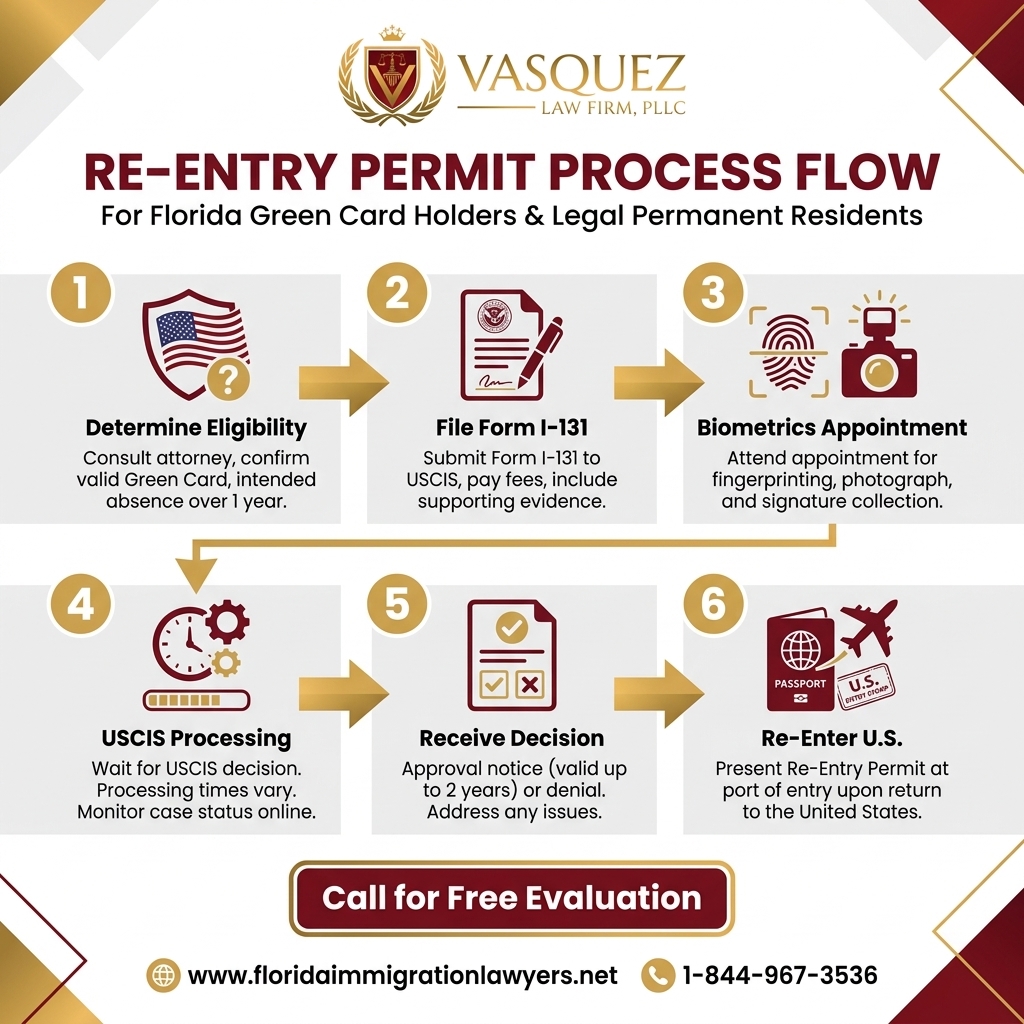
Document Checklist for Re-Entry Permit Application
- Completed Form I-131, Application for Travel Document: This is the primary application form. Ensure all sections are filled out accurately and completely, signed, and dated. Any missing information or signatures will result in rejection.
- Valid Green Card (Form I-551, Permanent Resident Card) - Copy: Provide a clear, legible photocopy of both the front and back of your current Permanent Resident Card. This proves your lawful permanent resident status.
- Two identical passport-sized photographs: These photos must meet USCIS specifications (2x2 inches, white background, full-face view, taken within the last 6 months). Write your name and A-number lightly on the back of each photo.
- Proof of travel plans or ties to the U.S.: While not strictly mandatory for initial filing, providing evidence of your intent to return strengthens your case. This can include:
- Financial ties: Bank statements, property deeds (e.g., for your home in Miami or Orlando), investment accounts, or tax returns filed as a U.S. resident.
- Family ties: Birth certificates of U.S. citizen children, marriage certificates to a U.S. citizen or LPR spouse, or letters from family members residing in the U.S.
- Employment ties: Letters from U.S. employers indicating a leave of absence or future employment, or business ownership documents.
- Other ties: Membership in U.S. organizations, utility bills, or car registrations.
- Payment for application fee: A check or money order payable to "U.S. Department of Homeland Security" for the exact current fee amount. Credit card payments are also an option via Form G-1450, Authorization for Credit Card Transactions. Verify the fee on the USCIS website before mailing your application.
Organizing these documents meticulously is a critical step. Creating a checklist and making copies for your own records can prevent last-minute stress and ensure nothing is overlooked. Florida Immigration Lawyers can help you gather and organize all necessary paperwork, ensuring your application is robust.
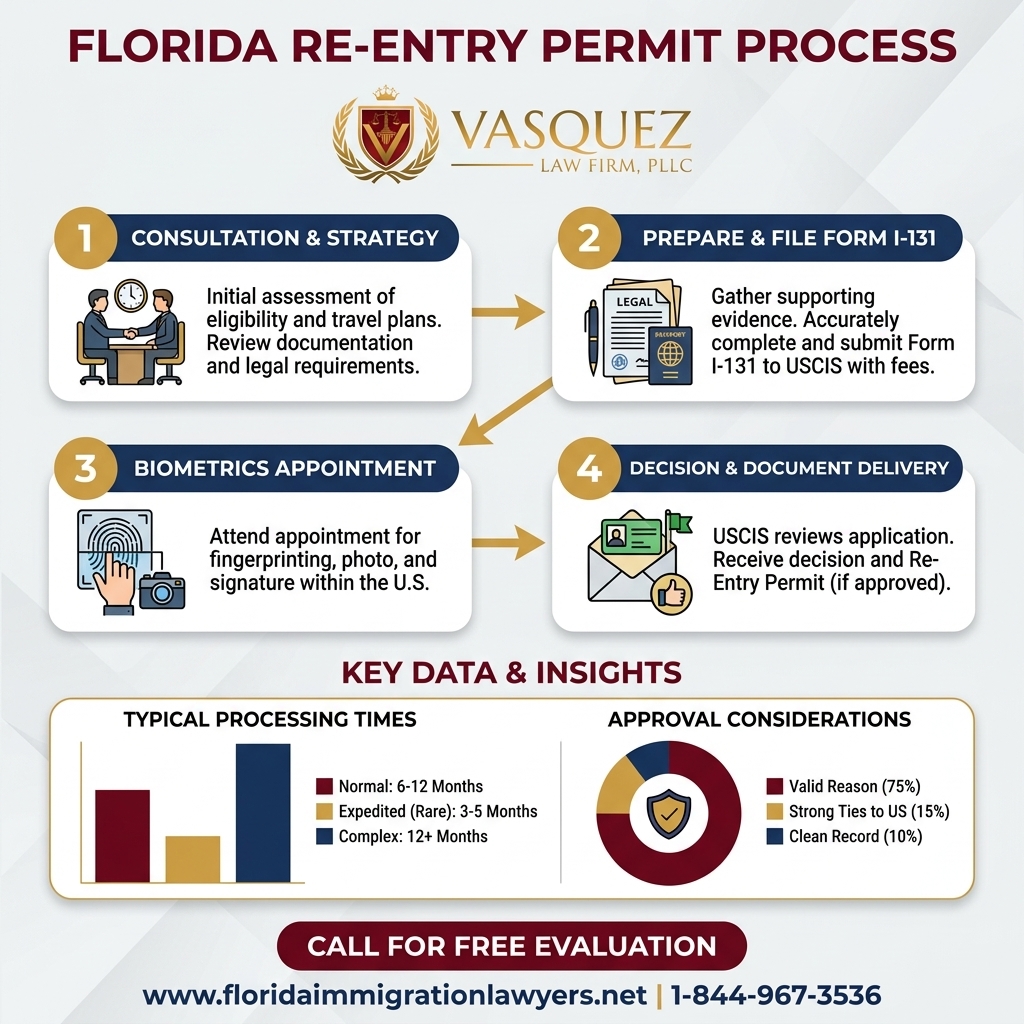
Timeline and Processing Expectations
Typically, processing a re-entry permit takes several months. It’s advisable to apply at least 60-90 days before your intended departure. Attending the biometrics appointment promptly can help avoid delays. Keep in mind that processing times can vary based on the USCIS workload and your specific case details.
Current processing times for Form I-131 can fluctuate significantly, often ranging from 8 to 14 months, or even longer in some instances. You can monitor the latest estimates on the USCIS website using the "Check Case Processing Times" tool. Because of these variable timelines, filing your application as early as possible is crucial. While you must be physically present in the U.S. to file the application and attend the biometrics appointment, you are generally permitted to depart the U.S. after your biometrics appointment has been completed. However, you must arrange for the permit to be mailed to a U.S. address or, in specific circumstances, to a U.S. Embassy or Consulate abroad.
Understanding this timeline is vital for planning your international travel from Florida. For example, if you plan to leave for a family emergency in six months, you should ideally file your I-131 application now to ensure your biometrics are completed before your departure. If you have an urgent, unforeseen need to travel, consulting with Florida Immigration Lawyers can help you explore any potential expedited processing options, although these are rare for re-entry permits and usually require compelling humanitarian reasons. Our team can also help you track your application status and respond to any Requests for Evidence (RFEs) from USCIS, which can further impact processing times.
Cost Factors and Fee Breakdown
The cost for filing Form I-131 can vary, and additional fees may apply for biometric services. It's wise to check the latest fee schedule on the USCIS website. Fees are non-refundable, so ensure that your application is complete and accurate to avoid unnecessary expenses.
As of the latest updates, the filing fee for Form I-131 for a re-entry permit is a specific amount, plus a separate biometrics fee. These fees are subject to change, so always verify the exact amounts on the official USCIS website before preparing your payment. It's important to budget not only for these government fees but also for other potential costs. These might include fees for obtaining new passport photos, mailing costs, and, if you choose to seek professional assistance, legal fees for an immigration attorney.
Investing in legal guidance, such as from Florida Immigration Lawyers, can be a cost-effective decision in the long run. While there's an upfront legal fee, it significantly reduces the risk of common mistakes that could lead to application delays, RFEs, or even denials, which would incur further costs in re-filing or appealing. Our firm offers transparent fee structures and free consultations to help you understand the full financial scope of your re-entry permit application.
Frequently Asked Questions about Re-Entry Permits
Below are answers to common questions and critical mistakes LPRs often make when applying for a re-entry permit. These insights are designed to help you navigate the process effectively and avoid pitfalls.
When to Call a Lawyer
Consider contacting an immigration lawyer if you face complexities with your re-entry permit application, such as prior immigration violations or extended travel plans exceeding the two-year permit limit. Florida Immigration Lawyers can help clarify legal requirements and streamline your application process. Our team is ready to assist you throughout your immigration journey.
You should particularly seek legal counsel if you have any past immigration issues, such as previous denials of immigration benefits, a history of overstaying visas, or any criminal record, no matter how minor. These factors can complicate your application and may require careful legal strategy to address. Furthermore, if your travel plans are unusually long (e.g., needing to stay abroad for more than two years due to a unique family situation or a long-term professional assignment), an attorney can advise on alternative strategies or the feasibility of applying for subsequent permits.
Navigating USCIS regulations can be daunting, and a small oversight can lead to significant consequences. An experienced immigration attorney from Florida Immigration Lawyers can provide invaluable assistance by thoroughly reviewing your case, preparing all necessary documentation, ensuring timely submission, and representing you in communications with USCIS. This proactive approach helps mitigate risks and significantly increases the likelihood of a successful outcome, giving you confidence in your travel plans and your LPR status.
About Florida Immigration Lawyers
At Florida Immigration Lawyers, we provide expert legal services to individuals across Florida, including Tallahassee. Our team specializes in family and business immigration, deportation defense, and citizenship applications. With a commitment to client success, we offer 24/7 support and free consultations. Contact us at 1-844-967-3536 or visit our website for more information.
Our firm understands the nuances of U.S. immigration law and the specific needs of Florida's diverse immigrant communities. We pride ourselves on offering personalized legal strategies tailored to each client's unique circumstances. When it comes to re-entry permits, our attorneys guide you through every step, from initial eligibility assessment and meticulous form preparation to gathering compelling supporting evidence and preparing you for your biometrics appointment. We are dedicated to ensuring your LPR status remains secure, no matter how far your travels take you.
Our commitment extends beyond just filing paperwork. We provide ongoing support, keeping you informed about your application's progress and swiftly addressing any USCIS inquiries or Requests for Evidence. With Florida Immigration Lawyers, you gain a trusted partner who is fluent in both English and Spanish, ready to advocate for your best interests and provide clarity in complex legal matters. Don't hesitate to reach out for a free consultation to discuss your re-entry permit needs.
Sources and References
- U.S. Citizenship and Immigration Services (USCIS)
- Executive Office for Immigration Review (EOIR)
- 8 U.S.C. Chapter 12 - Immigration and Nationality Act
- U.S. Department of State
Related services: immigration practice areas, family immigration services.
This article provides general legal information and is not intended as legal advice. Every case is unique, and outcomes depend on specific facts and circumstances. Contact an attorney for advice about your particular situation.
Do not navigate this process alone. Contact Florida Immigration Lawyers today.
Final CTA
Ensure your travel plans don't jeopardize your residency status. Call Florida Immigration Lawyers at 1-844-967-3536 for a free consultation. Se habla español - Estamos aquí para ayudarle.
If you need legal assistance, learn more about our immigration law practice, or call us at 1-844-967-3536 for a free consultation.
Do Not Navigate This Process Alone
Our experienced immigration attorneys are ready to fight for you. Get a free, confidential consultation today.
Se Habla Español
Frequently Asked Questions
Florida Immigration Lawyers
Immigration Attorney | Founder, Vasquez Law Firm
U.S. Air Force veteran and immigration attorney with thousands of cases resolved. J.D., NCCU School of Law. AILA member. Admitted to the 4th, 5th, and 11th Circuit Courts.
Available 24/7 - Free Evaluations
Related Legal Services
Our Florida immigration attorneys can help you with free immigration consultation, experienced immigration attorneys and business immigration. Call today at 1-844-967-3536 for a free consultation.
Related Links
Related Topics
Free Legal Consultation
Discuss your case with our experienced attorneys. We're available 24/7.
Se Habla Español - Estamos aquí para ayudarle.
Related Articles
Deportation Defense Lawyers in Orlando | VLF Florida
Facing deportation in Orlando can be overwhelming. Learn how a deportation defense lawyer can help you navigate removal proceedings and protect your rights. Contact Florida Immigration Lawyers for a free consultation.
Green Card Through Marriage Florida: Your 2026 Guide
For couples in Florida seeking a green card through marriage, the process involves intricate steps, extensive documentation, and careful adherence to USCIS regulations. This comprehensive 2026 guide from Florida Immigration Lawyers details eligibility, the step-by-step application, required documents, interview preparation, and potential challenges. Whether you reside in Kissimmee or elsewhere in Florida, understanding the nuances of proving a bona fide marriage and navigating federal immigration law is crucial. Our expert team provides essential insights and support to help you achieve permanent residency. Learn how to avoid common mistakes and when to seek professional legal assistance for your marriage-based green card application.
Understanding Public Charge Rule for Florida Immigrants
Explore how the public charge rule affects Florida immigrants, particularly in Homestead. This guide covers the essentials of navigating this complex immigration rule, offering practical advice and legal support options.
Free Immigration Consultation in Florida | VLF Florida
Facing immigration issues in Florida? Discover the importance of free consultations with experienced immigration lawyers in Coral Springs. Learn how to prepare for a consultation, avoid common mistakes, and explore when to seek legal help. Call Florida Immigration Lawyers today!