H-2B Visa for Florida Hospitality Seasonal Workers
Explore how the H-2B visa supports Florida's hospitality industry by allowing employers to hire seasonal workers. Learn about the application process, common pitfalls, and when to seek legal help. Contact Florida Immigration Lawyers for a free consultation.

H-2B Visa for Florida Hospitality Seasonal Workers: Your Comprehensive Guide
Florida's vibrant hospitality sector, a cornerstone of its economy, thrives on the influx of tourists, particularly during peak seasons. To meet this fluctuating demand, businesses across the Sunshine State often rely on a crucial resource: seasonal workers. The H-2B visa program offers a vital pathway for employers to bring in non-agricultural temporary workers, ensuring seamless operations and high-quality service. This comprehensive guide delves into the specifics of the H-2B visa, particularly for those seeking or offering seasonal employment in Florida's diverse range of hotels, resorts, theme parks, restaurants, and other tourist attractions.
Navigating the complexities of U.S. immigration law can be daunting for both employers and prospective employees. Understanding the nuances of the H-2B program, from eligibility criteria to application procedures and compliance requirements, is essential for a successful outcome. Our firm specializes in immigration law, providing expert guidance to businesses and individuals alike. If you're considering the H-2B program, this article will serve as your essential starting point, offering insights into how this visa can benefit Florida's hospitality industry and outlining the steps involved.
Understanding the H-2B Visa Program: A Foundation for Florida Businesses
The H-2B non-agricultural temporary worker program allows U.S. employers to bring foreign nationals to the United States to fill temporary non-agricultural jobs. These jobs must be temporary in nature, meaning they are either a one-time occurrence, a seasonal need, a peakload need, or an intermittent need. For Florida's hospitality industry, seasonal and peakload needs are most common, particularly during tourist seasons like winter, spring break, and summer holidays. Whether it's staffing a beachfront resort during high season, managing increased demand at a theme park, or ensuring smooth operations at a popular restaurant, the H-2B visa provides a flexible solution.
The program is designed to supplement the domestic workforce, not replace it. Employers must demonstrate that there are not enough U.S. workers who are able, willing, qualified, and available to perform the temporary work. This often involves a rigorous recruitment process, which we will discuss in more detail. The H-2B program is critical for sectors that experience predictable, recurring periods of increased labor demand, allowing businesses to maintain their operational capacity and service standards without committing to year-round permanent staff for seasonal roles.
Who Qualifies for an H-2B Visa in Florida? Dual Perspectives
Both employers and prospective employees must meet specific criteria to participate in the H-2B program. Understanding these requirements from both sides is crucial for a successful application.
Employer Eligibility: Demonstrating Temporary Need
Florida employers seeking H-2B workers must first prove a temporary need for labor. This is typically categorized as:
- Seasonal Need: The job is traditionally tied to a season of the year by an event or pattern and is recurring. Examples include hotel staff during winter tourist season or lifeguards during summer.
- Peakload Need: The employer regularly employs permanent workers, but needs to supplement its permanent staff due to a temporary increase in workload. For instance, a restaurant hiring extra waitstaff for a major festival.
- One-Time Occurrence: The employer has not employed workers to perform the services or labor in the past and will not need workers in the future, or a permanent employee is temporarily absent.
- Intermittent Need: The employer occasionally needs temporary workers for short periods.
Beyond demonstrating temporary need, employers must also commit to paying the prevailing wage for the occupation in the area of intended employment, as determined by the Department of Labor (DOL). They must also conduct extensive recruitment efforts to ensure no qualified U.S. workers are available for the positions. This often involves advertising in local newspapers, state workforce agencies, and other relevant platforms. Maintaining meticulous records of these recruitment efforts is paramount for compliance.
Worker Eligibility: Skills and Intent
For prospective employees, the primary requirement is to possess the skills and qualifications necessary for the temporary job offered by the U.S. employer. Common roles in Florida's hospitality sector include:
- Housekeepers and cleaning staff for hotels and resorts
- Cooks, chefs, and kitchen staff for restaurants and catering services
- Waitstaff, bartenders, and food service attendants
- Landscapers and groundskeepers for resorts and golf courses
- Amusement park and recreation attendants
- Guest service representatives and front desk staff
Workers must also demonstrate an intent to return to their home country upon the completion of their authorized temporary stay. While H-2B visas are non-immigrant, meaning they are not a direct path to permanent residency, understanding the full scope of immigration options is always beneficial. Applicants must have a valid passport and be admissible to the United States. A clean criminal record and no prior immigration violations are generally required.
Navigating the H-2B Application Process: Key Steps and Challenges
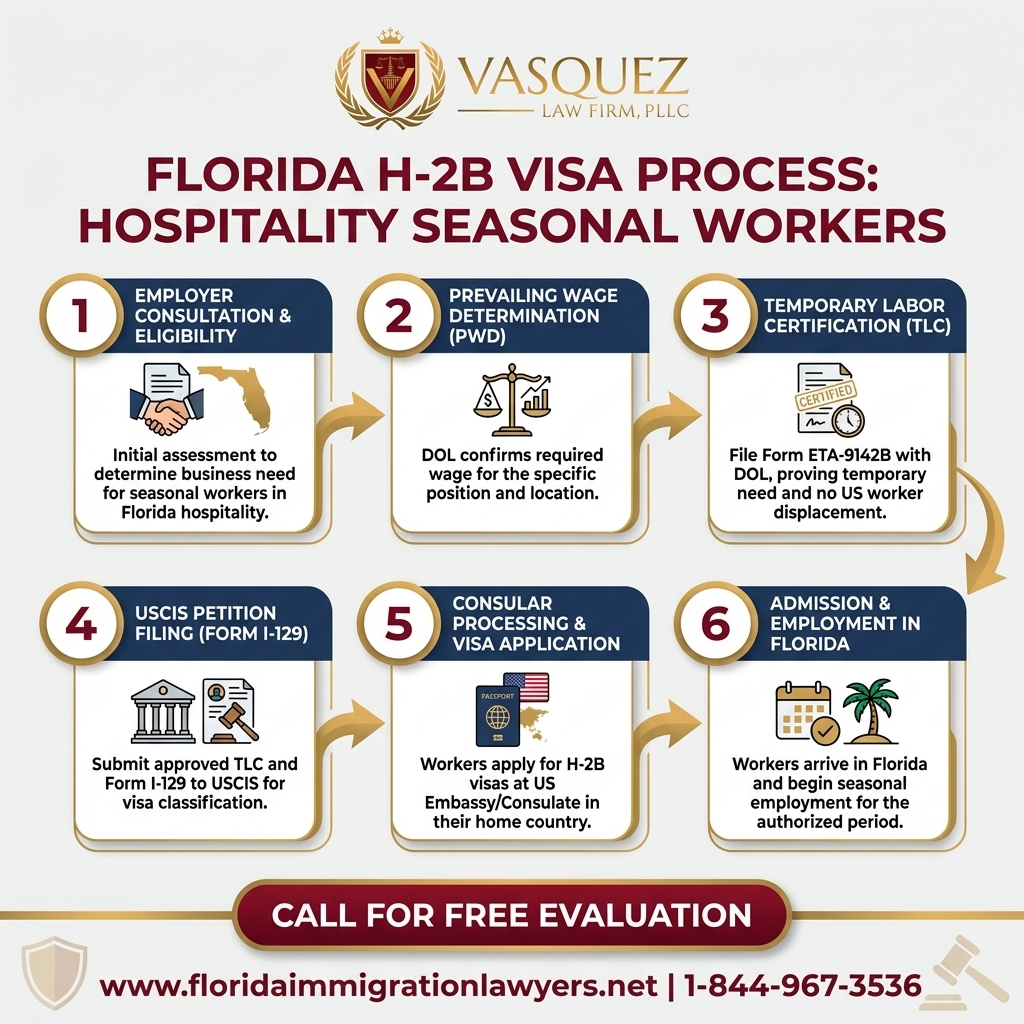
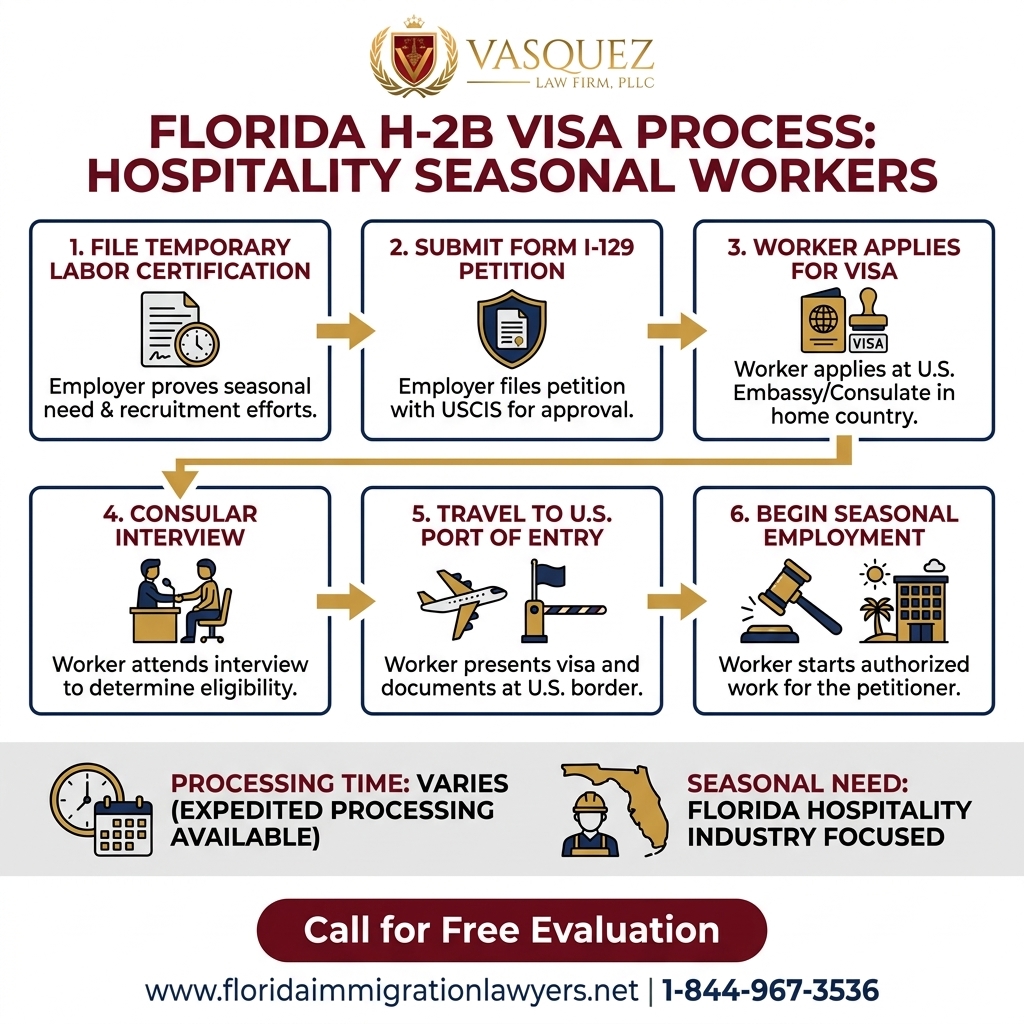
The H-2B application process is multi-faceted and requires careful attention to detail and adherence to strict deadlines. It involves coordination between the employer, the Department of Labor (DOL), U.S. Citizenship and Immigration Services (USCIS), and the U.S. Department of State.
Step 1: Temporary Labor Certification (TLC) from the DOL
This is the foundational step. The employer must first obtain a Temporary Labor Certification from the DOL, which confirms that there are no qualified U.S. workers available for the job and that employing foreign workers will not adversely affect the wages and working conditions of similarly employed U.S. workers. This process involves:
- Filing a Prevailing Wage Request: Determining the appropriate wage for the position.
- Recruitment Efforts: Conducting mandatory recruitment activities (e.g., newspaper ads, job orders with state workforce agencies) to test the U.S. labor market.
- Filing Form ETA-9142B: The Application for Temporary Employment Certification, submitted to the DOL.
This stage is often the most time-consuming and complex, requiring meticulous documentation of recruitment efforts and responses. Errors or omissions here can lead to significant delays or denials.
Step 2: Petition to USCIS
Once the TLC is certified by the DOL, the employer files Form I-129, Petition for a Nonimmigrant Worker, with USCIS. This petition includes the certified TLC, evidence of the employer's temporary need, and details about the prospective workers (if known). USCIS reviews the petition to ensure all regulatory requirements are met and that the employer and positions qualify for H-2B status.
A significant challenge at this stage is the annual H-2B cap. Congress sets a numerical limit of 66,000 H-2B visas per fiscal year, split into two halves (33,000 for the first half, October 1 - March 31, and 33,000 for the second half, April 1 - September 30). Demand often far exceeds supply, leading to lottery systems and the need for prompt filing as soon as filing windows open. Supplemental visas are sometimes authorized by Congress, but these are not guaranteed. Employers must strategize their filing dates carefully to maximize their chances.
Step 3: Visa Application at a U.S. Embassy or Consulate
Upon USCIS approval of Form I-129, prospective workers who are outside the U.S. apply for the H-2B visa at a U.S. embassy or consulate in their home country. This involves completing Form DS-160 (Online Nonimmigrant Visa Application), attending a visa interview, and providing necessary documentation, including their passport, the approved I-129 petition receipt, and any supporting documents requested by the consulate. The consular officer will assess the applicant's eligibility and intent to return home after their temporary stay.
Step 4: Admission into the U.S.
If the visa is granted, the worker can travel to the U.S. and seek admission at a port of entry. A U.S. Customs and Border Protection (CBP) officer makes the final decision on admission and the length of authorized stay.
Throughout this intricate process, potential challenges can arise, from DOL audits of recruitment efforts to USCIS requests for additional evidence, and even consular processing delays. Having experienced legal counsel is invaluable to navigate these hurdles effectively and ensure compliance at every stage. Our attorneys are well-versed in these procedures.
Benefits for Florida's Hospitality Sector: A Win-Win for Economy and Workers
The H-2B program is not just a bureaucratic process; it's a vital economic engine for Florida's tourism-driven economy. It provides numerous benefits:
- Meeting Seasonal Demand: Allows businesses to maintain high service standards during busy periods, preventing understaffing and ensuring a positive experience for visitors. This is particularly crucial for Florida's reputation as a world-class tourist destination.
- Economic Stability: Supports local economies by enabling businesses to operate at full capacity, leading to increased revenue, tax contributions, and indirect job creation for permanent residents in supporting industries.
- Flexibility for Employers: Offers a flexible workforce solution, allowing businesses to scale up or down based on seasonal needs without the long-term commitments associated with permanent hiring.
- Opportunity for Workers: Provides foreign nationals with temporary employment opportunities, allowing them to gain valuable work experience, earn wages, and often support their families back home.
From the bustling kitchens of Orlando's theme parks to the pristine beaches of Miami's luxury hotels, H-2B workers play an indispensable role in delivering the exceptional experiences that tourists expect from Florida.
Common Challenges and Considerations: Mitigating Risks
Despite its benefits, the H-2B program has its complexities and potential pitfalls. Employers and workers must be aware of these to ensure a smooth process and avoid legal issues:
- Annual Cap Limitations: As mentioned, the H-2B cap is a constant challenge, often leading to fierce competition for available visas. Strategic planning and early filing are critical.
- Rigorous Compliance: The DOL and USCIS maintain strict compliance requirements. Employers must adhere to prevailing wage rules, working condition standards, and recruitment obligations. Failure to comply can result in significant penalties, audits, and future disqualification from the program.
- Processing Delays: Government processing times can be unpredictable, impacting hiring timelines. Employers should plan well in advance of their anticipated start dates.
- Potential for Fraud: Both employers and workers must be wary of fraudulent schemes. All applications should be handled through legitimate channels and with proper legal guidance.
- Worker Protections: H-2B workers are protected by U.S. labor laws, including minimum wage, overtime, and safe working conditions. Employers must ensure these protections are upheld.
In cases where an H-2B worker might face issues such as unfair treatment, wage disputes, or even potential threats to their status, understanding their rights and seeking legal advice is paramount. In extreme situations, individuals might need to explore options like asylum or deportation defense if their circumstances change unexpectedly or they face unlawful accusations.
The Role of Legal Expertise in H-2B Visas
Given the intricate nature of the H-2B visa program, engaging an experienced immigration attorney is not just beneficial but often essential. Legal professionals can:
- Ensure Compliance: Guide employers through the complex DOL and USCIS regulations, minimizing the risk of errors, delays, or denials.
- Optimize Strategy: Advise on the best approach for demonstrating temporary need, conducting recruitment, and navigating the H-2B cap.
- Prepare Documentation: Assist in compiling and submitting all necessary forms and supporting evidence accurately and on time.
- Respond to Challenges: Represent clients in case of DOL audits, USCIS Requests for Evidence (RFEs), or other administrative hurdles.
- Protect Worker Rights: Provide counsel to H-2B workers regarding their rights and responsibilities, ensuring they are treated fairly and understand their visa terms.
Whether you are a Florida hospitality business looking to staff up for the season or a foreign national seeking temporary work, expert legal guidance can make a significant difference in the success of your H-2B journey. Our dedicated team of immigration attorneys is committed to providing comprehensive support.
Frequently Asked Questions About H-2B Visas
- What is the H-2B visa?
The H-2B visa is for non-agricultural temporary workers coming to the U.S. to perform temporary services or labor where U.S. workers are unavailable. It addresses seasonal, peakload, one-time, or intermittent needs.
- What kind of jobs qualify for H-2B in Florida hospitality?
Common jobs include housekeepers, cooks, resort staff, landscapers, amusement park attendants, and various service roles in hotels, restaurants, and theme parks across Florida.
- How long can an H-2B visa holder stay in the U.S.?
Generally, an H-2B visa is granted for up to one year, with possible extensions in increments of up to one year, for a maximum total stay of three years. After three years, the worker must depart the U.S. for at least three months before seeking readmission on an H-2B visa.
- Is there a cap on H-2B visas?
Yes, there is an annual numerical cap of 66,000 H-2B visas each fiscal year, split into two halves. Supplemental visas are often authorized by Congress, but these are not guaranteed and are typically allocated based on specific criteria.
- Can H-2B visa holders bring their families?
Spouses and unmarried children under 21 may be eligible for H-4 nonimmigrant status. However, H-4 dependents are generally not authorized to work in the U.S. and must apply for their own work-authorized visa if they wish to be employed.
- What are the employer's responsibilities?
Employers must pay the prevailing wage, provide safe working conditions, cover certain transportation and recruitment costs, and comply with all terms and conditions of the certified Temporary Labor Certification and USCIS petition.
- What happens if my H-2B visa expires?
It is crucial to depart the U.S. before your visa expires or apply for an extension or change of status if eligible and approved. Overstaying your visa can lead to severe immigration consequences, including bars to future re-entry and potential deportation proceedings.
- Where can I find legal help for H-2B visas?
It is highly recommended to consult with an experienced immigration attorney to navigate the complex H-2B application process. Our firm offers free consultations to discuss your specific needs. Contact us today to learn more about how we can assist you.
Conclusion: Partnering for Success in Florida's Hospitality Landscape
The H-2B visa program is an indispensable tool for Florida's hospitality industry, enabling businesses to thrive during peak seasons and contributing significantly to the state's economic vitality. While the process is detailed and demanding, understanding its requirements and challenges is the first step toward successful utilization. For employers, meticulous planning, strict adherence to regulations, and proactive recruitment are key. For workers, possessing the right skills and understanding their rights are paramount.
Whether you are a business owner in Miami, Orlando, or Tampa seeking to secure your seasonal workforce, or a skilled individual aspiring to contribute to Florida's vibrant tourism sector, expert legal guidance is invaluable. Our firm is dedicated to simplifying the complexities of immigration law, offering tailored solutions and unwavering support. Don't let the intricacies of the H-2B process deter you. Reach out to our experienced team for a personalized consultation and take the next step towards achieving your goals. Contact us today to schedule your free consultation and discover how we can help you navigate the H-2B visa journey with confidence.
Sources and References
- U.S. Citizenship and Immigration Services (USCIS)
- Executive Office for Immigration Review (EOIR)
- U.S. Department of State - Bureau of Consular Affairs
- Immigration and Nationality Act (INA), 8 U.S.C. Chapter 12
Do Not Navigate This Process Alone
Our experienced immigration attorneys are ready to fight for you. Get a free, confidential consultation today.
Se Habla Español
Frequently Asked Questions
Florida Immigration Lawyers
Immigration Attorney | Founder, Vasquez Law Firm
U.S. Air Force veteran and immigration attorney with thousands of cases resolved. J.D., NCCU School of Law. AILA member. Admitted to the 4th, 5th, and 11th Circuit Courts.
Available 24/7 - Free Evaluations
Related Legal Services
Our Florida immigration attorneys can help you with deportation defense, citizenship and naturalization and family immigration services. Call today at 1-844-967-3536 for a free consultation.
Related Links
Related Topics
Free Legal Consultation
Discuss your case with our experienced attorneys. We're available 24/7.
Se Habla Español - Estamos aquí para ayudarle.
Related Articles
Understanding the O-1 Visa for Extraordinary Ability
Explore the O-1 visa, designed for individuals with extraordinary ability, and learn how to navigate the application process in Florida. Call 1-844-967-3536 for expert guidance.
J-1 Waiver Physician Placement in Florida | VLF Florida
Explore how to secure a J-1 waiver for physicians in Florida's underserved areas. Learn about the Conrad 30 program and the steps to work in St. Petersburg.
Protect Yourself from Immigration Scams in Florida
Immigration scams are a growing concern in Florida, especially in areas like Kissimmee. Learn how to protect yourself and seek legitimate help from licensed attorneys. Call Florida Immigration Lawyers for a free consultation.
Immigration Services Kissimmee Florida | Expert Legal Help
For residents of Kissimmee, Osceola County, and communities across Florida, including the vibrant Puerto Rican population, understanding the complex world of immigration services is essential. This guide from Florida Immigration Lawyers covers family petitions, employment visas, asylum, naturalization, and crucial deportation defense strategies. We provide a step-by-step overview of common processes, essential document checklists, and insights into processing timelines and costs. Learn about common mistakes to avoid and when to seek professional legal help. Our firm offers comprehensive, compassionate, and expert legal representation to help you achieve your immigration goals in Florida. We serve clients throughout the state, ensuring personalized attention and effective strategies for every unique case.